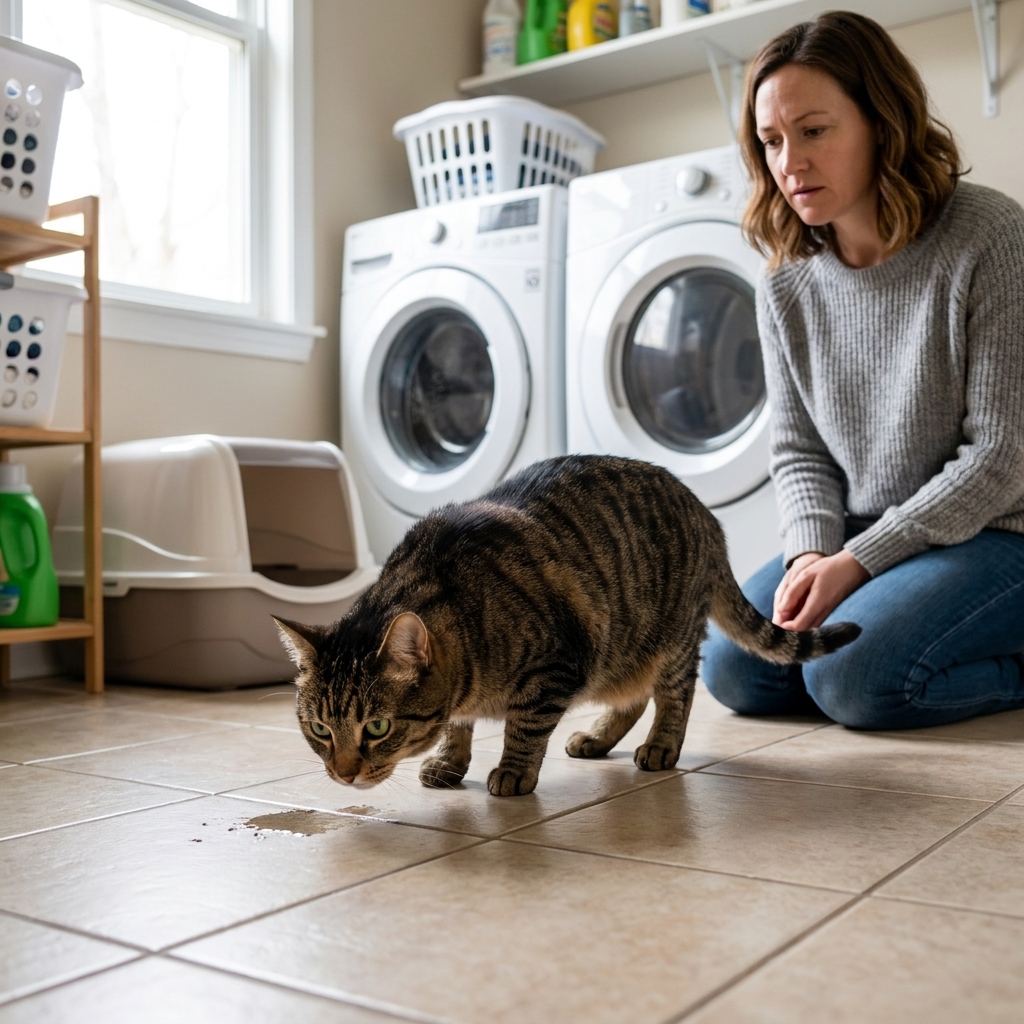
If your cat is peeing outside the litter box, I know how quickly it can turn your home upside down. It smells, it feels personal, and it is easy to spiral into “Why is my cat doing this to me?”
In most cases, it is not spite. It is communication. Cats pee outside the box when something about the box, the location, their body, or their environment is not working for them.
Before we jump into troubleshooting: if your cat is straining, vocalizing, making frequent tiny trips, has blood-tinged urine, is lethargic, or cannot pee at all, treat it as urgent and contact a veterinarian right away. Urinary blockages can be life-threatening, especially in male cats.
One quick note: “litter box problems” can mean urine, stool, or both. This guide focuses on pee, because the causes and next steps are a little different than poop accidents.
How to tell what you are dealing with
Two patterns matter because they point to different causes:
- Peeing on flat surfaces (floors, bath mats, laundry piles) is often about litter box access, cleanliness, medical discomfort, or stress.
- Spraying on vertical surfaces (walls, doors, furniture) is usually territorial or stress related. Spray is often a smaller amount and may be aimed backward with a quivering tail.
Now, let’s walk through the most common reasons and the fixes that tend to work.
1) UTI, inflammation, or bladder pain
When a cat associates the litter box with pain, they may avoid it and choose softer, “safer” spots like rugs or bedding. Cats can have:
- Feline idiopathic cystitis (FIC), bladder inflammation often linked with stress
- Bladder stones or crystals
- Bacterial urinary tract infections (UTIs), which are relatively uncommon in otherwise healthy young cats and more common in seniors or cats with other health issues
That is why “UTI-like” signs in younger cats are often sterile inflammation (FIC) rather than an infection that needs antibiotics.
What it looks like
- Frequent trips to the box with little output
- Straining, vocalizing, licking the genital area
- Accidents near the box
- Blood in urine
What to do
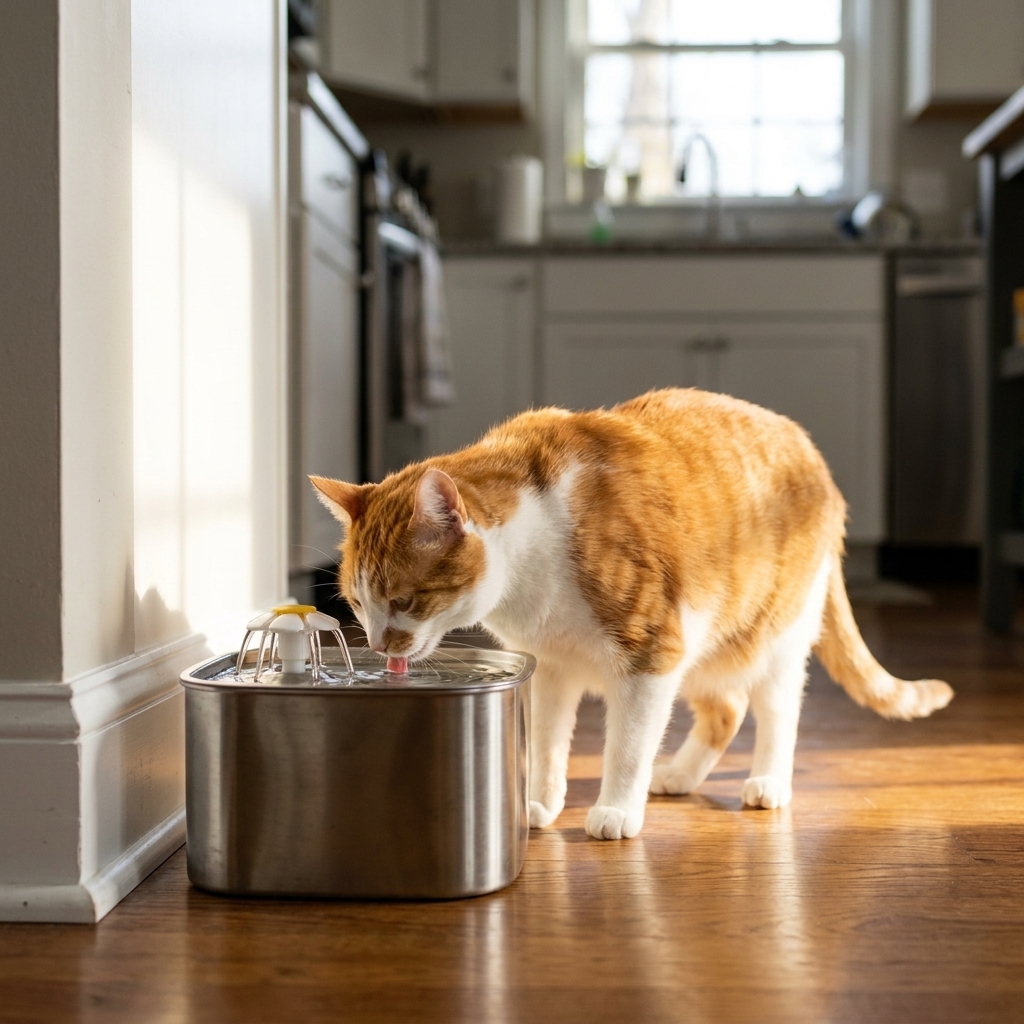
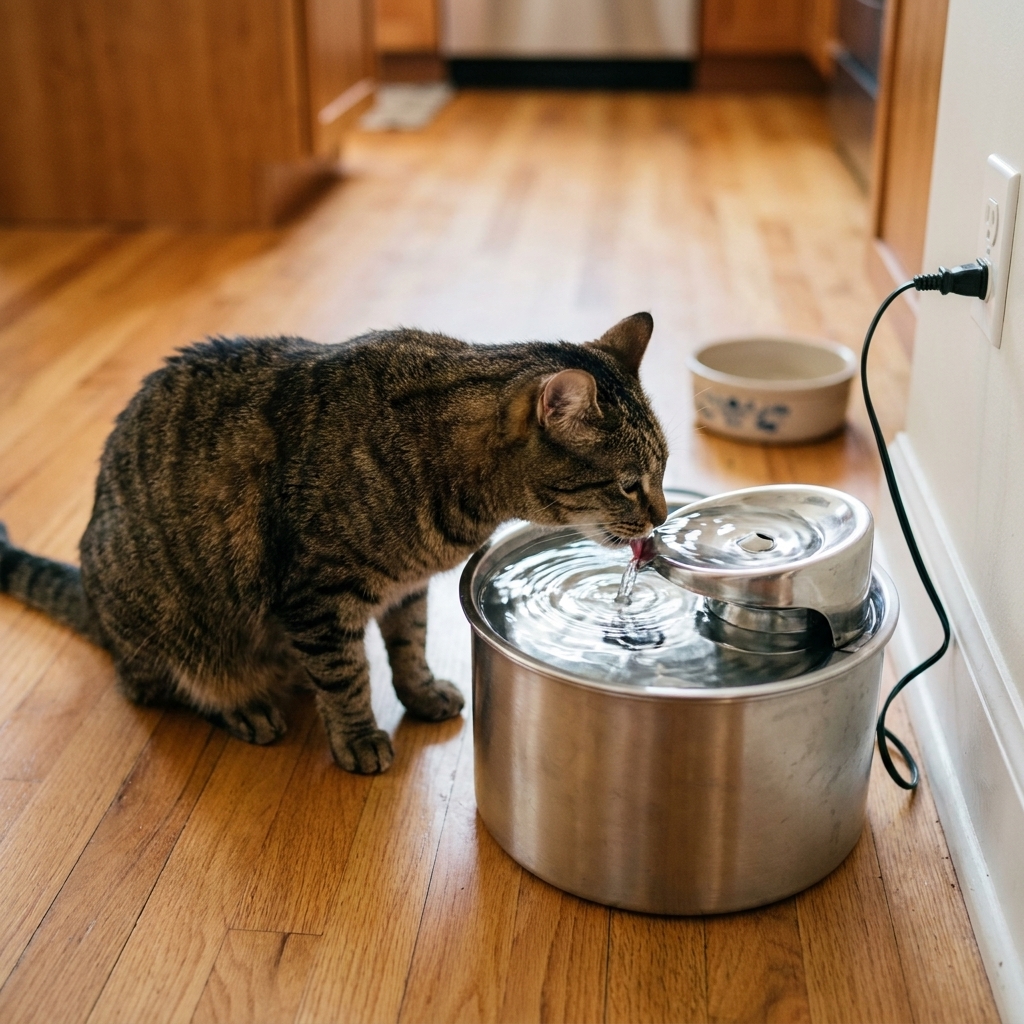
Book a vet visit for an exam and urinalysis. If your cat is uncomfortable, do not “wait and see.” At home, support recovery by boosting water intake (wet food, fountains, extra bowls) and reducing stress while you work with your vet on treatment.
2) Pain or mobility issues
Cats with sore joints may avoid climbing into a high-sided box, stepping over a tall lip, or walking down to a basement. Declawed cats may also avoid certain litter textures because it can hurt their paws. Declawing is also associated with long-term welfare and behavior risks, including litter box avoidance in some cats.
What it looks like
- Accidents that start gradually, often in older cats
- Urinating right outside the box
- Stiffness, hesitation to jump, changes in grooming
What to do
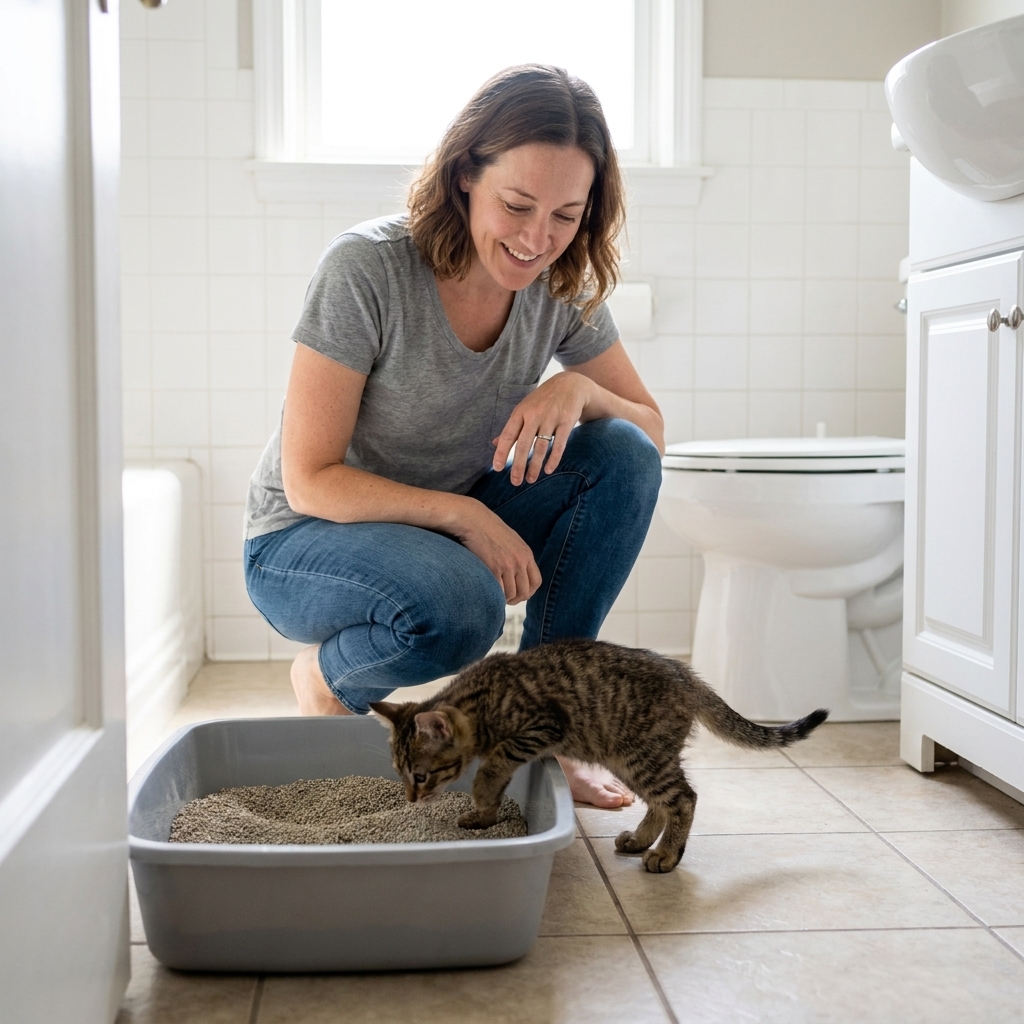
- Switch to a large, low-entry litter box with easy access.
- Use a soft, unscented, sand-like litter.
- Place a box on every level of the home.
- Ask your vet about pain management. Comfort changes behavior.
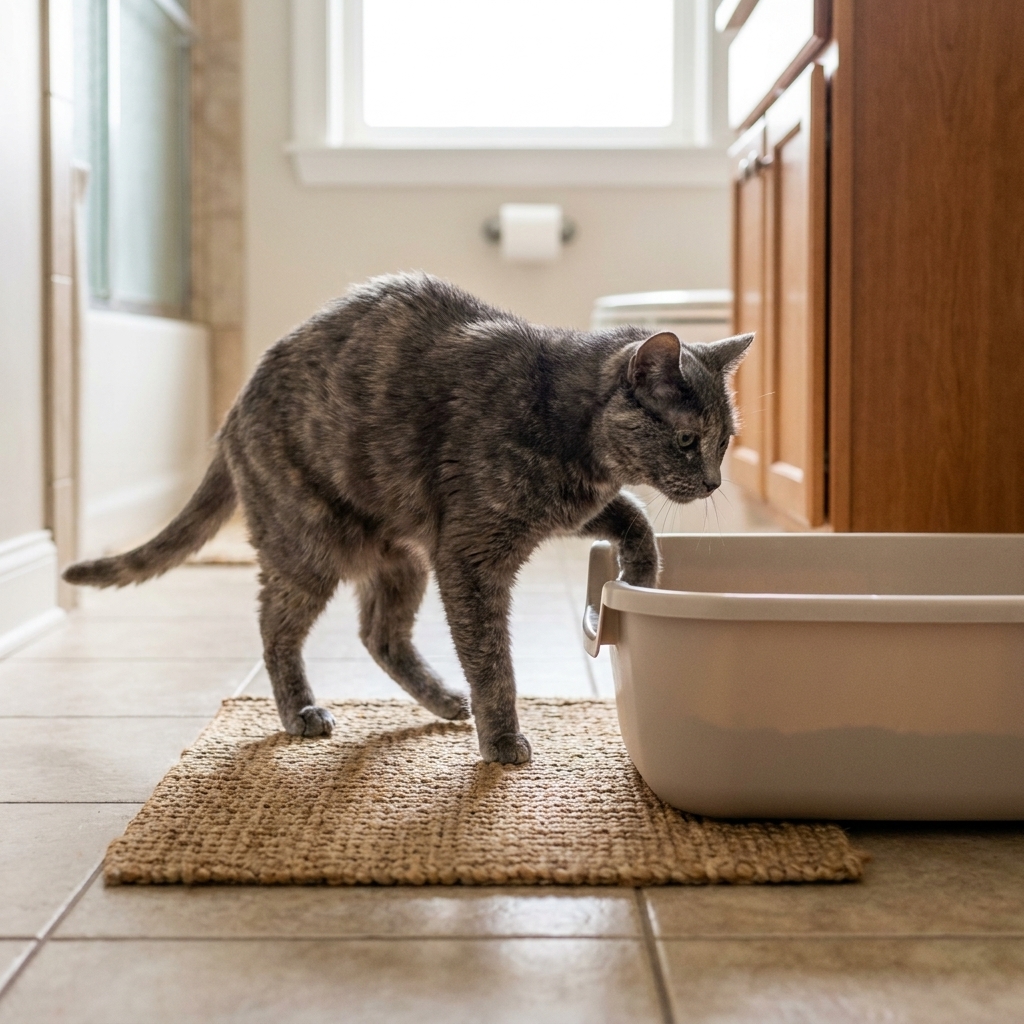
3) The box is too dirty
Some cats will tolerate a lot. Others are firm believers in a pristine bathroom. If the box is even slightly too dirty, they vote with their paws.
What it looks like
- Accidents happen more right before cleaning day
- Your cat perches on the edge, paws at the floor, or seems reluctant to enter
What to do
- Scoop at least once daily. Twice daily is better for multi-cat homes.
- Do a full litter dump and wash the box regularly (often every 2 to 4 weeks depending on litter type and household).
- Use mild, unscented soap. Skip harsh cleaners that leave a strong smell.
4) Too few boxes, bad locations
A widely used rule of thumb many behaviorists recommend is one box per cat, plus one extra. It sounds excessive until you live with a cat who has strong opinions about personal space and bathroom lines.
What it looks like
- Accidents start after adding a new cat, roommate, baby, or dog
- One cat “guards” access by hovering or ambushing near the box
- Your cat avoids a box in a loud, busy, or dead-end area
What to do
- Add boxes and spread them out. Two boxes side-by-side count as one location to most cats.
- Choose quiet, easy-to-access spots with at least two exit routes when possible.
- Avoid placing boxes next to noisy appliances, like washing machines or furnaces.
5) They hate the litter
To us, litter is litter. To cats, texture is everything. Many cats strongly prefer fine-grain, unscented clumping litter. Scented litters, crystal litters, pellet litters, and strongly perfumed deodorizers can be a deal-breaker.
What it looks like
- Your cat uses the box sometimes, then chooses towels, laundry, or the bathtub other times
- Digging at the floor or mat instead of in the litter
What to do
- Offer a “litter buffet” with two boxes: current litter in one, unscented fine clumping in the other.
- Change litters gradually to avoid a total boycott.
- Avoid additives and heavy fragrances. Most cats want neutral.
If you are doing a transition, keep at least one familiar box available while you test changes. Give a new setup a fair trial (often 7 to 14 days) unless your cat is clearly distressed.
6) The box itself is the problem
Many commercial boxes are too small. A good rule of thumb is a box that is at least 1.5 times your cat’s body length (nose to base of tail). Covered boxes can trap odor and some cats feel cornered in them. Liners can bunch and snag, which some cats find alarming.
What it looks like
- Your cat hangs their rear over the edge
- They seem reluctant to fully enter a covered box
- Accidents happen even though the box is clean and nearby
What to do
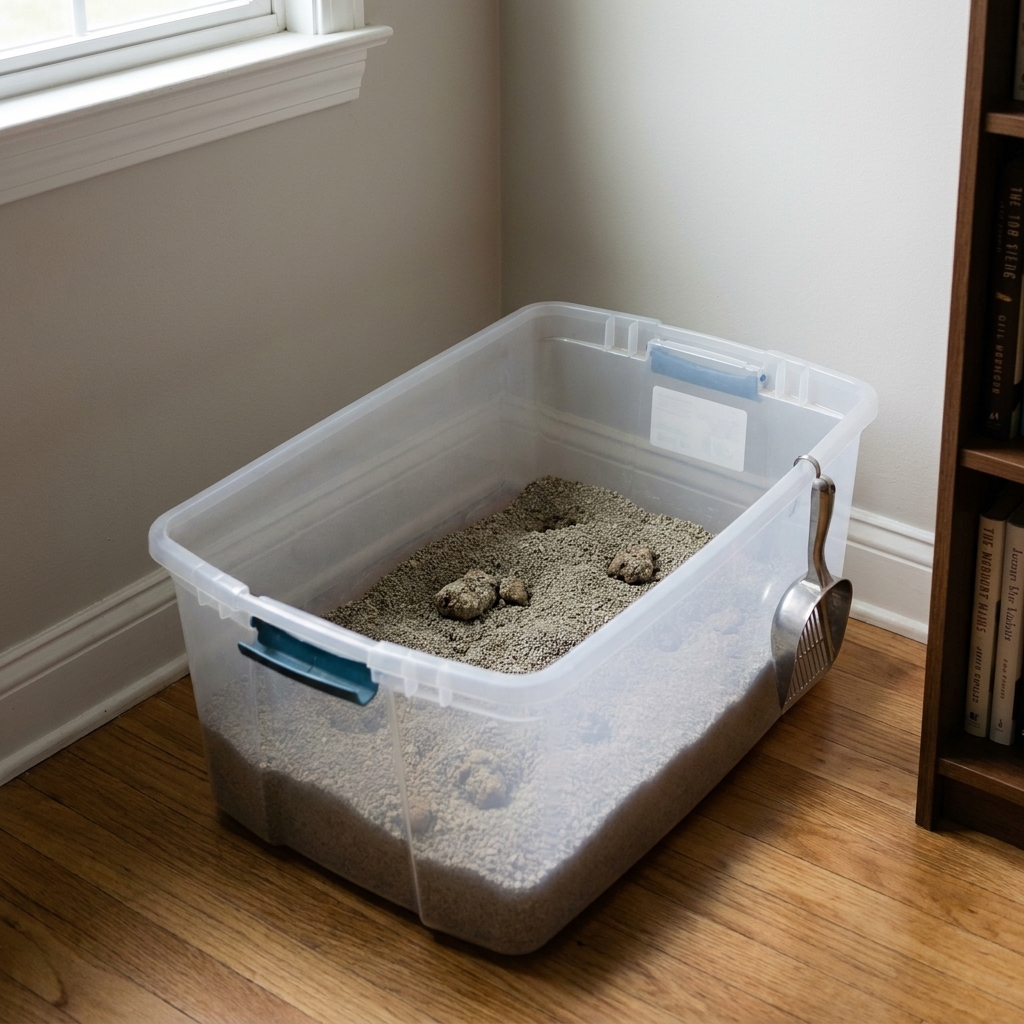
- Try a larger, open box or a big under-bed storage bin with a low cut entry.
- Skip liners and use a high-quality scoopable litter to reduce sticking.
- If you prefer covered, test an uncovered option for a few weeks and see what your cat prefers.
7) Stress, anxiety, conflict
Stress can inflame the bladder and change litter box habits even in cats who have been perfect for years. Common triggers include moving, renovations, schedule changes, new pets, neighborhood cats outside, or tension between resident cats.
What it looks like
- Accidents start after a life change
- Increased hiding, vigilance, overgrooming, or irritability
- Spraying on walls or peeing near doors and windows
What to do
- Increase “safe cat stuff”: hideouts, vertical space, predictable playtime, and calm routines.
- Block visual access to outdoor cats (frosted window film can help).
- For multi-cat tension: add resources, spread them out, and consider a behavior consult if conflict is ongoing.
- Talk with your vet about anxiety support when needed.
8) Marking behavior
Spraying is not the same as a full pee. It is often a message: “This is mine,” or “I am not feeling secure.” Unneutered cats are more likely to spray, but fixed cats can spray too, especially under stress.
What it looks like
- Small amounts on vertical surfaces
- Often near doors, windows, new furniture, or after a new animal appears
What to do
- If your cat is not spayed or neutered, schedule it. It is one of the biggest levers for spraying.
- Clean with an enzymatic cleaner made for pet urine. Regular cleaners often leave odor cues.
- Reduce triggers: block outdoor cat sightings, reintroduce cats if conflict is present, and increase enrichment.
9) Bad box memories
If something scary happened in or near the box, your cat may decide it is unsafe. Common culprits include being ambushed by another cat, a loud noise (like a washing machine kicking on), or being caught and medicated right after using the box.
What it looks like
- Your cat approaches the box, then bolts
- Accidents happen in a new “safer” spot
What to do
- Move the box to a quieter location or add an additional box in a calmer area.
- Make the path to the box low-stress, well lit, and easy to navigate.
- Avoid grabbing or scolding your cat around the box. We want the box to predict safety, not surprises.
10) Urine smell left behind
Cats have a powerful nose. If a spot still smells like urine to them, it can become a repeat bathroom even when you cannot smell anything.
What it looks like
- Repeat accidents in the same corner, on the same rug, or on the same bedding
What to do
- Use an enzymatic cleaner and follow the soak time on the label.
- For laundry: pre-soak with enzyme cleaner, then wash. Avoid ammonia-based products.
- Temporarily block access to favorite repeat spots while you reset the habit (close doors, pick up bath mats, use a waterproof cover, or move furniture).
- If an item keeps getting re-soiled (especially foam, carpet pad, or an old rug), replacement may be the kindest option.
Quick plan
- Rule out medical issues first. A vet visit saves time and prevents suffering.
- Add a box. Place it in a quiet, easy-to-reach location.
- Make it easy. Big box, low entry, unscented fine litter.
- Scoop daily. More often if you have multiple cats.
- Reduce stress. Predictable play, safe spots, and resource spread.
- Clean correctly. Enzymes, not “fresh scent.”
- Give changes time. Unless your cat is in pain or panicking, try each adjustment for about 7 to 14 days so you can tell what is helping.
What not to do
- Do not punish. It increases stress and can make the problem worse.
- Do not rub your cat’s nose in it. They do not connect that with learning.
- Do not trap them in the litter box area. We want voluntary, confident box use.
When to call a pro
If you have tried the basics for 1 to 2 weeks and accidents continue, or if you see aggression between cats, it is time for more targeted help. Start with your veterinarian to rule out pain and urinary disease.
For behavior help, look for a board-certified veterinary behaviorist (DACVB) or a qualified behavior consultant who works with cats, such as an IAABC certified cat behavior consultant. The right pro can help you pinpoint triggers, set up a realistic litter box plan for your home, and keep the problem from turning into a long-term habit.