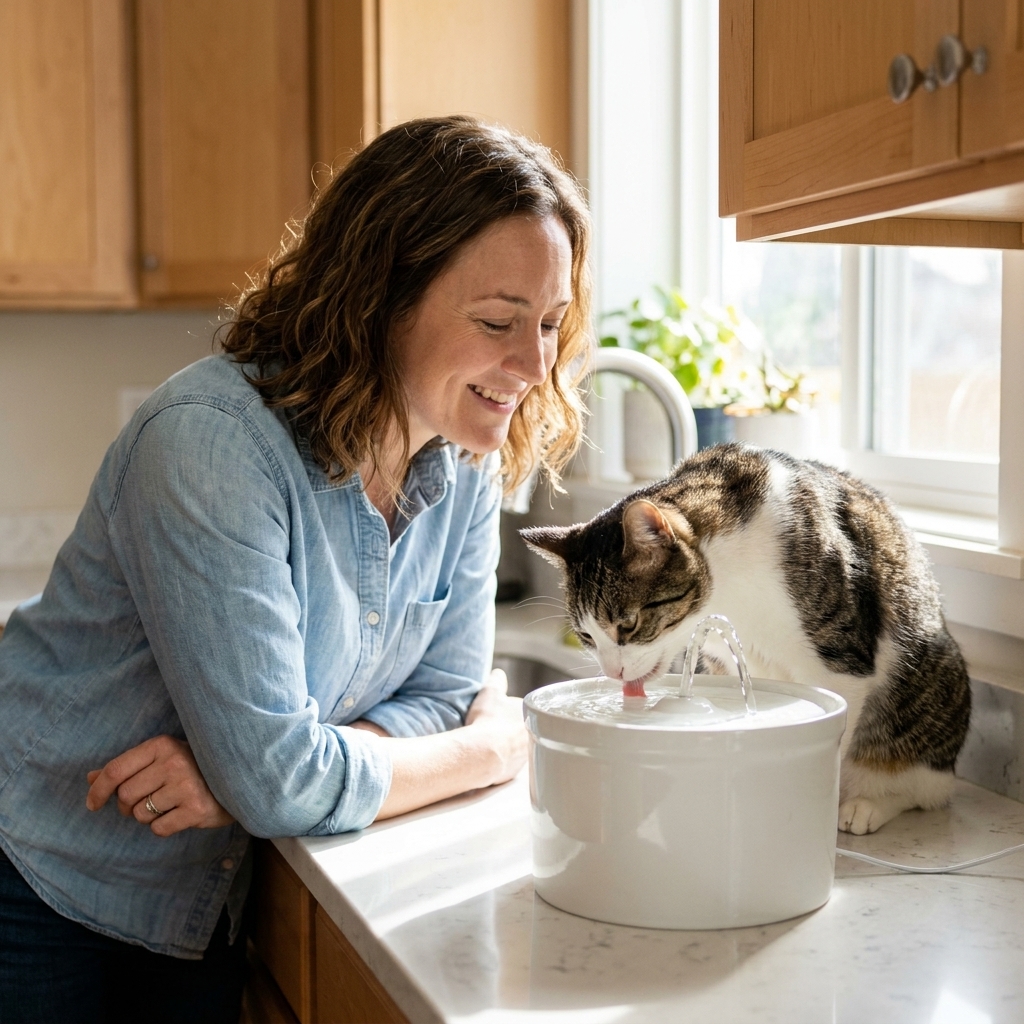
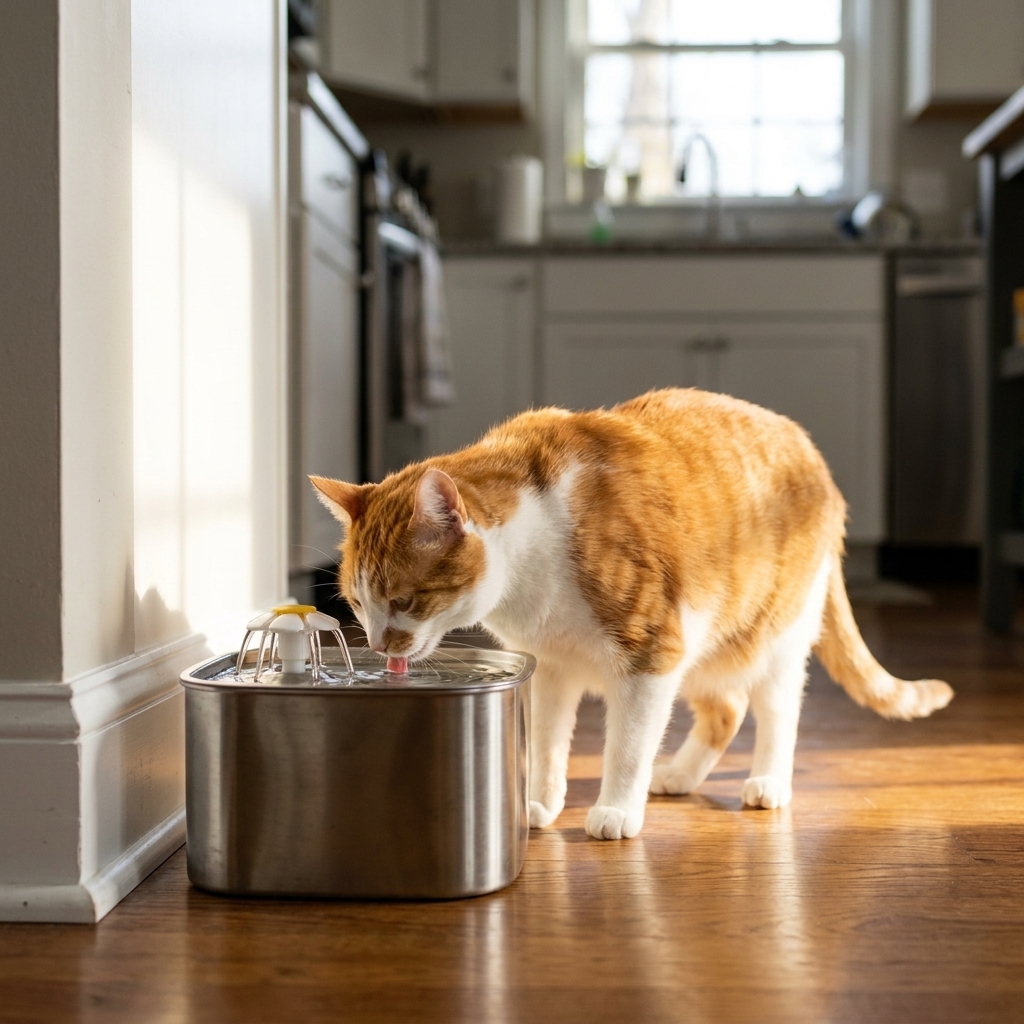
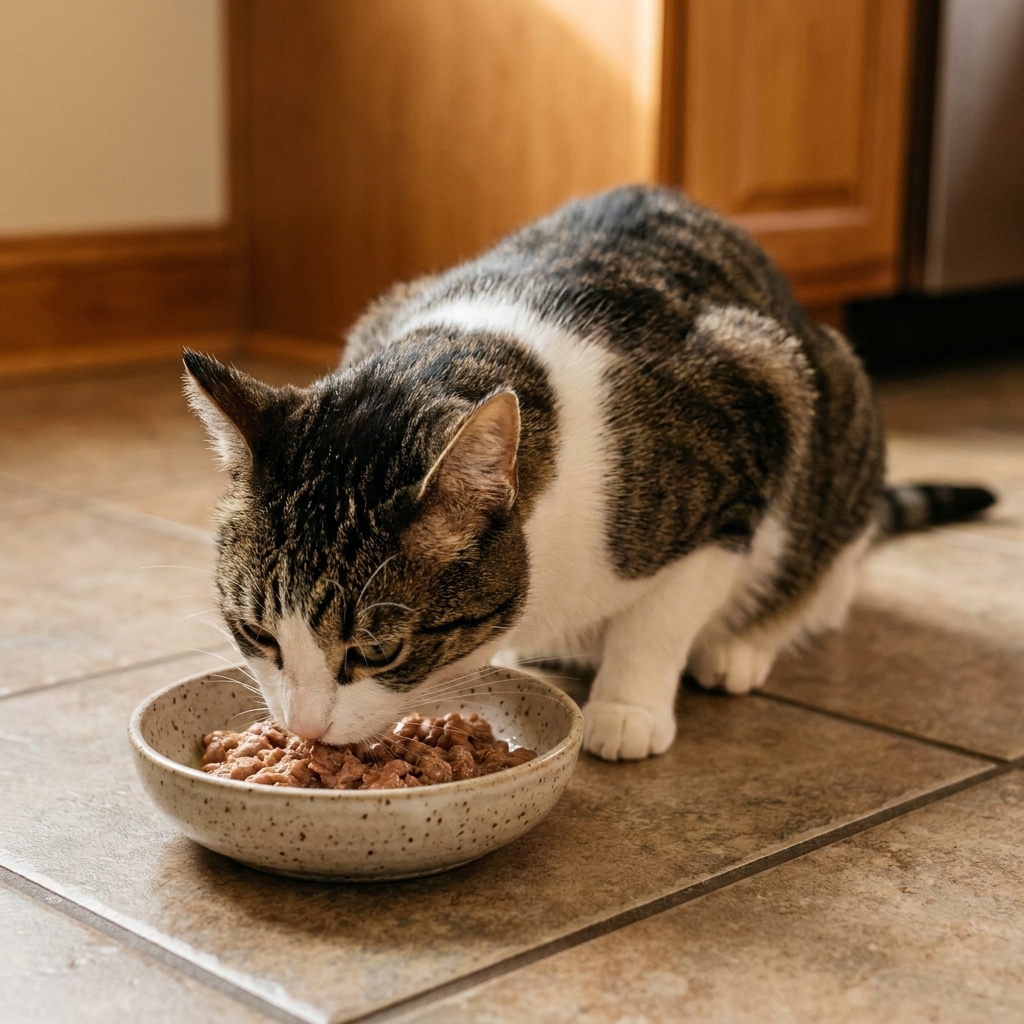
If you have ever stared at your cat’s water bowl like it’s a mystery novel, you are not alone. Many cats often have a lower drive to drink than dogs, and they are famously good at meeting some of their water needs through food. In modern homes, that can matter, because consistently low total moisture intake can contribute to problems like constipation and some lower urinary tract issues.
The good news: most cats can be nudged into better hydration with the right setup and a few strategic habits. Below are my go-to, vet-informed tricks I use with foster cats and client families in my behavior work.
Throughout, I lean on widely used guidance from veterinary and feline-medicine organizations, including the American Association of Feline Practitioners (AAFP) and the International Society of Feline Medicine (ISFM), plus what we know about feline idiopathic cystitis (FIC) and the role stress and environment can play in urinary flare-ups.
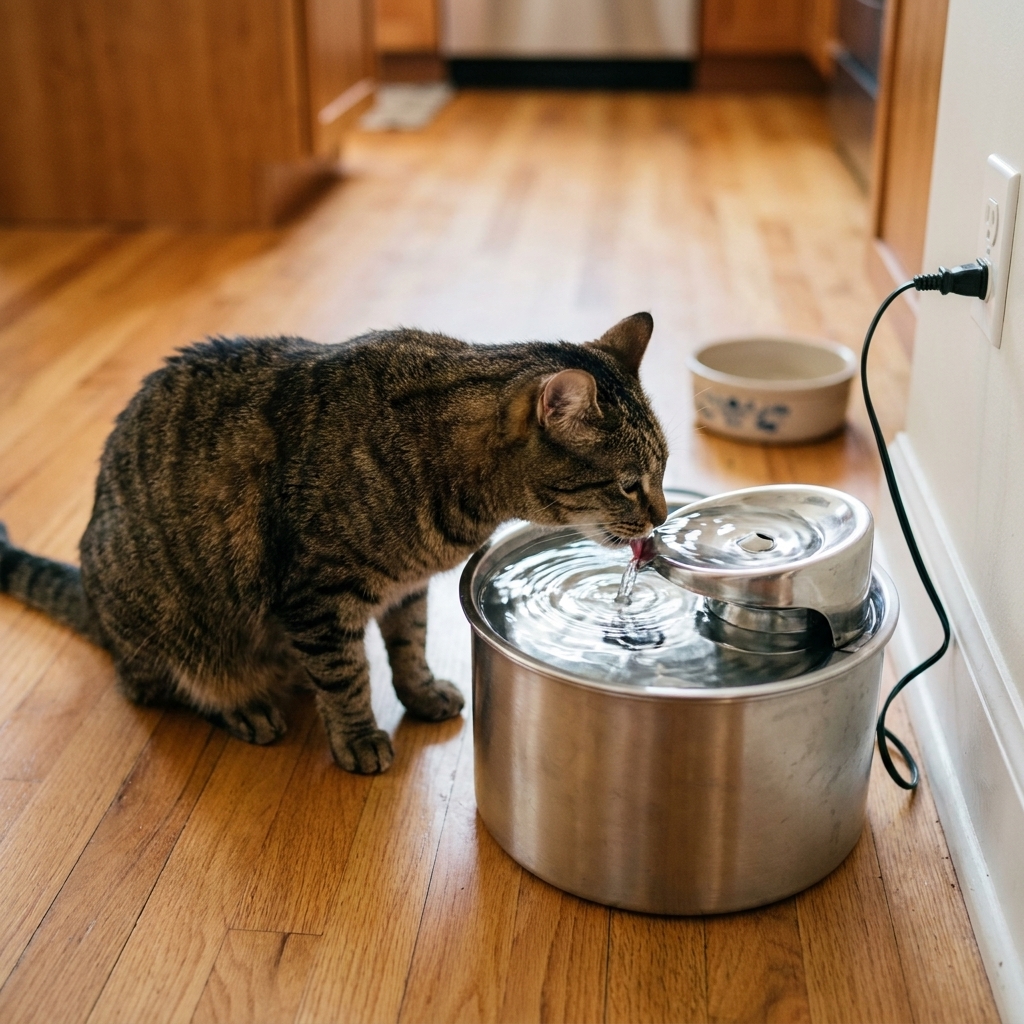
1) Use a water fountain (choose wisely)
Flowing water is more appealing to many cats than still water. Some cats also seem to prefer the taste of circulating, filtered water. A fountain is not magic, but it can be an easy win.
What to look for
- Wide drinking surface: Cats that dislike whisker contact often prefer a wide top tray rather than a narrow spout.
- Stainless steel or ceramic: These are easier to clean thoroughly and tend to hold fewer odors than many plastics.
- Low noise: A loud motor can spook sensitive cats. Quiet fountains get more consistent use.
- Easy to disassemble: If it is annoying to clean, it will not get cleaned often enough.
Make the transition smoother
Set the fountain next to the usual water bowl for a week. Run it for short periods at first if your cat is cautious. Some cats investigate quickly; others need days. Let them set the pace.
2) Put water in the right places
In multi-cat homes and busy households, access and comfort are everything. If the only water is in a high-traffic hallway near the washing machine, some cats will simply opt out.
- Create multiple stations: Aim for at least two water locations, and at least one on each floor.
- Choose calm spots: Think away from loud appliances, heavy kid traffic, or a barking-dog zone.
- Avoid dead ends: Many cats prefer open areas where they can drink and still scan the room, rather than being tucked into a corner.
- Spread resources out: In multi-cat homes, separate water from litter boxes and distribute stations so one cat cannot easily “own” the only route.
If you want a simple rule of thumb borrowed from common multi-cat resource guidance: more is better, and “one per cat plus one extra” is a reasonable starting point for key resources, including water.
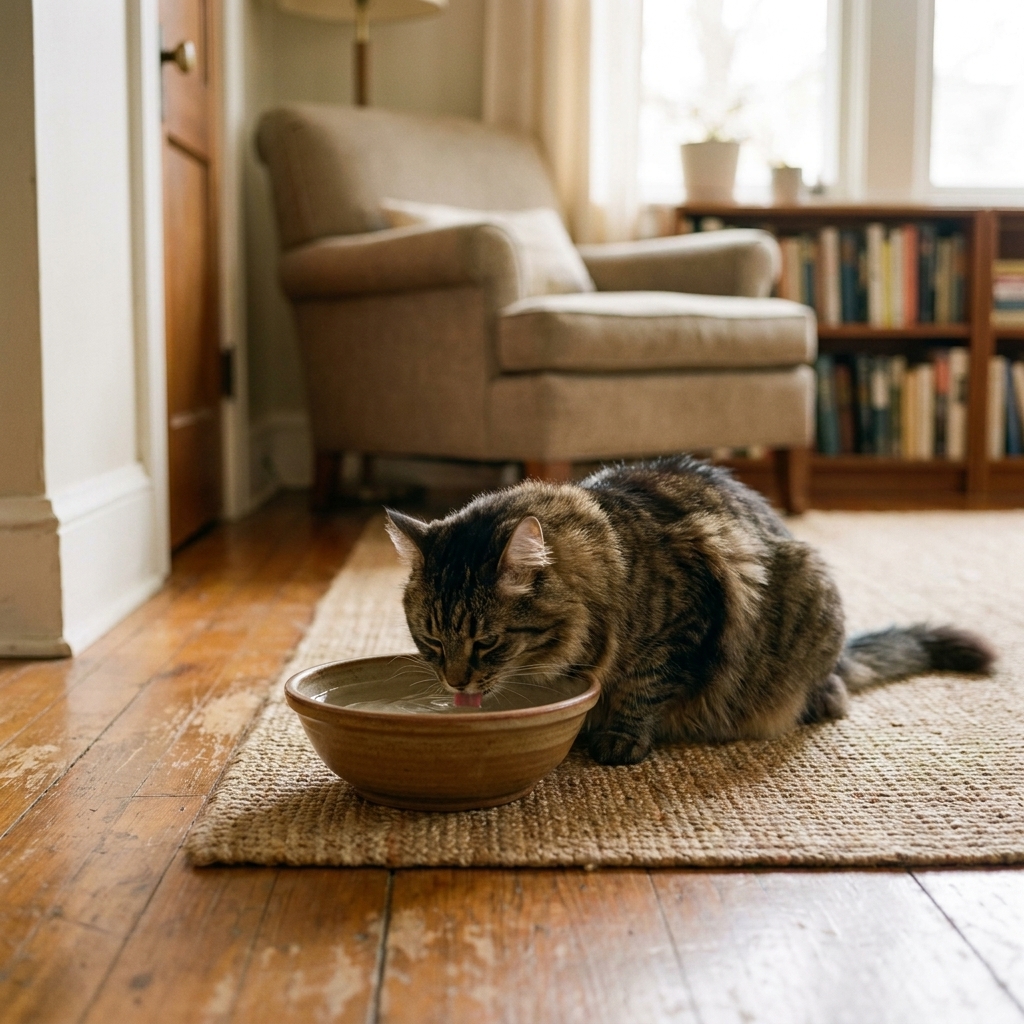
3) Keep water away from food
A surprising number of cats drink more when their water is not right next to their food. Some behaviorists suggest this may reflect an instinct to avoid water near potential contamination.
Move the water bowl (or fountain) a few feet away from feeding areas. If your cat is nervous about change, shift it gradually over several days.
4) Try new bowls
I have watched cats ignore one bowl for months, then happily drink from a different shape like we just served sparkling spring water. The usual culprits are whisker stress, smell, and taste.
- Go wider and shallower: Many cats prefer a broad, shallow dish that does not press on whiskers.
- Test materials: Stainless steel and ceramic are great starting points. If you use plastic, replace it if it gets scratched, since scratches can harbor biofilm.
- Use heavy bowls: Light bowls slide, clang, and can spook cats.
5) Refresh and clean often
Cats have sharp senses. A bowl that smells “fine” to us can smell very off to them. Even clear water can develop a thin biofilm that makes a cat walk away.
- Refresh daily: Dump and refill at least once a day.
- Wash regularly: Aim for daily washing with soap and hot water when you can, especially in hot weather or multi-cat homes. A realistic minimum for many households is several times a week.
- For fountains: Follow the manufacturer’s schedule for filter changes and do a full scrub weekly, including the pump parts where slime builds up.
If you have ever wondered why your cat drinks from the bathtub instead, bowl cleanliness can be one common reason. Location, novelty, cooler surfaces, and a preference for running water can also play a role.
6) Feed more wet food
If I could pick one hydration strategy with the biggest payoff for most cats, it is this: feed more moisture.
Dry food is typically roughly 8 to 12 percent moisture. Canned and pouch foods are often around 75 to 82 percent moisture. Labels vary by brand and recipe, but the overall gap is huge. For cats who are naturally light drinkers, more wet food can meaningfully increase total daily water intake.
Easy ways to do it
- Switch fully to wet food if your cat and budget allow.
- Go half and half: Even one wet meal per day can help.
- Use a slow transition: Mix small amounts of wet into the familiar food and increase over 7 to 14 days to reduce tummy upset.
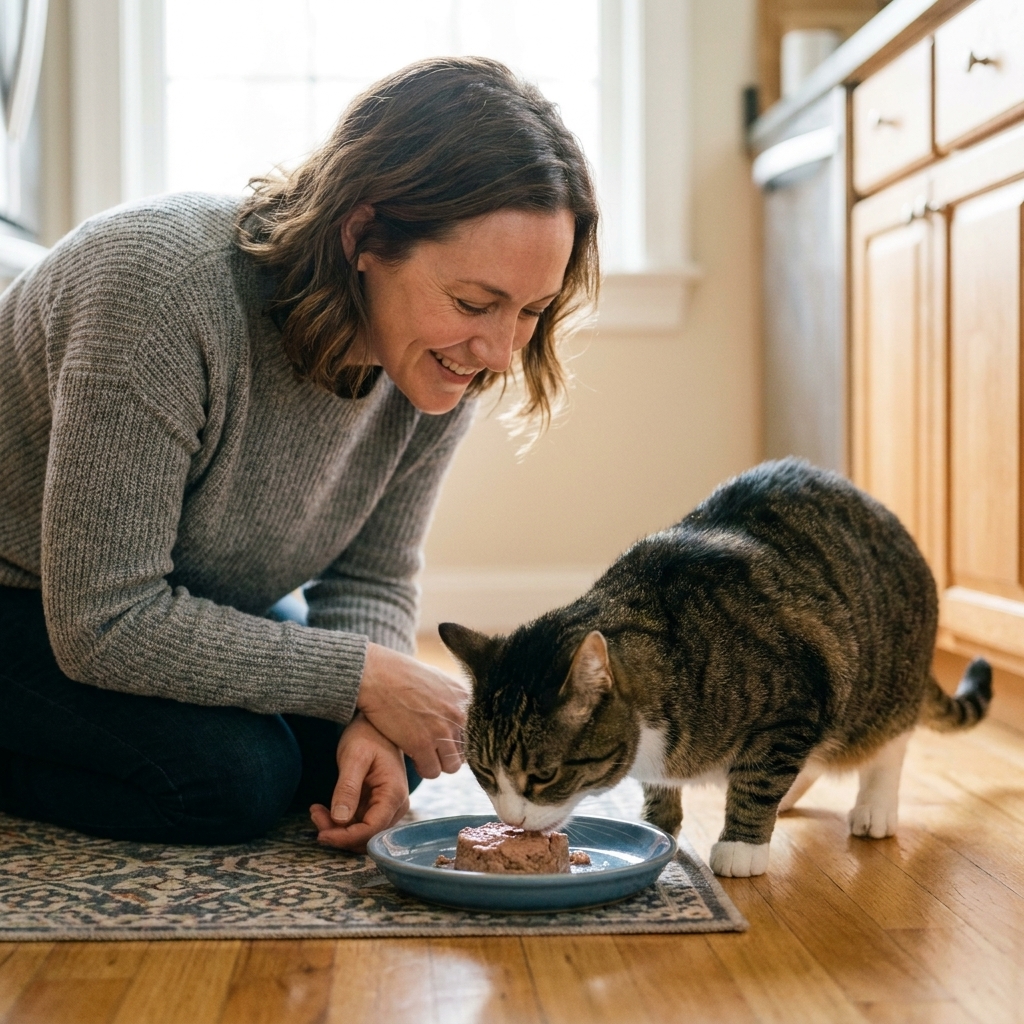
7) Add water or broth to meals
For many cats, drinking from a bowl feels optional, but licking up extra moisture from food feels like a treat. This can be especially useful for cats prone to constipation or lower urinary tract flare-ups, and it is a solid preventative habit for a lot of households.
What to add
- Plain water: Start with 1 to 2 teaspoons mixed into wet food and work up to a soupier texture.
- Cat-safe broth: Choose broth made for pets or use homemade, unseasoned meat broth. Avoid onion and garlic, which are toxic to cats. Be cautious with store-bought broths, even “low sodium” versions, since they can still be salty for cats.
- Water from tuna packed in water: An occasional splash can entice picky cats. It may be higher in sodium than plain water, and for some cats it can reinforce picky preferences, so I keep it as an occasional topper.
Tip from my home: Clementine likes her wet food stew-like. Waffles prefers a thinner gravy texture. Cats are nothing if not specific.
If your cat has a medical condition where fluid goals matter (for example, heart disease or advanced kidney disease), or if you are using a prescription diet, ask your vet how to adjust moisture without disrupting the plan.
8) Offer low-pressure water extras
Some cats drink more when water is presented in a novel way. Think of it like enrichment for hydration.
- Ice cubes in a bowl: A few cats love batting them and licking the meltwater.
- A second “special” cup: A wide, stable glass or mug can be oddly appealing. Place it on the floor or a safe counter spot you allow.
- Redirect sink obsession: If your cat begs for the faucet, a small fountain can satisfy the running-water preference more safely and consistently.
Keep it low-pressure. We are aiming for curiosity, not conflict.
9) Lower stress in multi-cat homes
Hydration is not just about water. It is about whether your cat feels safe enough to drink. Stress is closely associated with feline idiopathic cystitis (FIC), a common cause of urinary signs in cats, and improving the environment is a core part of management in many veterinary guidelines.
Signs water access might feel stressful
- One cat hovering near the kitchen or doorway when another tries to drink
- Only drinking at night when the home is quiet
- Reluctance to drink unless a person is present
What helps
- Add more water stations: Spread them out so no one cat can guard them all.
- Improve traffic flow: Place bowls where cats have more than one escape route.
- Increase enrichment: Play sessions, climbing spaces, scratching options, and predictable routines can lower overall stress.
Is your cat drinking enough?
There is no perfect one-size-fits-all number, because water needs vary with diet (wet vs dry), temperature, activity, and health conditions. Instead of fixating on ounces, focus on trends and overall hydration.
Ways to gauge intake
- Mark the level: Use a piece of tape or a washable marker line on a bowl or reservoir and check it at the same time each day.
- Track the context: Wet-fed cats may drink less from the bowl because they are getting more moisture from food.
- Watch litter box output: Changes in urine clump size or frequency are often more useful than guessing what was consumed.
Green flags
- Normal energy and appetite
- Urine clumps that are a typical size for your cat, with regular urination
- Gums that look moist, not tacky or dry
Red flags to call a vet
- Straining to urinate, frequent trips, or crying in the box: This can be an emergency, especially in male cats.
- Sudden increase in thirst with larger pee clumps: can be a sign of kidney disease, diabetes, or hyperthyroidism.
- Sudden decrease in drinking plus lethargy, vomiting, or poor appetite.
- Constipation or very small, infrequent stools.
If you are ever unsure, bring a short log to your vet: what diet your cat eats, what you have tried, and any changes in litter box output. That context is incredibly helpful.
If your cat refuses the fountain
- Try a different stream style: Some cats prefer a bubbling top, others prefer a gentle spout.
- Check the noise: If the pump hums loudly or vibrates, place it on a silicone mat and ensure the water level is high enough.
- Deep clean: A slimy pump or stale filter can create smells cats hate.
- Offer both: Keep a regular bowl available too. Choice reduces stress and encourages experimentation.
A few quick don’ts
- Do not restrict water to try to “encourage” drinking later.
- Avoid salty or seasoned broths and never use onion or garlic in anything you add to food.
- Skip strong cleaners, essential oils, or scented products near bowls and fountains. Many cats avoid smells we barely notice.
Bottom line
Helping your cat hydrate is not about winning in one day. It is about stacking small advantages: better water presentation, cleaner bowls, more access points, and most importantly, more moisture in food.
If your cat has a history of urinary crystals, bladder inflammation, constipation, or kidney disease, talk with your veterinarian about a hydration-forward plan and whether a urinary or kidney-support diet is appropriate. Earlier support tends to mean fewer surprises later, and a more comfortable cat.