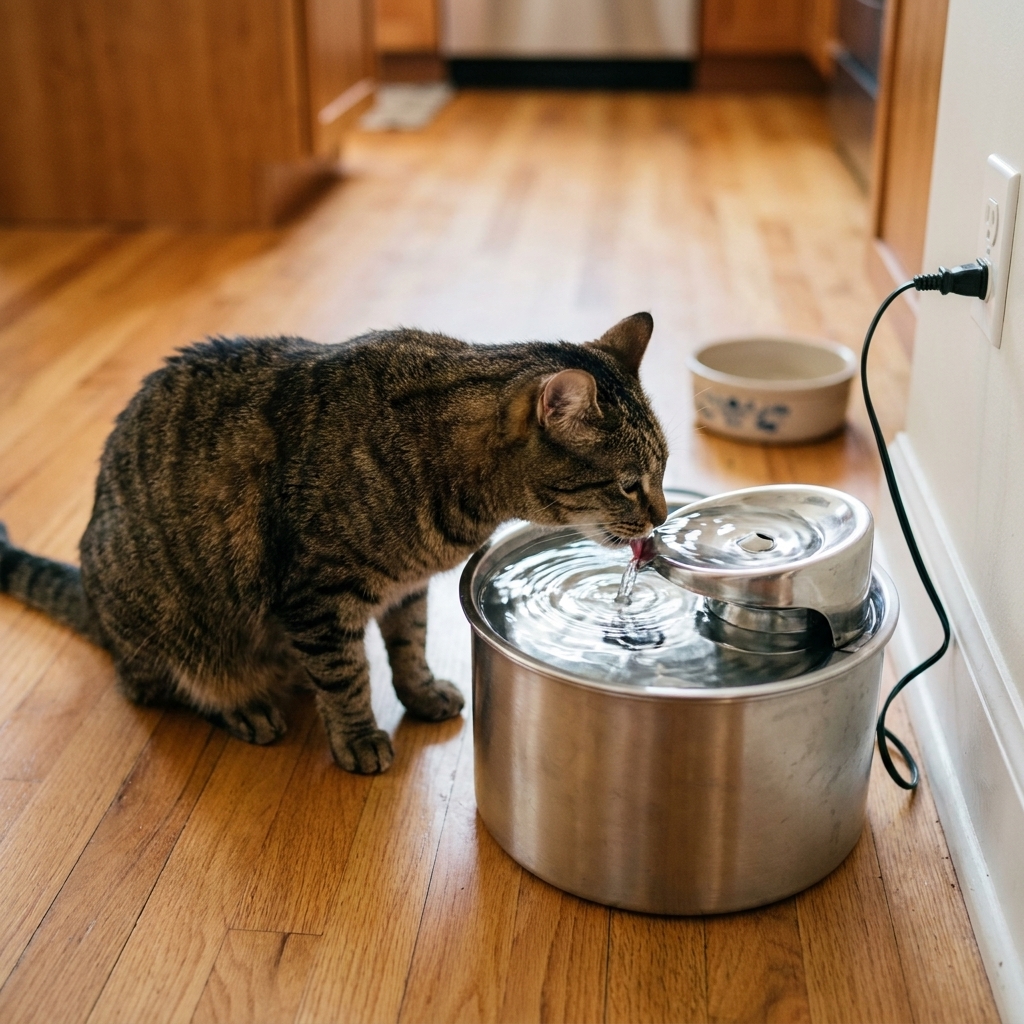
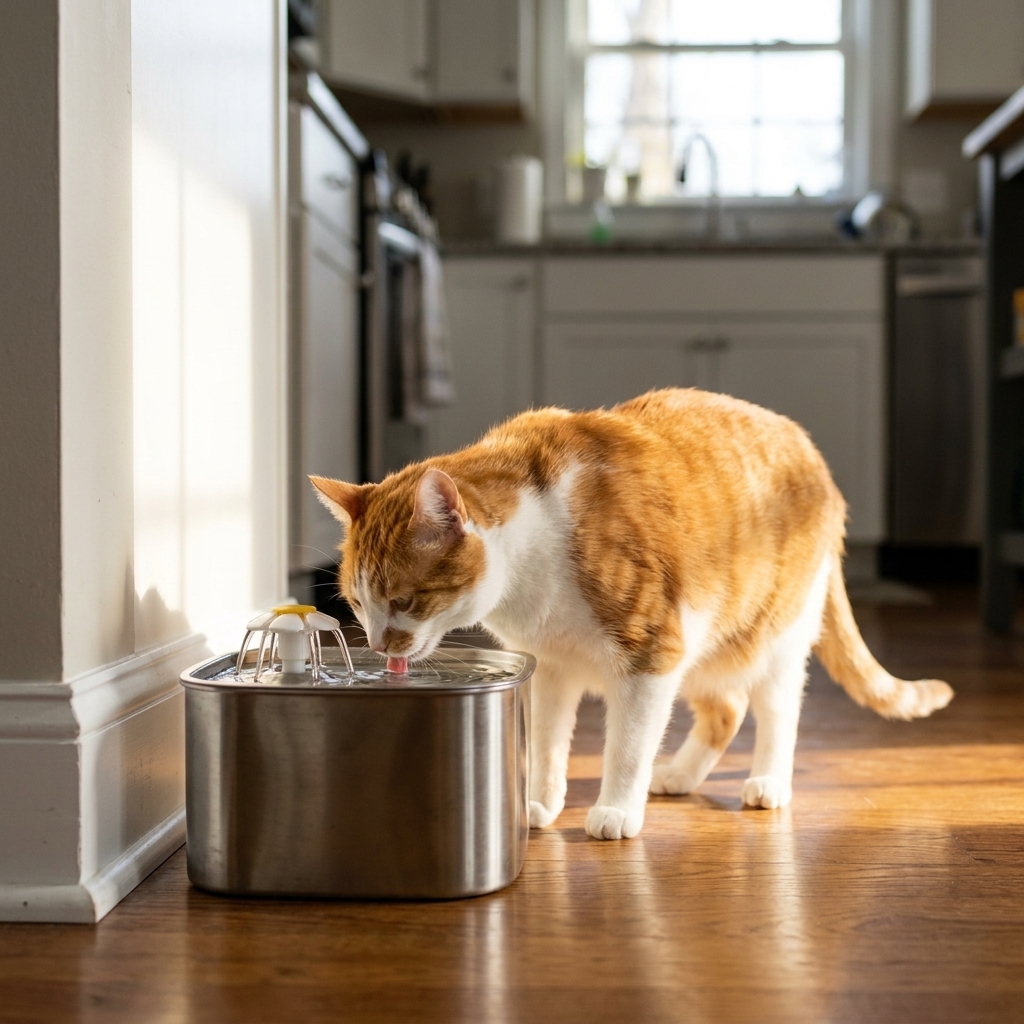
If you have ever caught your cat trying to sip from the faucet, pawing at a dripping tub, or ignoring a perfectly clean water bowl like it offended them personally, you are in excellent company. Many cats are drawn to moving water, and a well-chosen fountain can be a simple daily-care upgrade that supports hydration and can make life easier for you, too.
As a foster coordinator, I used fountains constantly for cats who were prone to constipation, had a history of urinary trouble, or were just stubborn drinkers. In my own house, Clementine treats still water like a bad idea, and Waffles will drink anything as long as it makes a quiet gurgling sound. A fountain is not magic, but for a lot of cats it is a very practical nudge toward drinking more.
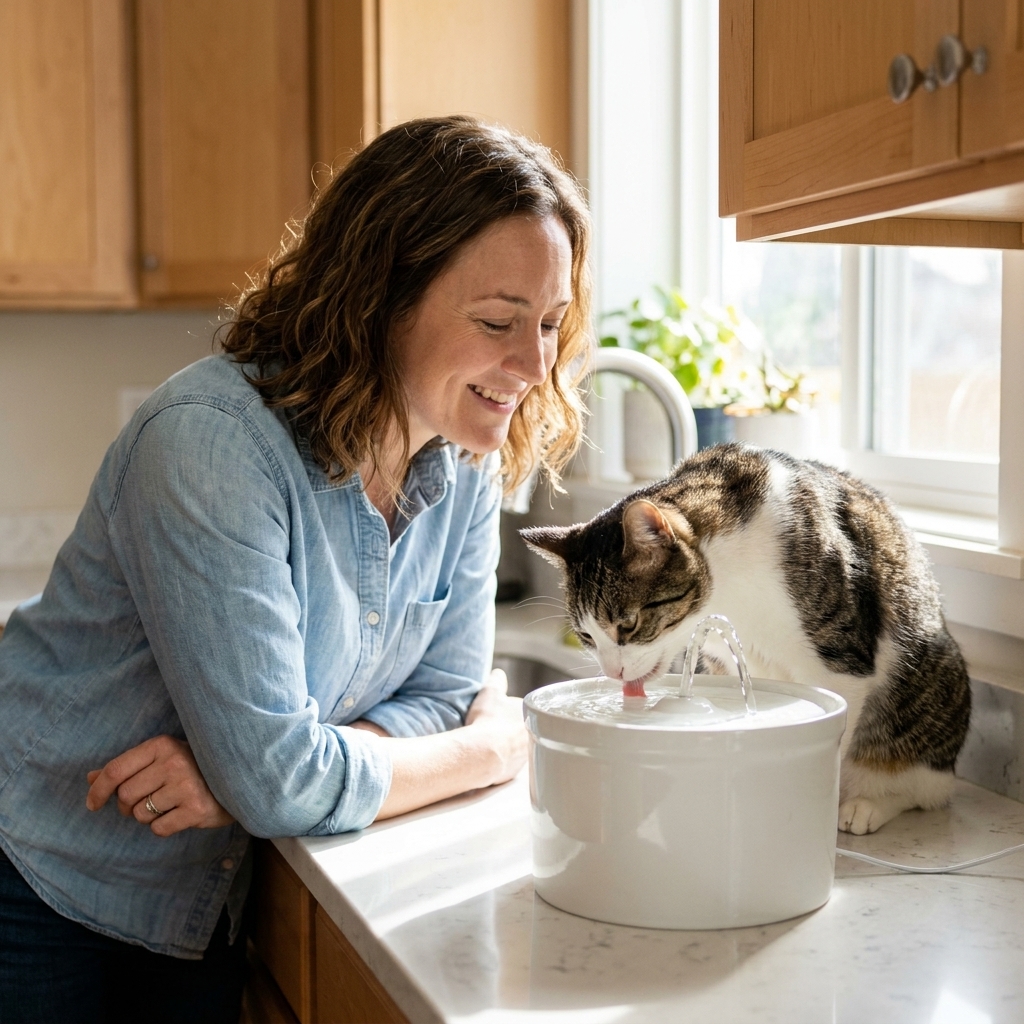
Why running water appeals to cats
Domestic cats descended from wildcats that were well-adapted to arid environments, and many cats have a lower thirst drive than you might expect, especially when they eat mostly dry food. Individual cats vary a lot, but it helps explain why some need a little encouragement to drink.
In nature, standing water can be riskier than fresher sources, so plenty of animals, cats included, show a preference for water that looks, sounds, or tastes clean.
A fountain helps by:
- Keeping water circulating, which can make it more appealing.
- Reducing stagnant or “stale” water, especially in warm rooms.
- Adding sound and motion that some cats find interesting or reassuring.
- Filtering out debris like hair, dust, and kibble crumbs that quickly end up in open bowls.
Not every cat cares, but many do, and you usually find out within the first week.
Health benefits of a water fountain
The biggest benefit is straightforward: more water in generally means better hydration overall. When cats drink a bit more consistently, it can support multiple body systems.
Urinary tract support
Hydration helps dilute urine. For cats prone to urinary crystals, stones, or idiopathic cystitis, encouraging water intake is often part of a veterinarian’s prevention plan. A fountain can be one piece of that plan, alongside diet changes and stress reduction.
Kidney support (especially for seniors)
Kidneys rely on good hydration to do their job. A fountain does not treat kidney disease, but for older cats who drink better from moving water, it can help you keep hydration more consistent. If your cat has kidney disease, work with your vet on a full strategy including diet and monitoring.
Constipation and hairball support
Many constipated cats are quietly under-hydrated. Getting even a small increase in daily water intake can help stool move more comfortably. It also helps some cats pass ingested hair more easily, though brushing and diet matter a lot here too.
Better day-to-day drinking habits
Even when there is no medical issue, a fountain can reduce the “I guess I will drink later” pattern. This is especially useful in multi-cat homes where one cat likes to guard the water bowl.
One practical note: fountains can make it harder to tell exactly how much your cat is drinking. If you are monitoring intake for urinary or kidney reasons, measure what you pour in each day (or mark the fill line) so you can track trends and share them with your vet.
Do all cats need a fountain?
No. Some cats drink perfectly well from a bowl, especially cats eating a high-moisture wet diet and cats who already have multiple water stations around the home.
A fountain is most worth trying if:
- Your cat rarely drinks and eats mostly dry food.
- You often see concentrated, strong-smelling urine in the litter box.
- Your cat begs for faucet water or plays in the bowl.
- You have a cat with a history of urinary issues, constipation, or recurrent dehydration concerns (with your vet’s guidance).
- You have multiple cats and want to reduce resource guarding.
If your cat is suddenly drinking a lot more than usual, skip the fountain shopping for a moment and call your veterinarian. A change in thirst can signal medical problems that need attention.
How to choose the right cat water fountain
There are dozens of fountains that look similar online, but a few features truly matter for cat safety and for your sanity.
1) Material: stainless steel, ceramic, or plastic?
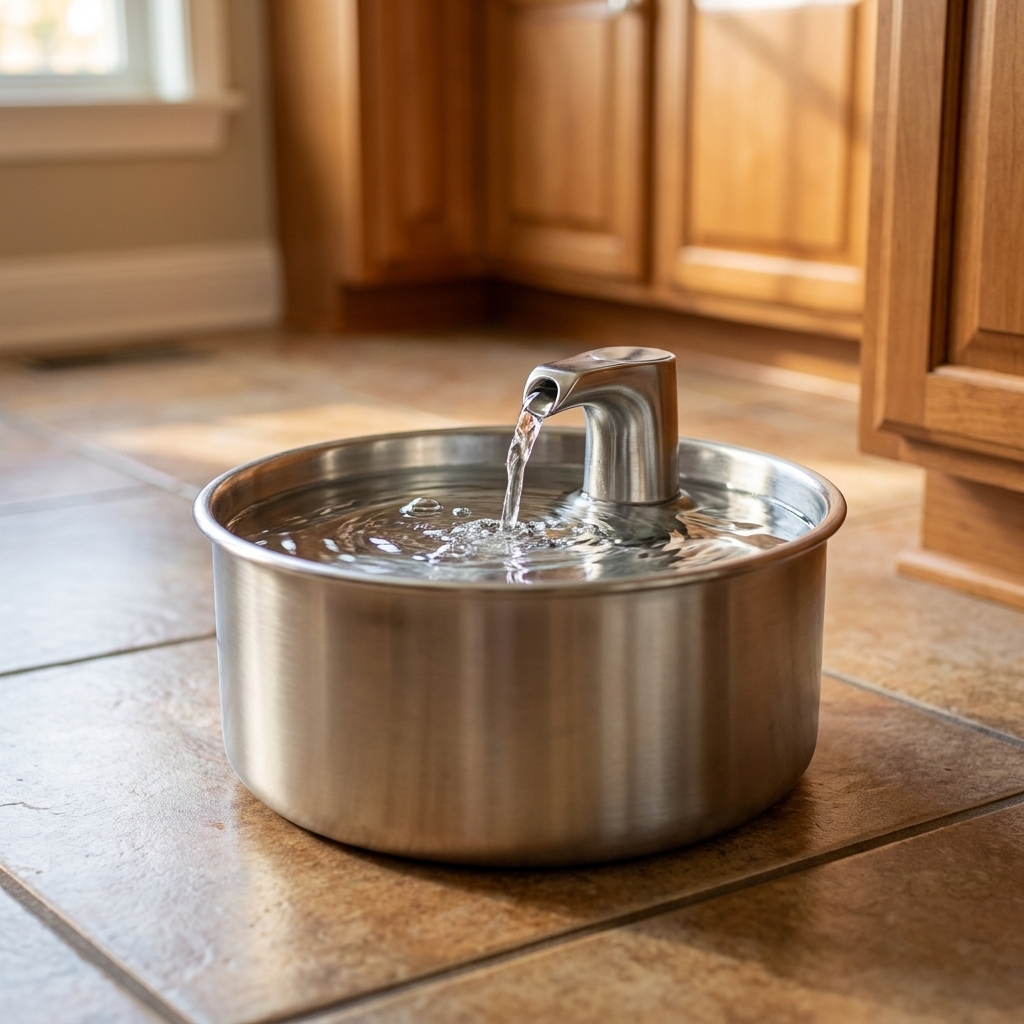
- Stainless steel is my top pick for most homes. It is durable, easy to sanitize, and less likely to develop micro-scratches that can harbor bacteria.
- Ceramic is also excellent if it is high-quality and lead-free. It is heavier, which some cats prefer because it does not slide. It can chip if dropped.
- Plastic is light and often cheaper, but it scratches more easily over time. Some cats also seem more prone to chin acne with plastic bowls and fountains, although hygiene and cleaning frequency are usually the bigger drivers. If you use plastic, replace it when you see scuffs, cloudiness, or persistent odors.
2) Filter type and replacement cost
Most fountains use one or more filters, commonly:
- Carbon filters to improve taste and reduce odors.
- Foam or mesh pre-filters to catch hair and debris before it reaches the pump.
Before you buy, check that replacement filters are easy to find and reasonably priced. A fountain with hard-to-source filters becomes a very expensive bowl.
3) Easy cleaning (this is the deal-breaker)
The best fountain is the one you will actually keep clean. Look for:
- Few parts and wide openings where gunk cannot hide.
- Dishwasher-safe components (at least the bowl and top pieces).
- Minimal crevices around spouts and lids.
In rescue, we avoided fountains with complicated towers or tiny channels. They look sleek, but they are the first to develop biofilm if you miss a cleaning.
4) Pump quality and noise level
Some cats hate a loud motor or a vibrating base. Some humans do too. If your cat is easily startled, choose a model known for a quieter pump and a stable, heavier base. Also make sure the fountain can run at the water level you will realistically maintain. Many pumps get noisy when water runs low.
5) Capacity and refill frequency
Bigger is not always better. A large fountain can hold more water, but if it is bulky you may clean it less often.
- One cat: a small to medium capacity fountain often works well (roughly 1.5 to 2.5 liters, depending on your refill habits).
- Two or more cats: medium to large capacity can reduce refills and squabbles (often around 2.5 to 3.5 liters).
Regardless of size, top off with fresh water regularly. Cats notice.
6) Design: stream, bubble, or spout?
Cats have preferences. If your cat loves the faucet, they may prefer a gentle stream. If your cat is cautious, a quieter bubbling surface may feel safer.
If you are unsure, choose a fountain that offers multiple flow attachments so you can experiment without buying a second unit.
7) Cord safety and placement options
Pick a setup that fits your home. Ideally the cord is protected and the fountain sits on a washable mat. Place it away from litter boxes and, for many cats, away from food bowls. Some cats strongly prefer their water station separate from meals.
For electrical safety, keep the plug off the floor if you can, avoid placing cords where they can sit in water, and do not use damaged cords. If a GFCI outlet is available in the area, it is a smart choice.
Where to place a cat water fountain
Placement can make or break fountain success. Aim for a spot that is calm, easy to access, and not trapped in a corner.
- Quiet and low-traffic: away from slamming doors and noisy appliances.
- Not next to the litter box: most cats prefer distance.
- Give an exit route: avoid tight corners where a cat might feel ambushed.
- Add multiple stations in multi-cat homes: two smaller stations can beat one big one if you have tension between cats.
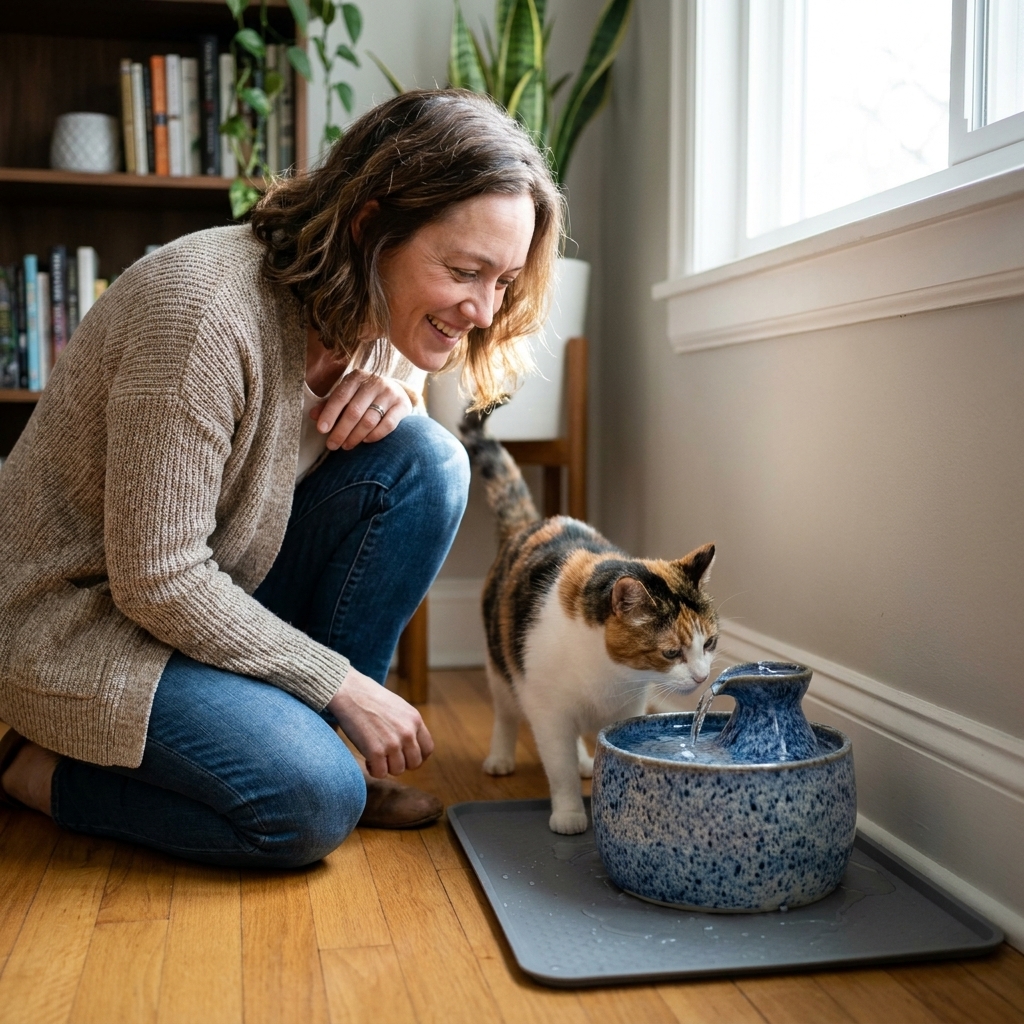
How to transition your cat to a fountain
Some cats stroll up and drink immediately. Others treat the fountain like suspicious new furniture. Here is a gentle, low-stress transition plan.
Step 1: Run it next to the current bowl
Keep your cat’s usual water bowl available. Set the fountain nearby and let them investigate without pressure.
Step 2: Make it smell familiar
If your cat is wary, rub a clean cloth on their cheeks (where facial pheromones are) and then lightly wipe the outside of the fountain base. Keep everything clean and dry around the water itself.
Step 3: Encourage curiosity, not forced drinking
Try a few treats placed near the fountain or a short play session in the same room. Avoid putting treats directly in or on the drinking surface.
Step 4: Slowly fade the old bowl
Once you see consistent drinking from the fountain for several days, you can remove the old bowl or move it farther away. In multi-cat homes, I often keep an additional water station in a second location anyway.
Cleaning and maintenance
Fountains are great, but they are not set-it-and-forget-it. The combination of saliva, food particles, and room temperature can create biofilm if you let it slide.
A realistic routine
- Daily: top off with fresh water, rinse obvious debris, and make sure flow is normal.
- Every 3 to 7 days: wash the fountain parts with hot soapy water, rinse thoroughly.
- Every 2 to 4 weeks: deep clean the pump and replace filters as directed by the manufacturer (sooner if you have multiple cats or lots of hair).
How often you need to scrub depends on the model, how many cats you have, and your water (hard water can cause faster mineral buildup). Use a small brush set dedicated to pet dishes to scrub tight areas around the pump and spout. If you ever notice slimy buildup, take the fountain apart that day and do a full clean.
Hard water and mineral buildup
If you see a white, chalky film, you are dealing with mineral scale. Many homes can safely descale fountain parts with diluted white vinegar, then rinse extremely well and wash again with dish soap before reassembling. If your fountain brand gives specific instructions, follow those first.
Common problems and quick fixes
“My cat is scared of it.”
Try a quieter flow setting, move it to a calmer room, and let your cat approach at their own pace. You can also start with the fountain turned off, using it as a still bowl for a day or two, then switch it on.
“My cat keeps splashing water everywhere.”
Choose a lower-profile design with a gentler bubble rather than a tall spout. Place it on a waterproof boot tray or silicone mat. Some splashers do better with a heavier ceramic unit they cannot tip.
“The pump is loud.”
First check the water level. Most pumps get noisy when low. If the fountain is full and still loud, clean the pump and check for hair wrapped around the impeller.
“My cat still does not drink much.”
A fountain helps many cats, but not all. Increase water stations, try different bowls, and consider adding wet food if appropriate. If you are worried about hydration, ask your vet about your cat’s ideal plan based on age, diet, and health history.
Safety notes
- Monitor intake changes: sudden increases or decreases in drinking are medical clues.
- Keep cords tidy: use cord covers if your cat likes to chew, and replace frayed cords.
- Do not rely on filters alone: filters improve water quality, but they do not replace washing.
- Households with immunocompromised pets or people: you may want to prioritize stainless steel or ceramic and a stricter cleaning routine. For household-specific precautions, check in with your veterinarian and, for humans, your physician.
FAQ
Is a cat water fountain better than a bowl?
It can be. For cats who prefer moving water, a fountain often increases drinking and keeps water fresher between refills. A clean bowl is still a perfectly valid option if your cat drinks well from it.
Do fountains help prevent urinary crystals?
Hydration can help dilute urine, which is important for urinary health. But crystals have multiple causes, including diet, urine pH, stress, and genetics. If your cat has a urinary history, talk with your veterinarian about a full prevention plan.
How often should I change the water in a fountain?
Top it off daily and refresh it regularly. Even with a filter, most homes do best with a full dump and refill during your weekly wash, or more often if you have multiple cats.
Should I get one fountain per cat?
Not necessarily, but you should have enough water access points to prevent blocking or guarding. In many multi-cat homes, two water stations in different locations is the sweet spot, whether that is two fountains or a fountain plus a bowl.
My bottom line
If your cat is a reluctant drinker, eats mostly dry food, or has any history of urinary or constipation issues, a water fountain is one of the simplest upgrades you can try at home. Choose a model that is easy to clean, made from stainless steel or ceramic when possible, and has affordable filters. Then place it thoughtfully and keep it fresh.
Your goal is not to make your cat drink. It is to make drinking the easy choice. Most cats will meet you halfway once the water tastes and feels right.