Many stressed cats do not “act stressed” in an obvious way. They get quieter. Tighter. A little more vigilant. You might notice them choosing the back of the room instead of the couch, pausing before walking through a doorway, or watching normal household sounds like they are waiting for something bad to happen. And because cats are masters of masking discomfort, stress can simmer for weeks before it shows up as a problem you cannot ignore, like litter box accidents or a surprise swat.
The good news: once you know what to look for, you can usually improve things quickly with the right environment tweaks, predictable routines, and a little detective work. Below are seven common (and often subtle) signs of feline stress and anxiety, plus what I typically do with my own rescues, Clementine and Waffles, and with foster cats who arrive convinced the world is out to get them.
First, a quick reality check
Stress is not “bad behavior.” It is communication. A stressed cat is telling you they do not feel safe, do not feel well, or cannot predict what will happen next.
Also, stress and medical problems overlap. If your cat’s behavior changed suddenly, or you are seeing appetite changes, vomiting, diarrhea, weight loss, pain, or litter box issues, call your vet. Urinary issues in particular can become urgent fast, especially for male cats.
Stress or just personality?
This is where people get stuck, so I like to anchor everything to one question: is this a change from your cat’s baseline?
- A naturally shy cat who prefers the bedroom may be perfectly fine.
- A social cat who suddenly avoids you, stops greeting people, or startles at everything is waving a big flag.
- A cat who has always eaten like a vacuum is different from a cat who suddenly starts bolting meals.
You are not looking for one “symptom.” You are looking for a pattern, especially if it is new.
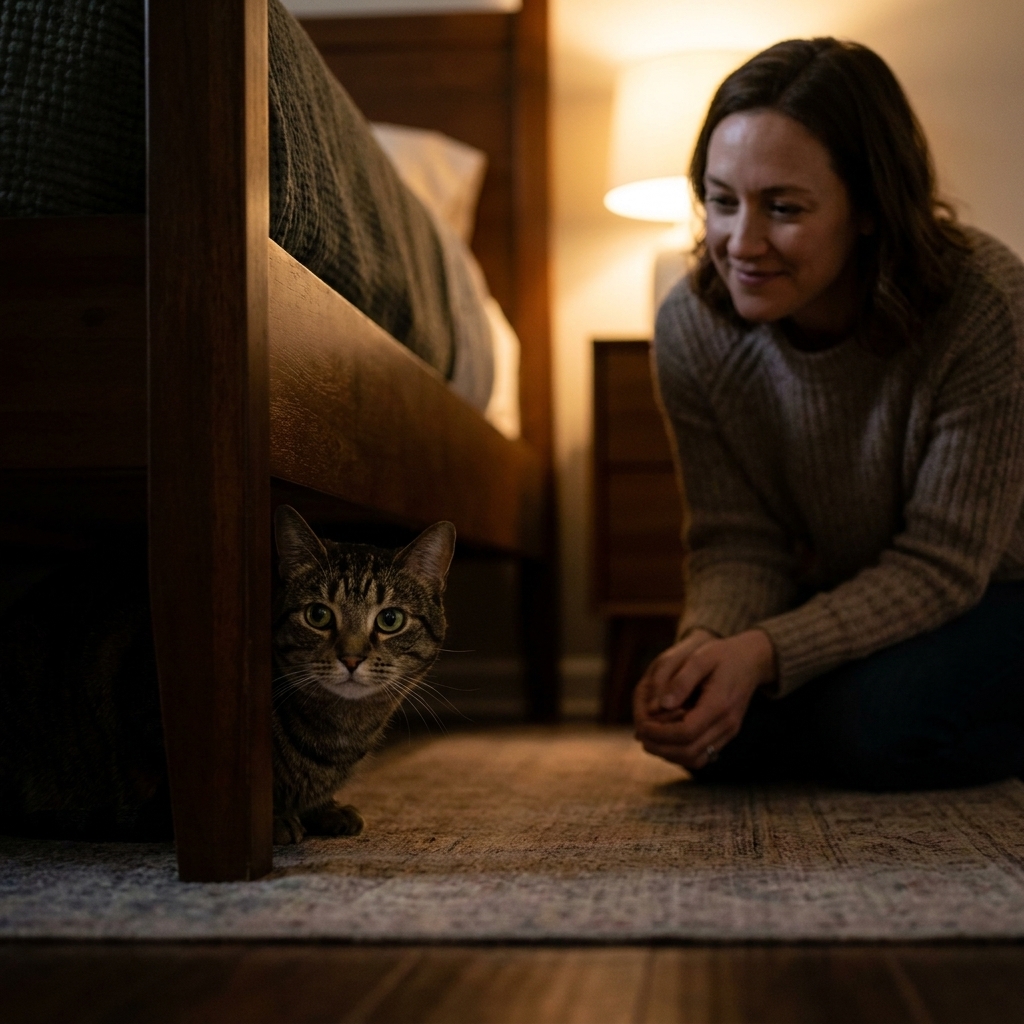
Sign #1: Hiding more than usual
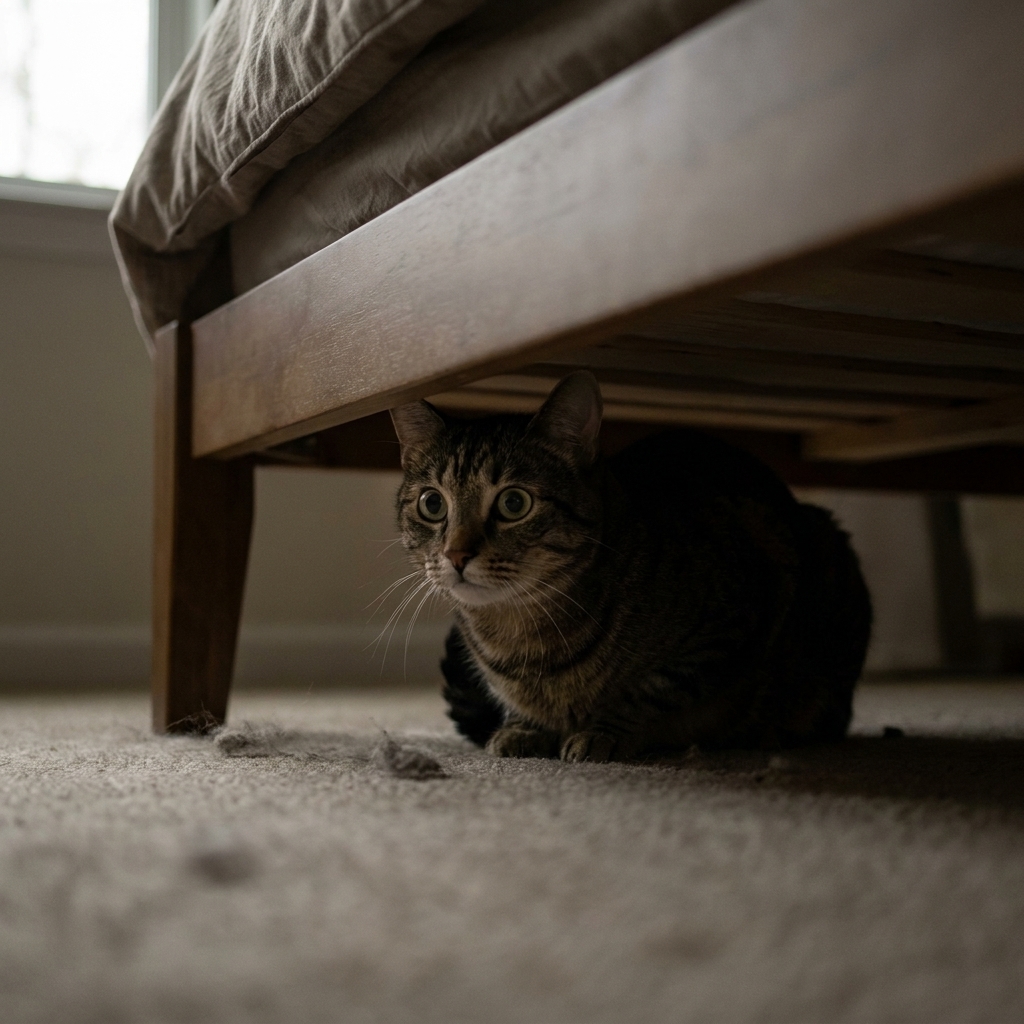
Some cats are introverts, and that is fine. What I am watching for is a change: a social cat who suddenly lives in the closet, or a shy cat who now hides for hours longer than normal.
What it can look like
- Staying under beds or behind furniture when the home is quiet
- Skipping meals to avoid leaving a “safe spot”
- Freezing when approached rather than moving away
How to calm them
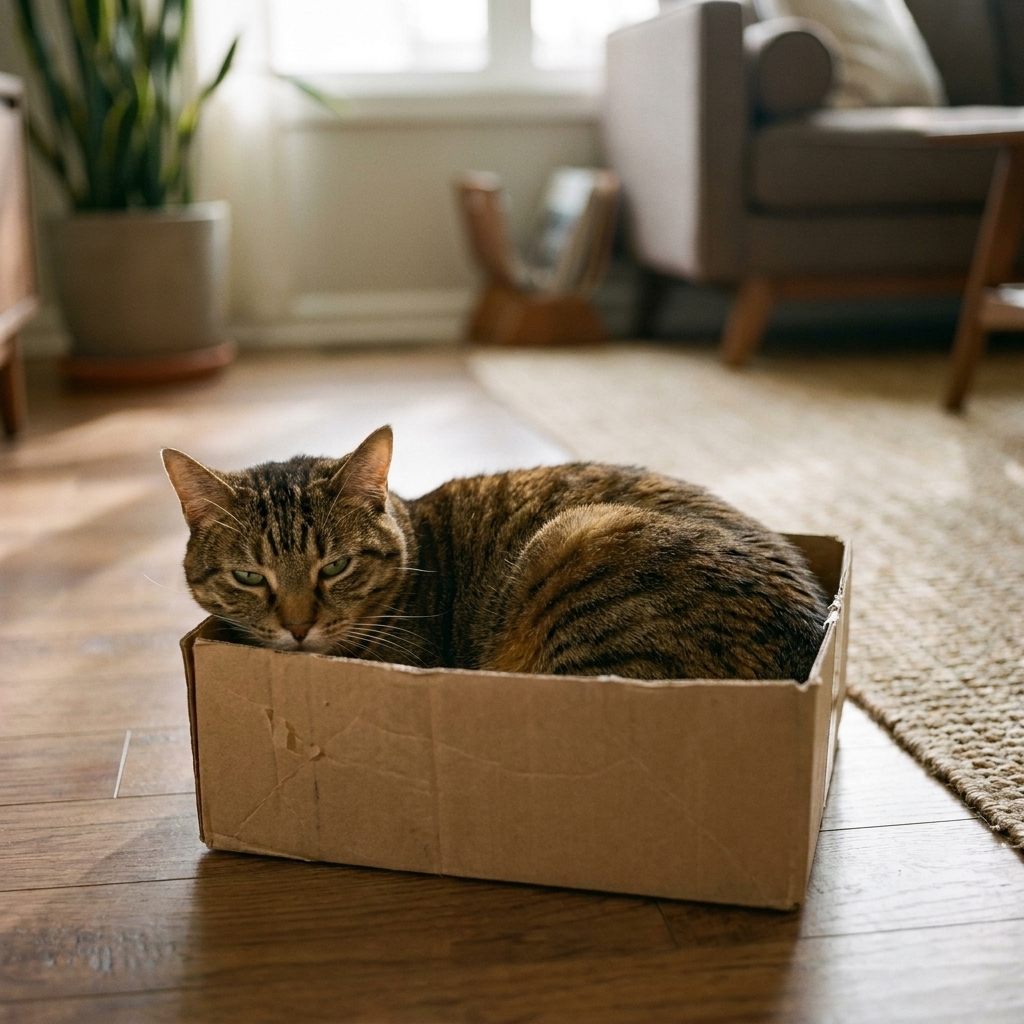
- Create “legal” hiding options: covered beds, cardboard boxes on their side, or a cat cave in a quiet corner. When cats have acceptable hiding spots, they usually hide less.
- Build vertical safety: add a cat tree or wall shelves so your cat can observe from above. Height makes many cats feel secure.
- Use gentle invitations, not forced contact: sit on the floor nearby, toss treats past them (not at them), and let them choose to approach.
Sign #2: Excessive grooming or sudden overgrooming
Cats groom to self-soothe, so stress can turn normal grooming into a coping mechanism. Over time, this can become compulsive.
What it can look like
- Licking one area repeatedly (often belly, inner thighs, or forearms)
- Thinning hair, broken hairs, or bald patches
- Red or irritated skin
How to calm them
- Rule out medical causes: allergies, pain, fleas, and skin infections can all trigger licking. Also note that orthopedic pain (like back, hip, or knee discomfort) can cause very focused licking even when the skin looks normal. If you see hair loss, skin irritation, or a sudden new grooming hotspot, involve your vet.
- Add predictable daily enrichment: two to three short play sessions (5 to 10 minutes) can lower baseline stress.
- Increase “foraging”: puzzle feeders, treat balls, or tossing kibble down a hallway gives the brain something productive to do.
Sign #3: Changes in appetite or eating style
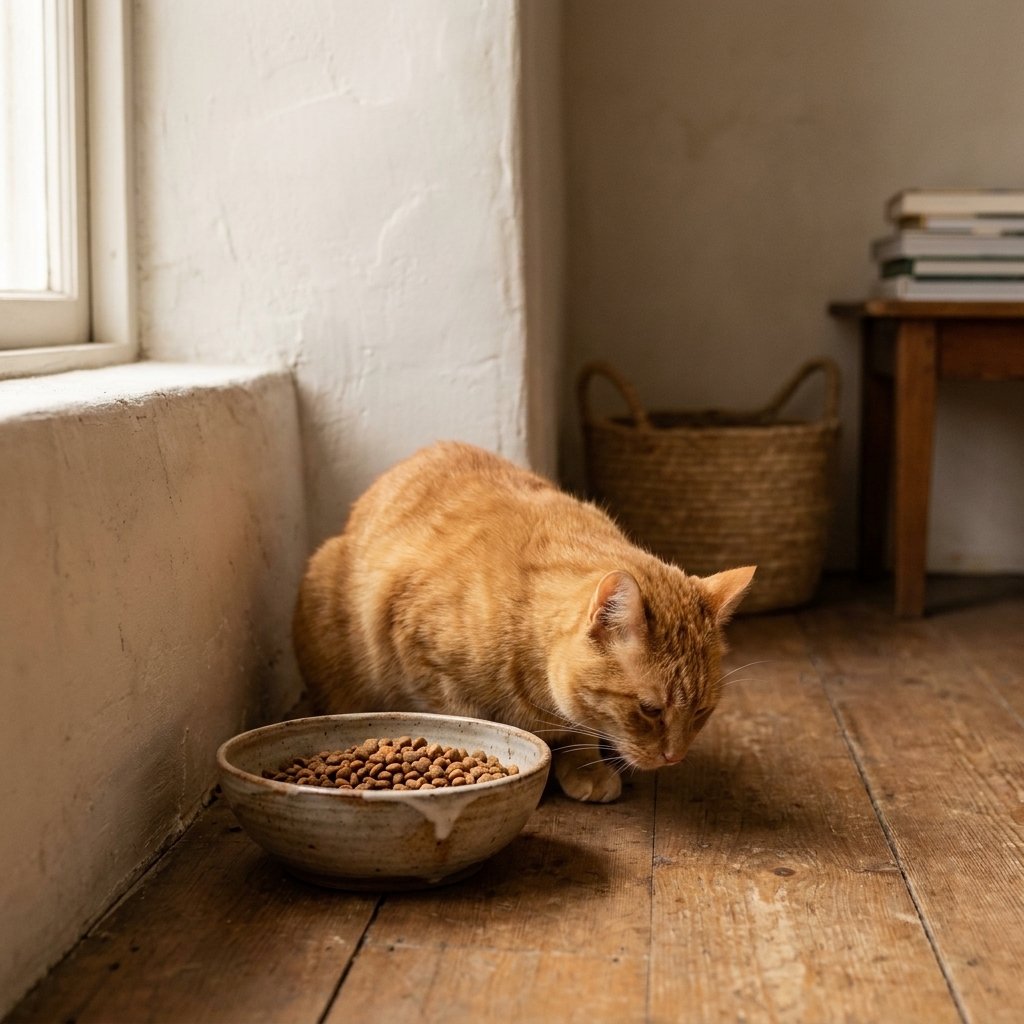
Stress can reduce appetite, but it can also cause “drive-by snacking,” where a cat grabs a few bites quickly and leaves, then returns later when they feel safer. Some cats also start guarding the bowl like it is a treasure.
What it can look like
- Eating significantly less or skipping meals
- Bolting food faster than usual
- Only eating when you are present, or only at night
How to calm them
- Protect mealtimes: feed in a quiet area away from foot traffic and other pets. Many cats relax when they can eat with their back to a wall.
- Separate resources in multi-cat homes: multiple feeding stations reduce pressure and competition.
- Keep routine boring in the best way: same general times, same safe location, minimal chaos during meals.
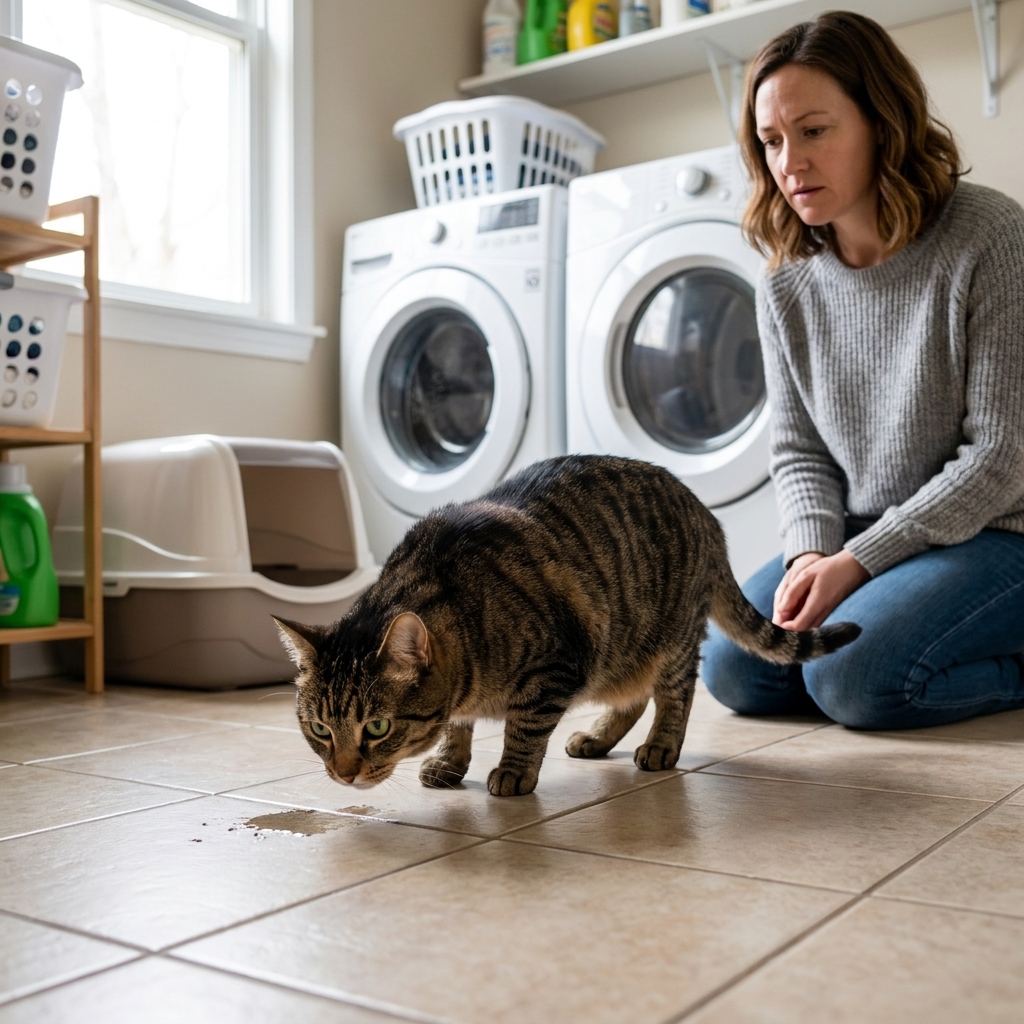
Sign #4: Litter box changes
Stress is a common contributor to litter box trouble, but it is never the only possible cause. Urinary tract discomfort, constipation, arthritis pain, and other issues can make a previously perfect cat avoid the box.
What it can look like
- Urinating outside the box (often on soft items like laundry or rugs)
- Pooping just outside the box
- Going more frequently, straining, or vocalizing
How to calm them
- Vet check first: especially for urinary signs. Straining or producing only small amounts can be urgent.
- Improve the “bathroom experience”: unscented litter, a larger box, and a quiet location. Some cats dislike covered boxes because odors concentrate and they feel cornered. Other cats prefer the privacy. If problems started after switching to a covered box, try uncovered for 1 to 2 weeks and see if things improve.
- Add boxes: the classic guideline is one box per cat, plus one extra, placed in different areas.
- Remove social pressure: make sure another pet cannot ambush your cat at the box. If needed, block sightlines or relocate boxes.
Sign #5: Tense body language
Feline stress lives in the body. One of my favorite “quick checks” is to observe your cat when nothing is happening. Are they soft and loose, or are they braced like a coiled spring?
What it can look like
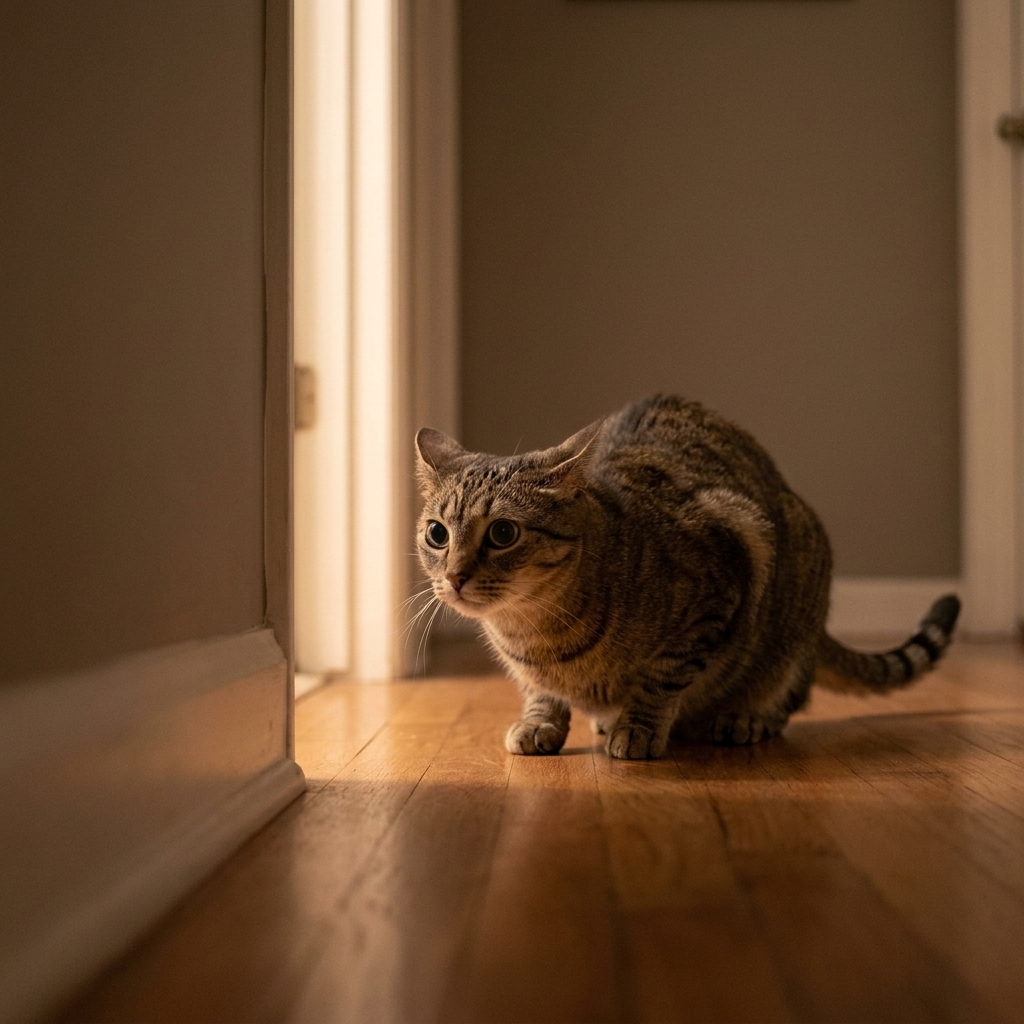
- Ears turned sideways or flattened more often than usual
- Tail tucked, tail tip twitching, or tail swishing when not playing
- Low crouched posture, wide pupils, or hypervigilant scanning
How to calm them
- Give distance: stress escalates when a cat cannot increase space. Let them choose where to be.
- Use slow-blink communication: look softly, slow blink, then look away. It is a simple way to signal safety.
- Reduce sudden noise and movement: close doors gently, avoid chasing, and provide quiet rest zones.
Sign #6: Irritability or aggression
Many cats who lash out are not being mean. They are overwhelmed, overstimulated, in pain, or guarding themselves. I see this a lot after household changes, like a move, visitors, a new baby, or even rearranged furniture.
What it can look like
- Swatting when you walk by
- Growling or hissing at familiar people or pets
- Petting turning into biting faster than usual
How to calm them
- Stop interactions sooner: do shorter petting sessions and end while your cat is still relaxed.
- Watch for early warning signs: skin twitching, tail swishing, ears rotating back, sudden stillness, or a hard stare.
- Offer choice-based affection: let your cat approach you. Use treats to reinforce calm proximity rather than picking them up.
- Consider pain: arthritis and dental pain can make tolerance plummet. If the change is new, talk to your vet.
Bite and scratch safety
If a bite breaks skin, wash it well with soap and running water and contact a medical professional. Cat bites can get infected quickly. If your cat is escalating, get veterinary and behavior help early.
Sign #7: Sleep changes and nighttime restlessness
Cats often have bursts of activity at dawn and dusk, but stress can crank that up. Some cats pace, vocalize more at night, or seem unable to settle.
What it can look like
- Restless pacing or repeated checking of doors and windows
- More nighttime vocalizing
- Light sleeping, startling easily, or waking at small sounds
How to calm them
- Try the “hunt, eat, groom, sleep” rhythm: play session, then a small meal, then lights dim. This mimics natural feline routines.
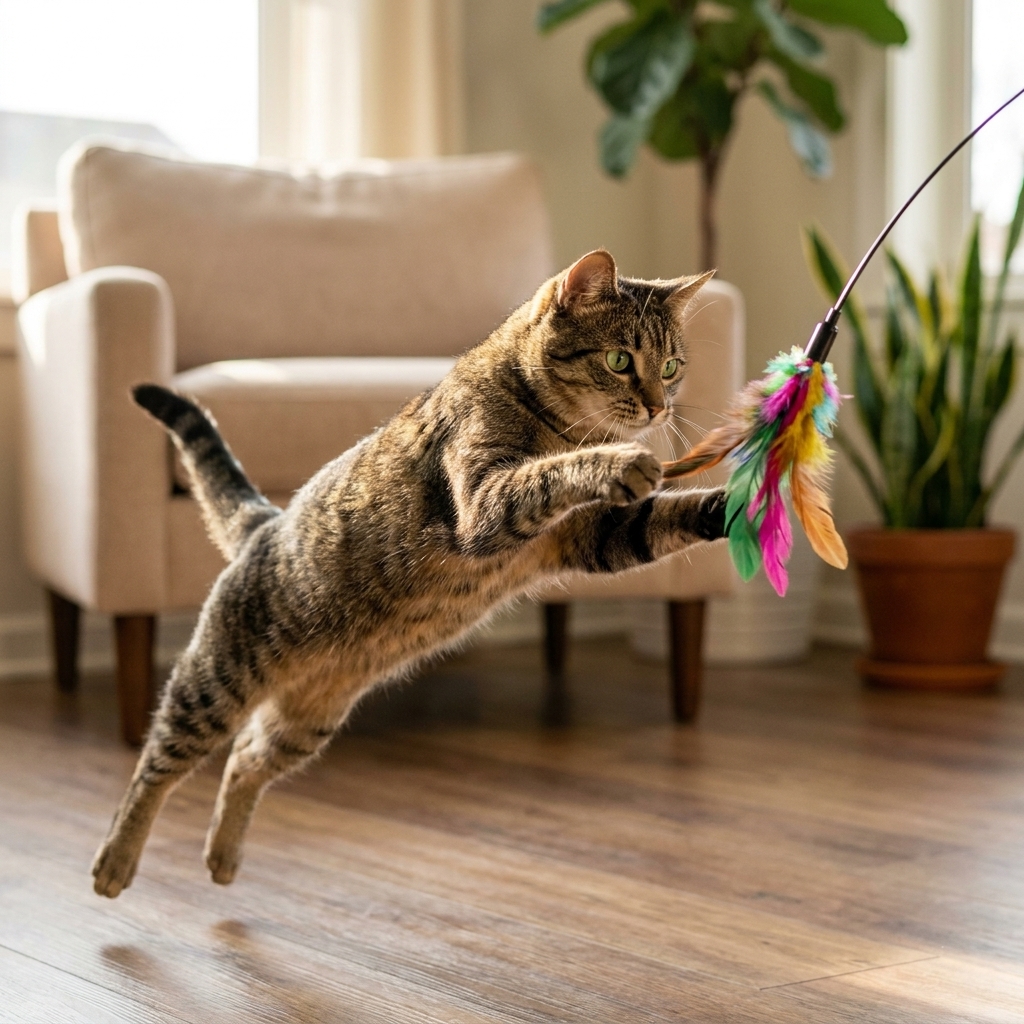
- Add evening enrichment: wand toy play, a food puzzle, or a short training session (yes, cats can be trained) to burn mental energy.
- Create a calm sleep environment: cozy bed options, white noise if household sounds are unpredictable, and access to a safe room if needed.
What causes stress in cats
Sometimes the trigger is obvious, like a move. Other times it is something small we would never consider stressful. Common culprits include:
- New pets or tension between existing pets
- Schedule changes, travel, houseguests, or loud renovations
- Outdoor cats visible through windows
- Litter box location changes, dirty boxes, or strong scents
- Boredom or lack of control over their environment
- Pain or chronic medical conditions
My go-to calming plan
If you are not sure where to start, this is the order I use in rescue work because it gets the fastest wins. I usually give each change about 7 to 14 days (unless the situation is urgent) so I can tell what is helping.
1) Make resources easy and plentiful
- Multiple water stations, food stations (if multi-cat), and litter boxes
- At least one tall perch and one covered hide per cat
- Scratch options in key areas (near sleep spots and near “problem” scratching zones)
2) Add enrichment that matches cat instincts
- Interactive play: wand toys, chase games, short sessions daily
- Foraging: scatter feeding, puzzle feeders, treat hunts
- Predatory outlets: kicker toys, crinkle tunnels, paper bags with handles removed
3) Stabilize the routine
- Consistent feeding windows
- Predictable quiet times
- Gentle handling and fewer forced interactions
4) Reduce visual triggers at windows
If your cat is reacting to neighborhood cats, block the view for a while. Frosted window film, keeping blinds partially closed, or rearranging furniture so your cat is not posted at the “problem window” can lower arousal fast. Then give them a better alternative nearby, like a tall perch facing into the room, plus a daily play session to drain that alert energy.
5) Support with pheromones and calming tools
Synthetic feline facial pheromones (diffusers or sprays) can help some cats feel more secure, especially during transitions. I think of them as a support tool, not a magic fix. If your cat’s anxiety is significant, your vet can also discuss behavior medication, which can be life-changing when used appropriately.
Multi-cat stress fixes
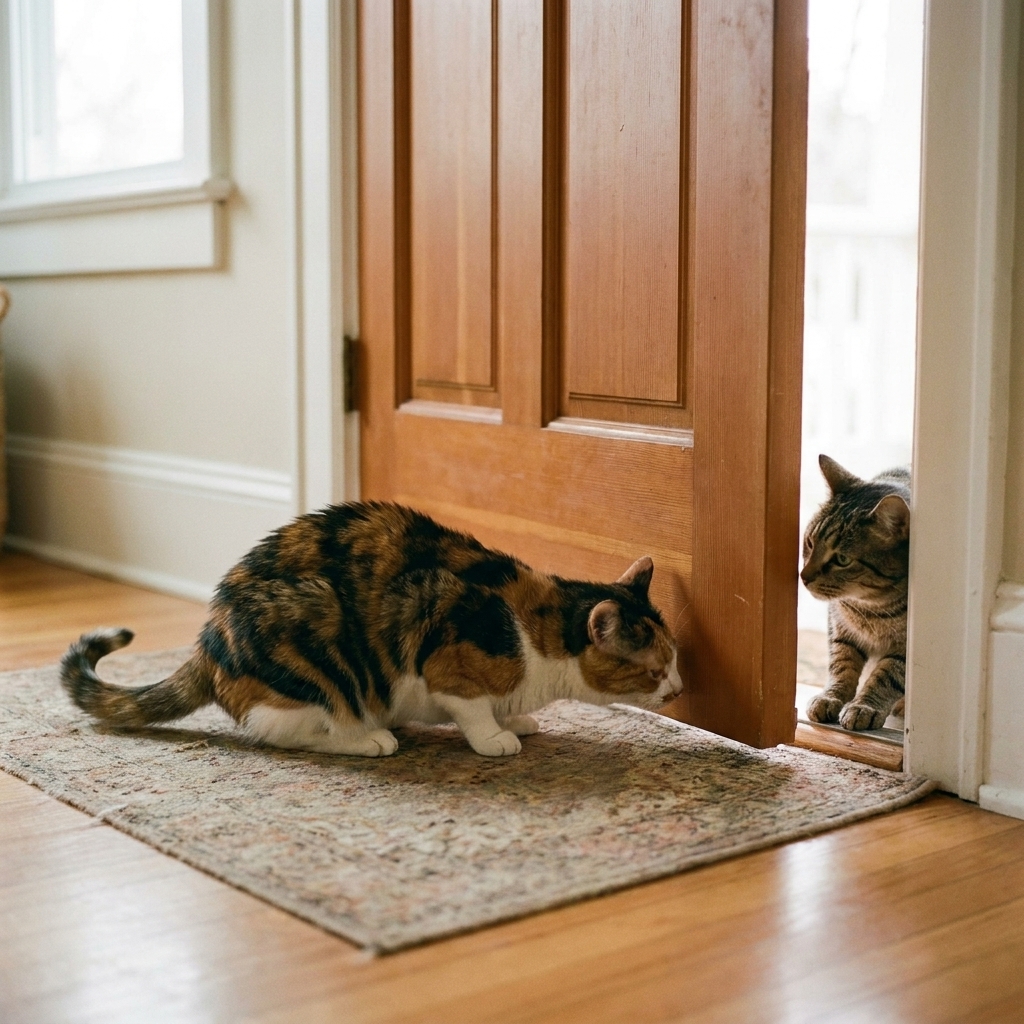
Multi-cat tension is one of the most common stress engines I see, and it is often quiet. No dramatic fights, just one cat blocking a hallway, staring at the litter box, or claiming the best doorway like a toll booth.
What usually helps
- Separate resources: food, water, litter boxes, scratching posts, and beds in different locations.
- Break up sightlines: use baby gates, screens, tall furniture, or rearrange layouts so cats are not forced into constant face-offs.
- Do slow introductions when needed: if things are already tense, go back to basics with short separations, scent swapping (blankets, bedding), and gradual reintroduction around treats and play. When in doubt, a cat behavior pro can save you months of trial and error.
When to get professional help
Please reach out to your veterinarian or a qualified cat behavior professional if:
- Behavior changes are sudden or severe
- There is any chance of pain or illness
- Aggression is escalating or someone has been bitten
- Litter box issues persist beyond basic setup changes for more than 1 to 2 weeks
- You are seeing self-injury from overgrooming
You do not need to wait for things to become a crisis. Early support is faster, kinder, and usually less expensive.
Quick FAQ
How long does it take for a stressed cat to calm down?
It depends on the trigger and the cat. Some cats relax within days once resources and routine improve. Others, especially after a move or a scary event, may need weeks. I watch for small wins first: eating more confidently, relaxing posture, and returning to normal grooming.
Should I comfort my cat when they are scared?
You can offer calm company, soft speech, and treats, but avoid forced handling. Think “support their choice” instead of “make them be held.” If your cat seeks you out, that is a good sign.
Can I reduce stress in a multi-cat home?
Yes. The biggest stress reducers are resource separation (multiple bowls and boxes in different locations), vertical space, and structured play. If tension is already established, a slow reintroduction plan can make a bigger difference than trying to “correct” behavior in the moment.