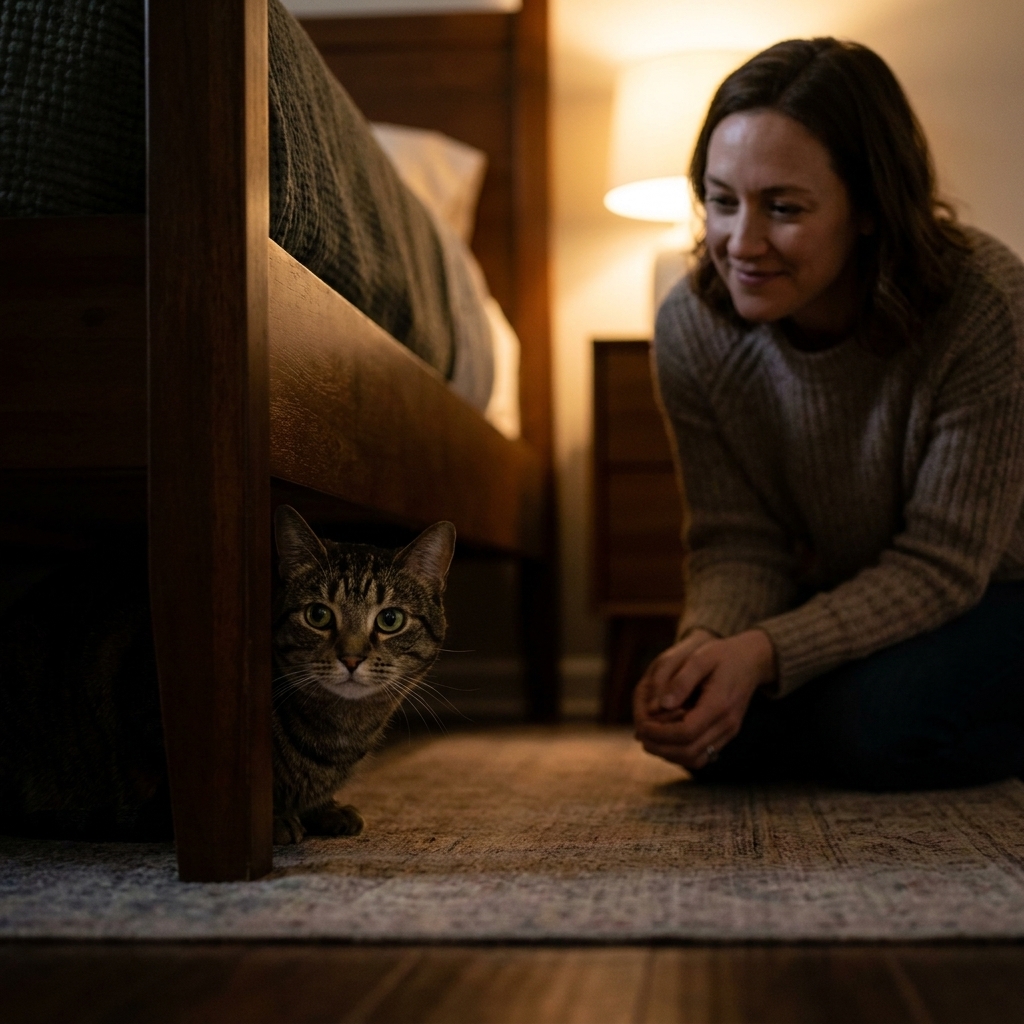
A “random” cat bite can feel personal, especially when you were just sitting there minding your business. But in my experience (and in Clementine’s very strong opinions), cats rarely bite truly unprovoked. The trigger is usually subtle, easy to miss, or happened earlier than you think. That said, there are rarer exceptions, including pain, sensory changes, or age-related cognitive and neurologic issues that can make behavior seem to come out of nowhere.
This article will help you decode what your cat is communicating, pinpoint the most common causes of sudden biting, and teach them safer ways to interact with you without escalating the situation. This is general education, not a substitute for veterinary or medical care.

First, a quick safety note
If your cat is biting hard enough to break skin, or the behavior is new and intense, treat it as both a behavior and a potential medical issue. Pain and illness can shrink a cat’s tolerance dramatically.
Also, if you’re bitten:
- Wash immediately with soap and running water.
- Apply an antiseptic and cover.
- Seek urgent medical care promptly if the bite is deep, redness or swelling spreads, you have fever, you have limited mobility, you’re immunocompromised, or it’s on the hand or near a joint. Cat bites have a higher infection risk than many other bites, and hand and joint bites are especially high-risk.
- Ask about tetanus if you are not up to date.
- Discuss rabies risk if the cat is unknown, unvaccinated, or the bite involved a stray or outdoor cat with unknown history.
Why it feels unprovoked
Cats communicate in “quiet” ways: muscle tension, ear angle shifts, tail changes, skin ripples. Many cats also have delayed reactions. They may tolerate petting for 30 seconds, then suddenly hit a threshold and bite when their nervous system says “enough.”
Think of biting as a message, not a moral failing. Your goal is to figure out what the message is.
Warning signs quick check
When bites feel sudden, it is often because the warning signs were fast or easy to miss. Here is a simple way to scan the situation:
- Green: loose body, soft eyes, relaxed tail, slow blinks, leaning into touch.
- Yellow: tail flicking, skin twitching, ears rotating sideways, brief freezing, pupils widening, head turning toward your hand.
- Red: stiff posture, hard stare, ears flattened, growl or yowl, swat, lunging, biting.
If you notice “yellow,” pause and give your cat a choice to continue or walk away.
Common causes of sudden biting
1) Overstimulation
This is one of the top reasons a cat bites “out of nowhere,” especially during petting. Certain types of touch can go from pleasant to overwhelming fast. Skin can become hypersensitive and the cat chooses the fastest way to make it stop.
Often looks like: your cat leans in for pets, purrs, then suddenly whips around and bites.
Early warning signs:
- Tail starts twitching or thumping
- Ears rotate sideways or flatten slightly
- Skin ripples along the back
- Pupils dilate
- Cat pauses, stiffens, or turns head toward your hand
- Sudden grooming, licking, or a quick head shake
Why it happens: some cats have lower touch tolerance, certain body areas are “nope zones” (often lower back, belly, hindquarters), or they are already stressed and have less bandwidth.

2) Play aggression
If your cat learned as a kitten that hands are prey, they may ambush ankles, bite fingers, or clamp down during “cute” wrestling. This can look unprovoked because the cat is initiating play, not responding to petting.
Often looks like: stalking, crouching, pouncing, bunny-kicking, then biting.
Common contributors:
- Using hands to play (wrestling, finger wiggling)
- Not enough daily interactive play
- Single kittens without appropriate bite inhibition practice
- High-energy young cats with limited outlets
3) Redirected aggression
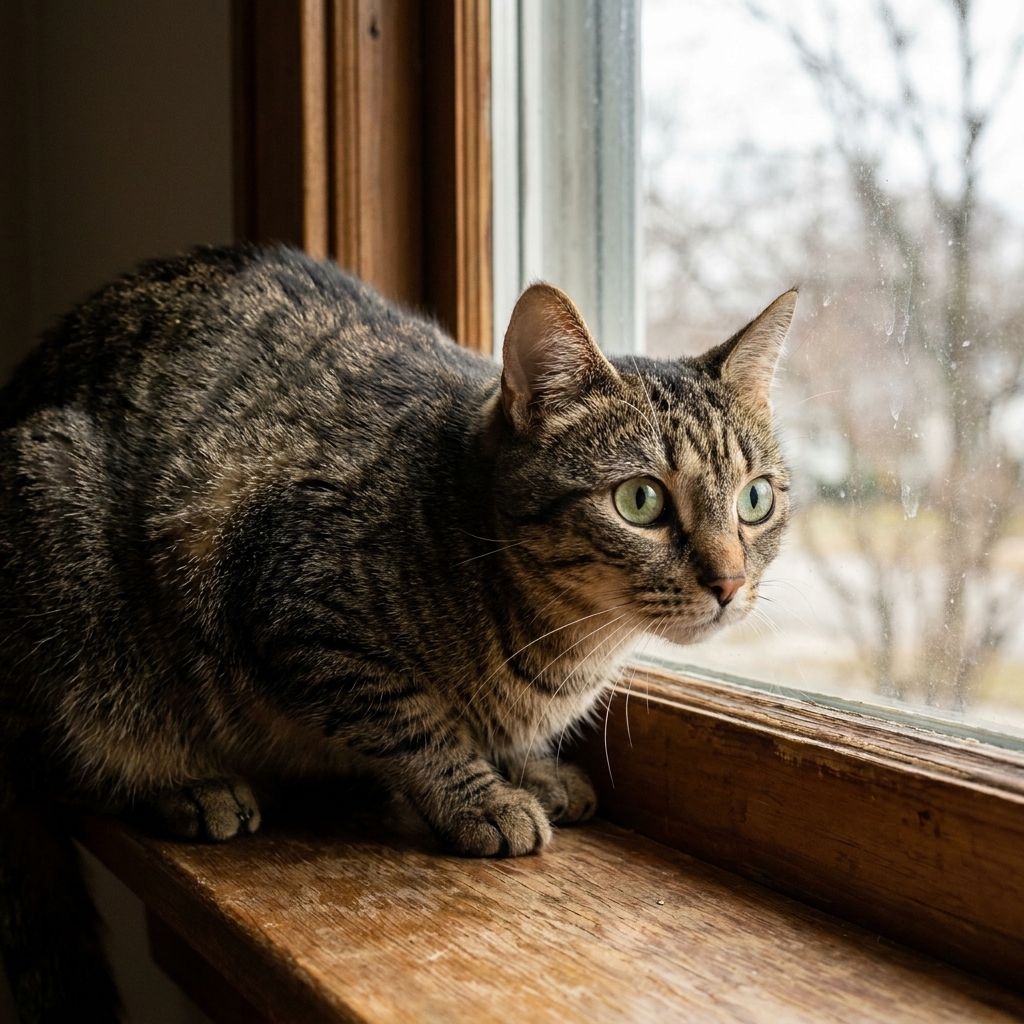
Redirected aggression is when something ramps your cat up, and they redirect that adrenaline onto the nearest moving thing. The most common culprit is seeing another cat through a window, hearing a strange noise, or smelling an unfamiliar animal on you.
Often looks like: your cat is staring out the window, body low and tense. You walk by and they bite your leg or hand.
Important: This is one situation where trying to comfort, restrain, or pick up your cat can make things worse in the moment. Safety first, space second, problem-solving later.
4) Fear, stress, or feeling trapped
A cat can bite when they feel cornered, startled, or handled in a way that removes choice. This includes well-meaning hugging, restraining for nail trims, or reaching toward a cat who is resting in a tight space.
Often looks like: bite happens when you approach, lean over, reach under furniture, or pick them up.
Stressors that lower tolerance: new home routines, visitors, loud renovations, a new pet, schedule changes, or even boredom.
5) Pain or medical issues
If biting is new, worsening, or happens when you touch a specific area, pain jumps to the top of the list. Cats are incredibly good at hiding discomfort, and biting can be their clearest “please don’t touch that” signal.
Common pain-related triggers:
- Dental disease or mouth pain (biting during face or head contact)
- Arthritis (biting when you pet along the back or pick them up)
- Skin issues (fleas, allergies, dermatitis)
- Urinary discomfort (lower tolerance, irritability)
- Hyperthyroidism or other systemic illness (behavior changes)
- Cognitive dysfunction or neurologic issues, especially in seniors (sudden irritability, confusion, startling easily)
Book a vet visit promptly if you notice any of the following along with biting: hiding more, decreased appetite, changes in grooming, litter box changes, sensitivity to touch, limping, weight loss, confusion, or bad breath.
6) “Love bites”
Some cats do gentle, inhibited nibbling as part of social interaction. But many “love bites” are really early overstimulation or a request for space. The difference is in intensity and body language.
- Gentle, inhibited nibble: relaxed body, slow blinks, no tension, bite does not escalate.
- Escalating bites: tension builds, tail flicks, cat stares at your hand, bite gets stronger or followed by a swat.
How to stop the biting safely
Step 1: Stop using your hands as play
If you take only one thing from this article, let it be this: hands do not wrestle with cats. If your cat is already in the habit, do not punish them. Just change the rules starting today.
- Use wand toys, kicker toys, and toss toys instead.
- Keep a toy in each main room so you can redirect quickly.
- If your cat grabs your hand, go still and calm. Slowly disengage by placing a toy between you and the cat.
Step 2: Learn your cat’s “all done” signals
With petting-induced biting, prevention is the cure. Pet less, pause more, and stop before your cat hits the threshold.
Try the 3-second rule: pet for 3 seconds, then stop and watch. If your cat re-initiates (leans in, head butts, relaxed body), continue. If you see tension or tail flicks, you are done.
Better petting spots for many cats: cheeks, under the chin, top of head. Many cats dislike full-body strokes, belly rubs, or firm pressure along the lower back.
Step 3: Reinforce calm behavior
We want to teach your cat what to do instead of biting.
- Reward four paws on the floor with treats or gentle chin scratches.
- Teach a target behavior (touching their nose to your finger or a target stick) and reward it. This gives them a clear, bite-free way to engage.
- Mark and reward calm approaches. If your cat walks up politely, treat. If they pounce, stand still and redirect to a toy.
Step 4: Add predictable daily play
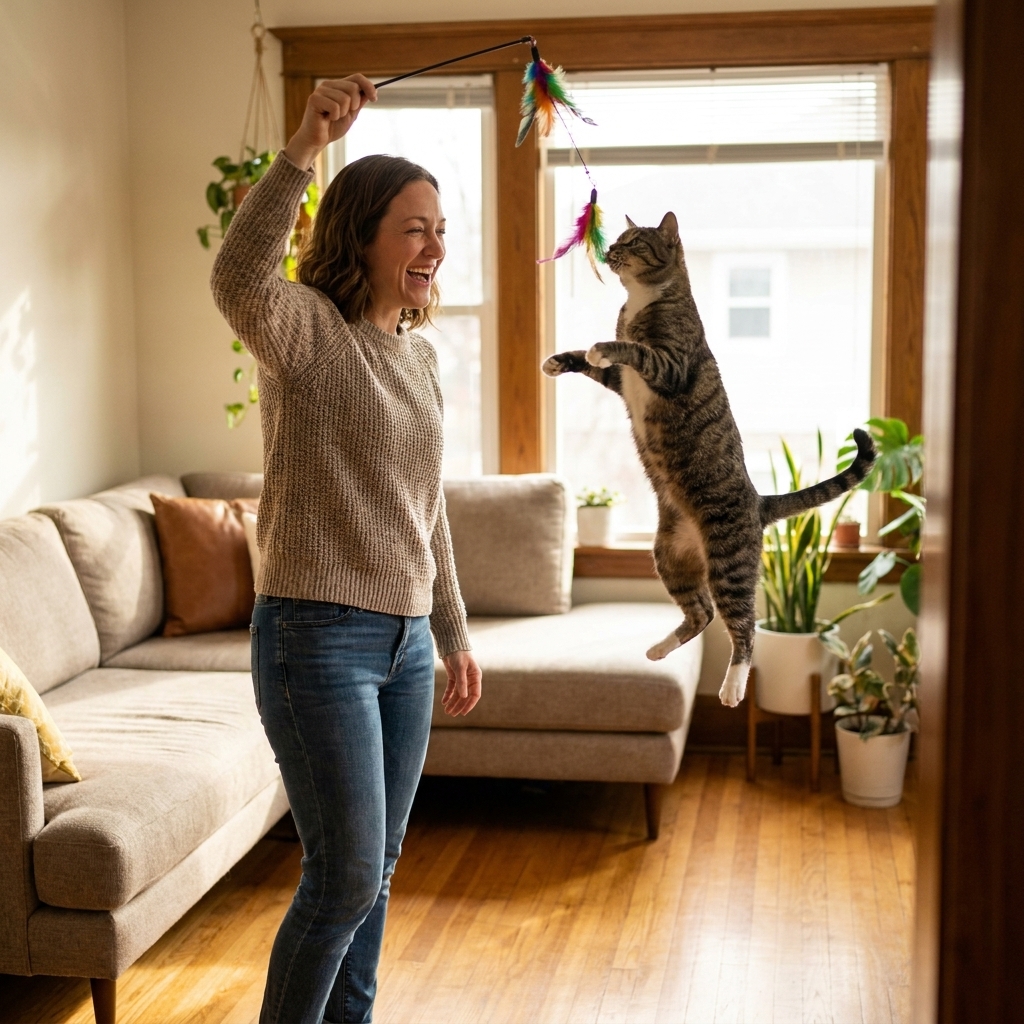
A lot of “out of nowhere” biting is a bored predator doing their job. I’m a big fan of two to three short play sessions daily over one marathon session.
A simple routine:
- 5 to 10 minutes of wand play (stalk, chase, pounce)
- End with a small meal or a few treats (the “catch”)
- Then let your cat rest
This helps drain energy and reduces ambush behavior. Clementine, for what it’s worth, is an enthusiastic supporter of the “play hard, snack, nap” lifestyle.
Step 5: Reduce stress and manage hot spots
Stress makes cats reactive. Your goal is to make the home feel predictable and cat-friendly.
- Add vertical space: a cat tree, shelves, or a window perch.
- Provide hiding options: covered beds or open boxes in quiet areas.
- Use puzzle feeders: to channel hunting behavior.
- Respect rest: let sleeping cats sleep, especially kids and visitors.
- Trim nails regularly: not as a “fix,” but to reduce injury if a swat happens.
If outdoor cats are triggering redirected aggression, consider window film, closing blinds during peak times, or blocking access to the most triggering windows temporarily. During high-arousal moments, use simple management like closing doors, using a baby gate, or giving your cat a quiet room to decompress.
Step 6: Avoid punishment
Yelling, scruffing, tapping a nose, spraying water, or “alpha” tactics tend to create more fear and more biting. They do not teach your cat what you want, and they can damage trust.
Instead, think: interrupt, redirect, reward. If you miss the warning signs and the bite happens, calmly end interaction and give your cat space. Then adjust your plan to prevent the next one.
What to do in the moment
When teeth make contact, your job is to de-escalate. Fast movements can trigger harder bites or chasing.
- Freeze for a second. Yanking away can tear skin and can act like prey movement.
- Create a barrier with a pillow, folded blanket, cushion, or a thick towel between you and the cat.
- Step away slowly or guide your cat out with the barrier, then give them time to reset in a quiet room.
- If your cat has latched on, avoid pulling back hard. Some people find that gently moving toward the bite (not away) can reduce tearing and may help in some cases, but it can be risky. If you can do so safely, prioritize using a barrier or distraction to disengage.
- Do not chase your cat afterward.
Kids and multi-person homes
Biting often improves faster when everyone in the home follows the same rules.
- Teach “invite, don’t approach”: have kids sit still and offer a hand for a sniff, then pet briefly on the cheeks or chin if the cat leans in.
- No grabbing or hugging: many cats bite when they feel trapped, even with people they love.
- Supervise all kid-cat interaction: especially with energetic play or when the cat is resting.
- Create cat-only zones: a room or high perch where the cat can retreat and not be followed.
When to call the vet or a behavior pro
Call your vet if:
- Biting is new or escalating
- Your cat seems sensitive to touch or avoids being handled
- You notice changes in appetite, litter box habits, grooming, mobility, sleep patterns, or weight
- Your cat is older and biting started recently (arthritis and cognitive changes are common)
Get behavior help if:
- Bites are frequent, severe, or unpredictable
- There’s redirected aggression toward family members
- You feel unsafe handling your cat
- You have a multi-cat home with tension that spills onto people
A qualified behavior professional can build a plan tailored to your home, your cat’s triggers, and your schedule. Often, small changes make a big difference once we identify the pattern.
FAQ
Why does my cat bite me while purring?
Purring is not always “happy.” Many cats purr when they’re overstimulated or trying to self-soothe. If purring happens alongside tail flicking, tension, or sudden turning toward your hand, stop petting and give your cat a break.
Why does my cat rub on me and then bite?
Rubbing can be greeting, scent-marking, or a request for interaction. The bite often happens when petting continues past their comfort limit or when they switch from social behavior into play. Try brief cheek rubs, then pause and let your cat choose what happens next.
My cat bites only me, not other people. Why?
Usually it’s a pattern: you may be the one who plays rough with hands, pets longer, or approaches during high-arousal moments. Sometimes it’s also familiarity. Cats can be more “honest” with the person they trust most. Treat it like a solvable communication mismatch, not a personal rejection.
Will my cat grow out of biting?
Some kittens mellow with age, but habits often stick if they are practiced. The fastest path is to prevent rehearsal by redirecting to toys, reinforcing calm interactions, and meeting daily play needs. If bites are severe or escalating, plan on a longer timeline and get help early.
The takeaway
If your cat bites “unprovoked,” there’s almost always a cause: overstimulation, play habits, stress, redirected aggression, or pain. Once you learn the early signals and adjust how you touch, play, and structure the environment, many cats become noticeably gentler, though timelines vary and tougher cases may need veterinary and behavior support.
If you want a simple starting point, begin here: shorter petting sessions, more wand-toy play, and a vet check if the biting is new. You and your cat deserve a relationship built on trust, not surprise teeth.