If your cat seems perfectly fine, it can feel a little strange to book an annual vet checkup. I get it. Cats are masters at looking okay even when something is brewing under the surface. A wellness visit is your chance to catch small issues early, update prevention plans, and get a reality check on weight, dental health, and anything that has quietly changed at home.
This guide walks you through what typically happens during a yearly exam, what vaccines and lab tests your vet may recommend, and a list of questions you can bring so you leave feeling clear, not overwhelmed.
Before you go: set your cat up to do well
A smoother visit starts at home. A stressed cat can mask pain, breathe faster, and make the physical exam harder. These quick steps help a lot.
Carrier prep (yes, it matters)
- Leave the carrier out year-round if possible, with a soft blanket and a few treats so it is not a “scary object that appears before betrayal.”
- Use a synthetic feline facial pheromone spray inside the carrier 10 to 15 minutes before travel if your cat gets anxious. Let it dry fully before your cat goes in.
- Cover the carrier with a light towel for the car ride. Many cats feel safer when the world is a little less visually loud.
Bring the right info
The fastest way to get useful answers is to arrive with specifics. Jot these down on your phone:
- Current food brand, formula, and how much you feed daily
- Treats, supplements, and any human food your cat gets
- Medications and preventives (names and doses if you know them)
- Litter box habits (frequency, stool consistency, any changes)
- Water intake changes, vomiting, hairballs, coughing, sneezing, or itchy skin
- Behavior changes like hiding, irritability, nighttime yowling, or reduced play
Tip: If you can, bring a short video of anything odd (wheezing, limping, strange head movements, litter box straining). Try to capture it in normal lighting with audio if breathing is the issue. Cats love to act normal at the clinic.
What happens at the appointment
Every clinic has its own rhythm, but most annual checkups follow a similar sequence: history, vitals, physical exam, then vaccines and any recommended tests. Many clinics will also talk through costs and priorities up front, especially if multiple things are due.
1) History and “what’s new”
You will usually start by reviewing your cat’s lifestyle and any changes since the last visit, including:
- Indoor-only vs indoor-outdoor time
- Exposure to other cats (roommates, fosters, boarding)
- Travel, recent moves, new pets, or household stressors
- Diet changes and appetite
- Any vomiting, diarrhea, constipation, or hairball patterns
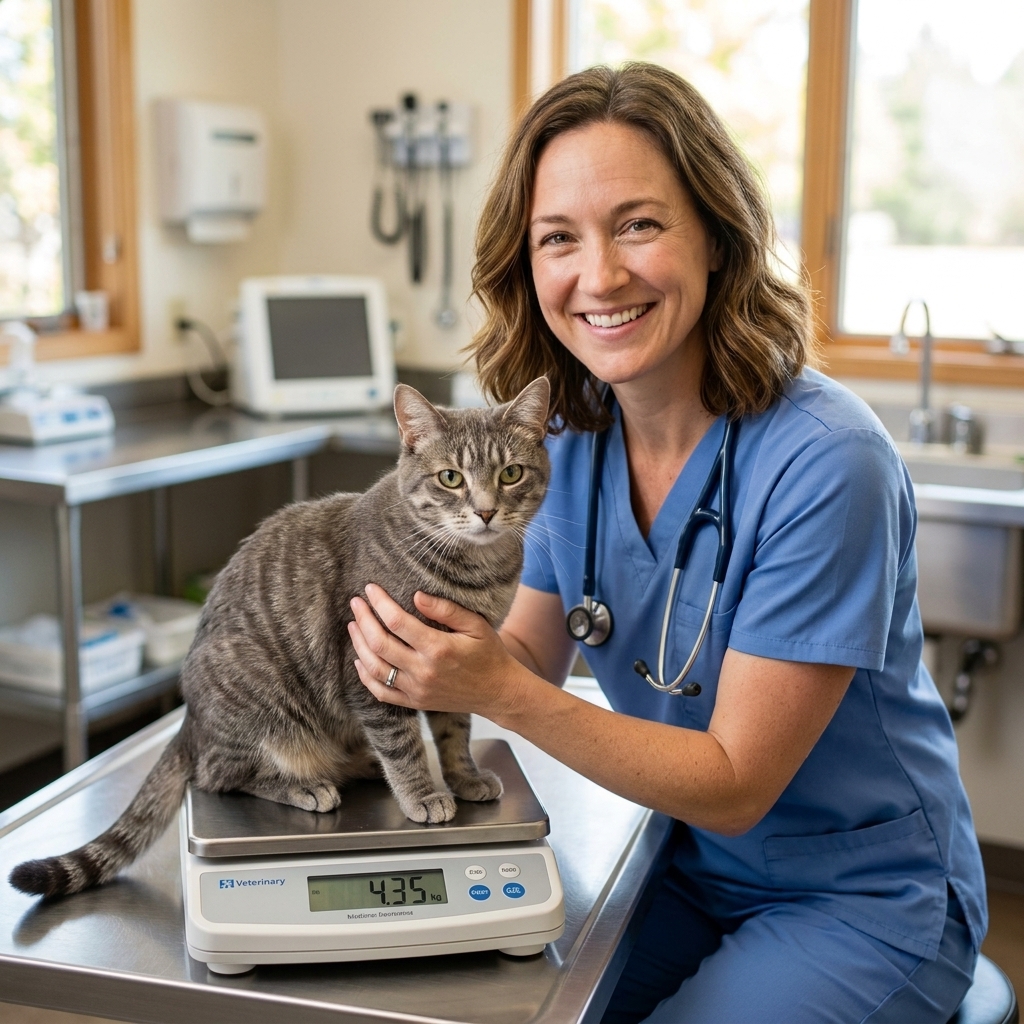
2) Weight, body condition, and vitals
This is more than a number on a scale. Your vet team is looking for trends.
- Weight and body condition score: gradual weight gain over time and excess weight can increase diabetes risk and can worsen joint wear and tear.
- Temperature, heart rate, and respiratory rate: changes can flag stress, pain, infection, or heart and lung concerns.
If your cat is spicy about handling, tell the team. There is no prize for “toughing it out.” Many cats do better with pre-visit medication or a low-stress handling plan.
The physical exam, nose to tail
A thorough exam is a full-body scan for subtle clues. Here is what’s typically included.
Eyes, ears, and mouth
- Eyes: clarity, discharge, pupil response, and signs of pain or inflammation.
- Ears: debris, odor, redness, mites, polyps, or infection.
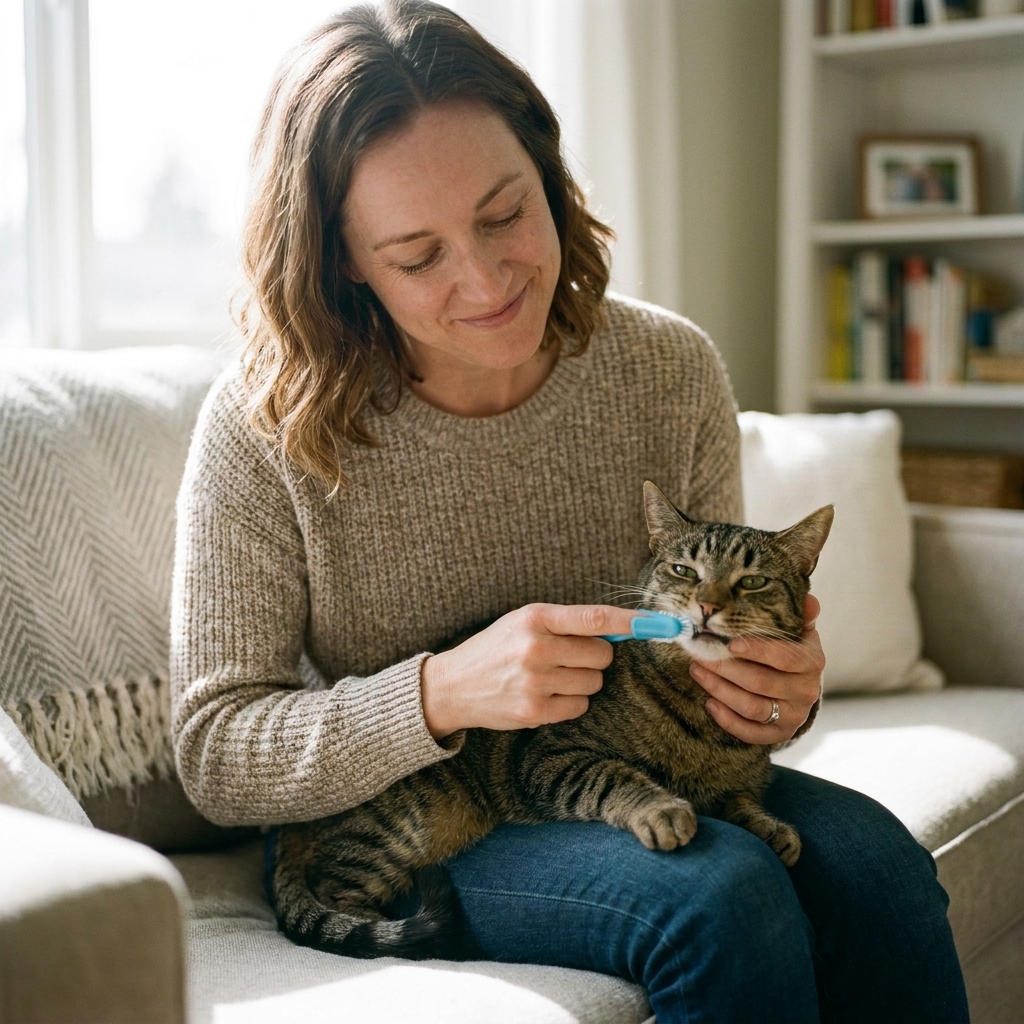
- Mouth and teeth: gum inflammation, tartar, broken teeth, resorptive lesions, bad breath, and oral pain.
Dental disease is incredibly common in adult cats, and it can affect more than the mouth. If your cat’s breath is suddenly intense, mention it.
Heart and lungs
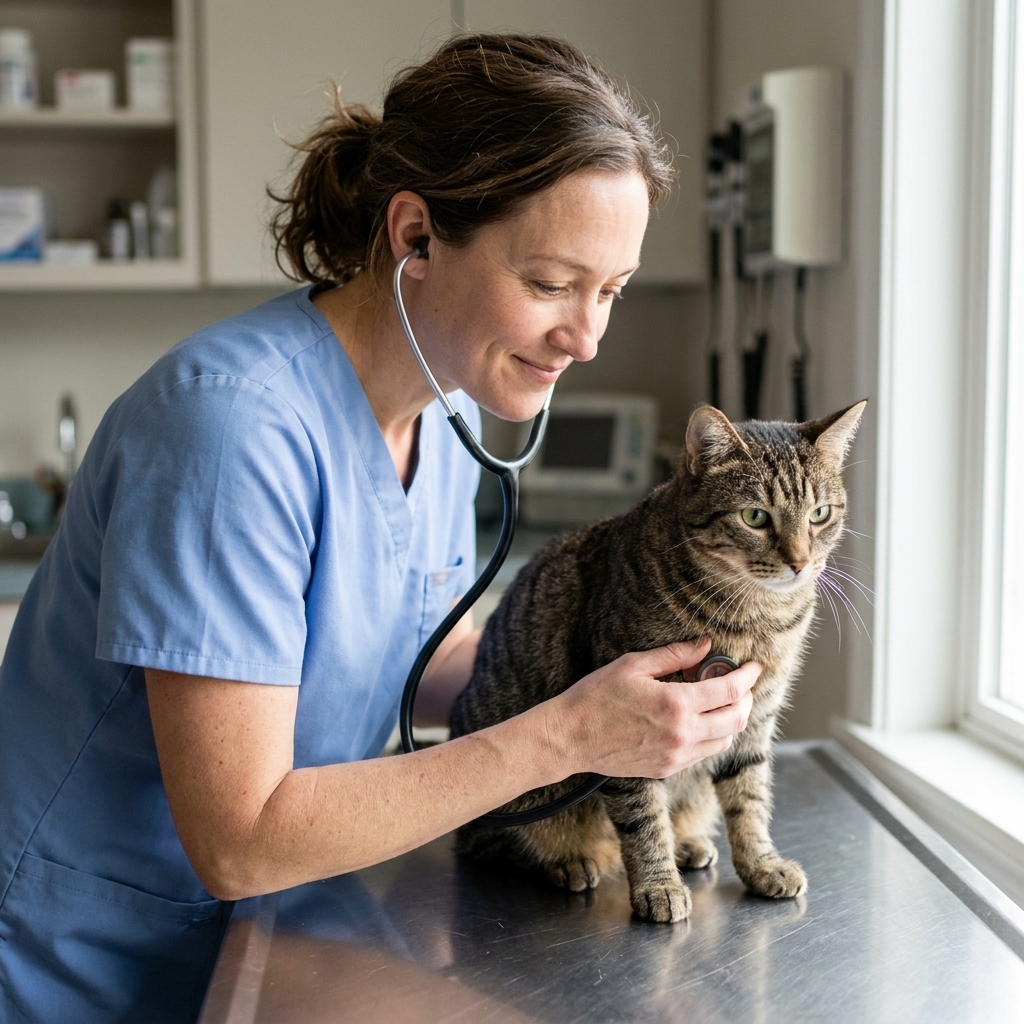
Your vet will listen for murmurs, rhythm changes, and lung sounds. If a murmur is detected, your vet may recommend follow-up testing such as blood pressure checks, chest imaging, or a cardiology referral depending on severity and your cat’s symptoms.
Abdomen and organs
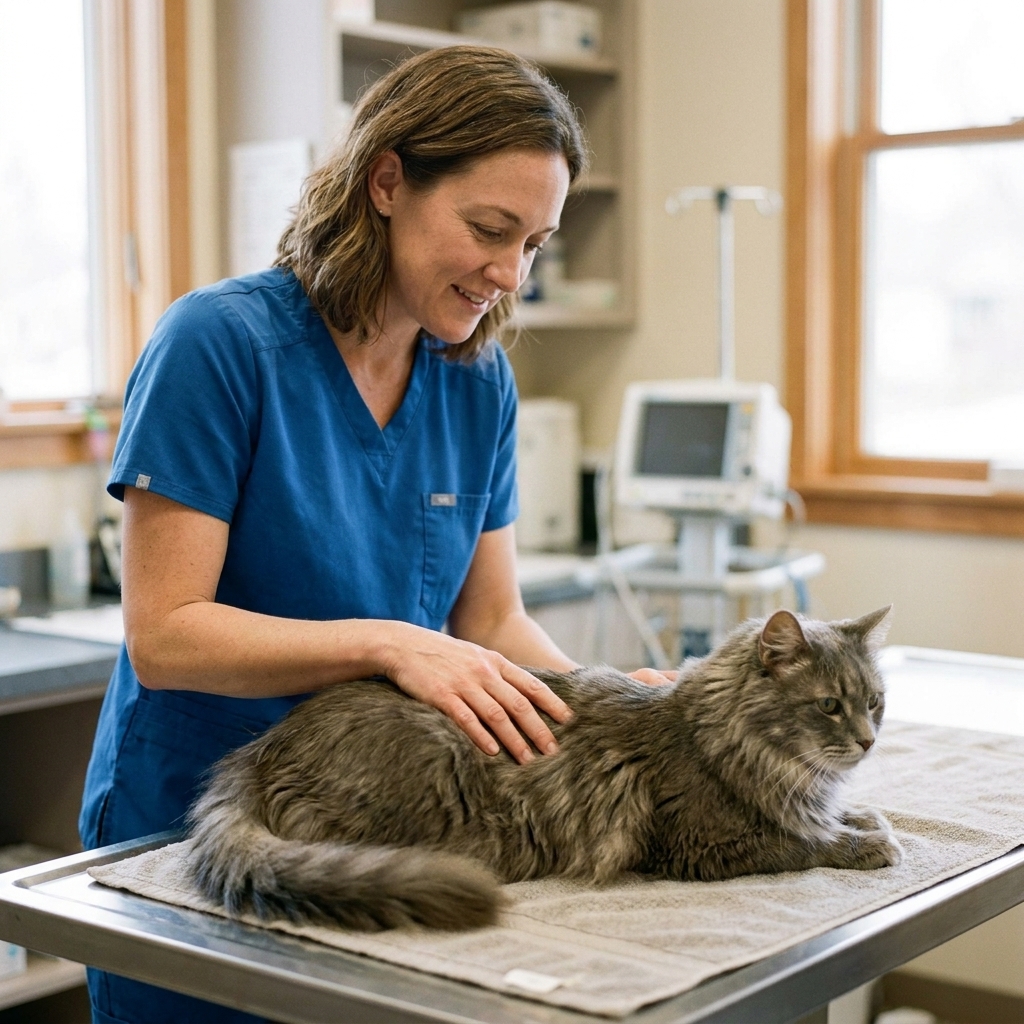
With gentle palpation, your vet checks for pain, enlarged organs, constipation, and abnormal masses. This is also where they may notice early weight loss or muscle loss that is easy to miss under fur.
Skin and coat
- Dandruff, overgrooming, bald spots, scabs, flea dirt, and ear or neck scratches
- Evidence of allergies, parasites, infection, or stress-related grooming
Muscles, joints, and mobility
Arthritis is underdiagnosed in cats because they do not always limp. Your vet may watch your cat walk, extend joints, and assess muscle condition. If your cat no longer jumps up easily, hesitates before the couch, or “misses” jumps, bring it up.
Body condition and hydration
Your vet evaluates fat coverage, muscle tone (especially along the spine), and hydration status. Chronic kidney disease and hyperthyroidism are often first flagged by trends in weight and muscle, then confirmed with lab work. If something seems “off” but you cannot quite name it, that is worth saying out loud.
ID and microchip
Many clinics will scan your cat’s microchip and confirm your contact info. It is a quick check that can matter a lot if your cat ever slips out.
Cat vaccines: what’s usually recommended
Vaccines are not one-size-fits-all. Your vet tailors the plan to your cat’s age, lifestyle, location, and risk of exposure. These are the big categories you will hear about.
Core vaccines
- FVRCP (feline viral rhinotracheitis, calicivirus, panleukopenia): The standard “distemper combo” and commonly considered foundational protection.
- Rabies: Often required by law depending on where you live. Even indoor cats can be exposed through bats or accidental escapes.
Risk-based vaccines
- FeLV (feline leukemia virus): Often recommended for kittens and for cats who go outdoors or have contact with unknown cats. Some indoor cats may still benefit depending on household factors.
- Bordetella (and other region or setting dependent vaccines): Occasionally recommended for cats in high-density settings like shelters, catteries, or frequent boarding.
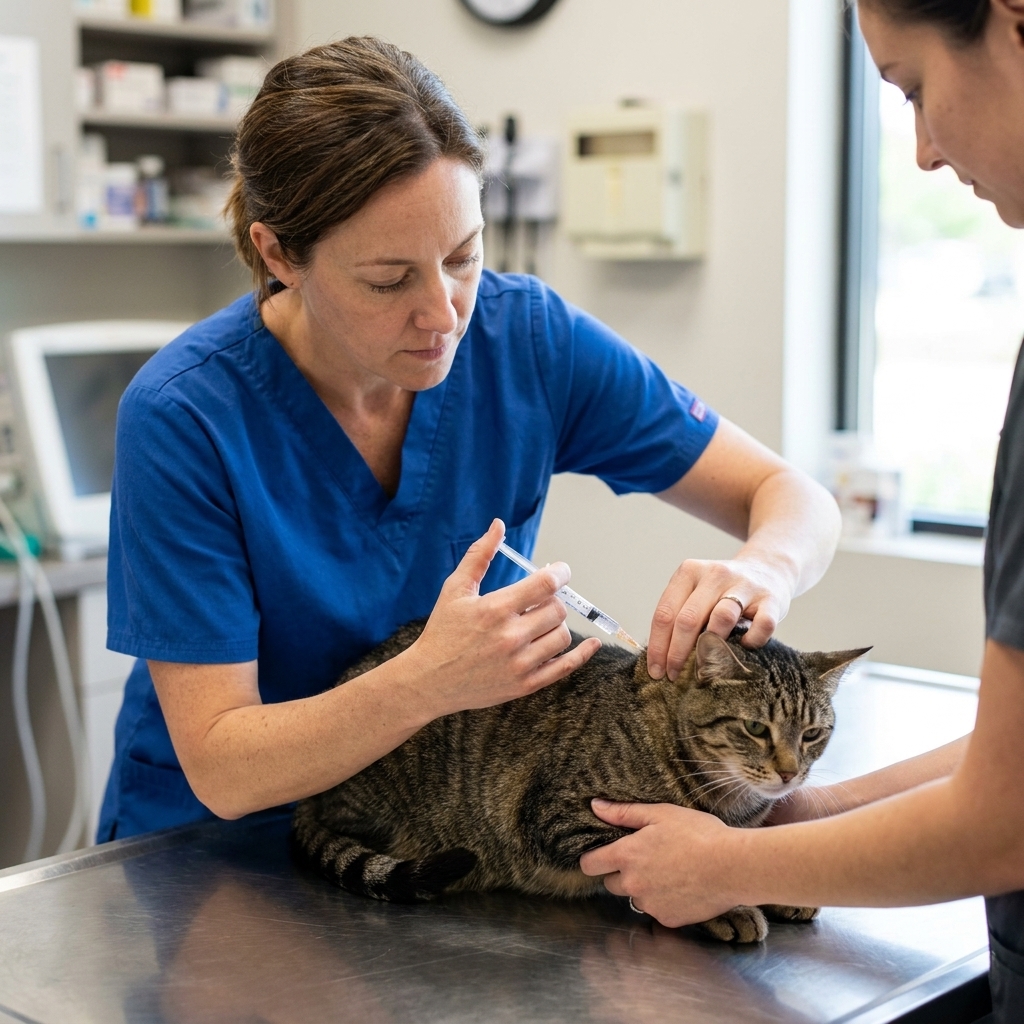
What you can expect: Your vet will review your cat’s vaccine history, discuss risks, and recommend what is due now versus what can wait. If you are worried about vaccine reactions or your cat has a history of sensitivity, ask about spacing vaccines, monitoring plans, and which injection sites they use.
Also worth knowing: vaccine-associated injection-site tumors are rare, but they are one reason vets track exactly what was given and where. If you ever feel a lump at an injection site that lasts more than a few weeks or seems to be growing, call your clinic for guidance.
Blood work and lab tests
Lab testing can catch medical issues before your cat looks sick. Not every cat needs the same panel every year, but it is common for vets to recommend baseline testing and more frequent monitoring as cats age.
Common screening tests
- Complete blood count (CBC): looks at red and white blood cells and can flag anemia, inflammation, infection, and more.
- Blood chemistry panel: assesses organ function (including kidney and liver values), blood sugar, and electrolytes.
- Urinalysis: provides information about hydration, urine concentration, kidney function indicators, and sediment findings that may suggest crystals or inflammation.
- Thyroid testing (T4): commonly recommended for middle-aged and senior cats, or any cat with weight loss, ravenous appetite, vomiting, or unusually high energy.
Your vet may also recommend additional tests based on exam findings, history, and age, such as blood pressure measurement, FeLV/FIV testing, or specific follow-up markers for kidney health.
Parasite screening and prevention
Even indoor cats can get parasites. Many clinics discuss prevention at every annual visit.
- Fleas: Fleas can hitchhike indoors, and some cats develop intense itchiness from even a few bites.
- Ticks: Risk varies by region, but ticks can come in on people and dogs.
- Intestinal parasites: Some vets recommend periodic fecal testing, especially for kittens, former strays, outdoor cats, or multi-cat households.
- Heartworm: Cats are atypical hosts, but they can still get heartworm-related disease, sometimes showing up as coughing, fast breathing, vomiting, or vague “not quite right” days. Prevention may be recommended depending on location and lifestyle.
Dental checks: what needs anesthesia
A quick look in the mouth during the exam is helpful, but it is not the whole story. Many painful dental problems hide below the gumline.
What the awake exam can assess
- Visible tartar buildup and gum redness
- Obvious broken teeth
- Severe oral inflammation or lesions
When your vet may recommend a dental cleaning
If there are signs of periodontal disease, pain, or resorptive lesions, your vet may suggest a dental procedure under anesthesia with dental radiographs. That is the only way to properly evaluate the roots and bone.
If you are nervous about anesthesia, say so. A good clinic will talk you through pre-anesthetic blood work, monitoring, and how they manage pain.
Senior cats: what changes
As cats get older, many vets recommend visits every 6 months instead of yearly. “Senior” depends on the individual cat and the clinic, but many practices start senior-style screening somewhere around age 7 to 10.
Cats can experience meaningful health changes over a shorter time window than humans, so earlier monitoring matters.
At senior checkups, it is common to see:
- More routine lab monitoring (blood work and urinalysis)
- Blood pressure measurement
- More in-depth mobility and pain discussions
- Nutrition adjustments for muscle maintenance and hydration support
Questions to ask at your cat’s annual checkup
If you ever leave the clinic and think, “Wait, I forgot to ask the most important thing,” you are not alone. Here is a practical checklist you can use every year.
Health basics
- Is my cat’s weight and body condition ideal? If not, what is a realistic target weight and timeline?
- Do you see any signs of pain, stiffness, or arthritis?
- How do my cat’s heart and lung sounds seem today?
- Do you notice anything concerning in the eyes, ears, or mouth?
Vaccines and prevention
- Which vaccines are due today, and which are optional based on my cat’s lifestyle?
- What flea, tick, intestinal parasite, and heartworm prevention do you recommend for our area?
- If my cat has had vaccine reactions before, what is the safest approach this year?
Lab work and screening
- Do you recommend baseline blood work or urine testing today? Why or why not?
- What results would be considered “normal for my cat,” and what trends should we watch over time?
- Should we check blood pressure or thyroid levels this year?
Dental and nutrition
- Do you see signs of dental disease that might require a cleaning?
- Is my cat’s diet meeting their needs for age, weight, and health status?
- How much should I feed per day, and should I adjust treats?
- Would you recommend wet food, a urinary diet, or dental-support options for my cat specifically?
Behavior and home life
- Are my cat’s litter box habits normal for their age?
- My cat does (insert behavior). What medical causes should we rule out, and what behavior plan do you suggest?
- Is there anything in my home setup you would change to reduce stress and support healthy routines?
Planning and budget
- What are the top one to two priorities today if we need to pace testing or treatments?
- Can you share an estimate for today’s visit and any follow-up items you recommend?
After the visit: what to watch for
Most cats are back to normal quickly after a wellness exam, but a few mild, short-lived side effects can happen after vaccines or a stressful outing.
Normal, mild reactions
- Slight sleepiness for a day
- Mild soreness at the injection site
- Temporary decrease in appetite
Call your vet promptly if you notice
- Facial swelling, hives, or itching
- Vomiting, diarrhea, or weakness soon after vaccination
- Trouble breathing
- Hiding that lasts more than a day or two, or obvious pain
- Straining in the litter box, frequent trips with little urine, or crying out while urinating
If your cat tends to hold their urine when stressed, encourage hydration and keep the litter box extra inviting at home. Stress can be a big trigger for urinary issues in some cats.
A simple checkup checklist
If you like a quick plan to screenshot, here it is.
- Bring: carrier with cozy blanket, treats, your question list, and any videos of symptoms
- Be ready to discuss: diet, meds, litter box habits, vomiting or hairballs, drinking and urination, behavior changes
- Expect: weight and vitals, full physical exam, vaccine review, parasite prevention discussion, and often a microchip scan
- Consider: screening blood work and urinalysis, especially for adult and senior cats
- Ask: dental status, pain and mobility, ideal weight, and what to monitor before the next visit
And one last gentle reminder from someone who has hauled plenty of reluctant cats to the clinic: you are not “overreacting” by going in when things seem normal. Preventive care is one of the kindest, most practical things you can do for your cat’s long-term health.