Cats are world class at looking “fine” when they are not. It is not stubbornness or drama. It is instinct. In the wild, acting sick can make an animal a target, so many cats learn to mask discomfort until it becomes impossible to ignore.
As a foster coordinator, I cannot tell you how many times a cat came into my program labeled “shy” or “grumpy” only for us to discover dental pain, arthritis, a urinary issue, or an injury. The earlier you catch pain, the easier it usually is to treat, and the less your cat has to suffer quietly.
Below are seven subtle signs your cat may be in pain, plus practical guidance on what to do next and when it is time to call the vet.
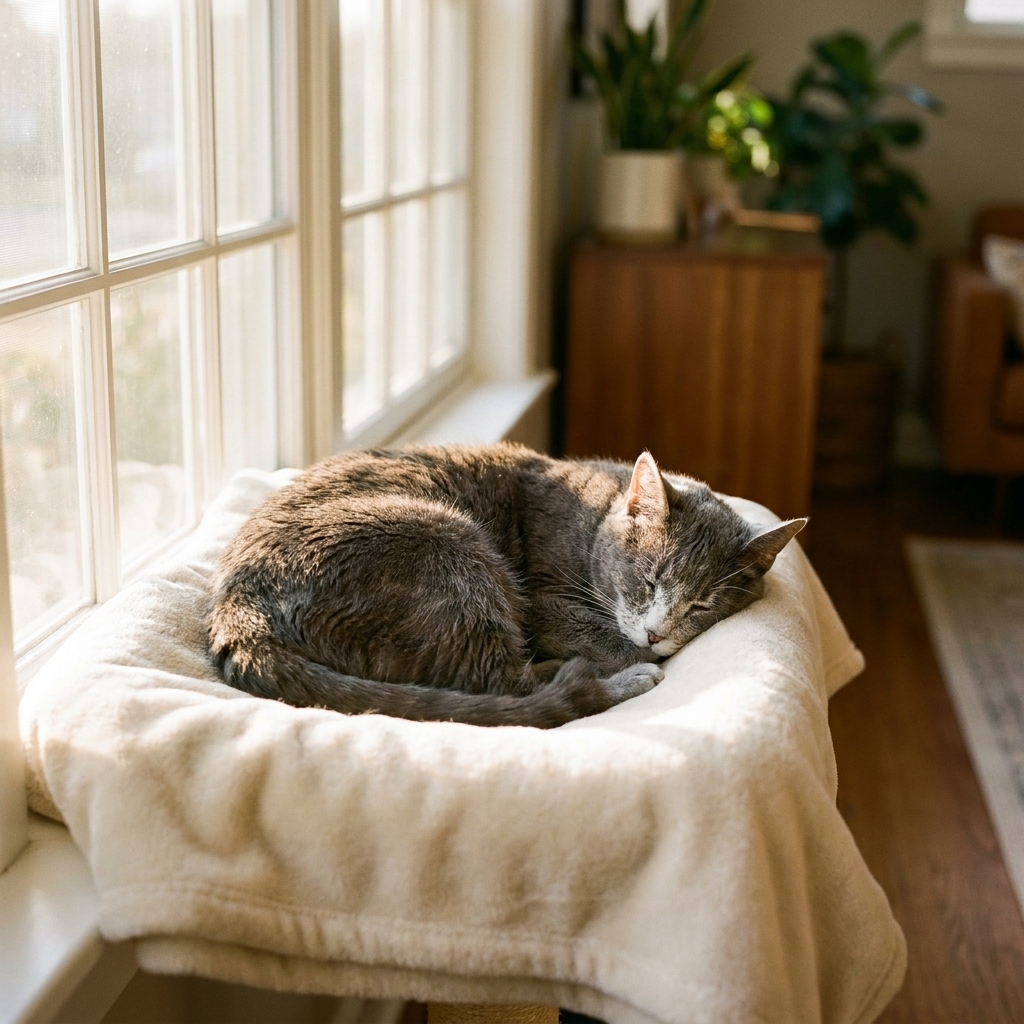
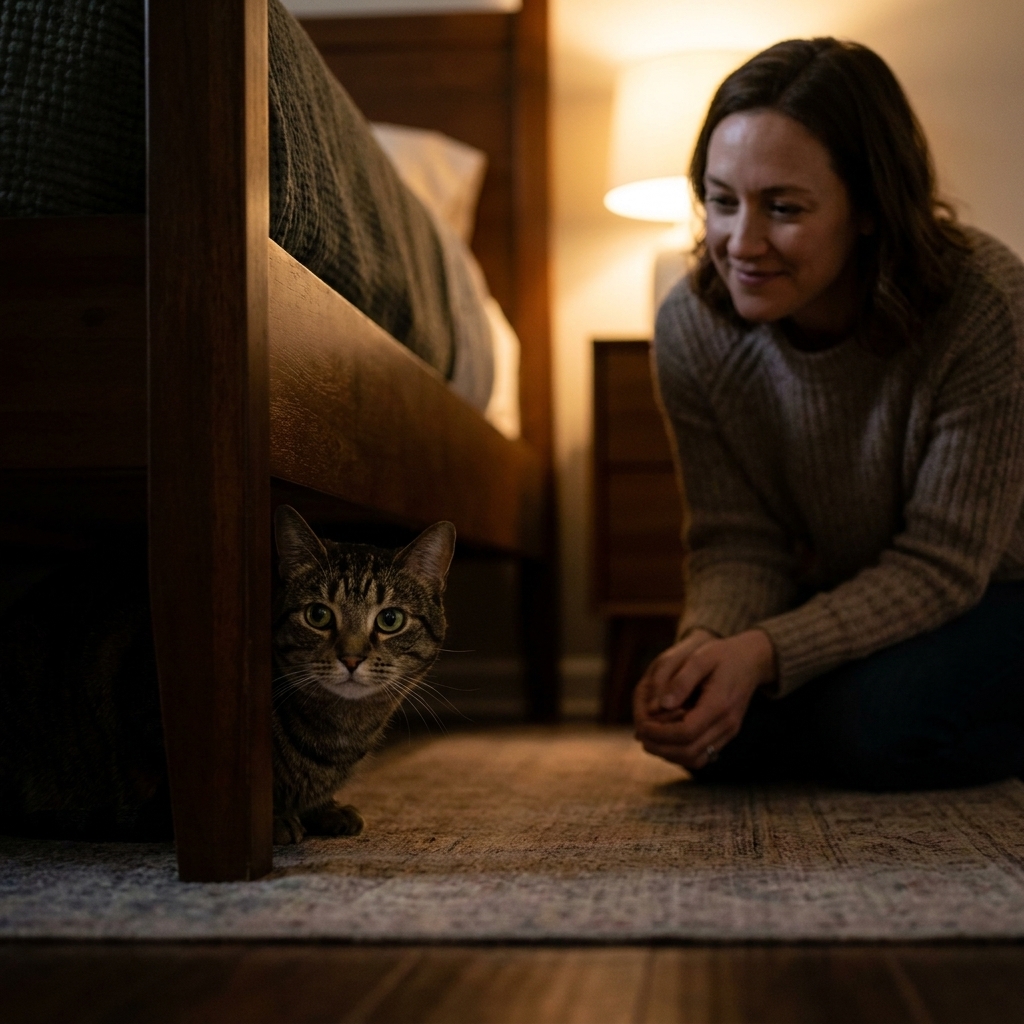
1) Hiding more or resting in odd spots
Some cats are naturally private, but pain often changes where and how often they retreat. You might notice your cat:
- Spending more time under beds or in closets
- Sleeping in hard-to-reach places they do not usually use
- Staying in one room instead of following you around
- Resting in litter box-adjacent areas or near water bowls
Why it can signal pain: Hiding is a protective behavior. Cats may withdraw when they feel vulnerable, nauseated, sore, or feverish.
What you can do today: Note when it started and whether anything else changed (new pet, visitors, loud construction, new litter). If your cat seems comfortable only when tucked away and the behavior is new, treat it as a health clue, not just “mood.”
2) Cranky, clingy, or not themselves
Pain does not always look like crying out. More often it looks like a personality shift. Some cats become short-tempered, swatty, or avoid touch. Others go the opposite direction and become unusually needy, vocal, or glued to your side.
Common subtle changes:
- Hissing or growling when approached
- Not wanting to be picked up
- Sudden “petting aggression” that was not there before
- Unusual nighttime restlessness
Why it can signal pain: When something hurts, tolerance for handling drops. Cats may also seek reassurance if they feel unwell.
Important: If a normally friendly cat starts guarding a body area (for example, flinching when you touch their back or shoulder), skip the troubleshooting and schedule an exam.
3) Slower movement or fewer jumps
This is one of the easiest pain clues to miss because it can look like “my cat is just getting older” or “they are being lazy.” Watch for small changes in movement, including:
- Hesitating before jumping onto the couch or bed
- Using a chair as a step-stool when they used to leap easily
- Stiffness after naps
- Moving with a shorter stride or a lower head position
Why it can signal pain: Arthritis is incredibly common in adult and senior cats, and even younger cats can have joint pain, soft tissue injuries, or spine discomfort.
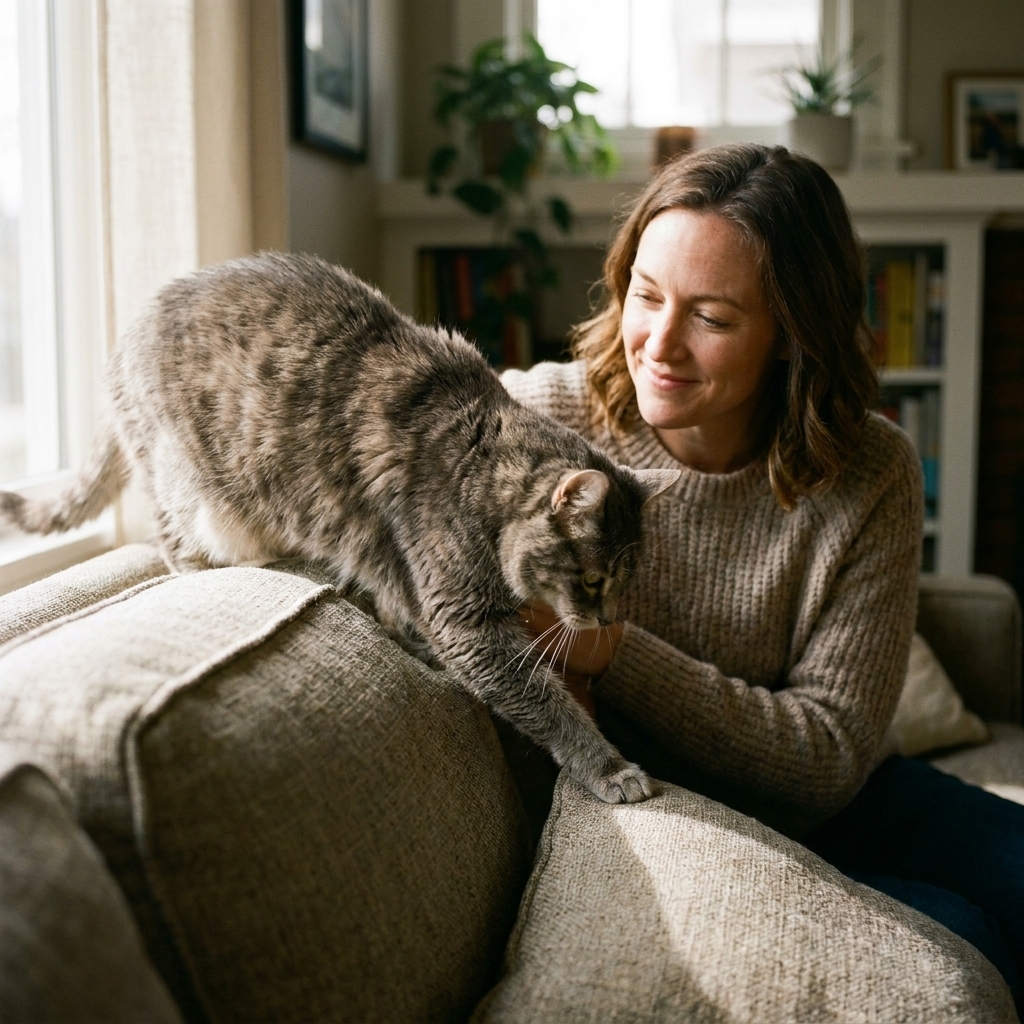
What helps while you book the appointment: Add a sturdy pet step or ottoman near favorite furniture, keep litter boxes easy to enter, and avoid making them jump for food or play.
4) Grooming changes
Cats often self-soothe with grooming, and pain can disrupt that in both directions.
- Overgrooming: Licking one area repeatedly (often belly, inner thighs, or a joint) can reflect discomfort, itch, stress, or urinary pain.
- Undergrooming: A previously tidy cat developing a greasy coat, dandruff, or mild matting may be avoiding twisting and bending because it hurts.
Why it can signal pain: Dental disease can make grooming uncomfortable. Arthritis can make it difficult. Skin pain, bladder discomfort, and nausea can all change grooming patterns.
What you can do: Take a clear photo of the area and the coat quality. If there is hair loss, redness, scabs, or broken skin, call the vet sooner rather than later.
5) Appetite or drinking shifts
Many painful conditions affect appetite, including dental disease, nausea, constipation, kidney disease, pancreatitis, and infections.
Red flags that often look “small” at first:
- Taking longer to eat
- Chewing on one side, dropping kibble, or walking away from the bowl
- Meowing at food but not eating much
- Suddenly preferring soft food when they used to love crunchy
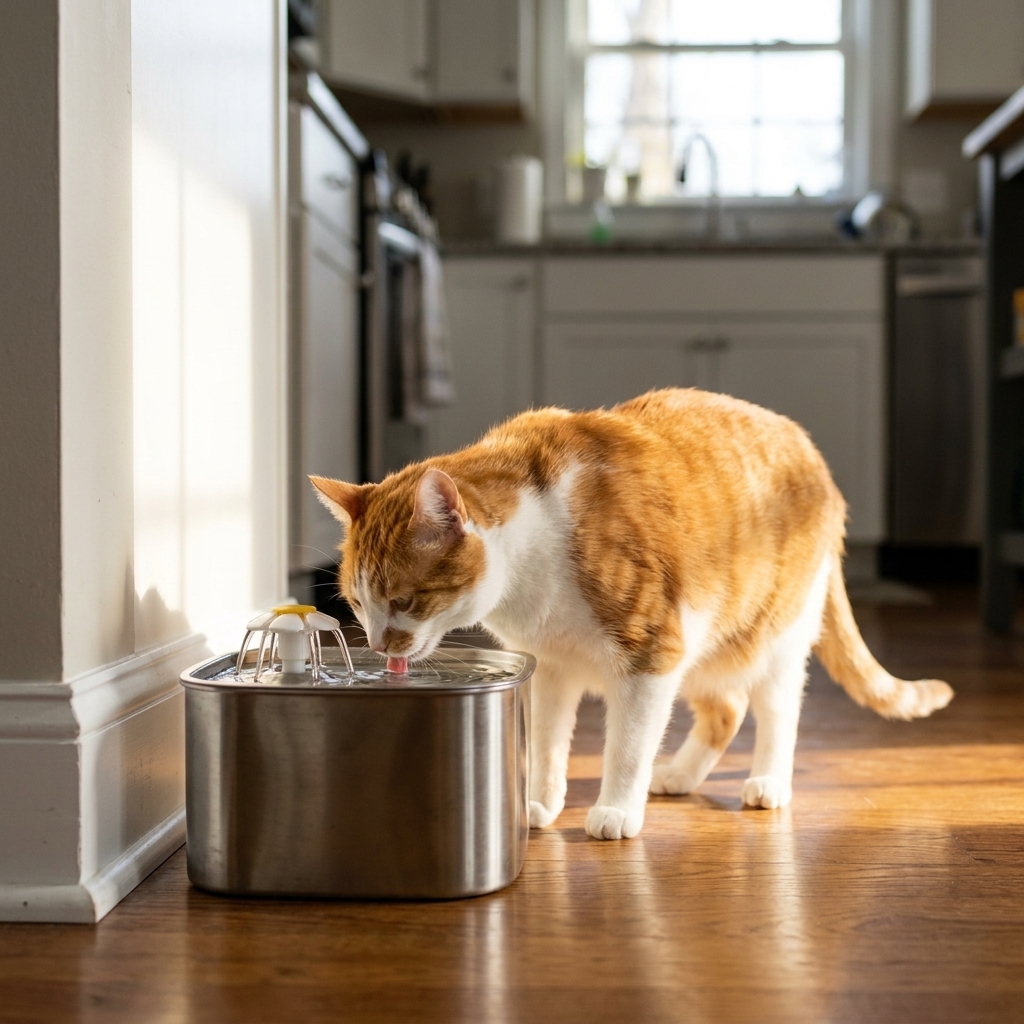
- Noticeably increased or decreased drinking
Why it can signal pain: Mouth pain is a huge one. So is abdominal discomfort. Cats may also eat less when they are feverish.
At-home tip: Measure food and water for a few days. “Eating less” is easier to spot when you have numbers, not vibes. If your cat eats nothing for 24 hours, treat that as urgent.
6) Litter box changes
People expect pain to look like crying in the box or peeing on the bed. Sometimes, it is subtler: smaller clumps, more trips, or a cat who looks like they are trying but not producing much.
Watch for:
- Frequent box visits with small urine clumps
- Straining, posturing, or lingering in the box
- Crying out, licking the genital area, or acting restless afterward
- Poop that is smaller, harder, or less frequent
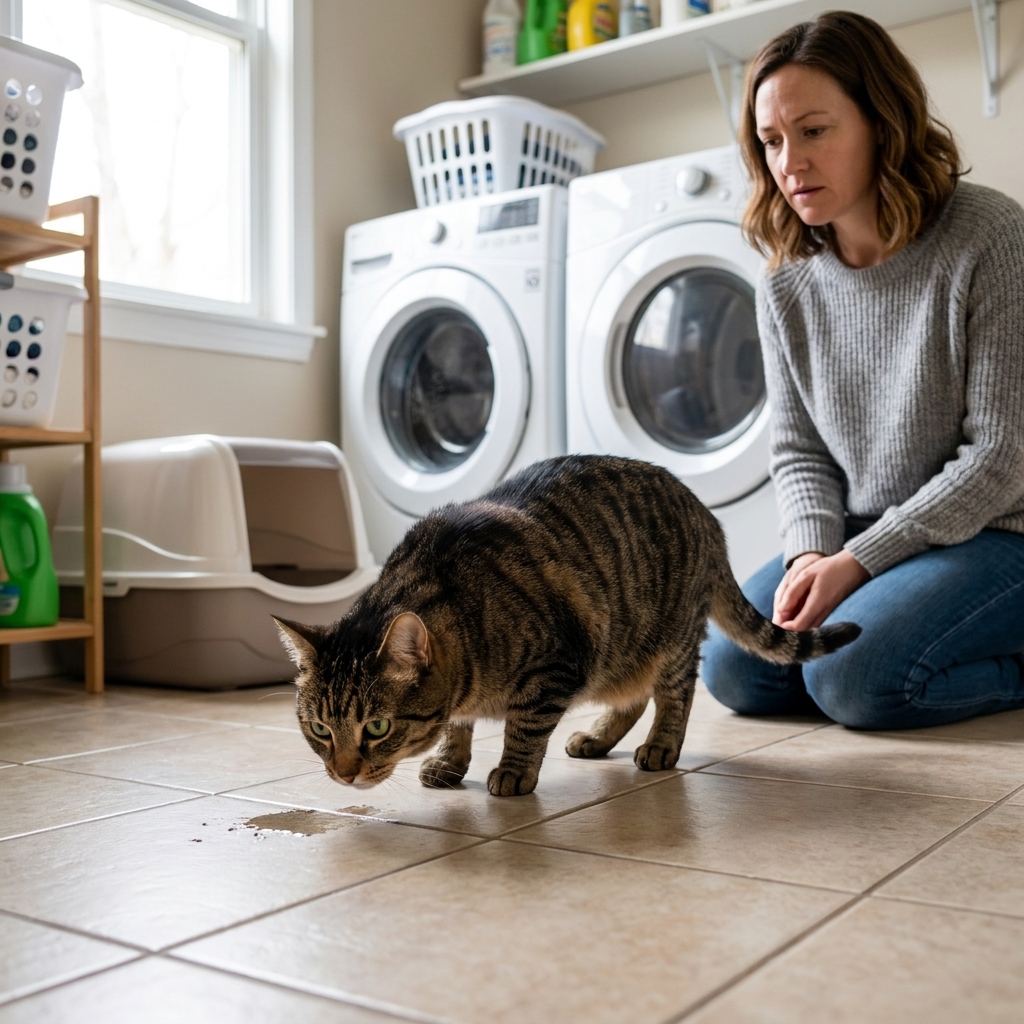
- Going just outside the box, especially on cool surfaces like tile
Why it can signal pain: Urinary tract inflammation, bladder stones, constipation, arthritis (difficulty stepping into a box), and GI pain can all show up here.
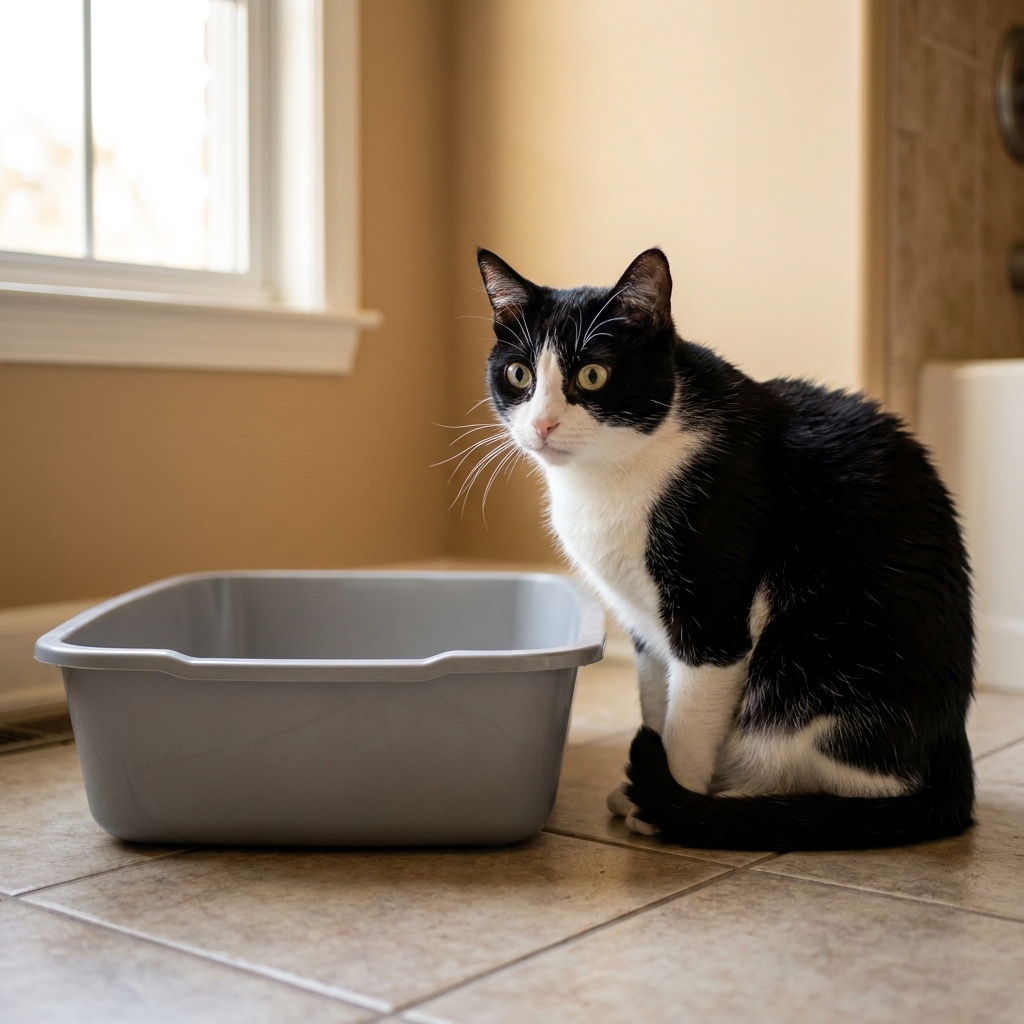
Very important: If your cat is straining to pee and producing little to no urine, that can be a life-threatening emergency, especially in male cats. Do not wait.
7) Facial and posture clues
Cats communicate pain with their whole body, but it can be easy to miss unless you know what to look for.
Common signs include:
- Squinted eyes or a “sleepy” look when they are not actually sleepy
- Ears angled out to the side or slightly back
- Whiskers held forward or flattened differently than usual
- A tense body, tucked paws, or a hunched posture
- Tail held close to the body, or minimal tail movement
Why it can signal pain: Cats often “shut down” physically when uncomfortable, conserving energy and protecting sore areas.
Try this: Take a short video of your cat resting, walking, and being gently offered a treat. Vets love video. It captures what cats may hide in the clinic.
When to call the vet
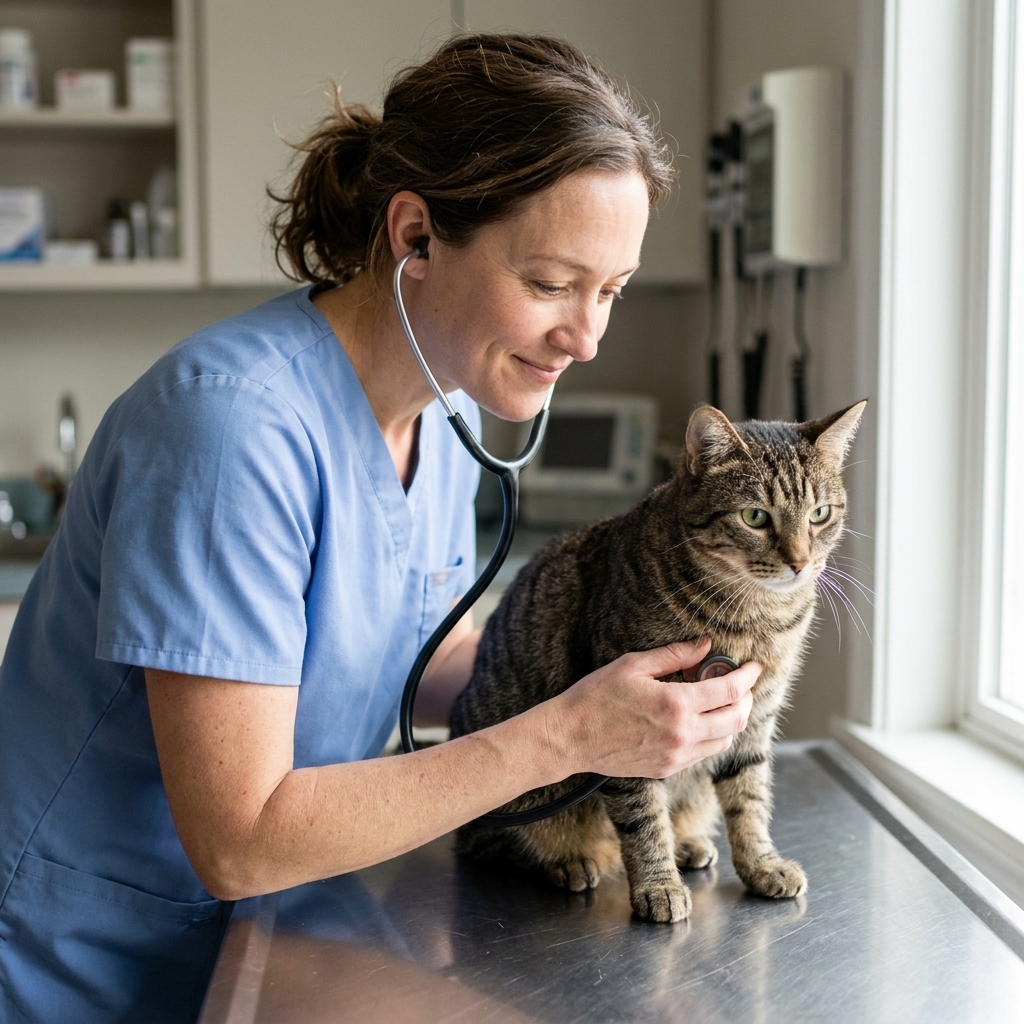
If you are seeing one subtle sign, it is worth monitoring closely. If you are seeing two or more, or anything that escalates over 24 to 48 hours, I recommend calling your vet and describing the changes plainly and specifically.
Go to an emergency vet now if you notice:
- Straining to urinate, producing little or no urine, or repeated unproductive box trips
- Open-mouth breathing, labored breathing, or blue or pale gums
- Sudden inability to use a limb, severe limping, or collapse
- Obvious severe pain (crying out, extreme agitation, cannot get comfortable)
- Suspected toxin exposure or trauma (fall, hit by car, attack)
- Continuous vomiting, vomiting with blood, or profound lethargy
- Not eating for 24 hours (or more than 12 hours for kittens or medically fragile cats)
Book a prompt appointment if:
- Your cat is hiding more and acting withdrawn
- Jumping or stairs suddenly seem difficult
- Grooming changes persist more than a day or two
- You notice chewing changes, drooling, pawing at the mouth, or bad breath
- There are persistent litter box changes without clear stress triggers
What not to do at home
I know how tempting it is to “try something” when you are worried, but a few common moves can make things worse.
- Do not give human pain meds. Many are toxic to cats, even at small doses.
- Do not force stretching or massage. If there is an injury, you can increase pain or damage.
- Do not assume it is behavioral. Many cats get labeled “spiteful” for peeing outside the box when the real issue is pain or urgency.
If you are unsure what is safe, call your vet clinic. A quick phone triage can be incredibly helpful.
A simple pain journal
When you call the vet, specific details speed up care. For the next 48 hours, jot down:
- Eating and drinking amounts (estimate is fine, measured is better)
- Litter box output and any straining
- Video of walking, jumping, and resting posture
- Any touch sensitivity (where, and what your cat did)
- Timeline: when you first noticed the change
Bring those notes to the appointment. They help your vet narrow down causes quickly.
The bottom line
If your cat is acting “a little off,” trust that instinct. Cats rarely change habits for no reason. You do not need to diagnose the problem to take action, you just need to notice patterns early and get help when things do not add up.
And if you are reading this at 2 a.m. with a worried knot in your stomach, I have been there, too. I have watched Clementine try to play tough through a sore tooth, and I have watched Waffles stare at the water bowl like it personally betrayed him during a stomach bug. You are not overreacting by paying attention. You are being exactly the kind of cat parent your cat needs.