If you have ever watched two cats lock eyes like tiny, furry duelists, you already know: introductions are not about letting them work it out. They are about building familiarity and safety in slow, repeatable steps. I have helped many cats through this process in rescue and foster homes, including the ones labeled “unadoptable.” The good news is that most cats can learn to coexist, and many become genuine buddies, when we let time and scent do the heavy lifting.
This guide walks you through a proven introduction timeline using scent swapping, site swapping, and supervised visits, without territorial fights. Go at the pace of the most stressed cat, not the calendar.
Before you start
The biggest mistake I see is skipping the setup phase. A strong setup prevents most meltdowns.
Make a basecamp
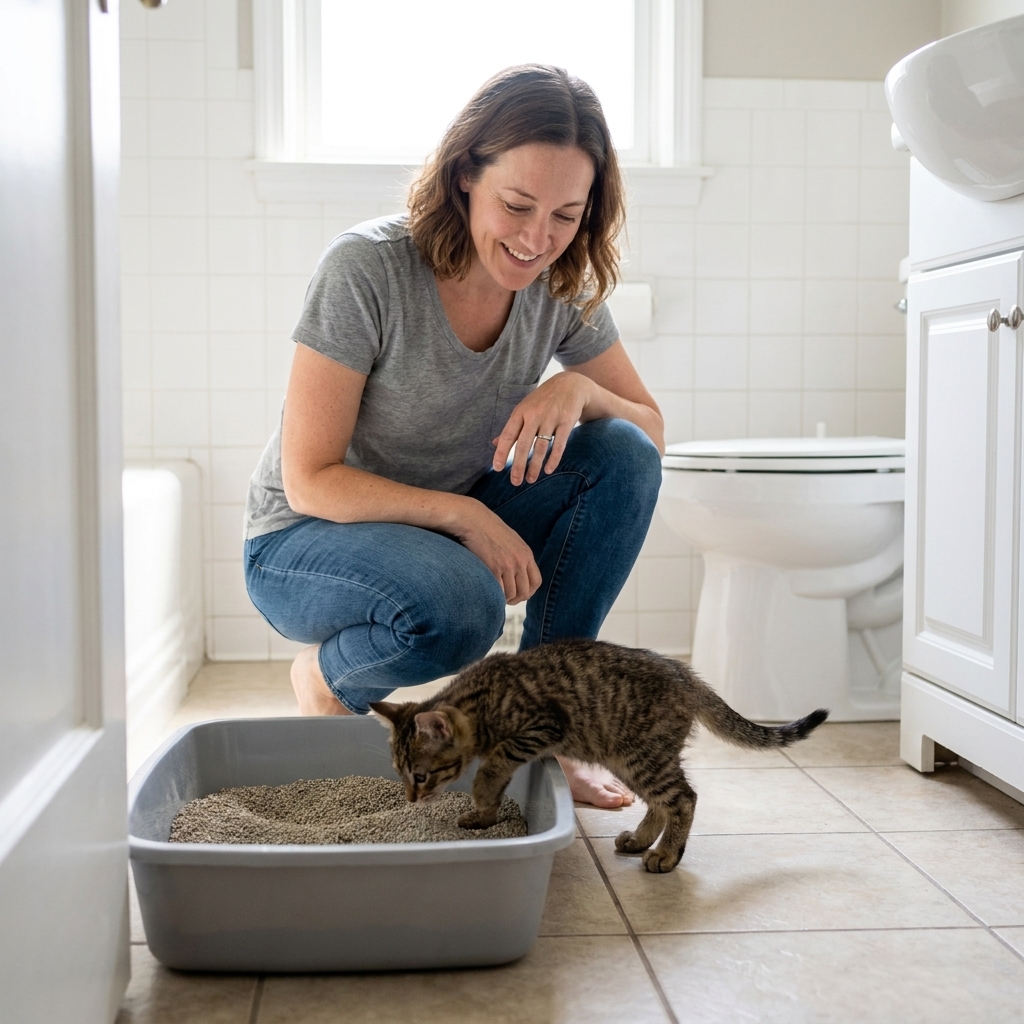
Your new cat needs their own closed room for the first stage, ideally a quiet bedroom or office.
- Resources: litter box, food, water, scratching surface, bed, hiding spot, toys
- Comfort: a soft blanket that can be swapped later, and a predictable routine
- Calm: keep the door closed and interactions low-key at first
Rule of thumb: one litter box per cat plus one extra, spread out across the home once you reach shared-space stages.
Do a health check
If either cat has diarrhea, sneezing, coughing, eye discharge, fleas, or is not eating well, pause and talk to your vet. Medical issues and pain can turn a manageable introduction into a fight.
Set up traffic flow
Cats hate feeling trapped. Before face-to-face steps, create easy escape routes and vertical space.
- Cat trees, shelves, or cleared bookcases
- Baby gates or screen doors for controlled visual access
- Multiple resting spots and scratching posts

Introduction stages
Some pairs move through this in a week. Some need several weeks. If you rush and they have a big blow-up, you typically lose more time than you saved.
Stage 1: Decompress (Days 1 to 3)
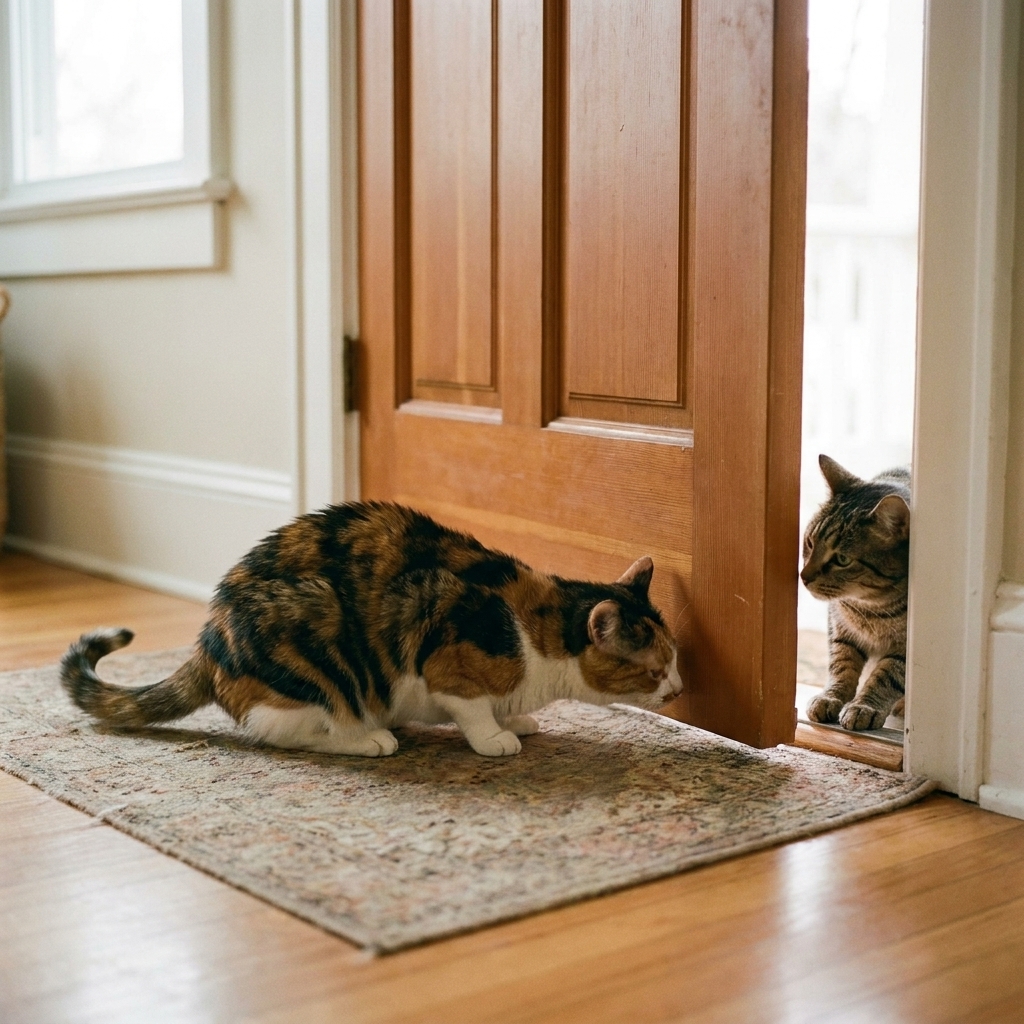
Goal: both cats feel safe on opposite sides of the door.
- Let your resident cat keep their normal routine and territory.
- Spend calm, positive time with the new cat in basecamp.
- Feed both cats on their respective sides of the closed door, starting far away and gradually moving bowls closer as long as both eat comfortably.
Green lights: eating normally, curious sniffing at the door, relaxed body posture.
Yellow lights: mild hissing at the door, cautious sniffing then walking away. This can be normal early on.
Red lights: refusing food near the door, growling that escalates, door charging, redirected aggression toward you or other pets.
Stage 2: Scent swap (Days 2 to 7)
Goal: each cat learns the other’s scent predicts good things.
Scent is your best friend here. Cats rely heavily on scent, often more than visual cues, when deciding what feels familiar.
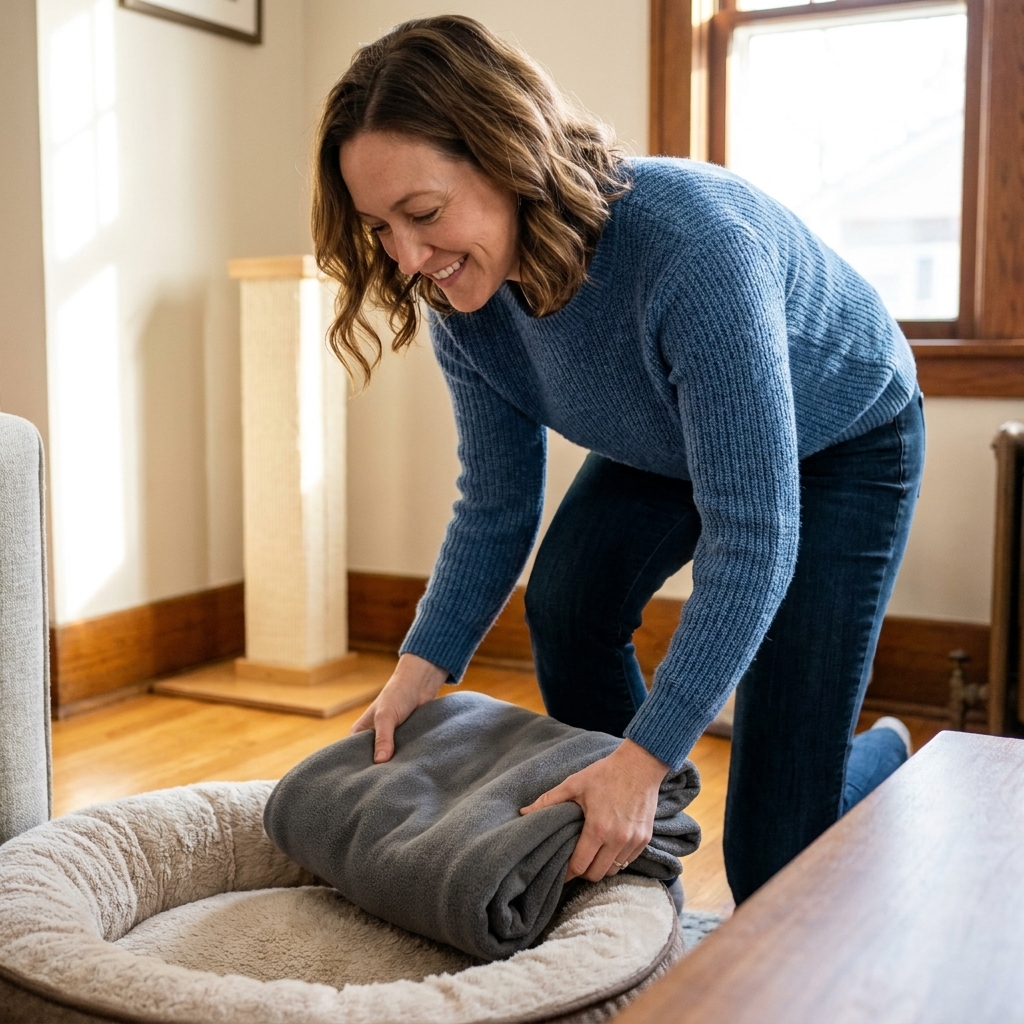
- Swap bedding: trade blankets or small beds daily.
- Use a soft cloth: gently rub one cat’s cheeks (where friendly pheromones are), then place that cloth near the other cat’s resting area.
- Pair scent with treats: put the swapped item down, then immediately offer a high-value treat or a meal.
Pro tip: if either cat seems tense, increase distance. Put the scented item across the room and work closer over a few days.
Stage 3: Site swap (Days 4 to 14)
Goal: both cats learn that sharing territory is normal and not threatening.
This step is a game-changer for many households. It teaches, “I can be in your space and nothing bad happens.”
- Confine the resident cat to another room (with their own litter and water) and let the new cat explore the main home for 30 to 60 minutes.
- Then swap, letting the resident cat investigate basecamp while the new cat returns to basecamp.
- Do this once daily if possible, always ending before anyone gets overwhelmed.
What to watch for: relaxed sniffing, tail held neutrally, casual rubbing on furniture, grooming. If you see stalking posture, tense crouching, or fixation, shorten the session and slow down.
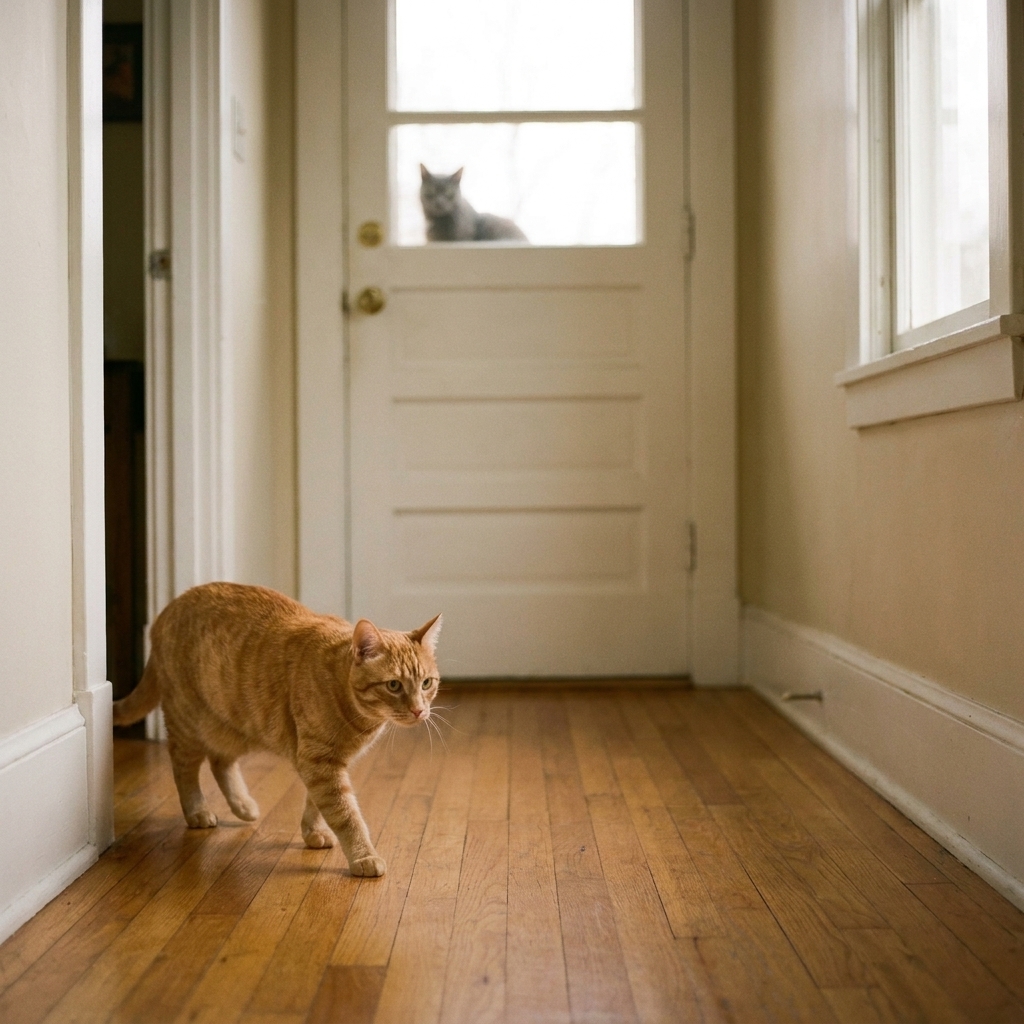
Stage 4: Visual meetings (Days 7 to 21)
Goal: cats can see each other without escalating.
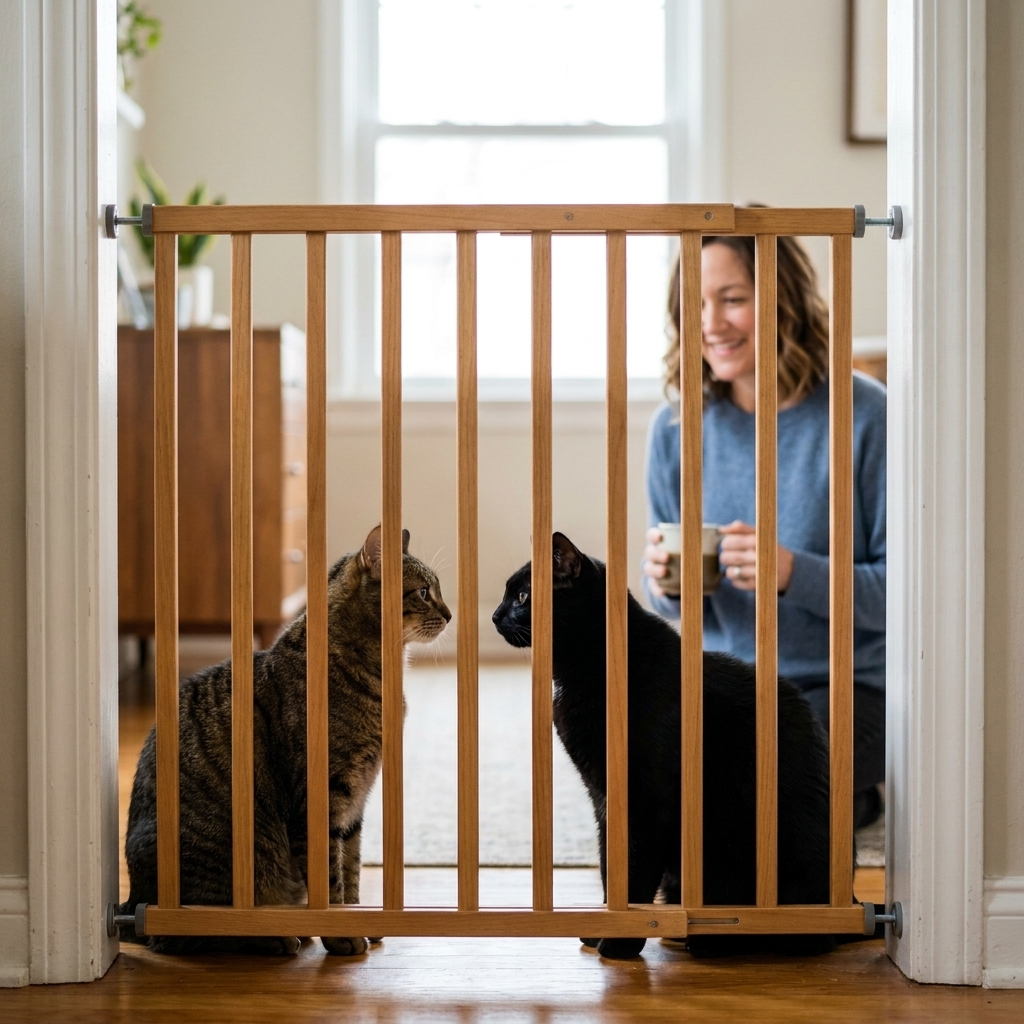
Start with a strong physical barrier so nobody can rush and fight.
- Options: baby gate with a sheet clipped to it (raise the sheet gradually), screen door, or a cracked door secured with a door strap.
- Keep sessions short: 30 to 120 seconds at first, then build up.
- Pair with good stuff: Churu-style treats, meals, wand toys played parallel, or gentle praise if your cat likes that.
Read the room: soft eyes, ears forward or neutral, slow blinks, sniffing and turning away are all positive. Hard staring, ears flattened sideways, low growling, tail lashing, and crouching are signs to end the session.
If you get a hiss, do not panic. End on a calm note, increase distance next time, and keep going more slowly.
Stage 5: Supervised visits (Weeks 2 to 6)
Goal: short, calm, shared-space time that ends before tension boils over.
When barrier sessions are consistently calm, move to supervised visits in a larger room.
- Start tiny: 1 to 5 minutes.
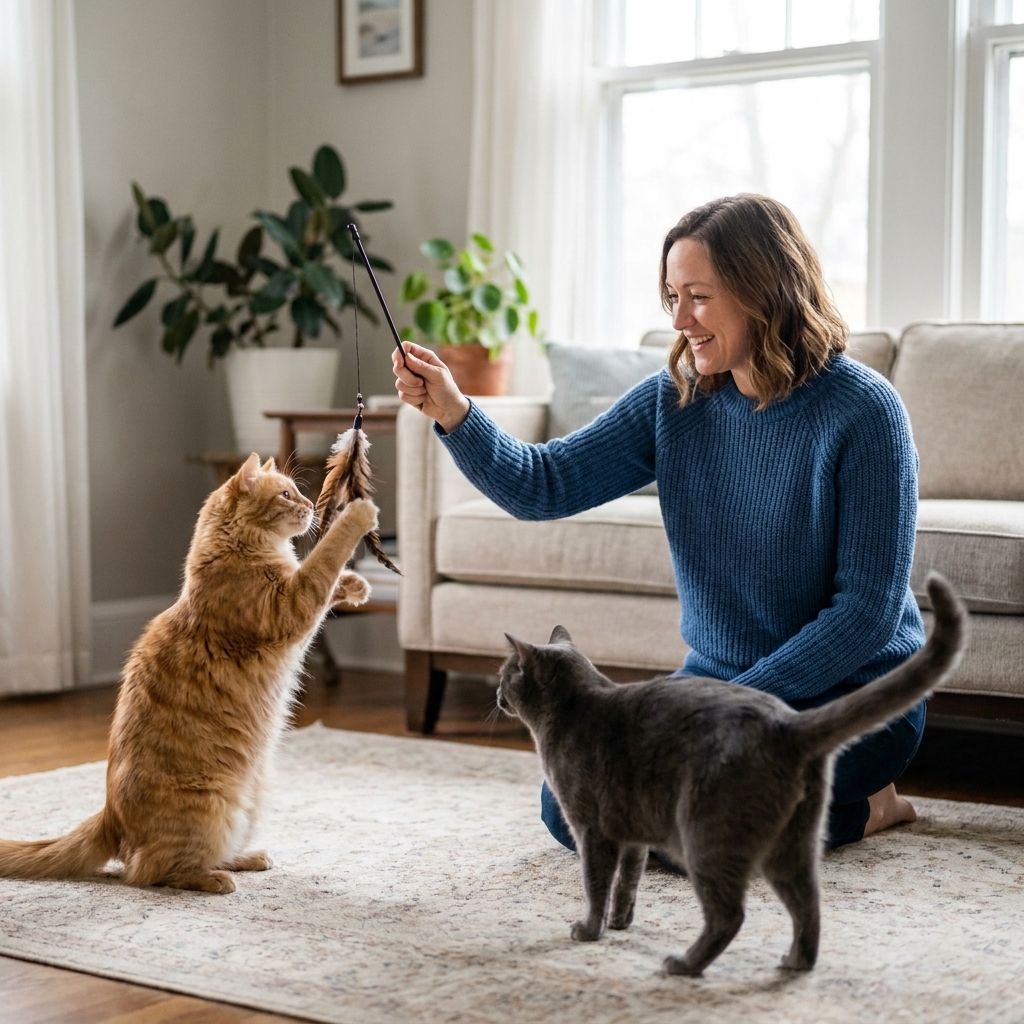
- Add structure: use wand toys, treat scatters, or two food puzzles placed far apart.
- Keep exits open: block dead-end hiding spots where a cat could be trapped, but provide safe vertical escapes and multiple routes away.
- End early: finish the session while both cats are still doing okay.
Helpful tools: a large piece of cardboard or a pillow as a visual blocker if one cat fixates, and treats to redirect attention. Avoid picking up a keyed-up cat with your hands, since that is how people get scratched or bitten during redirected aggression.
Extra safety prep: trim nails before early supervised visits if your cats tolerate it. It can reduce damage if someone swats, but it is not a replacement for a slow introduction.
Unsupervised time
Only move to unsupervised time when you have seen a pattern of calm interactions for at least a week: passing without drama, relaxed body language, and no chasing that ends in a cornered cat. Many households reach this in 3 to 6 weeks, but there is no prize for speed.
What not to do
- Do not just put them together and hope they sort it out. Fights create long-lasting fear associations.
- Do not punish hissing or growling. Those are distance-increasing signals, not bad behavior. Punishment can escalate aggression.
- Do not force physical contact like holding one cat and presenting them to the other.
- Do not use a carrier face-off. Trapping one cat while the other approaches can trigger panic and redirected aggression.
- Do not restrict food to make them eat together. Food should be a comfort, not a stressor.
Troubleshooting
Hissing at the door
Normal at first. Create more distance during door feeding sessions, increase scent swapping, and add playtime for the resident cat before door sessions to take the edge off. If the hissing escalates daily, you moved too fast.
New cat hides and will not engage
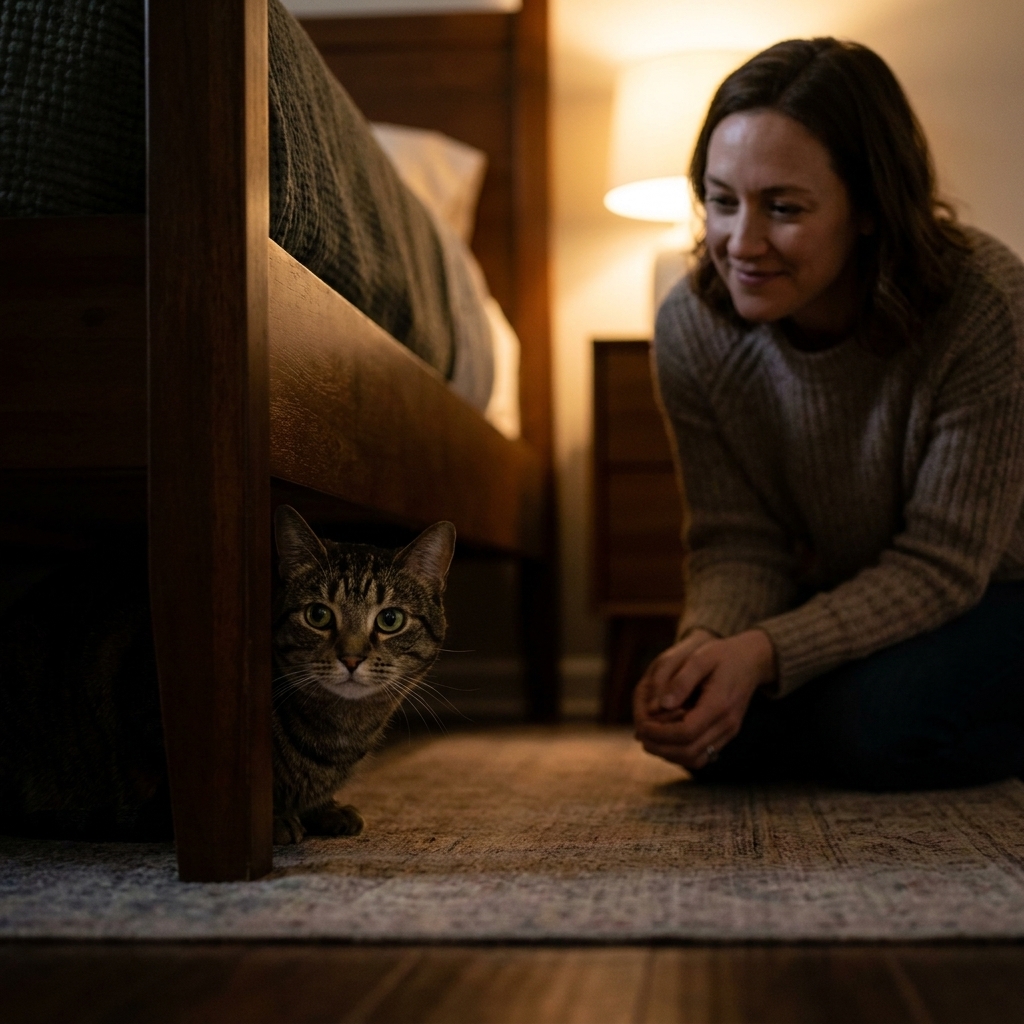
Hiding is a coping strategy. Give your new cat more decompression time. Sit quietly in basecamp, read a book, and toss high-value treats gently near the hiding spot. Use a wand toy only if your cat shows curiosity. Forced interaction backfires.
They were fine, then a chase happened
This often happens when one cat gets overstimulated or a resource feels scarce. Go back a stage for a few days.
- Add more litter boxes and scratching posts.
- Increase vertical space.
- Do more parallel play, not face-to-face staring time.
One cat stares like a statue
Hard staring is a common precursor to a lunge. Interrupt early by tossing a treat away from the other cat, using a wand toy to redirect, or stepping between them with a calm body block. Shorten sessions and increase distance next time.
They swatted
Not necessarily a deal-breaker. A single swat with no contact or a brief bat-and-retreat can be communication. What matters is the pattern. If swats are frequent, paired with growling, cornering, or chasing, slow down and return to barrier sessions.
Peeing outside the box
Stress and territory insecurity are common triggers. Add boxes (open, uncovered often helps), spread them out, clean accidents with an enzymatic cleaner, and reduce introduction pressure. Also call your vet to rule out urinary issues, especially in male cats.
Break up a fight safely
If a fight happens, your job is to separate without getting hurt.
- Do not put your hands in the middle.
- Start with low-startle options: toss a pillow or blanket between them, slide a large piece of cardboard in as a visual barrier, or stomp on the floor from a few steps away.
- If you must escalate: a loud clap or brief noise can interrupt, but avoid repeatedly startling cats. Some cats become more fearful or noise-sensitive, and that can make future sessions harder.
- Herd, do not grab: guide one cat behind a door using the barrier.
After a fight, separate fully and restart at an earlier stage for several days. Stress can stay elevated for about 1 to 3 days, so give everyone time to cool down.
When to stop and get help
Some situations are beyond DIY pacing. Bring in your veterinarian and a qualified behavior professional if you see:
- Injuries, puncture wounds, or repeated attacks
- Sustained, intense stalking or fixation that does not improve when you go back stages
- Severe fear or shutdown, including a cat that will not eat or use the litter box due to stress
- Humans being bitten or badly scratched, especially in redirected aggression moments
- Ongoing litter box issues that started with introductions
You do not need to white-knuckle this. Early help often prevents months of conflict.
Long-term harmony
- Resource abundance: multiple food stations, water sources, beds, and scratching areas
- Daily play: at least 10 to 15 minutes per cat, especially for young or high-energy cats
- Predictable routine: meals and play at consistent times
- Respect personalities: some cats become best friends, others become polite roommates. Both are wins.
If you want a single guiding principle: aim for calm and boring interactions. Friendship can grow from there, but safety has to come first.
FAQ
How long does it take?
Many cats need 2 to 6 weeks. Some pairs need longer, especially if one cat is fearful, under-socialized, or has a history of fighting. Moving slowly usually gets you to peace faster.
Should I let them hiss?
Yes, within reason. Hissing is communication. You do not want hissing to escalate into stalking, cornering, or swatting. If it escalates, end the session and increase distance next time.
Do pheromone diffusers help?
They can help some households, especially during early stages, but they are not a substitute for a gradual introduction. Think of them as a support tool, not the plan.
Kitten and adult cat?
Adult cats are often overwhelmed by kitten energy. Use more parallel play, keep supervised visits short, and make sure the adult has kitten-free zones and high perches. Many adult cats warm up once the kitten learns manners.
Multi-cat homes or dogs?
The same staged approach applies, but management matters more. In multi-cat homes, introduce one relationship at a time when possible. With dogs, prioritize a barrier setup, leash control, and calm rewards, and move even more slowly if your cat is wary.
When should I call a professional?
If you see repeated attacks, injury, intense fixation, redirected aggression toward people, or ongoing litter box issues tied to the introduction, it is time for veterinary guidance and a qualified behavior professional. You do not need to handle this alone.
If you are in the thick of introductions right now, take a breath. You are not failing because your cats are hissing. You are simply translating two different languages into a shared routine. Go slow, reward calm, and let scent do what it does best: make strangers smell like family.