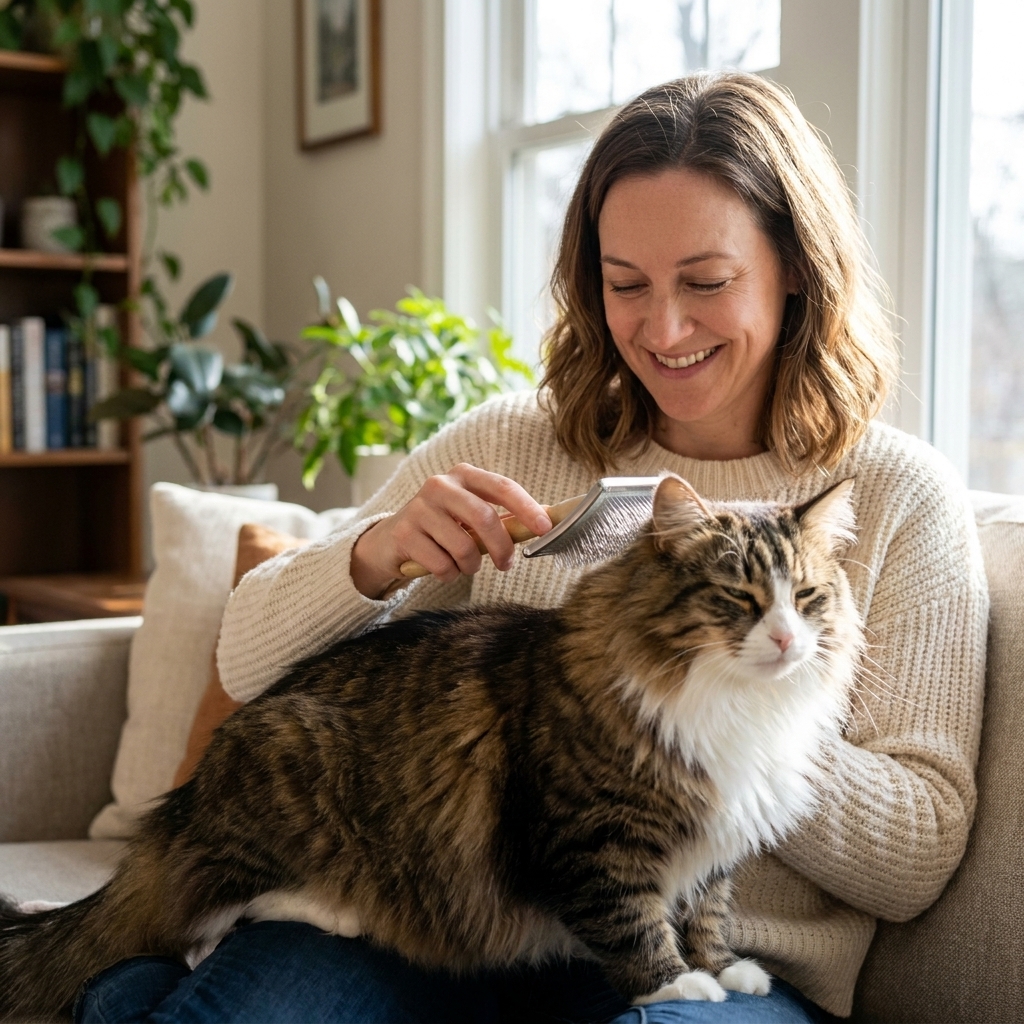
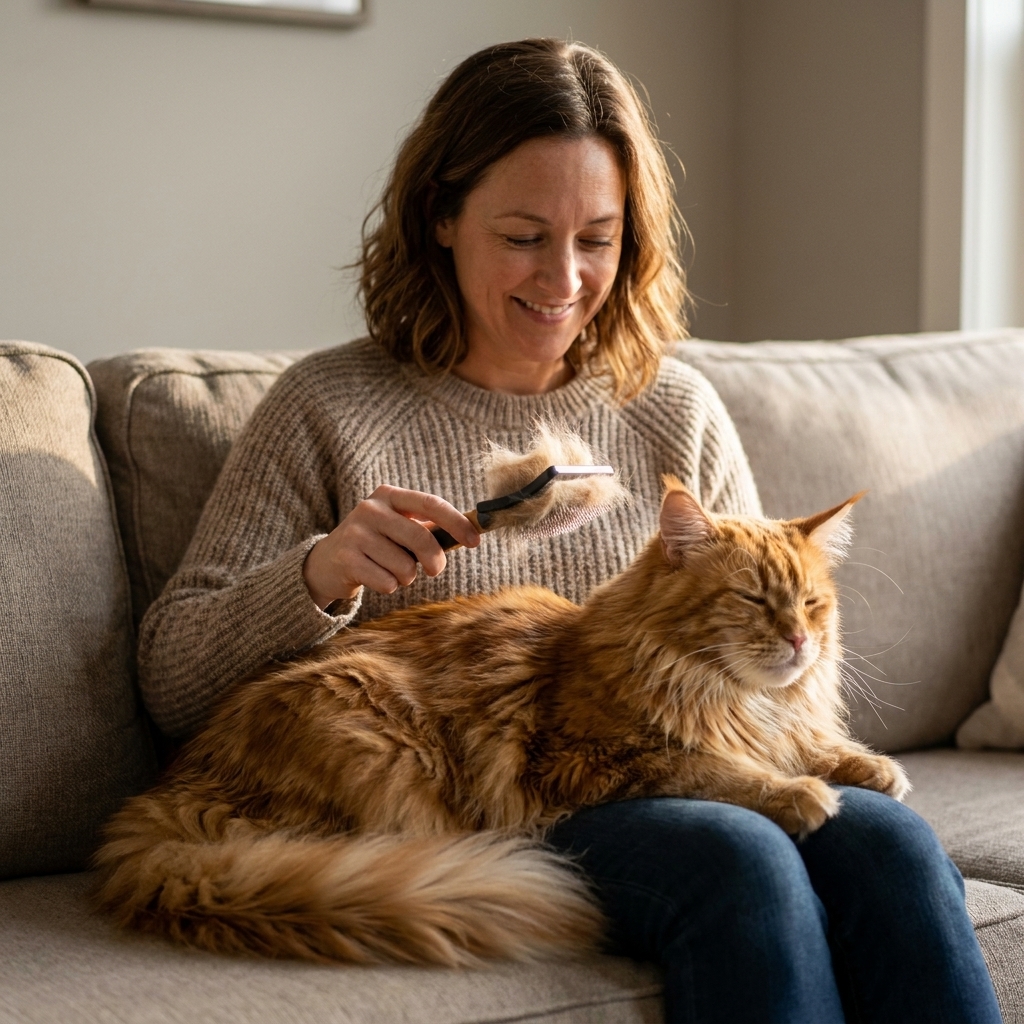
If you share your home with a cat, you also share your home with cat hair. I live with Clementine (a tortie who sheds like it is her job) and Waffles (an orange tabby who looks shocked every time he discovers his own fur on the couch). The good news is that removing cat hair is less about brute force and more about using the right tool for the right fabric.
Below are five methods I recommend often in rescue and behavior work, plus a few prevention habits that make every cleanup easier.
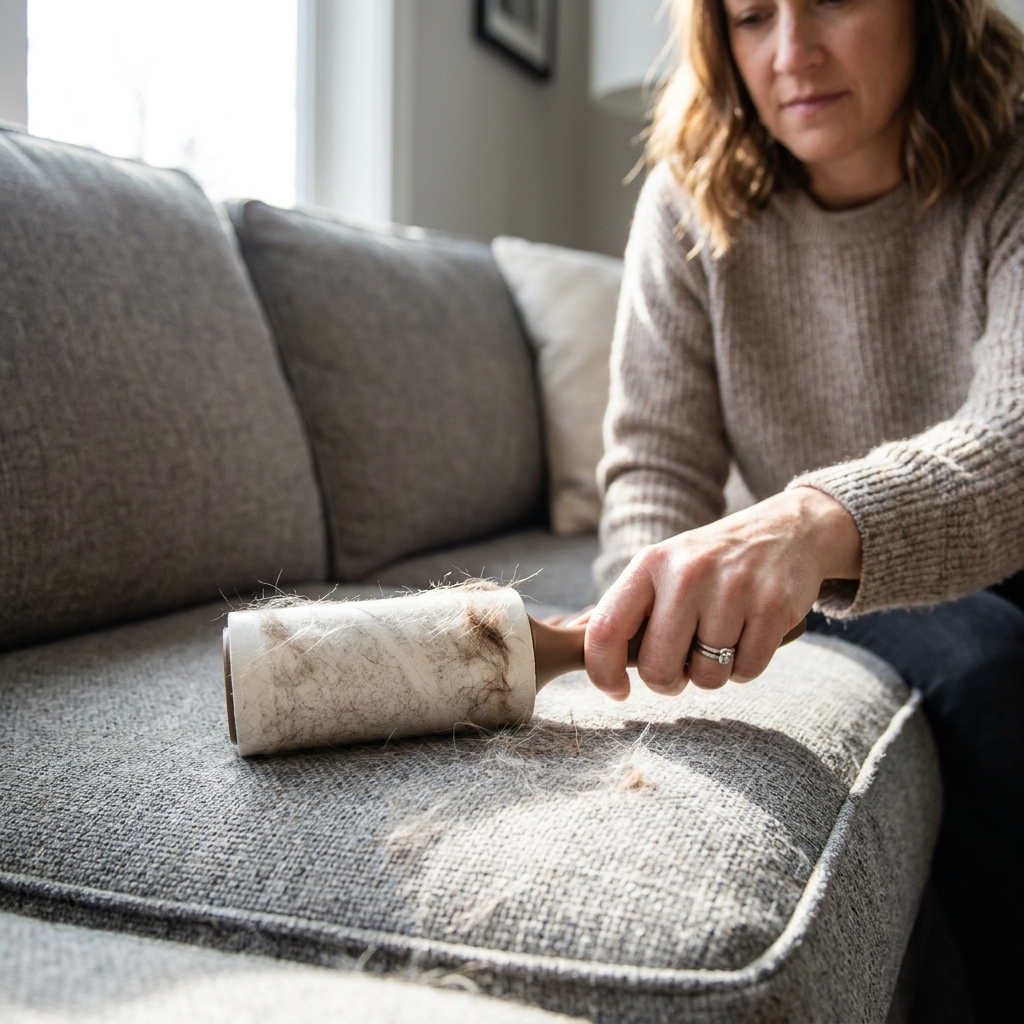
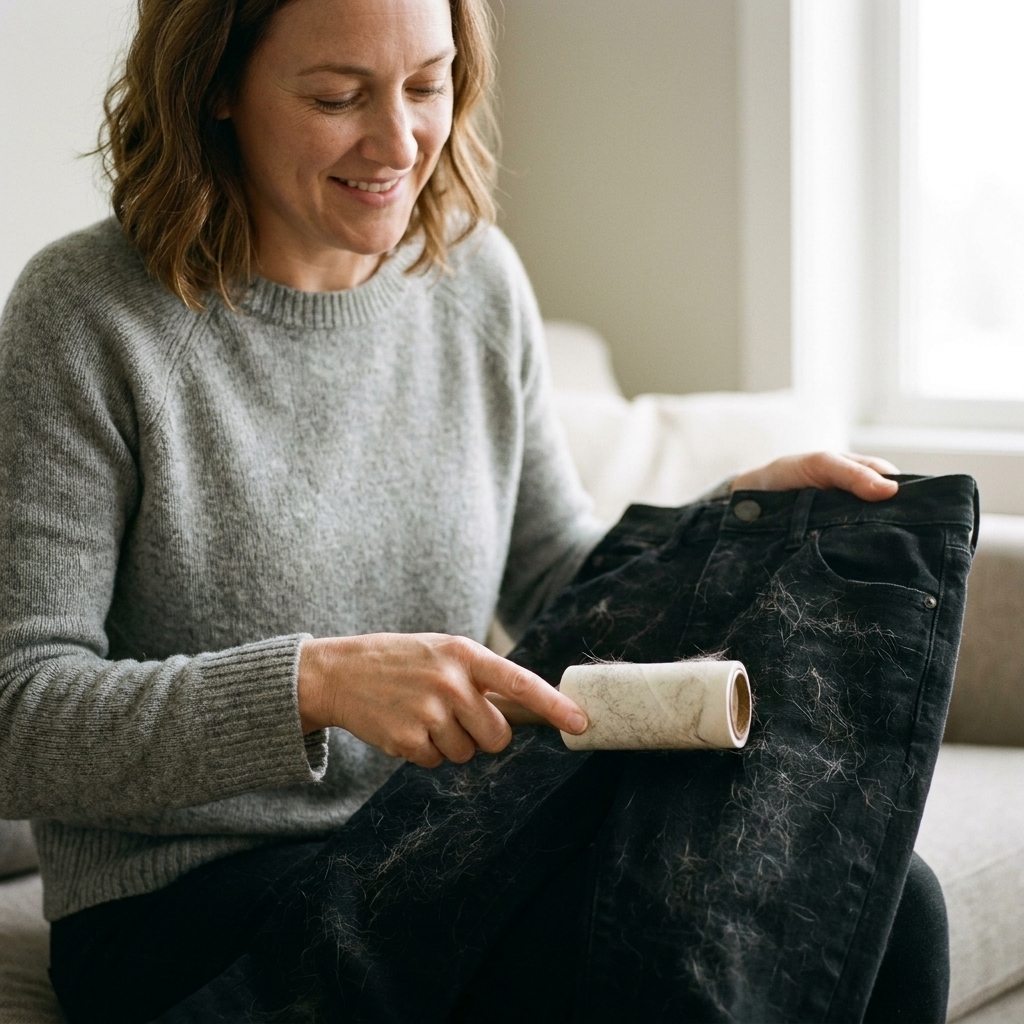
1) Lint rollers (and reusable sticky rollers)
Best for: clothing, throw pillows, cat trees, quick touch-ups before guests
A classic sticky lint roller is still one of the fastest ways to de-fuzz clothes and small fabric surfaces. The adhesive grabs hair that is sitting on top of fibers, which is why it feels so instantly satisfying.
How to get better results
- Roll in one direction first, then crosshatch (roll again at a slight angle). A second pass helps lift hair lodged along the weave.
- Use short strokes on knits. Long aggressive rolls can stretch sweaters and snag looser fabrics.
- Keep one by the door and one near the laundry. Cat hair tends to “teleport” during outfit changes.
What to look for
- Wide sheets for furniture and bedding
- Extra-sticky sheets if you have velvet, microfiber, or tightly woven upholstery
- Reusable sticky rollers if you want less waste (rinse and air dry per the manufacturer)
Real-life note: Lint rollers are amazing for the final polish, but on heavily coated sofas they can get expensive fast. If you are burning through sheets weekly, pair this with the rubber method below.
2) Rubber tools: silicone squeegees and rubber brooms
Best for: couches, rugs, car upholstery, cat beds, heavy buildup
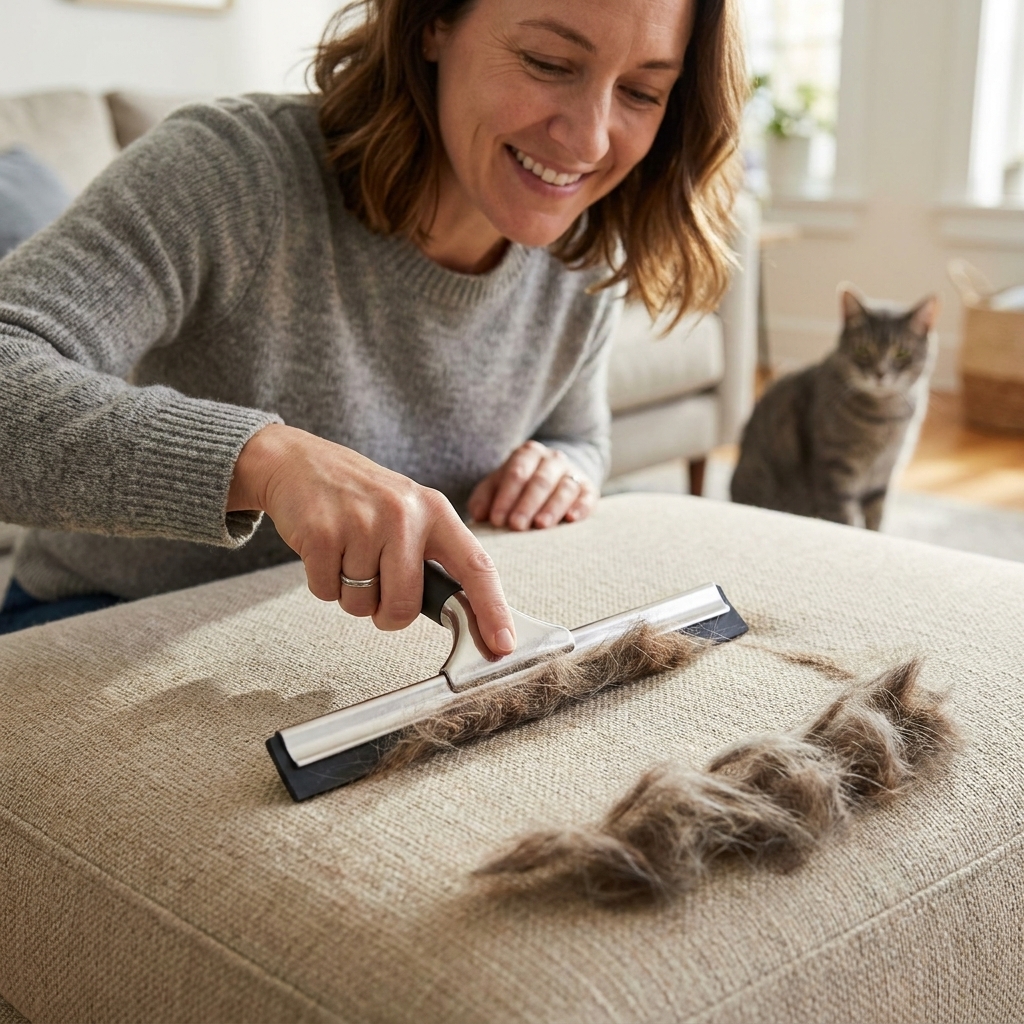
Rubber is my secret weapon for fur. The slight tackiness creates friction that pulls hair out of fabric. It also clumps hair into little tumbleweeds you can scoop up, which is oddly satisfying.
Two options that work
- Silicone squeegee (or rubber squeegee): Great for sofas, stairs, and car seats. Drag it firmly across fabric to lift and gather hair.
- Rubber broom: Best for low-pile rugs and carpeted areas where cats nap a lot. Use short strokes to pull hair up, then vacuum.
How to use rubber without damaging fabric
- Test a small spot first on delicate weaves.
- Use moderate pressure and keep the tool flat to avoid snagging.
- Be extra cautious with loose boucle and some velvets. If the fabric catches easily, switch to a vacuum upholstery tool or a lint roller instead.
- Follow with a vacuum or lint roller to grab what you loosened.
Why I love this method: It is inexpensive, reusable, and it works especially well on the “cat’s favorite cushion” where hair is woven in.
3) Pet-hair vacuum (with the right attachments)
Best for: larger areas, multi-cat homes, ongoing maintenance, allergies
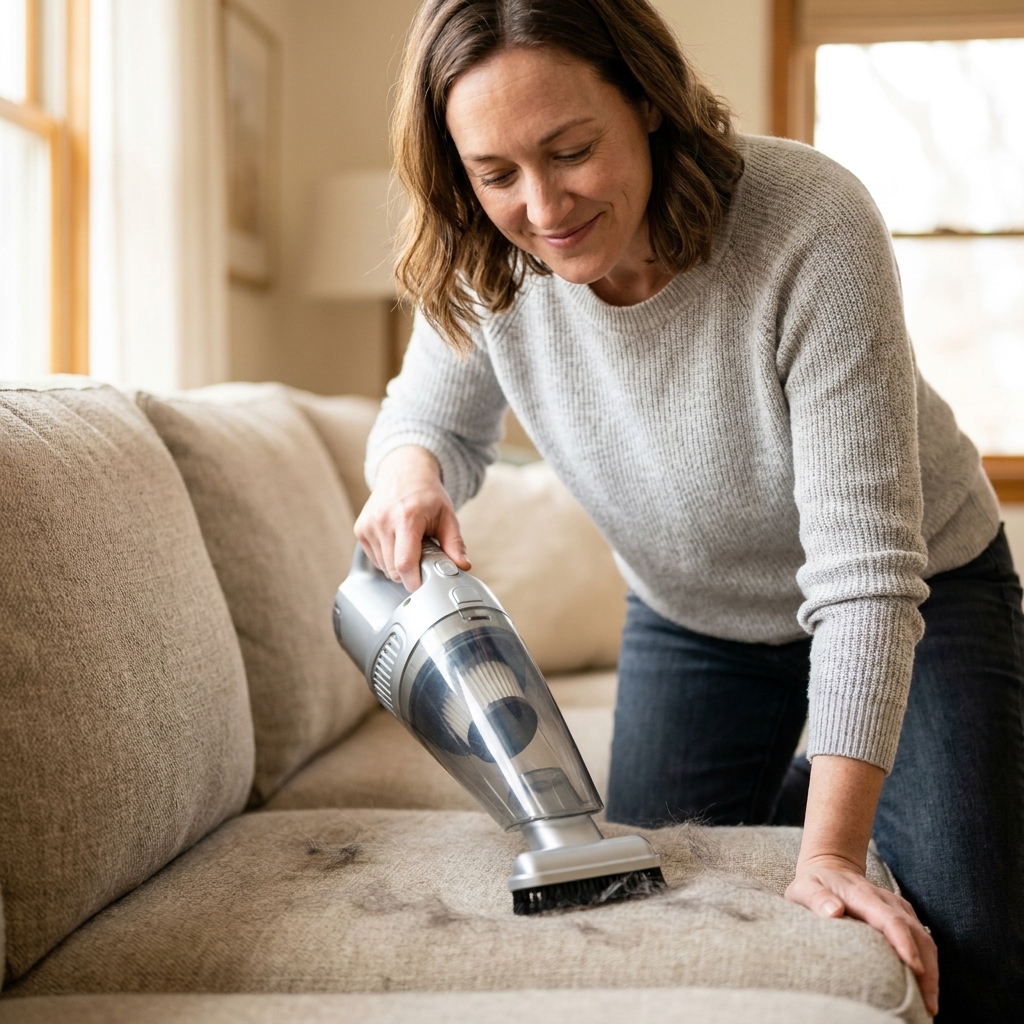
Not all vacuums handle cat hair equally. The key is airflow plus the correct brush or upholstery tool. A vacuum that excels at crumbs can still struggle with fine fur that embeds into fabric.
Features worth paying for
- Motorized upholstery brush or a turbo tool for couches and pet beds
- A sealed HEPA system if allergies are a concern (this can help capture fine dander and other allergen particles, not just hair)
- Easy-to-empty bin that does not require you to touch the fur compacted inside
- Strong suction with adjustable settings so you can safely vacuum curtains and delicate fabrics
Technique matters more than people think
- Vacuum slowly. Give the brush time to agitate and lift hair.
- Change direction. Do a pass with the nap of the fabric, then against it.
- Hit the “cat zones” first. The arm of the sofa, the window perch, the foot of the bed.
Cat-parent reality check: A vacuum is fantastic for maintenance. For hair that is already embedded, do a quick rubber-squeegee pass first, then vacuum for a deeper clean.
4) Damp microfiber cloths and dryer sheets (used safely)
Best for: quick furniture touch-ups, lamp shades, baseboards, fabric headboards
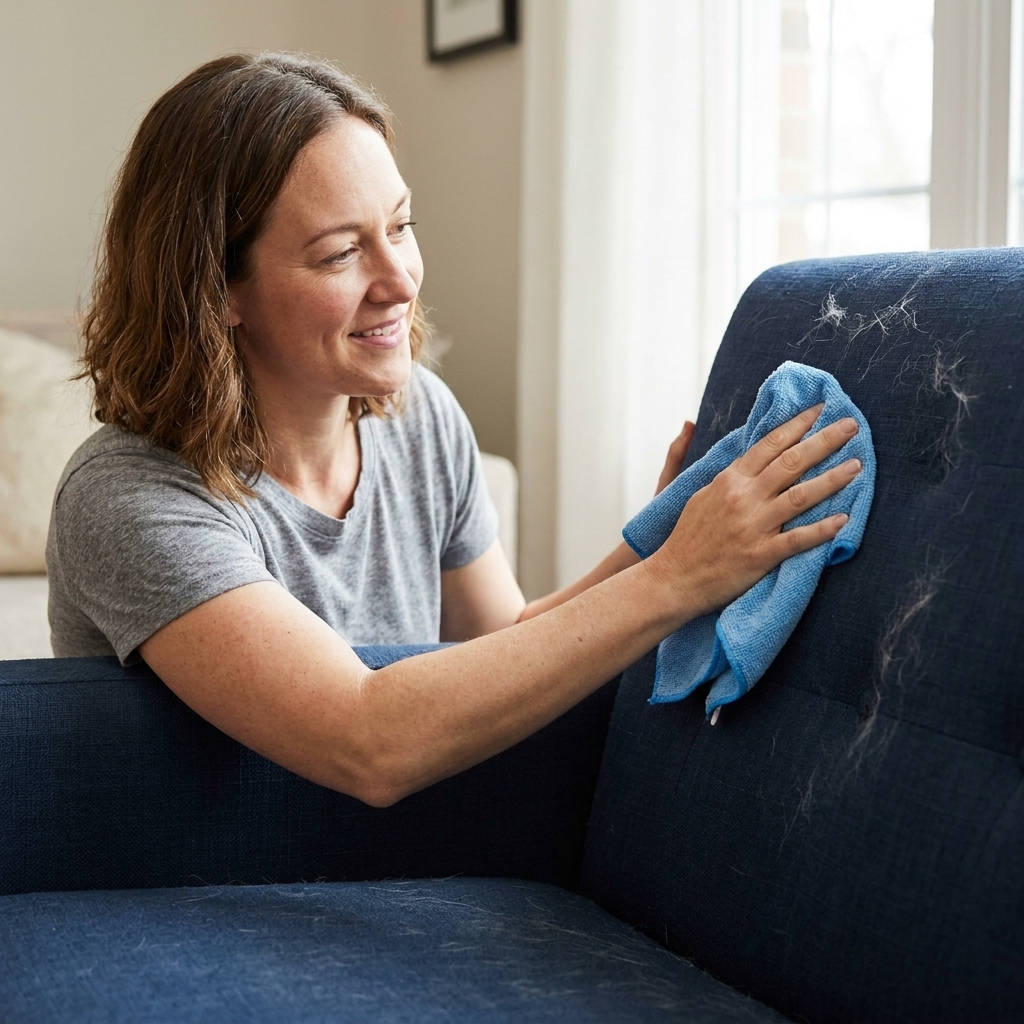
When you slightly dampen a microfiber cloth, the moisture helps hair cling to the cloth instead of floating around. This is especially helpful for surfaces where a lint roller is awkward.
Microfiber method
- Lightly mist a microfiber cloth with water (do not soak it).
- Wipe in one direction to gather hair.
- Rinse the cloth as it loads up, then wring and repeat.
What about dryer sheets?
Dryer sheets can reduce static and help pick up stray hairs in a pinch, but I prefer microfiber for routine use. If you do use a dryer sheet on furniture, keep it out of your cat’s reach and avoid rubbing it on areas your cat licks or sleeps on. Some cats will chew anything crinkly, and dryer sheet residue can irritate their mouth or stomach if they get ahold of it.
5) Laundry strategies that actually de-fur clothes
Best for: clothing, blankets, slipcovers, removable cushion covers
If cat hair is coming out of the washer still glued to your clothes, you are not alone. A washer agitates and rinses well, but it does not always pull hair off fabric the way a dryer can. Results also vary by fabric and washer type.
My go-to routine for fur-heavy loads
- Shake items outside first. It feels silly, but it dramatically reduces how much hair ends up in your machine.
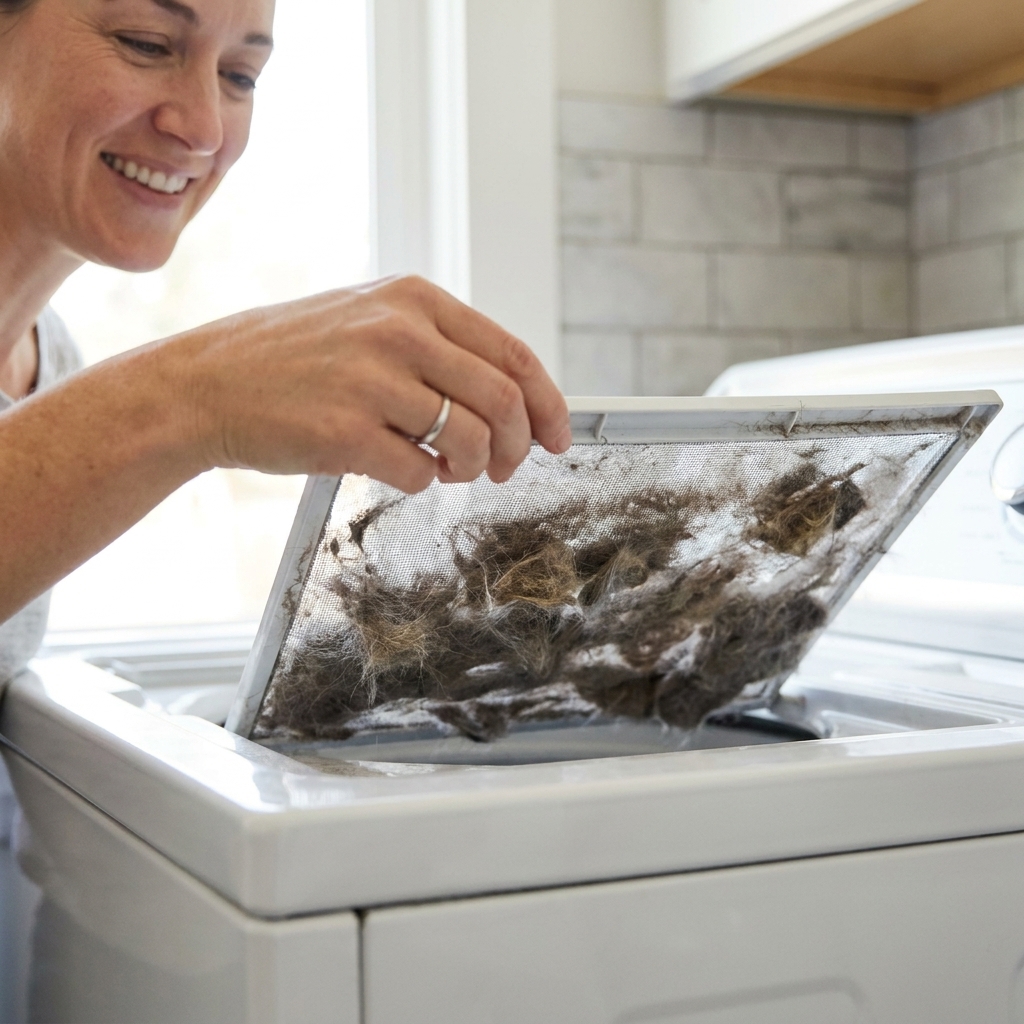
- Do a short dryer cycle before washing (if the fabric allows). 10 minutes on low or air fluff helps loosen hair. Clean the lint trap right after.
- Wash as usual. Use your normal detergent. Avoid overloading the washer since crowding prevents hair from moving into the water.
- Dry thoroughly. Hair releases best when the load tumbles freely and fully dries. Clean the lint trap again.
Helpful add-ons
- Wool dryer balls: Reduce static and help hair migrate to the lint trap.
- Laundry hair catchers: Some work better than others depending on fabric and washer type. If you try one, treat it as a bonus, not a miracle.
Machine-care tip: If you wash a lot of pet bedding, run an empty rinse cycle occasionally and wipe the washer gasket and drum rim to prevent fur buildup.
Prevent hair buildup
Hair removal tools work best when you are not fighting a month of accumulation. These habits keep fur from reaching “felt blanket” status on your furniture.
- Brush regularly. Even 3 to 5 minutes a few times a week makes a big difference. Pick a brush your cat tolerates, then keep sessions short and reward with a treat.
- Use the right grooming tool. Slicker brushes are great for many coats, rubber curry-style brushes are gentle for short-haired cats, and deshedding tools can help but should be used lightly so you do not irritate skin.
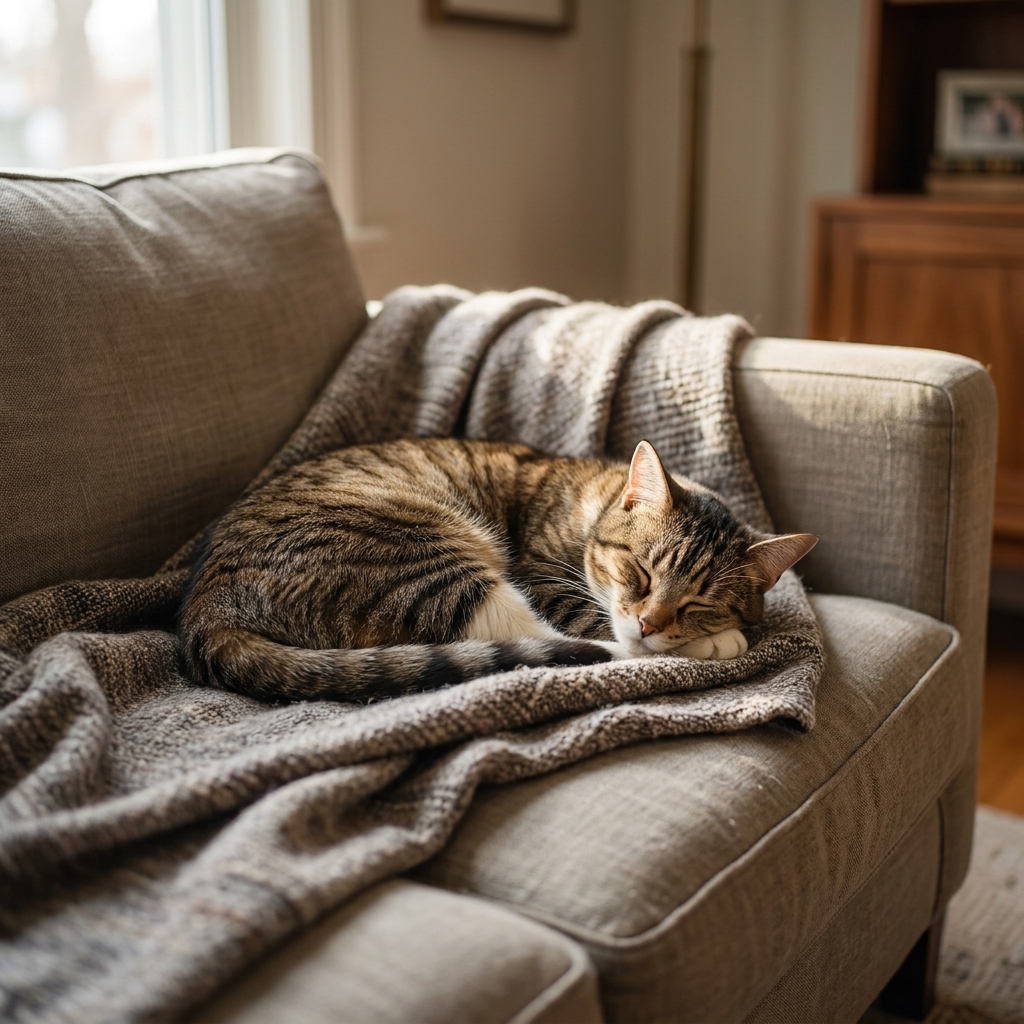
- Add washable throws where your cat lounges. One throw blanket is easier to de-fur than an entire couch.
- Use a dedicated cat blanket on the bed. Especially if your cat likes sleeping on your pillow like a tiny, furry supervisor.
- Vacuum on a schedule, not a panic. A quick twice-weekly pass beats a sweaty pre-guest marathon.
- For allergies, think beyond the floor. Washing throws regularly and running an air purifier or improving ventilation can help reduce lingering dander in the air.
Quick picks
- If your couch is covered: Rubber squeegee first, then vacuum, then lint roll for finishing.
- If your clothes are the problem: Lint roller plus a pre-wash de-fur dryer tumble.
- If allergies are in the mix: A pet-hair vacuum with a sealed HEPA system, plus frequent brushing and washable throws.
- If you want the simplest cheap win: A silicone squeegee is hard to beat.
FAQ
What removes cat hair from furniture best?
For most fabrics, the best one-two punch is a rubber squeegee to lift embedded hair, followed by a vacuum upholstery tool to remove what you loosened. Use a lint roller at the end for any remaining wisps.
How do I get cat hair off clothes without a lint roller?
A slightly damp microfiber cloth works surprisingly well, especially on sturdier fabrics like denim. For laundry day, do a 10-minute dryer tumble on low or air fluff before washing to loosen hair, then dry fully.
Why does cat hair stick so much to some fabrics?
Static, tight weaves, and textured materials (like microfiber or certain knits) can hold onto fine hair. That is why friction-based tools like rubber and thorough tumbling in the dryer tend to outperform simple washing alone.