If you share your home with a long-haired cat, you have probably found it: the dreaded damp cylinder on the rug in the middle of the night. Hairballs are common, but they are not something your cat has to “just live with.” With the right grooming rhythm, a few smart diet tweaks, and safe hairball aids, most long-haired cats can go from frequent hairballs to rare, manageable episodes.
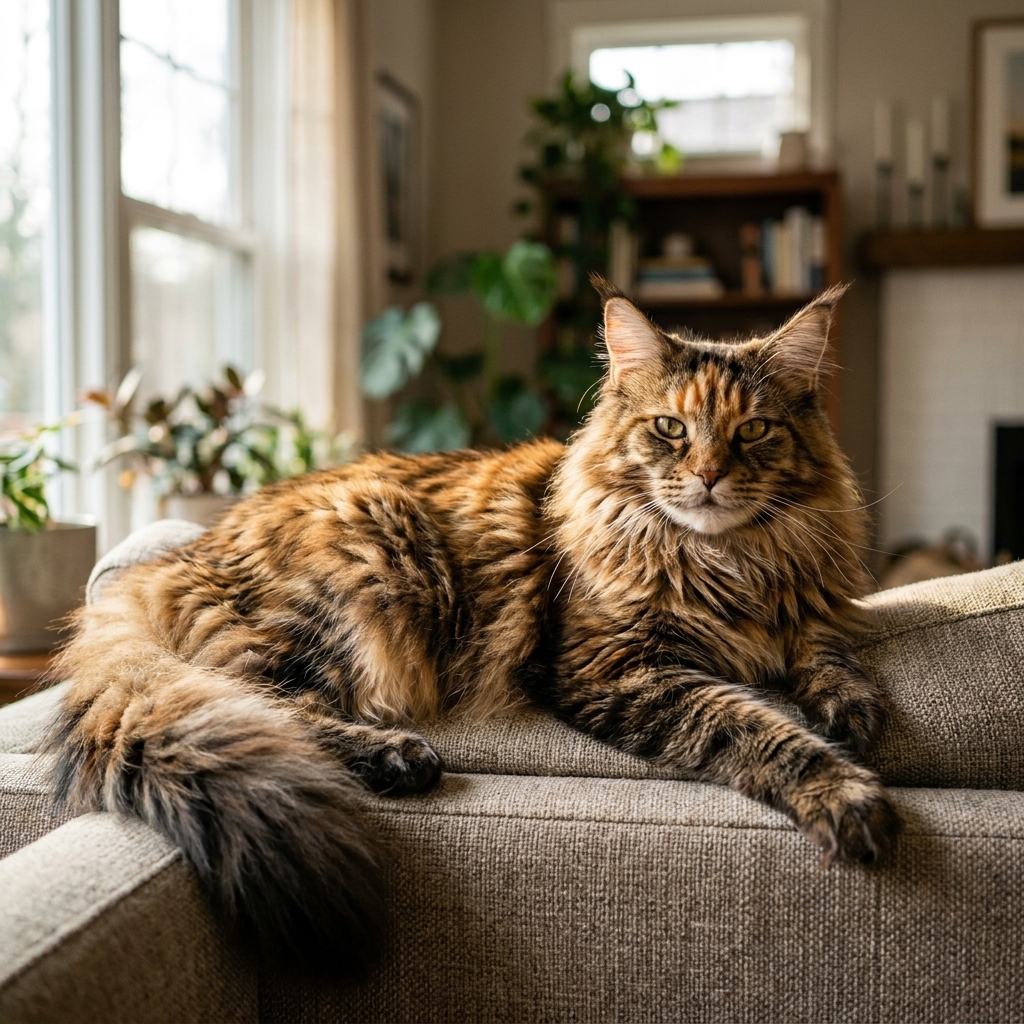
I have fostered plenty of fluffy cats who looked like they were wearing a luxury coat and felt like they were swallowing half of it. One of my current fosters, Clementine, is a perfect example: glorious fur, big grooming energy, and a lot more hair in her system than anyone asked for. The good news: prevention is usually simpler than it seems once you understand why hairballs happen.
Why long-haired cats get hairballs
Hairballs form when swallowed fur clumps together in the stomach and digestive tract. Cats swallow hair during grooming, and long coats simply provide more hair to swallow. Normally, small amounts of fur pass through the intestines and come out in the litter box. A hairball shows up when that fur does not move along smoothly and your cat vomits it up.
Common risk factors in fluffy cats
- Heavy shedding seasons (often spring and fall)
- Frequent self-grooming, including overgrooming from stress or itchiness
- Dry stool or mild constipation, which makes it harder for hair to pass
- Low moisture intake, especially in cats eating mostly dry food
- Skin irritation from fleas, allergies, or dry skin leading to extra licking
- Obesity or arthritis, which can reduce effective grooming and increase matting, then trigger intense grooming when the cat can reach certain spots
If hairballs are happening often or vomiting is becoming routine, it is worth treating it as a solvable problem, not just a gross fact of life.
Grooming routines that actually reduce hairballs
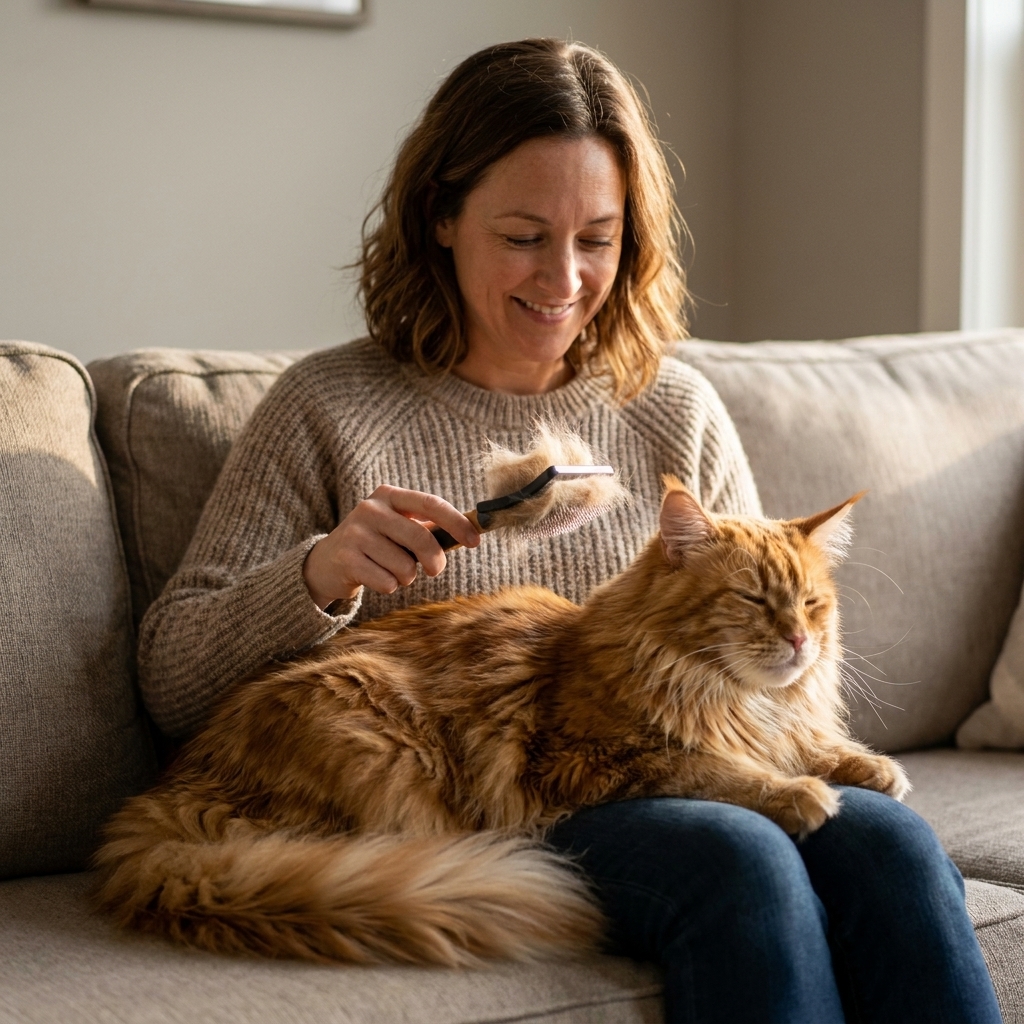
Grooming is your number one hairball prevention tool for long-haired cats. The goal is not just to make your cat look tidy. It is to remove loose undercoat before your cat swallows it.
How often should you brush?
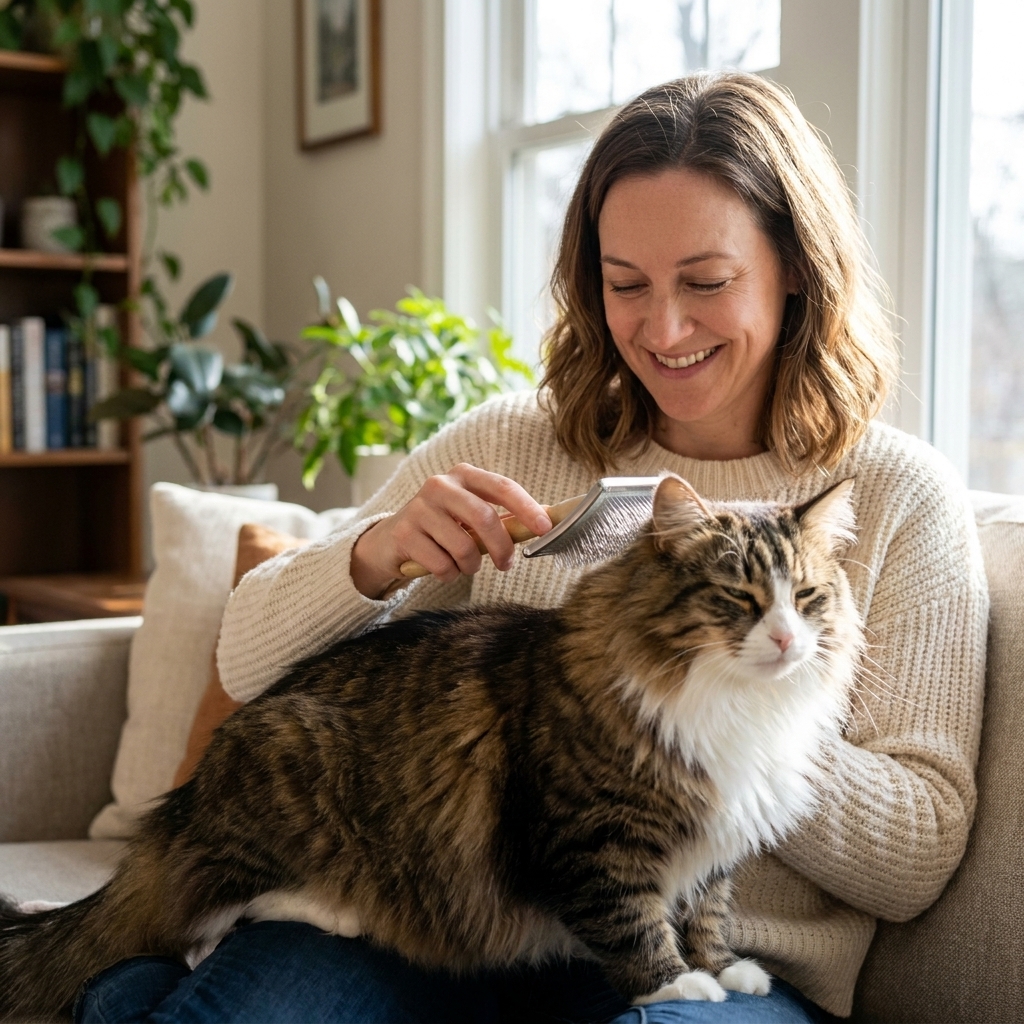
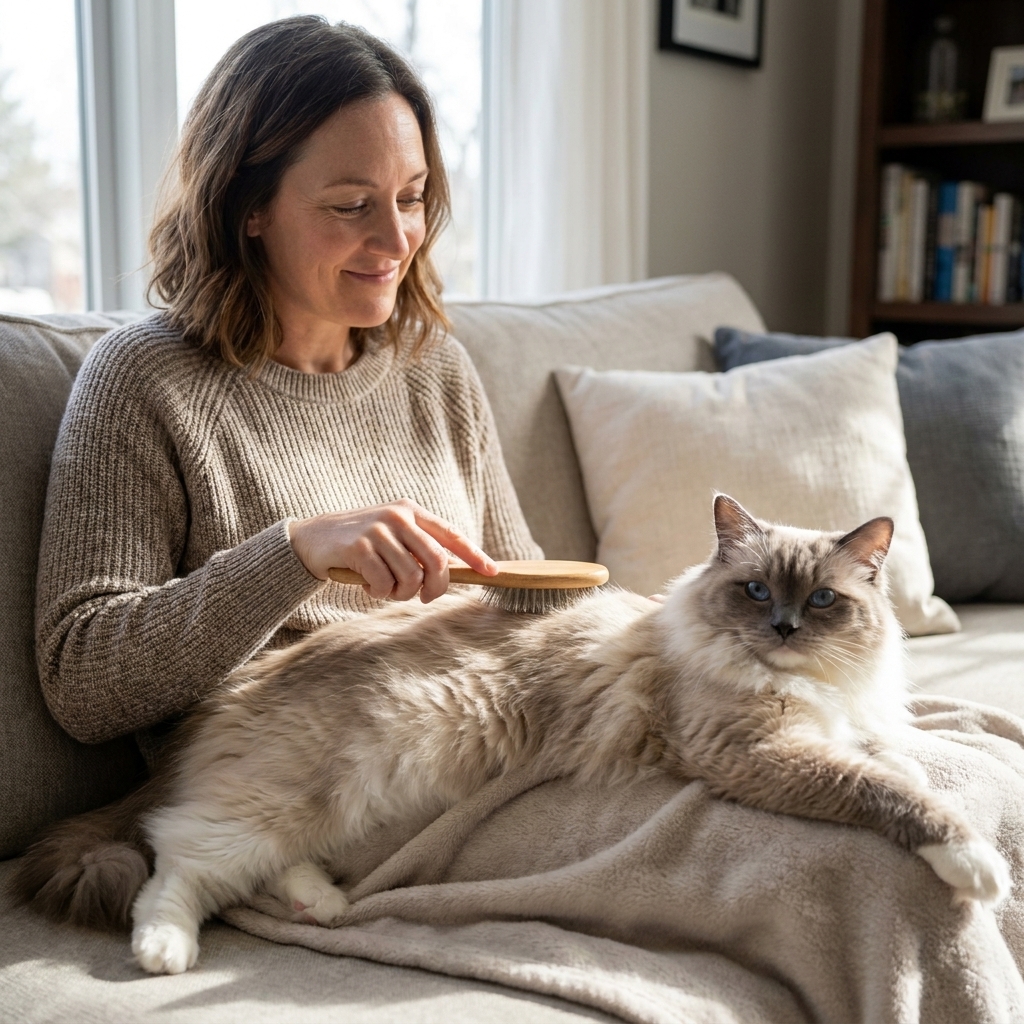
Most long-haired cats do best with daily brushing, even if it is just 3 to 5 minutes. During heavy shed periods, you may need two short sessions a day. Consistency beats marathon grooming sessions that end in frustration for both of you.
Brush technique that protects the skin
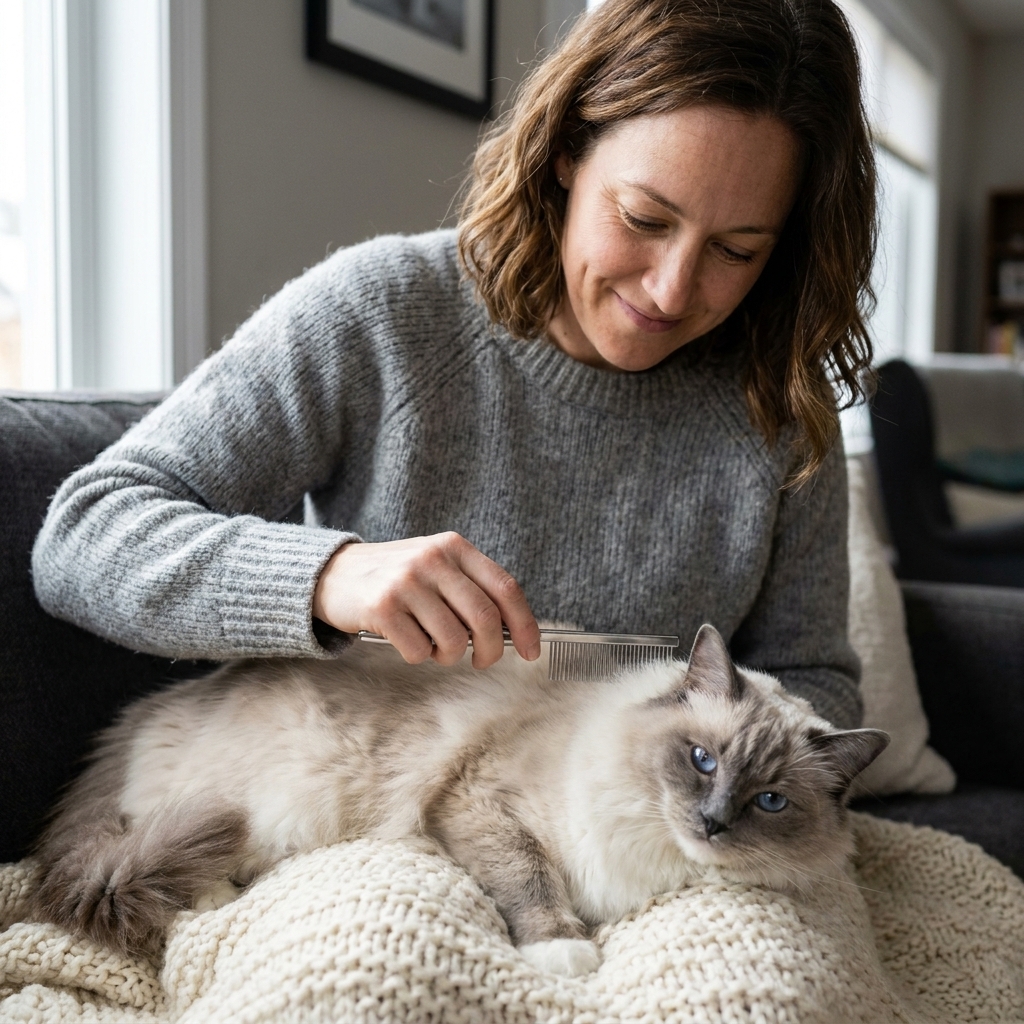
Start gently and work in small sections. If you hit a tangle, comb from the ends toward the skin instead of yanking straight through. If you see redness, feel heat, or your cat starts twitching or flinching, stop and reset. A calmer, shorter session today beats a battle that makes tomorrow impossible.
Best brush types for long coats
- Stainless steel comb: My top pick for long hair because it helps find tangles and pulls loose hair from deep in the coat. Look for a comb with both wide and fine teeth.
- Slicker brush: Great for surface fluff and light tangles. Use a gentle hand and short strokes to avoid skin irritation.
- Deshedding tool: Can be helpful, but use cautiously. Some tools can over-strip the coat or irritate skin if used too aggressively or too often. If your cat’s coat seems thinner, frizzy, or your cat becomes sensitive to brushing, scale back.
Hairball-friendly diet
Food can make a noticeable difference, especially for cats who are prone to constipation or who produce dry, firm stools. The best diet for hairballs supports two things: healthy gut motility and hydration.
Hydration is a quiet hairball remedy
If I could pick one change that helps many long-haired cats, it is increasing moisture intake.
- Add more wet food or a mixed wet and dry routine if your cat will accept it.
- Use warm water or a low-sodium broth made for pets to “float” canned food, creating a stew-like texture.
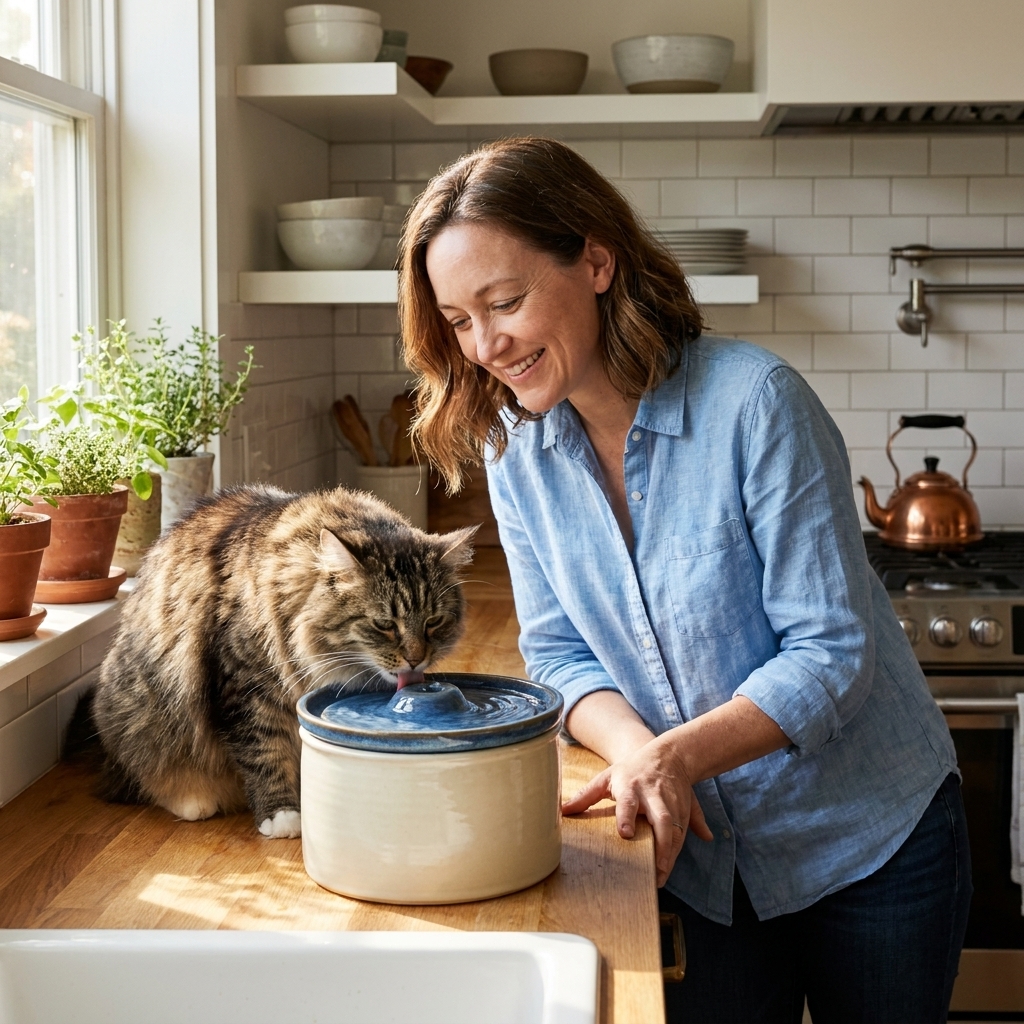
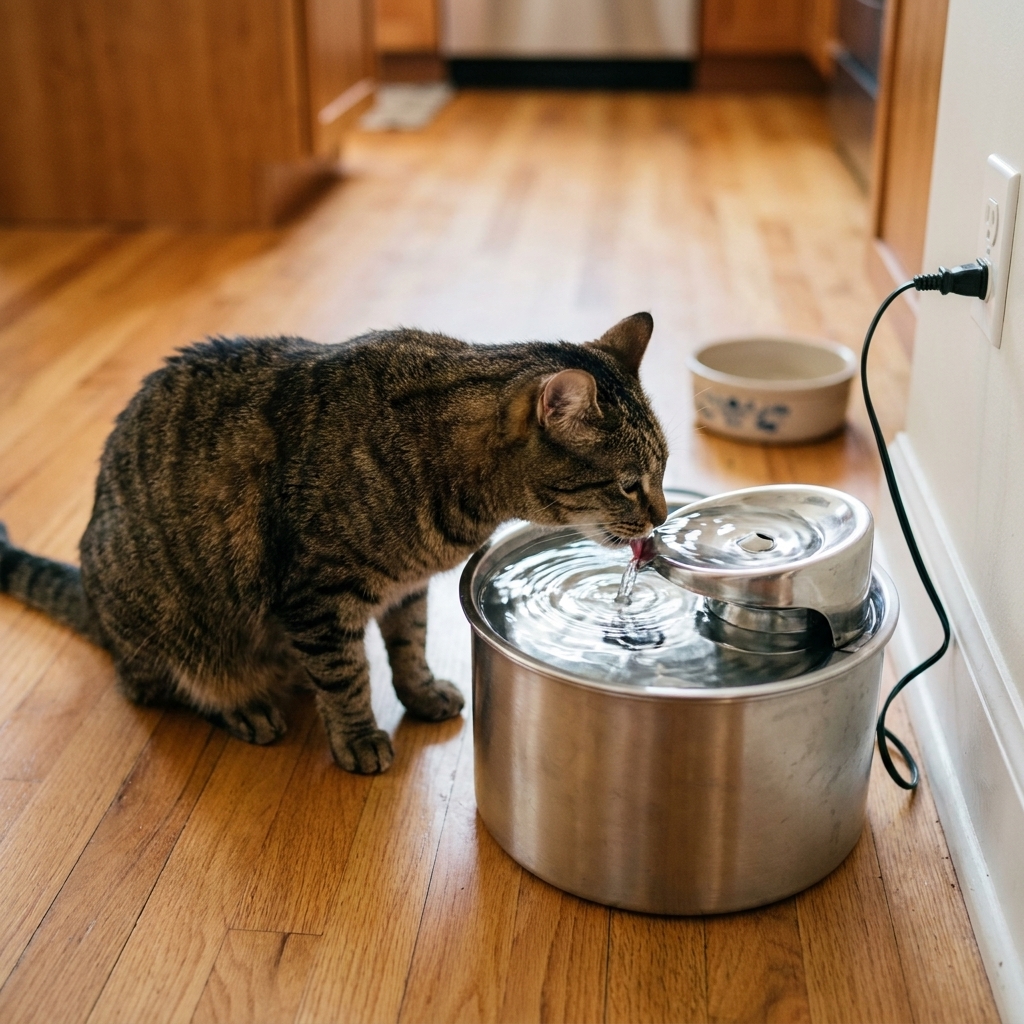
- Try a water fountain if your cat prefers moving water.
More moisture often means softer stool and smoother “traffic flow” for swallowed hair.
Fiber: helpful in the right amount
Many hairball diets use added fiber to help move hair through the intestines. For some cats, this is a win. For others, too much fiber can lead to larger stools, gas, or even constipation if water intake is low.
If you are considering a higher-fiber hairball formula, I recommend:
- Transition slowly over 7 to 10 days to avoid stomach upset.
- Watch the litter box: You want regular, comfortable stools, not dry pebbles or straining.
- Pair fiber with moisture: Fiber works best when your cat is well hydrated.
Omega-3s for coat and skin support
A healthier coat can mean less breakage and less shedding. Some cats benefit from diets with added omega-3 fatty acids, or from vet-approved fish oil supplements. Do not start supplements casually, though. The dose matters, and some cats on certain medical diets should not add extra fats without guidance.
If itch is driving the licking
If your cat is licking because they are itchy, hairballs can be the symptom, not the root problem. Year-round, vet-approved parasite prevention and help for allergies or dry skin can reduce overgrooming and the amount of fur your cat swallows.
Safe hairball gels and pastes
Hairball gels can be useful for long-haired cats who get occasional hairballs despite good grooming. Many gels work by lubricating the GI tract so hair moves through more easily. Others rely more on fiber, malt, or stool-supporting ingredients. The right product depends on your cat and the bigger picture of their stool quality and vomiting pattern.
How often can you give hairball gel?
Always follow the label directions and your veterinarian’s advice. In general, many products are used:
- More frequently at first (for a few days) if a cat is actively prone to hairballs
- Then reduced to a maintenance schedule such as a few times per week
If you find you “need” gel daily long-term, I take that as a sign to reassess grooming, hydration, stool quality, or possible underlying issues like overgrooming or GI disease.
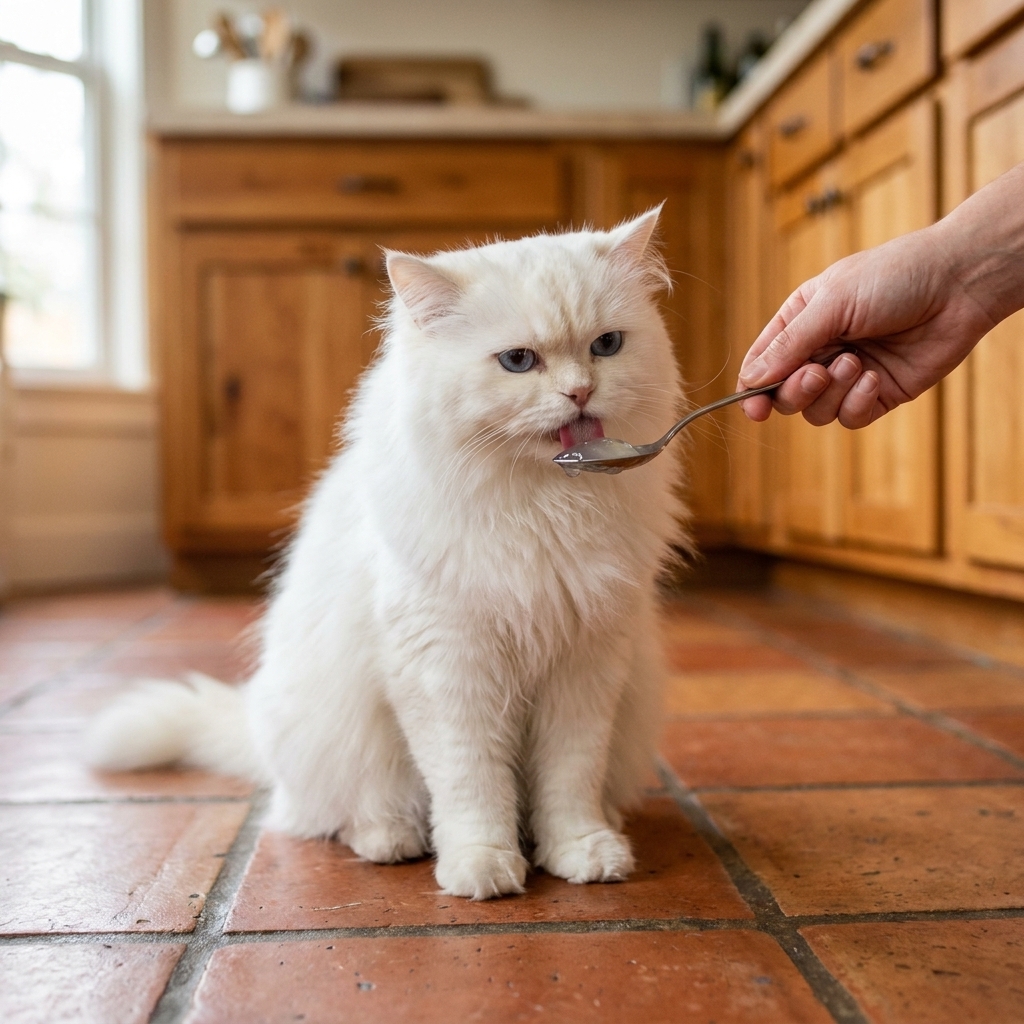
Tips for giving gels without a wrestling match
- Offer a small amount on a paw: Many cats lick it off naturally.
- Put a tiny dab on a lickable treat if your cat accepts it.
- Avoid force-feeding whenever possible: Stress can worsen overgrooming and GI upset.
Ingredients to be cautious about
Some hairball products contain petroleum-based lubricants and flavorings. Many cats tolerate them, but check with your veterinarian if your cat:
- Has chronic vomiting, pancreatitis history, or inflammatory bowel disease
- Is on multiple medications (some lubricants may interfere with absorption timing)
- Is a kitten, senior, or has any chronic illness
If your cat vomits shortly after gel use, refuses food, or develops diarrhea, stop and talk to your vet.
At-home support for easier passage
Along with grooming and diet, these supportive habits can help reduce how often hairballs happen.
Keep your cat moving
Movement supports healthy gut motility. Two to three short play sessions per day can make a real difference, especially for indoor long-haired cats.
- Use wand toys for 5 to 10 minutes
- Scatter-feed or use a puzzle feeder if your cat enjoys “hunting” meals
- Encourage stair climbing or couch-to-chair jumping for confident cats
Reduce matting to reduce overgrooming
Mats are uncomfortable and often trigger frantic licking and chewing around tangled areas. If your cat mats easily:
- Comb high-friction zones daily (armpits, belly, behind ears, under collar area)
- Consider a professional groomer for a sanitary trim or belly tidy
- Never cut mats with scissors at home, since cat skin is thin and easy to injure
Support constipation safely
If your cat’s stools are consistently dry or they strain, ask your veterinarian about constipation support. That might include a prescription GI diet or a stool-softening plan such as PEG 3350, but dosing and suitability need to be individualized.
Manage stress-related overgrooming
Some cats lick as a coping skill. If hairballs spike after a move, schedule change, or new pet, the “fix” is often stress reduction plus grooming support.
- Stick to predictable mealtimes
- Add vertical space like a cat tree or window perch
- Ensure enough litter boxes and safe resting spots in multi-cat homes
When to call the vet
Most hairballs are occasional. Frequent vomiting is not normal, even if your cat produces hairballs sometimes. Also, not all vomiting is hairballs. If your cat is regularly bringing up food or liquid, or seems nauseated between episodes, fur in the vomit does not automatically mean the hairball is the cause.
Seek veterinary care promptly if you notice
- Repeated unproductive retching (trying to vomit but nothing comes up)
- Loss of appetite or hiding, lethargy, or obvious discomfort
- Constipation, straining, or no stool for 24 to 48 hours depending on your cat’s normal routine
- Bloated abdomen
- Vomiting that is not hairball-shaped or contains blood
- Hairballs that are becoming frequent, happening weekly, or suddenly increasing from your cat’s baseline
- Weight loss, chronic diarrhea, or ongoing vomiting
These signs can point to issues like GI obstruction, inflammatory bowel disease, parasites, food intolerance, or other medical problems. A hairball can contribute to blockage, especially in long-haired cats, and that is an emergency.
A simple prevention plan
If you want a straightforward routine, here is my go-to plan for many fluffy cats:
Daily
- 3 to 5 minutes of brushing with a comb plus a quick slicker pass
- At least one wet meal or added water mixed into food
- 5 to 10 minutes of play
Weekly
- Check for mats in armpits, belly, and behind ears
- Wipe down with a damp hand or pet wipe if your cat tolerates it to pick up loose fur
As needed
- Hairball gel or paste used exactly as directed
- Veterinary check-in if hairballs become frequent or vomiting becomes a pattern
FAQ
How many hairballs are normal for a long-haired cat?
Occasional hairballs can be normal, especially during shedding season. What matters most is your cat’s baseline and whether the frequency is increasing. If hairballs are happening more than occasionally, showing up weekly, or your cat is vomiting in general on a regular basis, it is worth adjusting grooming and diet and talking with your vet.
Is coughing the same as trying to pass a hairball?
Not always. Cats may “hack” with a hairball, but coughing can also signal asthma or respiratory disease. If your cat frequently crouches with a stretched neck and seems to cough without producing a hairball, capture a video and show your veterinarian.
Do hairball treats work?
Some help, especially if they add modest fiber and your cat tolerates them. The downside is calories. For many long-haired cats, you will get better results from daily brushing plus added moisture than from piling on treats.
Can I give my cat olive oil, butter, or coconut oil for hairballs?
I do not recommend it as a routine remedy. Oils and fats can trigger GI upset in some cats, and they add calories fast. If you are tempted to try a home remedy, talk to your vet first, especially if your cat has a sensitive stomach or any history of pancreatitis.
Bottom line
For long-haired cats, hairball control is usually a three-part approach: remove loose hair with consistent grooming, keep the gut moving with moisture-forward nutrition and play, and use hairball products thoughtfully when needed. If hairballs become frequent, your cat is retching without producing anything, or you see appetite and energy changes, treat it as a medical question, not a grooming problem.
If Clementine could write this article herself, she would probably insist that the best hairball remedy is “more brushing, but only when I feel like it.” Real life is a little messier, but with a calm routine and the right tools, most fluffy cats improve quickly.