Maine Coons have a way of taking up space in your home and in your heart. They are famously social, often dog-like in their interest in “helping” with daily routines, and they come wrapped in a glorious coat that makes people assume they are high maintenance. The truth is a little more nuanced: Maine Coons are not difficult, but they do have big-cat needs. Their growth is slow, their bodies are substantial, and their coats and joints ask for consistent support.
I have worked with plenty of “gentle giants” in rescue who were surrendered for issues that were completely preventable: chronic mats, stomach upset from rapid diet changes, litter box avoidance because the box was too small, or weight gain that crept up when kitten calories stayed on the menu too long. Let’s set you up with a plan that keeps your Maine Coon thriving from kittenhood through the senior years.
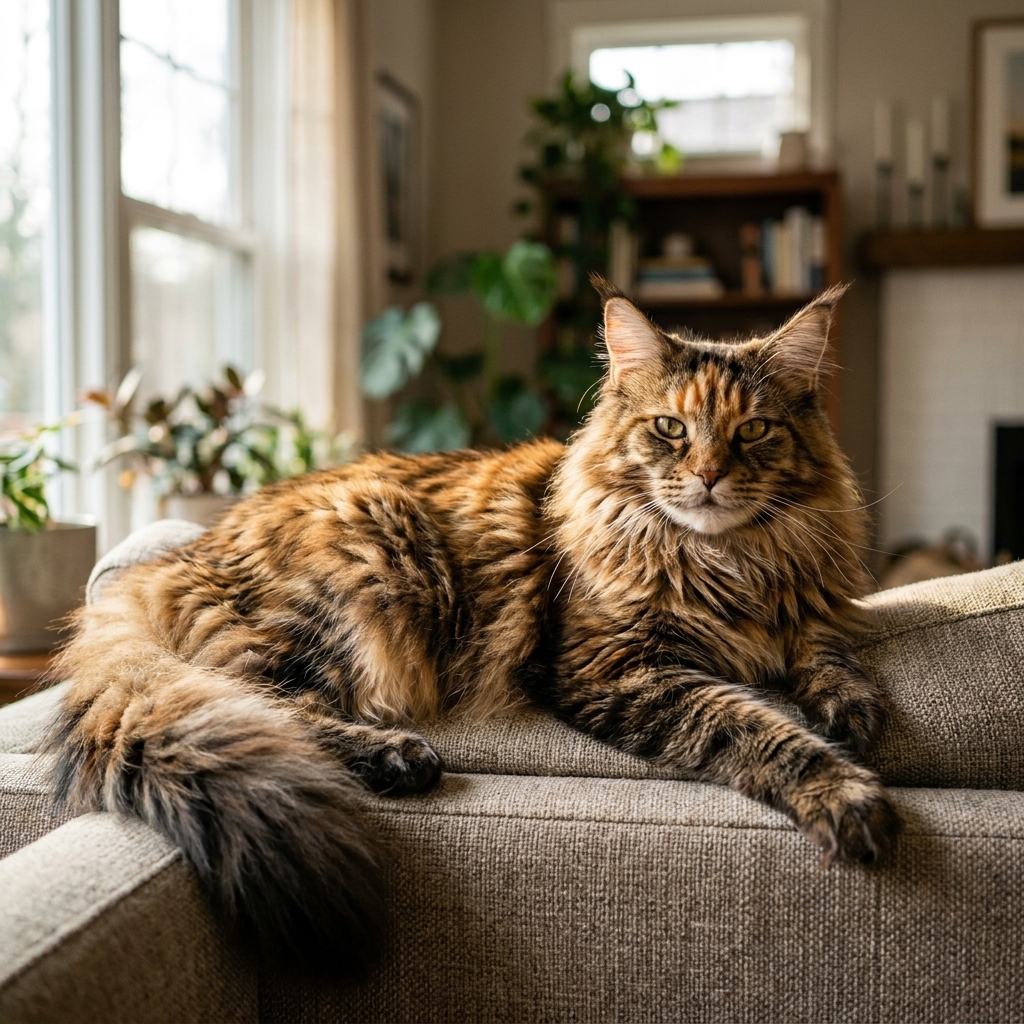
Maine Coon basics
Size, growth, and temperament
Maine Coons are one of the largest domestic cat breeds. They also mature slowly. Many do not fully fill out until around 3 to 4 years, and some can take up to 5 years. That long growth runway is part of why nutrition, joint support, and weight management matter so much.
Temperament-wise, most Maine Coons are friendly, curious, and people-oriented. Many enjoy being near you more than being on you. They can be chatty, playful well into adulthood, and surprisingly sensitive to household stress.
Coat and shedding
Their coat is typically medium-long with a shaggy texture and heavier ruff, britches, and belly fluff. It tends to resist tangling more than some longhair coats, but mats can still happen quickly in high-friction areas, especially during seasonal shed.
Home setup at a glance
- Litter box size: bigger than you think. Many Maine Coons need an “XL” box or even a low-entry storage tote style box for comfort.
- Scratching: tall, sturdy posts are non-negotiable.
- Perches: wide, stable cat trees and shelves that can handle a heavy cat safely.
Diet and nutrition
If there is one place Maine Coon parents accidentally go off track, it is food. Not because you are doing anything “wrong,” but because large, slow-maturing cats can look lean one month and suddenly look round the next. The goal is steady, controlled growth and a body condition that stays athletic, not bulky.
What to feed: wet, dry, or both?
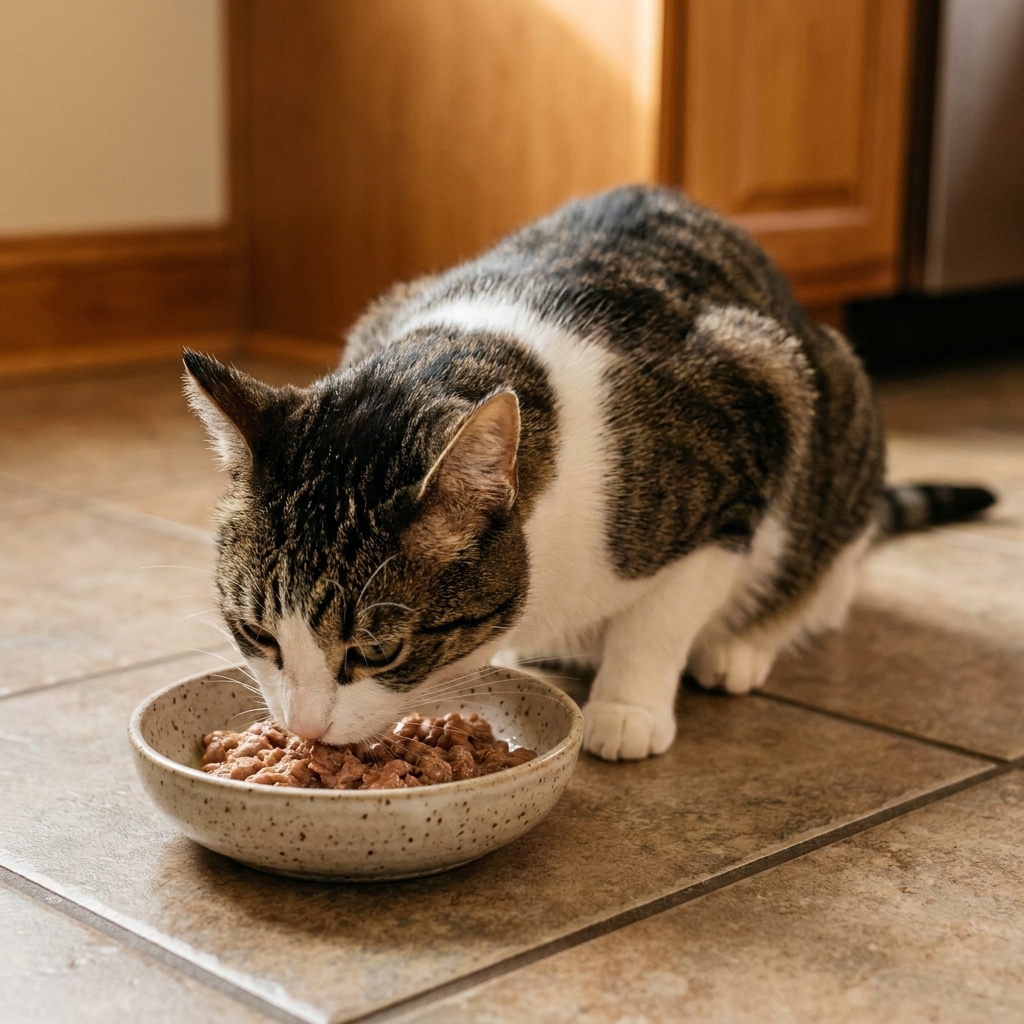
For most Maine Coons, a wet-forward diet (canned or balanced fresh) with some dry if it works for your household is a practical sweet spot. Wet food supports hydration and can make calorie control easier because you are feeding a larger volume of food for the same calories.
- Wet food benefits: hydration support, strong satiety for many cats, and many formulas are protein-forward.
- Dry food benefits: convenience, puzzle feeder friendly, can be helpful for multi-cat routines.
Whatever you choose, look for a diet labeled as complete and balanced for your cat’s life stage (kitten, adult, or all life stages). If you feed a mix, make sure the total daily calories still match your cat’s needs.
Protein, fat, and carbs: a practical approach
Maine Coons do best when their diet is anchored in animal-based protein. You do not need to become a label detective overnight, but here are friendly guidelines:
- Prioritize animal proteins (chicken, turkey, beef, fish) as primary ingredients.
- Moderate fat supports skin and coat, but too much can pile on calories quickly.
- Carbs are not “toxic,” but high-carb foods can make weight management harder for some cats.
Kitten feeding (and why Maine Coon kittens are different)
Maine Coon kittens often stay in that lanky, growing phase longer than other breeds. That does not mean they should free-feed indefinitely. In general:
- Up to 6 months: multiple meals daily (3 to 5) works well for most kittens.
- 6 to 12 months: aim for 3 meals daily if possible.
- 12 months and beyond: many transition to 2 meals daily, though some do best with 3 smaller meals.
Many Maine Coons can stay on a kitten formula longer than average, but it depends on body condition and activity. Your veterinarian can help you decide when to transition. When in doubt, use your cat’s body condition score and growth trend, not the calendar alone.
How much to feed (without obsessing)
Calorie needs vary wildly by age, activity, metabolism, and whether your cat is neutered. Use the feeding guide on the food as a starting point, then adjust based on:
- Waistline: you should see a waist when viewed from above.
- Ribs: you should be able to feel ribs with a light layer of padding.
- Energy: playful, steady energy is a good sign.
If your Maine Coon is gaining quickly, do not panic or slash food dramatically. Tighten portion measurements, reduce calorie-dense treats, and add gentle daily play. Small changes are safer and more sustainable.
Supporting joints and coat with nutrition
Because Maine Coons are big-bodied cats, joint support matters throughout life. Talk with your veterinarian about whether supplements are appropriate, especially if your cat is middle-aged or less active. Evidence for some supplements in cats is mixed, so I think of these as vet-guided trials, not automatic add-ons.
- Omega-3 fatty acids (EPA/DHA): can support skin, coat, and joint health.
- Joint supplements: options may include glucosamine, chondroitin, or green-lipped mussel, depending on your vet’s guidance.
Important: never add supplements casually if your cat has medical conditions or is on medication. “Natural” can still interact with health issues.
Treats and toppers
Treats are wonderful for training and bonding, especially with a smart, food-motivated Maine Coon. Keep treats to 10 percent or less of daily calories. Great options include freeze-dried meat treats, tiny bits of their regular wet food, or single-ingredient treats.
Common diet mistakes I see
- Switching foods too fast, causing diarrhea or vomiting. Transition over 7 to 10 days when possible.
- Free-feeding dry food long-term in a cat who is less active, leading to slow weight creep.
- Overusing fish-based diets. Fish can be fine, but relying on one protein forever can create a picky eater, and some fish-heavy formulas can be higher in certain minerals and fats. Aim for sensible variety unless your vet has you on a specific therapeutic plan.
Grooming and coat care
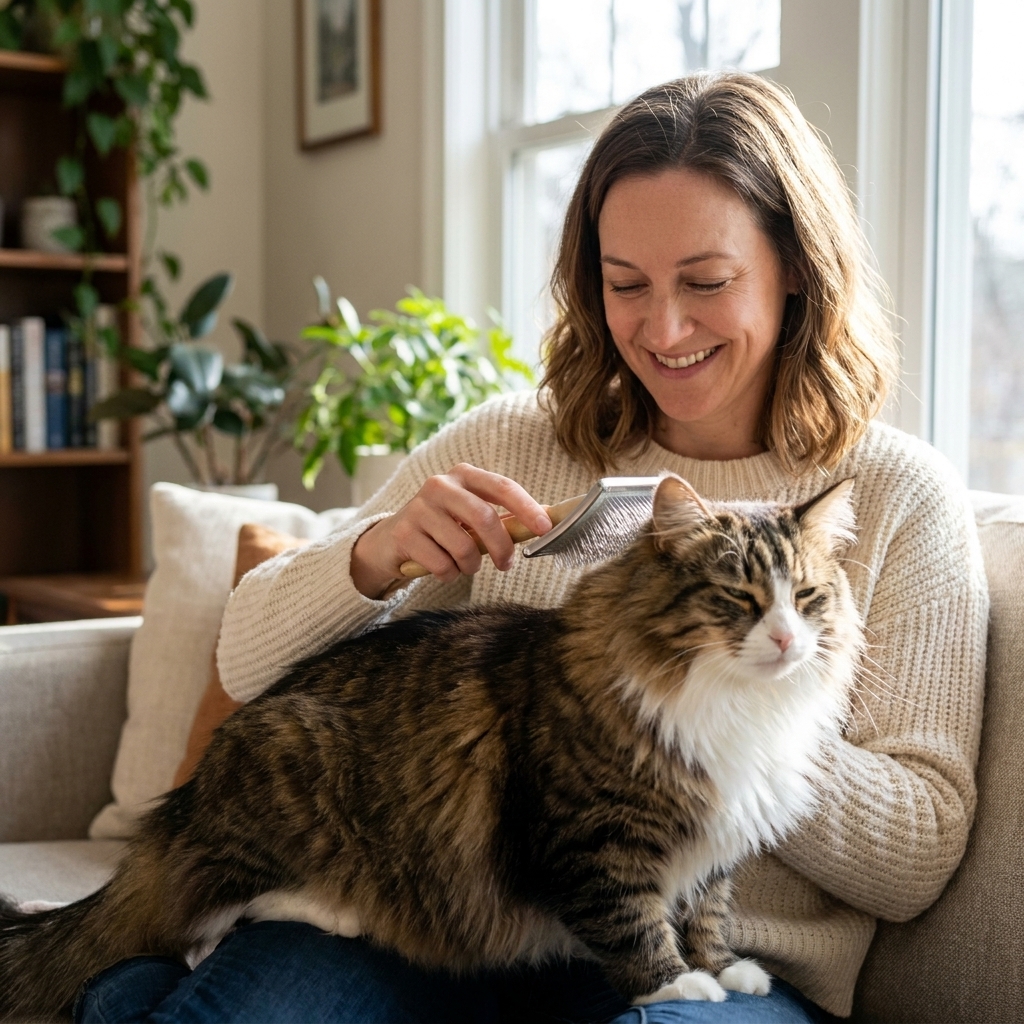
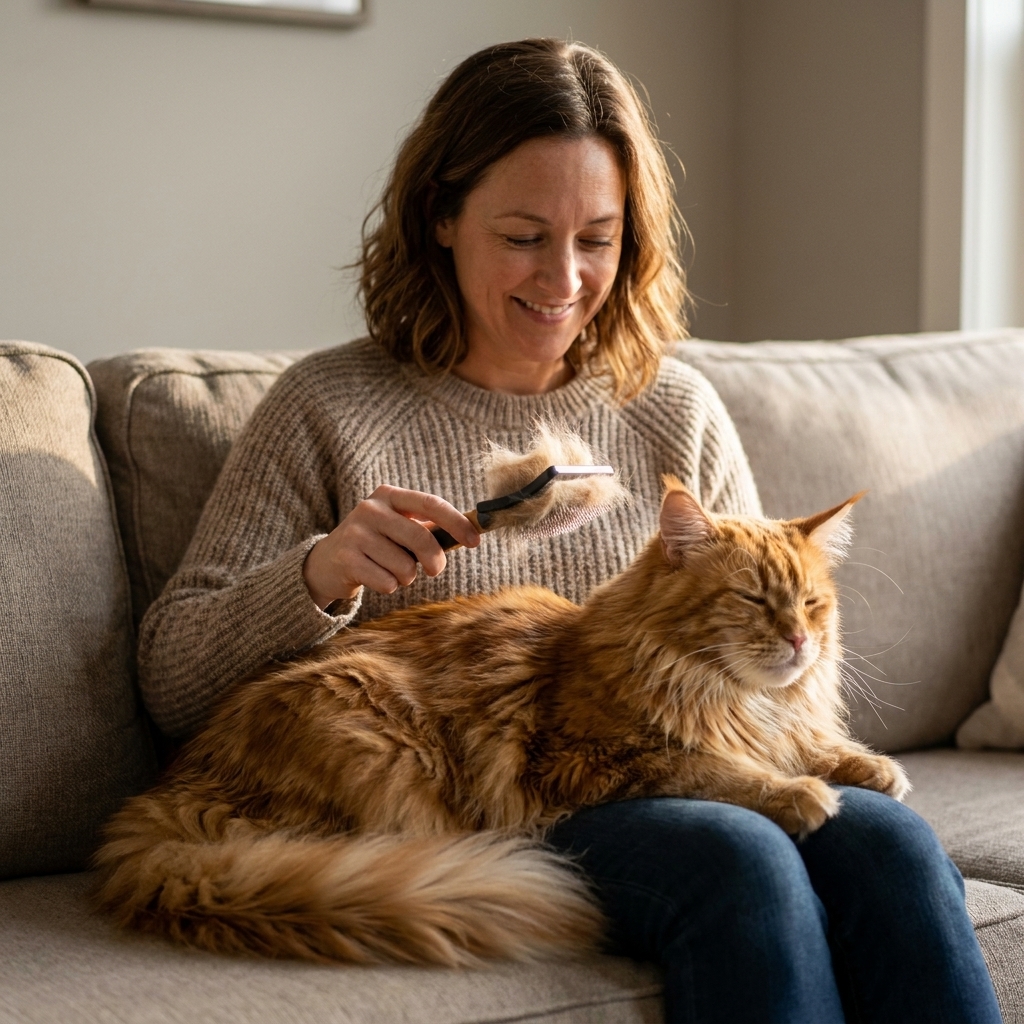
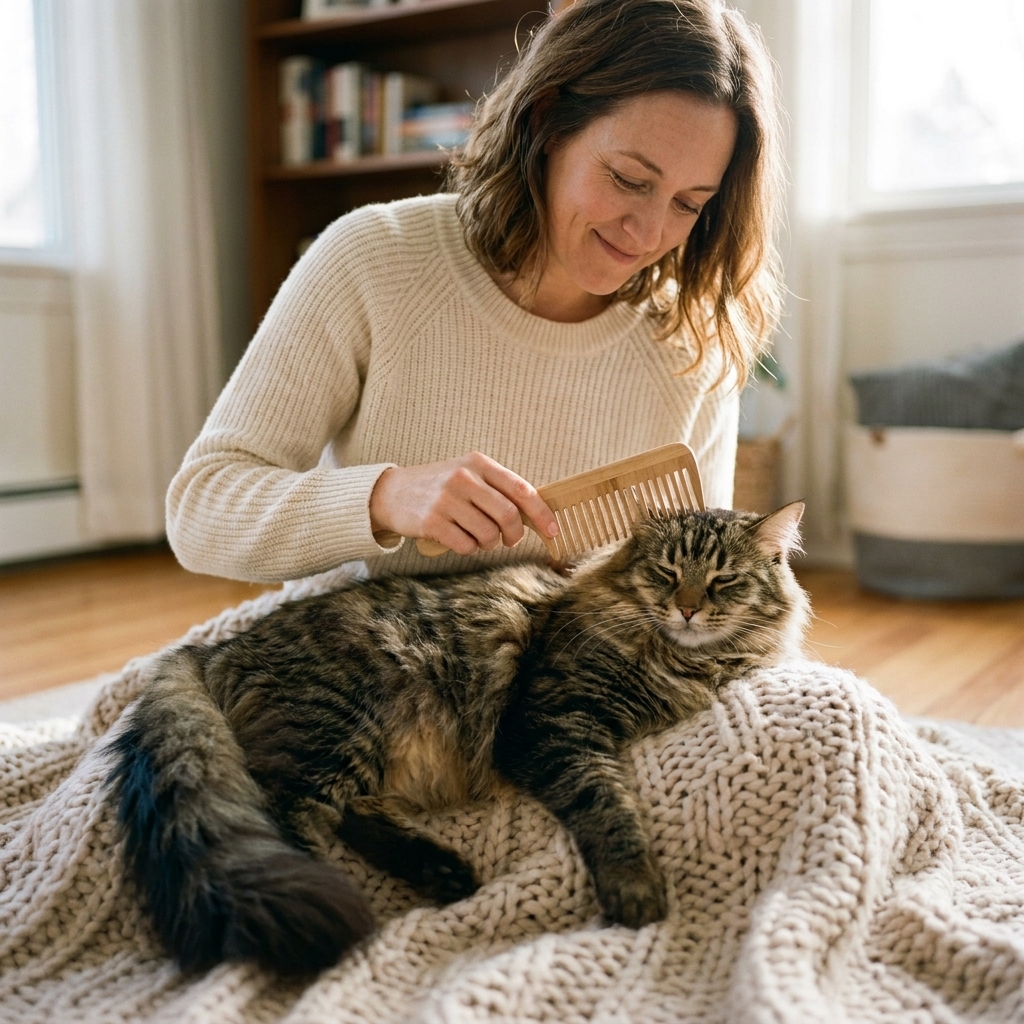
Maine Coon grooming is less about perfection and more about consistency. A few minutes a few times a week prevents most problems. And if you start early, grooming becomes calm bonding time rather than a wrestling match.
How often to brush
- Typical weeks: 2 to 4 grooming sessions per week.
- Shed seasons (often spring and fall): short daily sessions can prevent mats and hairballs.
- Senior or overweight cats: may need more help with belly and back-end grooming.
Tools that actually help
- Wide-tooth metal comb: my top pick for checking down to the skin and catching early tangles.
- Slicker brush: helpful for fluffing and surface shedding, but always follow with a comb to confirm you are not just brushing the top layer.
- Dematting tool (used carefully): only for experienced hands, and never for tight mats near skin. When in doubt, ask a professional groomer or your vet.
High-mat zones to check
- Behind the ears
- Armpits and chest ruff
- Belly and “britches”
- Under the collar area (if your cat wears one)
Hairballs: what is normal?
Longhair cats can be more prone to hairballs, especially during shed season. An occasional hairball can be normal. What I do not like to see is frequent vomiting, vomiting with no hairball produced, or a cat who seems nauseated and stops eating. If your cat is vomiting more than occasionally, or you see lethargy, weight loss, constipation, or appetite changes, loop in your veterinarian.
Bathing: yes or no?
Most Maine Coons do not need routine baths, but an occasional bath can help with greasy coat texture, heavy shedding, or if your cat got into something messy. If you do bathe:
- Use a cat-specific shampoo.
- Keep water warm, not hot.
- Dry thoroughly, especially in cooler months.
If your cat’s coat becomes persistently oily, flaky, or smells “off,” consider a vet visit. Skin and coat changes can be an early clue that something else is going on.
Nails, ears, and teeth
- Nails: trim every 2 to 4 weeks for most cats.
- Ears: check weekly. Clean only if you see debris, and use a vet-approved ear cleaner.
- Teeth: brushing is gold standard, even a few times per week. Dental disease is incredibly common in cats, including Maine Coons.
If you can only do one grooming habit, pick teeth. A lot of “mystery crankiness” and picky eating improves when mouths are comfortable.
Exercise, enrichment, and training
Maine Coons are built like athletes in fluffy pajamas. They need daily movement and mental stimulation, not just for fun, but for joint health and weight management.
Daily play that fits a big body
- Interactive wand play: 10 to 15 minutes once or twice daily is a great baseline.
- Low-impact chasing: toss soft toys down a hallway for sprints with safer turns.
- Climbing: use sturdy cat trees and wall shelves rated for larger cats.
For kittens and young adults, you can go bigger and longer. For seniors, shorter sessions more frequently often feel better on the joints.
Puzzle feeding
Maine Coons often love a “job.” Puzzle feeders slow down fast eaters, reduce boredom, and can support healthy weight. Start easy, then increase difficulty so your cat stays confident, not frustrated.
Harness training
Many Maine Coons take well to harness training because they are people-focused and curious. Go slow:
- Let them sniff the harness, then reward.
- Practice wearing it indoors for short sessions.
- Add the leash later.
- Graduate to quiet outdoor areas once your cat is comfortable.
Health concerns
Maine Coons are generally hardy cats, but they do have a few health issues that come up more often in this breed. Knowing what to watch for is not about worrying. It is about catching problems early, when we have more options.
Hypertrophic cardiomyopathy (HCM)
HCM is a heart disease that can occur in any cat, but it is seen with increased frequency in Maine Coons. Some cats have a genetic predisposition, and responsible breeders may screen breeding cats.
What you might notice at home: often nothing early on. In more advanced cases, you may see reduced stamina, rapid breathing, open-mouth breathing, or sudden weakness.
What helps: routine veterinary exams, and in some cases, your vet may recommend an echocardiogram, especially if a murmur is heard or there is family history. If you are getting a kitten from a breeder, ask what cardiac screening they do for their breeding cats. Some breeders also use genetic testing for known Maine Coon HCM variants. It is useful information, but it does not replace an echo, and it does not guarantee a cat will never develop heart disease.
Hip dysplasia and arthritis
Big cats put more load on hips, knees, and spine. Hip dysplasia can contribute to pain and mobility changes, sometimes showing up as subtle “laziness.”
Signs to watch for:
- Hesitating before jumping up or down
- Using stairs like a cautious toddler
- Stiffness after naps
- Less play, more irritability when touched
Support strategies: maintain a lean body condition, provide steps or ramps to favorite spots, use soft bedding, and ask your vet about pain management and joint supplements if needed.
Spinal muscular atrophy (SMA)
SMA is an inherited condition documented in Maine Coons that can cause muscle weakness and an abnormal gait, often starting when cats are young. Many affected cats can still have a good quality of life with supportive care, but it is important to involve your veterinarian promptly if you notice weakness or coordination changes. If you are working with a breeder, ask whether they test for SMA and how they use those results in their program.
Dental disease
Dental disease is common across all breeds. Maine Coons are not magically exempt. Bad breath, drooling, pawing at the mouth, or suddenly preferring soft food can be clues.
Home tooth brushing plus professional cleanings when your veterinarian recommends them can dramatically improve comfort and long-term health.
Obesity (the quiet troublemaker)
Maine Coons are supposed to be large, which makes excess weight harder to spot. Obesity increases the risk of arthritis pain, diabetes, urinary issues, and reduced lifespan. If you are not sure, ask your vet or a feline-savvy technician to score your cat’s body condition and help you set a realistic target.
Preventive care
Preventive care is not glamorous, but it is what keeps cats out of crisis. Here is a simple rhythm that works for many Maine Coon households.
Veterinary visits
- Kittens: a series of visits for vaccines, deworming, and growth monitoring.
- Adults: at least yearly wellness exams.
- Seniors (often 10+): every 6 months is ideal, with routine lab work as recommended.
Parasite prevention
Even indoor cats can be exposed to fleas or intestinal parasites. Ask your veterinarian what is appropriate for your region and household, especially if you have dogs or if your cat goes outdoors on a harness.
Spay and neuter
Spaying and neutering supports population control and can reduce certain behavior and health risks. Your veterinarian can advise on timing based on your cat’s growth and overall health.
Microchip and ID
Because Maine Coons are often friendly and curious, they can be surprisingly confident about doorways. Microchips and an ID tag on a breakaway collar are a strong safety net.
Maine Coon home
Litter box comfort
Many litter box issues in large cats come down to simple geometry. If your Maine Coon has to crouch like they are in an airplane bathroom, the setup is not working.
- Choose an XL box with plenty of turning room. A practical rule is about 1.5 times your cat’s body length (nose to base of tail). For many Maine Coons, that means roughly 24 to 30 inches long, but go by your cat’s actual size.
- Scoop daily.
- Use a litter that your cat consistently accepts, and change types gradually.
Sturdy vertical space
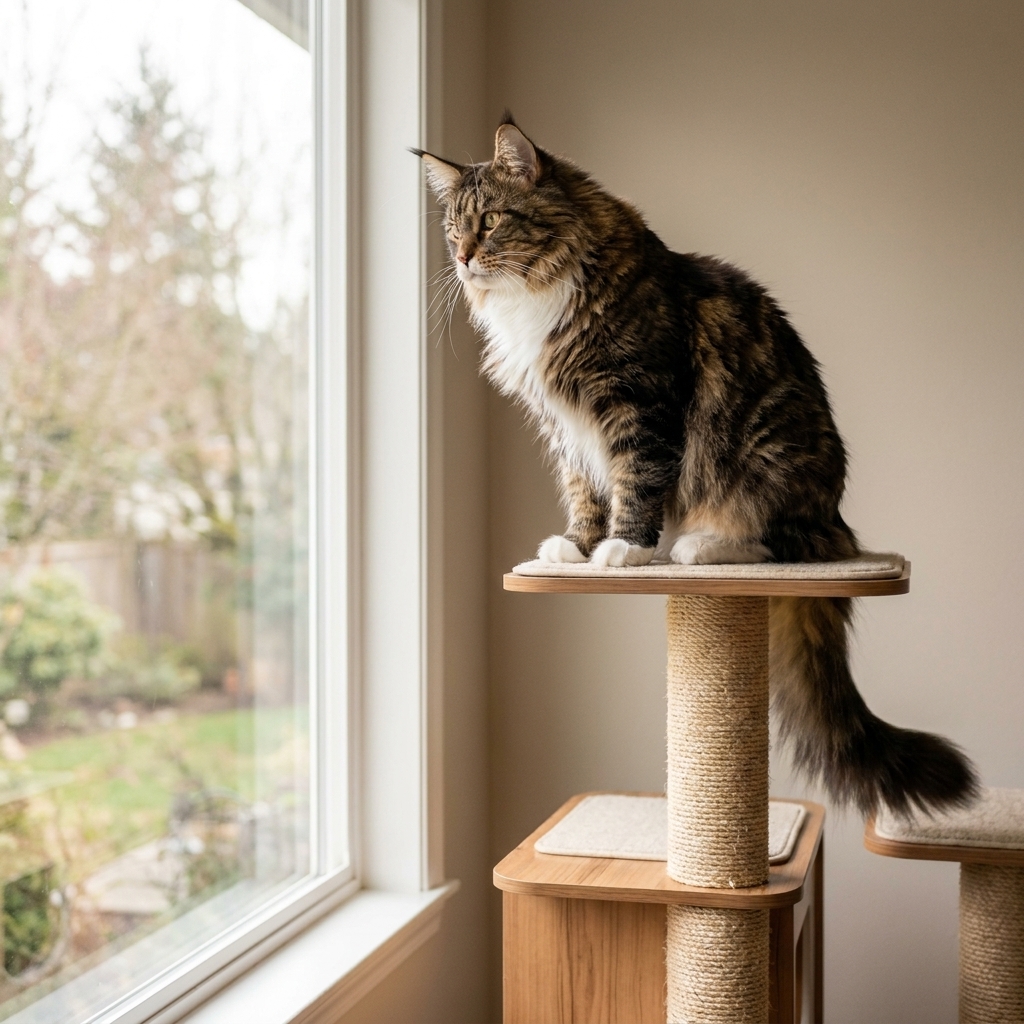
Maine Coons love to climb and supervise. Make sure perches and trees are stable and rated for larger cats. Wobbly furniture can create fear, and fear can become avoidance.
Scratching that fits their body
Look for scratchers that let your cat fully extend. Tall sisal posts, heavy cardboard loungers, and horizontal scratchers all have a place. Put them where your cat already likes to scratch, not where you wish they would scratch.
FAQ
Do Maine Coons need a special diet?
They do not need a magical “breed-only” diet, but they do benefit from high-quality, protein-forward nutrition, controlled calories, and a plan that supports slow growth and joint health. The best diet is the one your cat thrives on and that you can feed consistently.
How often should I groom my Maine Coon?
Plan for 2 to 4 sessions per week, with more frequent quick comb-throughs during heavy shedding seasons. Focus on mat-prone areas like armpits, belly, and behind the ears.
Are Maine Coons hypoallergenic?
No cat breed is truly hypoallergenic. Some people tolerate certain cats better than others, but Maine Coons still produce allergens like Fel d 1.
Why is my Maine Coon always hungry?
It can be normal for growing kittens and active young adults to act like bottomless pits. It can also be a sign the diet is too calorie light, too low in protein, or the feeding schedule is not satisfying. Rarely, medical issues can drive hunger. If appetite suddenly ramps up, or your cat is losing weight despite eating well, schedule a vet visit.
When should I worry about breathing or heart issues?
Seek urgent veterinary care if you see open-mouth breathing, persistent rapid breathing at rest, blue-tinged gums, collapse, or sudden hind-limb weakness (often painful and frightening). If you ever count your cat’s resting breaths and it is consistently over about 40 breaths per minute, call your vet for guidance, even if your cat seems otherwise “okay.”
My biggest tip
Pick one routine you can keep on your busiest week, then build from there. For many families, that is two measured meals a day, a short evening play session, and a quick comb-through while you watch TV. Consistency beats intensity every time, especially for a big, slow-growing cat who will be with you for a long time.
If you want a simple starting point, do this: measure food, comb weekly, keep your cat lean, and schedule regular wellness visits. That combination prevents the majority of coat, joint, and lifestyle-related issues I see in practice, and it helps your Maine Coon stay exactly what they are meant to be: a confident, cuddly, slightly ridiculous household legend.