Yes. An older cat can absolutely learn a nose target, and in my experience many seniors take to it surprisingly quickly because they are often less frantic and more routine-loving. Nose targeting is a low-impact trick that builds communication, confidence, and cooperation for everyday care like getting onto a scale, moving to a mat, or walking into a carrier.
The key for senior cats is comfort first: short sessions, seated or low-effort positions, and rewards that are worth the effort. If your cat seems suddenly reluctant to move, jump, or turn their head, check in with your veterinarian to rule out pain or mobility changes.
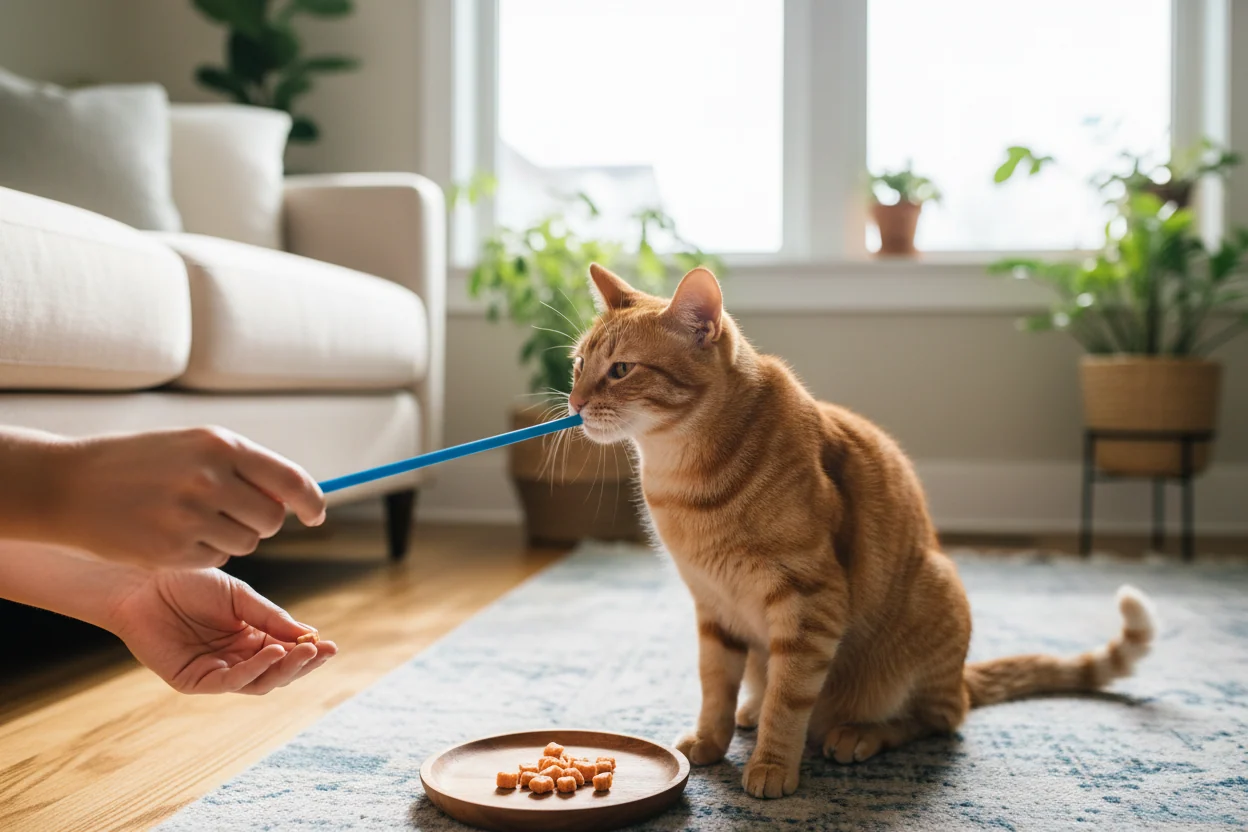
What a nose target is
A nose target means your cat touches their nose to an object you present, usually your fingertip or a small target like the end of a spoon. The nose touch becomes a simple, predictable behavior you can use to guide your cat without pushing, grabbing, or chasing.
For older cats, I love it because it can be done:
- At ground level (no jumping required)
- From a sit or relaxed stand
- In 10 to 30 second mini-sets
- With minimal handling, which many seniors appreciate
Why it helps older cats
Senior cats are often labeled “set in their ways,” but what I see in real homes is different. Most older cats are excellent learners when the lesson respects their body and their boundaries.
Benefits you can use
- Gentle movement enrichment: a few steps toward a target is still exercise.
- Cooperative care: target onto a towel, into a carrier, or onto a scale.
- Stress relief: predictable games can help many cats feel safer during changes (new meds, new routines, new home layouts).
- Brain workout: learning may support healthy engagement, especially when a cat’s world is getting smaller.
Example: If your 12-year-old cat needs monthly weight checks, you can target them onto a bathroom scale for a treat instead of lifting them and risking discomfort for both of you.
Before you start
Pick a reward that feels worth it
Many older cats have smaller appetites, dental sensitivity, or picky preferences. Choose something easy to eat and high value for your cat, such as:
- Soft treats that break into tiny pieces
- A small lick of a commercial cat lickable treat or purée
- A few bites of their favorite canned food
Keep portions tiny. You want lots of repetitions without filling them up. If your cat has kidney disease, heart disease, diabetes, food allergies, or other medical conditions, ask your veterinarian before adding new treats. Some lickable treats can be surprisingly calorie dense, and some can be higher in sodium than you would expect.
Keep it low-effort and low-slip
Use a non-slip surface like a yoga mat, bath rug, or carpet. Seniors with arthritis can feel insecure on slick floors.
Watch for “this is too much” body language
- Tail flicking faster than normal
- Ears turning sideways or back
- Head turning away from you
- Skin twitching along the back
- Walking off and not re-engaging
If you see these, it is not a failure. It is feedback. Make it easier, shorten the session, or stop and try later.
Ask your vet about new mobility issues
If your cat suddenly resists bending their neck, stepping over low objects, using stairs, jumping onto favorite spots, or being touched around the hips or shoulders, ask your veterinarian. Pain can look like “stubbornness,” especially in senior cats.
A senior-friendly plan
This plan is designed for seated or low-effort positions. Most cats can learn the basics in a few days, but go at your cat’s pace.
What you need
- Your cat, comfortable and awake
- High-value treats
- Your fingertip or a small target (the end of a spoon works well)
- A marker signal if you want one (a clicker or a consistent word like “yes”)
Step 1: Start from comfort
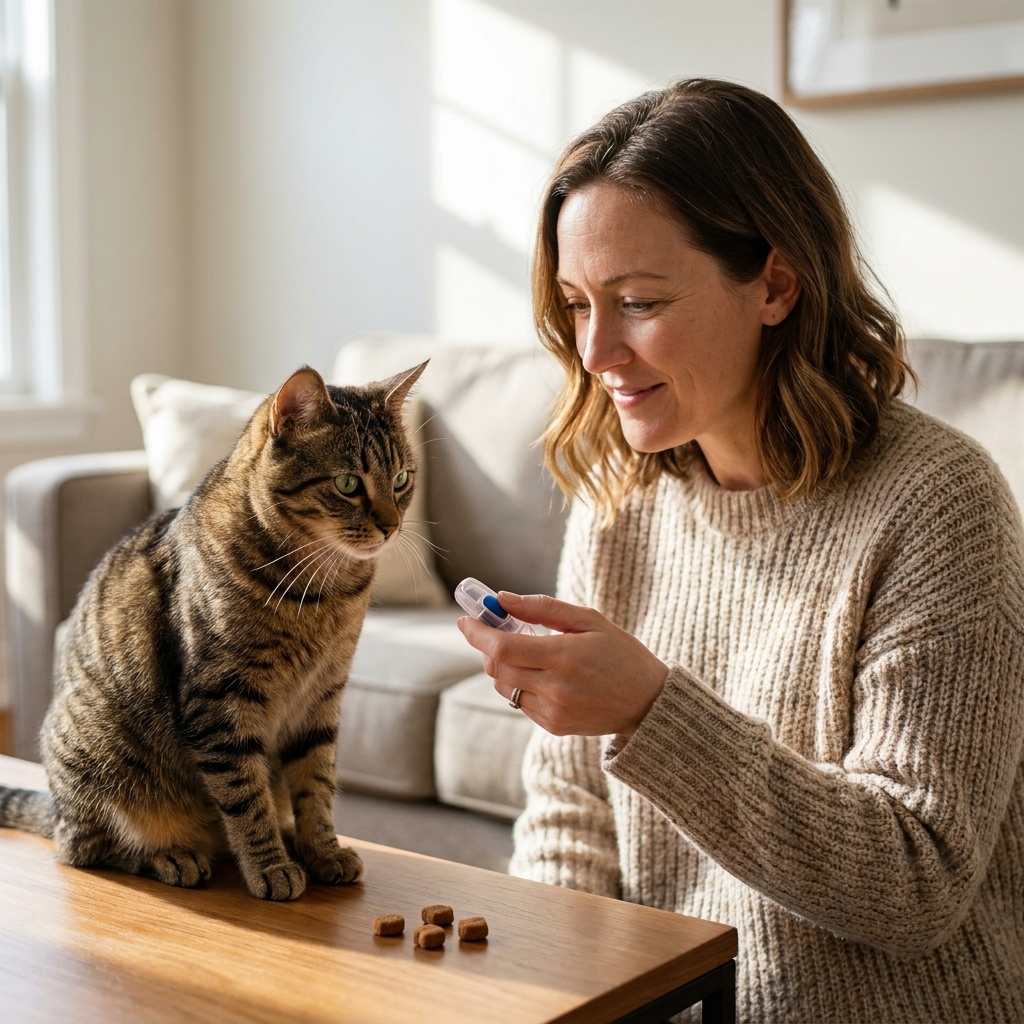
Sit on the floor or a low chair. Let your cat remain seated or standing naturally. Present your finger or target about 1 to 2 inches from their nose, off to the front (not above the head).
Most cats will sniff. The moment the nose makes contact, mark (say “yes” or click) and then give a treat. Mark first, treat second. That timing is what makes the lesson clear.
Step 2: Repeat in tiny reps
Do 3 to 5 successful touches, then pause. End while your cat is still interested.
Sessions can be 30 to 90 seconds total. With seniors, I prefer several micro-sessions across the day rather than one longer training block.
Step 3: Add a cue (optional)
After your cat is reliably touching, say a simple cue like “touch” right before you present the target. Keep your tone calm and consistent.
Step 4: Add one small step
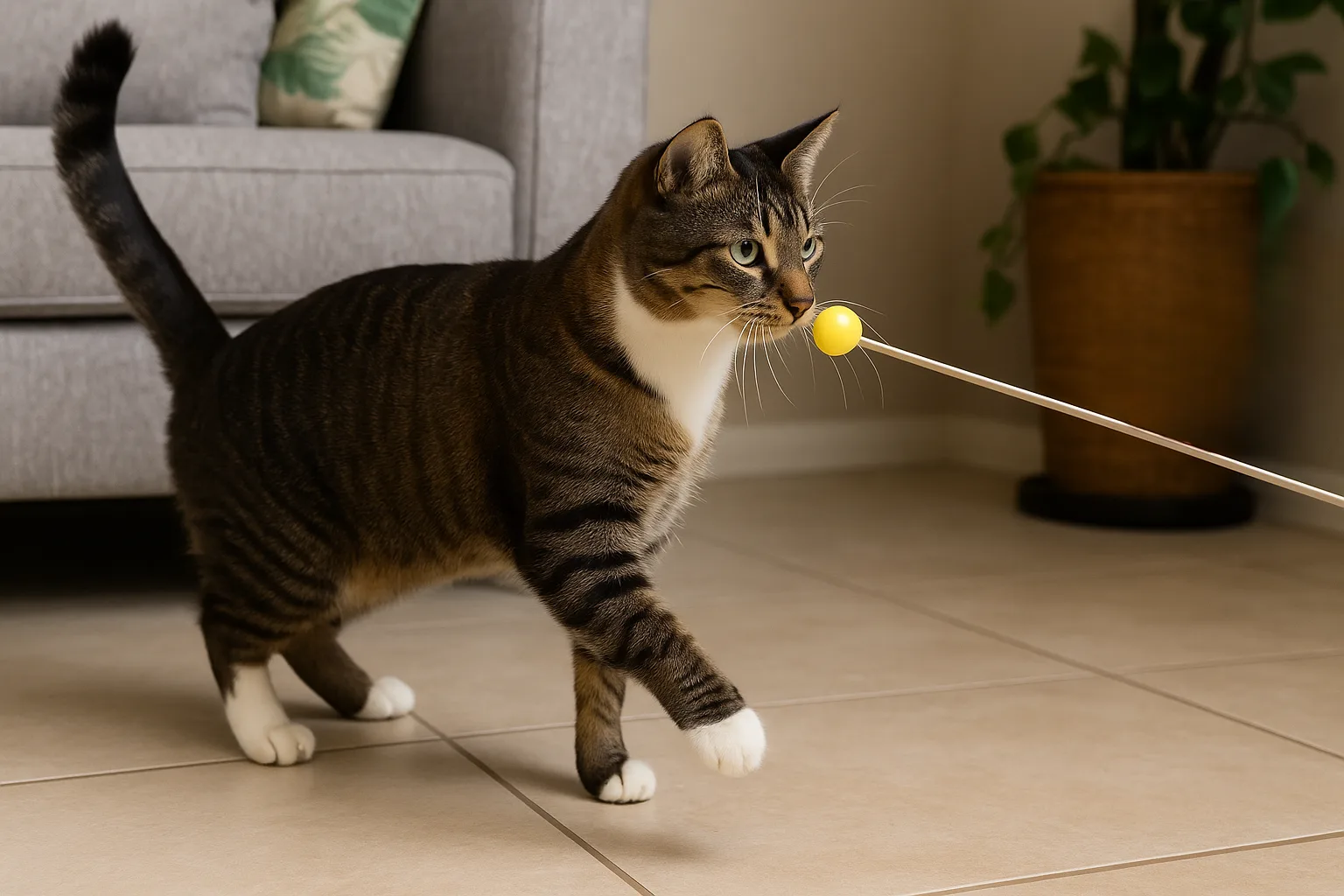
Move your target 3 to 6 inches away so your cat takes a single step to touch. Mark and reward.
For many older cats, one step is plenty. You can build up slowly over days.
Step 5: Use it in real life
Once the nose touch is solid, you can use it to guide your cat:
- Onto a non-slip mat
- Onto a low stool or step (only if cleared by your vet and your cat is comfortable)
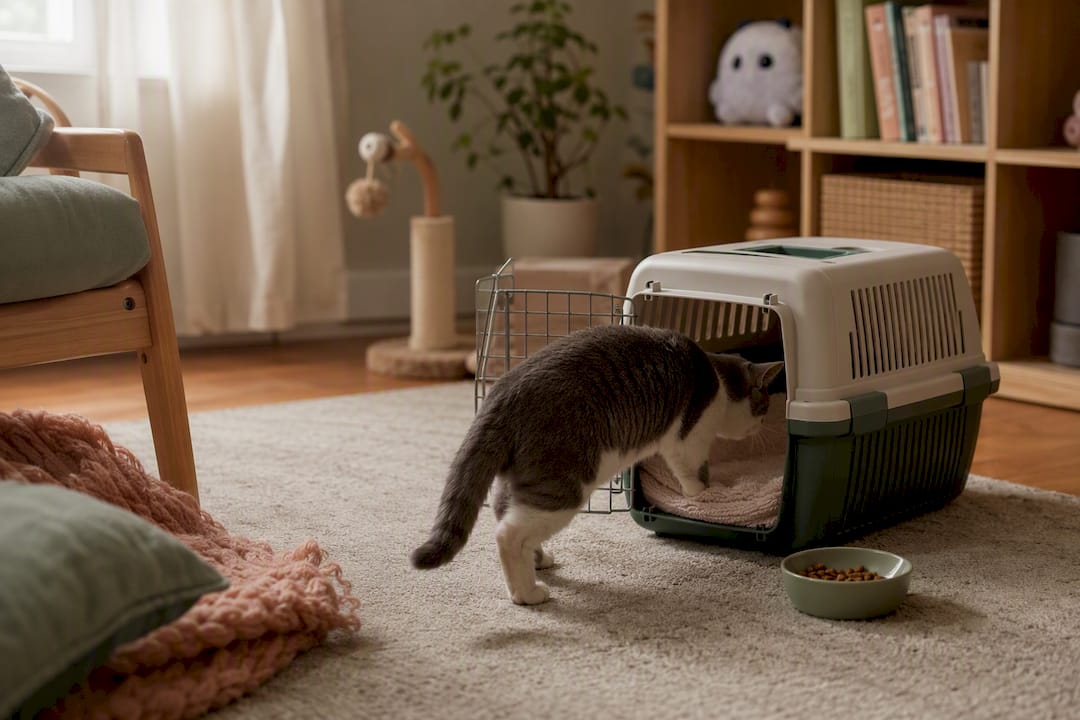
- Toward an open carrier placed on the floor
- Onto a scale platform
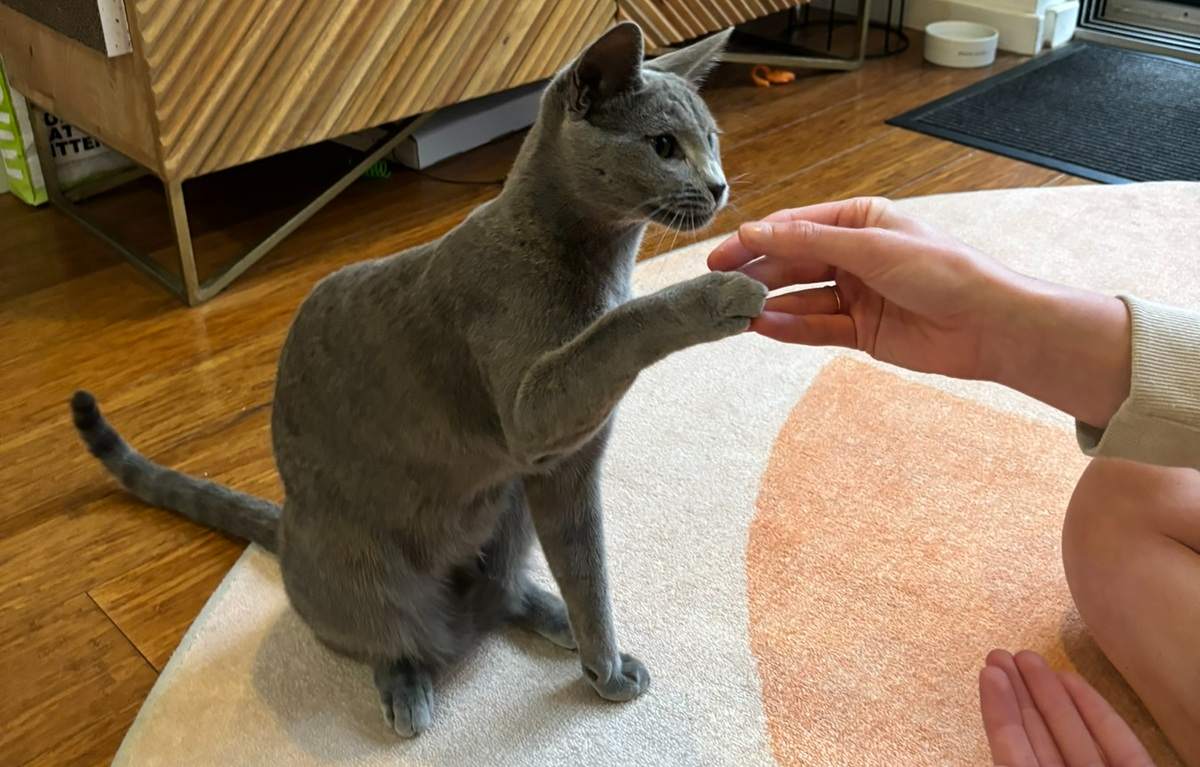
Built-in stop cues
Older cats deserve an easy “all done” signal so they know the game is over and they can relax.
- Verbal stop cue: say “all done” in a calm voice.
- Visual stop cue: show open, empty hands.
- Reset: toss a treat a foot away (if your cat is comfortable walking) or place it near them, then end the session.
If your cat walks away, that is also a stop cue. Respect it and try again later.
Troubleshooting
“My cat won’t touch, they just stare.”
Try moving the target closer, like ½ to 1 inch away, and reward any investigation at first, including a sniff. You can shape toward contact gradually.
“My cat head-bumps too hard or gets grabby.”
Keep the target steady and low. Deliver treats away from your fingers so your hand does not become the snack location. If excitement escalates, end on a success and take a longer break.
“My cat seems uncomfortable reaching.”
Bring the target to them rather than asking them to stretch. Keep your hand at nose height, not above. If stiffness or reluctance is new, ask your vet about pain and mobility support.
“My cat is treat-motivated, but has dietary restrictions.”
You can use part of their regular meal, especially for cats on prescription diets. Ask your veterinarian before adding new treats if your cat has kidney disease, diabetes, food allergies, heart disease, or other medical conditions.
“My senior has vision or hearing changes.”
Make the target easier to find. Use a slightly larger target (like the rounded end of a spoon), choose a high-contrast color against your floor, and keep it close to the nose at first. If your cat startles at sounds, skip the clicker and use a soft verbal marker. If your cat does not respond reliably to a spoken cue, rely more on consistent hand presentation and routine.
Safety and help
Home safety
- Skip slippery floors: use a rug or mat to prevent slips.
- Avoid forced movement: do not pull your cat by the collar or harness to “help” them touch.
- Keep sessions calm: many seniors fatigue faster, mentally and physically.
When to involve a professional
Get help from your veterinarian if you notice signs of pain, sudden behavior changes, or reduced mobility. If your cat is fearful, defensive, or has a bite history, a qualified feline behavior professional can tailor a plan that keeps everyone safe and reduces stress.
FAQ
Is my cat too old to learn tricks?
No. Age is not the limiting factor. Comfort, motivation, and session design matter more than years. Many seniors love predictable, low-pressure training.
How long does it take to teach nose targeting?
Some cats get it in a single day. Others need several days of tiny sessions. If your cat has vision changes, anxiety, or pain, it may take longer and that is normal.
Can nose targeting help with carrier training?
Yes. Once your cat understands “touch,” you can target them toward the carrier entrance, then reward inside the carrier. Keep the door open and avoid closing it until your cat is relaxed in and around it.
My take from a house with two rescues
My tortie, Clementine, will learn any behavior if she thinks it benefits her personally. My orange tabby, Waffles, needs the game to be obvious and the payoff to be immediate. Many older cats are the same. They are not “unable,” they are discerning. When you make the nose touch easy on their joints and generous on the reward side, they usually surprise you.
If you try one thing today, let it be this: sit down, offer your finger an inch from your cat’s nose, and celebrate the smallest sniff. That tiny moment is the start of a new shared language.