If you want your cat to step onto a scale willingly, the simplest way I know is to teach a “touch the target” game first, then use that target to guide them onto the scale in tiny, rewarded steps. You are not “making” your cat hold still. You are building a habit where the scale predicts good things.
I grew up fostering kittens, and now I live with Clementine (a tortie with very firm opinions) and Waffles (my sweet orange tabby who is often surprised by his own feet). Even confident cats can decide that a scale is suspicious. The target card turns weighing into a clear, cat-friendly job: touch this, earn a treat, repeat.
Why a target card works so well
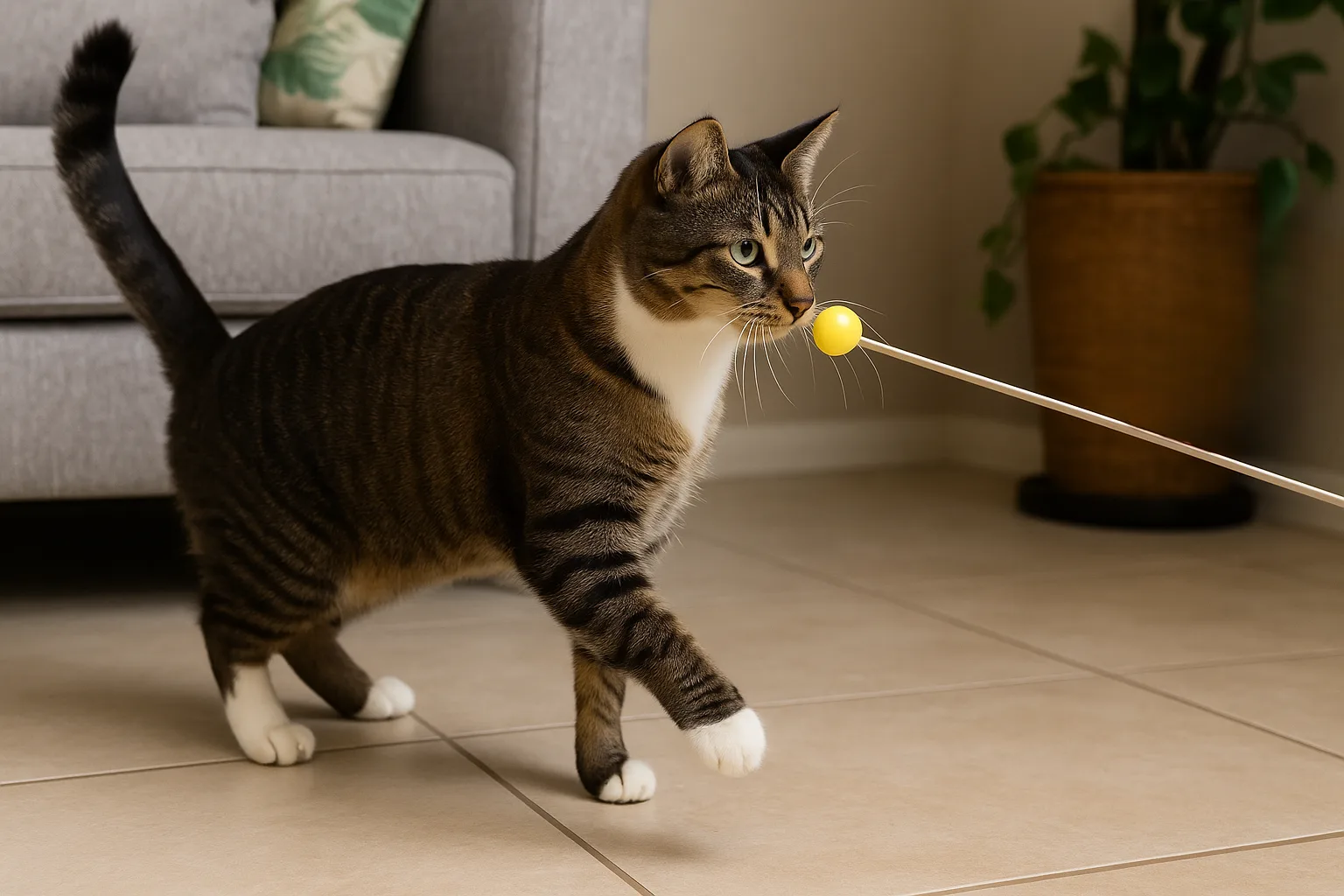
A target card is a small, easy-to-see object your cat learns to touch with their nose or paw. Once your cat understands that touching the target earns a reward, you can “move the behavior” anywhere, including onto a scale.
- Clear communication: Cats love clarity. “Touch that” is simpler than “please stand perfectly still on this weird platform.”
- Low pressure: Your cat controls the interaction. They can step away, and you can try again later.
- Often steadier readings: A calmer cat can settle more reliably, which often makes it easier to catch a stable number.
What you need
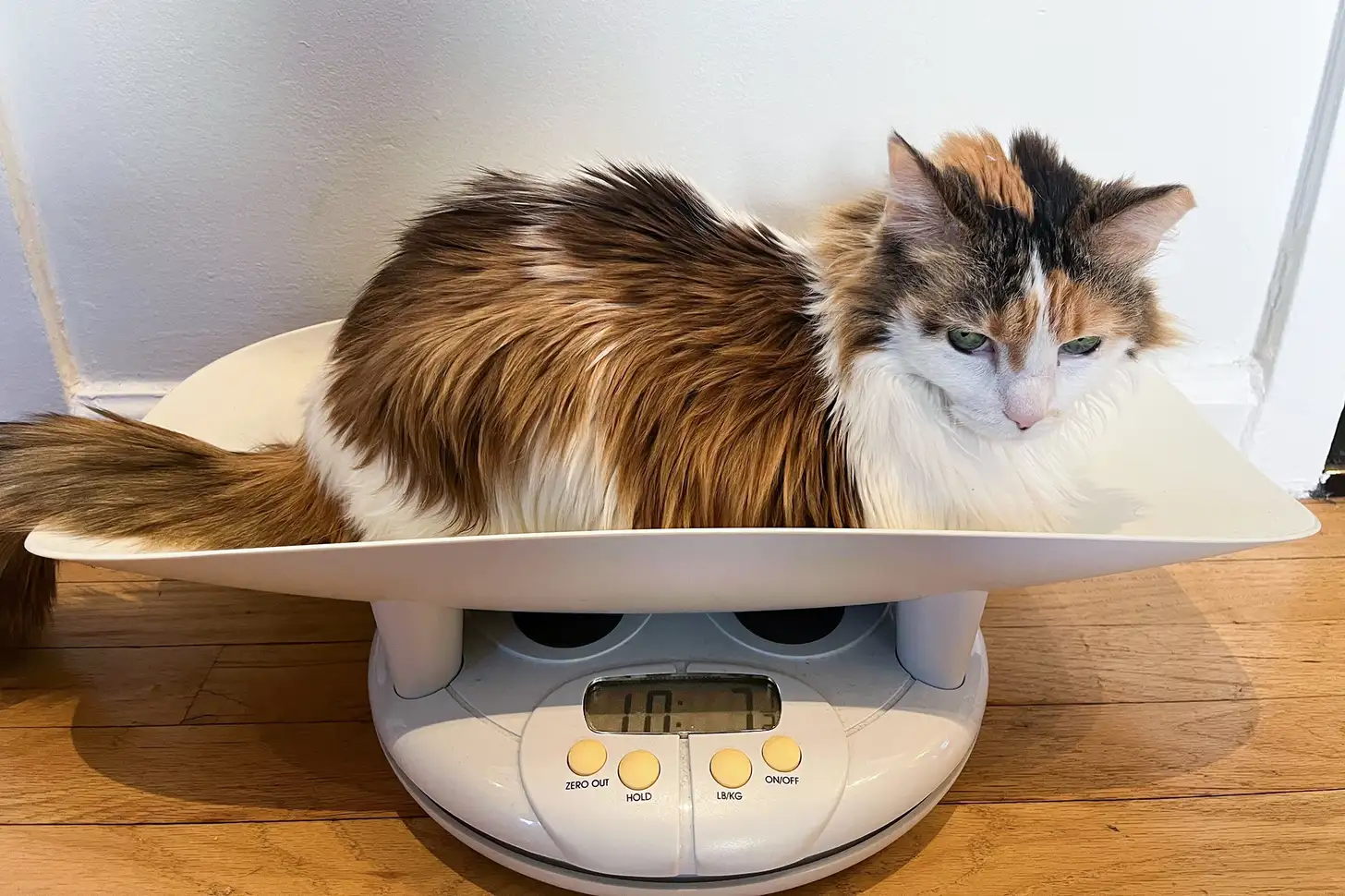
- A scale: A baby or pet scale is great for many cats. They often measure in smaller increments, which is handy if you are tracking subtle changes. A bathroom scale can work too.
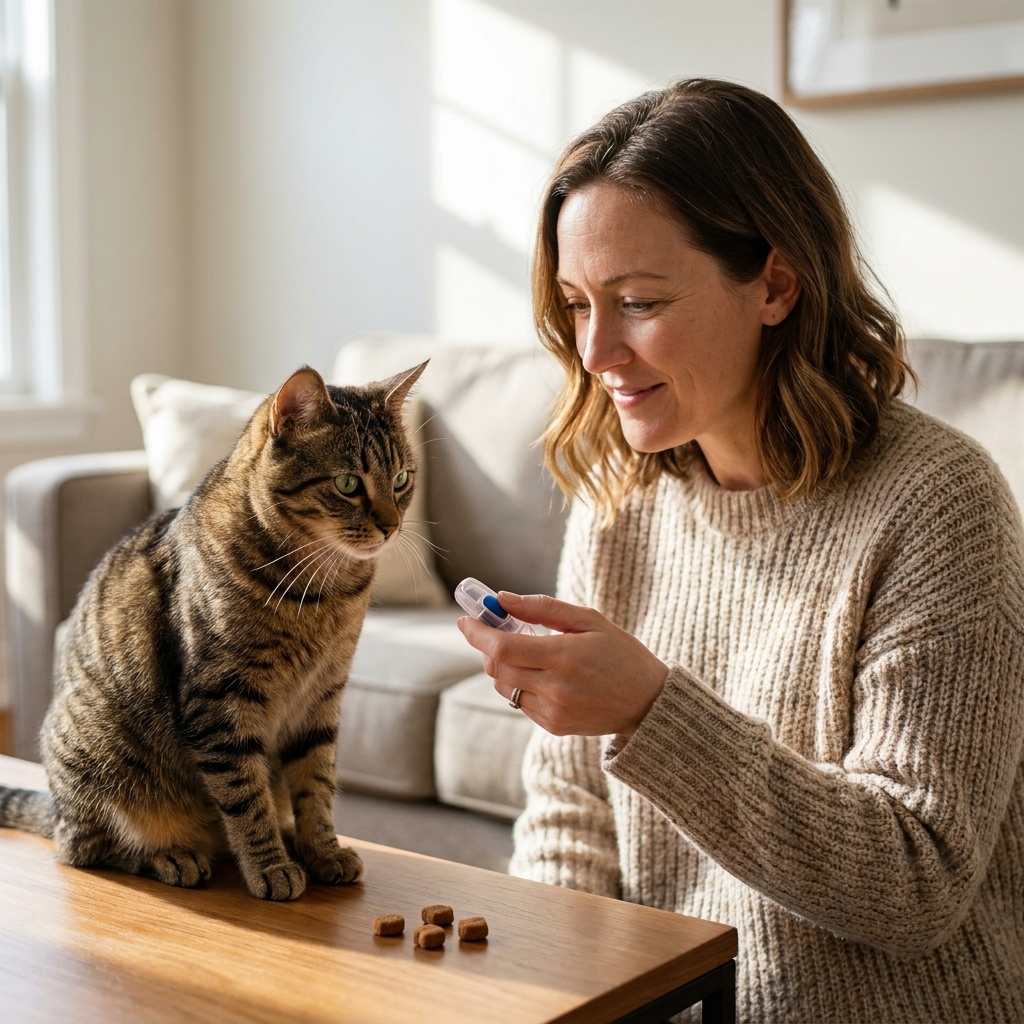
- A target card: A sticky note, index card, or a lid from a plastic container. Pick something easy to hold and consistent in color.
- Rewards: Tiny, pea-sized treats or a lickable treat on a spoon. For many cats, lickables create less crunch-and-dash, meaning less grab-a-treat-and-run.
- Optional marker: A clicker or a short word like “yes.” This tells your cat the exact moment they did the right thing.
- Optional scale mat: A thin non-slip mat can make the surface feel more secure. Just make sure it does not interfere with the scale’s feet or sensors, especially on digital bathroom scales.
Tip from my foster-coordinator days: choose rewards your cat can eat quickly. If your cat has to chew for 30 seconds, the training rhythm gets clunky and frustration shows up faster.
If you are placing a tray, towel, or carrier top on a baby scale, check whether your scale has a tare function so you can zero it out first.
Before you start
Pick a good time
Train when your cat is naturally interested in food and interaction, but not frantic. I like a calm window, often before a routine meal, without skipping meals or restricting food.
Keep it short
Plan for 30 to 90 seconds at first. Stop while your cat still wants more. That is how you get eager participation next time.
Make the scale less weird
- Place the scale on a stable surface (not wobbly carpet if possible).
- If the surface is slick or cold, add a thin non-slip mat (as long as it does not mess with the scale’s sensors).
- Let the scale live out in the open for a day or two so it becomes “furniture,” not “surprise object.”
One cat at a time
If you have multiple cats, do yourself a favor and train them separately at first. I have seen treat excitement turn into sibling drama in about 0.4 seconds. Shut a door, keep the session calm, and everyone stays friends.
Target to scale
Step 1: Teach “touch” away from the scale
Hold the target card a few inches from your cat’s nose. When your cat leans in and touches it, mark (click or “yes”) and immediately reward.
- If your cat does not touch it, make it easier: bring the card closer or reward any interest like a sniff.
- Repeat until your cat is clearly seeking the target.
Goal: Your cat touches the target 8 out of 10 times without hesitation.
Step 2: Add a little movement
Move the target card slightly to the left or right so your cat takes one step to touch it. Mark and reward.
Goal: Your cat follows the target for 1 to 2 steps comfortably.
Step 3: Bring the scale in, but do not use it
Bring the scale into the training area, but do not ask your cat to go on it yet. Do a few easy “touch” reps with the target card several feet away from the scale.
Goal: Your cat ignores the scale and stays engaged with the game.
Step 4: Target near the scale
Now place the target card so your cat has to approach the scale and touch the target next to it, then on the edge of it.
- Reward heavily for calm curiosity.
- If your cat startles, back up to “touch away from the scale” for a few reps.
Goal: Your cat can touch a target held just over the scale without backing away.
Step 5: One paw, then two
Hold the target so your cat naturally places one paw on the scale to reach it. Mark and reward instantly. Then ask for two paws, then three, then all four over multiple repetitions.
Do not rush this part. Many cats are fine with one paw, then suddenly decide two paws feels “too committed.” That is normal.
Goal: Your cat steps fully onto the scale to touch the target.
Step 6: Add a pause for the number
Scales often need a second to stabilize. Once your cat is happily stepping on, start rewarding for a tiny pause before you mark. In other words, you are delaying the click or “yes” by small increments:
- 0.5 seconds
- 1 second
- 2 seconds
Keep your criteria realistic. Many cats will do best with “step on, pause, treat” rather than “stand perfectly still for 10 seconds.”
Step 7: Fade the target (optional)
If you want your cat to step onto the scale without seeing the card every time, you can gradually make the target smaller or hold it higher, then switch to a cue like “scale.”
It is also completely fine to keep the target forever. Plenty of cats like having a clear job.
Getting a usable weight
Training is the hard part. The actual weigh-in should feel boring.
- Weigh at the same time of day when possible (morning tends to be consistent).
- Use the same scale and surface.
- Take 2 to 3 readings and use the middle value if one seems off.
- Keep notes: Date, weight, and anything relevant like “big poop right before weigh-in” or “switched foods this week.”
What success looks like: your cat steps onto the scale on cue, pauses for about 2 seconds while you read the number, then gets paid.
If your cat’s weight changes noticeably over a short time, or you are concerned about appetite, vomiting, diarrhea, thirst, or energy level, that is a veterinarian question. Home weights are helpful data, but they are not a diagnosis.
Common hiccups
“My cat is scared of the scale.”
- Start farther away and reward for simply being near it.
- Use a non-slip mat to reduce wobble and noise (without blocking the scale’s feet or sensors).
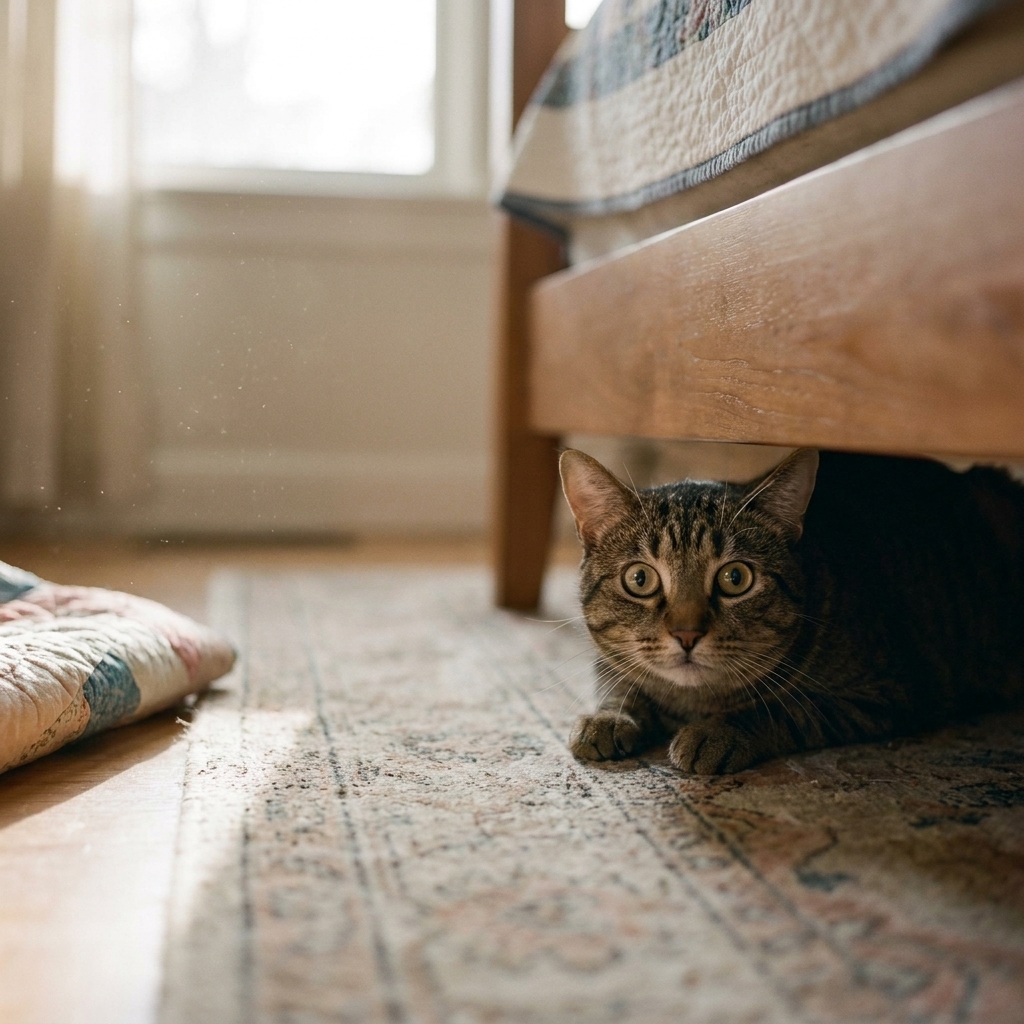
- Lower the challenge: treat for looking at the scale, then one step toward it, then touch near it.
“My cat will step on, then jump off.”
- Reward faster, the instant paws land.
- Switch to a lickable reward so your cat stays in place longer.
- Practice micro-pauses: half a second counts.
“My cat tries to bite the target card.”
This is usually enthusiasm, not aggression. Hold the card steady and reward nose touches quickly. If biting escalates, switch to a target your cat cannot chew easily, like the end of a wooden spoon, and reward gentle touches.
“My cat is not food motivated.”
Some cats prefer play or attention. You can still use targets, but reward with what your cat actually values.
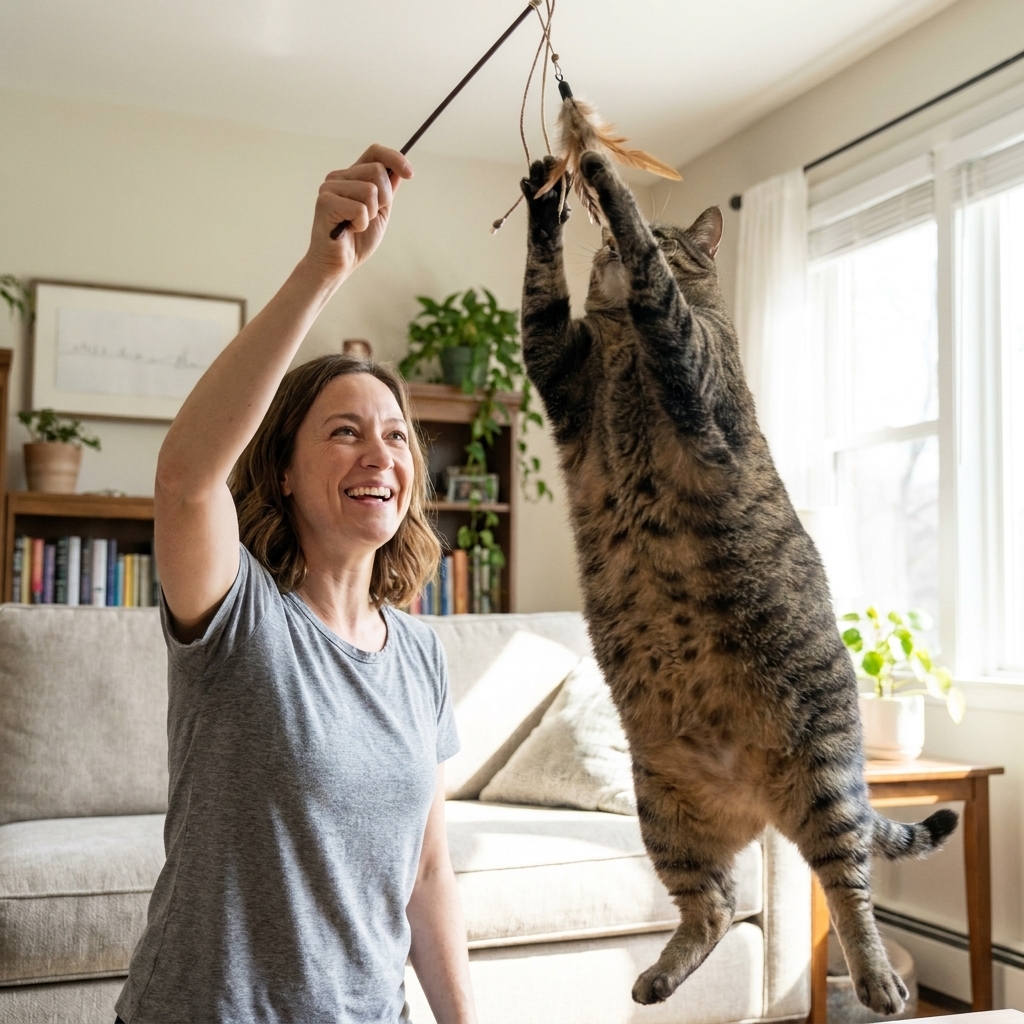
- For example: After a target touch, you toss a favorite spring toy for a quick chase, then reset.
- For example: After stepping onto the scale, your cat gets a short cheek rub if they enjoy petting.
“I only need this for vet visits.”
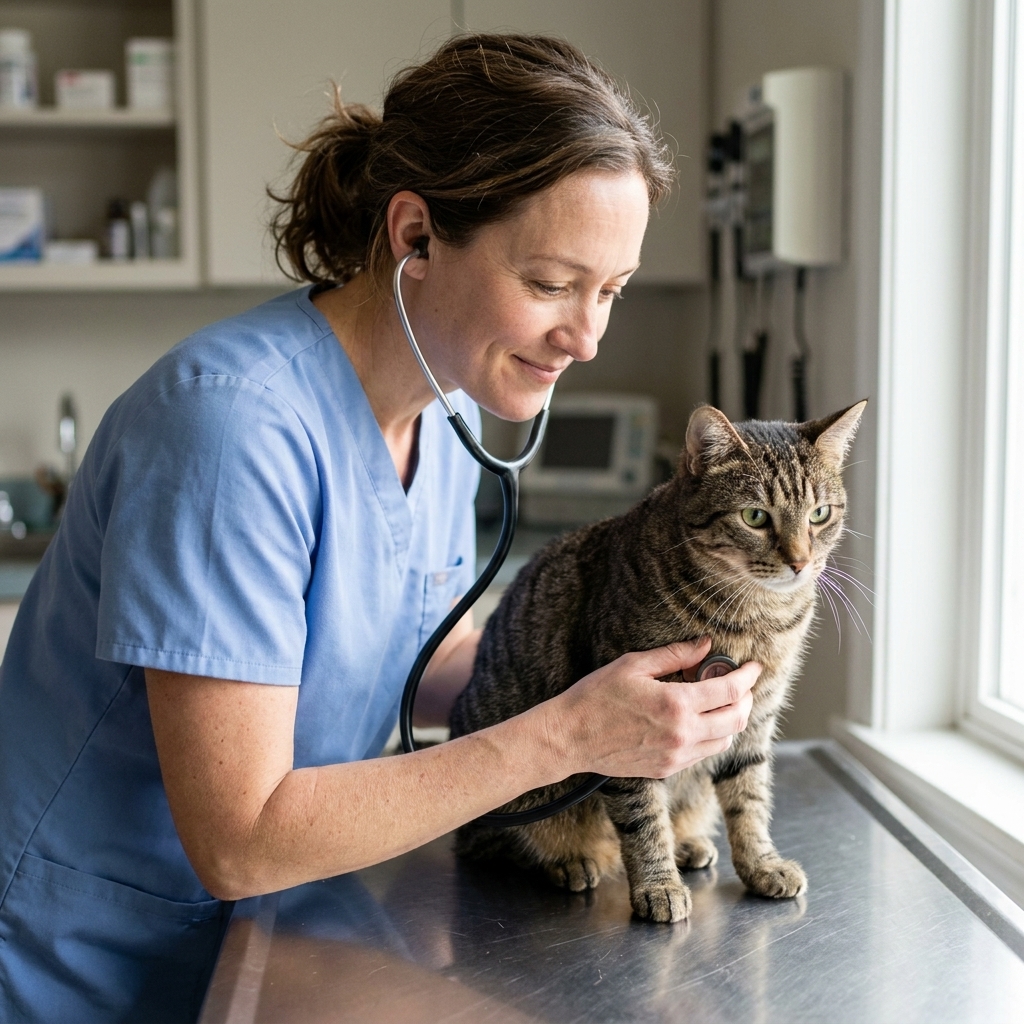
Even better reason to train it. If you can get “step on and pause” at home, you are reducing stress at the clinic. Bring your target card with you and ask the staff if you can use it during weigh-in.
Shy cat plan
If your cat is under-socialized or easily spooked, think in “micro-steps” and give more breaks.
- Work in a smaller, predictable room with fewer noises.
- Train from your cat’s “safe zone” and let them choose to approach.
- Do more sessions, shorter sessions.
- End every session with an easy win, like one target touch away from the scale.
In rescue work, I learned that confidence grows when the cat is allowed to opt in. Progress might look slow day to day, but it stacks.
Safety and comfort
- No scruffing, forcing, or pinning onto the scale. That creates long-term scale avoidance.
- Use breaks if your cat flicks their tail hard, freezes, swats, growls, or suddenly grooms as a stress reset.
- Support seniors: For arthritic or older cats, keep the scale surface grippy and the step-up low. If your cat seems painful or reluctant to jump, talk with your veterinarian.
FAQ
How long does it take to train a cat to use a scale?
Some cats get the idea in a day, others need a week or two of tiny sessions. Shy cats often take longer, and that is okay. Consistency matters more than speed.
Can I use my bathroom scale instead of buying a baby scale?
Yes. Many people weigh themselves holding the cat, then subtract their own weight. If you do that, aim for consistency: same time of day, same scale, same routine. One downside is that many bathroom scales are not very sensitive, so small changes (a few ounces or about 100 grams) can be hard to detect.
For cats who dislike being held, target training onto the scale is usually less stressful.
What if my cat only puts front paws on the scale?
Reward that, then adjust the target so your cat has to shift weight forward and eventually step fully on. Think: front paws today, three paws tomorrow, all four soon.
Should I train with the scale on or off?
Start with it off if beeps or sudden numbers make your cat jumpy. Once your cat is confidently stepping on, turn it on and reward calm behavior while the display changes.
How often should I weigh my cat?
As a general baseline for healthy adult cats, every 2 to 4 weeks is usually plenty. If your veterinarian is monitoring a condition, if your cat is on a weight plan, or if your cat is older and changes are easier to miss, you may want to weigh more often.
Bottom line
Target training turns weighing from a wrestling match into a cooperative routine. Keep it reward-based, keep it short, and celebrate the small steps. When your cat learns that stepping onto the scale makes good things happen, you get better data and a calmer cat, which is a win I will take every time.