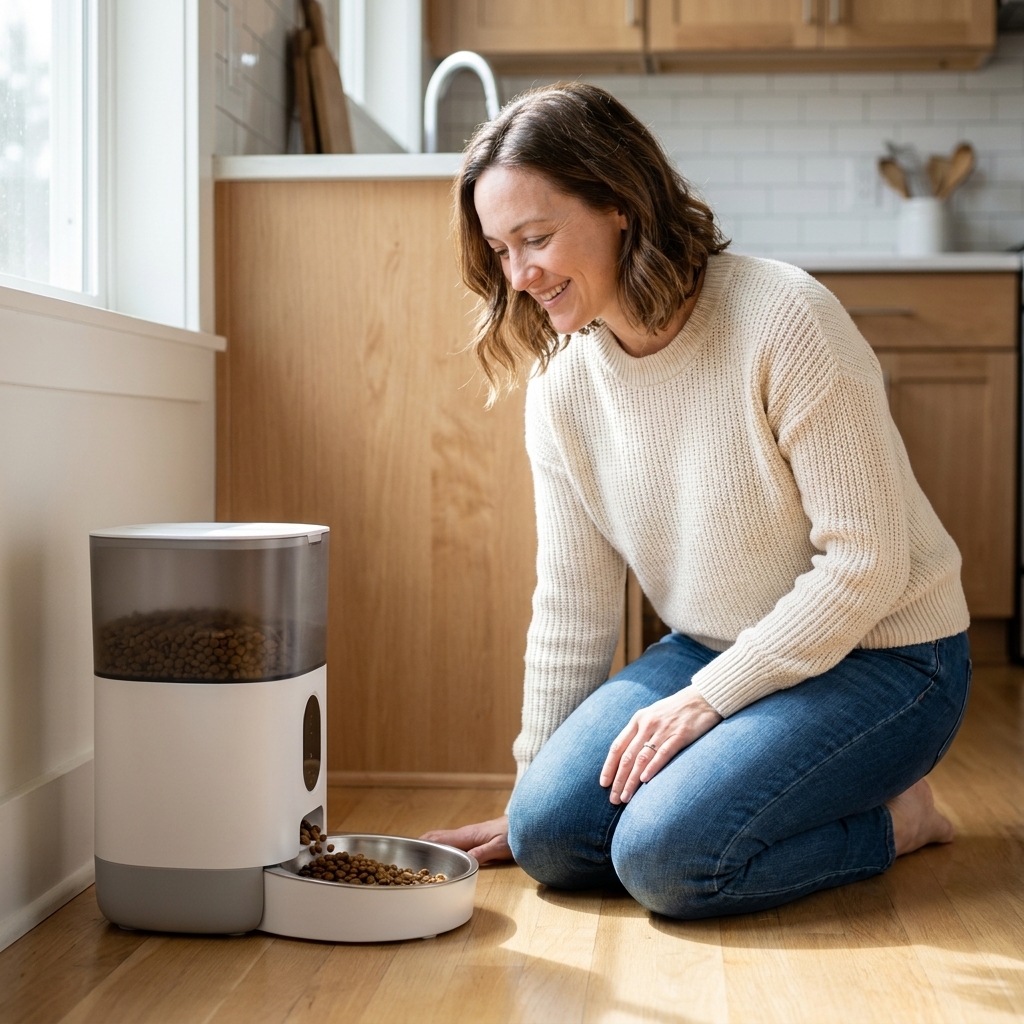
If your indoor cat is getting a little too round, you are not alone. I have met plenty of beloved couch potatoes in rescue and foster homes, and the good news is that safe, steady weight loss is absolutely doable. The key is to approach it like a gentle lifestyle change, not a crash diet. Cats are not small dogs, and rapid weight loss can be genuinely dangerous.
Below, I will walk you through how to tell whether weight is a concern, how to set a safe goal, how to calculate portions you can actually stick to, how to choose a weight-management food, and how to add exercise without stressing your cat out.
First, confirm it is a weight issue
Some cats are naturally stockier, some have extra fluff, and some are quietly carrying more fat than we realize because we see them every day. Two quick at-home checks can help you decide if it is time to act.
Ribs and waist
- Ribs: You should be able to feel your cat’s ribs with light pressure, like feeling the ridges under a thin blanket. If you have to press hard to find ribs, there is likely excess fat.
- Waist: Look down from above. Most cats should have a visible waist behind the ribs. If your cat looks like a loaf from every angle, that is a clue.
- Tummy tuck: From the side, the belly should tuck up behind the ribcage. A swinging “primordial pouch” can be normal. A low, heavy belly that hangs and broadens can point to extra fat.
Get a real weight and a BCS
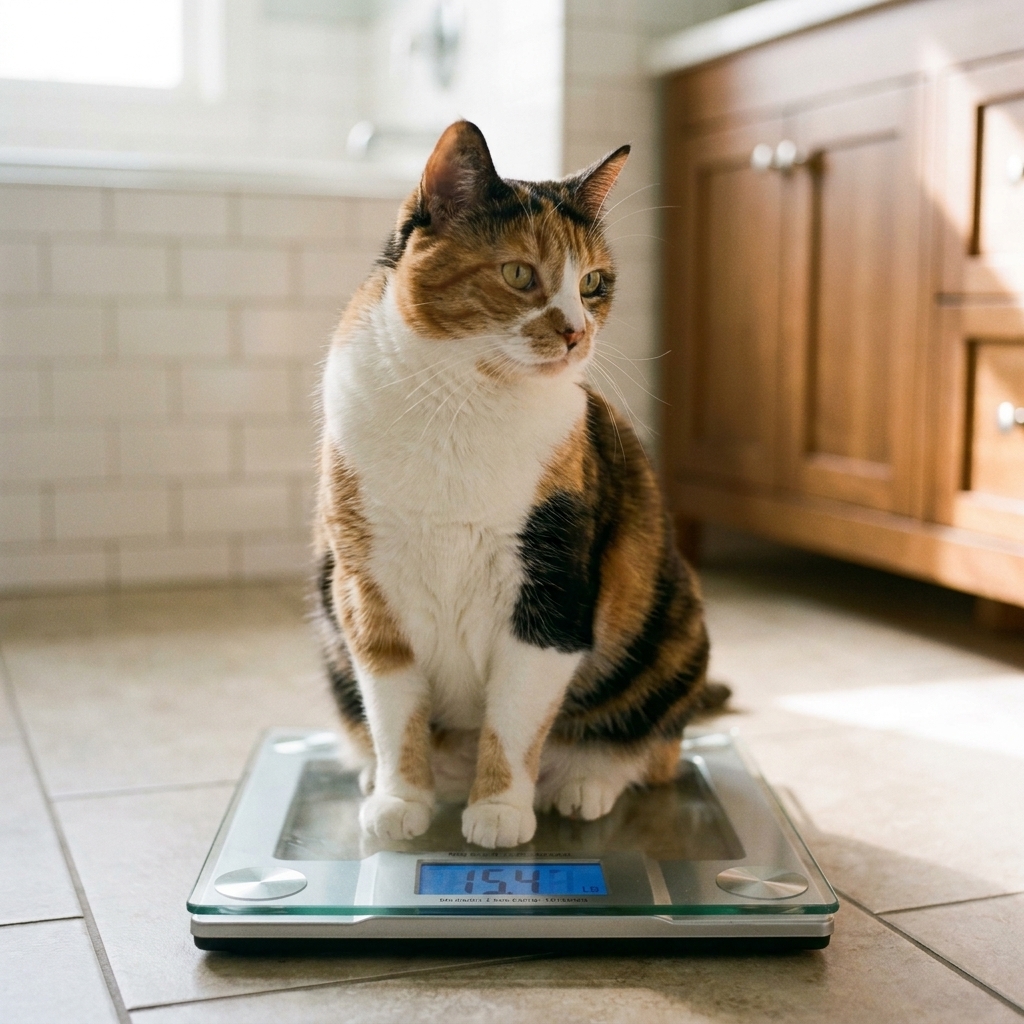
If you can, weigh your cat on the same scale weekly (or weigh yourself holding your cat, then subtract your weight). Even better, ask your veterinarian for a Body Condition Score (BCS). It is a simple 1 to 9 scoring system that helps you set a realistic target weight. This matters because “lose two pounds” is a very different request for a 9-pound cat than for a 16-pound cat.
Safety rules
This section is short on purpose because these are the big mistakes I see when worried cat parents understandably try to fix things fast.
- Do not crash diet. Rapid weight loss can trigger hepatic lipidosis (fatty liver disease), a life-threatening condition. Any plan should aim for slow, steady loss.
- Do not let a cat go without food. In general, cats should not go 24 hours without eating. If your cat is refusing food, eating dramatically less, or seems unwell, call your veterinarian promptly.
- Do not guess if other symptoms show up. If weight gain came with increased thirst, vomiting, diarrhea, constipation, weakness, or behavior changes, get a medical check before changing calories. Some medications (including steroids) can affect weight.
Also worth knowing: true hypothyroidism is rare in cats, and hyperthyroidism more often causes weight loss, not gain. In other words, unusual appetite or weight changes are a good reason to loop your vet in rather than assume it is “just overeating.”
How much to feed
Portion control is the engine of weight loss. Exercise helps, but diet is where the biggest change happens. Here is a simple way to get portions under control without turning your home into a 24/7 negotiation.
Step 1: Set a calorie target
Most weight-management plans are based on your cat’s ideal weight, not their current weight. Your veterinarian can calculate a safe daily calorie range based on body condition, age, muscle mass, and health conditions.
Before your appointment, track what you currently feed for 3 days:
- exact food brand and formula
- how much per meal (cups, cans, grams, pouches)
- treats and toppers (yes, even the “tiny” ones)
- table scraps and lickable tubes
This food diary gives your vet something concrete to work from, and it often reveals easy wins.
Step 2: Weigh food, do not eyeball it
Measuring cups feel convenient. For dry food, they are often inconsistent because kibble shapes vary and cups get scooped differently each time.
- Best: a small digital kitchen scale and feeding in grams.
- Next best: use the same measuring tool level-filled each time, but understand it is less precise.
Once you know your daily total, split it into 2 to 4 meals. Many cats do better with more frequent, smaller meals, especially former free-feeders.
Step 3: Treats count
Treats are not “extra.” They are calories. A helpful guideline is to keep treats at 10% or less of daily calories. If you are using treats for training (which I love), choose tiny, soft treats you can break into micro pieces, or use part of the day’s kibble as training rewards.
Step 4: Slow the pace
Slower eating helps cats feel more satisfied and makes portions feel larger.
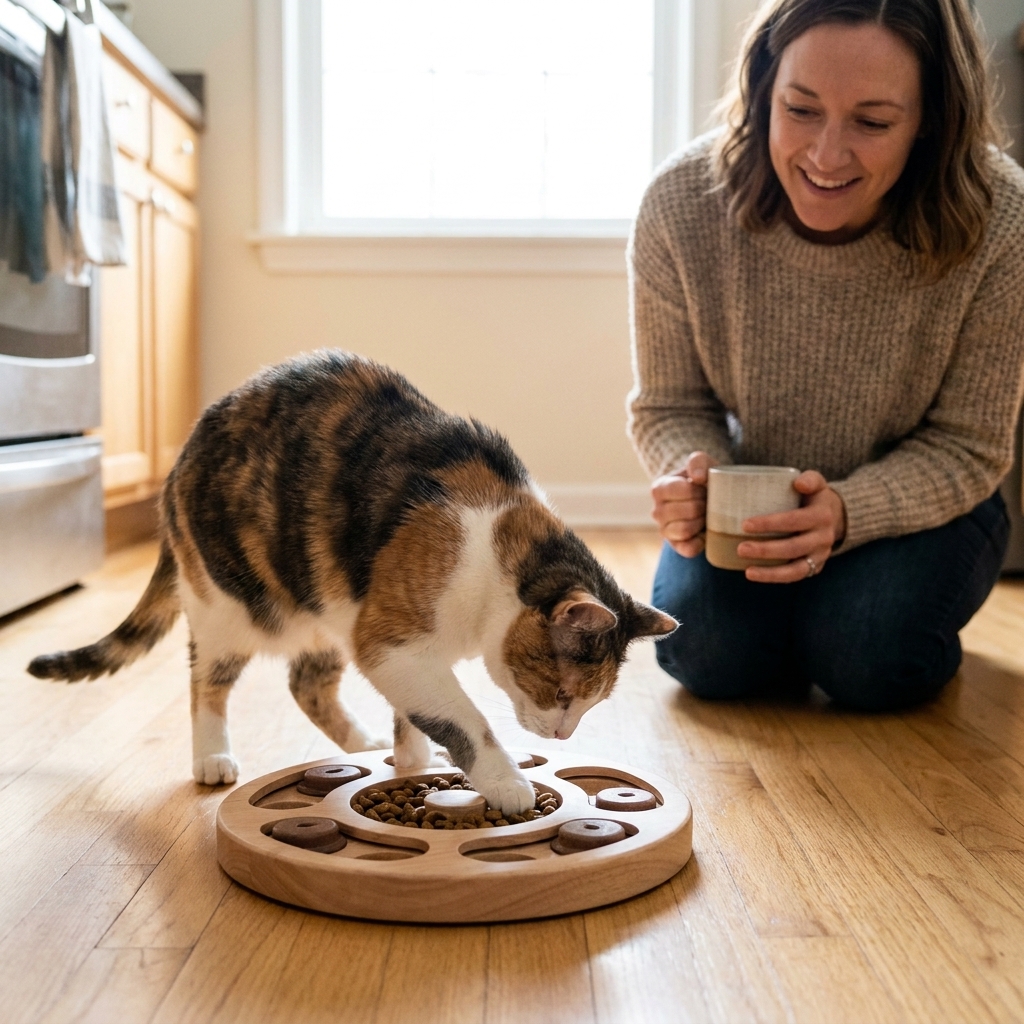
- puzzle feeders
- snuffle mats designed for cats
- treat balls for measured kibble
- scatter feeding in multiple small “stations”
Picking a weight-loss food
Not all “light” or “indoor” foods are created equal. The best weight-loss diet is one your cat will eat, that keeps them full, and that protects muscle while body fat decreases.
What to look for
- High protein: Cats are obligate carnivores. Adequate protein supports lean muscle and satiety during calorie restriction.
- Lower calorie density: This lets your cat eat a satisfying volume for fewer calories.
- Added fiber (sometimes): Fiber can help some cats feel fuller, though very high fiber is not ideal for every cat.
- Complete and balanced: Weight loss still requires full nutrition. Avoid unbalanced homemade restriction unless formulated by a veterinary nutritionist.
Wet vs dry
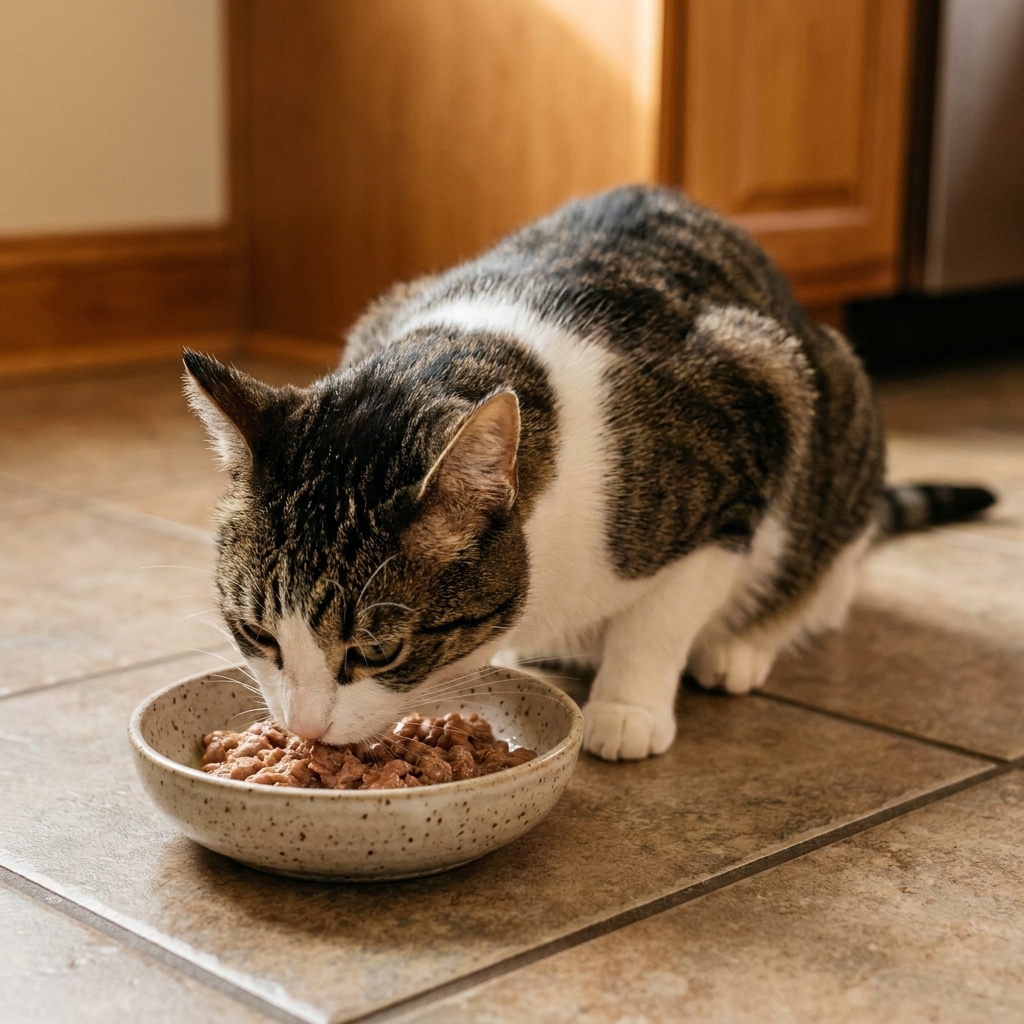
In many households, shifting some (or all) calories to wet food helps because canned diets are often less calorie-dense and add water, which can support fullness.
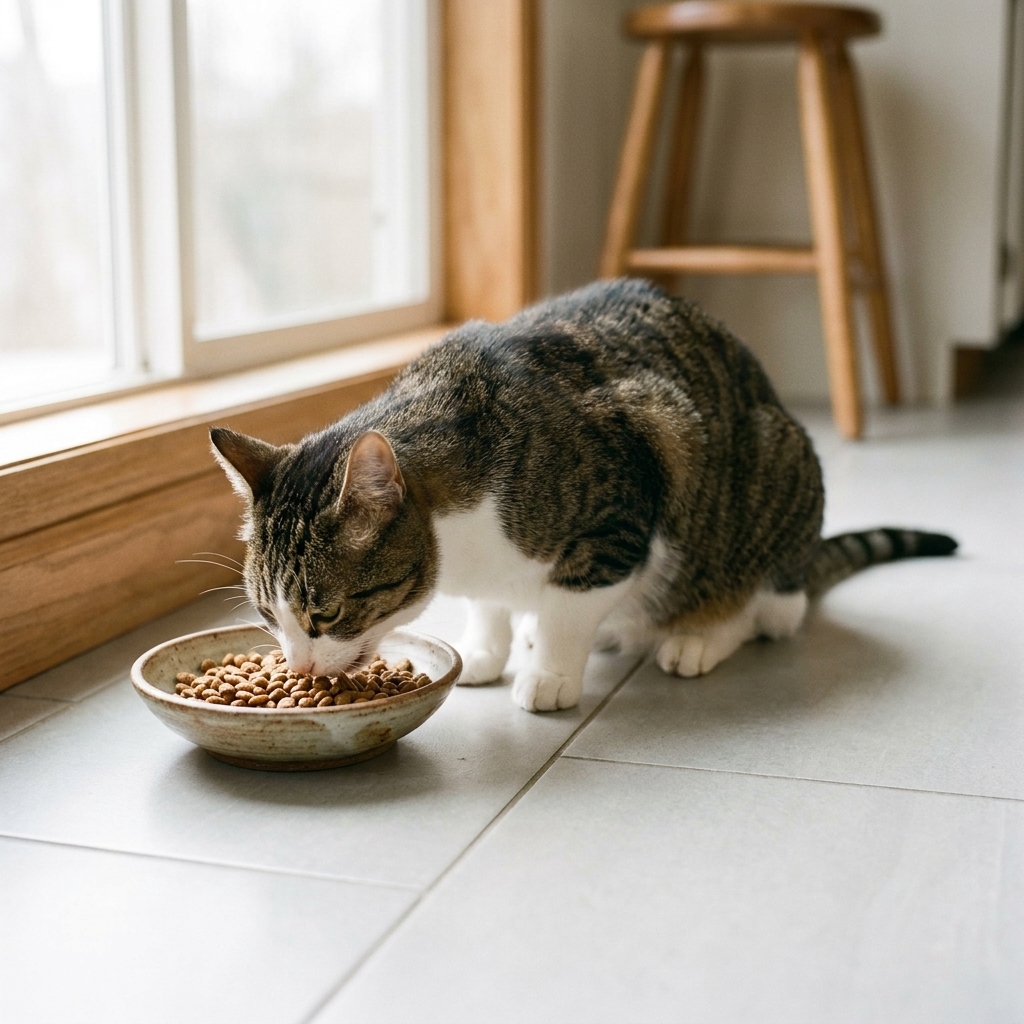
That said, some cats do great on measured dry food using puzzle feeders. The “best” format is the one you can portion accurately and your cat will eat consistently.
Prescription diets
If your cat is significantly obese, constantly hungry, or losing weight very slowly despite careful measuring, your vet may recommend a prescription weight-loss formula. These diets are designed for safe calorie restriction while maintaining nutrient levels, and they can be a game changer for the hungriest cats.
Switch slowly
Most cats do better with a gradual transition over 7 to 10 days:
- Days 1 to 3: 75% old food, 25% new
- Days 4 to 6: 50% old, 50% new
- Days 7 to 9: 25% old, 75% new
- Day 10: 100% new
If your cat has a sensitive stomach, slow it down further. If your cat refuses the new food, do not “wait them out” without guidance. Call your vet for options.
Exercise for indoor cats
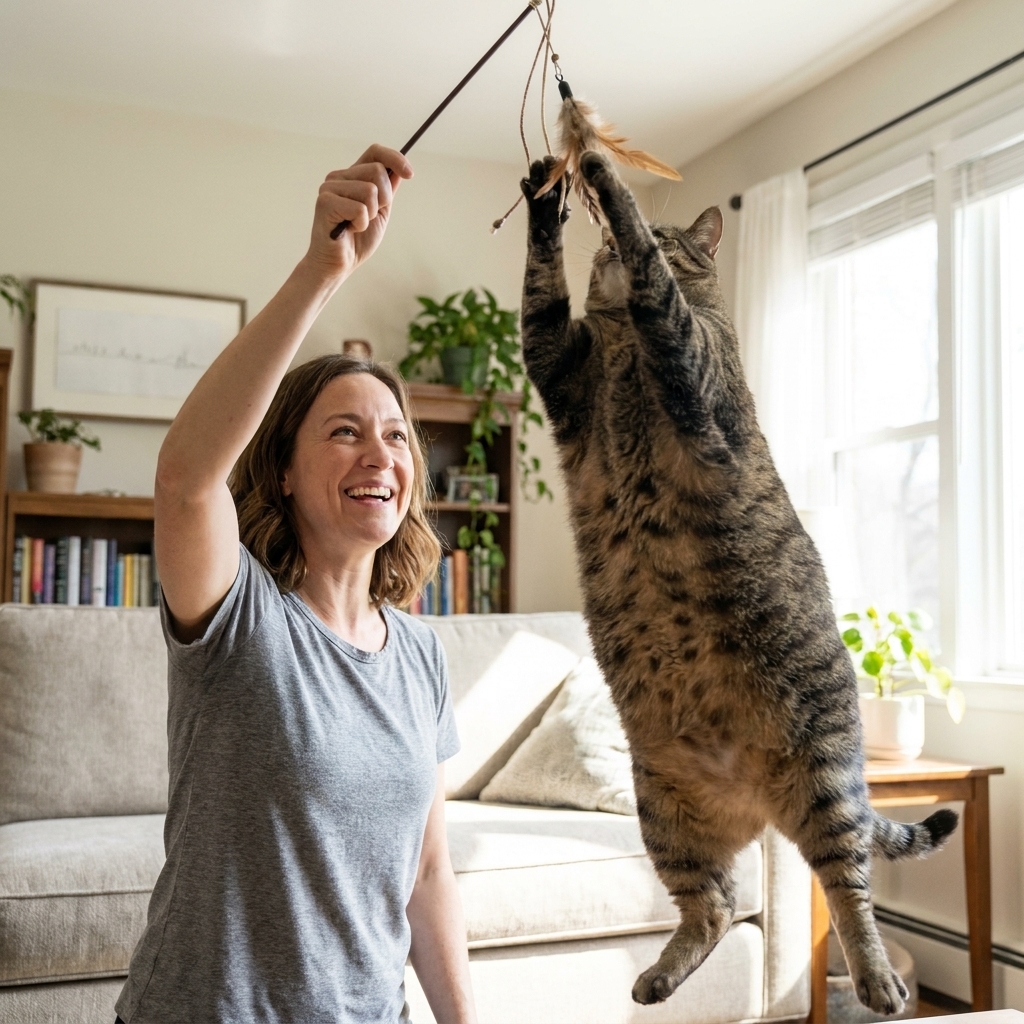
When I say “exercise,” I do not mean turning your cat into a marathon runner. I mean stacking small moments of movement throughout the day so calories burn, muscles work, and your cat gets the mental enrichment they were built for.
Keep play short
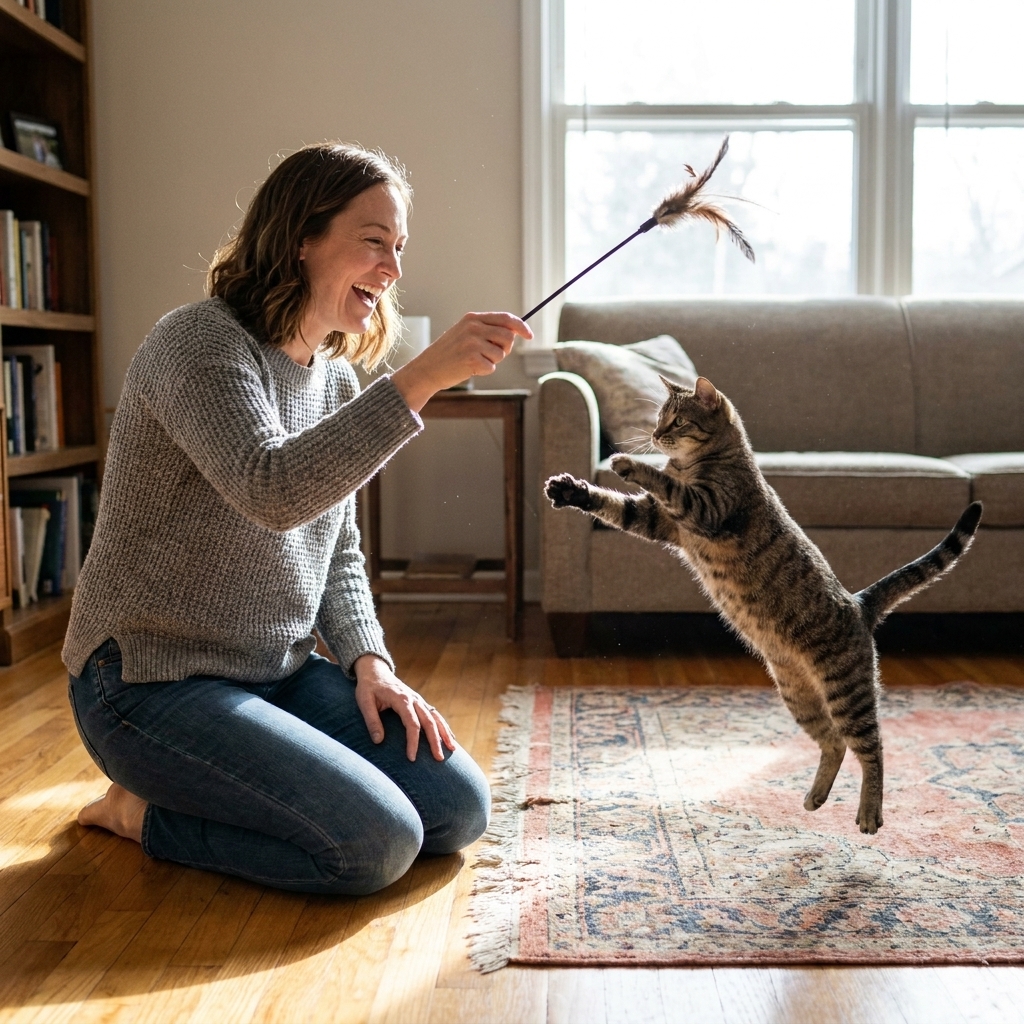
A great starting goal is two 5-minute sessions per day. Many overweight cats fatigue quickly, and that is okay. Consistency matters more than intensity.
- Wand toys: Mimic prey with short bursts, pauses, and changes of direction.
- Toss-and-chase: Soft mice, crinkle balls, or a rolled sock can work for cats that like ground games.
- Food play: Hide a few pieces of kibble in a puzzle feeder or around one room for a “hunt.”
Pro tip from my house: Clementine (my tortie) loves dramatic pounces, but Waffles (my orange tabby) needs slower “injured bug” movements to stay engaged. Match the play style to your cat’s personality, not what you think play should look like.
Set up your space
You do not need a huge home. You just need a few reasons to move.
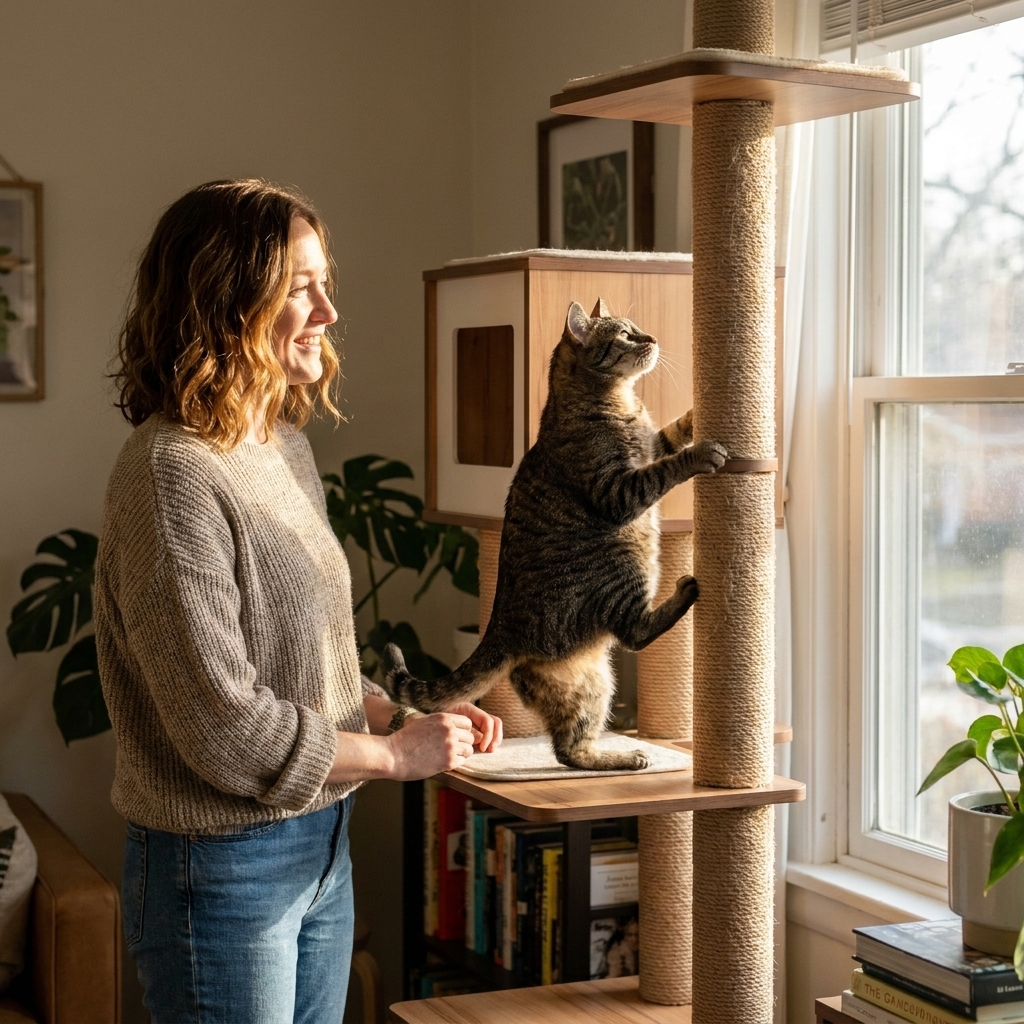
- a sturdy cat tree near a window
- wall shelves or a safe climbing route (if your cat enjoys height)
- food and water placed a little farther apart (not inconvenient, just not side-by-side)
- daily “treat scavenger hunt” using measured calories
A weekly plan
Here is a gentle structure that works well for many indoor cats and their humans. Adjust based on your veterinarian’s guidance and your cat’s comfort.
Week 1: Measure and stabilize
- Get a baseline weight.
- Stop free-feeding and move to measured meals.
- Start a food diary, including treats.
- Add one short play session daily.
Weeks 2 to 4: Build routine
- Switch to grams if you can.
- Keep treats to 10% or less of daily calories.
- Increase play to two short sessions daily.
- Introduce one puzzle feeder or slow feeder.
Month 2 and beyond: Adjust carefully
- Weigh weekly at home.
- For obese cats or cats with medical issues, schedule weigh-ins with your vet every 2 to 4 weeks until things are stable.
- If weight is not trending down after 3 to 4 weeks, talk to your vet before cutting calories again.
- If an adjustment is needed, small changes are safer than big ones (think modest calorie tweaks, not repeated steep cuts).
How fast is safe?
For most cats, a safe target is about 0.5% to 2% of body weight per week, with many plans aiming around 1% per week. Your veterinarian may aim lower for seniors, cats with other conditions, or cats who are losing muscle, and they may aim higher only with close monitoring.
Important: If your cat ever stops eating, eats dramatically less, vomits repeatedly, or seems unwell during a weight-loss plan, pause changes and call your veterinarian promptly. A cat who is not eating is not “being stubborn.” It is a medical risk.
Common roadblocks
“My cat acts starving all day.”
- Split meals into 3 to 4 smaller servings.
- Use puzzle feeders to slow eating.
- Ask your vet about switching to a diet with better satiety (often higher protein and or tailored fiber).
- Increase play before meals. Many cats feel more satisfied after a successful “hunt.”
“I have multiple cats and one is stealing food.”
- Feed meals in separate rooms with doors closed.
- Use visual barriers (a baby gate, a screen door, or turning feeding stations away from each other) to reduce stress and food guarding.
- Pick up bowls after 15 to 20 minutes.
- Consider microchip feeders for cats on different calorie plans.
“My cat only eats dry food.”
That is more common than you think. Start by measuring dry food precisely and using puzzle feeders. If you want to add wet food, try a gradual introduction with tiny amounts, slightly warmed (never hot), and served on a flat plate for whisker comfort.
“My cat is older or arthritic and won’t play much.”
Choose low-impact movement: gentle wand play at floor level, short “toss” games, or food puzzles that encourage standing and stepping. Also talk to your vet about pain management. When cats hurt, they conserve energy, and weight gain follows.
When to call the vet sooner
Please book a vet visit before starting weight loss if any of these apply:
- your cat is very overweight or gained weight rapidly
- your cat has diabetes, kidney disease, heart disease, or a history of urinary issues
- your cat is on long-term medication (including steroids)
- your cat is a senior, has mobility pain, or has muscle loss
- your cat has a history of not eating when stressed
A safe plan is always a partnership. You bring the day-to-day observations and consistency. Your vet brings medical context and the right targets.
After the goal: maintenance
Once your cat reaches their target weight, do not snap back to the old routine. Ask your vet how to increase calories gradually to a maintenance level, then keep measuring for a while so the regain does not creep in.
Many cats need the same basics long-term: measured meals, treats that stay in the budget, and daily movement and enrichment. The difference is that maintenance usually gives you a little more flexibility and a much calmer cat.
FAQ
Should I switch to “indoor cat” food?
Sometimes, but not automatically. “Indoor” is a marketing category that can mean many things. For weight loss, prioritize calorie density and protein quality, and use your vet’s calorie target to guide portions.
Is it okay to use a little canned pumpkin for fullness?
In small amounts, plain pumpkin can help some cats, but it is not a weight-loss solution by itself. If you want to try it, ask your vet for an appropriate amount and confirm it fits your cat’s digestive needs.
Can I put my cat on a fasting schedule like people do?
I do not recommend fasting-style approaches for cats without veterinary guidance. Cats have unique metabolism and are more vulnerable to complications when calorie intake drops too quickly.
How do I know the plan is working?
You should see a gentle downward trend on the scale over weeks, plus small wins like easier grooming, more willingness to play, and a more defined waistline. Take monthly photos from above and from the side. Visual progress can be easier to notice than day-to-day changes.
The kindest mindset
Weight loss can feel emotional, especially if food has been your main way of showing love. Try to reframe love as structure: measured meals, smarter treats, and play that helps your cat feel like a cat again. Your indoor cat does not need a perfect plan. They need a safe one that you can keep doing.
If you want, bring your cat’s current food label and a 3-day feeding log to your next vet visit. You will walk out with clearer numbers, less guesswork, and a calmer path forward.