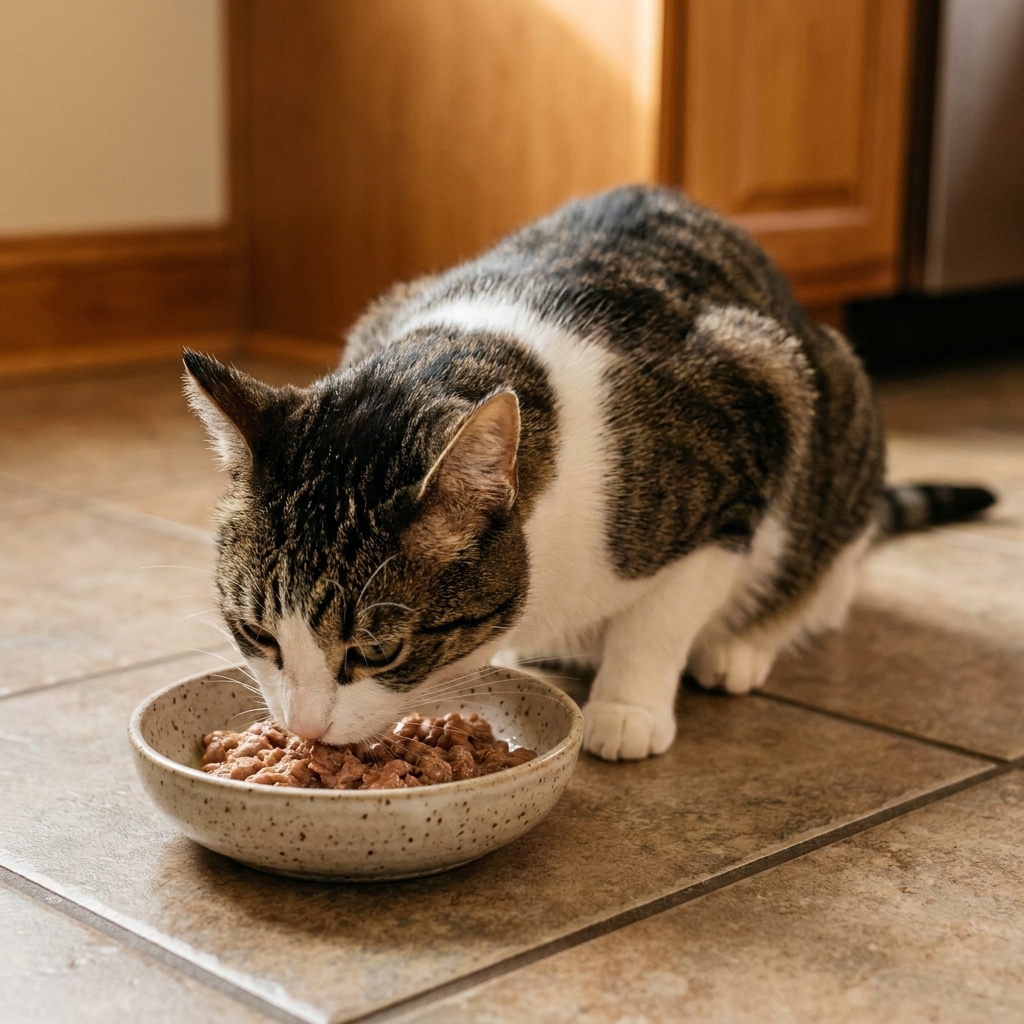
Switching cat food sounds simple until you’re staring at a full bowl, a judgmental tail flick, and a surprise hairball on the rug. I get it. Whether you’re moving to a higher-quality diet, managing allergies, or your cat has decided their old food is “beneath them,” the goal is the same: change foods without upsetting their stomach or teaching them that refusing meals gets them something better.
This 7-day plan is my go-to for most healthy adult cats. It’s gentle on digestion, predictable for your cat, and easy for you to follow without doing math at every meal.
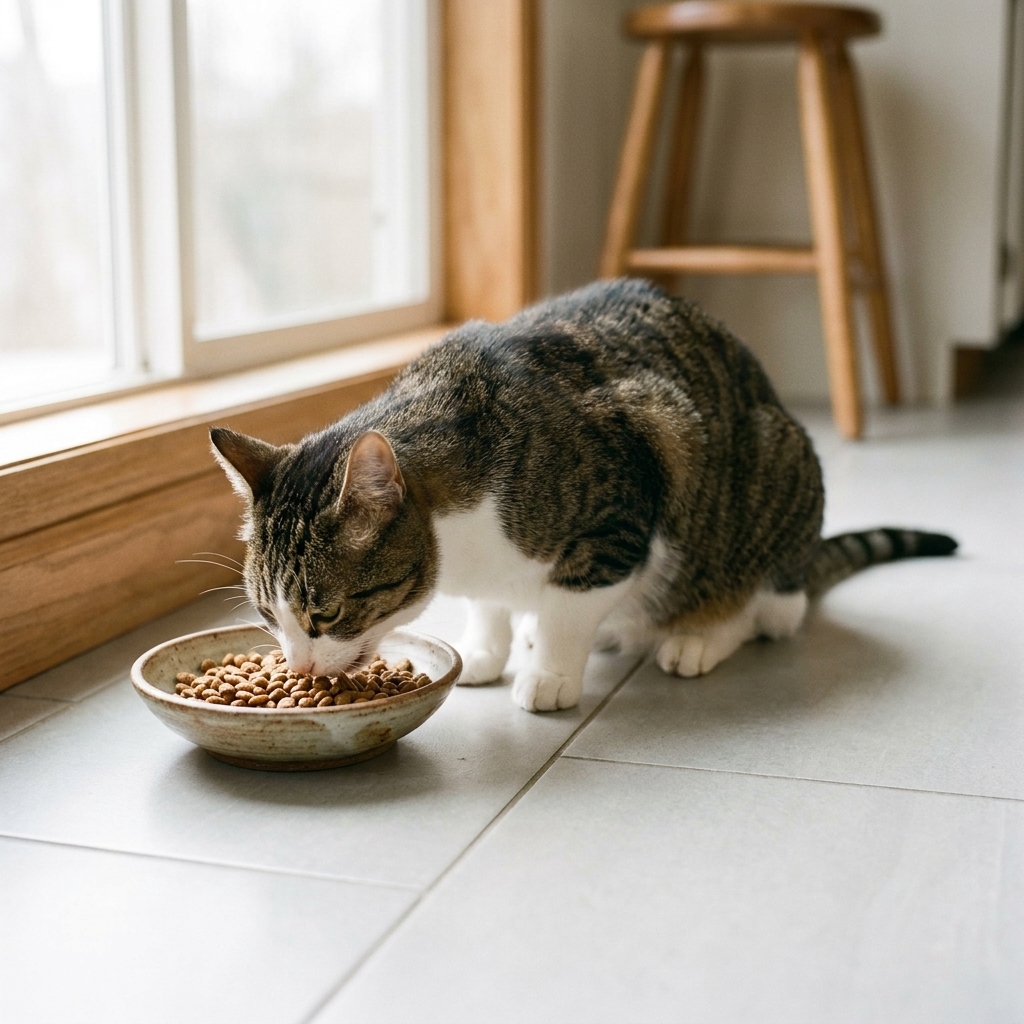
Before you start: set up for a smooth switch
1) Make sure the new diet fits
For most cats, “fits” means a diet labeled as complete and balanced for their life stage (kitten, adult, senior). If your cat has kidney disease, urinary issues, diabetes, suspected food allergies, IBD, pancreatitis, or a history of bladder blockages, your timeline and food choice should be guided by your veterinarian.
2) Do a quick health check
If your cat is vomiting frequently, has ongoing diarrhea, is losing weight, or seems painful or lethargic, do not start a DIY food transition and hope it fixes things. Get them checked first. A diet change is not a diagnostic tool.
3) Measure consistently (and watch calories)
The most consistent approach is weighing food on a small kitchen scale, especially with kibble. If you use cups, be as consistent as possible with the same scoop and the same “level” each time.
One extra thing that matters: wet and dry foods can have very different calorie densities. A half cup of kibble is not “the same” as half a can of wet food. If you’re switching wet to dry (or dry to wet), check the feeding guide for both foods and ask your vet if you’re unsure about daily calories.
4) Pick your meal schedule for the week
If your cat free-feeds, transitions can get messy because you can’t control the ratio they’re eating. For this week, aim for 2 to 4 measured meals per day. This also helps you notice appetite changes quickly.
- Wet food cats: Smaller, more frequent meals often go better.
- Kibble cats: Two meals is fine, three is even better if your schedule allows.
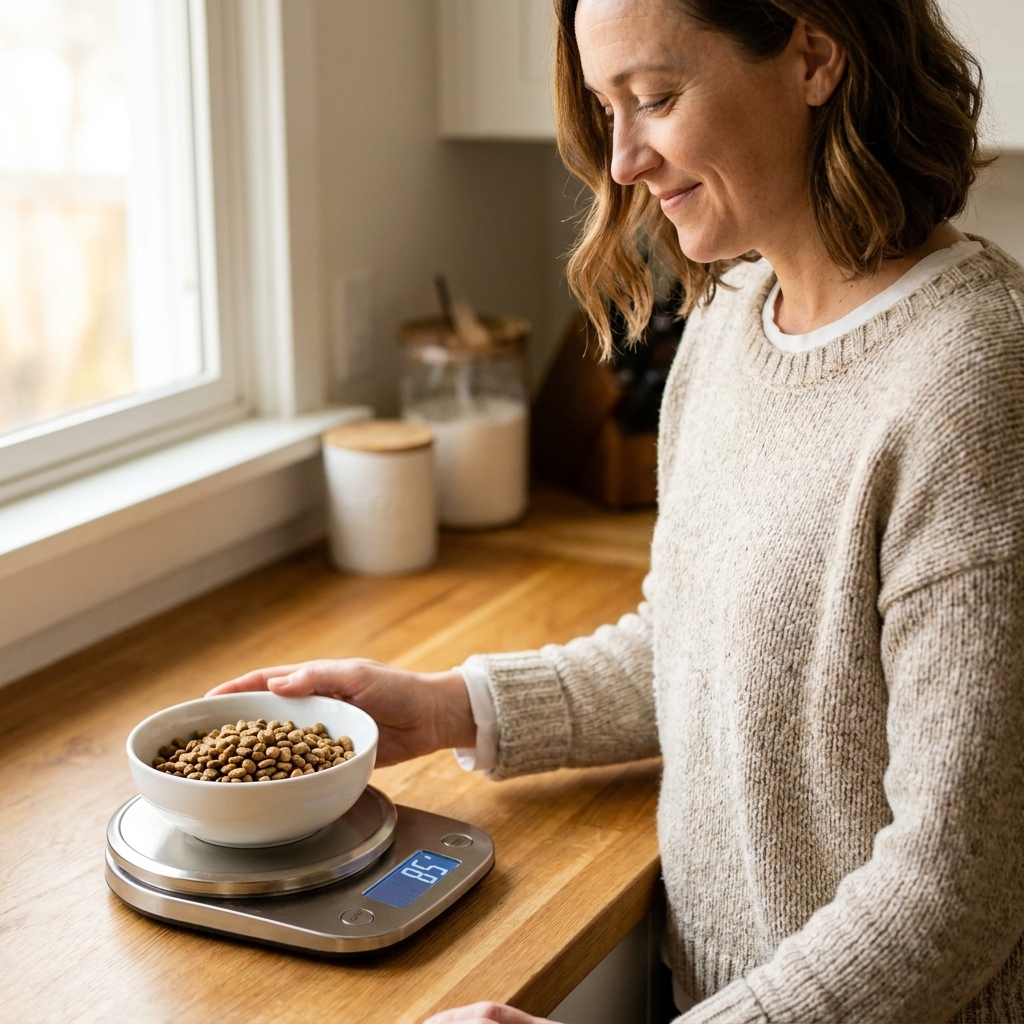
The 7-day transition schedule
Here’s the simple, gentle glide path. The percentages refer to the total food offered across the entire day (so if you feed multiple meals, keep the same ratio at each meal).
- Day 1: 75% old food + 25% new food
- Day 2: 75% old food + 25% new food
- Day 3: 50% old food + 50% new food
- Day 4: 50% old food + 50% new food
- Day 5: 25% old food + 75% new food
- Day 6: 25% old food + 75% new food
- Day 7: 100% new food
Quick example: If your cat gets two meals a day and each meal is 40 grams, Day 3 is 20 grams old + 20 grams new at breakfast, and the same again at dinner.
Pro tip from my rescue days: Repeat days on purpose. That’s why Days 1 and 2 match, and Days 5 and 6 match. Many cats do better when you give their gut a little time to adjust at each step.
How to mix it
- Kibble to kibble: Mix thoroughly so your cat can’t “sort” pieces as easily.
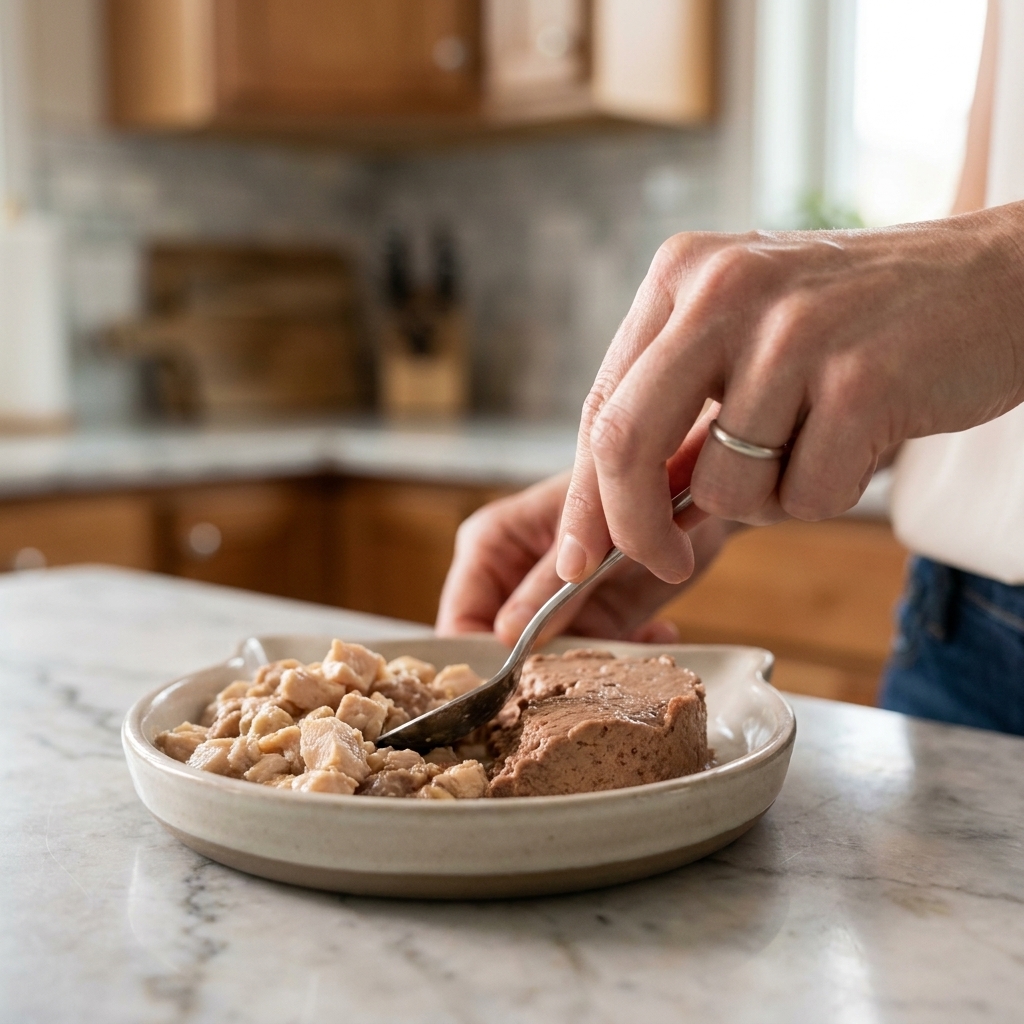
- Wet to wet: Mix in the bowl until the texture is uniform.
- Kibble to wet (or wet to kibble): Offer both at the same mealtime, but keep the ratios for the day. Some cats prefer two small bowls side-by-side, others do better when it’s mixed. Follow your cat’s preference, but keep the ratio consistent.
What “normal” can look like
A smooth transition is usually boring. That’s what we want. Still, minor changes can happen as your cat adjusts to differences in protein, fat, and fiber.
- Appetite: Slight hesitation at first is common, especially with a new texture or aroma.
- Stool: Mildly softer stool for a day can happen. It should not become watery diarrhea.
- Gas: A little extra stink can occur, particularly when switching protein sources.
If you notice mild changes, pause at the current ratio for 2 to 3 extra days before moving forward. A 7-day plan can become a 10 to 14-day plan and still be a success.
How to prevent tummy trouble
Keep treats and extras steady
This is the sneaky part: during a transition, many people add extra treats to “encourage” eating. Then the cat’s stomach gets an overload of new inputs and we blame the new food.
For this week, keep treats minimal and consistent. If your cat needs pill pockets or toppers for medication, keep the brand and amount stable.
Don’t change everything at once
If you’re also switching litters, moving homes, changing feeding location, or introducing a new pet, expect more stress and more GI sensitivity. When possible, change one big thing at a time.
Hydration helps
Especially if you’re moving toward more kibble or a higher-fiber diet, hydration matters.
- Add a tablespoon or two of warm water to wet food to boost moisture.
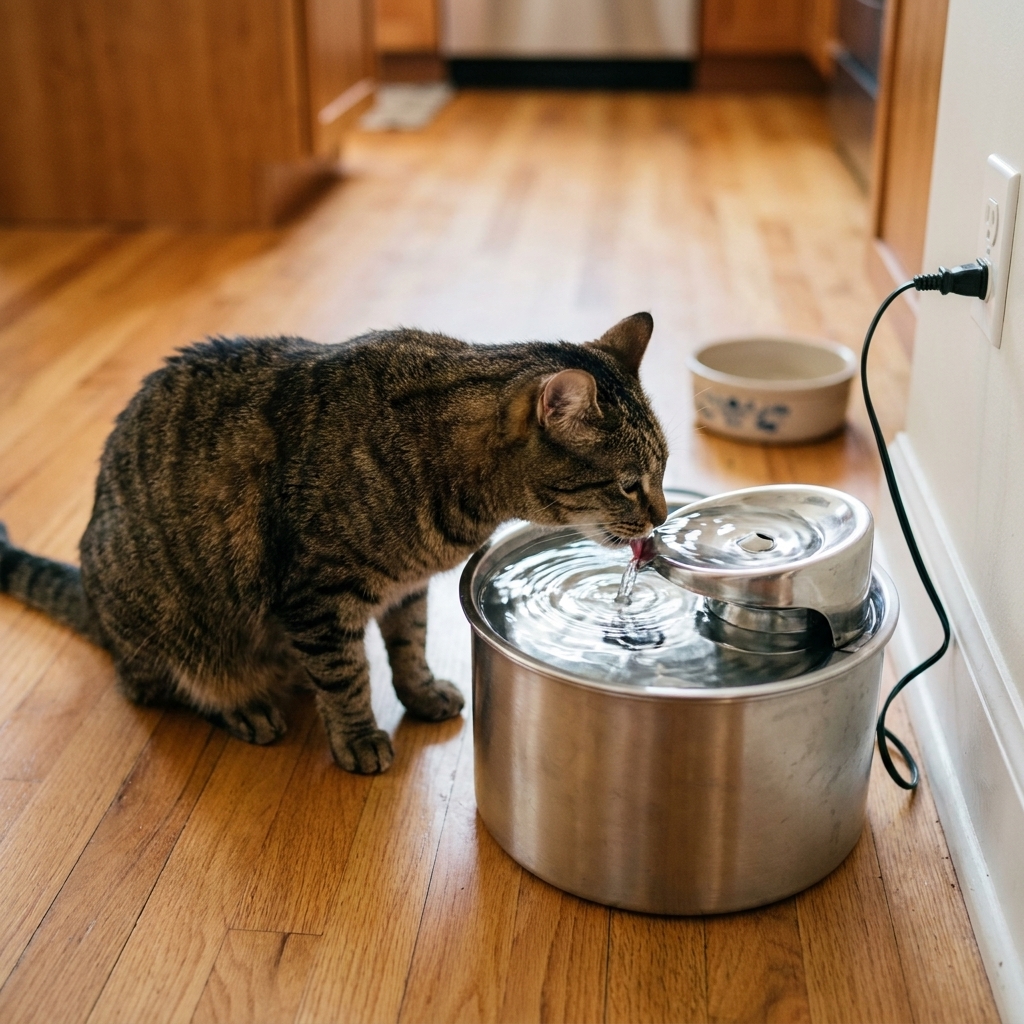
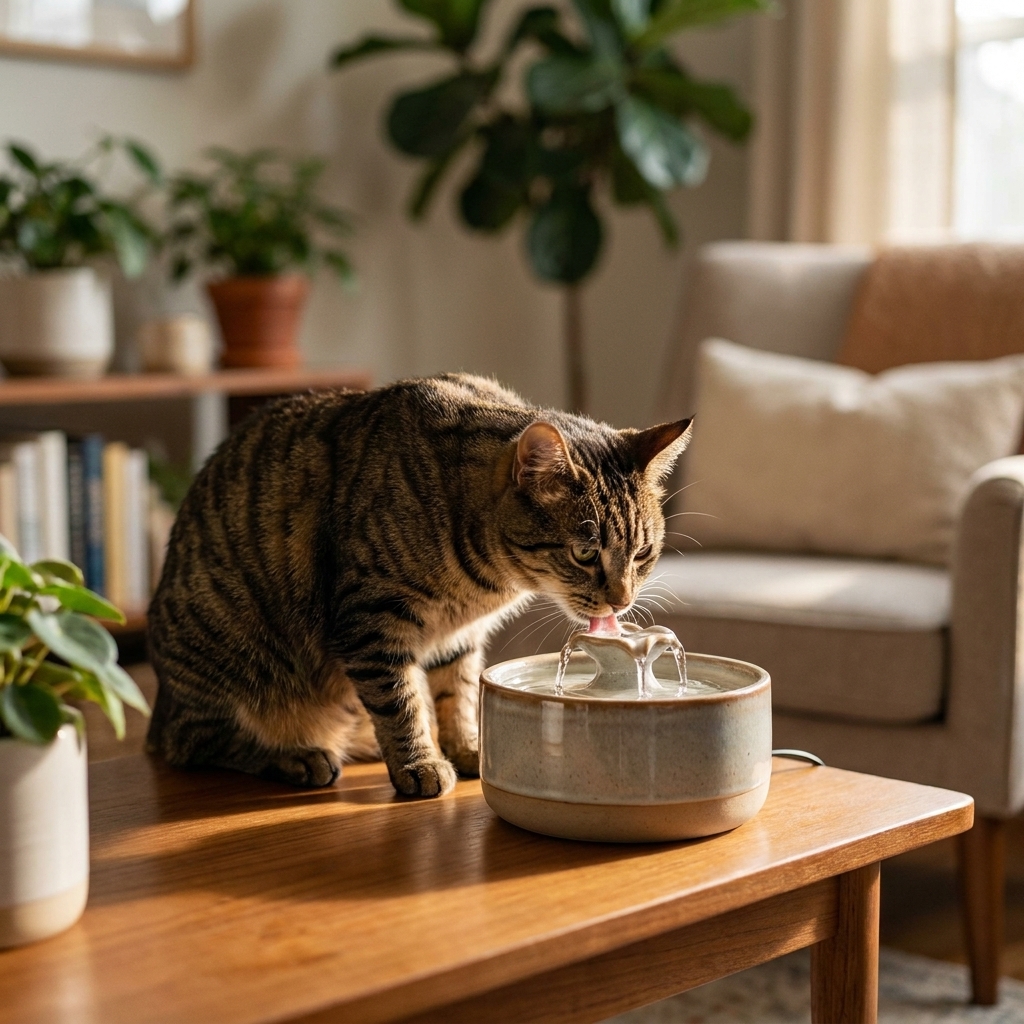
- Provide fresh water in multiple locations.
- Consider a cat water fountain if your cat prefers moving water.
How to avoid creating a picky eater
As a foster coordinator, I saw this pattern constantly: a cat refuses a new food, the human panics, and the cat learns that refusing dinner leads to a better offer. Cats are brilliant at training us.
That said, I need to say this clearly: do not turn this into a prolonged hunger standoff, especially if your cat is overweight, has a history of going off food, or has any medical condition. Cats can get very sick when they do not eat. If intake is dropping, jump to When to call the vet below.
Stick to meal windows (with a safety check)
Offer the mixed meal for 20 to 30 minutes, then pick it up. Next meal, offer the same ratio again. This keeps the plan consistent and reduces grazing-related fussiness.
If your cat is not eating at all, do not keep repeating “tough love” meals for a full day. Use the vet guidance in the red-flag section and err on the side of safety.
Warmth and aroma are your best friends
If your cat is hesitant, try warming wet food slightly (think “mouse body temperature,” not hot). You can do this by stirring in warm water. Stronger aroma often improves acceptance without needing to introduce new toppers.
Use toppers strategically, not emotionally
If you need a topper, choose one you can use consistently for the whole transition and keep it tiny, ideally under 10% of your cat’s daily calories. Good options include:
- A sprinkle of freeze-dried meat crumbs
- A teaspoon of the cat’s regular wet food mixed into the new wet food
- A small amount of tuna water with no added salt (occasional, not daily, and skip it for cats on sodium-restricted diets such as some heart or kidney patients)
If you find yourself rotating three toppers, two brands, and a different flavor every meal, pause and simplify. Consistency is what makes picky cats feel safe.
Troubleshooting by symptom
If your cat refuses the bowl
- Double-check the ratio. If you jumped too quickly, go back to the last ratio they ate comfortably.
- Offer smaller portions more often. A big, unfamiliar-smelling meal can be intimidating.
- Try a different dish. Some cats dislike deep bowls that touch their whiskers. A shallow plate can help.
- Keep it calm. Hovering, pleading, or repeatedly swapping foods teaches your cat that protests work.
If your cat gets soft stool or diarrhea
- Stop advancing the schedule. Stay at the current ratio for a few days.
- Consider slowing the whole transition. Many sensitive cats need 10 to 14 days.
- Review treats. Extra snacks are a common cause.
- Call your vet if diarrhea is watery, persistent beyond 24 to 48 hours, or paired with lethargy or poor appetite.
If your cat vomits
- One isolated vomit can happen, especially if your cat ate too fast or hairballs are involved.
- Repeat vomiting, vomiting with lethargy, or vomiting plus refusal to eat needs a vet call.
- Slow feeding can help: use a puzzle feeder for kibble or spread wet food thinly on a plate.
If your cat acts hungry all the time
Some new foods are less calorie-dense than the old diet, especially when switching between wet and dry or to a weight-management formula. Check the feeding guide and your cat’s body condition. If your cat is finishing meals but still begging, talk to your veterinarian about appropriate daily calories and whether the new diet is the right fit.
Special situations
Switching to a prescription diet
If your veterinarian prescribed a diet for urinary crystals, kidney disease, or GI disease, ask whether a faster transition is needed. In some medical situations, the benefit of starting the therapeutic diet sooner can outweigh the risk of a slower schedule. Your vet can tailor the plan.
Switching a senior cat
Older cats can be more sensitive to change and more vulnerable to appetite dips. I typically recommend a slower transition (10 to 14 days) unless your veterinarian advises otherwise. Weight loss in seniors can happen quickly and matters.
Overweight cats and “food skippers”
If your cat is overweight or has a history of refusing food when stressed or picky, be extra cautious. These cats can be at higher risk for complications when they do not eat. Go slower, monitor intake closely, and call your veterinarian sooner rather than later if appetite drops.
Multi-cat households
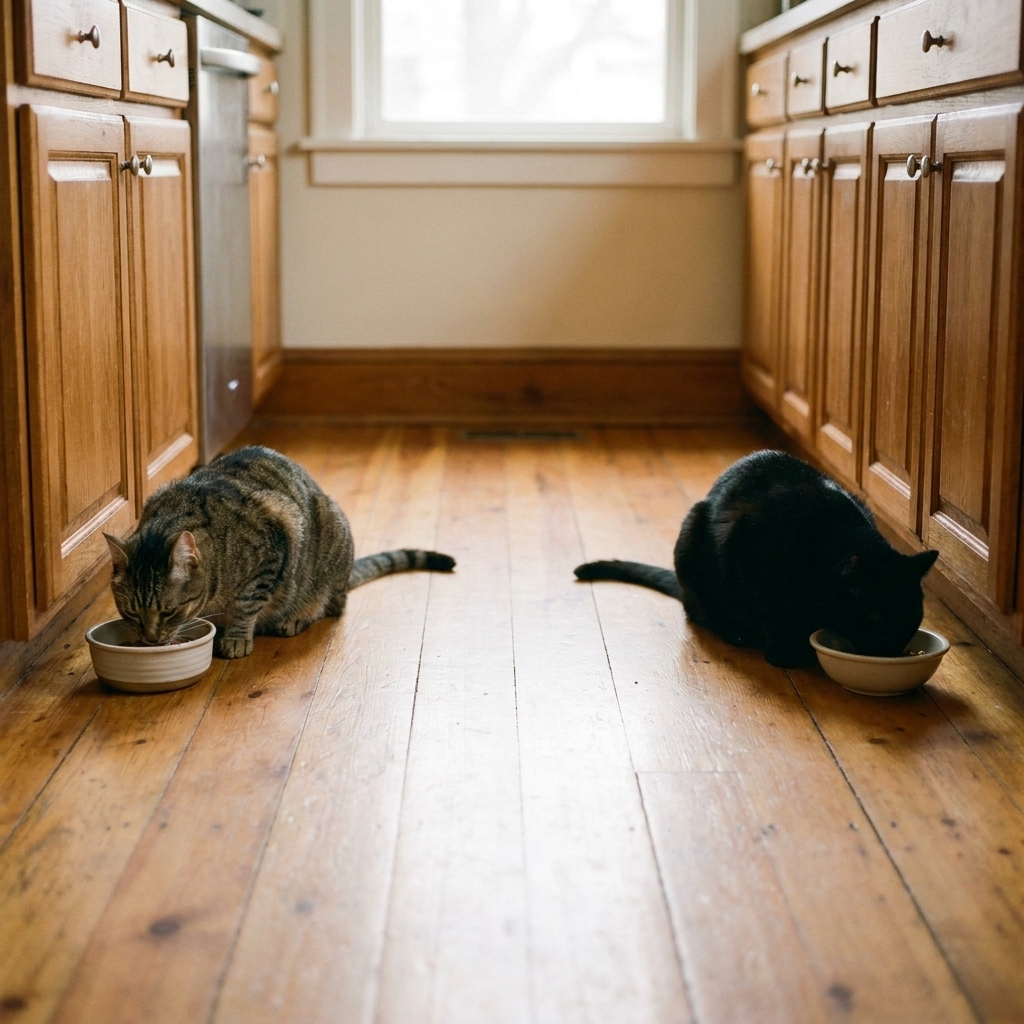
If one cat is switching diets for medical reasons, meal feeding is your friend. Feed cats separately with closed doors or microchip feeders so everyone eats the correct food. Many “mystery” stomach upsets are actually caused by cats sneaking each other’s meals.
When to call the vet
Please reach out to your veterinarian promptly if you notice any of the following during a transition:
- Not eating for 12 to 24 hours (and sooner for kittens, seniors, diabetics, or cats with medical conditions)
- Repeated vomiting or inability to keep food down
- Watery diarrhea, blood in stool, or black tarry stool
- Lethargy, hiding more than usual, signs of abdominal pain
- Rapid weight loss or marked increase in drinking and urination
Cats can develop serious complications from prolonged inappetence, including hepatic lipidosis (fatty liver). If your cat is refusing food, it’s not a “wait it out” situation.
7-day transition checklist
- Measure food consistently (scale if possible)
- Feed scheduled meals instead of free-feeding for this week
- Follow the ratios: 75/25, 50/50, 25/75, then 100
- Pause at a step if stools soften or appetite dips
- Keep treats steady and minimal
- Call the vet for red flags, not after days of struggling
If you want the most important takeaway: slow is fast. A calm, steady transition is far more likely to stick long-term and far less likely to end in a picky eater standoff.
Give your cat a scratch from me, and from Clementine (who would like you to know she prefers any food she did not agree to five minutes ago) and Waffles (who is currently staring at his water bowl like it’s a difficult math problem).
FAQ
Can I transition my cat in less than 7 days?
Some cats can, but I rarely recommend it unless your veterinarian instructs you to start a therapeutic diet sooner. Faster switches increase the odds of diarrhea and refusal, especially in sensitive cats.
Should I add probiotics during the switch?
For some cats with sensitive digestion, a veterinarian-recommended probiotic can help. It’s not mandatory for most healthy cats, and product quality varies. If your cat has chronic GI issues, ask your vet which strain and brand they trust.
My cat only eats the old food pieces. What do I do?
This is common with kibble. Mix very thoroughly, use smaller kibble sizes if available, and move forward only when your cat is reliably eating the mixed ratio. If needed, slow the schedule and stay at 75/25 for several more days.
Is it okay to switch proteins (chicken to fish, etc.)?
Yes, but protein changes can be more dramatic for some cats. If your cat has suspected food sensitivities, work with your veterinarian so you’re switching strategically and not accidentally muddying the waters.