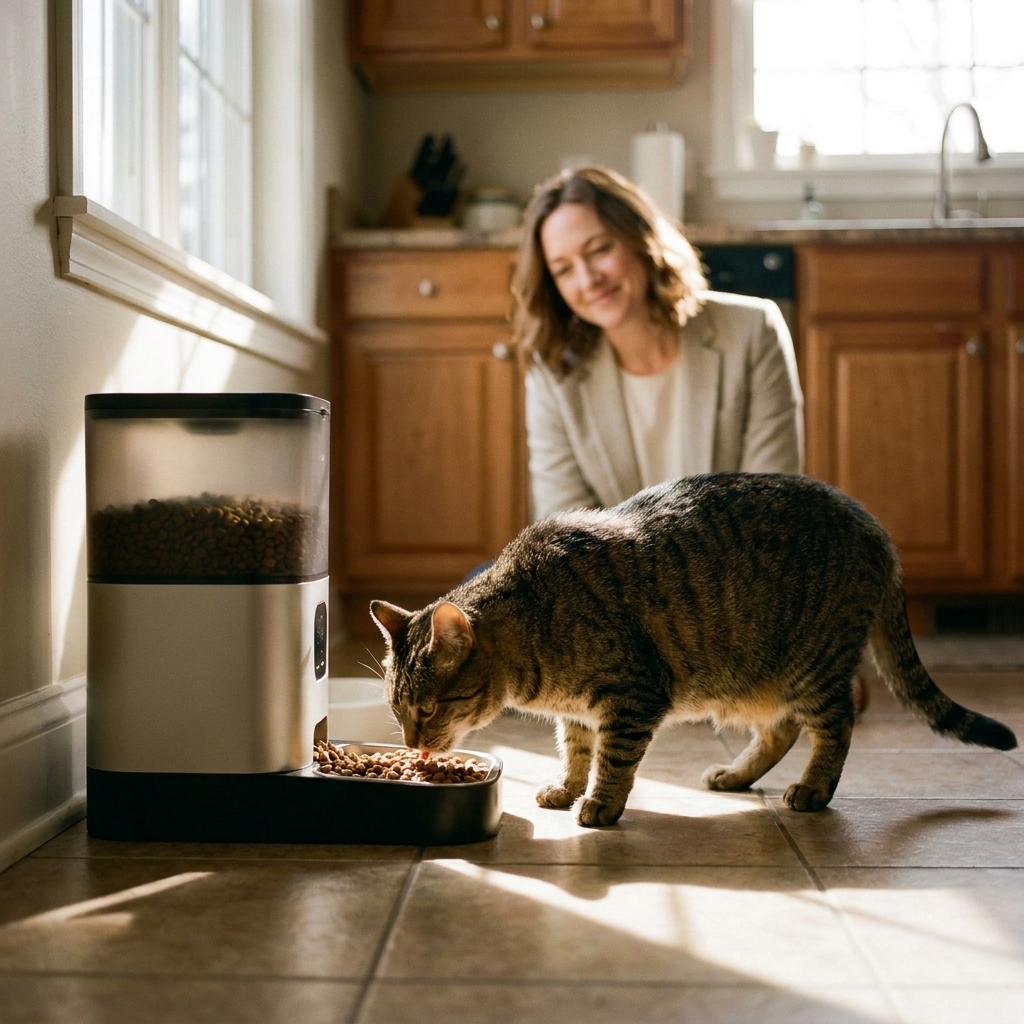
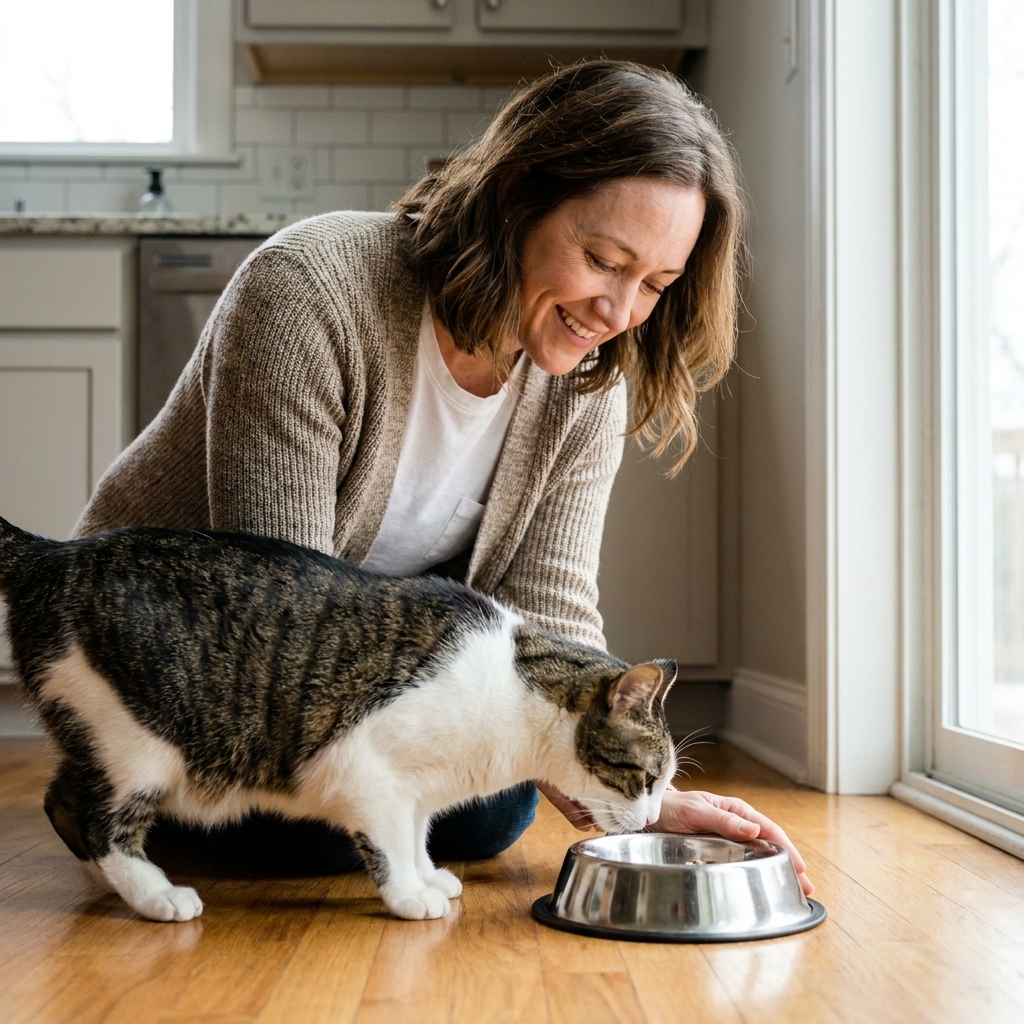
If you have ever stumbled into the kitchen at 5 a.m. to a cat who swears they have never been fed in their life, you are in excellent company. Automatic cat feeders can be genuinely life-changing for some households, but the “best” feeder depends on why you want one: portion control, convenience, keeping one cat out of another cat’s food, or simply buying yourself a little peace and predictability.
In rescue work, I saw feeders solve problems and create new ones when they were mismatched to the cat or the home. This guide will help you pick the right style, avoid common pitfalls, and set it up in a way your cat actually accepts.
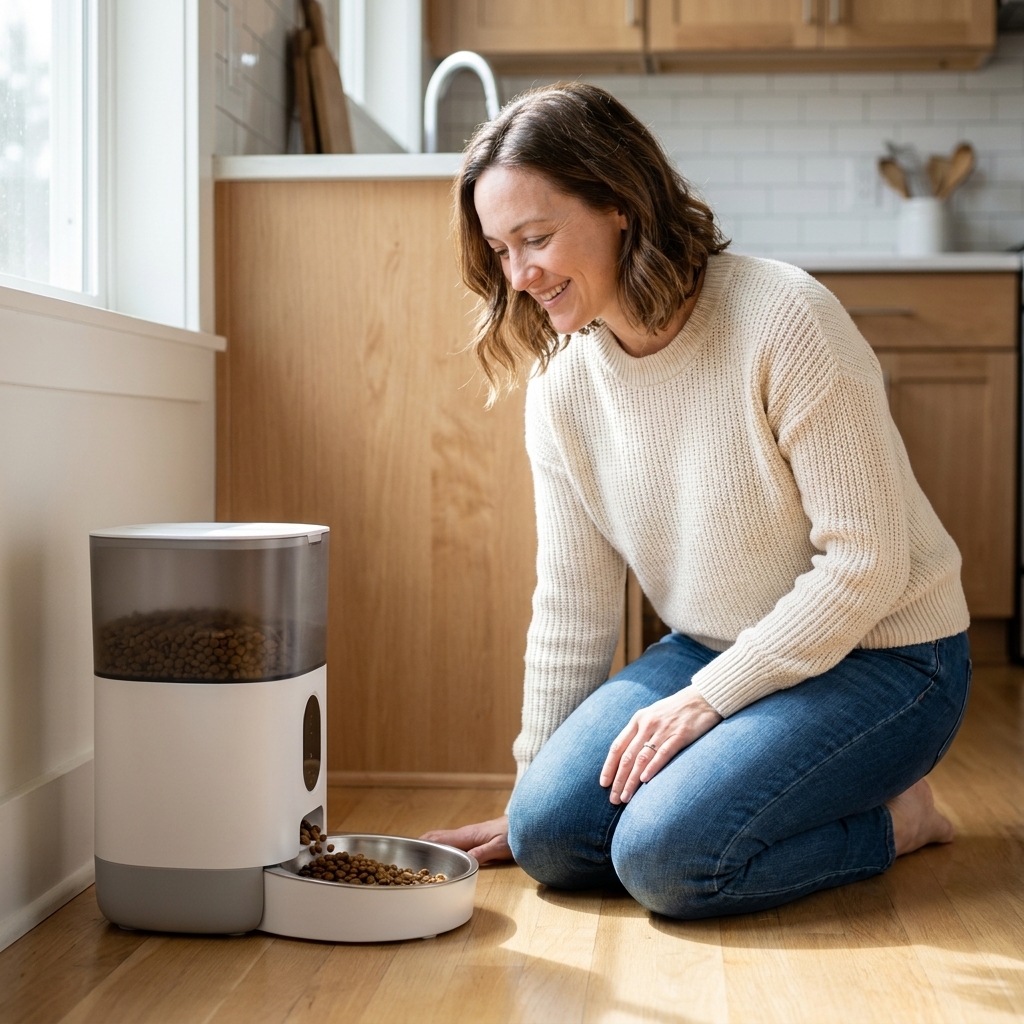
First: what problem are you solving?
Before you compare features, get super clear on the goal. Here are the most common reasons cat caregivers consider an automatic feeder, and the feeder type that usually matches best:
- Portion control for weight management: Timed portion feeder (best) or microchip feeder (if food stealing is involved).
- Stopping one cat from eating another cat’s prescription diet: Microchip or RFID collar tag feeder.
- Reducing early morning wake-ups: Timed feeder that delivers a small meal around the usual “alarm time.”
- Feeding while you are at work: Timed feeder with enough meal slots for your schedule.
- Free-feeding a cat who self-regulates: Gravity feeder can work, but has tradeoffs.
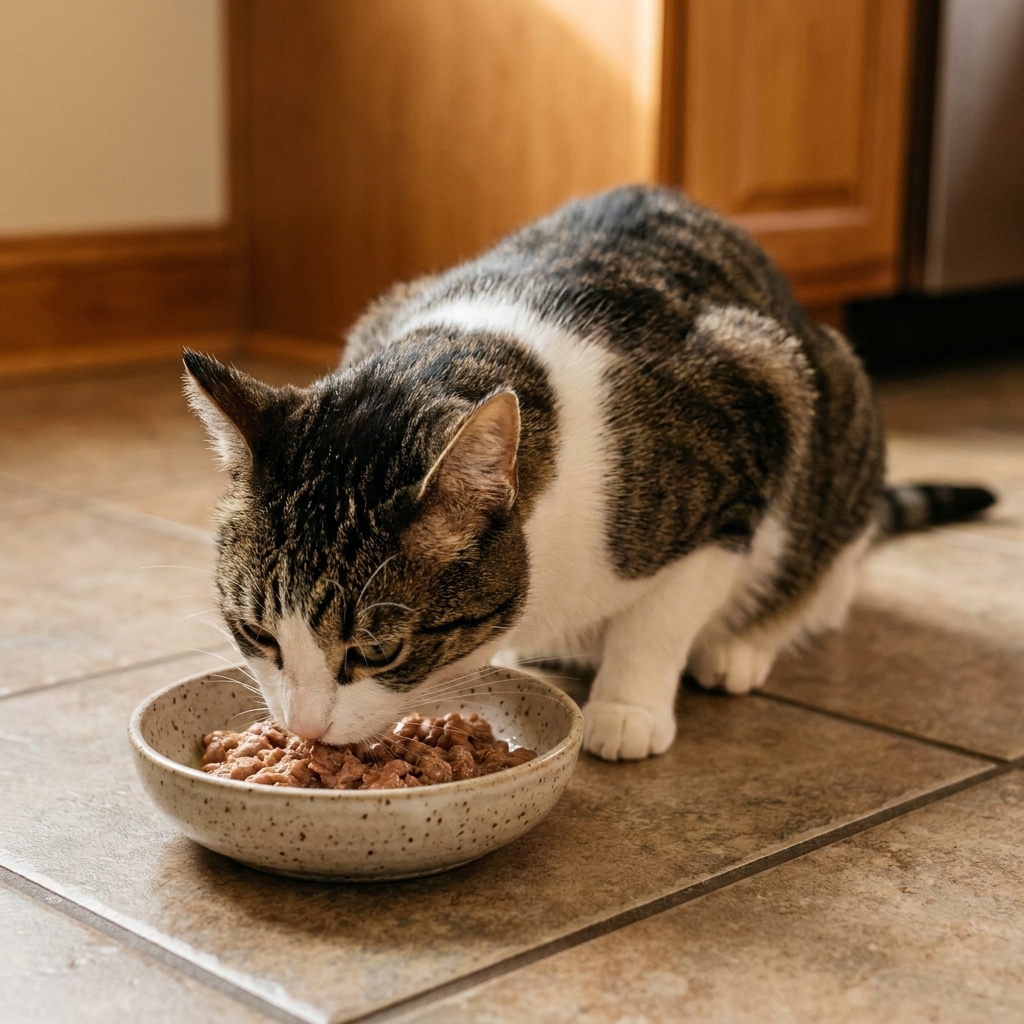
- Wet food during the day: Timed wet-food tray feeder, ideally with ice packs.
If you are thinking, “All of the above,” that is normal. In that case, prioritize health needs first (weight, prescription diet access), then convenience.
The three main types
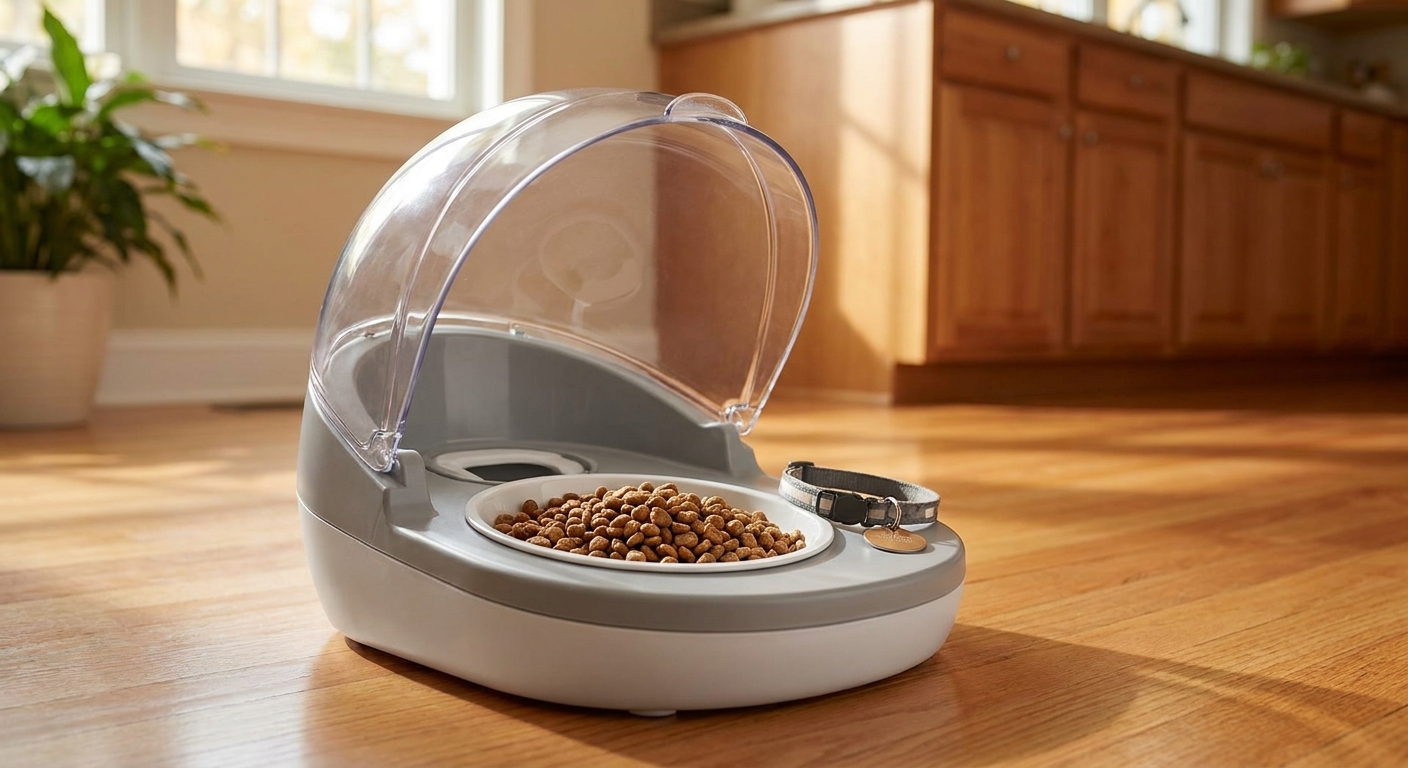
Microchip feeders
Best for: multi-cat homes, diet separation, slow eaters, cats on prescription food, and any household with a food bully.
Microchip feeders open only for the registered cat, using either your cat’s implanted microchip or an RFID tag on a collar. This is often the most reliable option when one cat is stealing another’s food or when you need consistent separation for medical diets.
Pros
- Prevents food theft and diet sabotage.
- Helps shy cats and slow grazers eat in peace.
- Can reduce tension around mealtimes in multi-cat homes.
Cons
- More expensive than other types.
- Some cats need a gradual introduction to the moving lid.
- Usually not designed to dispense exact portions on a timer. They control access, not delivery.
- Some cats need a collar tag if their microchip is not compatible, and some clever cats try to “tailgate” in behind the registered cat.
My behavior note: If a cat has a history of resource guarding, microchip feeders can be wonderfully calming, but place them thoughtfully. You do not want the “guarding cat” able to corner the other cat at the feeder entrance.
Gravity feeders
Best for: cats who naturally nibble, low-drama single-cat homes, and short-term convenience.
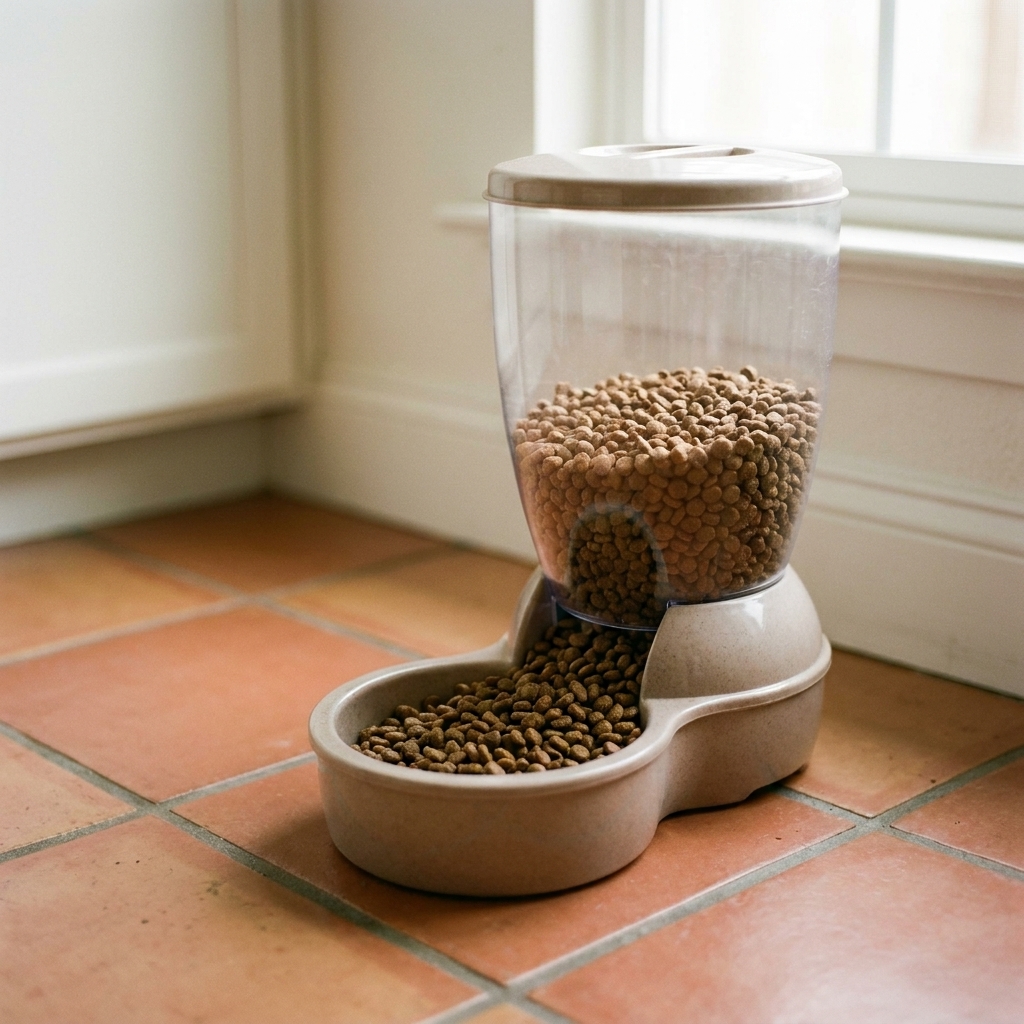
Gravity feeders continuously refill the bowl as your cat eats. They are simple and usually inexpensive. The downside is that they make measured intake difficult and can encourage overeating in cats who are anxious, bored, or food-motivated.
Pros
- No batteries, no programming, minimal setup.
- Budget-friendly.
- Works even during a power outage.
Cons
- Hard to measure intake accurately.
- Often not recommended for cats who need measured intake (for example, weight loss plans and many diabetes routines).
- Can go stale if the reservoir holds too much for how quickly your cat eats.
My nutrition-nerd note: If you use gravity feeding, store kibble properly and do not overload the hopper “just because it fits.” Fresher food is more palatable and typically easier on sensitive stomachs.
Timed feeders
Best for: portion control, structured meal schedules, reducing begging, and helping you split daily calories into multiple smaller meals.
Timed feeders come in two common formats:
- Kibble portion feeders: a hopper plus an auger or rotating mechanism that drops measured amounts at scheduled times.
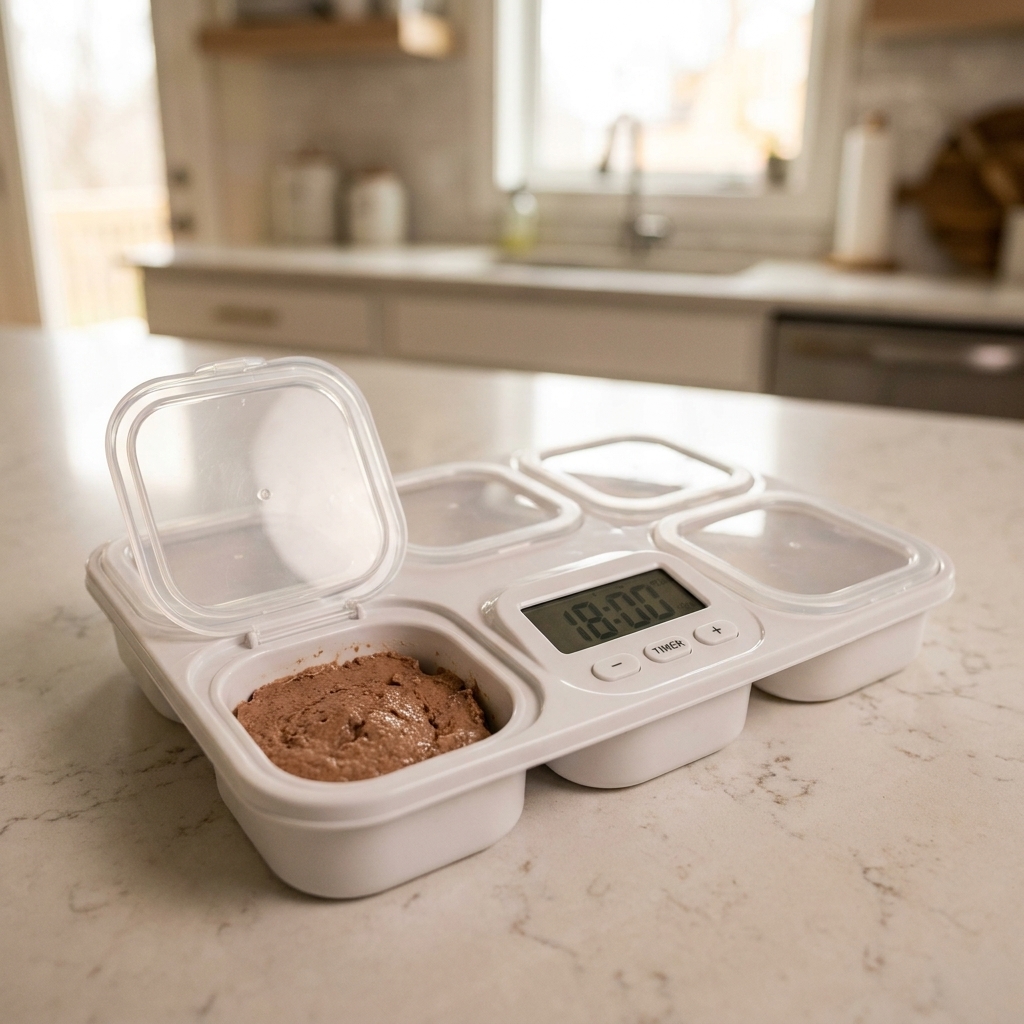
- Tray feeders: a rotating tray with compartments (often used for wet food), opening one meal at a time.
Pros
- Excellent for weight management and consistent routines.
- Can reduce scarf-and-barf by delivering smaller, more frequent meals.
- Some models store schedules internally so they keep working after a brief outage. Always confirm “clock retention” or internal memory in the specs.
Cons
- Not all “portion sizes” are truly consistent across kibble shapes.
- Kibble dust can clog mechanisms if cleaning is skipped.
- Some cats learn to camp out and hover, which can increase food obsession if the schedule is too rigid or portions are too small.
How to choose
If you have multiple cats
- Food stealing or prescription diets: Choose a microchip feeder for the cat who needs protected access.
- Everyone eats separately and politely: Timed feeders can work, but you may still need separate feeding stations in different rooms.
Quick reality check: Two cats can share one timed feeder only if they share food, share pace, and share nicely. That is rarer than we want it to be.
If you need portion control
Choose a timed portion feeder. Gravity feeders are the opposite of portion control, and microchip feeders do not dispense measured amounts unless paired with a measured routine you manage.
If you feed wet food
Look for a timed tray feeder designed for wet food, ideally with an ice pack or cooling space beneath the tray. Wet food can help some cats with hydration and may be useful in households managing urinary issues, but your veterinarian should guide the big decisions.
Food safety matters. A common rule of thumb is to discard wet food after about 1 to 2 hours at room temperature. Warm rooms shorten that window. If you will be away all day, consider using a timed feeder for a small mid-day kibble portion and offering wet meals when you are home, or use a chilled tray feeder and keep the “out” time conservative.
If your cat is anxious or sound-sensitive
Prioritize:
- Quiet dispensing (read reviews carefully)
- Low mechanical movement near the face (some cats dislike lids that swing close)
- A wide, stable base that does not wobble
For these cats, microchip feeders often require a slower introduction, while simple timed kibble droppers can be easier if the motor is quiet.
Features that matter
Accuracy and portion sizing
Portion feeders usually measure by volume, not by calories. Kibble size and shape changes how much food drops per “portion.” Once you pick a feeder, do a one-time calibration at home:
- Dispense 1 portion into a measuring cup.
- Weigh it on a kitchen scale if you can.
- Convert to calories using the bag’s kcal per cup (or kcal per gram) information.
Concrete example: If 1 portion dispenses 12 grams and your kibble is 3.8 kcal per gram, that portion is about 46 calories. Now you can plan the day’s schedule with real numbers.
Power and backup
Look for feeders that can run on batteries (or have a battery backup) if the power goes out. Cats who rely on timed meals can get understandably stressed when the schedule breaks.
Hopper design and freshness
A tight seal helps keep kibble fresher and less aromatic to inquisitive noses. If you have a determined cat, check for a locking lid and a design that does not allow paw-scooping from the chute.
Bowl shape and whisker comfort
Some cats dislike deep, narrow bowls that press on their whiskers. If your cat tends to eat around the edges or seems fussy at the bowl, choose a feeder with a wide, shallow dish or one that lets you swap in a whisker-friendly bowl insert.
Cleaning and hygiene
If the feeder is annoying to clean, most people clean it less. Aim for:
- Removable bowl and food-contact parts
- Smooth plastic or stainless surfaces with minimal crevices
- Dishwasher-safe parts, if possible
For wet-food tray feeders, easy cleaning is non-negotiable.
Before you rely on it
Automatic feeders are helpful, but they are also a single point of failure. Before you make it part of your cat’s routine, do a short test run.
- Run it for 3 to 7 days while you are home enough to notice problems.
- Watch for jams, especially with dusty kibble or large pieces.
- Confirm the backup plan (battery backup, low-food alerts, and whether the schedule survives unplugging).
- Verify your cat is actually eating, not just “getting a meal dispensed.” In multi-cat homes, this matters.
Travel note: A feeder is not a substitute for daily welfare checks. For weekends away or longer, arrange a pet sitter, especially for kittens, seniors, cats on medication, and any household using wet food.
Common mistakes
Mistake: Using a gravity feeder for a cat who is gaining weight
If your cat is creeping upward on the scale, swapping to a timed portion feeder and splitting meals into smaller portions is often one of the simplest home changes you can make. Pair it with play and enrichment so meals are not the only “activity” in the day.
Mistake: Setting big, infrequent meals
Many cats do better with multiple small meals, especially cats prone to vomiting from eating too fast. If your feeder allows it, aim for 3 to 6 small meals rather than one or two large dumps.
Mistake: Not introducing it gradually
Some cats accept a new feeder instantly. Others need a slow roll-out.
- Start by placing the feeder near the usual bowl with food offered in the normal bowl.
- Then offer one meal per day from the feeder.
- Gradually increase until most meals come from the feeder.
For microchip feeders, begin with the lid open (or training mode, if available) so your cat builds a positive association before the movement starts.
Mistake: Using the feeder as the only enrichment
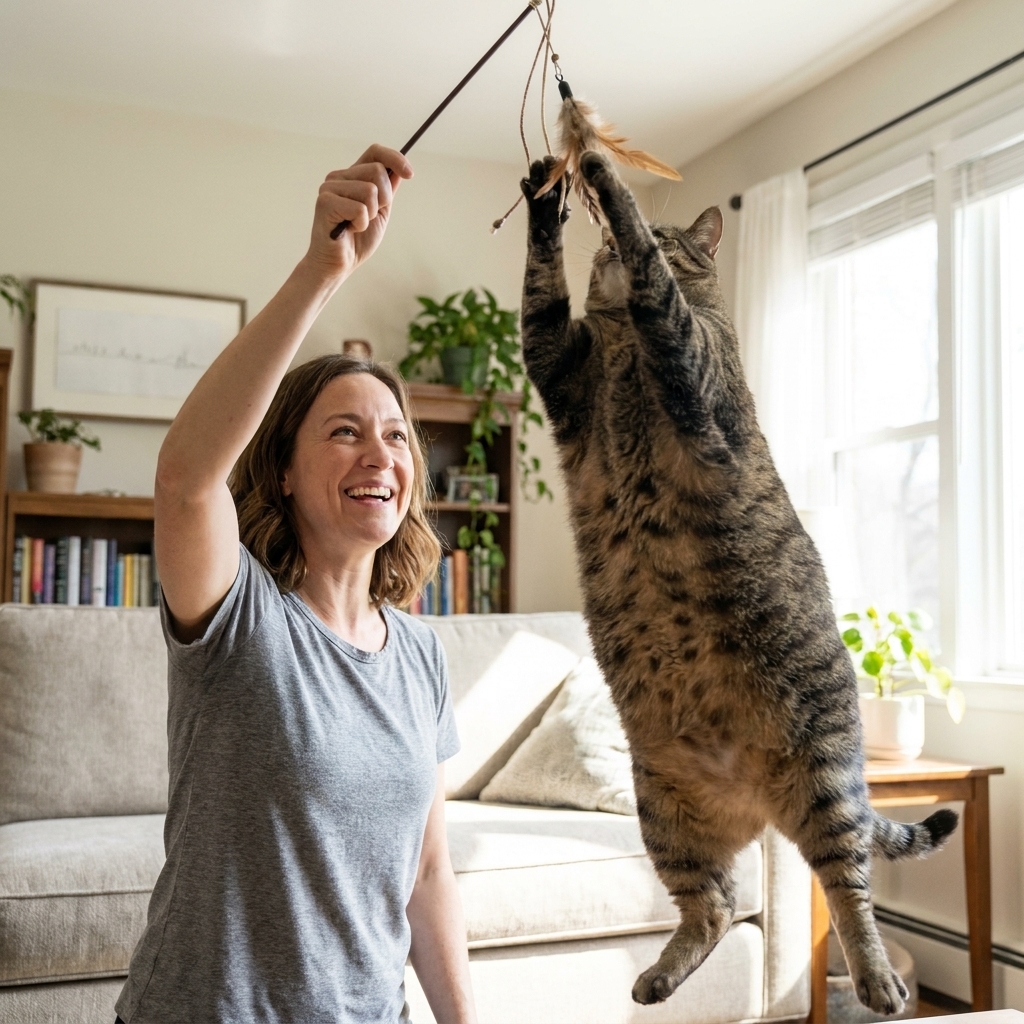
Feeding automation is convenience, not enrichment. Cats still need hunting outlets. If your cat becomes more demanding after you add a feeder, it is often because the routine is predictable but their day is still boring. Consider adding:
- A daily wand-toy session
- Window perches and bird-watching
- Food puzzles for one meal when you are home
Placement tips
Placement can make or break feeder success.
- Quiet, low-traffic spot: Especially for shy cats.
- Away from litter boxes: This is hygiene and comfort.
- Not tucked into a corner: Many cats dislike eating where they cannot see what is coming. Corners can also increase conflict in multi-cat homes.
- On a stable surface: If it slides, expect suspicion and spilled meals.
If you have multiple cats, separate feeding stations by distance and, ideally, by a visual barrier (a doorway, a baby gate with a small cat door, or feeding in separate rooms).
Pest note: If ants or roaches are a known issue in your home, choose a feeder with fewer crevices, keep the area spotless, and consider a shallow, pet-safe barrier or feeder mat that is easy to wipe down. Wet food attracts pests quickly.
Special situations
Cats who eat too fast
A feeder can help if it allows smaller, more frequent portions. You can also place a slow-feed insert in the bowl if the feeder supports it. If vomiting continues, talk with your veterinarian to rule out medical causes.
Prescription diets
If a prescription diet is medically important, treat it like medication: protect access. A microchip feeder is usually the most reliable solution, even if it is not the cheapest.
Wet food households
Timed wet-food feeders are helpful, but keep food safety in mind. Use ice packs when available, portion conservatively, and wash the tray daily. When in doubt, assume the safe “out” time is short, especially in warmer rooms or for cats with sensitive GI tracts.
FAQ
Will an automatic feeder stop my cat from waking me up?
Often, yes, but it can take a week or two. The goal is to remove you from the “food delivery” equation. Set a small meal to dispense shortly before your cat’s usual wake-up time. If your cat starts yowling at 5 a.m., try 4:45 a.m., then gradually push it later. Do not get up to feed. If you give in “just once,” cats learn persistence pays.
Are automatic feeders safe?
In general, reputable feeders are safe when used as intended. The biggest risks I see are portioning errors (leading to weight gain or missed meals), food going stale, and multi-cat conflict. Choose a model with reliable backup power, clean it regularly, and monitor intake for the first few weeks.
Can I use an automatic feeder for kittens?
Yes, with extra attention to portioning and freshness. Kittens typically need more frequent meals and higher calories. Make sure the feeder can handle small, frequent portions, and keep an eye on body condition as they grow. If you are fostering tiny kittens, supervised feeding is often safer because needs change fast.
What about feeders with cameras and apps?
They can be convenient, especially for checking whether a meal dispensed. Just remember: an app cannot tell you if another cat stole the meal, or if your cat feels unwell and is not eating. Use smart features as a tool, not a substitute for observing your cat’s normal habits.
Quick picks by household
- Single cat, needs portion control: timed portion feeder.
- Multi-cat, one cat steals: microchip feeder for the cat who needs protected food access.
- Wet food during work hours: timed tray feeder with cooling options (and conservative “out” times).
- Cat who self-regulates and you want simple: gravity feeder, but monitor weight closely.
By evaluating your cats’ ages, diets (wet, dry, prescription), and habits (grazing, inhaling, stealing), you can narrow down the feeder style that fits your home. Clementine would vote for “the one that feeds her faster,” and Waffles would vote for “the one he can stare at in confusion,” but a little matching upfront saves a lot of frustration later.