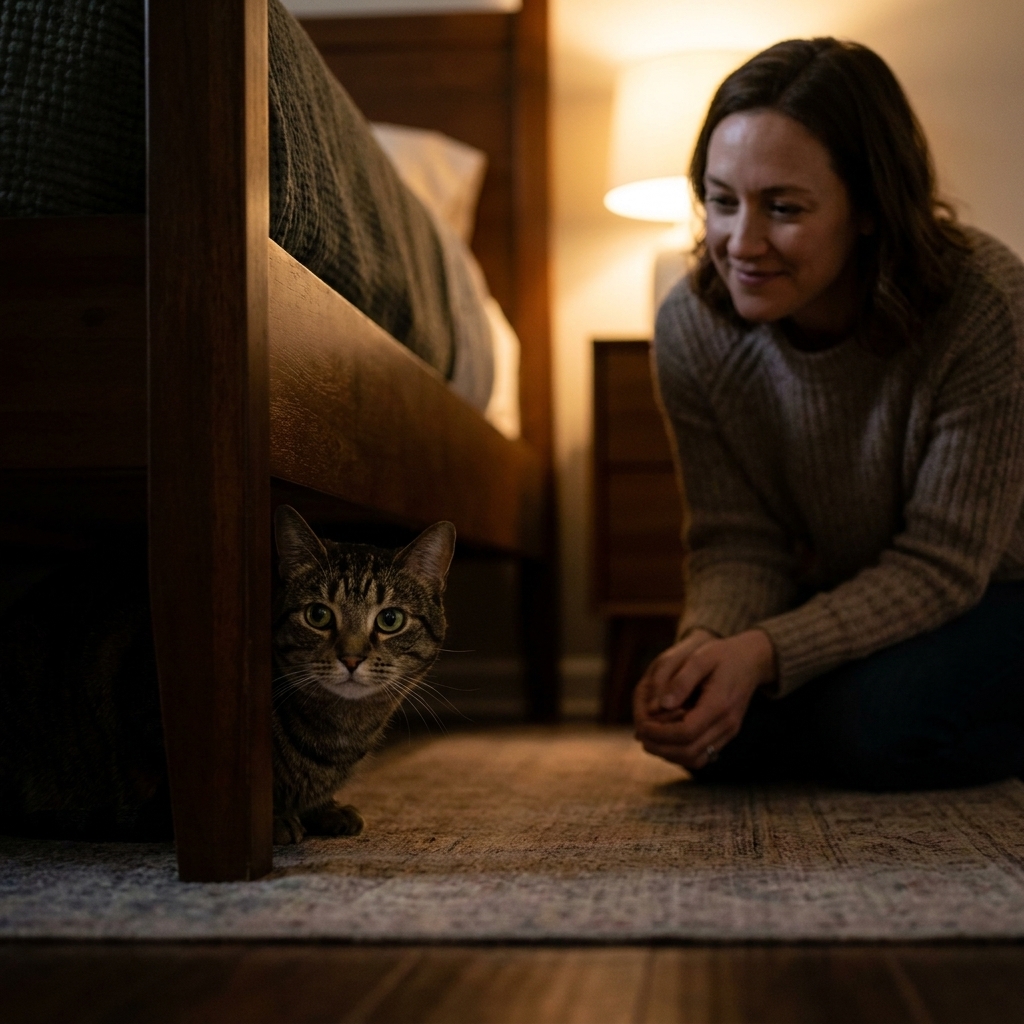
If your cat treats bedtime like the opening act and 3 a.m. like the main event, you are not alone. Cats often lean crepuscular, meaning they tend to be most active at dawn and dusk. Some cats shift more nocturnal or diurnal based on your household schedule, but the underlying point stands: when you are finally still, your cat may be ready to party. Add boredom, a snack habit, or a learned “wake the human, get a reward” pattern, and you have a tiny, furry alarm clock with opinions.
The good news: you can absolutely change this. Not by punishing your cat or trying to out-stubborn them, but by meeting their needs on purpose and removing the payoff for nighttime chaos. Below are seven evidence-informed, humane strategies I use in rescue homes and with my own two troublemakers, Clementine and Waffles.
1) Stop rewarding wake-ups
This is the unglamorous foundation. If your cat yowls, paws your face, or scratches the door and you respond with anything they value, the behavior gets stronger. And “anything” includes:
- Feeding them “just to make it stop”
- Getting up to shoo them away (attention can be rewarding)
- Letting them under the covers after they scream (cozy access is a reward)
- Throwing a toy to redirect (still a payoff at 3 a.m.)
Your goal: make nighttime wake-ups boring, every single time.
What to do instead
- If it is safe, do not engage. No talking, no eye contact, no reaching out.
- Use prevention (see tips below) so you are not relying on willpower at 2:47 a.m.
- Expect an extinction burst. When a behavior stops working, many cats escalate briefly. If you give in during the escalation, you teach them “try harder next time.” For many households, staying consistent for about 1 to 2 weeks is when things start to shift, but the timeline can vary by cat and reinforcement history.
One more thing to normalize: when you change routines (new feeding times, closing doors, adding a feeder), behavior can look worse before it looks better. That does not mean you failed. It means your cat noticed the rules changed.
If you cannot ignore because the behavior is destructive or unsafe, skip ahead to the environmental and scratching solutions. We can make ignoring possible by changing the setup.
2) Build an evening routine
Cats settle best when their day ends like a successful mini-hunt. In the wild, activity builds toward catching prey, eating, then resting. We can mimic that rhythm indoors.
A simple bedtime routine (20 to 30 minutes)
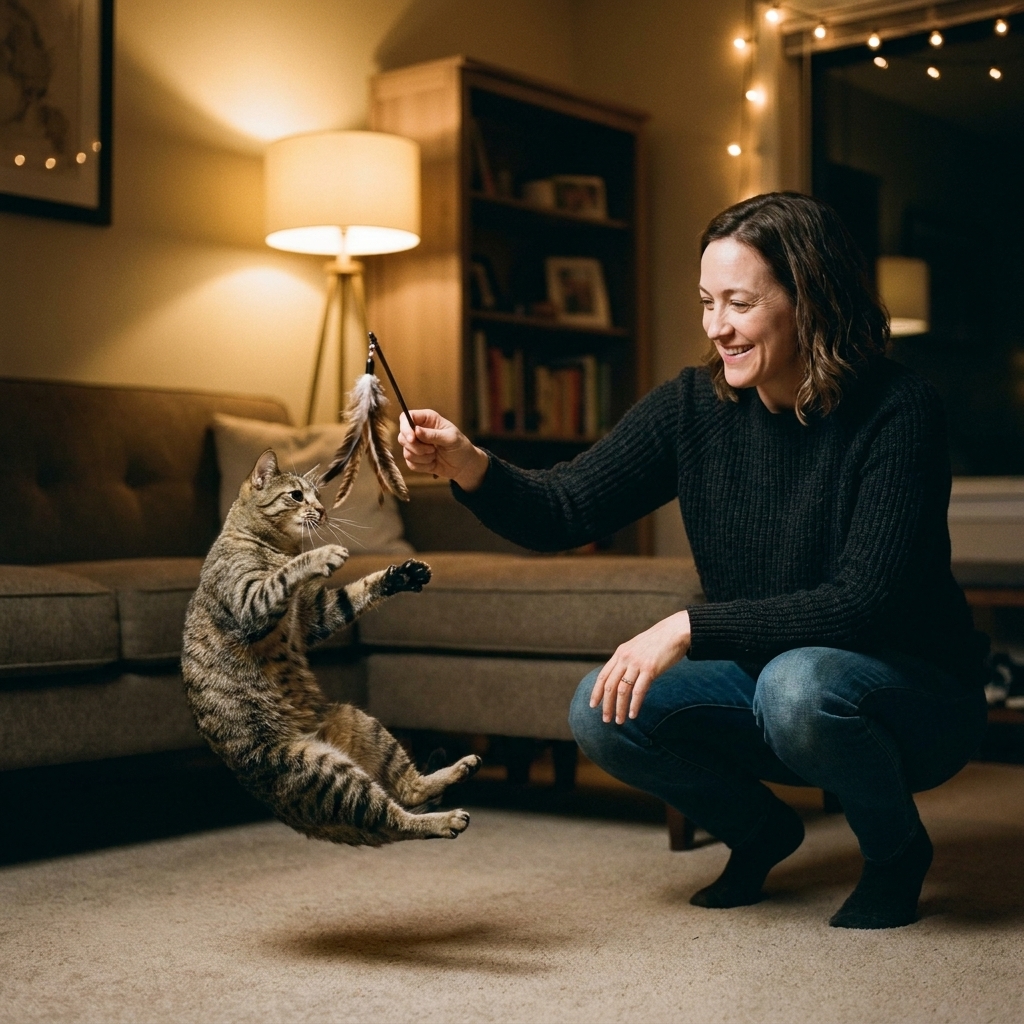
- Play: 10 to 15 minutes of active play (wand toy, chase toy, fetch for the cats who insist).
- Catch: End with a few easy “wins” where your cat grabs the toy.
- Eat: Offer the last meal of the day right after play.
- Wind down: Lights lower, voices softer, no more hype.
This is one of the fastest ways to reduce midnight zoomies because it meets the need for movement and mental work before you expect sleep.
3) Adjust feeding habits
A lot of night waking is food-related, even when it looks like “affection.” Many cats learn that waking you equals breakfast, and they will proudly keep that job.
Try one of these food strategies
- Move breakfast later. If your cat wakes you at 4 a.m., do not feed at 4. Push it to 6, then 6:30, then 7 over several days.
- Use an automatic feeder. This is my favorite tool for persistent early-morning wake-ups. It breaks the association between “human awake” and “food appears.”
- Shift more calories to bedtime. Not extra daily calories, just moving part of the daily intake to the last meal so your cat is not genuinely hungry overnight.
- Offer a small protein-forward snack before lights out. For some cats, a small wet-food portion at bedtime helps them sleep longer.
Quick health note: If your cat is waking you up ravenous and acting frantic around food, talk with your vet. Medical issues like hyperthyroidism, diabetes, parasites, pain, or other underlying illness can increase hunger or restlessness.

4) Fix daytime boredom
Many “nocturnal” cats are actually under-stimulated cats. If their day is quiet, they store energy and spend it when you finally stop moving.
Easy enrichment that works
- Two short play sessions daily (morning and evening). Even 8 to 10 minutes counts.
- Food puzzles for part of meals (especially dry food).
- Window perches or a bird feeder outside a window for “cat TV.”
- Rotate toys weekly so they feel new again.
- Clicker training (yes, cats love it). A 3-minute session can take the edge off more than you would expect.
If you have a single young cat with intense nighttime energy, you are not failing. You may simply have a cat who needs more structured outlets than most people realize. That is fixable.
5) Solve scratching and pouncing
Two common wake-up styles are (1) scratching at a closed bedroom door and (2) launching surprise attacks on toes. Both can be changed by adjusting the environment.
If your cat scratches the bedroom door
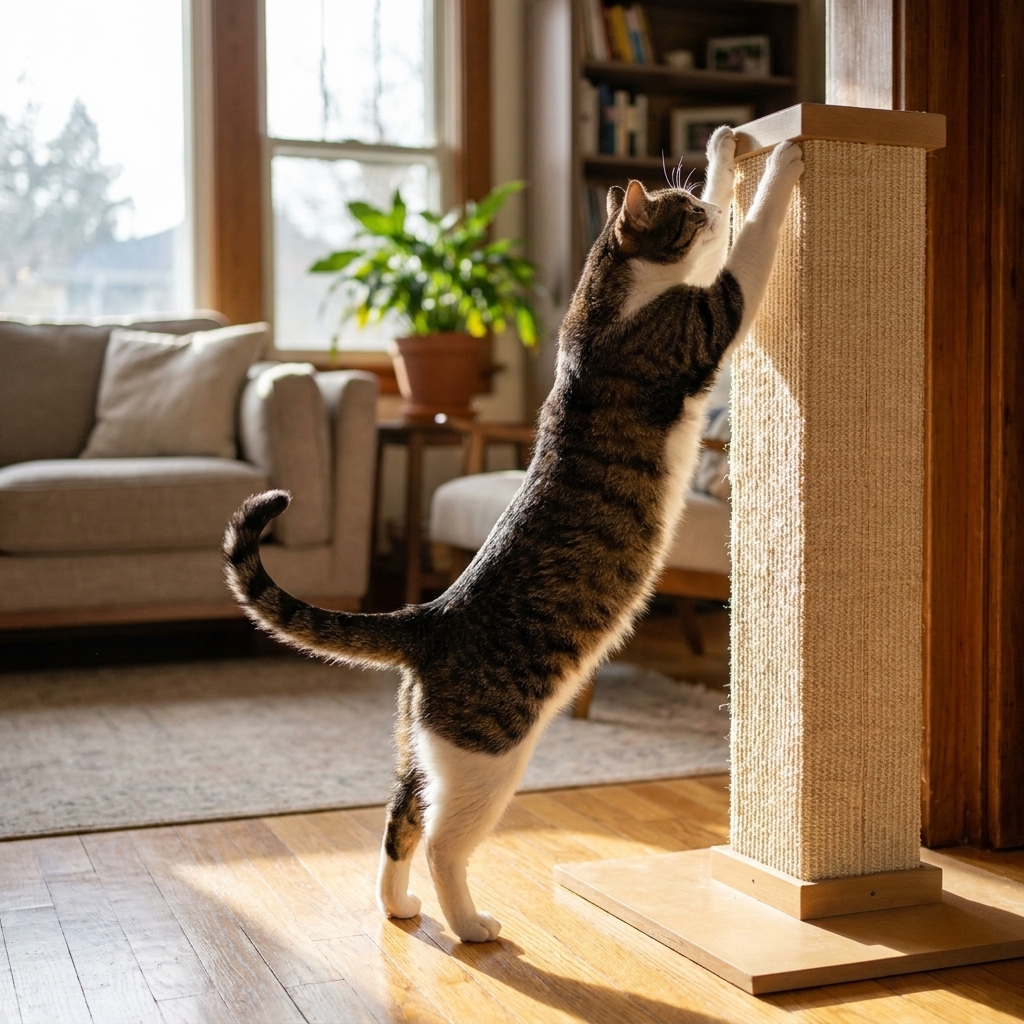
- Provide an approved scratch station nearby. Put a tall scratching post or sturdy cardboard scratcher near the door (or wherever your cat already scratches).
- Add a scratch deterrent to the door surface. Many cats dislike double-sided tape or a clear scratch guard. Test a small area first.
- Use a white noise machine or fan. It reduces the “feedback loop” where tiny scratches sound huge at night.
- Create distance if you can. A baby gate in a hallway can move the action away from your door.
Safety note on deterrents: Skip essential oils, strong fragrances, and DIY sprays that can irritate paws or airways. Stick with physical barriers (guards, tape, mats) and cat-safe, vet or behaviorist-approved options.
If your cat pounces on your feet
- Keep a thick duvet between cat and toes. Remove the “prey wiggle” reward.
- Do not play from bed. Wiggling fingers under the blanket teaches hunting games at bedtime.
- Offer a bedtime kicker toy outside the bedroom or near a cat bed, so there is an appropriate target.
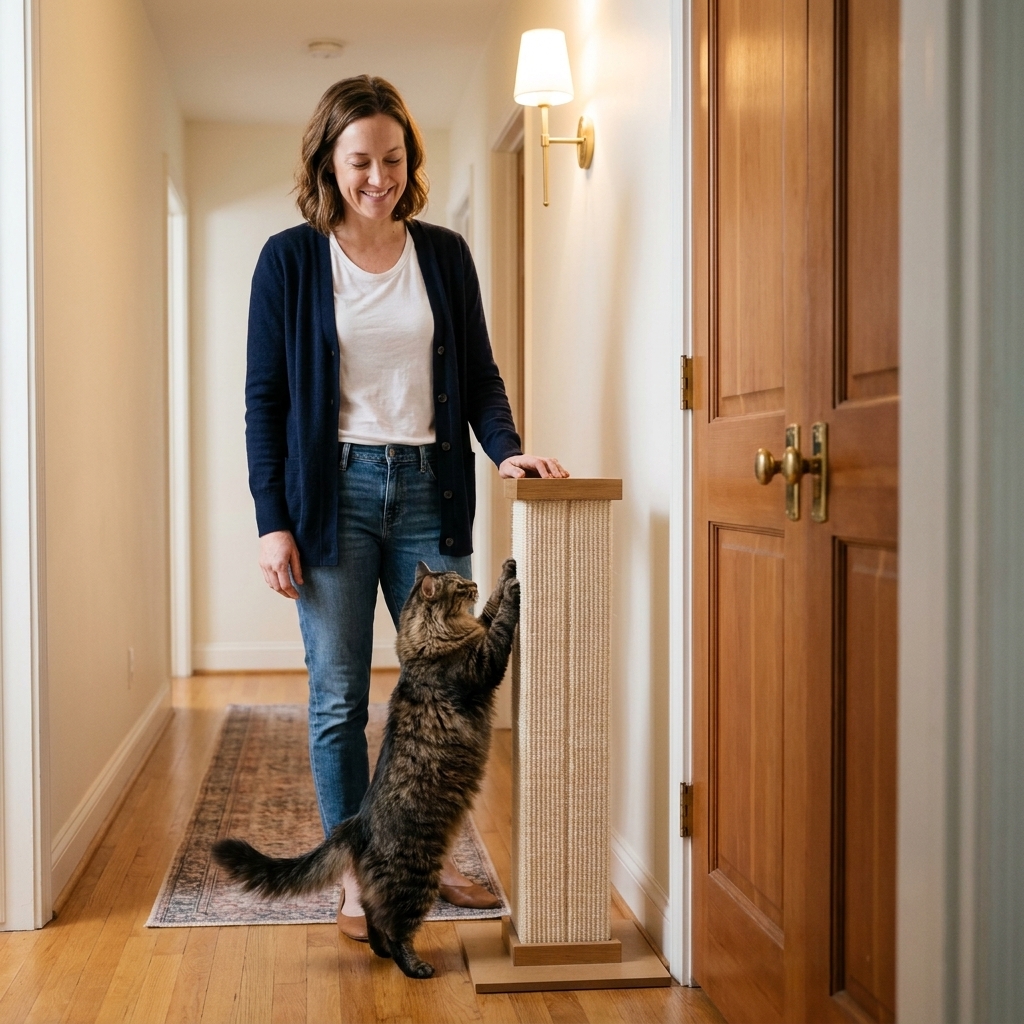
6) Set up a calm night zone
Some cats sleep better near you. Others sleep better with clear boundaries. Either way, make the nighttime environment predictable.
If your cat sleeps in your room
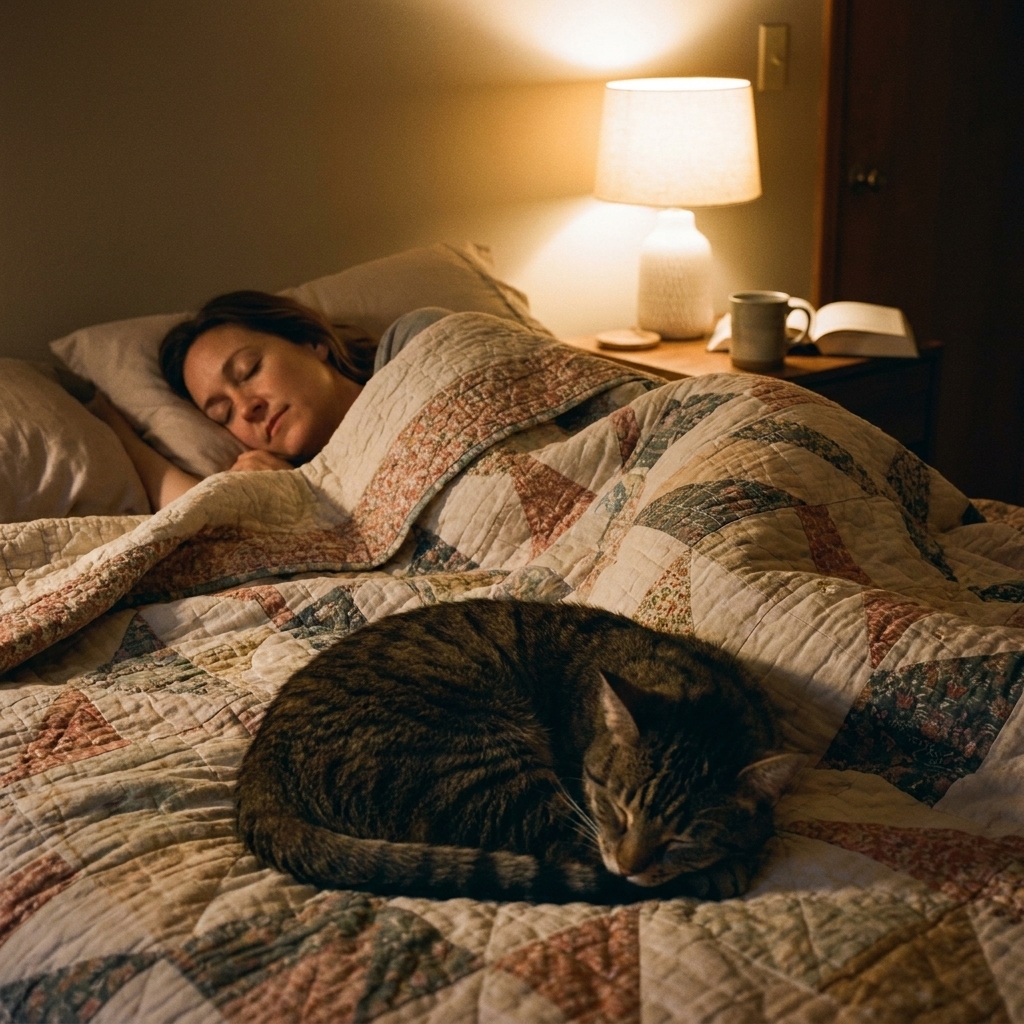
- Add a dedicated cat bed or blanket on a chair or bedside perch. Cats love having a “spot.”
- Keep one calm toy available (like a soft plush), and put exciting toys away at night.
- Close temptation zones (closet doors, cabinets) if your cat likes midnight adventures.
If your cat sleeps outside your room
- Set them up for success: water, a clean litter box, a comfy bed, and a safe temperature.
- Scoop the litter box before bed. Some cats will absolutely start a 2 a.m. protest if the box is not up to their standards.
- Make sure you have enough boxes. A common rule of thumb is one per cat, plus one extra, spread out in the home.
- Use a nightlight in the hallway for cats who seem unsettled in total darkness.
- Give a “goodnight” routine so separation is predictable: play, meal, a calm petting session, then lights out.
Important: if you change access (for example, you start closing the bedroom door), expect a transition period. Some cats escalate at first, and ignoring is only realistic once you have protected the door and floor and provided an acceptable scratch option nearby. Most cats adjust faster when their evening routine is consistent and their needs are met before separation.
7) Rule out health and stress
I never want you to lose sleep for weeks trying behavior fixes if your cat is actually uncomfortable. Night waking can be a sign of a medical or age-related change, especially if the pattern is new or suddenly intense.
Call your vet if you notice
- Increased thirst or urination
- Weight loss, ravenous hunger, or sudden appetite changes
- Vomiting or diarrhea
- New litter box accidents
- Excessive yowling, especially in older cats
- Stiffness, trouble jumping, hiding, or sensitivity to touch
Senior cats may yowl at night due to cognitive changes, vision loss, hearing loss, pain, high blood pressure, or kidney disease. These cats are not being “dramatic.” They are telling you something is off, and medical support can make a world of difference.
Also consider the social side. In multi-cat households, nighttime can be when tension shows up: blocking hallways, staring, chasing, or quiet bullying. If that sounds familiar, add more separate resources (litter boxes, water, feeding stations, resting spots) and give each cat an easy escape route to a safe zone.

A realistic 10-day plan
If you feel overwhelmed, here is a simple sequence that works for many households.
- Days 1 to 3: Start the evening play then meal routine. Scoop the litter box before bed. Add a scratch station by the door. Make wake-ups boring and consistent.
- Days 4 to 7: Shift breakfast later or add an automatic feeder. Add a second short play session during the day. If you have multiple cats, double-check that resources are spread out so nobody is getting ambushed at night.
- Days 8 to 10: Tighten the environment (white noise, tape or guard for scratching, remove nighttime temptation zones). Stay consistent.
Most cats show improvement within a couple of weeks when the payoff disappears and their needs are met earlier in the day. If you are stuck after that, it is worth getting a tailored behavior plan because small details matter, like the timing of meals, type of play, or household stress.
FAQ
Should I lock my cat out of the bedroom at night?
You can, as long as your cat has access to water, litter, and a comfortable resting spot. The key is consistency. If the door is closed some nights and open others, many cats will keep trying harder. Expect an initial increase in scratching or crying, and set up the environment first (scratch post, door protection, white noise) so you can hold the line humanely. Pair the change with an evening routine and enrichment so it is not just “door closed,” it is “needs met, then bedtime.”
Is it okay to ignore my cat crying at night?
If your cat is healthy and safe, ignoring attention-seeking yowling is often necessary to stop reinforcing it. If the crying is new, intense, or paired with other symptoms like appetite changes or litter box issues, get a vet check first.
Will another cat fix the night waking?
Sometimes a compatible feline friend helps, especially for young, social cats. But it is not a guaranteed solution, and mismatched cats can increase stress and nighttime conflict. If you are considering adopting a second cat, plan for a slow introduction and choose a temperament match.