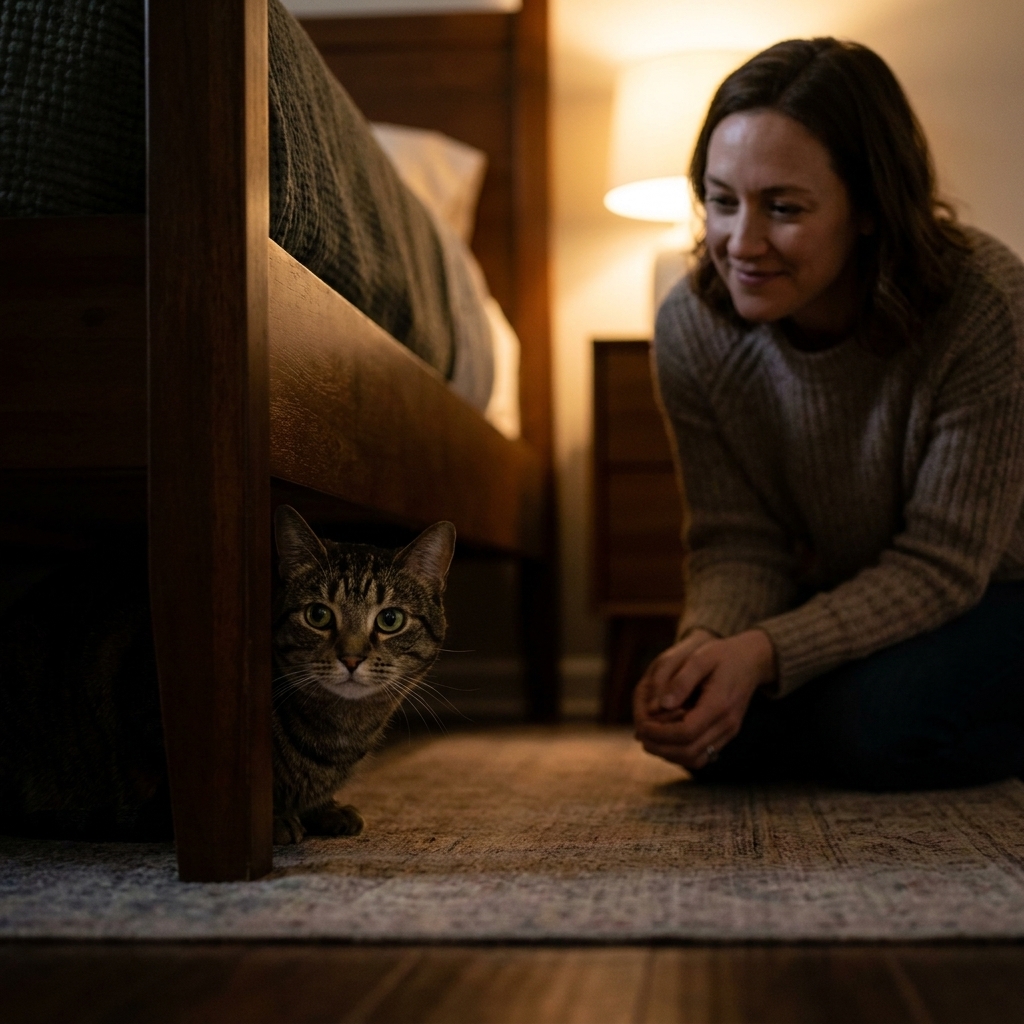
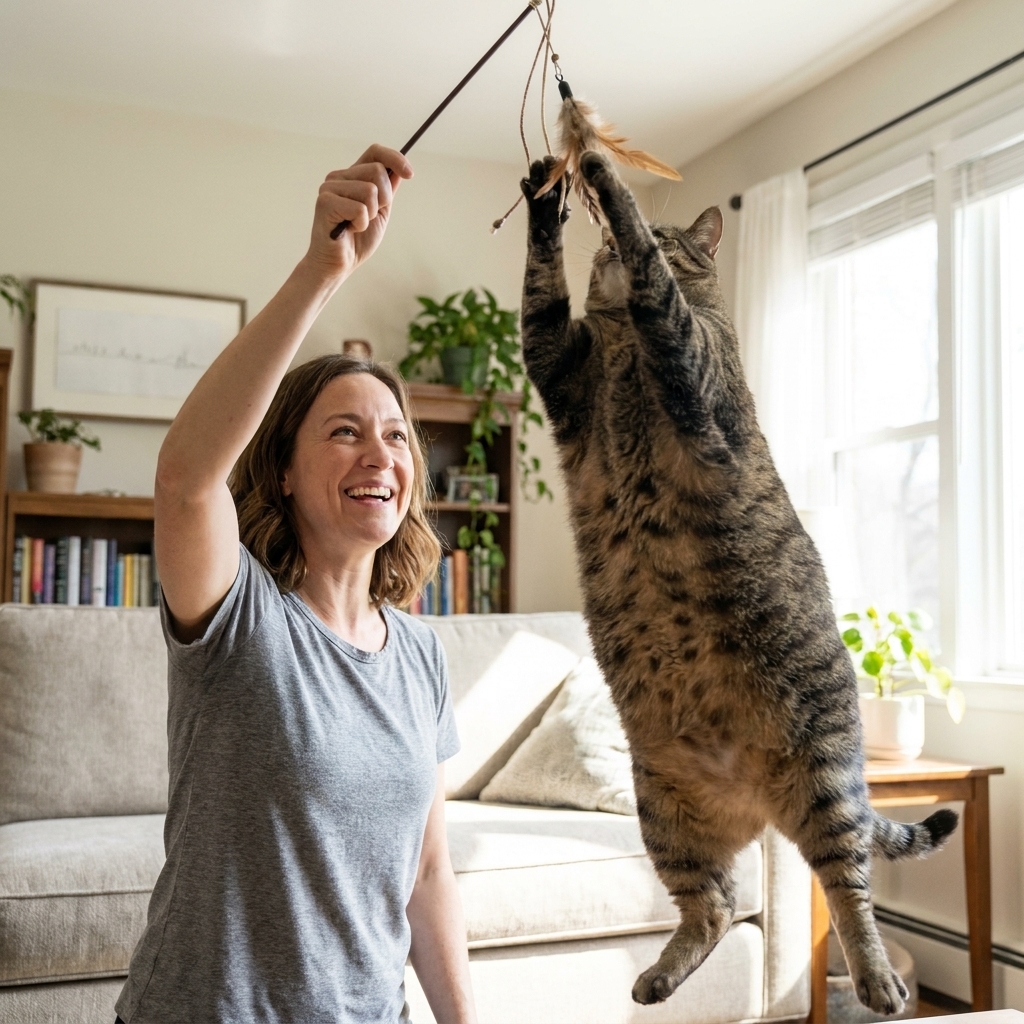
If your cat is treating your couch like a personal craft project, you are not alone. Scratching is normal, healthy cat behavior. Your cat is not being “bad” or “spiteful”. They are doing what cats are built to do: stretch, maintain claws, relieve stress, and leave scent messages behind.
The goal is not to stop scratching. The goal is to make the right thing easy and satisfying, and the wrong thing boring and unrewarding. Here is the exact step-by-step plan I use with foster cats, from confident kittens to former “unadoptables” who arrived stressed and swinging.
Why cats scratch
Most furniture scratching comes down to one of these reasons:
- The post is the wrong type. Many cats prefer tall, sturdy vertical posts. Others want horizontal cardboard. If the post wobbles, is too short, or feels “wrong” under paw, your cat will vote for the sofa.
- The post is in the wrong place. Cats scratch where scratching matters: near sleeping spots, on traffic routes, and next to the thing you keep trying to protect.
- The furniture is more rewarding. Upholstery is often a perfect texture and height, and it does not tip. Every successful pull of claws is a tiny reward.
- Stress and pent-up energy. New pets, schedule changes, outdoor cats at the window, boredom, and under-stimulation can increase scratching as a self-soothing behavior.
When you solve for texture, stability, and location, you usually solve the problem.
One quick health note: If scratching suddenly ramps up out of nowhere, or your cat seems itchy, stiff, or touchy about being handled, check in with your veterinarian. Pain, skin irritation, and stress can all change scratching behavior.
Choose the right scratcher
This matters more than most “training.” If the scratcher feels great, your cat will use it.
1) Go taller than you think
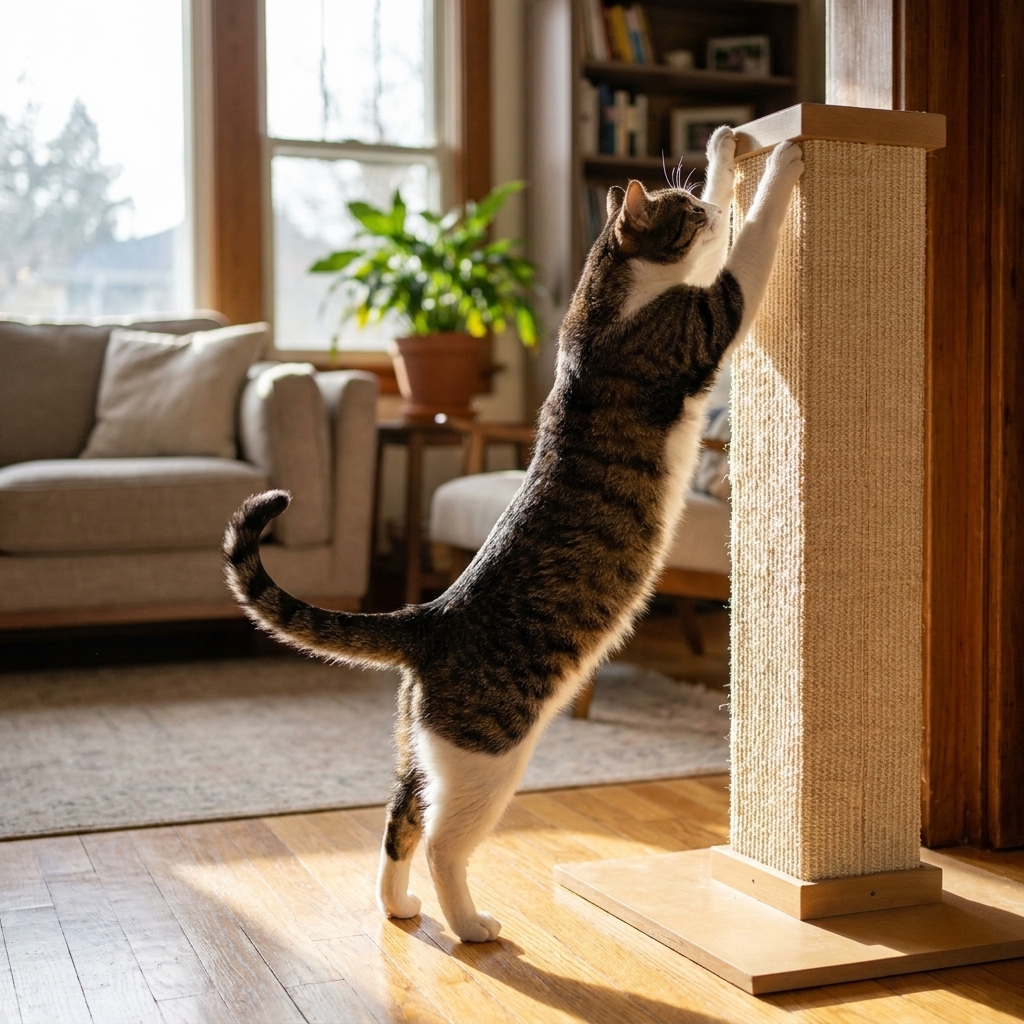
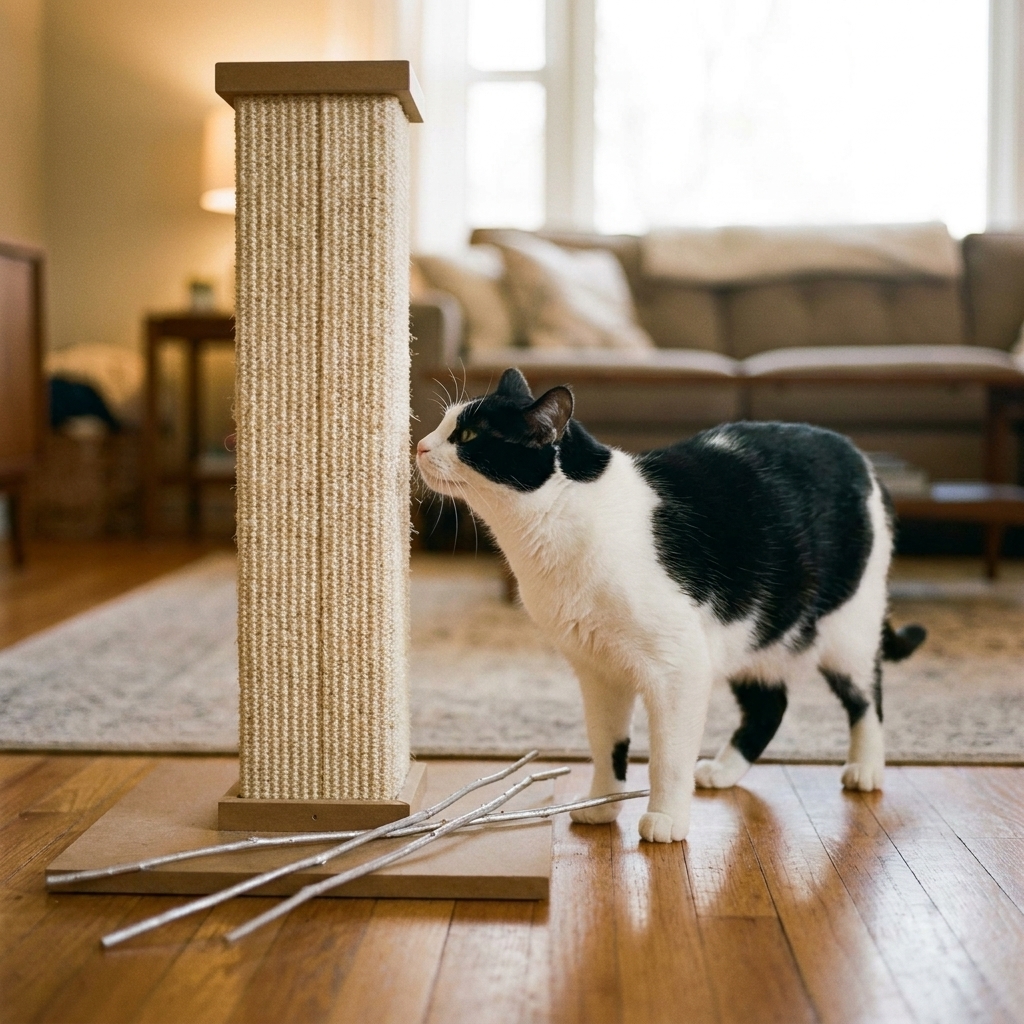
For vertical scratchers, I like posts that are at least 28 to 32 inches tall for the average adult cat. A good rule of thumb is: tall enough for a full-body stretch with straight elbows. If they cannot extend comfortably, they will keep shopping.
2) Prioritize stability
A scratching post should not wobble. If it tips or skids while your cat is mid-scratch, some cats may avoid it afterward. Look for a wide, heavy base, or a floor-to-ceiling tension post.
3) Offer the right surface
- Sisal rope or sisal fabric: Durable, satisfying resistance, great for most cats.
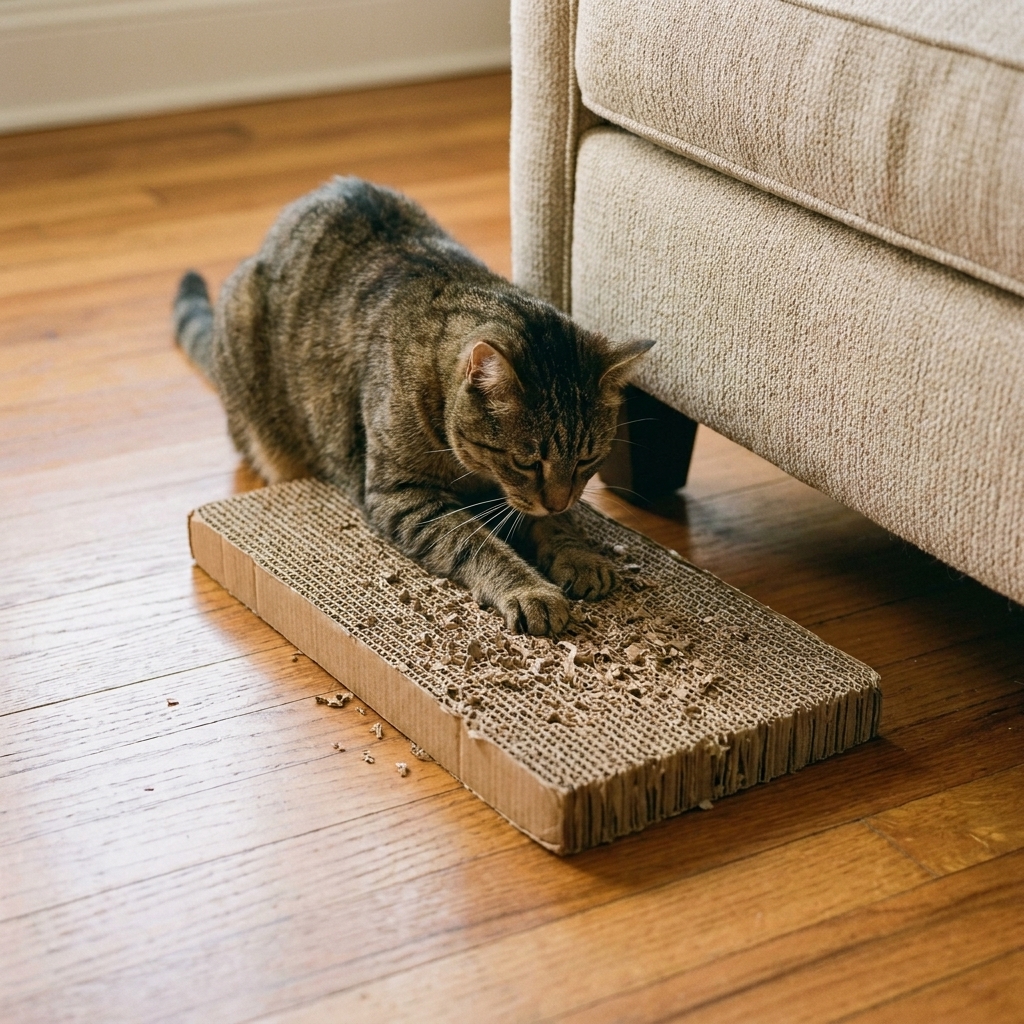
- Corrugated cardboard: A favorite for many cats, especially horizontal scratchers. Expect to replace it regularly.
- Carpet: I use this less often for training because it can feel too similar to rugs and some furniture. It can still work, but it is not my first choice for couch scratchers.
4) Add a horizontal option
Even if your cat scratches vertically, adding a horizontal scratcher often reduces furniture damage fast. Some cats like to scratch as part of a play pounce, and a flat scratcher lets them do that.
Put it in the right spot
In most homes, placement is the entire game. Start here:
- Put a scratcher right next to the furniture your cat targets. Not across the room. Not in the hallway. Within a paw’s reach of the crime scene.
- Add a scratcher near your cat’s favorite sleep spot. Many cats scratch immediately after waking up.
- Place scratchers along cat highways. Think: paths between food, litter box, and favorite windows.
- Avoid tucked-away corners. Cats like to scratch where they can see what is happening. Social scratching is a thing.
If you only buy one scratcher, put it where your cat already scratches, then expand from there.
Multi-cat note: In shared homes, scratching is often partly about territory and confidence. Plan for one scratcher per cat, plus one extra, and spread them out so a bossy cat cannot guard all the good options.
Step-by-step plan
Step 1: Make the furniture un-fun
While your cat is learning, protect the furniture so they cannot keep practicing the unwanted behavior.
- Cover the target area with a smooth throw, a fitted sheet, or a furniture cover.
- Use double-sided pet tape on the exact scratching zone if your cat tolerates it. Many cats dislike the sticky feel and will choose the scratcher instead.
- Block access with a chair or baby gate for short periods if needed, especially during high-zoomie hours.
Skip punishment. Scolding often teaches “scratch when the human is not here,” and it can make anxious cats scratch more.
Step 2: Make the scratcher easy
Set your cat up for an immediate win:
- Stabilize it: If it wobbles, wedge the base against a wall or heavy furniture, or add non-slip pads.
- Face it out: For vertical posts and panels, rotate it so the scratchable surface faces the room, not a corner.
- Make it smell familiar: Rub a soft cloth on your cat’s cheeks (where their friendly scent glands are) and wipe the scratcher.
Step 3: Use an attractant
Some cats are catnip super-fans. Others are unimpressed. Try:
- Catnip: Sprinkle a small pinch at the base or rub catnip on the scratcher. Refresh every few days.
- Silver vine: Often works for cats who ignore catnip.
- Pair it with rewards: Drop treats next to the scratcher, then on the base, then on a nearby perch. You are building a positive “scratcher zone.”
A quick note from my own house: Clementine (my tortie) goes wild for silver vine. Waffles (my orange tabby) would like you to know cardboard is the only valid option. Cats have opinions.
Redirect in the moment
When you catch your cat scratching furniture, the goal is to interrupt gently and immediately offer the correct outlet.
Do this
- Stay neutral. Take a breath. No yelling.
- Interrupt with a soft sound like a light clap, kissy noise, or “psst” just enough to pause them.
- Guide them to the scratcher by tossing a treat beside it or initiating play with a wand toy next to it.
- Reward scratching on the scratcher with calm praise, a treat, or a few seconds of play.
Avoid this
- Do not drag their paws on the scratcher. Many cats hate being physically manipulated and it can create scratcher-avoidance.
- Do not spray water. It can increase stress, harm trust, and often backfires.
- Do not chase. You will turn it into a game or a fear response.
Teach a simple cue
You can absolutely put scratching on cue, but I like to keep it simple for most homes.
Option A: Capture and reward
This is my favorite. It is low-pressure and works fast.
- Wait for your cat to use the scratcher naturally.
- As soon as claws touch it, say a consistent phrase like “Good scratch”.
- Reward with a treat or a quick wand-toy session.
- Repeat until your cat starts heading to the scratcher when they hear the phrase.
Option B: Lure, then reward
- Hold a treat near the scratcher to bring your cat close.
- Wait. Many cats will scratch as they investigate or stretch.
- Mark with “Good scratch” and reward immediately.
Keep sessions short, like 30 to 60 seconds. You want your cat to end thinking, “That was fun. Let’s do that again.”
If they love couch fabric
Some cats are texture loyalists. If they love the weave of upholstery, meet them halfway.
- Try a sisal fabric panel mounted vertically near the couch. Sisal fabric can feel closer to upholstery than rope.
- Offer a cardboard scratcher with a vertical angle (lean it slightly against a wall).
- Use a tall scratching panel that mimics the couch’s height and flatness.
The best scratcher is the one your cat will actually use repeatedly.
Common mistakes
- Too few scratchers: In multi-room homes, one scratcher is rarely enough. Add at least one per main area your cat spends time in.
- Replacing the scratcher too late: When sisal is worn smooth, it can lose appeal. Refresh or replace before your cat goes back to the sofa.
- Ignoring stress signals: If scratching spiked after a move, new baby, new cat, or neighborhood outdoor cats, address the underlying stress with routine, enrichment, and safe hiding options.
- Not enough play: A bored cat will invent activities. Two short interactive play sessions daily can dramatically reduce destructive behaviors.
Trims, caps, declawing
Nail trims
Regular nail trims can reduce damage, even while training is in progress. Many cats do well with a tiny tip removal about every 2 to 4 weeks, but it varies by cat and activity level. If trims are a battle, take it slow and pair with treats, or ask your vet or groomer for help.
Soft nail caps
Soft caps can be a temporary tool for persistent furniture damage, especially in rental homes or with delicate antiques. They are not a behavior fix, but they can buy you time while training and enrichment catch up.
Declawing
Declawing is a partial digital amputation that removes the last bone of each toe (the distal phalanx, often called P3). It has been linked in studies and position statements to pain and behavior risks, including increased biting and litter box problems. I do not recommend it. There are kinder, effective options that preserve normal cat behavior.
Troubleshooting
“They use the scratcher, but still scratch the couch.”
This usually means the couch is still more rewarding or more conveniently located. Add a second scratcher right at the couch corner, and make sure it is tall and stable. Increase rewards for scratcher use for 1 to 2 weeks.
“They are scratching more than usual.”
Increased scratching can be stress-related, or it can be your cat telling you something feels off physically. Look for triggers like a new pet, construction noise, schedule shifts, or outdoor cats at windows. Add enrichment: puzzle feeders, window perches, extra play, and a predictable routine. If you notice overgrooming, appetite changes, hiding, sensitivity to touch, or aggression, check in with your veterinarian.
“My kitten is shredding everything.”
Kittens have energy for days. Increase play, add multiple cardboard scratchers, and keep the best scratchers near sleeping spots and play zones. Baby-proof with covers and tape while they learn.
Quick checklist
- Choose a tall, sturdy scratcher with a surface your cat likes
- Place it right next to the current scratch target
- Make the furniture temporarily unappealing (covers, double-sided tape)
- Use attractants like catnip or silver vine if helpful
- Reward scratcher use immediately and consistently
- Add more scratchers in key locations around the home, especially in multi-cat homes
With the right setup, most cats switch over faster than you would expect. They are not trying to ruin your home. They are trying to meet a very real need. Your job is to give them a better place to do it.
FAQ
How long does it take?
Many cats improve within a few days when the scratcher is tall, stable, and placed directly next to the furniture they target. For more ingrained habits, multi-cat tension, or high-stress households, it often takes a few weeks of consistent setup and reinforcement. Some cats take longer, and that is normal.
Should I use catnip?
If your cat responds to catnip, yes. Use a small amount and refresh every few days. If catnip does nothing, try silver vine, cheek-scent rubbing, or treat and play rewards near the scratcher.
Is a spray deterrent okay?
I prefer physical blockers like covers and double-sided tape because they are predictable and do not add scary sensations. Some spray deterrents can increase anxiety in sensitive cats, and anxious cats often scratch more.
What if my cat only scratches horizontally?
Great, lean into that. Provide large horizontal cardboard scratchers and place them near the problem area. You can also add a low-angle scratcher to bridge the gap if your cat sometimes scratches vertically too.