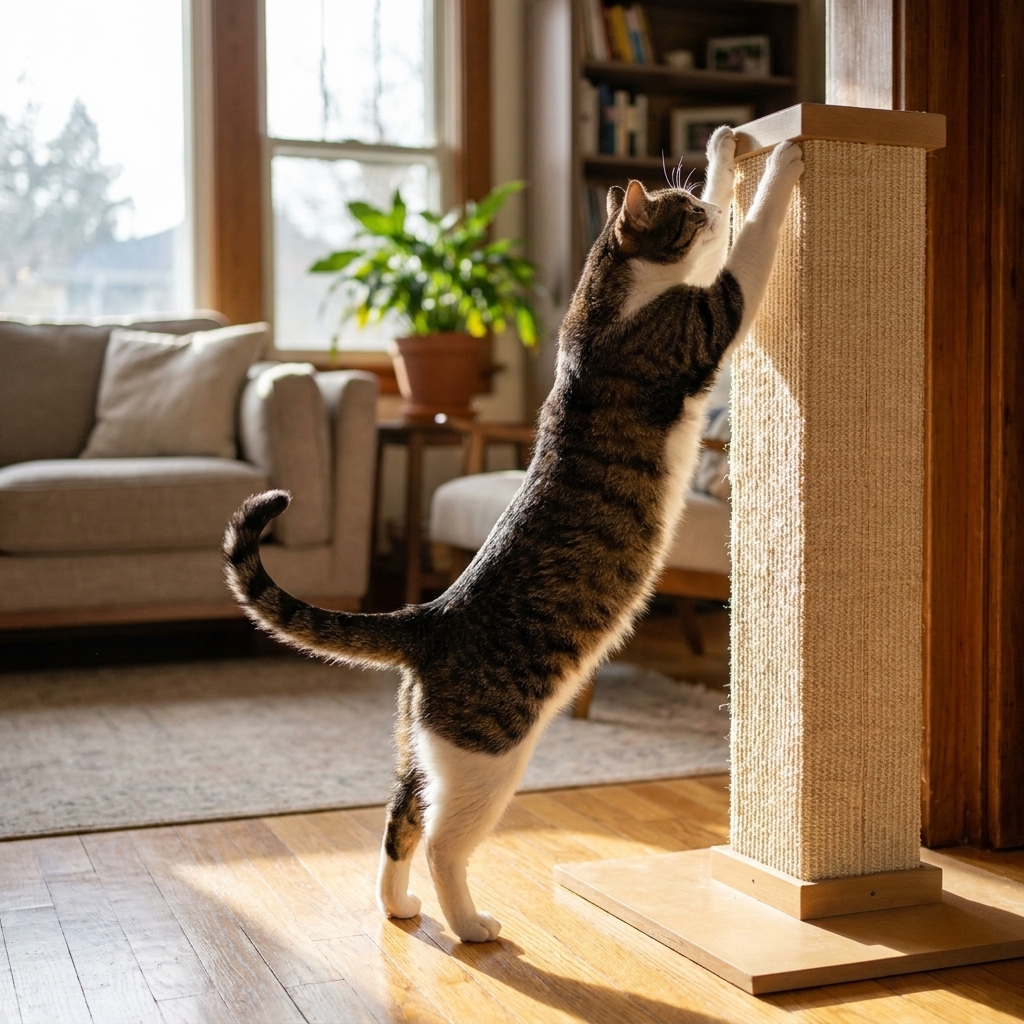
Indoor cats are brilliant little creatures trapped in a world of walls, schedules, and snack cabinets. When we take away the natural rhythm of hunting, climbing, stalking, and problem-solving, we have to replace it on purpose. Otherwise you get the classic greatest hits: 2 a.m. zoomies, countertop parkour, furniture shredding, or a cat who seems “lazy” when they are actually under-stimulated.
To be fair, some of those behaviors are also just normal cat behavior. The goal is not to “fix” your cat’s personality. It is to give them appropriate outlets so their instincts show up in ways that work for both of you.
Two of my favorite daily enrichment tools are interactive toys (like wand toys) and puzzle feeders (food puzzles). They can both keep indoor cats active and engaged, but they do it in very different ways. Let’s break down what each one is best at, who benefits most, and how to use both without turning your day into a full-time cat cruise director.
What counts as interactive toys vs. puzzle feeders?
Interactive toys (wand toys, teaser toys)
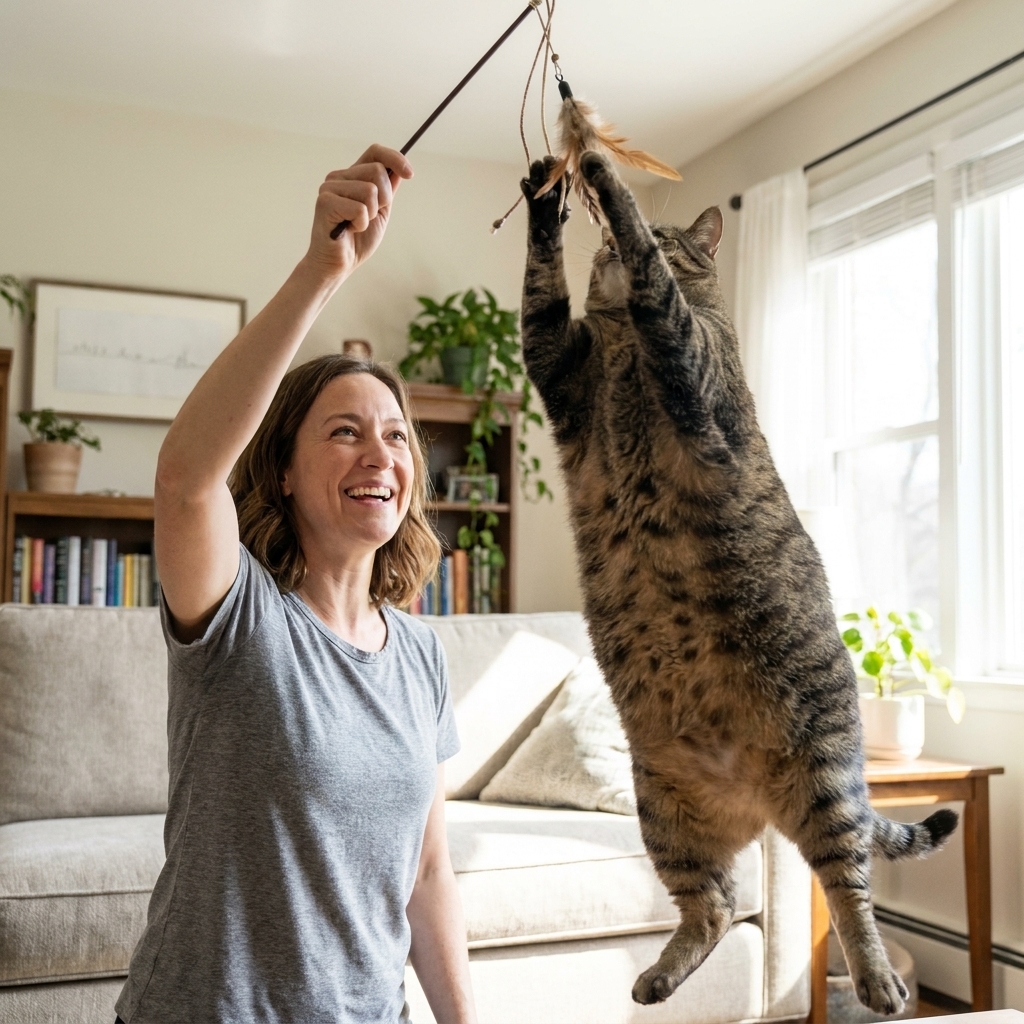
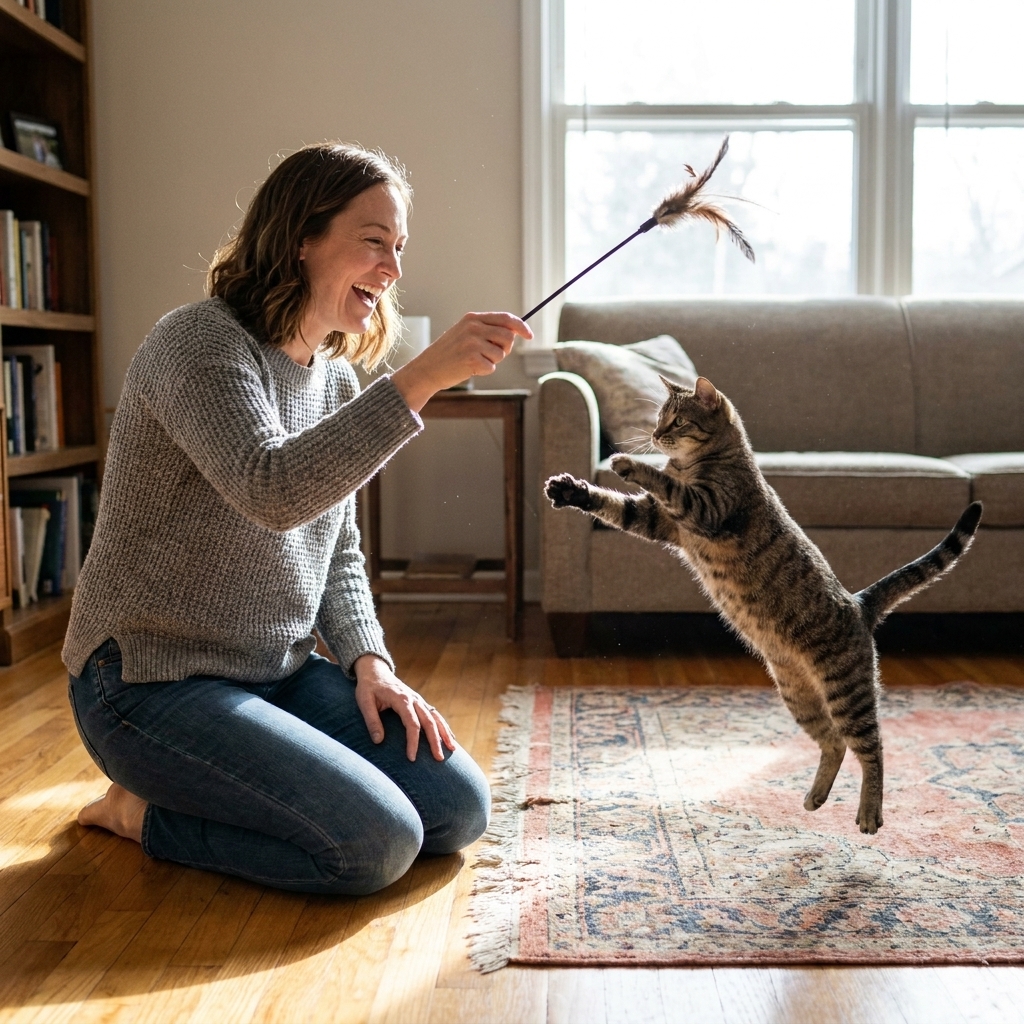
These are toys that typically require you to operate them, at least at first. Wand toys are one of the most effective options because they can help your cat practice a big chunk of the hunting sequence: track, stalk, chase, pounce, and grab.
- Common examples: feather wands, fabric “worm” teasers, ribbon teasers, toys on elastic cords, flirt-pole style toys.
- What they simulate: prey movement and a short hunt.
- Best use: structured play sessions.
Puzzle feeders (food puzzles, slow feeders, treat puzzles)
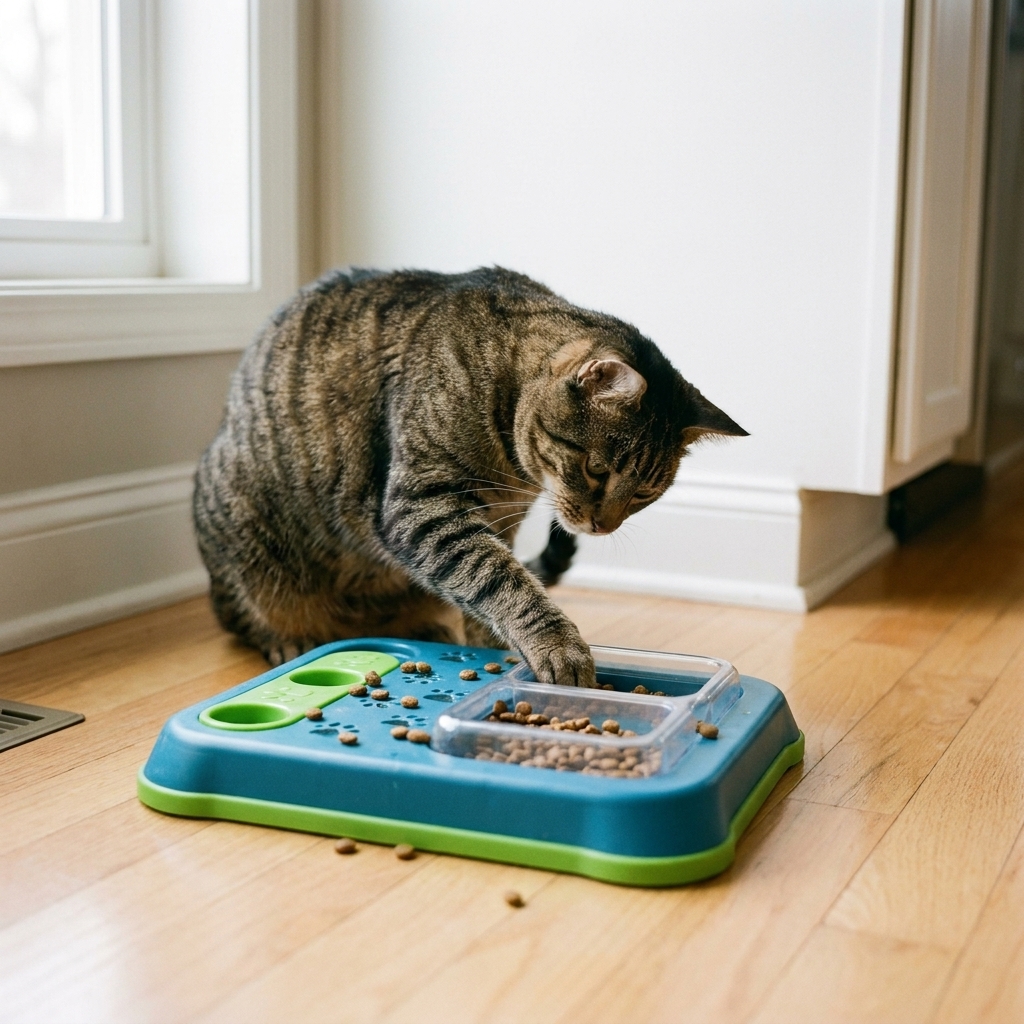
Puzzle feeders make your cat work for food by batting, rolling, pulling, licking, or problem-solving. Think of it as “brain games” with calories as the paycheck.
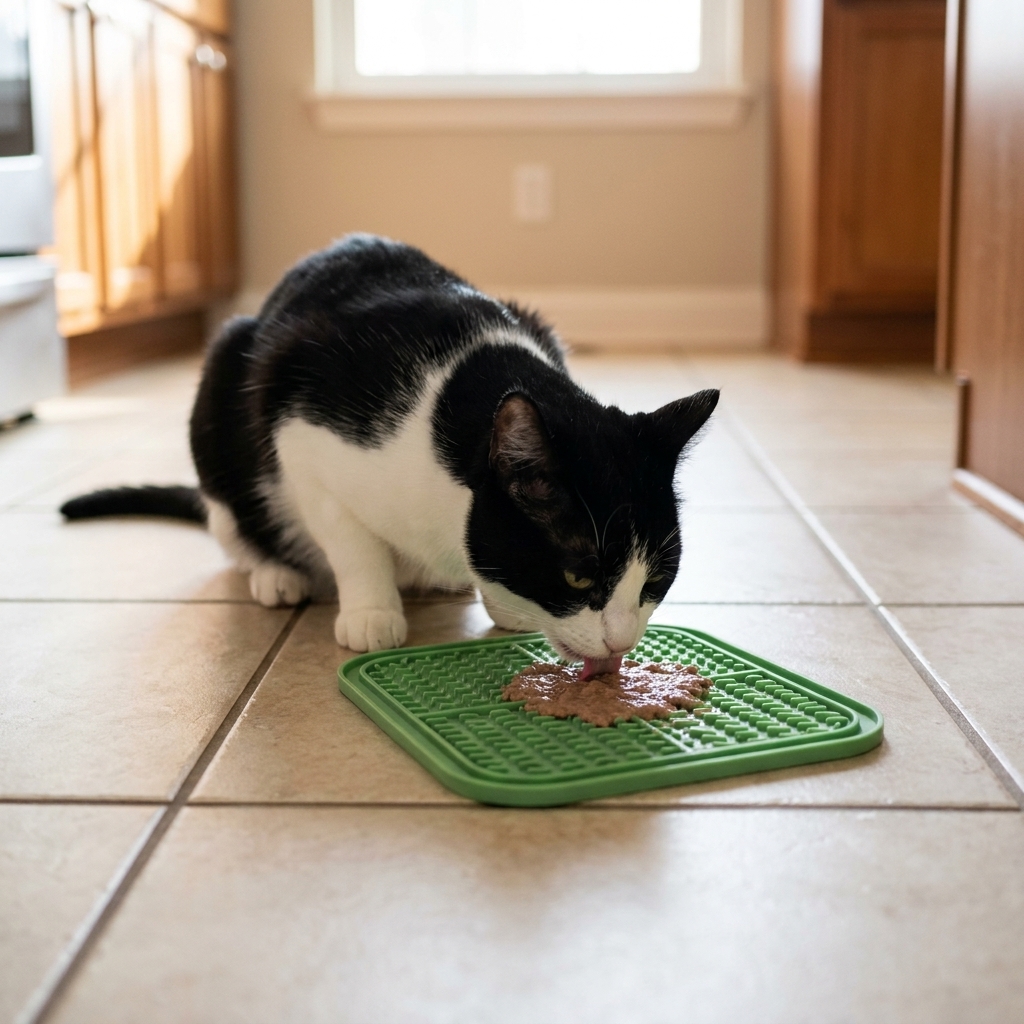
- Common examples: rolling treat balls, stationary puzzles with sliders and wells, lick mats for wet food, slow feeder bowls, foraging mats, DIY cardboard puzzles.
- What they simulate: searching and foraging for small meals.
- Best use: daily feeding routines and independent enrichment.
How wand toys help indoor cats
If I could only recommend one enrichment habit for most indoor cats, it would be daily interactive play. Wand toys are efficient, low-cost, and incredibly effective when used correctly.
Key benefits
- Healthy physical outlet: Great for burning energy in short bursts, especially for young cats and high-drive adults.
- Confidence building: Shy or under-socialized cats often come out of their shell during prey play because it feels instinctive and safe.
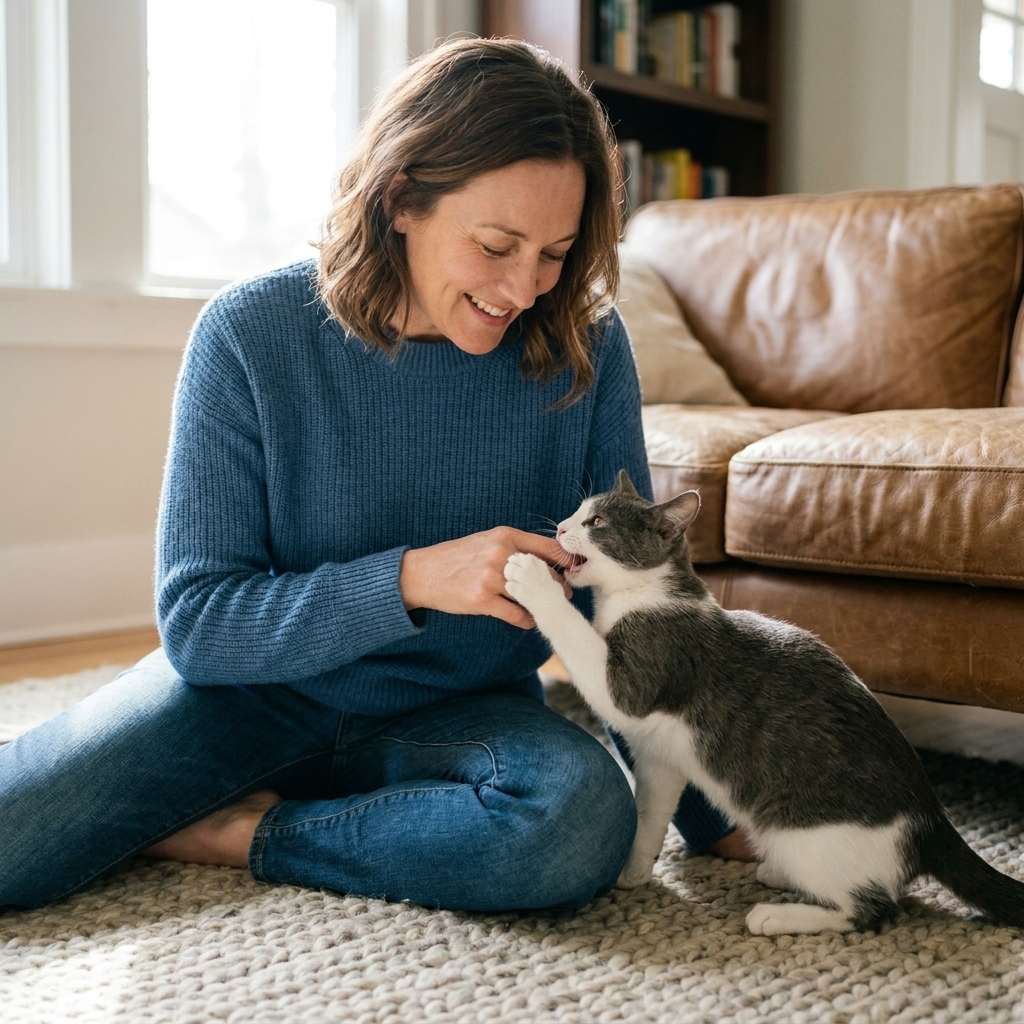
- Bonding: You become part of the fun, which can improve trust and relationship quality.
- Redirects problem behaviors: If your cat is ankle-attacking, harassing another cat, or tearing up the couch, structured play can take the edge off.
Common mistakes (and easy fixes)
- Mistake: Wiggling the toy in your cat’s face.
Fix: Move it away like prey escaping, and let your cat “hunt” toward it. - Mistake: Constantly lifting the toy high in the air.
Fix: Keep most movement along the ground with occasional hops. Many cats do most of their hunting low to the ground, but some absolutely prefer “bird” play, so follow your cat’s lead. - Mistake: No “catch” at the end.
Fix: Let your cat catch and bite the toy multiple times. Finish with a small meal or a few treats to help complete the hunt cycle. - Mistake: Leaving wand toys out unattended.
Fix: Store them away. Strings and elastic can be dangerous if swallowed.
Who benefits most from wand play?
Wand toys are especially helpful for:
- Kittens and adolescent cats
- High-energy adults who get bored easily
- Cats who pester other pets for entertainment
- Cats who need lower-impact activity (you control speed and intensity)
If your cat has asthma, heart disease, significant arthritis, obesity, or a recent surgery or injury, ask your veterinarian what “safe play” looks like for them. You can usually still do enrichment, but you may need a gentler plan.
How puzzle feeders help indoor cats
I’m a proud cat nutrition nerd, and puzzle feeding is one of those rare tools that supports both behavior and body condition. Cats often do best with multiple small meals and short “work” sessions. A bowl of kibble that appears twice a day is convenient for us, but it is not very engaging for them.
Key benefits
- Mental stimulation: Problem-solving reduces boredom and can help some cats feel more settled.
- Slower eating: Helpful for cats who inhale their food and act frantic for the next meal.
- Better daily rhythm: Encourages natural foraging behavior throughout the day.
- Weight management support: Not magic, but it can help spread calories out and add activity around meals.
One important note: if your cat is frequently regurgitating, vomiting, coughing, gagging, or losing weight, do not assume it is a “speed eating” issue. Persistent stomach or appetite changes are a good reason to check in with your vet.
Puzzle feeders are not just for kibble
If your cat eats wet food, you still have options:
- Lick mats spread thinly with wet food can extend mealtime.
- Food-safe silicone cups or shallow grooves encourage slower eating.
- DIY foraging with tiny wet food “dots” on a plate can create a mini scavenger hunt (messy, but effective).
Who benefits most from puzzle feeding?
- Cats who seem bored between meals
- Cats who wake you early for breakfast
- Food-motivated cats who need extra brain work
- Households where humans are busy during the day and independent enrichment helps
Interactive toys vs. puzzle feeders: which is better?
In a perfect world, you use both, because they meet different needs:
- Wand toys primarily satisfy the chase and capture part of the predatory sequence and provide cardiovascular bursts.
- Puzzle feeders primarily satisfy seeking and working for resources and provide longer-lasting mental engagement.
If you only have time for one
- Choose wand toys if your cat is bursting with energy, gets “spicy” at your ankles, or your main goal is better behavior in the evening.
- Choose puzzle feeders if your cat is food-obsessed, wakes you up for meals, eats too fast, or seems restless during the workday.
If your cat is older or has mobility issues
Many senior cats still want to “hunt,” but they may not want a full sprint. Try:
- Slower wand movements along the floor
- Shorter play sessions more often
- Lick mats and easier puzzles that do not require a lot of paw dexterity
If your cat is newly slowing down, suddenly avoiding jumping, or acting cranky when touched, it is worth a vet conversation. Pain can look like “attitude,” and the right support can make enrichment fun again.
How to build a simple daily routine
You do not need to entertain your cat nonstop. You just need consistent, predictable outlets.
A realistic starter schedule
- Morning: Puzzle feeder breakfast (or part of it), plus 2 to 5 minutes of wand play if you can swing it.
- Midday: Hide a few pieces of kibble or treats in a foraging toy, or set out an easy puzzle.
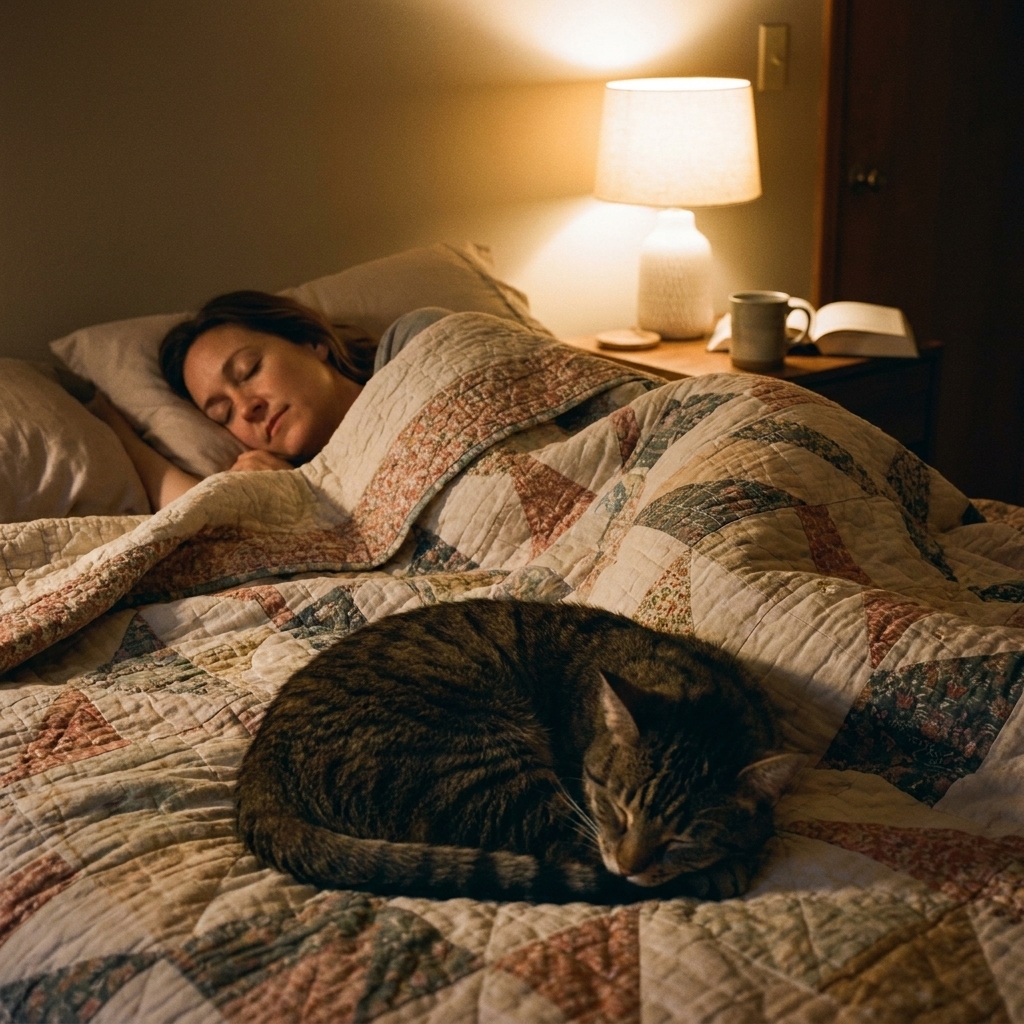
- Evening: 10 to 15 minutes of wand play, then dinner. This is my favorite way to reduce nighttime chaos.
Keep it interesting with rotation
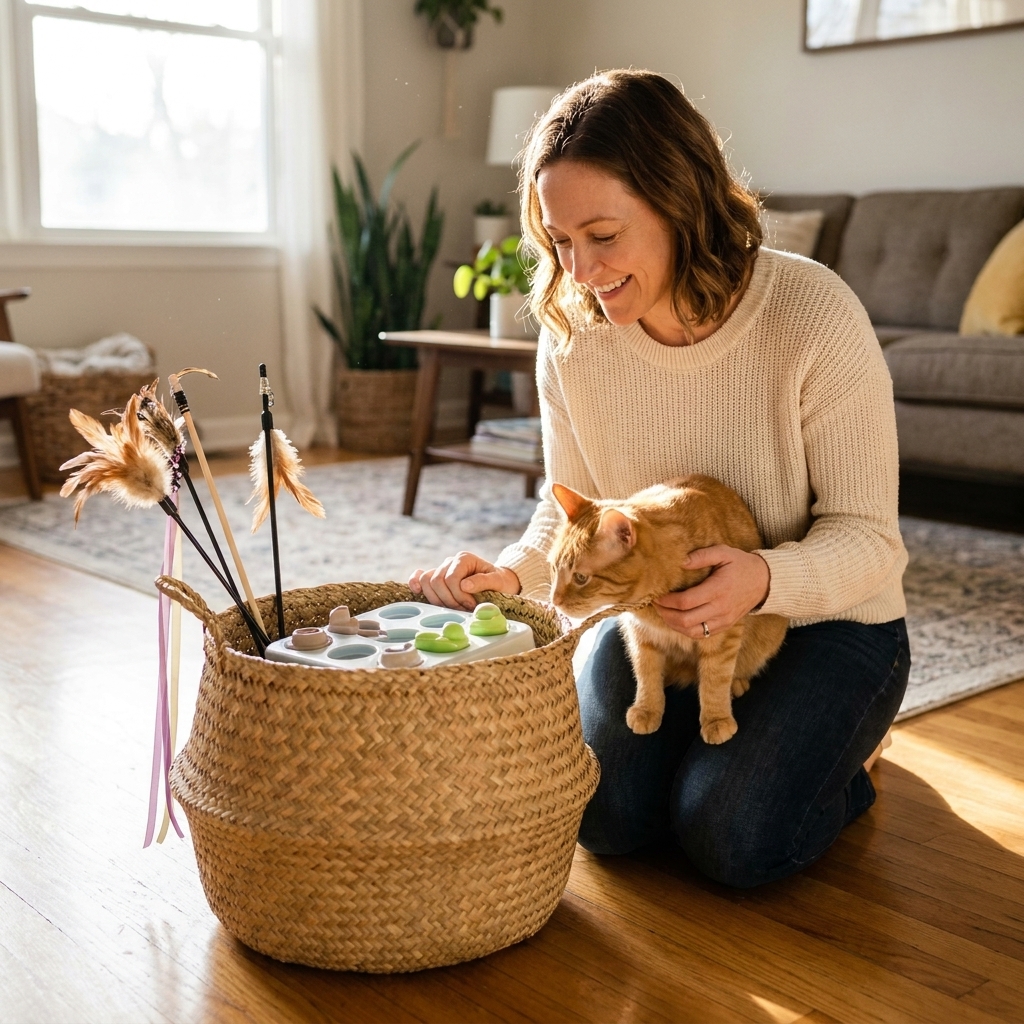
Cats get bored when the same toy is out forever. Instead of buying a mountain of stuff:
- Keep 2 to 4 wand attachments and swap them every few days
- Rotate puzzle feeders weekly
- Put toys away between uses so they stay “special”
Choosing a puzzle feeder
Puzzle feeding should feel like a fun challenge, not a dead-end job with no paycheck.
Match difficulty to your cat’s experience
- Beginner: Rolling treat ball with a large opening, shallow snuffle-style mats, simple lick mats.
- Intermediate: Slide puzzles with wells, stationary puzzles that require paw scooping.
- Advanced: Multi-step puzzles, stacked components, smaller openings.
Watch for frustration signals
If your cat starts swatting hard, biting the feeder, walking away repeatedly, or vocalizing, the puzzle may be too difficult. Make it easier and rebuild success.
Safety and hygiene tips
- Wash puzzles frequently, especially those used with wet food
- Choose sturdy, food-safe materials
- Avoid tiny parts that can break off and be swallowed
Choosing a wand toy
What to look for
- Sturdy wand and attachment: A secure connection reduces breakage.
- Longer wand length: Gives you more range, which is great for shy cats.
- Multiple textures: Some cats love feathers, others prefer fabric strips or faux fur.
Safety basics I insist on at home
- Supervise all string and elastic toys
- Check attachments for loose pieces
- End sessions by placing the toy out of reach
If your cat is the type to chew and swallow string, skip stringy attachments and choose sturdier fabric prey toys on a short, secure connector.
Troubleshooting: my cat won’t use it
My cat ignores wand toys
- Try a different prey style (bird-like feathers vs. mouse-like fur vs. wriggly worm)
- Play at your cat’s natural active times, often dawn and dusk
- Start small: slow movements, brief sessions, lots of wins
- Reduce distractions: quieter room, fewer people watching
My cat gives up on puzzle feeders
- Make it easier and reward quickly at first
- Use higher value food (a tastier kibble or a few treats) to teach the game
- Show them: tap the puzzle, roll the ball once, or place a few pieces visibly on top
- Try shorter sessions more often rather than one long, difficult puzzle
My cat gets possessive around food puzzles
Feed cats separately if there is tension. Resource guarding is common in multi-cat homes, especially if a cat has a history of food insecurity. Multiple smaller puzzles in different locations can help, but safety and peace come first.
For wand play in multi-cat homes, I like to give each cat at least a few minutes of “solo” time, even if it means taking turns in different rooms. It prevents squabbles and helps the quieter cat get their fair share of wins.
My favorite approach: pair play with food
In my house, Clementine would like everyone to know she is a “serious hunter” who deserves immediate payment. Waffles, on the other paw, is delighted just to be included. What works best for both of them is the same pattern I recommend to friends and family:
- Play with a wand toy for 5 to 15 minutes
- Let your cat catch the toy a few times
- Offer a small meal or puzzle feeder afterward
This taps into your cat’s natural hunt, eat, groom, sleep rhythm and it often leads to a calmer evening.
Quick FAQ
Are puzzle feeders good for cats who eat wet food?
Yes. Lick mats and shallow slow feeders work beautifully for wet food. You can also portion wet food into multiple small servings to create mini foraging moments throughout the day.
How long should I play with my cat using a wand toy?
Most cats do well with one to two sessions a day of about 5 to 15 minutes. Kittens may want more frequent, shorter bursts.
Can I leave a puzzle feeder out all day?
For dry food puzzles, often yes, as long as your cat does not guard it from other pets. For wet food puzzles, do not leave food out for hours. Use a conservative time limit that fits your home’s temperature and your veterinarian’s guidance, and wash the puzzle after.
Do puzzle feeders replace interactive play?
Usually not. Puzzle feeders are fantastic mental enrichment, but they do not fully replace the physical chase and social interaction many cats need. Think of them as teammates, not competitors.
The bottom line
If you are deciding between interactive toys and puzzle feeders, know this: you are already doing a loving thing by thinking about enrichment at all. Wand toys help your cat burn energy and satisfy the chase. Puzzle feeders help your cat work their brain and engage with food in a more natural way.
When you combine a short daily play session with at least one puzzle-style meal, many indoor cats become calmer, more confident, and less likely to invent their own entertainment at your expense.