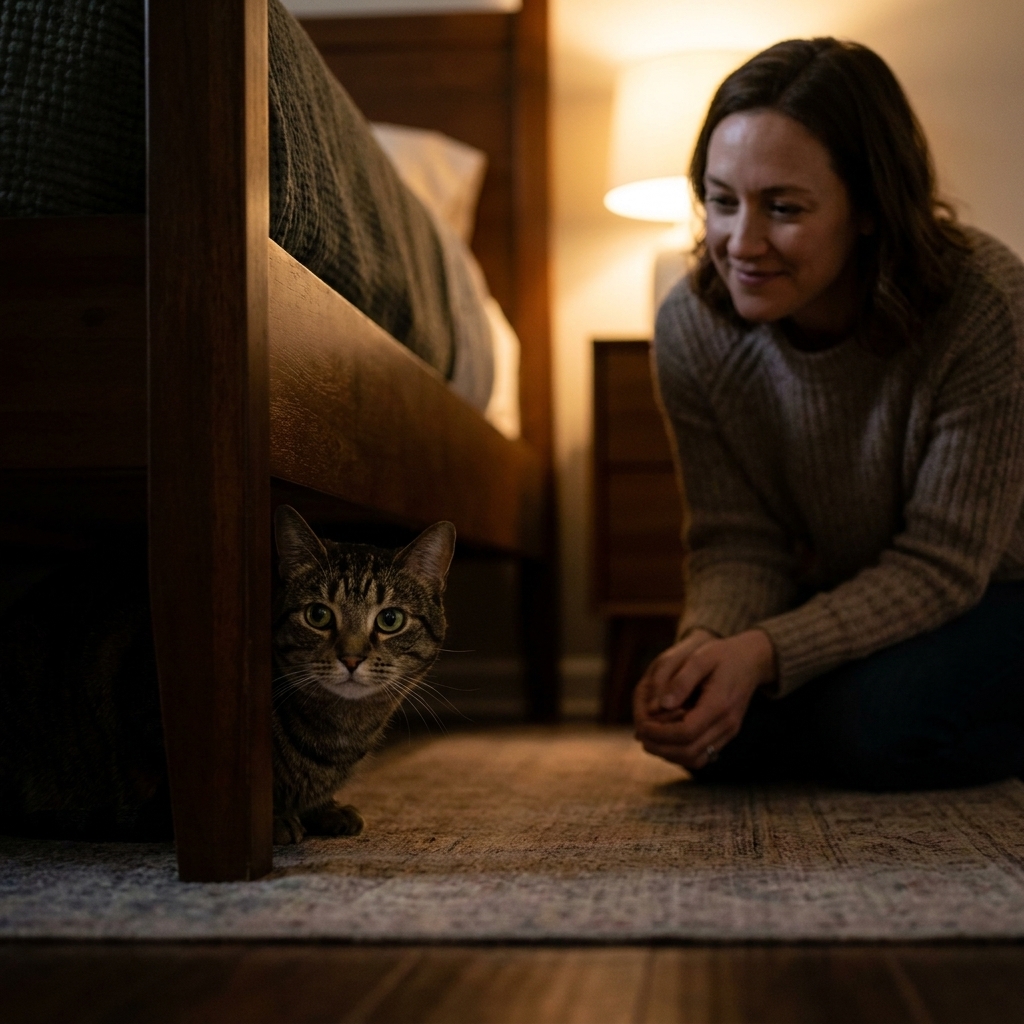
If you have ever gone from “aww, cuddle time” to “why are there teeth in my arm?” in 0.2 seconds, you are in very good company. Biting is one of the most common reasons cat parents feel confused, worried, or even a little afraid of their own cat.
The good news is that most biting is not “mean.” It is communication. The tricky part is learning what your cat is trying to say, because play biting and aggressive biting can look similar in the moment, but they come from very different emotional places and need different responses.
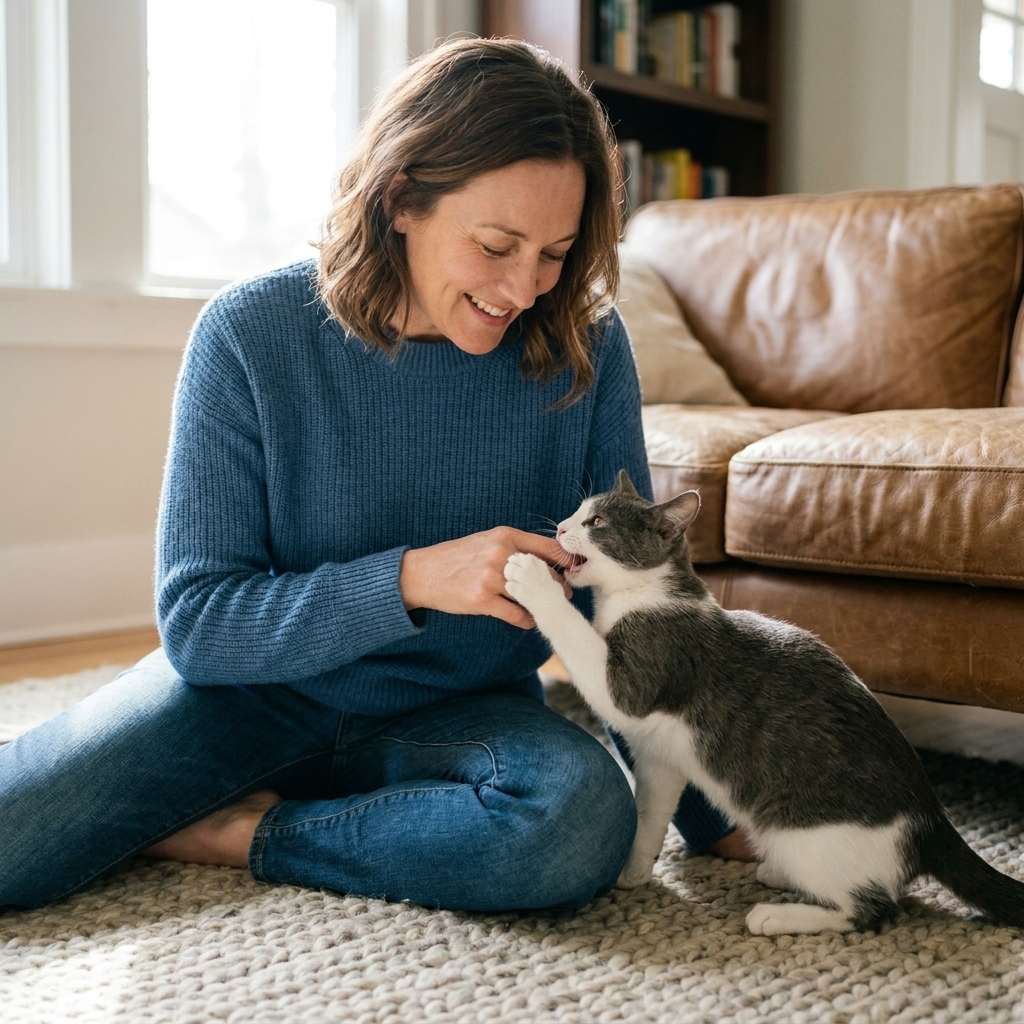
Let’s break down the difference, the body language clues to watch for, and exactly what to do so your cat learns better ways to interact.
What is play biting?
Play biting is usually part of normal feline behavior. Cats are tiny predators, and play is how they practice hunting skills: stalking, pouncing, grabbing, bunny kicking, and yes, biting.
Play biting typically means:
- The bite is inhibited (more like a nip or a gentle chomp than a full force bite).
- Your cat is in a playful mood, not a fearful or defensive one.
- The behavior is mixed with playful signals like bouncy movement, chasing toys, and frequent pauses.
Kittens and young cats are especially mouthy. If a kitten was orphaned early or did not have enough time with littermates, they may not learn “bite control” as well, so their play bites can feel surprisingly sharp.
What is aggressive biting?
Aggressive biting is a broad category that can include fear, pain, territorial behavior, redirected aggression, or intense overstimulation. It is less about play and more about your cat trying to create distance, end an interaction, or protect themselves.
Aggressive bites tend to be:
- Harder, more sudden, and more likely to break skin.
- Accompanied by tense, defensive body language.
- Followed by avoidance, hiding, or continued agitation rather than a relaxed return to play.
Important nuance: cats can also bite during petting when they get overwhelmed. That is often called “petting aggression,” but in many cats it is closer to overstimulation than true aggression. The bite is still real, but the emotion behind it is “too much,” not “I want to attack you.”
Body language checklist
When you are sorting out “play” versus “not okay,” look at the whole cat, not just the teeth. Here are the most useful tells.
1) Ears
- Play: ears forward or slightly to the side, swiveling with curiosity.
- Aggression or fear: ears flattened back or turned sideways and pinned (“airplane ears”).
2) Tail
- Play: tail may be upright with a friendly curve, or swishing loosely during excitement.
- Aggression or high arousal: tail lashing sharply, thumping, or puffed up; the movement looks stiff and intense.
3) Eyes and pupils
- Play: bright, alert eyes; pupils can be dilated from excitement, but the rest of the body stays loose.
- Aggression or fear: hard stare, wide eyes with a “frozen” look, dilated pupils paired with a tense crouch or a defensive posture.
4) Body posture
- Play: bouncy, wiggly movements; playful ambushes; rolling with relaxed muscles.
- Aggression or fear: stiff legs, low crouch, weight shifted back, arched back, puffed fur, or a sideways defensive stance.
5) The bite itself
- Play: quick nip, then release; often repeats in a “game” pattern; rarely punctures.
- Aggression: may clamp-and-hold, deliver repeated hard bites, or escalate quickly; more likely to puncture.
6) What happens right after
- Play: your cat may bounce away, re-engage with a toy, or do a quick zoom and return.
- Aggression or fear: your cat may growl, hiss, swat, stalk, hide, or stay hypervigilant and unable to settle.
If you are ever unsure, default to safety: pause the interaction, give your cat space, and switch to toy-based play later.

Common situations
Your cat bites during petting
This is often overstimulation. Many cats enjoy petting until their nervous system hits a threshold and then they go from “nice” to “nope” fast.
Clues it is overstimulation: skin twitching, tail thumping, ears rotating back, sudden head turn toward your hand, or a quick nip followed by your cat staying nearby.
Clues it could be pain: the biting is new for your cat, it happens when you touch one specific area, or it comes with changes in mobility, grooming, appetite, or litter box habits.
What to do: keep petting sessions short, stop at the first warning sign, and reward calm with a treat tossed away from your hand. Aim for “less but better.” If this is a sudden change or seems localized, schedule a vet check to rule out pain.
Your cat bites during play (hands and ankles)
Hand and ankle attacks are usually play plus habit. If hands have been used as toys, cats learn that human skin is part of the game.
What to do: redirect to a wand toy or kicker toy every time. Build a routine of two to three short play sessions daily, especially before your cat’s peak energy times, which for many cats is morning and evening.
Your cat bites when you pick them up
This can be a boundary issue, pain, fear, or simply “I do not like that.”
What to do: stop picking up unless necessary, and rebuild handling slowly with treat-based training. If this is new behavior, schedule a vet check to rule out pain.
Your cat bites after seeing another cat outside
This is a classic setup for redirected aggression. Your cat gets flooded with arousal at the window, then bites the nearest moving thing (often you or a housemate cat).
What to do: do not touch your cat in that moment. Create distance, block access to the trigger (close blinds, use window film), and let them decompress. Long-term, add enrichment and consider behavior support.
Scratching and biting together
If your cat grabs your hand and “bunny kicks,” the scratches can look dramatic even when the intent is play. Cats have a built-in wrestling style, and claws come out when they are excited or trying to hang on.
Still, if claws are consistently out during play, that is a sign you should adjust the game:
- Use toys that create distance (wand toys, flirt poles).
- Offer kicker toys for wrestling.
- End play while your cat is still having fun, before they get frantic.

What to do in the moment
The biggest mistake I see is trying to “teach a lesson” when a bite happens. From a cat’s perspective, yelling, pushing them, or scruffing feels like escalation. It often creates more fear and more biting.
Quick list: what not to do
- Do not punish (no yelling, hitting, scruffing, or spray bottles).
- Do not keep petting to “prove” they should tolerate it.
- Do not corner or chase a scared cat.
- Do not turn your hands into toys (even as a joke).
- Do not yank your hand away fast if your cat is latched on. That can tear skin. Instead, go still and create a barrier if you can do so safely.
If it is play biting
- Freeze. Stop moving your hand like prey. Movement is what makes it fun.
- Go neutral. Quietly stand up or turn away.
- Redirect. Toss a toy away from your body or grab a wand toy to continue play appropriately.
- Take a short break. If your cat is amped up, give a 30 to 90 second reset, then restart with a toy.
If it is fear-based or truly aggressive
- Stop the interaction immediately. No more touching, no chasing, no cornering.
- Create space. Step back slowly. If needed, place a pillow, blanket, or large cushion between you and the cat as a visual barrier.
- Let your cat decompress. Dim lights, reduce noise, and allow access to a safe room or hiding spot.
- Do not punish. Punishment increases stress and can make future bites more likely and more severe.
If skin is broken, wash the wound well with soap and water. Cat bites can cause deep infections even when the puncture looks small. Seek urgent medical care for deep punctures, bites to the hand or near a joint, spreading redness or swelling, fever, worsening pain, drainage, numbness, reduced finger movement, or if you are immunocompromised.
Long-term plan
Think of biting like a symptom. The fix is usually a combination of meeting needs, changing habits, and making the right behavior easy.
1) Daily “hunt, catch, eat” play
Short, focused play sessions do more than random bursts. I like 10 to 15 minutes with a wand toy, ending with a small meal or a few treats so your cat gets that satisfying “finish.”
2) Stop using hands as toys
This includes wrestling, finger wiggling, and letting kittens chew on you. It is adorable until it is not. If your cat is already in that habit, you can absolutely retrain it. You just have to be consistent.
3) Reward gentle behavior
Notice and reward moments when your cat is calm near your hands: sitting politely, sniffing without mouthing, choosing a toy. Toss a treat. Calm is a skill.
4) Set up your home for success
- Offer multiple scratchers (tall vertical and stable horizontal options).
- Add perches and window seats to reduce boredom.
- Use puzzle feeders or treat balls for mental work.
- Give your cat predictable quiet zones, especially in busy households.
5) Learn your cat’s early warnings
Most cats warn before they bite. The warning is just subtle: a tail tick, a skin ripple, a pause that feels “off,” a head turn. When you respect the warning, the bite becomes unnecessary.

Kids and guests
If your cat is mouthy, management matters, especially with children and visitors who may not read feline signals.
- Supervise all cat and child interactions.
- Teach kids to “freeze like a statue” if a cat grabs at hands or ankles, then call an adult.
- Give your cat escape routes and off-limits zones (a bedroom, tall cat tree, or gated area).
- Ask guests not to reach for your cat. Let the cat approach first.
When to see a vet
Any sudden change in behavior deserves a medical check. Cats are masters of hiding pain, and biting can be the first clue something hurts.
Book a vet visit if you notice:
- New biting in an adult cat who was previously tolerant
- Biting when touched in a specific area
- Changes in appetite, grooming, litter box habits, or mobility
- Increased hiding, irritability, or vocalizing
Common pain sources include dental disease, arthritis, urinary discomfort, skin issues, and gastrointestinal pain. Treating the underlying problem often dramatically reduces “aggressive” reactions.
Quick cheat sheet
- Play biting: loose body, bouncy energy, inhibited pressure, pauses, returns to play.
- Aggressive or fear-based biting: stiff posture, ears pinned, tail lashing, hard bite, growling or hissing, hard stare, difficulty settling after.
- Best immediate response: stop movement, create space, redirect to toys if playful, decompress if stressed.
- Best long-term fix: structured play, no hand play, reward calm, improve enrichment, rule out pain.
FAQ
Should I yelp when my cat bites me?
Sometimes a soft “ouch” and immediate withdrawal helps with kittens who are learning bite inhibition. But a loud yelp can also excite some cats or scare others. The most reliable approach is: freeze, calmly disengage, then redirect to a toy.
My cat purrs while biting. Is it still aggression?
Purring is not always “happy.” Cats also purr when they are overstimulated, anxious, or trying to self-soothe. Look at the full body: tense posture, tail thumping, and pinned ears matter more than the purr.
Why does my cat bite and then lick me?
This is common in cats who are affectionate but easily overstimulated. The lick can be social grooming, and the bite is the “I am done” moment. Shorter petting sessions and more consent-based handling usually help.
Are single kittens more bitey?
They can be. Littermates often teach each other when a bite is too hard, and solo kittens may miss some of that practice. You can make up for it by consistently ending play the moment teeth touch skin and offering appropriate chew and wrestling outlets.
When should I contact a behavior professional?
Get help if bites are breaking skin, if your cat stalks or ambushes family members, if there is redirected aggression between cats in the home, or if you feel unsafe. A qualified feline behavior professional can build a plan tailored to your cat’s triggers and household setup.