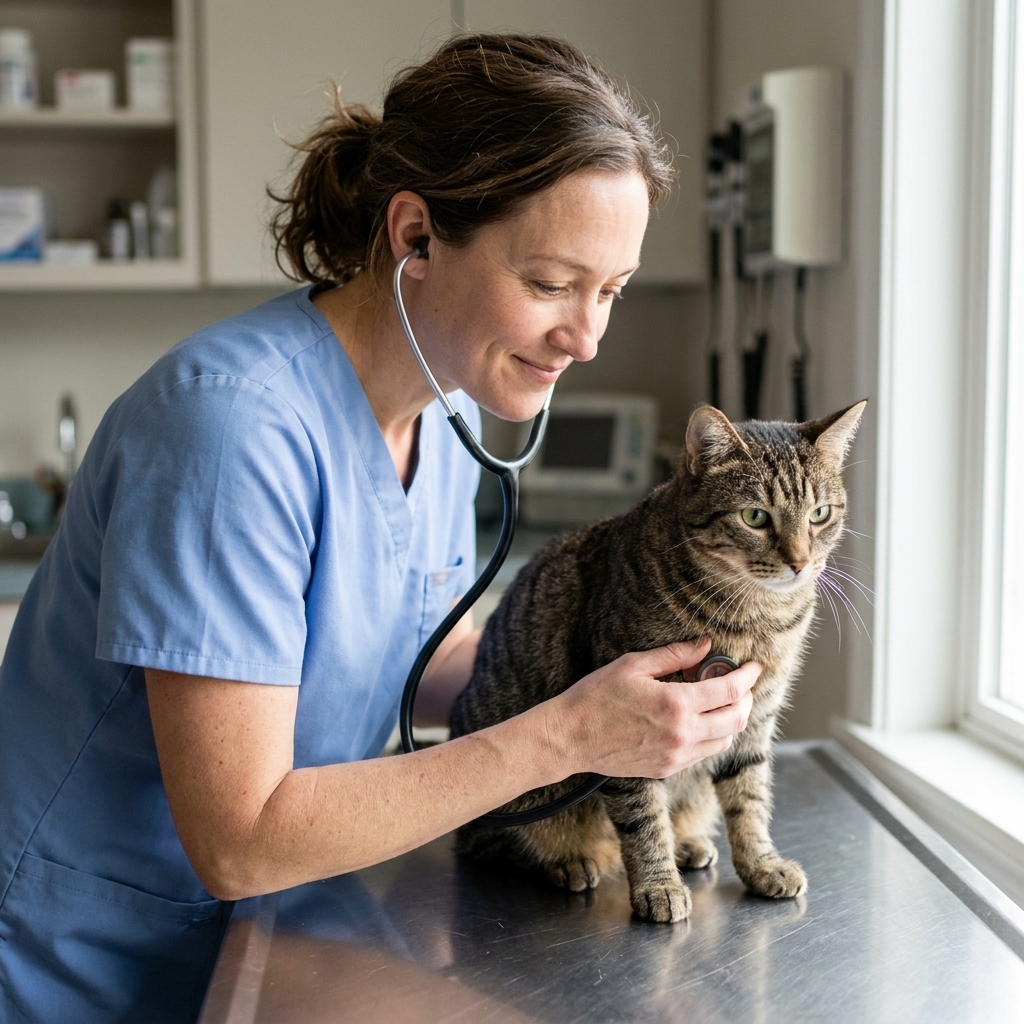
If you have ever found a flea on your cat, you know the particular kind of panic that follows. I have been there, too, usually at the exact moment my tortie Clementine decides she wants to cuddle on my pillow. The good news is that modern parasite prevention can be extremely effective. The not-so-fun news is that not every product is equally safe, and cats are uniquely sensitive to certain insecticides.
This guide walks you through flea collars and topical treatments (spot-ons) with a clear focus on safety, real-world effectiveness, and how to use each option correctly.

The quick takeaway
- For most cats, cat-labeled, vet-recommended topical treatments are often the safer, more predictable choice when used exactly as directed, especially in households with children or cats that groom each other.
- Flea collars can work well, but safety varies widely by brand, design, and active ingredient. Some collars have solid efficacy and good safety records, while others are more likely to cause irritation or problems if misused.
- The biggest danger is the wrong product for the wrong species. Dog-only flea products (especially those containing permethrin or other concentrated pyrethroids) can be life-threatening to cats.
- Whatever you choose, treating the environment matters. Most of the flea life cycle (eggs, larvae, pupae) is in your home, not on your cat.
How flea prevention works
Flea control is not just about killing the adult fleas you see. A single adult flea can lay about 20 to 50 eggs per day, and those eggs drop into carpets, bedding, couch cushions, and floor cracks. That is why a product that only repels fleas, or kills them slowly, can still leave you stuck in a cycle.
Cats also have a few special considerations:
- Grooming: Cats lick. A lot. Anything on the coat can end up in the mouth.
- Metabolism differences: Cats handle certain insecticides differently than dogs. The high-stakes example is permethrin and other pyrethroids, which are common in dog products and can cause severe neurologic signs in cats.
- Skin sensitivity: Some cats develop rashes or hair loss from contact products.
Flea collars
Flea collars generally work in one of two ways:
- Contact distribution: The active ingredient spreads over the skin and coat from the collar area, killing fleas and sometimes ticks.
- Vapor or repellent effect: Some collars release ingredients that deter fleas. In practice, repellency alone is rarely enough for a true infestation.
Pros
- Convenient: One application can last months.
- Less mess: No wet spot-on residue if applied correctly.
- Good for forgetful humans: Consistency is a huge part of flea prevention.
Cons
- Safety varies a lot: “Flea collar” is not one category. Ingredients and dosing control differ dramatically by product.
- Contact risk: Children (and other pets) may touch the collar and then touch their eyes or mouth.
- Local reactions: Some cats get redness, itching, scabs, or hair loss around the neck.
- Chewing hazard: Some cats manage to chew collars, and housemates may chew them during play or grooming.

Collar safety checks
If you are considering a collar, pay close attention to these points:
- Breakaway design: Cats should wear breakaway collars to reduce strangulation risk. Confirm it is a true cat breakaway collar (not just “adjustable” or “safety release”) and that it releases appropriately for a cat.
- Active ingredient: Different insecticides have different safety profiles. Avoid vague packaging and look for clear labeling.
- Species-specific labeling: It must explicitly say it is for cats.
- Household grooming: If your cats groom each other, collars increase the odds that another cat will lick the collar area.
- Buy from reputable sources: Counterfeit or expired parasite products are a real issue. I strongly prefer purchasing through your veterinarian, a pharmacy, or a trusted retailer rather than third-party marketplace listings.
Ingredient examples (not endorsements)
Safety and effectiveness come down to what is in the product, not the format. A few common examples you might see on labels:
- Collars: imidacloprid plus flumethrin is one combination used in long-acting collars for cats.
- Collars and older products: some collars use organophosphates or other older chemistries. These are not automatically “bad,” but they warrant extra caution and a vet conversation, especially for kittens, seniors, or cats with health issues.
If you are unsure about an ingredient, your vet can tell you whether it is appropriate for your specific cat and household.
Topical treatments
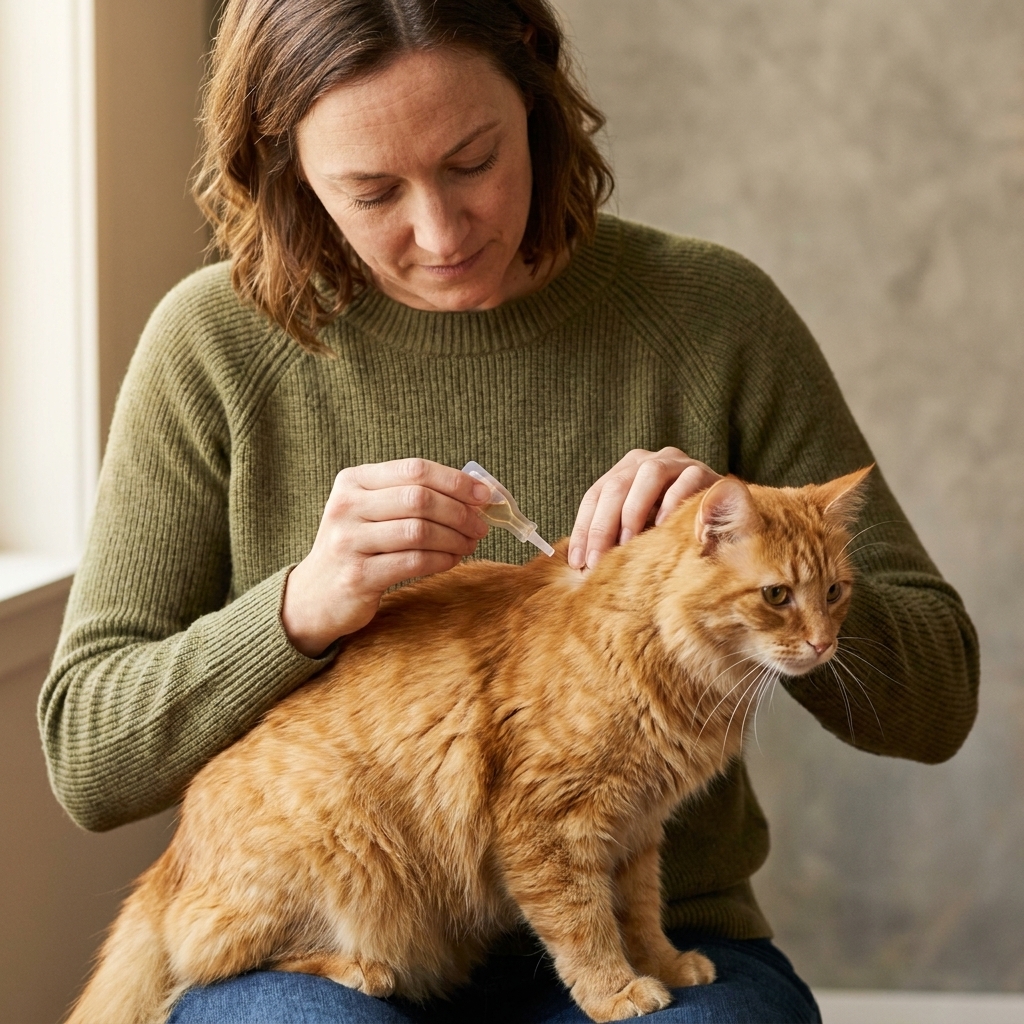
Topical treatments (spot-ons) are applied to the skin, typically at the base of the skull or between the shoulder blades. Depending on the product, they may kill adult fleas, prevent eggs from hatching, or disrupt the flea life cycle so an infestation resolves over time.
Pros
- Strong efficacy: Many prescription and vet-recommended options work quickly and consistently.
- Clear dosing: Weight-based doses reduce guesswork.
- No collar hazards: No strangulation risk, no collar chewing.
Cons
- Application errors are common: Putting it on the fur instead of the skin, splitting one tube between pets, or bathing too soon can reduce effectiveness.
- Temporary residue: The application site can feel oily for a day or two depending on the product.
- Grooming and contact concerns: Cats should not lick the wet medication, and housemates should not groom the application site.
Ingredient examples (not endorsements)
Common cat topical actives include:
- Imidacloprid (flea adulticide)
- Selamectin (broad parasite coverage in some products)
- Fluralaner (longer-acting flea and tick coverage in some products)
- Pyriproxyfen or methoprene (insect growth regulators that may be included in some formulas)
The best choice depends on your cat’s age, weight, health history, and whether you need tick coverage.
Safety: collar vs topical
When people ask me “Which is safest?”, what they usually mean is: “Which is least likely to make my cat sick if something goes wrong?” Here is how I think about it as someone who works with rescue intakes and multi-pet households.
In general, topicals are more predictable
With a reputable, cat-specific topical product (ideally prescription or vet-recommended), you typically get:
- Better studied dosing
- More consistent distribution and kill speed
- Clearer guidance for age and weight minimums
Collars have a wider range
Some modern collars have good safety data and can be a reasonable choice for the right cat. But the category also includes products with more variable fit, dosing, and skin tolerance. That variability is the reason many veterinarians prefer topicals or oral preventives for cats who are medically fragile, intense groomers, or in close contact with children.
Common side effects for both
With either collars or topicals, mild side effects can include:
- Temporary itching or redness
- Hair thinning at the contact site
- Mild drooling if the cat licks product or grooms a housemate too soon
- Upset stomach if ingested
Red flags (get help now)
Stop using the product and contact a veterinarian or pet poison helpline right away if you see:
- Tremors, twitching, or seizures
- Weakness, wobbliness, or collapse
- Severe vomiting or repeated diarrhea
- Labored breathing
- Extreme agitation or disorientation
One of the most preventable emergencies I see in rescue is a cat exposed to a dog-only flea product. If there is any chance that happened, do not wait to “see if they improve.” Get guidance immediately.
Effectiveness
Effectiveness depends on the product, the infestation level, and whether the environment is treated. That said, there are a few patterns I see consistently with rescue intakes and foster homes.
Topicals tend to win for active infestations
If your cat currently has fleas, a vet-recommended topical product is often the most reliable way to break the life cycle, especially when paired with environmental control. Some topicals also include an insect growth regulator to slow or stop reproduction, which can make a big difference in a home that is already seeded with eggs.
Collars can be great for prevention
A long-acting collar can be a practical prevention tool for certain cats, particularly if monthly dosing is hard for you. The key is choosing a collar with proven efficacy and a safety profile you are comfortable with, and fitting it correctly.
Why you may still see fleas for weeks
Even with excellent products, pupae in the environment can keep emerging for a while. In many homes, it can take 2 to 4 weeks (sometimes longer) to stop seeing fleas entirely, especially if you started treatment after an infestation was established. That does not automatically mean the product “failed,” but it does mean your cleanup plan matters.
Home cleanup basics
If you are dealing with a true infestation, plan on:
- Vacuuming frequently (including under furniture and along baseboards)
- Washing pet bedding on hot and drying on high heat
- Using vet-guided home treatments if needed for severe cases
- Treating all pets in the household with cat-safe products
How to apply topicals
Most “topical didn’t work” stories come down to application mistakes. Here is the method I teach fosters and adopters:
Step by step
- Weigh your cat and confirm you have the correct dose range.
- Part the fur until you see skin. Do not just squeeze it onto the coat.
- Apply at the base of the skull where your cat cannot lick, and where housemates have a harder time grooming.
- Keep cats separated until fully dry if they groom each other.
- Wash hands after application.
Bathing and grooming rules
Always follow the product label, but as a general rule: do not bathe your cat right before or right after a topical unless your veterinarian says it is okay. If your cat needs a bath because of a reaction or accidental exposure, your veterinarian or poison control may recommend washing with a mild degreasing soap to remove residue. Do not improvise with harsh detergents.
How to use collars
If a collar is the best fit for your household, these tips reduce risk:
- Confirm it is labeled for cats and for your cat’s age and weight.
- Confirm it is breakaway and designed for cats, especially if your cat climbs or goes outdoors.
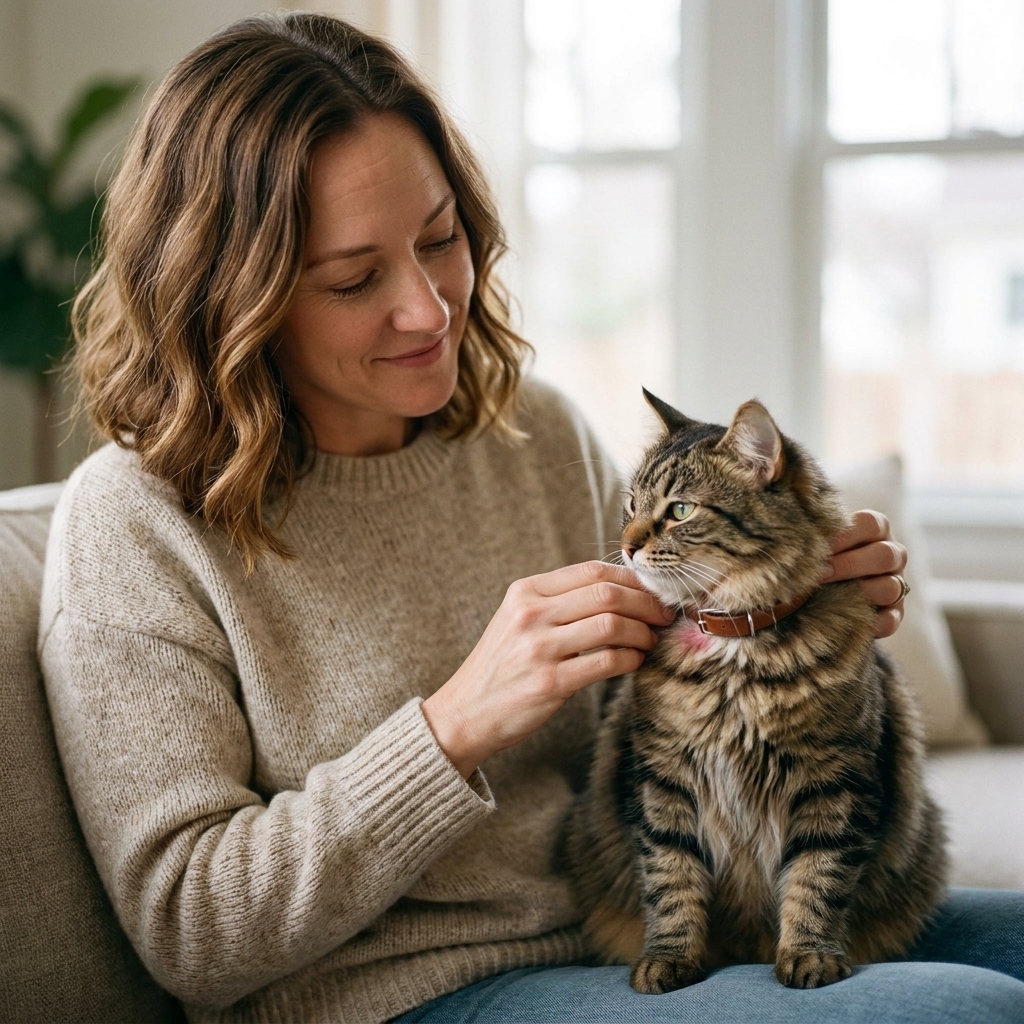
- Fit matters: You should be able to slip two fingers under the collar. Too loose increases snag and chewing risk, too tight can irritate skin.
- Trim excess length so your cat cannot chew the tail end.
- Monitor the neck daily for the first week for redness, scabs, or hair loss.
- Limit contact with children who may touch the collar and then rub eyes.
If your cat develops irritation around the collar, remove it and contact your veterinarian. Do not “wait it out.” In my experience, collar-related skin issues often worsen with continued exposure.
Special situations
Kittens
Kittens have strict age and weight minimums for parasite preventives. Always verify the label and, ideally, ask your vet. Young kittens are also more vulnerable to dehydration and anemia from fleas, so do not delay treatment if you see fleas.
Multi-cat homes
If your cats groom each other, topicals can still work beautifully, but you need a drying and separation plan. Collars can be trickier in heavy groomer households because another cat may lick the collar area regularly.
Cats with skin disease or allergies
Cats with dermatitis, flea allergy dermatitis, or chronic skin inflammation often need the most effective flea control possible, since even one bite can trigger a flare. In these cases, I usually lean toward vet-guided prescription options and tight environmental control.
Indoor-only cats
Indoor cats still get fleas. Fleas hitchhike on humans, dogs, and even through shared hallways in apartments. If you have had fleas in the past year, consistent prevention is often easier than repeating the cycle.
Households with dogs
This is where I see the most serious mistakes. Store dog and cat products separately, and never apply a dog topical to a cat. If your dog uses a topical, ask your vet about contact precautions so your cat does not cuddle and groom the application site.
What to ask your vet
Because ingredient safety and efficacy can vary so much by product and by your cat’s health history, I like to frame this as a short checklist for a vet chat:
- Does my cat need flea-only protection or flea and tick?
- What is the best option for a cat who grooms a lot or lives with other cats?
- Are there health conditions or medications that change the recommendation?
- What should I do if my cat drools or seems itchy after application?
- If we have fleas now, what environmental steps do you want us to take?
If you are choosing between a reputable collar and a reputable topical, I generally favor a vet-recommended topical for most cats because dosing and performance tend to be more consistent, and the safety guidance is clearer. I consider a collar when monthly application is not realistic, or when a cat’s lifestyle makes long-acting protection more practical, as long as the collar is cat-specific, properly fitted, and truly breakaway.
A quick note on oral options
You may also hear your veterinarian mention oral flea preventives. For some cats and households, a chewable or pill can be a great solution because there is no residue on the coat and no collar to chew. If your cat is hard to medicate, has a history of skin reactions, or lives with other pets who groom, it is worth asking whether an oral option is appropriate.
FAQ
Are flea collars toxic to cats?
Some can be, especially if the collar is not made for cats, is chewed, is fitted incorrectly, or contains ingredients that irritate your cat’s skin. Other collars have good safety data when used exactly as directed. The ingredient and the design (including true breakaway safety) matter more than the format.
Are topical flea treatments safe for cats?
Cat-specific, correctly dosed topicals are generally safe for most cats. The biggest risks come from using dog products on cats, using the wrong dose, buying questionable products from unreliable sources, or allowing licking before the product dries. If your cat has a history of sensitivity or neurologic issues, ask your veterinarian for the safest choice.
Why is my cat drooling after flea medicine?
Drooling often happens if a cat licks the product, or grooms a housemate’s application site. Some products taste bitter and can trigger dramatic foamy drool even without true poisoning. Still, monitor closely and contact your vet if drooling is heavy, your cat seems wobbly, or you see vomiting, tremors, or lethargy.
Can I use both a collar and a topical?
Do not combine parasite preventives unless your veterinarian specifically directs you to. Doubling up can increase the risk of side effects or overdose, especially if the products share similar insecticides.
My cat still has fleas after treatment. Did it fail?
Not always. In an established infestation, you may see fleas for a while as new adults emerge from the environment, even when the product is working. If you are still seeing live, active fleas after the expected time window on the label (or you missed a dose), talk with your vet about switching products and ramping up environmental control.
When to get help
Please reach out to a veterinarian promptly if:
- Your cat is very young, elderly, pregnant, or has chronic illness and you are unsure what is safe
- You see pale gums, weakness, or rapid breathing (possible anemia in heavy flea burdens)
- Your cat has any neurologic signs after flea treatment (tremors, twitching, seizures)
- You suspect exposure to a dog-only flea product
Flea prevention should not feel like a gamble. With the right product and a solid plan, you can protect your cat comfortably and safely, and keep those midnight itch-fests out of your house for good.