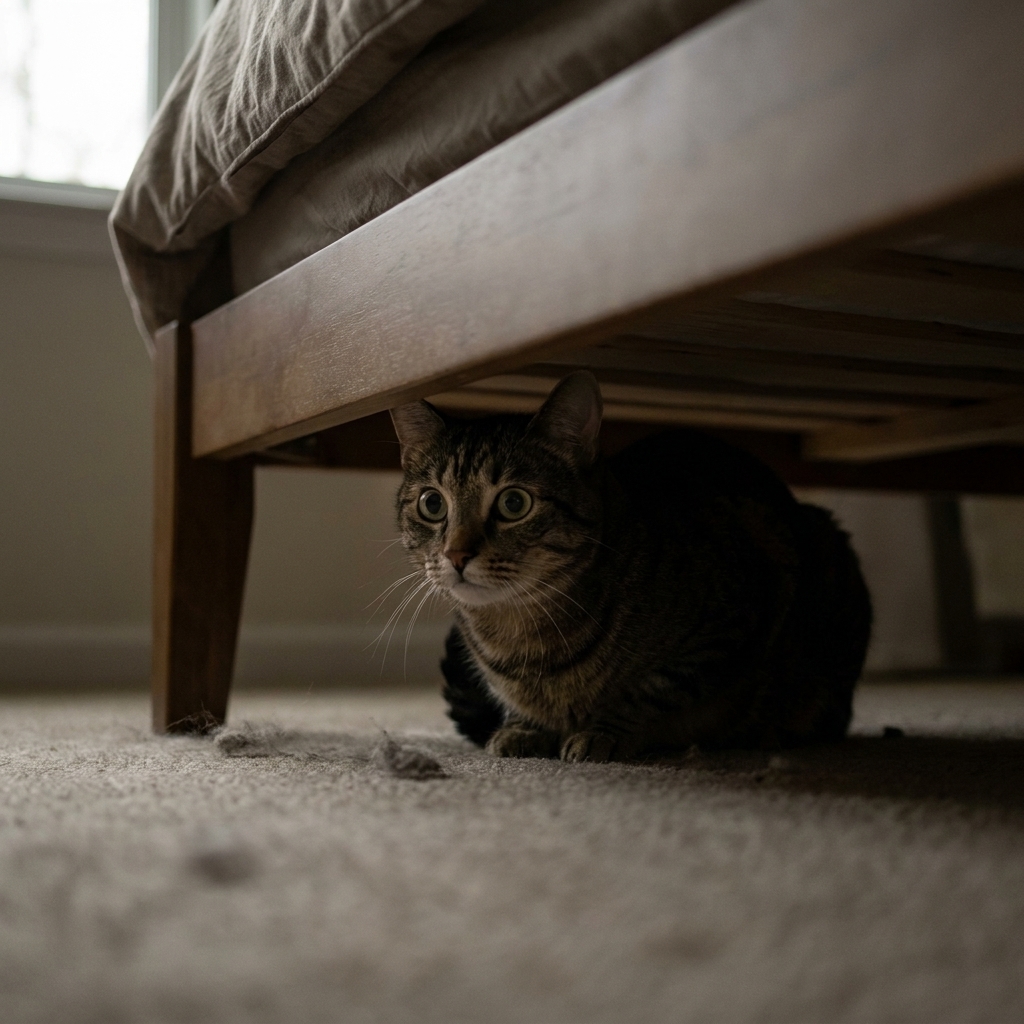
Choosing a cat carrier sounds simple until you are trying to zip a wiggly cat into one at 7 a.m. with a vet appointment on the calendar. I have seen cats scale mesh like tiny parkour athletes, I have seen carriers pop open at the worst moment, and I have also seen nervous cats settle beautifully when the carrier feels snug and predictable.
For context, I am writing this as someone who has lived with cats for years and helped friends and family troubleshoot everything from “won’t go in” to “got out in the parking lot.” The truth is this: both hard and soft-sided carriers can be safe, but they are safe in different ways. The best choice depends on how you travel (car, plane, walking), how your cat handles stress, and how likely they are to attempt an escape when adrenaline hits.
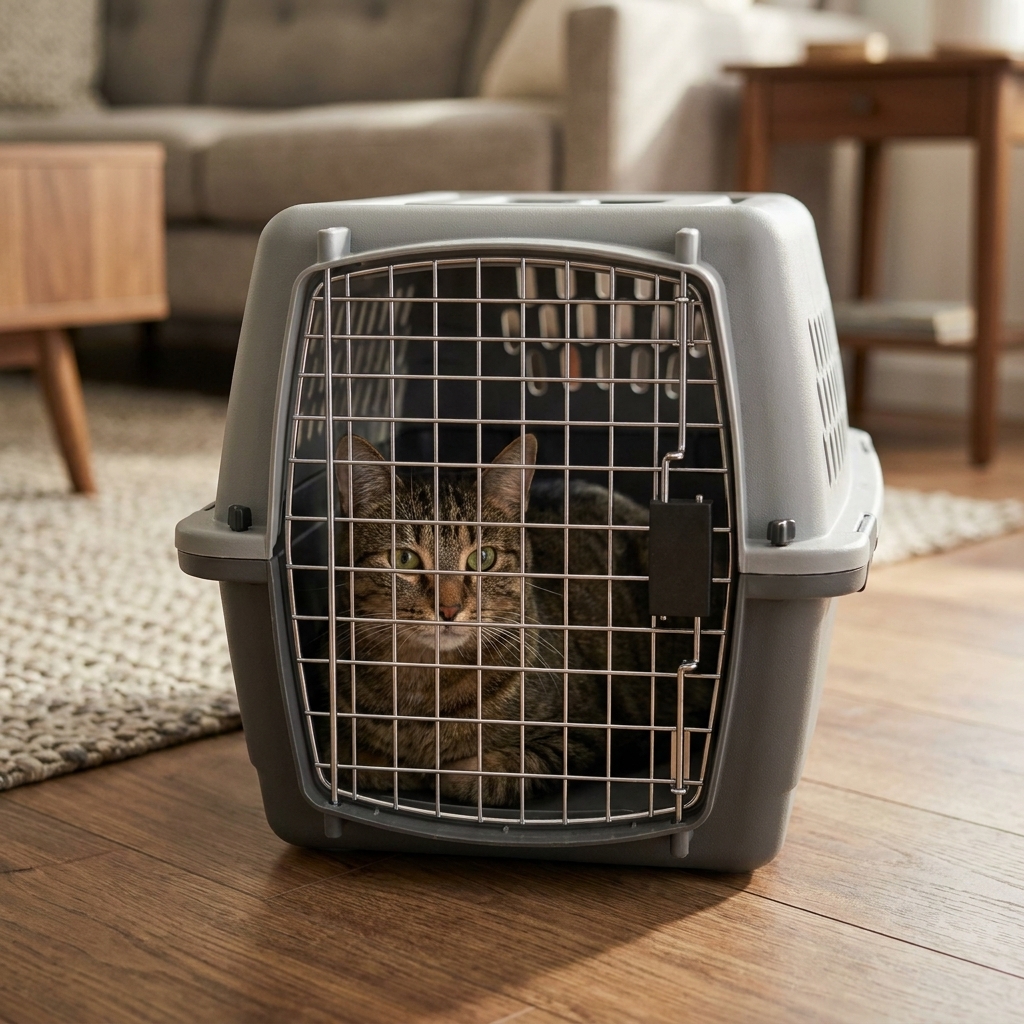
Below is my behavior-first breakdown, plus what features matter most so you can pick a carrier that keeps your cat secure and makes vet trips less dramatic for everyone involved.
Quick answer
If you want the simplest, most universally secure choice for vet visits and everyday car travel, a quality hard-sided carrier usually wins for durability and escape prevention.
A well-made soft-sided carrier can be a great option for calmer cats, short trips, and air travel, especially when comfort and portability matter. But it needs to be escape-resistant, structured, and used correctly.
- Best all-around for most cats: Hard-sided carrier with a secure metal door and strong latches
- Best for anxious or “spicy” cats: Hard-sided, top-loading option (or a hard carrier where the top half removes easily)
- Best for frequent flyers: Airline-compliant soft-sided carrier with a firm base and locking zippers
- Best for walkers and public transit: Structured soft-sided carrier with a firm base that does not sag when lifted
Hard-sided carriers
Why hard carriers are often the safest choice
Hard carriers are basically little protective shells. For cats, that can mean fewer “surprises” from the outside world, and for you, it usually means fewer escape attempts that succeed.
- Better protection in bumps and sudden stops: In routine driving mishaps, a rigid shell is less likely to collapse than fabric.
- Harder to claw, chew, or shred: This matters for stressed cats who go into full fight-or-flight mode.
- More secure doors and latches: Many hard carriers use metal doors and mechanical latches that are difficult for cats to defeat.
- More stable during handling: They stay upright more easily when you set them down.
One important nuance: most standard pet carriers are not crash-tested restraints. If you want the safest in-car option, look for a crash-tested crate or carrier and secure it exactly as the manufacturer instructs.
Tradeoffs
- Bulk and weight: Hard carriers can be awkward on stairs or long walks.
- Some are hard to load: Front-only doors can turn into a wrestling match with a fearful cat.
- Storage space: Not everyone wants a plastic spaceship in the closet.
Hard carrier features I look for
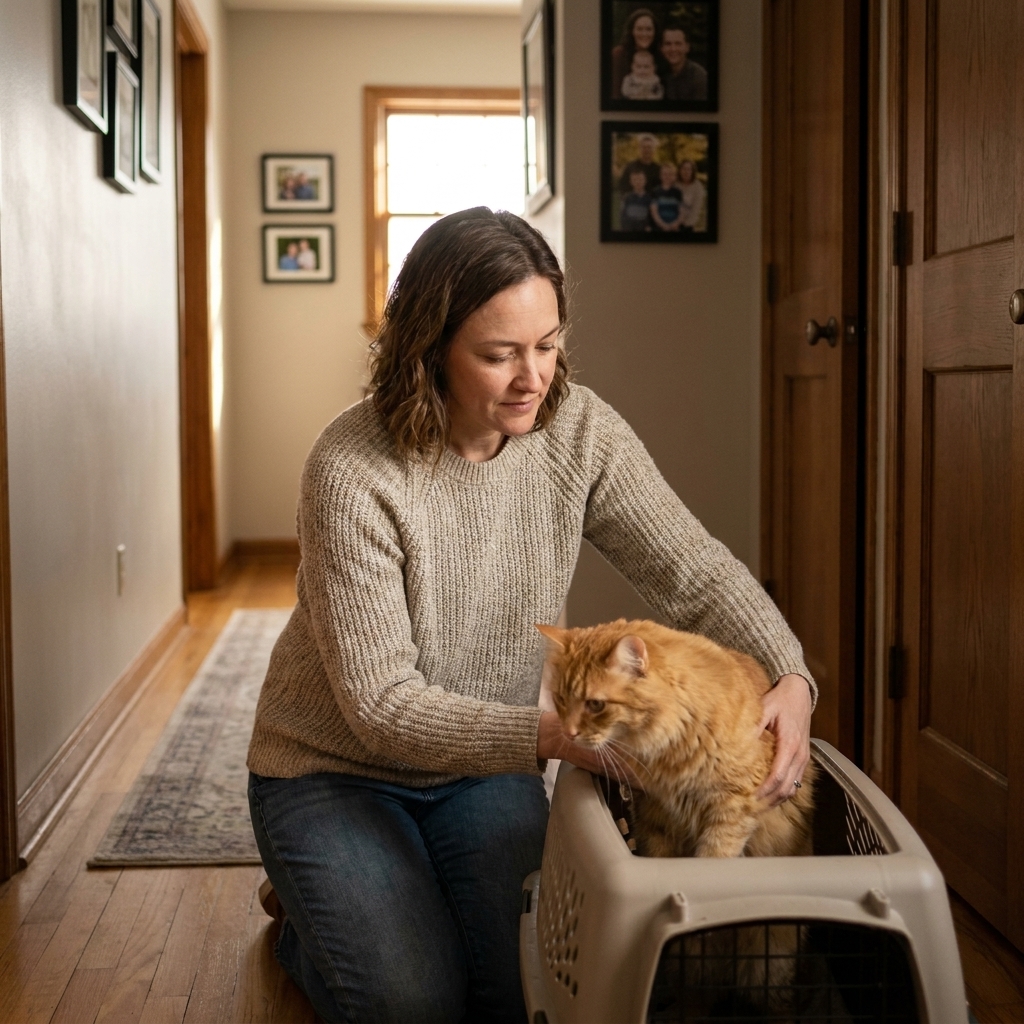
- Top-loading or a removable top half (huge help for cats who panic when pushed through a front door).
- Metal door with a latch that fully clicks into place.
- Bolts or sturdy fasteners connecting top and bottom halves (some cheaper carriers rely on flimsy side clips).
- Built-in seat belt pass-throughs if you plan to use a seat belt.
- Ventilation on multiple sides without giant openings a paw can hook.
Soft-sided carriers
Why soft-sided carriers can be a great choice
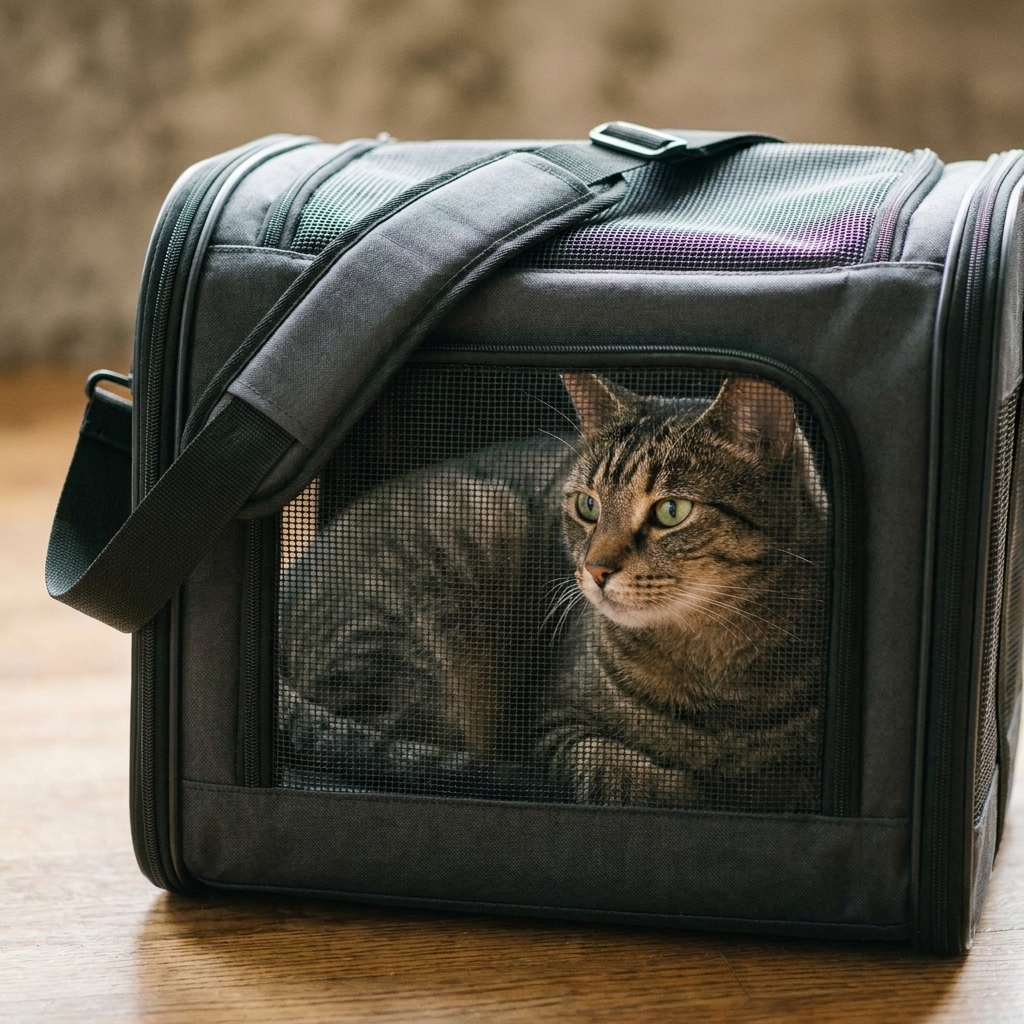
A good soft-sided carrier feels more like a cozy travel den than a plastic box. For some cats, that comfort translates to less thrashing and fewer stress behaviors.
- Comfort and flexibility: Many have softer interiors and a less “echoey” feel than hard plastic.
- Can be less intense for some cats: Mesh panels give visibility, which some cats find calming and others find overstimulating. You know your cat best.
- Easier to carry: Shoulder straps and lighter weight make a difference if you walk to the vet.
- Often best for in-cabin flying: Many are designed to fit under an airline seat.
Where soft carriers can be less safe
The safety concerns with soft carriers are not about comfort. They are about structure, escape resistance, and durability.
- Escape risk: Cats can learn to paw at zippers, push out corners, or tear mesh when scared.
- Less protection in impact: Soft sides can compress, especially if the carrier is squeezed, dropped, or jostled in a crowd.
- Chewing and clawing: A determined cat can damage fabric faster than you would expect.
Soft carrier features I look for
- Locking zippers (or zippers that clip to a D-ring). If a zipper can slide, assume your cat can eventually slide it.
- Firm base and structure so the carrier keeps its shape when lifted.
- Reinforced mesh that does not bow outward easily.
- Multiple access points (top and side), so you can choose the least stressful loading method.
- Published weight limit that actually covers your cat, with a little buffer.
- Seat belt loops if you will use it in a car.
Safety comparison
Escape prevention
Hard-sided usually wins, especially with a metal door and solid latches. Soft-sided can be safe, but only if the zippers lock, the seams are strong, and the mesh is durable.
Impact protection
Hard-sided usually wins for everyday bumps and sudden stops because the shell holds its shape. But for true collision protection, the gold standard is still a crash-tested crate or carrier installed per instructions.
Stress and comfort
It depends on the cat. Some cats settle better in a soft carrier with a padded base. Others do best in a darker, more den-like hard carrier with a towel draped over part of it.
Vet handling
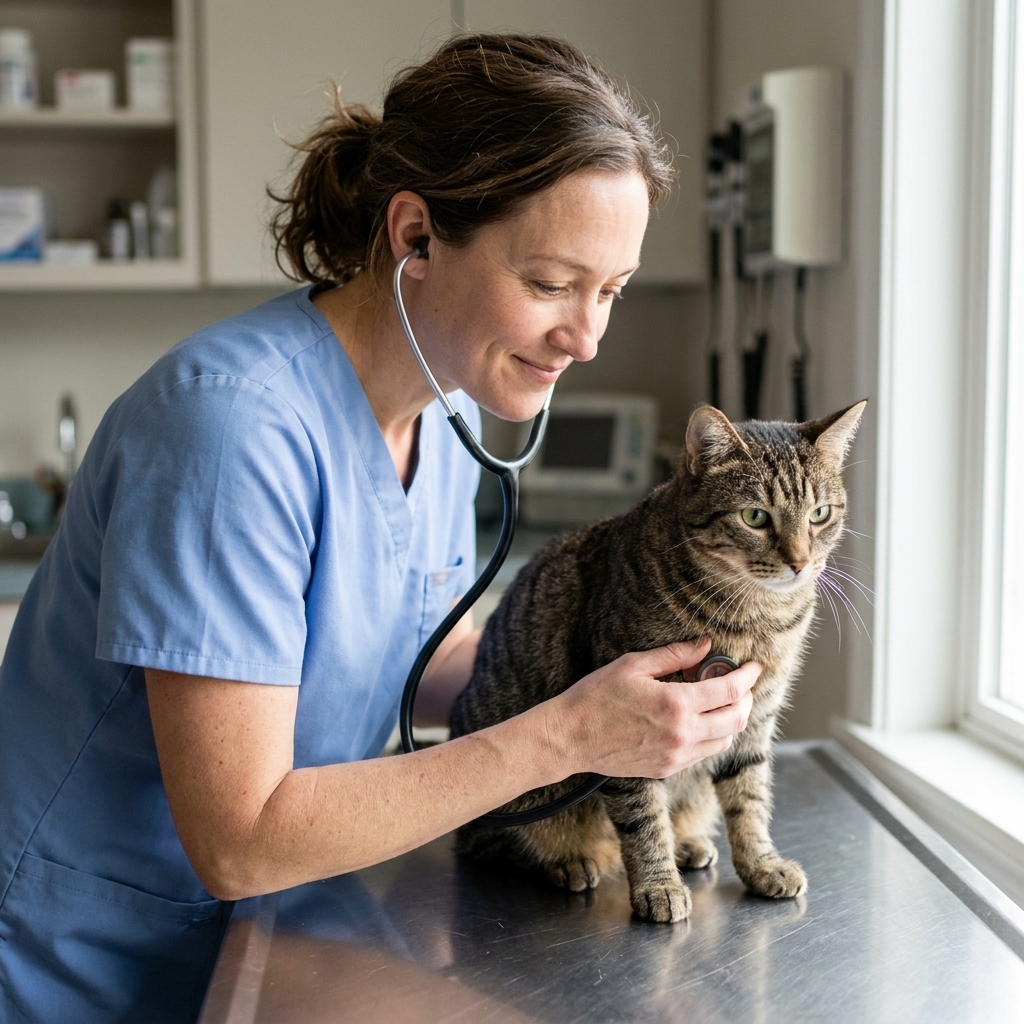
Hard-sided often makes vet exams easier, especially carriers where the top comes off. Many clinics love “remove-the-top” carriers because the cat can stay in the bottom half like a little bed while the vet listens to the heart and lungs.
Cleaning
Hard-sided is usually easier to sanitize after stress pees, vomit, or accidents. Soft-sided carriers vary widely. Some have removable, washable liners, which helps a lot.
Match your cat
For anxious cats
If your cat already hates the carrier, prioritize security and low-drama loading.
- Best bet: Hard-sided, top-loading or removable-top carrier.
- Why: Less wrestling, less chance of a frantic cat blasting through a partially closed zipper.
- Bonus tip: Cover part of the carrier with a light towel in the waiting room to reduce visual triggers.
For escape artists
I am going to be gently blunt here: if your cat has ever Houdini’d out of a carrier, choose a hard-sided carrier with a metal door. Soft carriers rely on zippers, seams, and mesh. Determined cats can defeat all three.
For calm, carrier-trained cats
If your cat walks into the carrier like it is their studio apartment, a structured soft-sided carrier can be comfortable and convenient, particularly for short trips or air travel.
For kittens
Kittens often do well in either style, but I still lean hard-sided for early vet visits. Kittens can squirm through surprisingly small openings, and early experiences teach them what “normal” travel feels like.
Best use cases
Vet visits
Top pick: Hard-sided with a removable top or top-loading door.
Why: Clinics can examine your cat with less handling, and you get a more secure container in a busy lobby full of dogs, doors opening, and unfamiliar smells.
Road trips
Top pick: A hard-sided carrier that can be secured, or a crash-tested crate if you want the highest safety option.
Important: Do not let your cat roam the car. Even the sweetest cat can panic in a new environment, and a loose cat can also interfere with the driver.
Air travel
Top pick: Soft-sided carrier that fits your airline’s under-seat dimensions.
Why: In-cabin rules usually come down to fit. Soft carriers flex to the space better than hard plastic.
Do not trust labels blindly: “Airline-approved” marketing is not a guarantee. Always confirm your exact airline requirements, including dimensions, ventilation rules, and whether they allow soft-sided or rigid-sided carriers for in-cabin pets.
Walking, rideshare, and public transit
Top pick: Structured soft-sided carrier with a stable, firm base and a shoulder strap.
Watch for: Excessive swaying, sagging bottoms, and carriers that tilt. Cats feel less secure when the floor moves under them.
What makes a carrier safe
- Correct size: Your cat should be able to stand, turn around, and lie down comfortably. Too big can feel insecure, too small can increase stress and heat buildup.
- Secure closures: Doors should latch firmly. Zippers should lock or clip.
- Stable base: A carrier that tips increases fear and the chance of injury.
- Ventilation: Good airflow on multiple sides without giant gaps.
- Non-slip bedding: A towel or fitted pad helps your cat feel stable and absorbs drool or accidents.
- Easy handling for you: If it is awkward to carry, it is more likely to get bumped into door frames or set down roughly.
A quick sizing check
- Length: Measure nose to the base of the tail, then add a little room so your cat can turn and settle.
- Height: Your cat should be able to sit or stand without the top pressing on their head or ears.
- Weight rating: For soft-sided carriers especially, make sure the manufacturer’s limit exceeds your cat’s weight.
Make travel calmer
This is the part most people skip, and it makes the biggest difference. The carrier should not only appear on “scary days.”
Leave it out
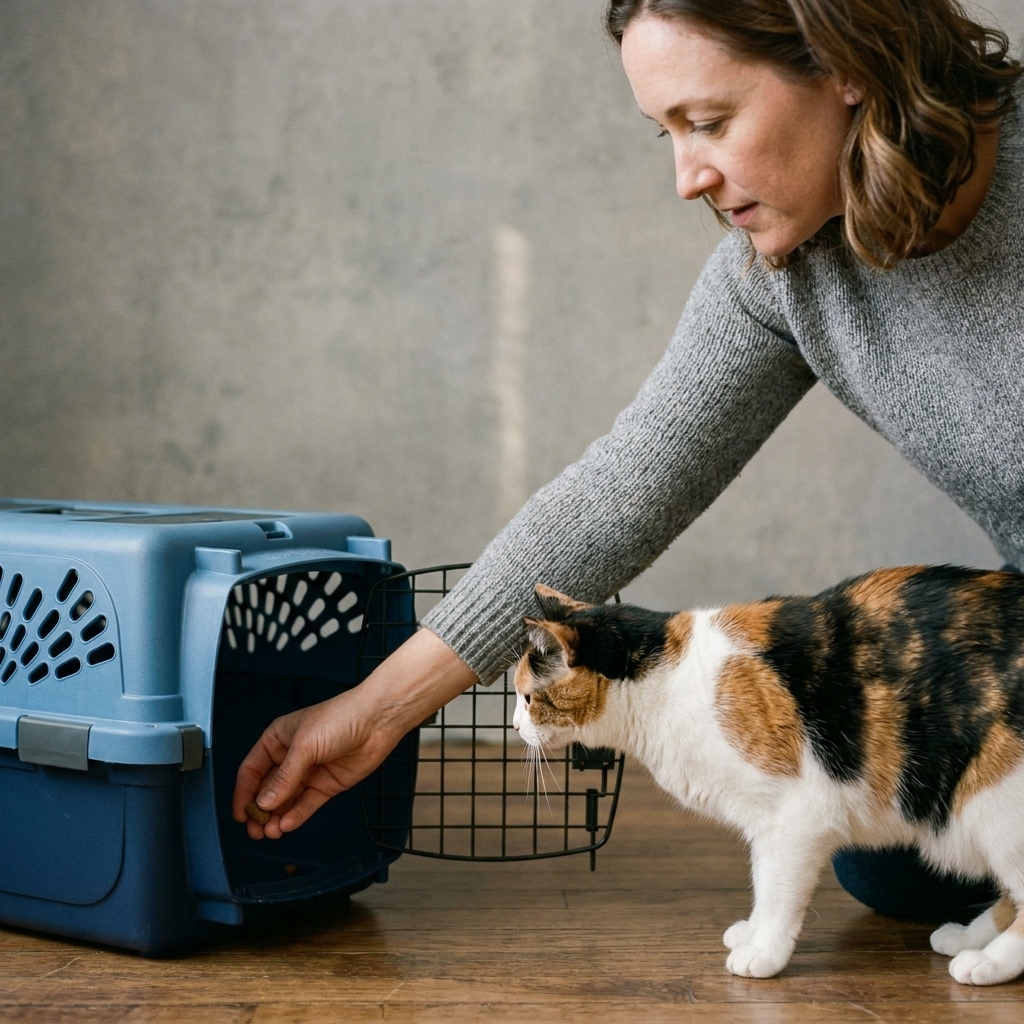
Keep the carrier in a living area with the door open and a soft blanket inside. Toss a few treats in randomly. Let your cat discover that the carrier is not a trap.
Practice short sessions
Close the door for a few seconds while your cat eats a treat, then open it. Build slowly. We are aiming for neutral to positive, not “endure it and survive.”
Use familiar scents
A blanket that smells like home can help. Avoid strongly scented cleaners right before travel.
Consider calming support
For many cats, a feline facial pheromone spray on bedding (used as directed, and allowed to dry before your cat goes in) can take the edge off. If your cat panics hard, talk to your vet in advance about pre-visit medication options. For some cats, a prescribed anti-anxiety medication can turn a traumatic trip into a manageable one.
Load smart
- Top-loading carrier: Lower your cat in gently, chest supported, then close calmly.
- Front-loading carrier: If your cat resists, try turning the carrier upright and lowering them in rear-first. Many cats feel less threatened that way.
Common questions
Is a soft-sided carrier safe for the vet?
It can be, if your cat is not an escape artist and the carrier is structured with locking zippers and reinforced mesh. If your cat panics, claws, or has ever gotten out of a carrier before, a hard-sided carrier is the safer choice.
Are backpacks safer than carriers?
Backpacks are a type of soft-sided carrier. Some are excellent, many are not. If you use one, look for a firm base, strong mesh, locking zippers, and enough ventilation.
About those clear “bubble” backpacks: they are not automatically unsafe, but they can trap heat and limit airflow, especially in direct sun or warm rooms. If you use one, prioritize ventilation and shade, and do not linger in hot environments.
Should I secure the carrier in the car?
Yes whenever possible, but do it in a way that the carrier is designed for. Use dedicated seat belt loops or pass-throughs if your carrier has them, and tighten the belt to reduce sliding. Avoid improvising by looping a seat belt through a flimsy handle.
If you cannot secure it properly, placing the carrier on the floor behind the front seat (where it fits safely and will not slide) can reduce movement compared to a loose carrier on the seat. And if you want the highest level of protection, consider a crash-tested crate or carrier.
My cat pees in the carrier. Should I switch types?
Sometimes switching helps, but frequent carrier peeing is usually a stress signal. Line the carrier with an absorbent pee pad under a towel, and work on carrier comfort training between visits. If this is new or sudden, mention it to your vet to rule out urinary issues.
What about a cardboard carrier from the shelter?
Cardboard carriers are okay as a very short-term solution, but they are not ideal for frequent travel. They can soften if your cat has an accident, handles are not always reliable, and cats can chew through them. For routine vet care, invest in a sturdy carrier you can clean and reuse.
Any extra safety steps before travel?
Before big trips, confirm your cat’s ID is up to date. A breakaway collar with an ID tag helps, and a microchip with current contact info is even better. I also like slipping a small card on the carrier with a phone number in case of an emergency.
Bottom line
If you want one carrier that covers most situations, choose a hard-sided carrier with a metal door and a top-loading or removable-top design. It is the best blend of escape prevention, durability, and vet-friendliness.
If you travel by plane often or you walk to the vet, a high-quality structured soft-sided carrier can be a wonderful second carrier, especially for cats who are already comfortable with travel.
And whatever you choose, the single biggest “safety upgrade” you can make is carrier training. A cat who feels secure is a cat who is less likely to thrash, bolt, or turn every trip into an emergency.