Harness training is one of my favorite “slow and steady wins the race” projects. Done right, it can give an indoor cat safe outdoor enrichment without the risks of roaming. Done too fast, it can turn the harness into a sworn enemy and make you both miserable.
Below is the exact progression I use with foster cats and with my own two rescues, Clementine and Waffles: tiny steps, lots of choice, and a very clear rule that your cat sets the pace.
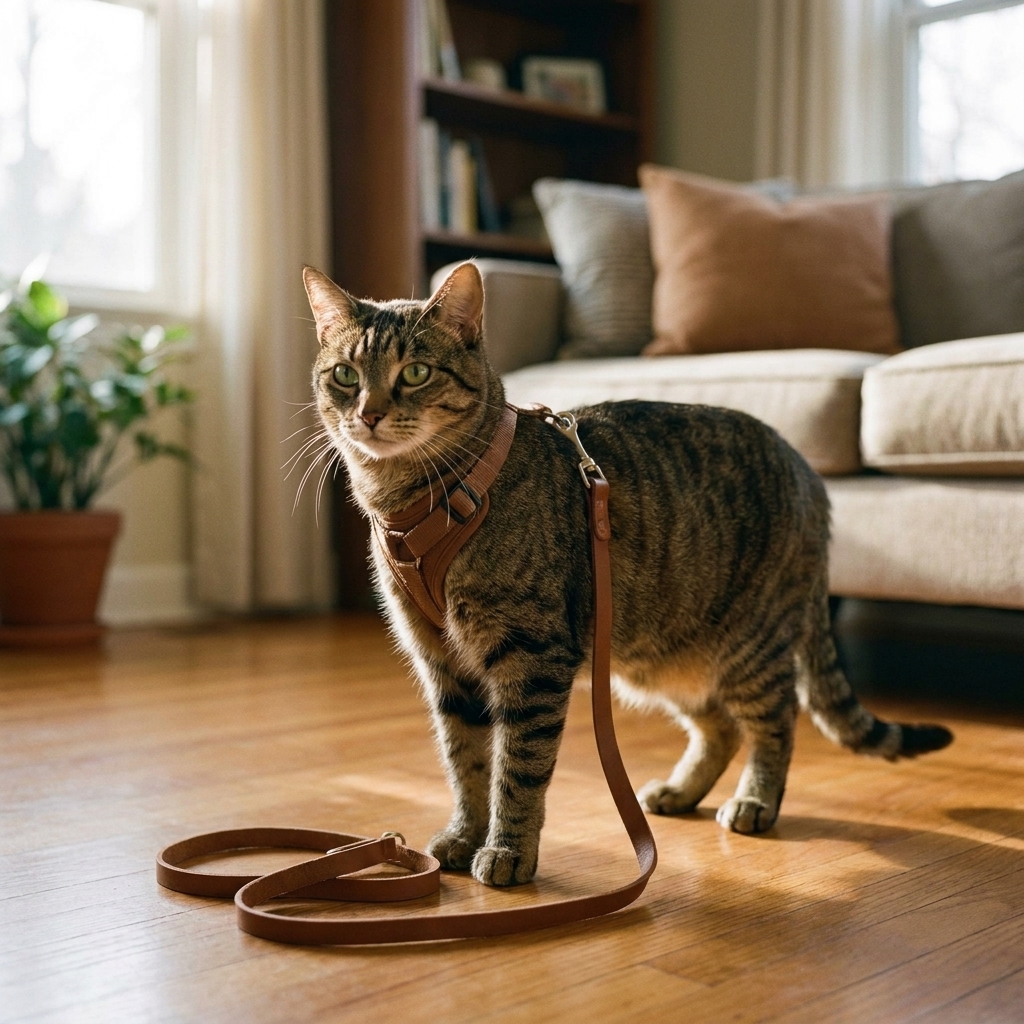
Before you start: is your cat a good candidate?
Many cats can learn to wear a harness, but not every cat will enjoy leash walks. Aim for comfort and confidence, not “going for miles.”
Good signs
- Curious and food-motivated, even if a little cautious.
- Comfortable being handled around shoulders and chest.
- Enjoys windows, bird watching, or patio time and recovers quickly from new sights and sounds.
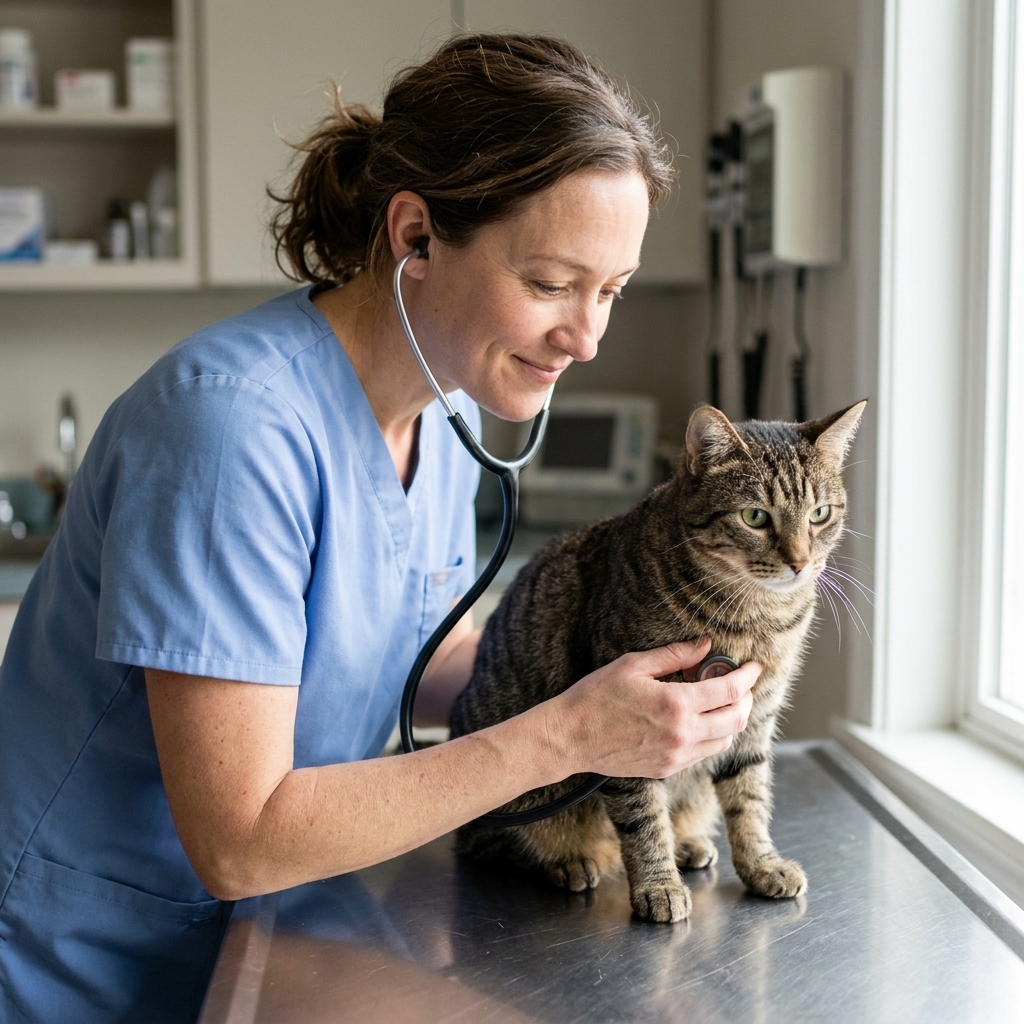
Press pause and ask your vet first if
- Your cat has breathing issues, significant arthritis, neck/back pain, or is recovering from surgery.
- Your cat is extremely fearful or panics when startled. We can still build confidence, but we may start with indoor enrichment instead of outdoor walks.
Gear that makes training easier (and safer)
Pick the right harness
Look for a well-fitting, escape-resistant cat harness. For most cats, I prefer:
- H-style harness (two loops with a strap between) for adjustability.
- Vest-style harness for cats who are very wiggly or sensitive to thin straps.
Skip anything that sits like a collar around the neck or puts pressure on the throat.
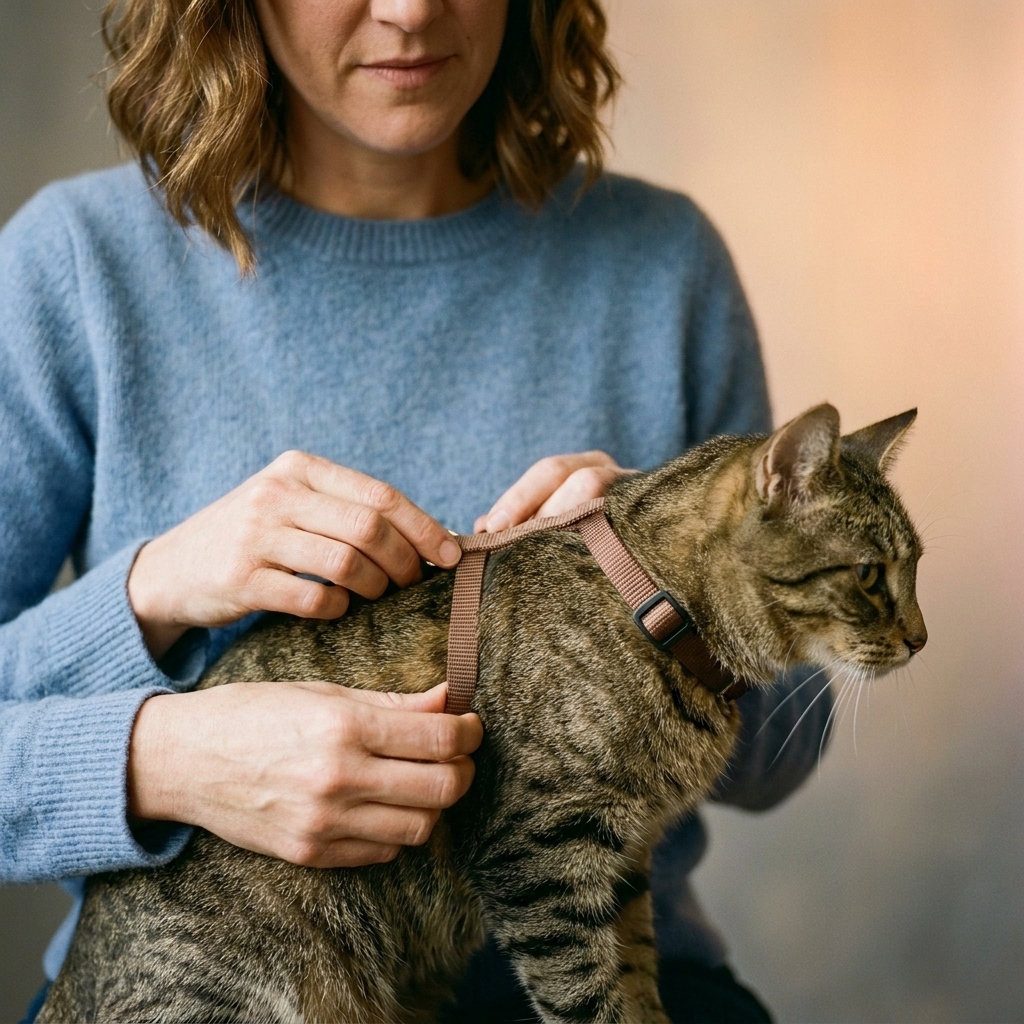
Fit checklist
- You can fit one to two fingers under straps, depending on your cat’s size.
- The harness does not rub behind the front legs.
- The back strap sits behind the shoulder blades, not up on the neck.
- Your cat can’t back out easily when they reverse.
Leash and extras
- Leash: 4 to 6 feet is ideal. Avoid retractable leashes early on because they can create sudden tension or jerks and can spook cats.
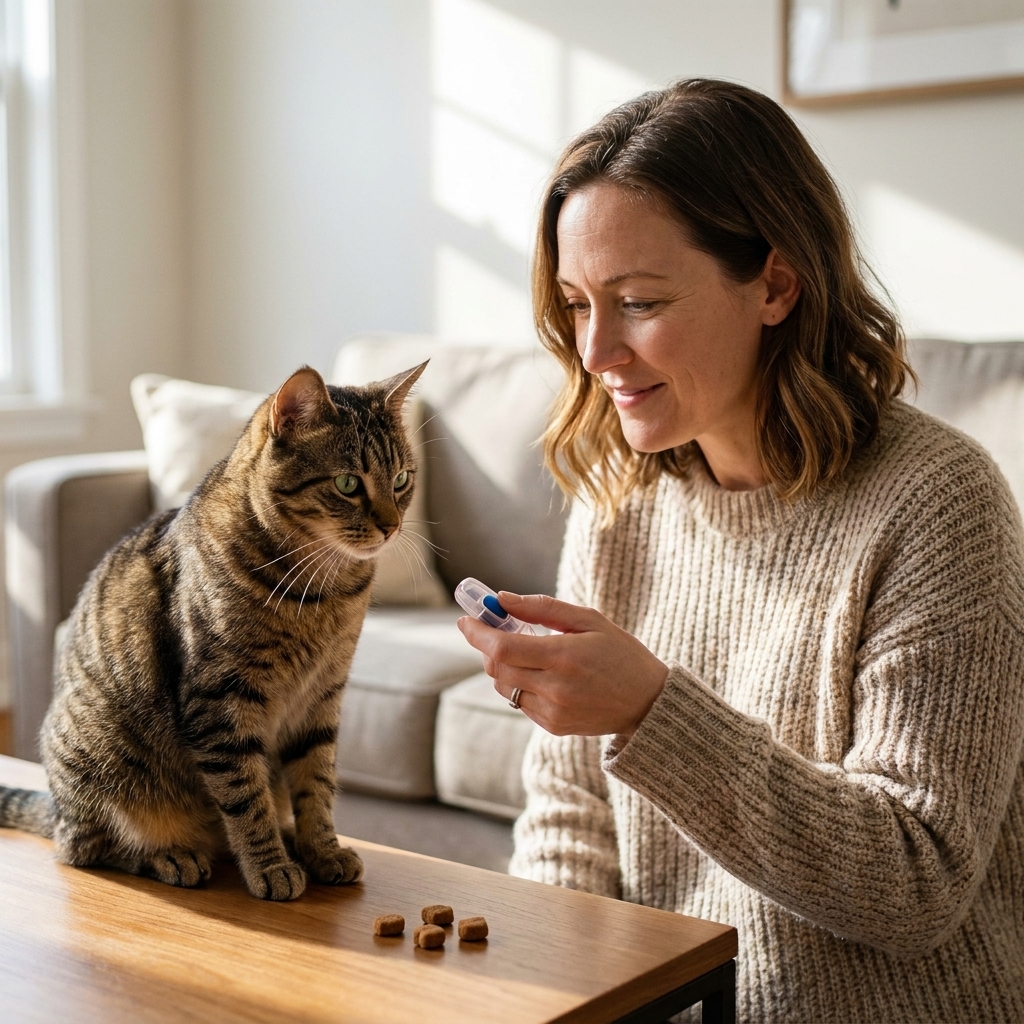
- High-value treats: Churu-style lickables, tiny bits of chicken, or whatever your cat would sell your soul for.
- Carrier: This is your “safe elevator” to and from the outside world.
- ID: Microchip plus a breakaway collar with an ID tag if your cat tolerates it. (The collar is not for leash attachment.) Make sure your microchip registration is current, and consider a tag on the harness too since breakaway collars can come off.
Your training rules (the ones that prevent drama)
- Work under threshold: if your cat freezes, flattens their ears, flicks their tail hard, pants, or bolts, the step is too big.
- Short sessions: 30 seconds to 3 minutes is plenty at first. End early, end happy.
- One new thing at a time: harness first, then leash, then door, then outside.
- No chasing, no wrestling: if you have to “catch” your cat to put the harness on, we’re not ready.
- Pair with good stuff: treats, play, brushies, or dinner. The harness predicts a party.
Step-by-step: harness to leash walks
Step 1: Let the harness become boring (2 to 7 days)
Place the harness near your cat’s favorite hangout, not hiding behind your back like a sneak attack.
- Set it on the floor several feet away.
- When your cat looks at it or approaches it, calmly toss a treat near the harness.
- Gradually reward for sniffing and stepping closer.
Goal: your cat can sniff the harness with relaxed body language.
Step 2: “Harness equals snacks” without wearing it (2 to 5 days)
Pick up the harness, then immediately deliver a treat. Put it down. Repeat.
- Touch the harness gently to your cat’s shoulder for one second, treat, remove.
- Work up to draping it across their back briefly, treat, remove.
Goal: harness contact makes your cat lean in, not pull away.
Step 3: Put it on, then take it right off (several sessions)
This is the moment many people accidentally rush. Keep it ridiculously easy.
- Clip the harness on.
- Feed a lickable treat or offer a favorite toy for 5 to 15 seconds.
- Unclip and end the session.
Goal: your cat stays relaxed while wearing it briefly.
Step 4: Build calm “wear time” indoors (1 to 3 weeks)
Increase duration in tiny increments.
- Start with 30 to 60 seconds, then 2 minutes, then 5.
- Use low-key activities: treat scatter, licking, gentle play.
- Supervise the entire time. Harnesses can snag on furniture.
If your cat does the classic “statue flop,” don’t laugh and leave it on hoping they’ll get over it. Go back a step and make the time shorter with better rewards. Many cats need a few days to learn they can move normally in a harness.
Goal: your cat walks, turns, and plays indoors while harnessed.
Step 5: Add the leash (3 to 10 days)
Start in a clutter-free room. Attach the leash and let it drag while you supervise so your cat gets used to the sensation and sound. Never do this outdoors, and never leave your cat unattended.
- Keep the leash lightweight.
- Prevent tangles around legs or furniture.
- Reward any relaxed movement with treats.
Next, pick up the leash and follow your cat rather than steering them. Think of it as “leash accompaniment,” not “leash control.”
Goal: your cat moves comfortably with the leash attached and you holding the end loosely.
Step 6: Practice near the door (a few sessions)
Doors are exciting and scary at the same time. We want calm.
- Harness on, leash on, then hang out several feet from the door and treat.
- Touch the doorknob, treat.
- Crack the door open one inch, treat, close it.
Goal: your cat remains curious and relaxed as the door opens and closes.
Step 7: First outdoor session: think “porch picnic,” not “walk” (1 to 10 minutes)
For most cats, the first outdoor experience should be tiny and controlled.
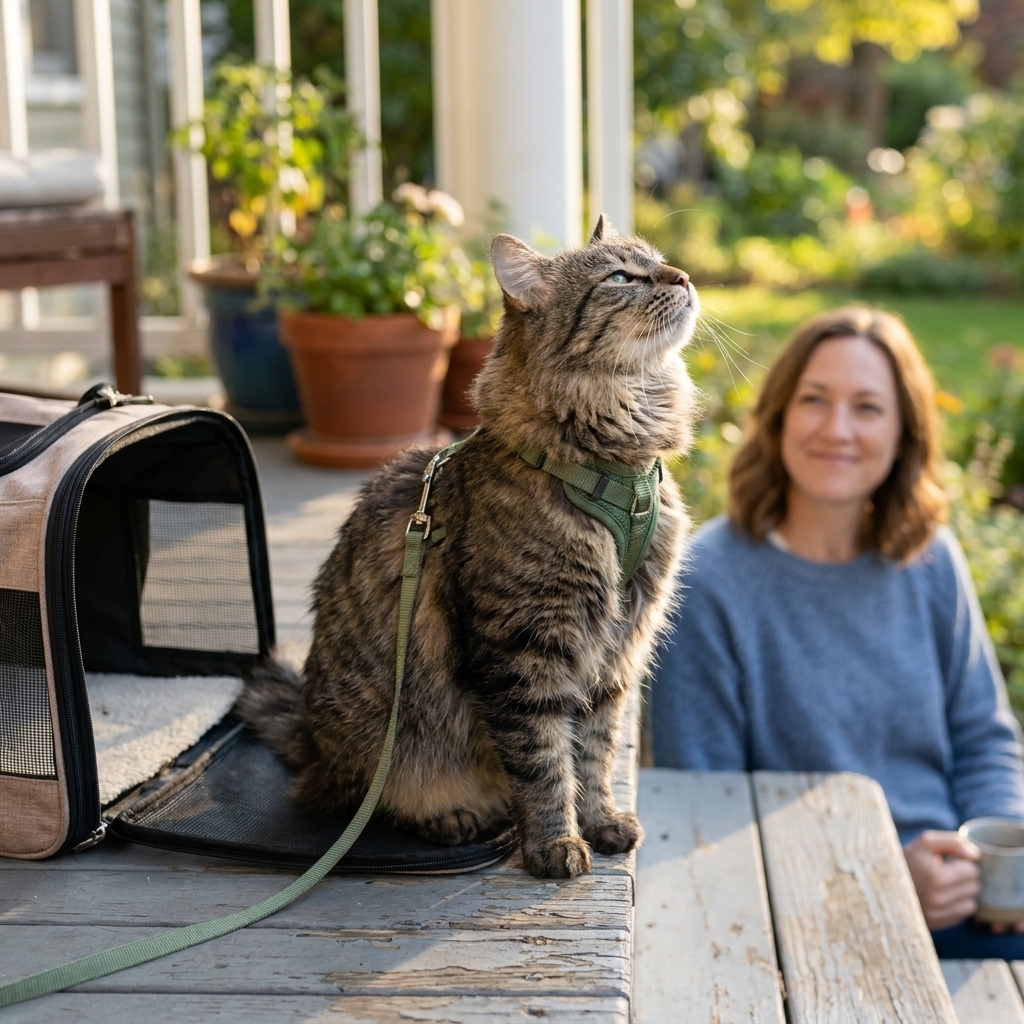
- Carry your cat outside in a carrier, then clip the leash before opening the carrier.
- Choose a quiet time of day with minimal dogs, people, and traffic noise.
- Sit with your cat and let them observe. Reward calm looking and sniffing.
- If your cat wants back in the carrier, that’s a great choice. Let them.
Goal: your cat associates outside with safety and choice.
What a “walk” looks like for most cats
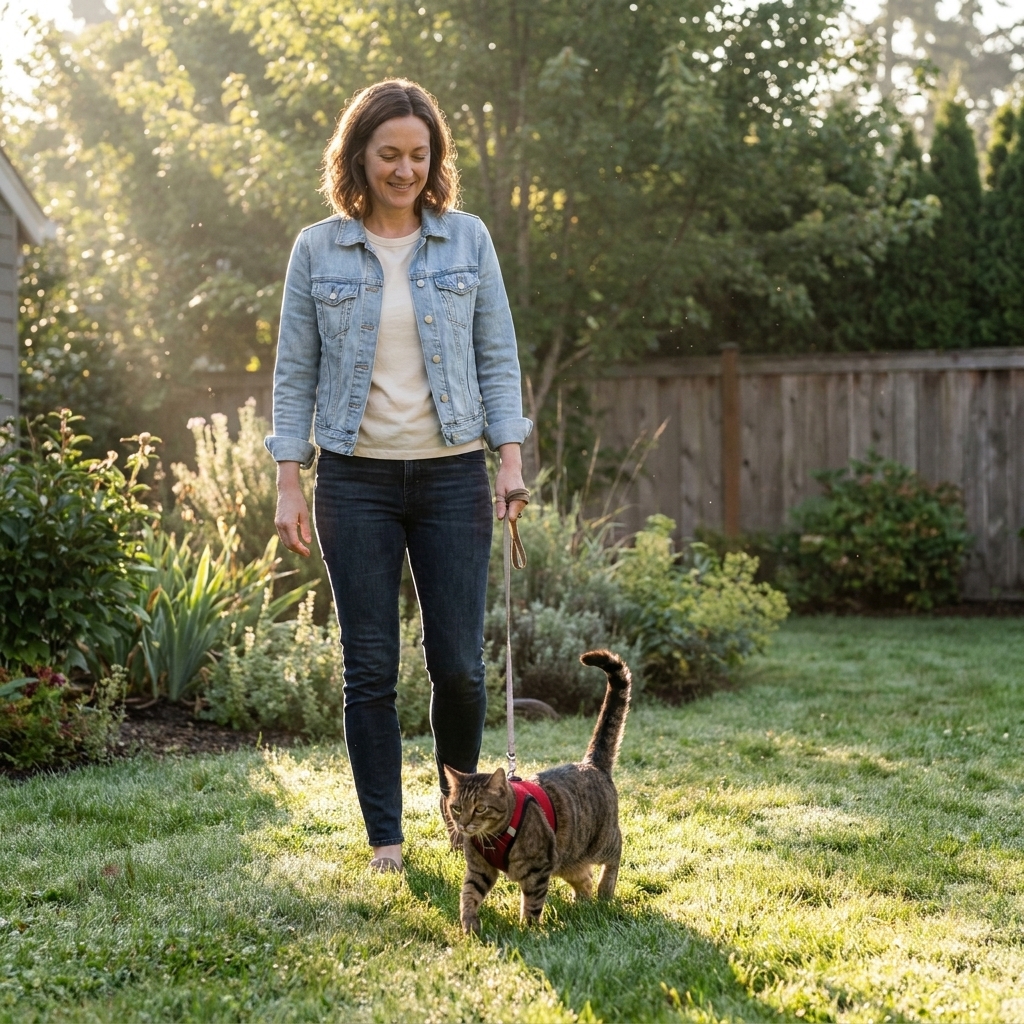
Leash walking with a cat is usually a slow wander, lots of sniffing, and many pauses. Some cats enjoy short routes along a quiet hallway, patio, or backyard perimeter. Others prefer staying close to you on a blanket and watching the world.
Let your cat lead. Your job is to keep the leash slack, prevent risky choices (like heading toward a barking dog), and end sessions before your cat hits sensory overload.
Safety non-negotiables
- Never tether and walk away. A startled cat can twist, injure themselves, or be attacked.
- Avoid dog-heavy areas. Even a friendly dog can frighten a cat into panic.
- Skip extreme heat and cold. Pavement can burn paws quickly, and cats can overheat or get chilled faster than many people expect.
- Watch for toxins. Avoid treated lawns, insecticides, rodent bait, and unknown plants.
- Prevent door-dashing habits. Always use a carrier to go outside, and avoid letting your cat “rush the door” to start sessions. This can help reduce door-dashing over time.
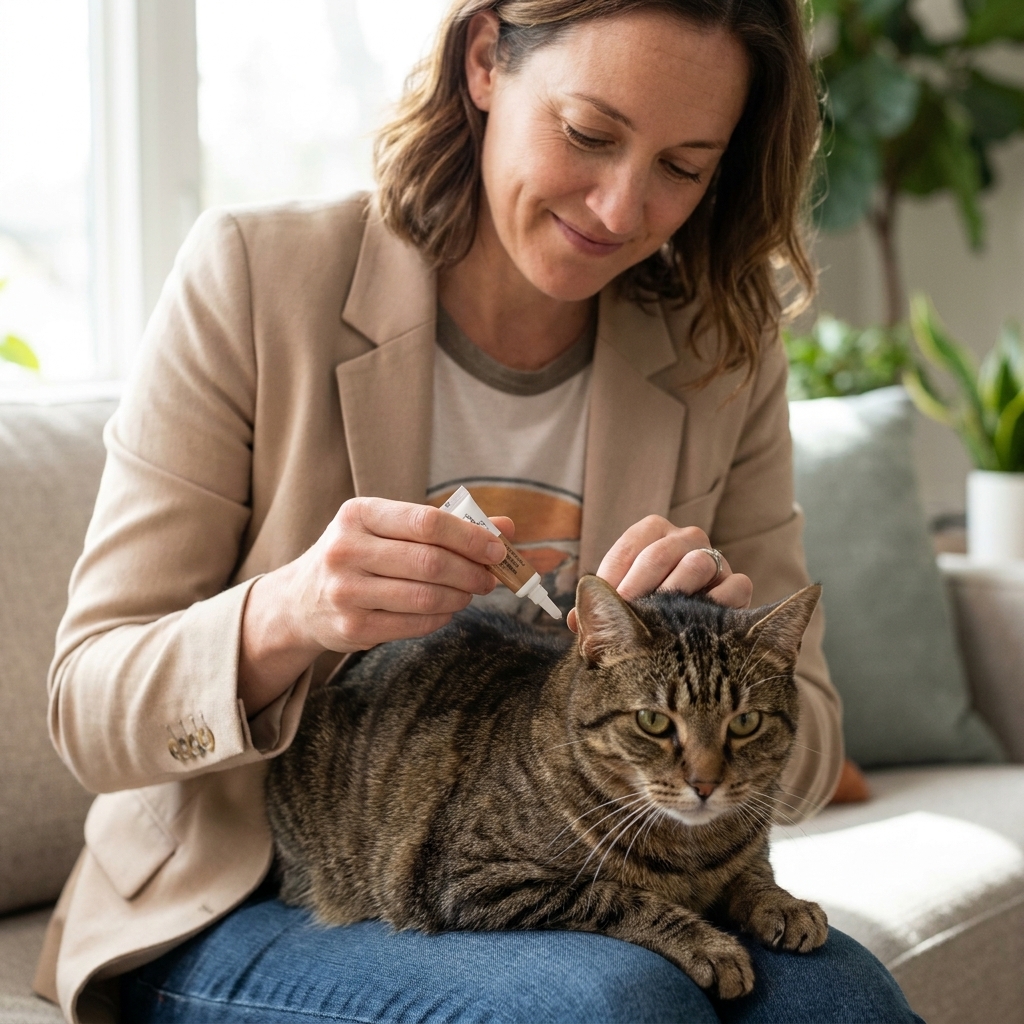
- Vaccines and parasite prevention matter. If your cat is going outside, talk with your vet about appropriate flea, tick, and worm prevention for your region. Outdoor time may also change vaccine recommendations (for example, FeLV in some cats and areas).
- Do a quick check after outdoor time. In tick-prone regions or if your cat brushed through tall grass, do a fast coat and paw check when you get back inside.
Troubleshooting common problems
My cat flops over and won’t move
This is usually a mix of surprise and uncertainty, not stubbornness. Try:
- Shorter wear time: 5 to 10 seconds, then treat and remove.
- Higher-value rewards, especially lickables.
- Practice right before mealtime, when motivation is higher.
- Double-check fit. Too tight behind the legs can cause the “statue.”
My cat backs out of the harness
- Re-check sizing and adjust both loops. In my experience, escapes usually happen when the neck or chest loop is too loose or the harness sits too far forward.
- Try a different style, especially a well-fitted vest harness for skinny, flexible cats.
- Keep the leash slack. Tension often triggers backing up.
My cat rolls and twists like they’re trying to remove it
That’s a stress signal. Go back to earlier steps and reward calm stillness. Also ensure nothing is pinching fur or rubbing armpits.
My cat panics outside
End the session immediately and calmly: guide them back into the carrier or pick them up securely if they tolerate it. Do not drag your cat by the leash. Next time, make the outside step smaller: quieter time of day, shorter duration, closer to the door, more treats, more choice.
My cat only wants to eat grass and won’t “walk”
Normal. Many cats experience the outdoors primarily through smell and taste. Manage it by:
- Choosing a grass-free area or laying down a blanket as a “station.”
- Teaching a simple cue like “this way” indoors with treats, then using it outside.
- Letting some sniffing and nibbling happen, while preventing plants you cannot identify.
A realistic timeline
Some confident, food-driven cats can go from “what is that?” to short outdoor sessions in 2 to 4 weeks. Many cats need 1 to 3 months. Shy cats may take longer, and that’s okay. And a small percentage of cats may never acclimate comfortably to a harness, even with patient training. Listen to the cat in front of you.
If you hit a plateau for more than a week, don’t push harder. Make the steps smaller, increase rewards, or shift your goal from “walks” to “harness comfort for porch time.” That still counts as a win.
FAQ
Can I leash train an adult cat?
Yes. Adults often do great because their routines are stable and you can be consistent. You may just need more time for desensitization than you would with a fearless kitten.
Is it safer to use a collar and leash?
No. Cats can slip out of collars easily, and collars can increase the risk of neck or throat injury if a cat bolts or lunges. A properly fitted cat harness is the safer option for leash work.
Should I carry my cat outside or let them walk out?
For most indoor cats, I recommend carrier in, carrier out. It can help reduce door-dashing and gives your cat an instant safe zone outdoors.
Can my cat be outside if they are not vaccinated?
Please talk with your vet first. Outdoor exposure increases risk for parasites and infectious diseases, and your vet can advise what protection makes sense based on your cat’s health and your area.
My favorite “success markers” to look for
- Your cat approaches when you pick up the harness.
- They eat treats and blink softly while wearing it.
- The leash stays mostly slack because your cat isn’t trying to flee.
- Outside, they sniff, pause, and explore, then willingly return to the carrier.
That’s the sweet spot: a cat who feels safe enough to be curious.