When you have multiple cats, giving medicine is rarely just about the medicine. It is about traffic control.
I learned this the hard way back when I was fostering litters for our local shelter. You would think the sick kitten would be the one begging for the medicated food. Nope. It was always the healthiest kitten in the room, acting like I had served a five-star buffet just for them. These days, Clementine (my tortie) is a professional gate crasher, and Waffles (my orange tabby) is… well, he tries his best and often licks the wrong bowl.
If you are trying to medicate one cat while others orbit the kitchen like tiny furry sharks, this guide will help you set up a routine that is safe, accurate, and as low-stress as possible for everyone.
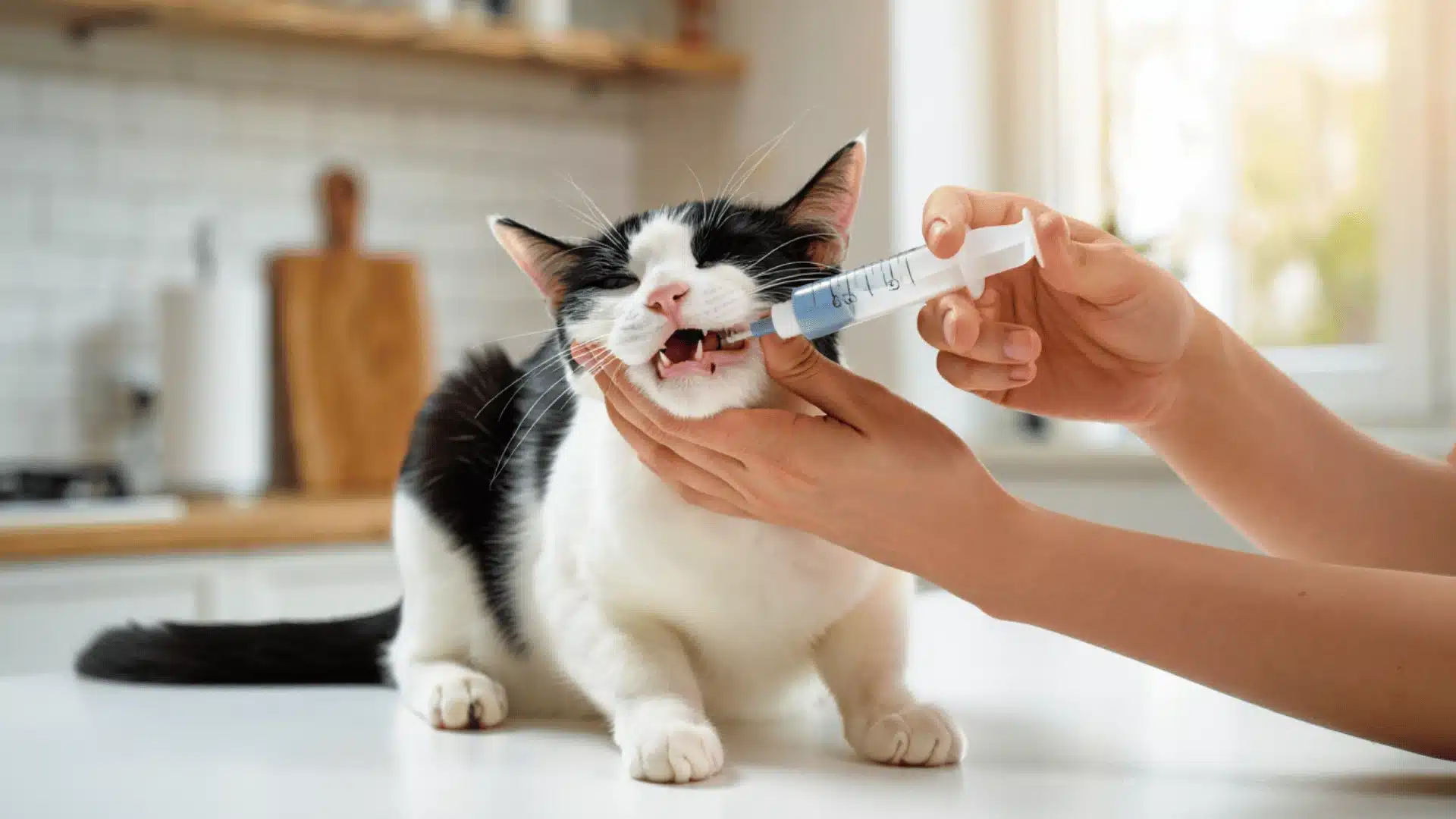
First: safety rules for multi-cat homes
Before we talk tactics, a few guardrails. These are the most common ways multi-cat medication routines go sideways.
- Never assume a shared meal is safe. The risk depends on the drug, the dose, and the other cat’s health, but even small amounts of some medications can be a big problem, especially for cats with kidney disease, heart disease, very small body size, or other meds on board.
- Do not “split the difference.” If you are not sure who ate the medicated bite, do not automatically redose. Call your vet or pharmacy for advice.
- Do not medicate around food conflict. If your cats squabble around meals, medication time can raise the tension. Set up more space than you think you need.
- Keep meds away from pets and kids. A knocked-over bottle in a curious-cat household is a real risk.
If you suspect the wrong-cat ingestion, an overdose, or a reaction, contact your veterinarian right away. If it is after hours, call an emergency clinic or a pet poison hotline recommended by your vet. Have the medication name and strength, the time it happened, your cat’s approximate weight, and a list of other meds or supplements ready.
Pick your med station first
Your goal is simple: one cat, one dose, zero interruptions. The best medication technique in the world can fail if another cat steals the medicated treat or spooks your patient mid-dose.
Choose a location that works
- Has a door (bathroom, bedroom, laundry room, office)
- Easy to clean (tile is great if you are using liquids)
- Minimal hiding spots (or at least ones you can block off)
- Good lighting so you can see the dose and your cat’s mouth
Set up a simple kit
I like to keep a small basket or bin in a cabinet, not out on the counter. Include:
- Medication(s) and dosing instructions
- Oral syringe if using liquid meds
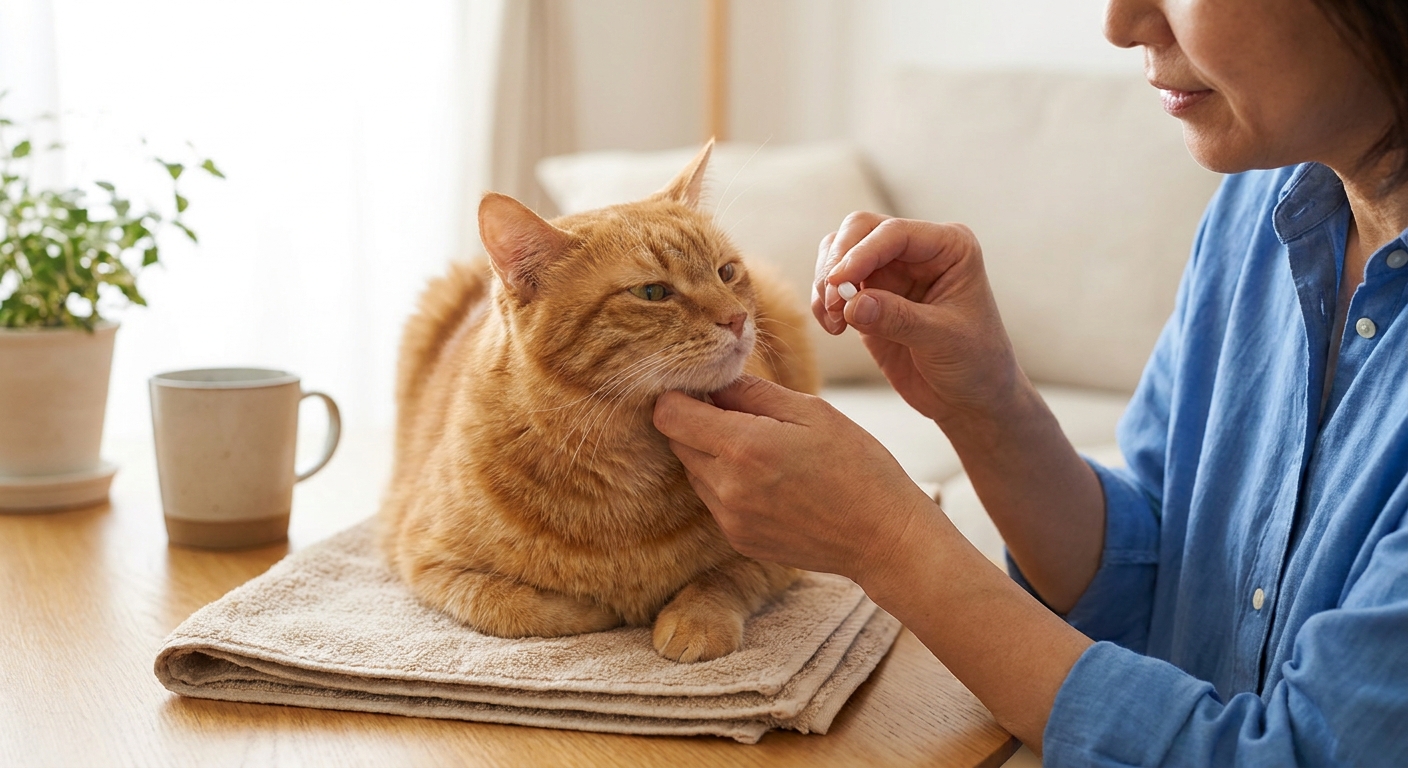
- Small towel (for gentle wrapping if needed)
- A few high-value treats or lickable puree
- A tiny dish or spoon for medicated food
- Paper towel and a little water for quick cleanup
Separate cats without a riot
The smoother you make the separation, the less your medicated cat will associate medicine with being chased and cornered.
Option A: patient goes first
This is my favorite because it feels kindest for the cat who is already not feeling great.
- Bring the patient to the med room with a treat trail or a favorite blanket.
- Close the door before you take out any food or meds.
- Give the medication, then follow with a reward.
- Let them hang out 3 to 10 minutes while you reset, so they are not immediately released into a crowd.
Option B: distract everyone else
Perfect for cats who hate being picked up.
- Set up two or more distraction stations in another area: kibble scatter, puzzle feeders, or separate treat plates.
- Once the non-patient cats are engaged, quietly close the patient into the med room or step in with them.
Option C: crates, gates, and carriers
Useful when you cannot close doors, but it takes some planning.
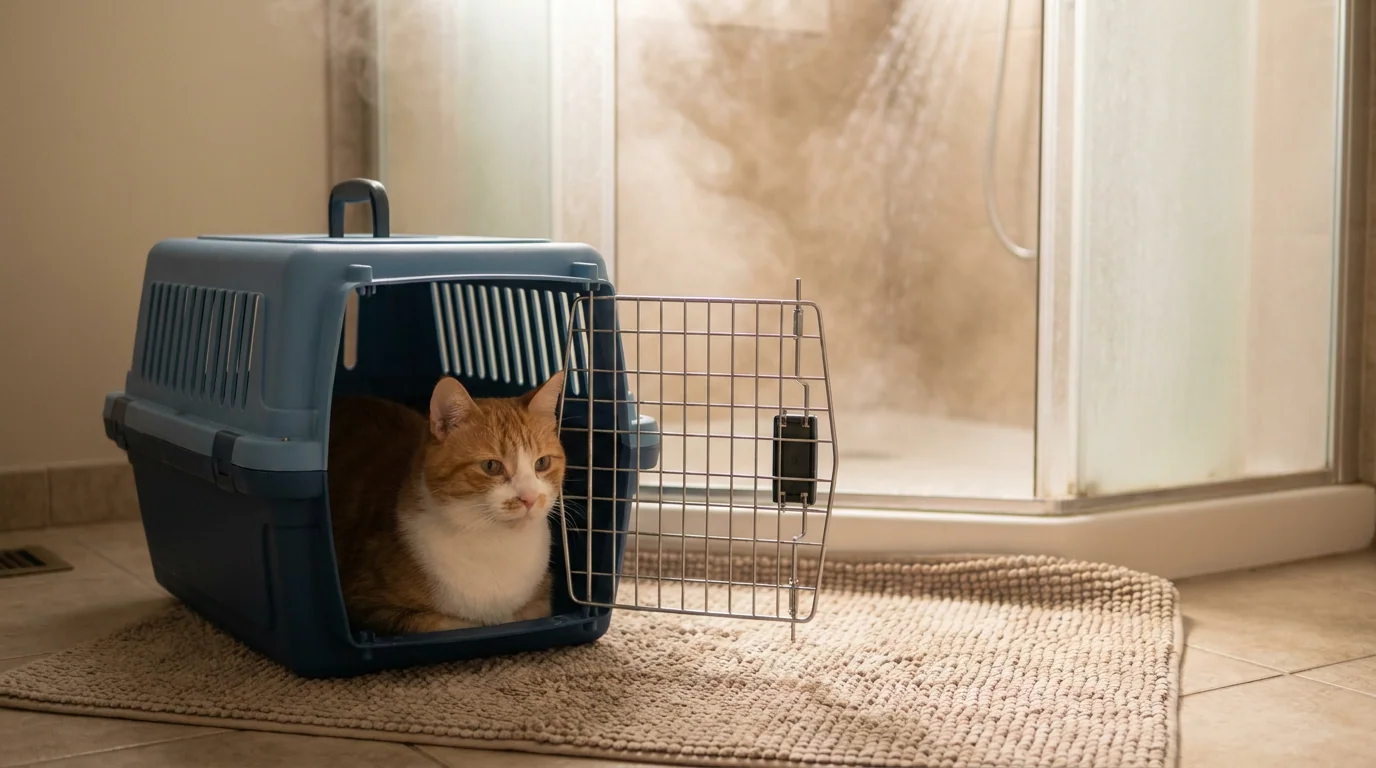
- Carrier in a quiet room: great for a patient who feels safer enclosed.
- Large dog crate: can work for longer separation with a bed and litter tray, but only with good ventilation, calm training, and supervision. If your cat panics in a crate, skip this option.
- Baby gate: only works if your cats will not jump it. Many cats absolutely will.
If your cats get stressed when separated, practice short door-closed sessions at non-med times with treats on both sides. Separation is a skill you can teach.
Make sure the right cat eats it
If your vet has okayed giving a medication in food, the multi-cat challenge is obvious: someone else will try to eat it. Here is how to stack the odds in your favor.
Check food safety first
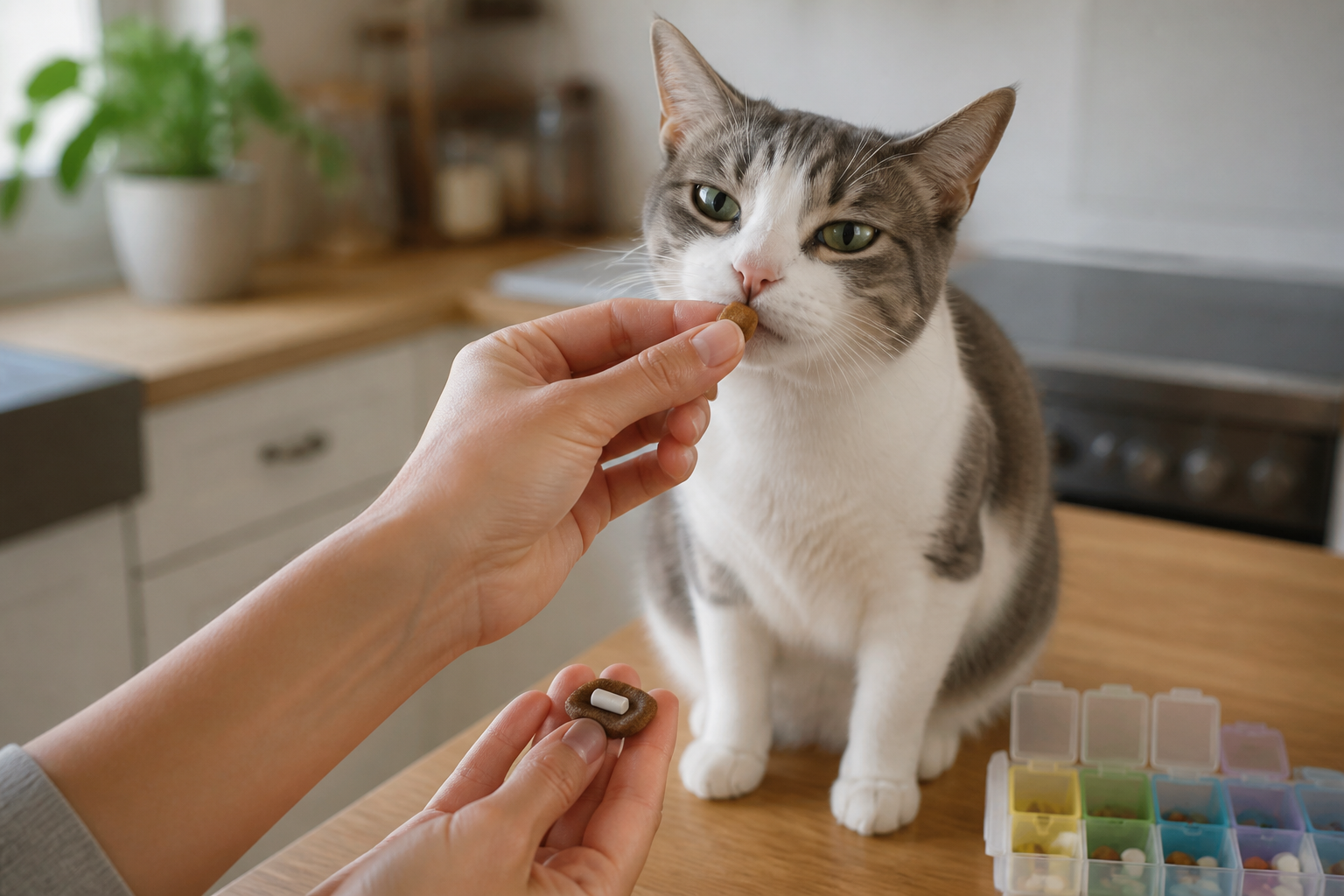
Not every medication can be mixed into food, crushed, or opened. Some must be given whole (like certain extended-release or enteric-coated tablets), and some taste so bitter that your cat will refuse the food and remember it forever. Before you crush, split, or hide anything, confirm with your vet or pharmacist that your exact medication can be given that way.
Use a micro-portion
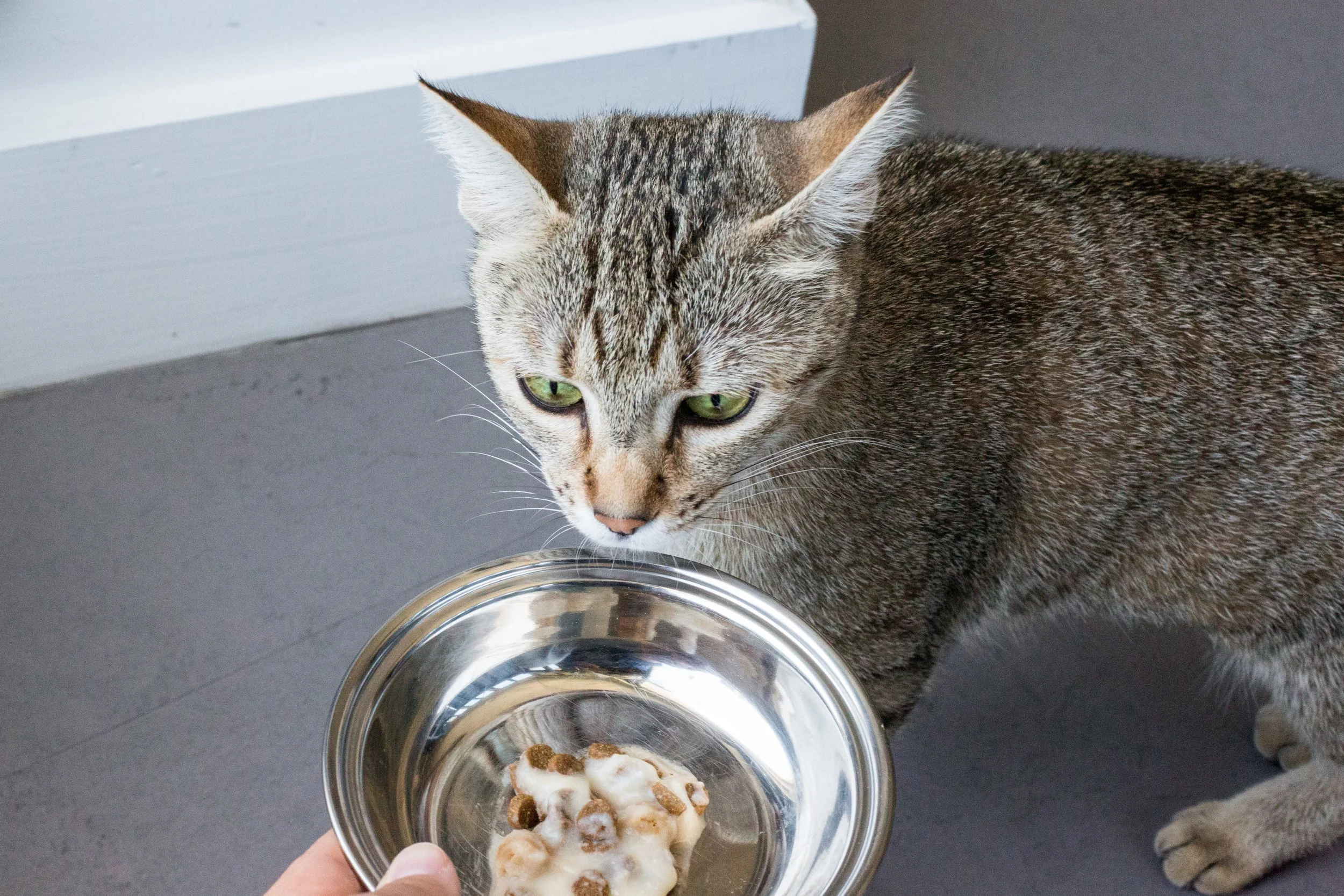
Mix the medicine into a very small amount of irresistible wet food, lickable puree, or a tiny bit of meat baby food that contains no onion or garlic. Check labels carefully, because many baby foods include onion powder. You also know your cat best, so avoid foods that upset their stomach or trigger sensitivities.
- Good goal: 1 to 2 teaspoons of food, then regular meal after.
- Avoid: mixing medicine into a full bowl. If they leave half, you cannot measure what they got.
Feed the medicated bite behind a door
Even cats who normally graze can learn a quick snack, then door opens routine. Close the door first, present the medicated bite second.
Watch the whole bite
Stay in the room and verify. Some cats are sneaky: they lick around the edges and leave the medicated center, or they walk away and return later when you are not looking.
If your cats swap bowls, change the system
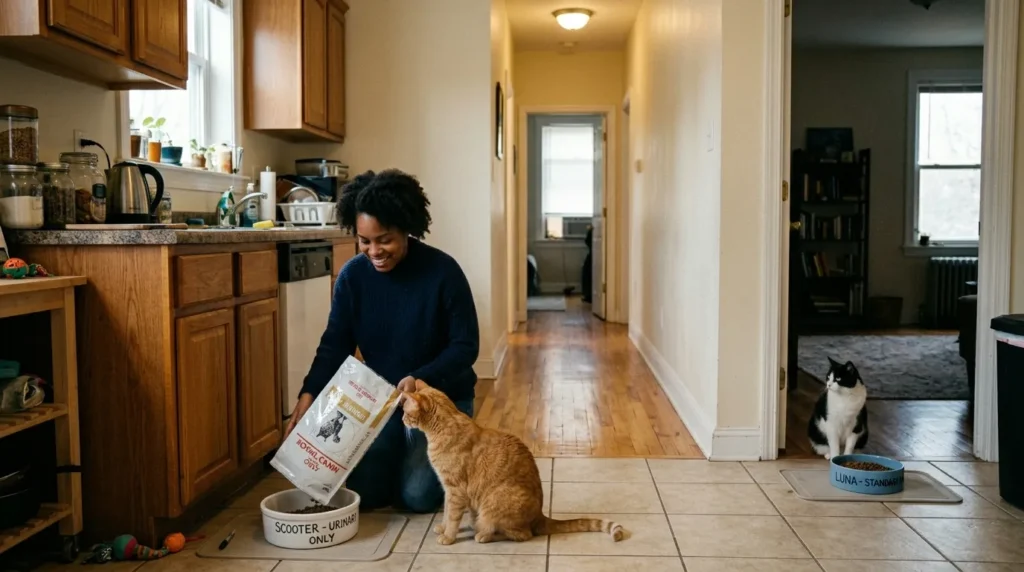
Bowl swapping is common in multi-cat homes and it is a big red flag during medication periods.
- Switch to timed meals temporarily instead of free-feeding.
- Feed in separate rooms with doors closed.
- Pick up bowls after 10 to 15 minutes so there is no opportunity for later bowl tourism.
If you are dealing with long-term meds in a determined household, microchip feeders (RFID bowls) can be a game changer. They take training, but they can reduce theft and stress once everyone learns the routine.
Pills: prevent dose theft
Pills add an extra twist: if the pill is dropped or spit out, another cat may eat it.
Contain the scene
- Medicate in a small room so you can find a dropped pill quickly.
- Keep the other cats fully out until you confirm the pill is swallowed.
- Have a flashlight handy if your flooring is dark.
Confirm the swallow
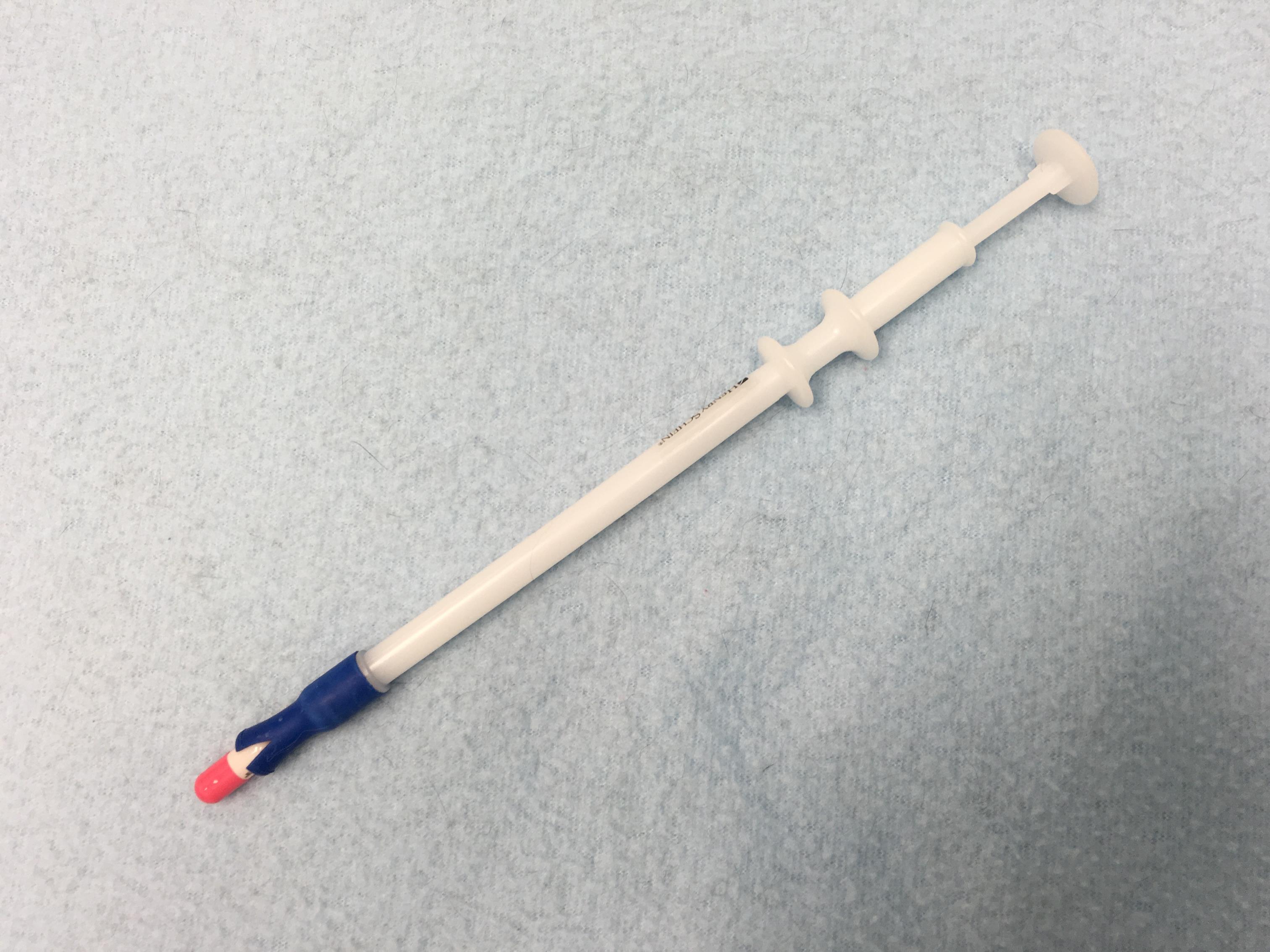
After giving the pill (by hand or with a pill popper), follow with a lickable treat if your vet approves. Some lip-licking is normal after pilling. What is more concerning is persistent drooling, pawing at the mouth, repeated gagging, or your cat backing away and doing a suspicious chew.
If your vet recommends water afterward, use only a tiny amount and go slowly into the cheek pocket. Do not force-squirt water into a resisting cat, and stop if your cat coughs, gags, or seems stressed. Aspiration is not something you want to mess with.
If a pill hits the floor
- Block other cats immediately (close the door, use your body as a barrier).
- Pick up the pill even if you think it is probably fine.
- Wipe the spot with a damp paper towel if it is a medication that can leave residue.
- Call your vet if you are not sure whether to redose.
Liquid meds: accurate and less messy
Liquid medication can be easier in multi-cat homes because you can deliver a precise dose directly. It can also get messy fast if your cat flings their head mid-syringe.
Set up to succeed
- Pre-draw the dose with the door closed and other cats out.
- Wrap in a towel only if needed, and keep it gentle. Most cats do better with steady support than tight restraint.
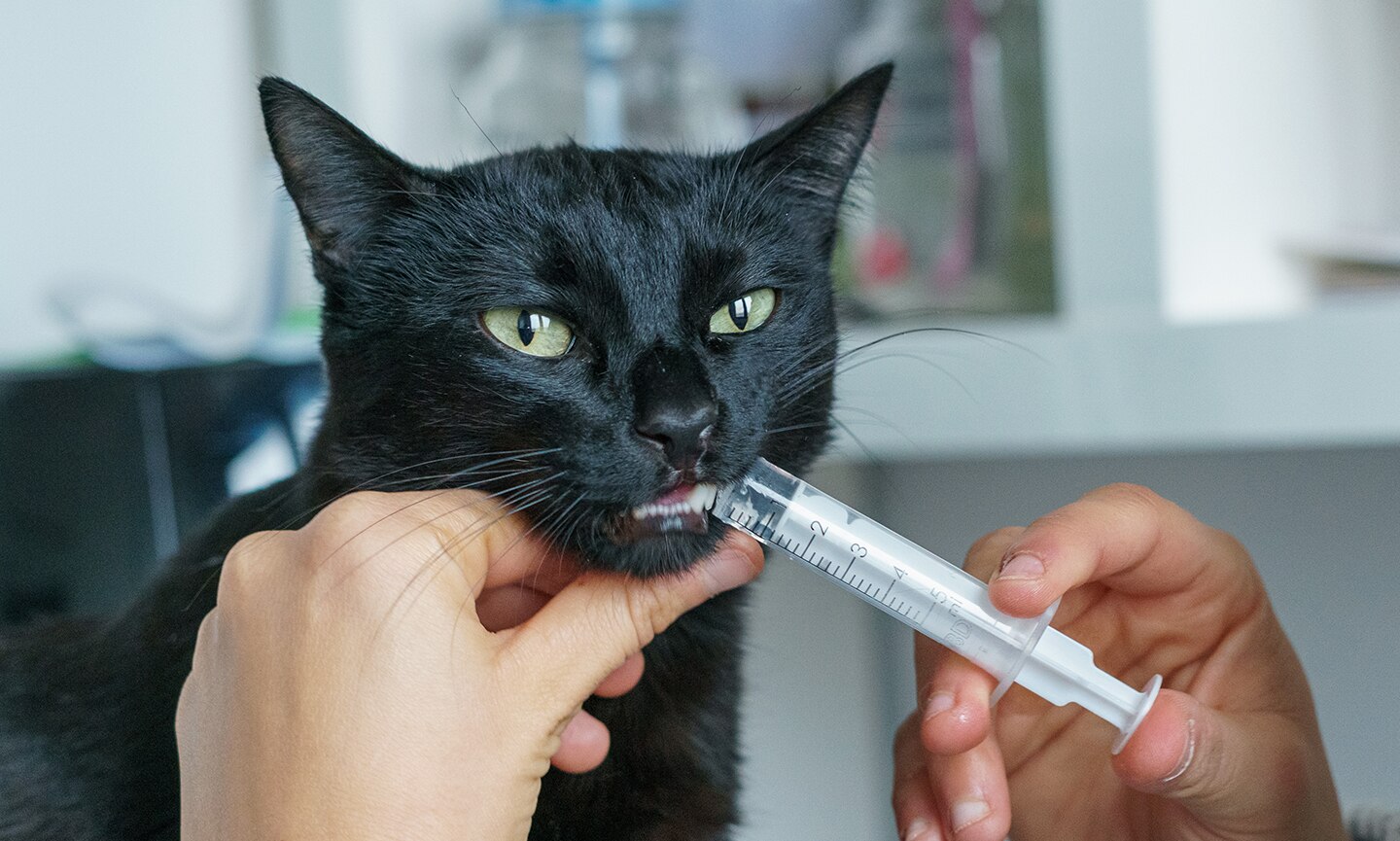
- Aim for the cheek pocket (between cheek and teeth), not straight back.
- Keep the head level and do not tilt it back. Squirt toward the throat increases the risk of choking or aspiration.
- Go slowly so your cat can swallow.
Stop other cats from licking spills
If medication drips onto fur, paws, or the floor, clean it right away and keep other cats out until you do. Many cats will groom each other, and you do not want the wrong cat ingesting residue.
Keep it positive
In multi-cat homes, the emotional ripple effect is real. One cat getting chased into a room twice a day can make the whole group tense. The goal is calm, predictable, and even a little boring.
Use everybody gets something timing
Right after the patient is medicated and rewarded, give the other cats a small treat or a few minutes of play. Not because they are owed it, but because it prevents jealousy and helps your medicated cat rejoin the group without drama.
Protect the relationship
- Approach slowly and pick consistent cues (same room, same phrase, same treat afterward).
- Do not only touch them for meds. Add a few gentle pets or a short grooming session at other times of day.
- End with comfort. A warm bed, window perch time, or quiet cuddle if your cat enjoys it.
If other cats guard the med room
This happens, especially when medication is hidden in fancy food.
- Rotate where you do medication (bathroom one week, office the next) if possible.
- Feed high-value treats to non-patient cats far away from the med room door.
- Consider a white-noise machine outside the door if hallway ambushing becomes a habit.
Labeling and storage
Multi-pet homes are busy. The more clearly you organize medication, the fewer mistakes you will make when you are tired or rushing.
Label like a pet sitter is helping
- Keep medications in the original container with the prescription label.
- If you use multiple meds, add a simple piece of tape to the bottle top with the cat’s name in bold marker.
- If you pre-load oral syringes (only if your vet or pharmacist says it is acceptable for that medication), label each syringe with cat name and dose time using tape on the barrel. Do not block measurement markings.
Use a dedicated bin, up high, closed
- Store meds in a lidded container in a cabinet, not on the counter.
- Keep them separate from treats so you never grab the wrong item in a hurry.
- If the medication needs refrigeration, use a clear bin on a high shelf in the fridge so it does not migrate behind leftovers.
Prevent helpful pet interference
Some cats will chew bottles, paw at blister packs, or knock over pill organizers. Dogs can be even faster. Treat medication like you would treat chocolate in a toddler house: put it away every time.
Common problems
My medicated cat refuses the separate room
- Start the room as a treat room first for a couple of days if you can.
- Feed a regular snack in there with the door open, then close it briefly, then reopen.
- Use a carrier as a safe shuttle for cats who prefer it.
My other cats scream outside the door
- Give them a distraction that lasts: puzzle feeder, scatter feeding, or a wand toy session with another human.
- Try medicating when the house is naturally calm, like after a play session or meal.
- Keep door-closed time short and consistent.
The patient spits out the pill, and I cannot find it
- Lock the other cats out and do a careful search before you let anyone in.
- Check under bath mats, along baseboards, and inside towels.
- Call your vet for redosing guidance.
The wrong cat licked the medicated food
Do not panic, but do not guess either. Put the medication away, separate the cats, and call your vet or an emergency clinic for next steps. Have the medication name, strength, and approximate amount ingested ready.
What should I watch for afterward?
Your vet will give you the most relevant list for the specific drug, but in general, keep an eye out for vomiting, severe lethargy, wobbliness, trouble breathing, facial swelling, or ongoing drooling and mouth pawing. If you see anything that worries you, call promptly and share the time of the dose, the amount given, and any change from your cat’s normal behavior.
Quick checklist
- Choose a small room with a door as your med station.
- Get all supplies ready before you bring the cat in.
- Separate first, medicate second, reward third.
- If using food, confirm with your vet that the med can be given that way, then mix into a tiny portion and watch it get fully eaten.
- Confirm pills are swallowed and clean any spills right away.
- Label medications clearly with the correct cat’s name.
- Store meds closed, up high, and away from treats.
Medication in a multi-cat home can feel like herding cats. Because it is. But once you build a routine that is predictable and calm, most households settle into it faster than you would expect. And your cat will pick up on your confidence, which is half the battle.