The first time I had to give eye drops to a foster kitten, I was sure I was going to poke an eyeball. Spoiler: I did not. What I did learn is that most “I can’t do this” moments come down to two things: positioning and pace. If you can keep your cat’s head steady for three seconds and stay calm yourself, you can get eye drops or ointment in safely.
This guide walks you through a low-stress technique that is commonly recommended by veterinarians for giving prescribed eye drops or eye ointment at home, plus what to do if your cat blinks the medication out. Always follow the pharmacy label and your veterinarian’s directions for dose and frequency, even if a friend’s cat had the same-looking bottle.
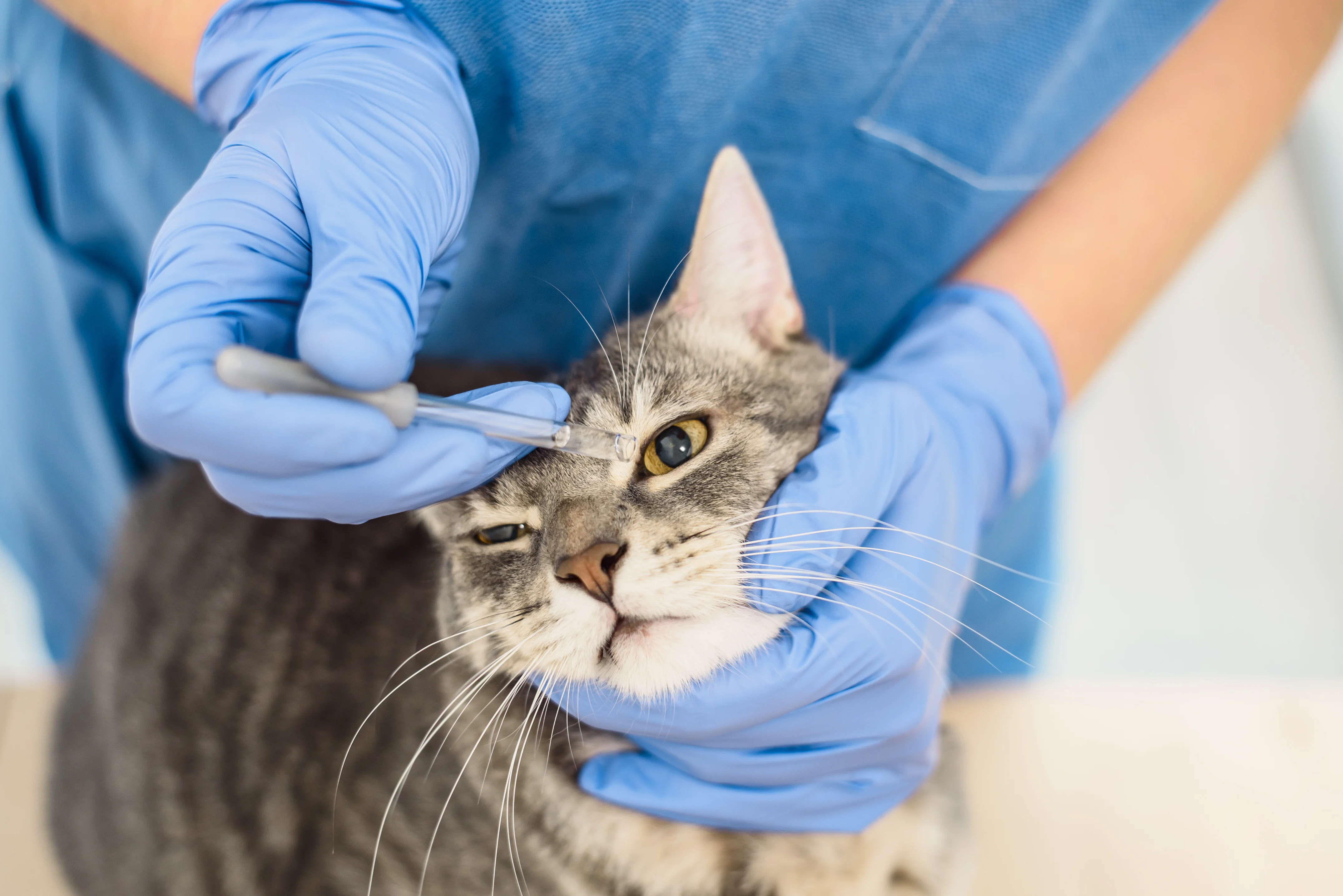
Before you start: set yourself up to succeed
Eye meds go best when you treat them like a tiny routine, not a wrestling match. The goal is smooth and quick, not perfect stillness for a full minute.
Gather your supplies
- Your cat’s prescribed eye drops or eye ointment
- A clean tissue or cotton round (for wiping discharge around the eye, not for touching the eyeball)
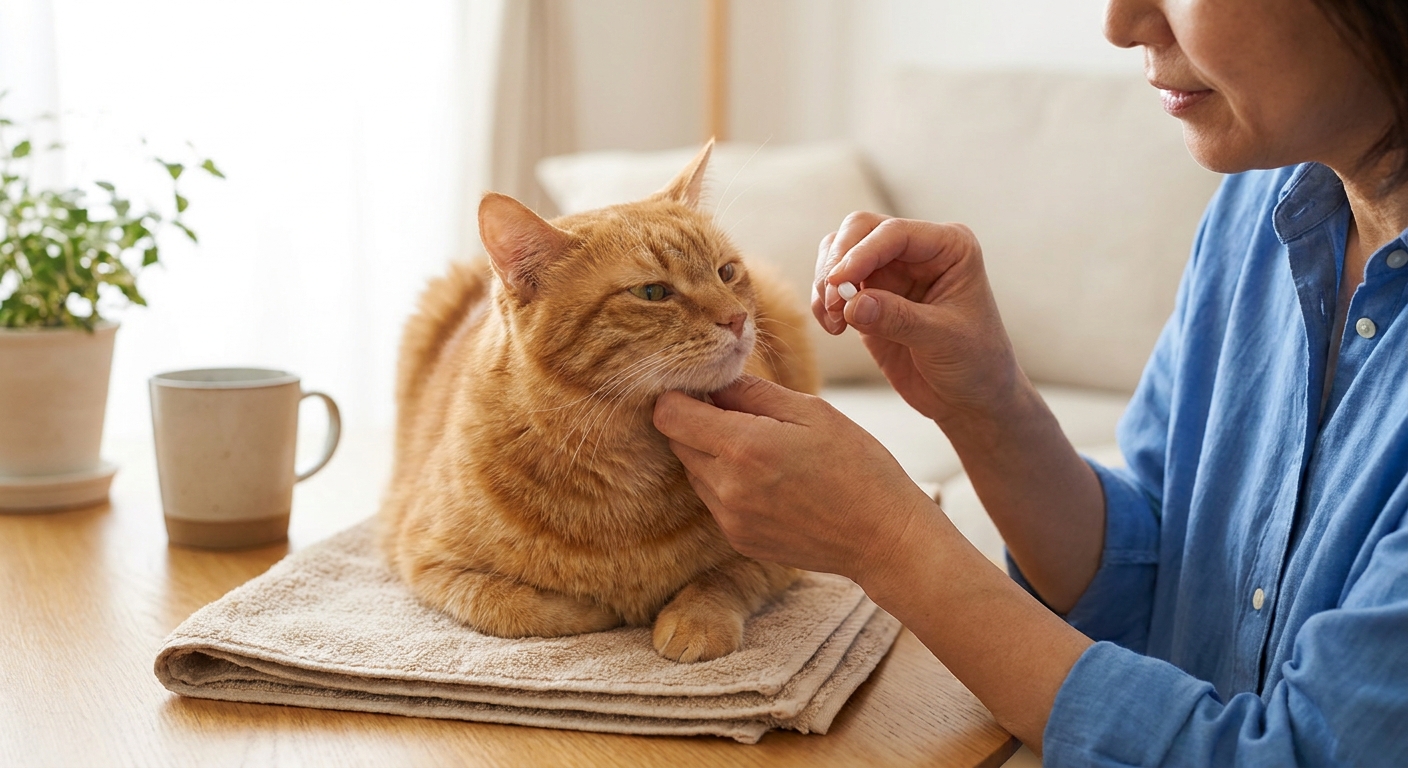
- A towel or small blanket (for traction and a gentle “purrito” if needed)
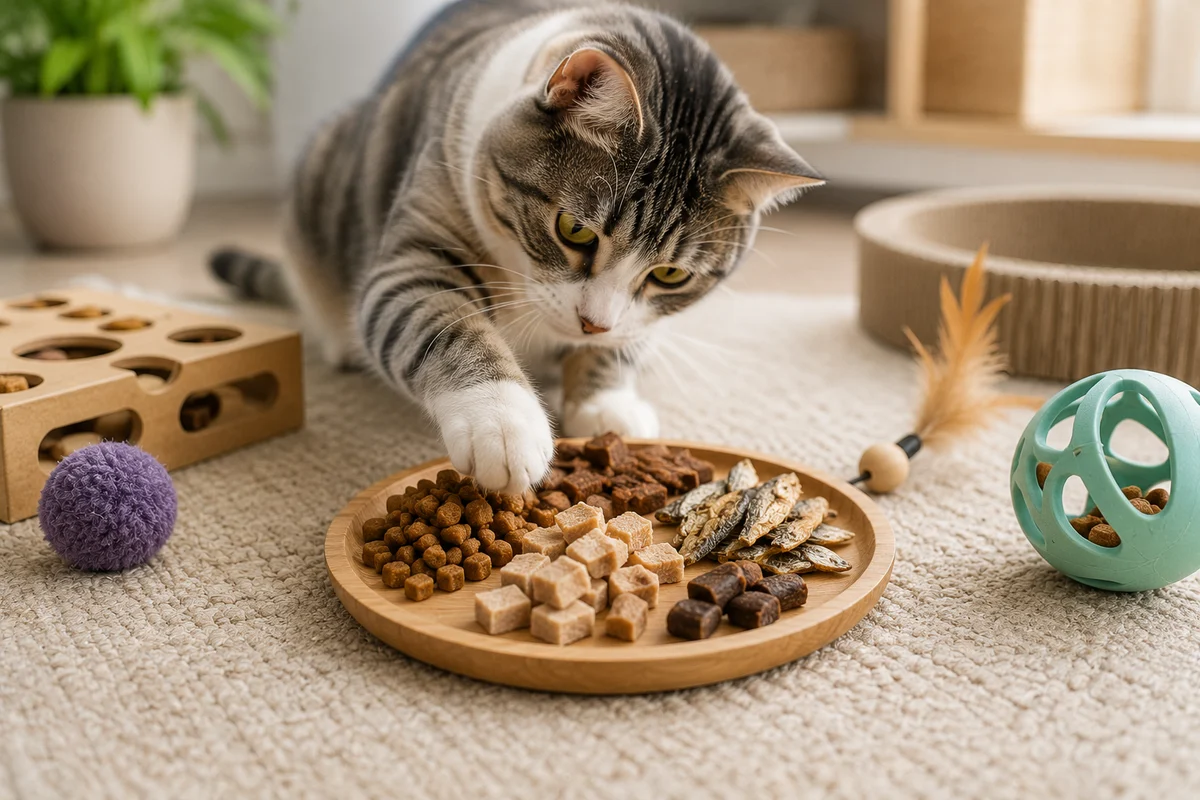
- Treats your cat loves, or a small meal if it fits your schedule
- Good light, ideally near a window or under a bright lamp
Check the label and inspect the medicine
- Confirm the correct eye(s) (left, right, or both) and the schedule.
- Shake only if the label says to.
- Look at the tip. It should be clean and intact. If the tip touched fur, skin, your fingers, or the eye last time, gently wipe the outside with a clean tissue to remove visible debris and then call your vet if you are concerned. Wiping helps, but it does not sterilize the applicator, and some situations call for replacing the medication.
- Do not rinse the tip under tap water unless your vet specifically instructed that for your product. Water can introduce germs. If you suspect contamination, your clinic is the best next call.
- Do not use expired medication or a bottle you cannot identify.
Wash your hands
This protects your cat’s eye and also keeps you from getting medication residue on your own skin.
Choose the right time and place
Pick a calm moment, not peak zoomies time. I often do eye meds right before a meal so the reward is built in. A waist-high surface can help save your back, but many cats do best on the floor where they feel secure.
Quick comfort tip: If the label says the medication should be refrigerated, check whether your veterinarian or the pharmacy label gives any guidance about warming it. Some cats tolerate drops better if the bottle is briefly held in your hand to take the chill off. Do not microwave it.
Trim your nails (optional, but helpful)
If you are using your fingers near your cat’s eyelids, short nails help you stay gentle and avoid accidental scratches.
How to hold your cat without a fight
You do not need to pin your cat down. You just need to reduce the escape routes long enough to aim safely.
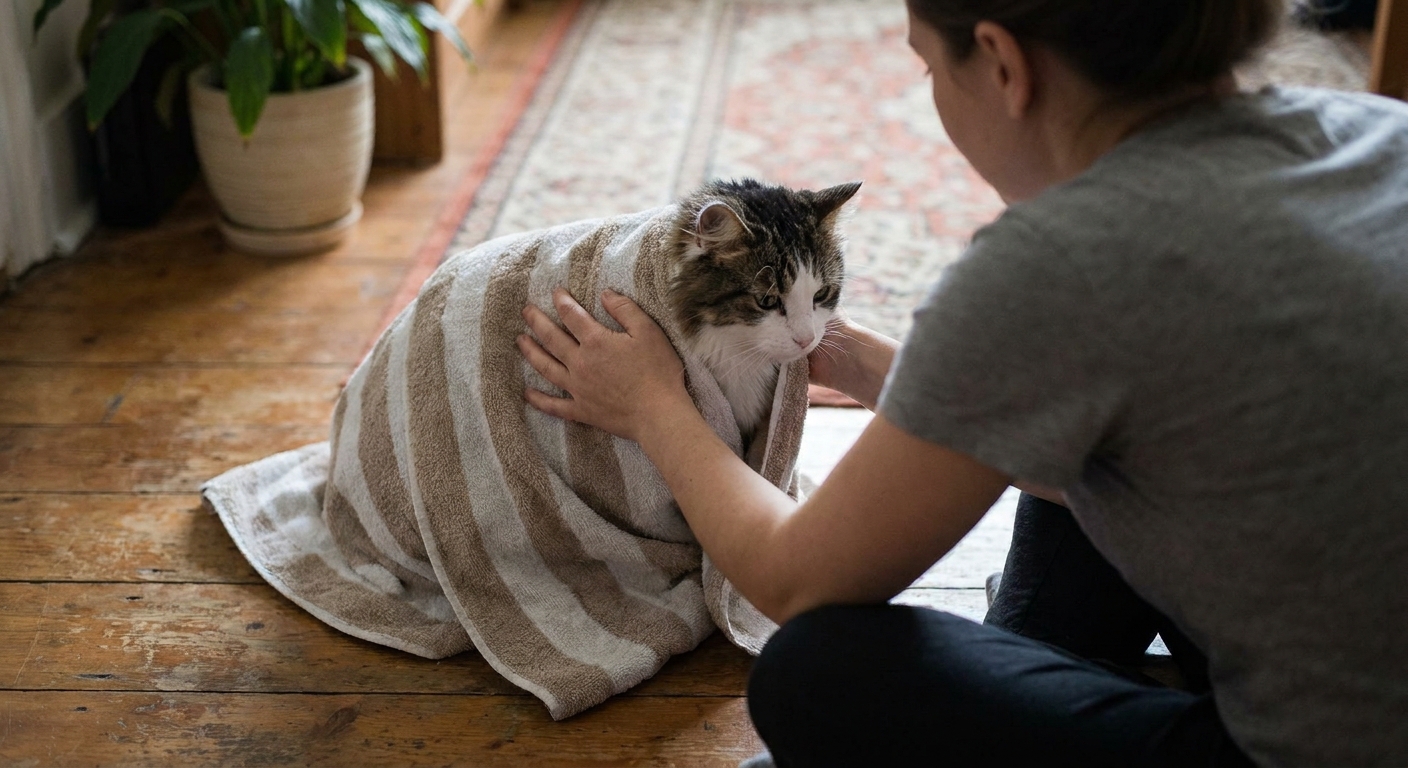
Option A: the towel burrito
- Lay a towel flat.
- Place your cat in the middle with their head near one short edge.
- Wrap one side snugly over their body, then the other, leaving the head out.
- Keep the front paws tucked inside if your cat tends to swipe.
Snug is good. Tight is not. You should be able to slip a finger under the towel at the chest.
Option B: the cuddle hold
Sit on the floor with your cat between your legs facing away from you, or on your lap with their side against your body. Keep your movements slow and boring. The calmer you are, the less dramatic this feels.
Option C: two-person teamwork
If your cat is stressed or you are nervous, recruit help. One person’s job is calm, steady head support and treats. The other applies the medication. Faster usually means less scary.
Step-by-step: giving your cat eye drops
For most cats, the easiest angle is from slightly above and behind the head, not straight on. Think “sneak it in like a raindrop,” not “aim a dart at an eyeball.”
- Position your cat using one of the holds above.
- With your non-dominant hand, steady the head and control the eyelids. Your fingers can rest on the bony rim around the eye, not on the eyeball itself.
- Tilt the chin slightly up. Many cats will naturally look upward when the chin is lifted, which exposes more of the eye.
- Use a finger to create a “pocket” by gently pulling down the lower eyelid, or lift the upper lid if that works better for your cat. Use the skin, not pressure on the eye.
- With your dominant hand, hold the bottle a short distance away, often about 1 to 2 inches. The key is that the tip must not touch eyelashes, fur, eyelids, or the eye surface. Tip contact can contaminate the bottle and can scratch the cornea.
- Drop the prescribed number of drops into the eye or into the lower-lid pocket. If your vet directed a single drop, one good drop is enough. More is not better and usually just rolls out.
- Let your cat blink. Blinking spreads the medication over the eye.
- Reward immediately with treats, praise, or a meal. The timing matters: reward right after the drop, not after you put the bottle away and clean up the counter.
Tip: If you are nervous about aiming, the lower-lid pocket is your best friend.
Step-by-step: giving your cat eye ointment
Ointment is thicker than drops, so it tends to stay put better, but it can feel weird to cats at first. Expect blinking and some mild squinting for a moment.
- Position and steady your cat just like with drops.
- Gently pull down the lower eyelid to make a pocket.
- Hold the tube close but do not touch the eye. Keep the tip clean and off the eyelashes.
- Squeeze a thin ribbon of ointment into the pocket, using only the amount your vet prescribed. A little goes a long way.
- Release the eyelid and let your cat blink. Blinking melts and spreads the ointment.
- Reward immediately.
If your cat’s vision looks temporarily blurry after ointment, that is common. They may walk a little cautiously for a minute. If your cat seems very painful, squints hard for a long time, or the eye looks worse after dosing, call your vet.
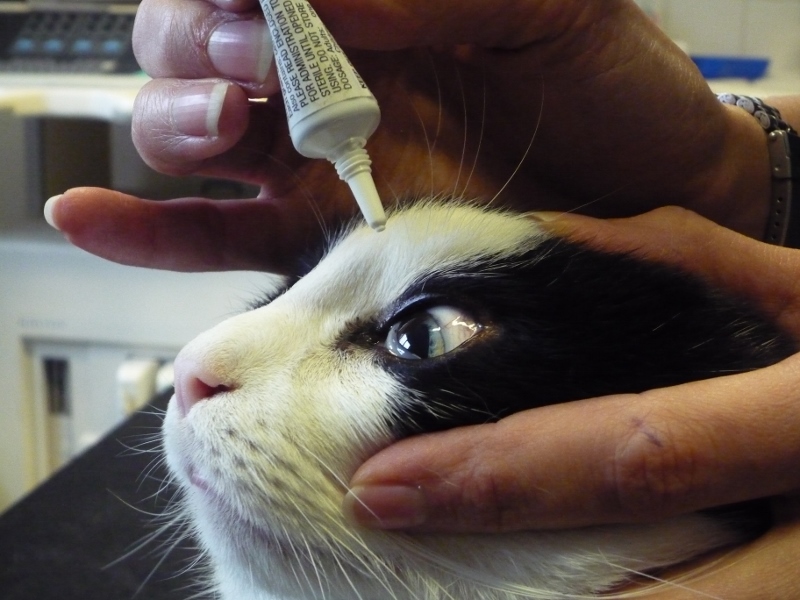
Keeping the bottle tip clean
Cat eyes are sensitive, and contaminated eye medication can make an infection harder to clear. These habits help keep the medicine safe:
- Never touch the tip to the eye, eyelids, lashes, fur, or your fingers.
- Cap it right away after use.
- Do not share eye medication between pets, even in the same home.
- Store it exactly as directed (some need refrigeration, some do not).
- If the tip touches anything, do not panic. Wipe the outside gently with a clean tissue, recap, and call your vet if you are worried about contamination. Wiping can remove gunk, but it cannot guarantee the medication stayed sterile, especially with active infections or corneal ulcers.
If your cat blinks the medicine out
This is one of the most common frustrations I hear, and it is usually fixable.
If it is eye drops
- If a drop lands on the closed eyelid and immediately runs down the face, you can usually try again right away with one more drop. Aim for the inner corner or the lower-lid pocket.
- If the drop clearly went into the open eye and then your cat blinked and a little fluid leaked out, that is normal. The eye can only hold so much. Do not keep adding more unless your veterinarian specifically instructed multiple drops.
- If you missed entirely multiple times, take a short break. Thirty seconds of calm is better than escalating into a full-body struggle.
If it is ointment
- If the ribbon lands on fur or whiskers, wipe the fur with a tissue and try again with a smaller amount.
- If the ointment went into the lower-lid pocket and your cat blinked it out onto the lid, do not keep reapplying over and over. Call your vet if you think your cat is not getting enough medication to treat the condition.
My favorite trick: apply the medicine from slightly behind the head so your cat is not watching the bottle approach. Many cats tolerate that angle better.
When you have multiple eye medications
It is common for cats to be prescribed more than one eye product. The order and spacing can affect how well they work.
- Ask your vet for the exact schedule if it is not on the label.
- In general, drops are often given before ointment because ointment can create a barrier that blocks watery drops. Do not assume though. Follow your clinic’s instructions.
- Wait time matters. Many veterinarians recommend waiting several minutes between products so the first one has time to absorb. If your label says a specific interval, use that.
- If both eyes need medication, many people find it easiest to do one eye, then the other, then start your timer for the next product (if there is one). Follow your vet’s directions if they gave you a different order.
If your cat fights hard
Some cats do not just “wiggle.” They panic. If you are getting swatted, your cat is open-mouth breathing, or the whole situation is escalating, it is okay to stop.
- Take a break and try again when everyone is calmer.
- Prevent injury. A scratched cornea (cat or human) is a bad time.
- Call your vet and ask for a quick demo, a different technique, or whether a different formulation is available.
- Ask about anxiety help if dosing has to happen for days and your cat is truly distressed. Your vet can tell you if pre-visit or at-home calming medications are appropriate.
What not to do
- Do not use human eye drops unless your veterinarian specifically prescribed them for your cat.
- Do not force the eye open if your cat is in significant pain or clamping the eyelids shut. That can be a sign of an ulcer or injury and needs veterinary guidance.
- Do not touch the eyeball with the bottle tip.
- Do not stop early just because the eye looks better, unless your vet tells you to. Infections and inflammation can rebound.
- Do not wipe inside the eye with cotton swabs or tissues. If you see discharge, wipe only the fur around the eye with a dampened cotton round, and ask your vet what is safe for your cat’s specific condition.
Make it easier next time: a simple reward routine
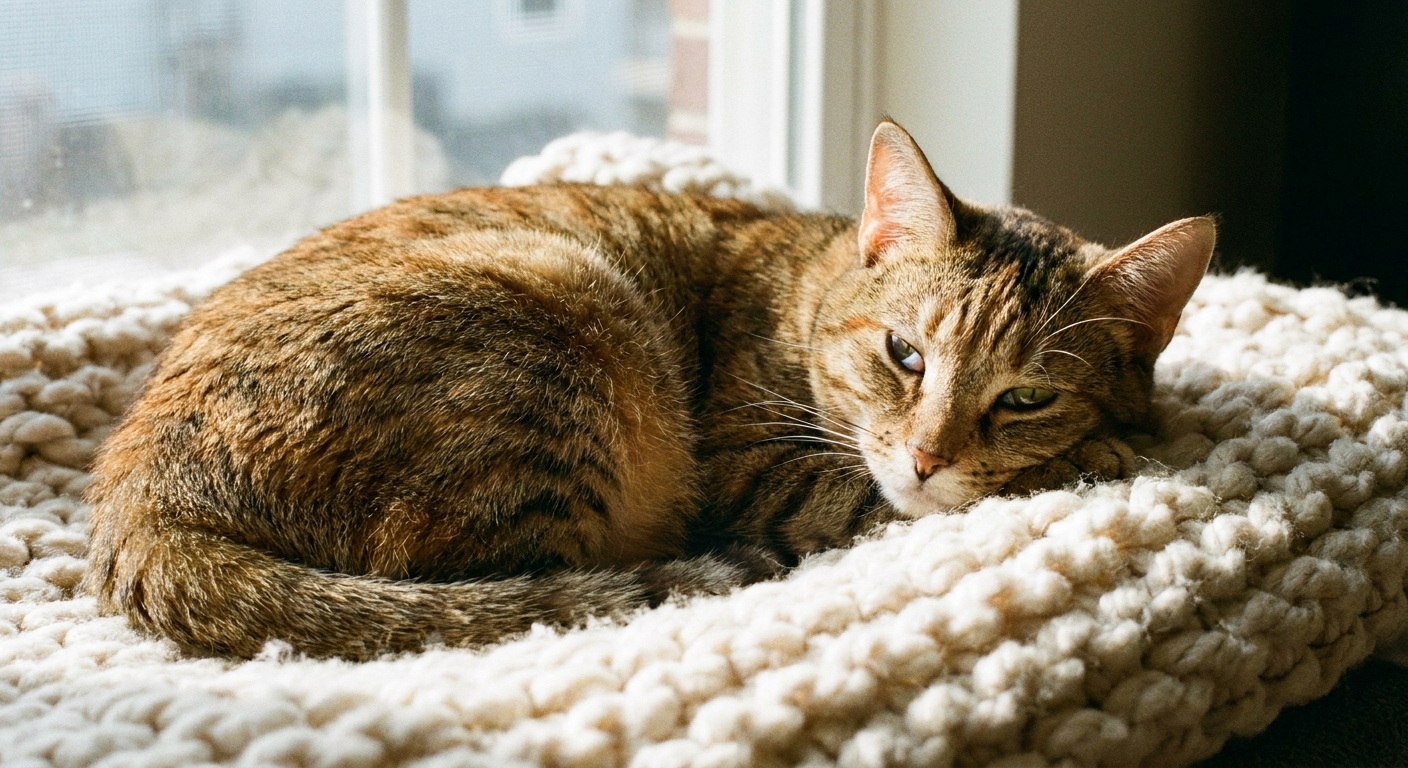
With my tortie Clementine, I have exactly a three-second window before she decides she is being inconvenienced. With my orange tabby Waffles, I have a longer window, but he will stare at the wall like he forgot why he is here. Either way, the routine is the secret sauce.
- Same spot each time (a towel on the couch, a bathroom counter, the floor).
- Same cue each time (I say, “Eyes, then treats,” in a calm voice).
- Fast medication, then immediate reward.
- End it. Once the treat happens, the session is over. No extra fussing.
Over a few days, many cats go from “absolutely not” to “I hate it but I will tolerate it for snacks.” That is a win in my book.
When to call the vet
Eye problems can change quickly, and some conditions are urgent. Call your veterinary clinic promptly if you notice any of the following, especially if symptoms are worsening:
- Redness, squinting, or discharge that gets worse instead of better
- The eye is held closed or your cat cries when you approach it
- Cloudiness over the surface of the eye
- Swelling around the eye or eyelids
- Bleeding, a visible scratch, or suspected trauma
- Your cat seems lethargic, stops eating, or hides more than usual
- You cannot get the medication in after repeated attempts, or you think most doses are being missed
- You accidentally used the wrong medication or the bottle tip touched the eye and you are concerned about contamination
If your vet suspects an ulcer or a serious infection, they may want to recheck quickly. It is always okay to ask for a demonstration in the exam room too. Most clinics are happy to show you the safest hand position.
Quick FAQ
Can I give eye drops while my cat is sleeping?
Sometimes you can, but I do not recommend surprising a sleeping cat. A startled cat can jerk their head and make it harder to apply safely. A calm, awake cat in a towel wrap is usually safer.
My cat is drooling or pawing at their face after eye meds. Is that normal?
Mild pawing can happen because the sensation is odd. Some cats drool if medication drains through the tear duct into the back of the throat and tastes bitter. If drooling is heavy, your cat seems distressed, or symptoms persist, call your vet.
What if my cat will not open their eye at all?
Do not pry. Persistent squinting or a tightly closed eye can signal significant pain, including corneal ulcers. Call your veterinarian for guidance before forcing the eyelids open.
Is it okay if I miss a dose?
Follow your vet’s instructions. In general, give the next dose when you remember unless it is close to the next scheduled time. Do not double doses unless your veterinarian tells you to.