The first time I saw “rice” stuck to a kitten’s back end, I didn’t think worms. I thought, How did you sit in something so gross? Five minutes later I was on the phone with a shelter vet, baggie in hand, realizing this is one of those cat-parent moments where being squeamish has to take a back seat.
If you suspect your cat has worms, you are not alone, and you are not overreacting. Intestinal parasites are common, especially in kittens, newly adopted cats, outdoor adventurers, and any household with fleas. The good news is that most cases are very treatable. The important part is getting the right diagnosis so your cat gets the right medication.
Signs you can actually see
Many cats with intestinal parasites look totally normal. Others show subtle changes that are easy to miss until you know what you are looking for. These are the real-life signs cat parents usually notice first.
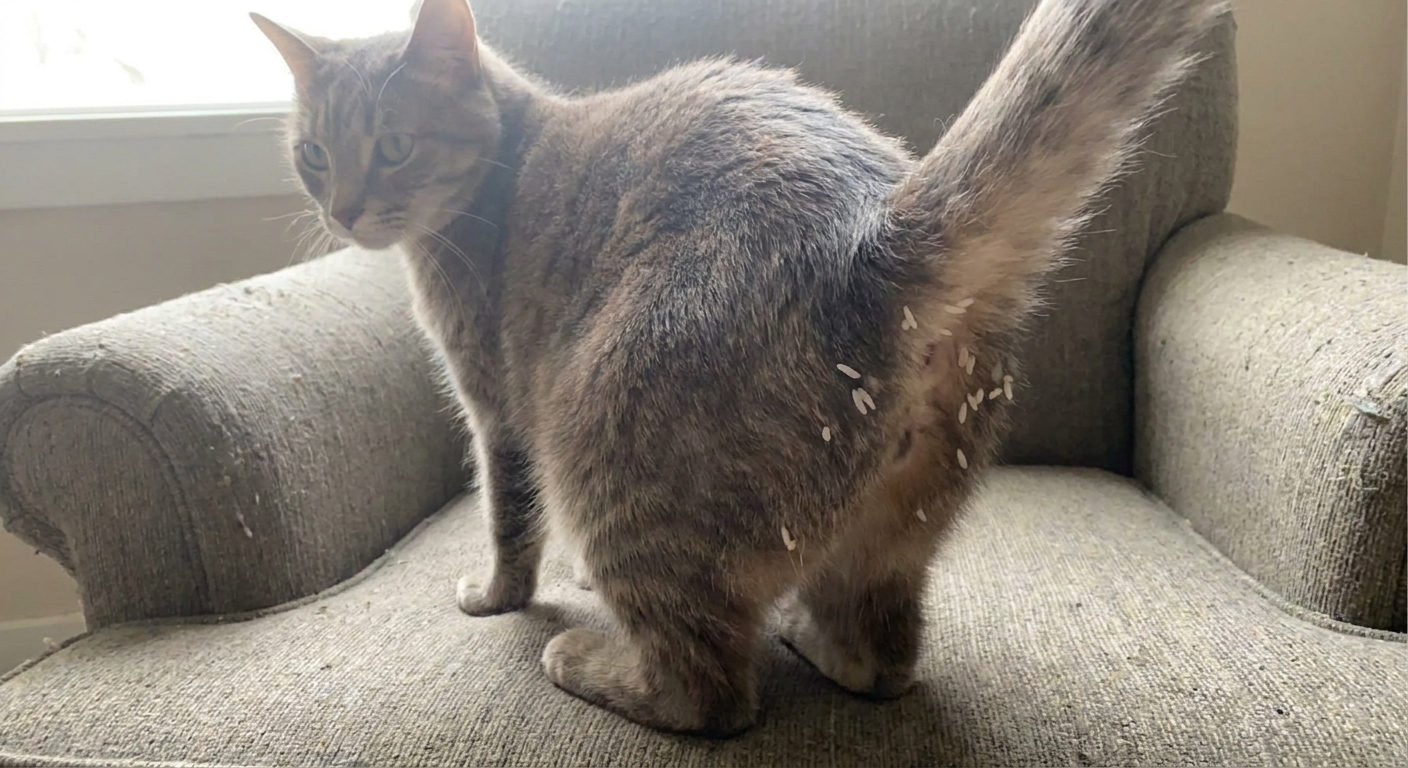
Rice-like segments on poop, in bedding, or around the tail
If you see tiny off-white pieces that look like sesame seeds or grains of rice, especially near your cat’s rear end or on a blanket where they sleep, think tapeworm segments. These segments can wiggle when fresh and then dry out into hard, pale flakes.
This is one of the most specific, telltale things you can spot at home. It is also one of the reasons I advise against guessing with a random dewormer. Many over-the-counter products do not treat tapeworms, or they treat only certain parasites. In real life, tapeworms are often diagnosed simply because someone sees the segments.
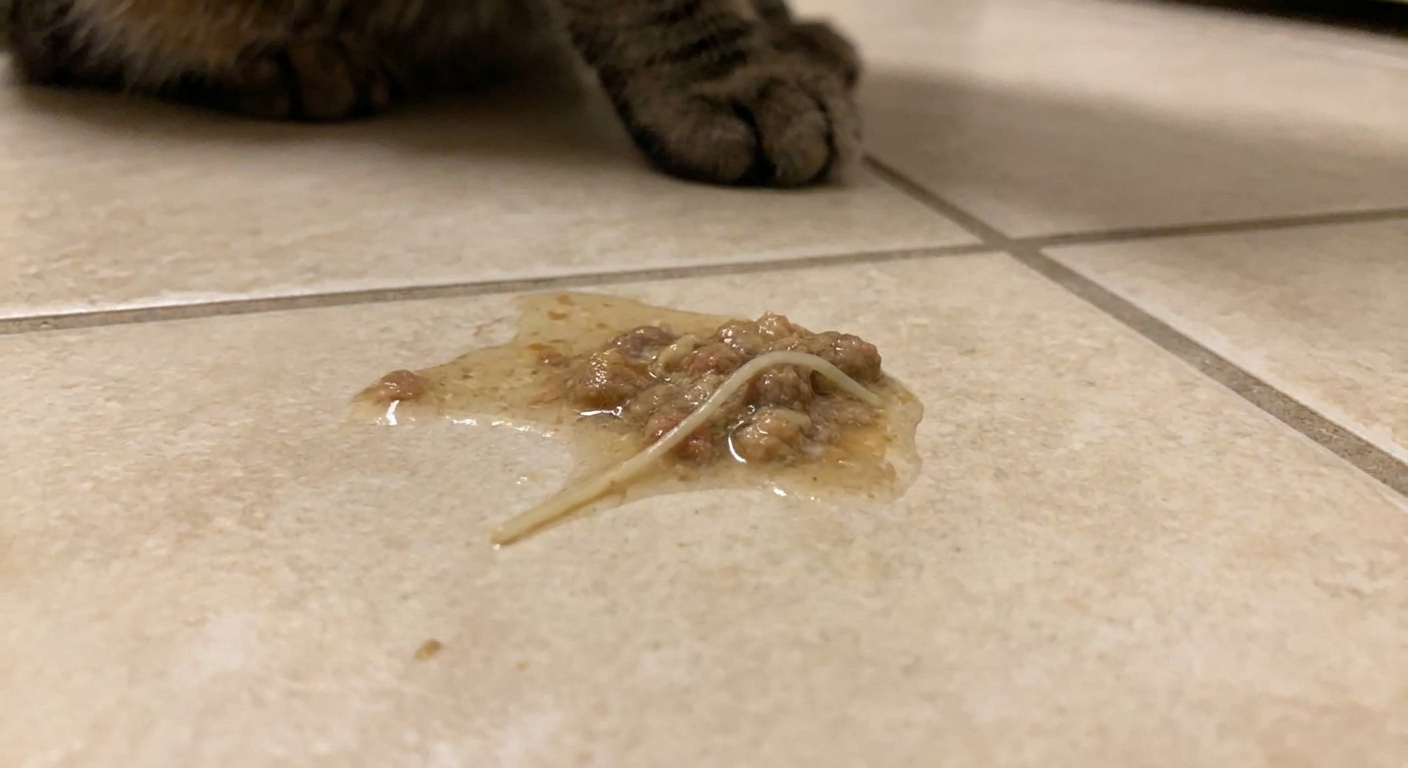
Long worms in vomit or in the litter box
Occasionally, you may see spaghetti-like worms in vomit or stool. That can happen with roundworms, and it is understandably alarming. If you can, take a clear photo and collect the sample safely for your veterinarian to examine.
Also worth knowing: some common intestinal parasites are not visible to the naked eye, including protozoa like giardia or coccidia. So a normal-looking litter box does not always mean everything is fine.
Signs that show up most in kittens
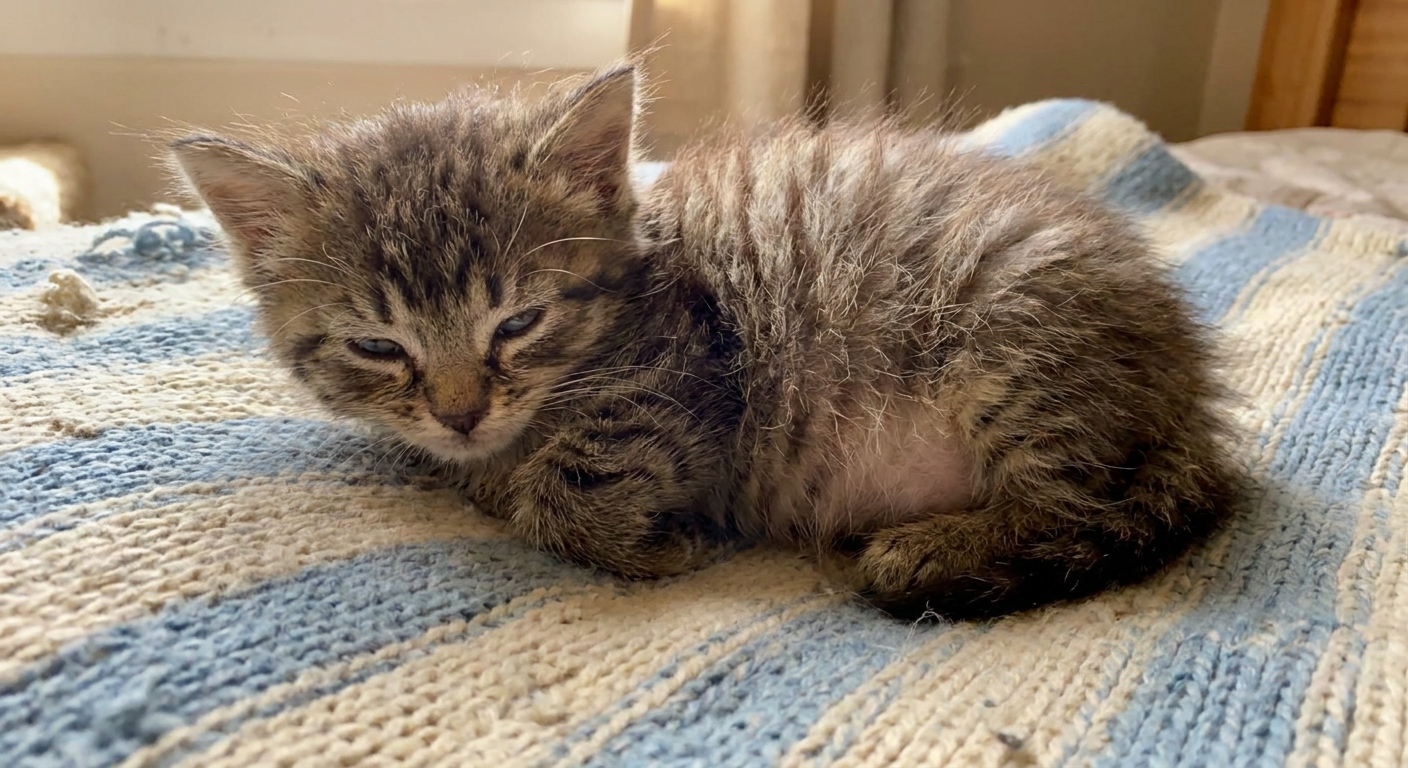
Kittens are parasite magnets. Their immune systems are still developing, and some parasites can be passed from mom to babies. In rescue work, I learned to treat “round belly plus dull coat” as a big neon arrow pointing toward intestinal parasites.
Potbelly with a dull coat
A kitten with parasites may have a round, distended belly even if the rest of their body looks bony or under-muscled. You might also notice a rough, dry, or less glossy coat. This is partly because parasites compete for nutrients and can irritate the gut.
Slow growth or “never seems satisfied” appetite
Some kittens with parasites act ravenous and still do not gain weight well. Others have a decreased appetite. Either way, poor weight gain is a reason to check in with your vet promptly, especially in very young kittens where dehydration and malnutrition can snowball fast.
Scooting: what it can mean
Scooting is when a cat drags their rear end along the floor. It is not always parasites, but it is a sign of irritation back there.
Parasites can contribute to scooting for a few reasons, including:
- Tapeworm segments irritating the skin around the anus
- Digestive upset causing frequent stools and irritation
- General itchiness if fleas are involved (and fleas often go hand-in-hand with tapeworms)
Other common causes include allergies and skin irritation, and sometimes anal sac issues (less common in cats than dogs, but they do happen). So scooting is a “call your vet” sign, not a “must be worms” verdict.
Why a fecal test is the smartest next step
The frustrating part about intestinal parasites is that what you see at home does not always tell you which parasite is involved. Different worms and other intestinal parasites require different medications and sometimes different treatment schedules.
A veterinarian can run a fecal test to look for parasite eggs or other evidence of infection. Depending on your clinic, this might include a fecal flotation, a fecal smear, and in some cases a more sensitive in-house or send-out test.
Two important notes from the trenches:
- A negative fecal does not always mean “no parasites.” Eggs may be shed intermittently. Your vet may recommend repeating testing or treating based on history and signs.
- Tapeworms can be tricky. You might see segments even if a fecal test does not pick up eggs, because egg packets are often contained within those segments rather than evenly mixed into the stool. This is one reason your observations and photos can be genuinely helpful for diagnosis.
Why a random store dewormer often misses
I completely understand the impulse to grab something off a shelf when you are worried. But “dewormer” is not one single thing.
Here is why do-it-yourself deworming can go sideways:
- Not all products cover all parasites. A medication that works for roundworms might not touch tapeworms.
- Some infections are not worms. Protozoa like giardia and coccidia need a different approach.
- Dosing depends on weight and health status. Kittens, seniors, and cats with other medical issues need extra caution.
- You can miss the “why.” For example, if your cat has tapeworms because of fleas, treating parasites without tackling fleas invites a repeat performance.
In broad strokes, tapeworms usually require a specific tapeworm medication, while roundworms and hookworms are often treated with a different dewormer and sometimes repeat dosing. For safety, I recommend letting your veterinarian choose the medication and dosing. You can absolutely ask questions and advocate for your cat. Just do not guess based on packaging.
How parasites spread to other pets and people
This is the part nobody loves talking about, but it matters. Some intestinal parasites can spread through microscopic eggs that end up in litter, on paws, on fur, and on surfaces. Others spread in different ways.
In the home
- Litter boxes are the big hotspot. Eggs can be shed in stool, and they are not visible to the naked eye.
- Shared spaces matter too: bedding, carpets, and anywhere a cat with a dirty rear end sits.
- Other pets can be exposed if they share litter areas, groom each other, or hunt the same critters.
Fleas and hunting
Tapeworms commonly involve fleas. If a cat swallows an infected flea during grooming, that can complete the cycle. Hunting rodents can also expose cats to certain parasites.
People, especially kids
Some parasites are zoonotic, meaning they can infect humans. The risk depends on the parasite. Roundworms and hookworms are the bigger “environmental egg” concern, while the most common cat tapeworm (Dipylidium) typically spreads to people by accidentally ingesting an infected flea. This is not meant to scare you. It is meant to emphasize why prompt diagnosis, treatment, and solid hygiene routines are worth it.
What to do next
1) Call your vet and describe what you saw
Be specific: “rice-like pieces around the tail,” “spaghetti-like worm in vomit,” “scooting,” “potbelly kitten,” and how long it has been going on.
2) Bring a stool sample if you can
Your clinic can tell you how fresh they want it and how to store it. If you see segments or a visible worm, a photo can help too.
If the idea makes your skin crawl, you are normal. A simple trick is to turn a small plastic bag inside out over your hand like a glove, pick up a small amount, then invert the bag closed. Wash your hands afterward.
3) Limit exposure while you wait
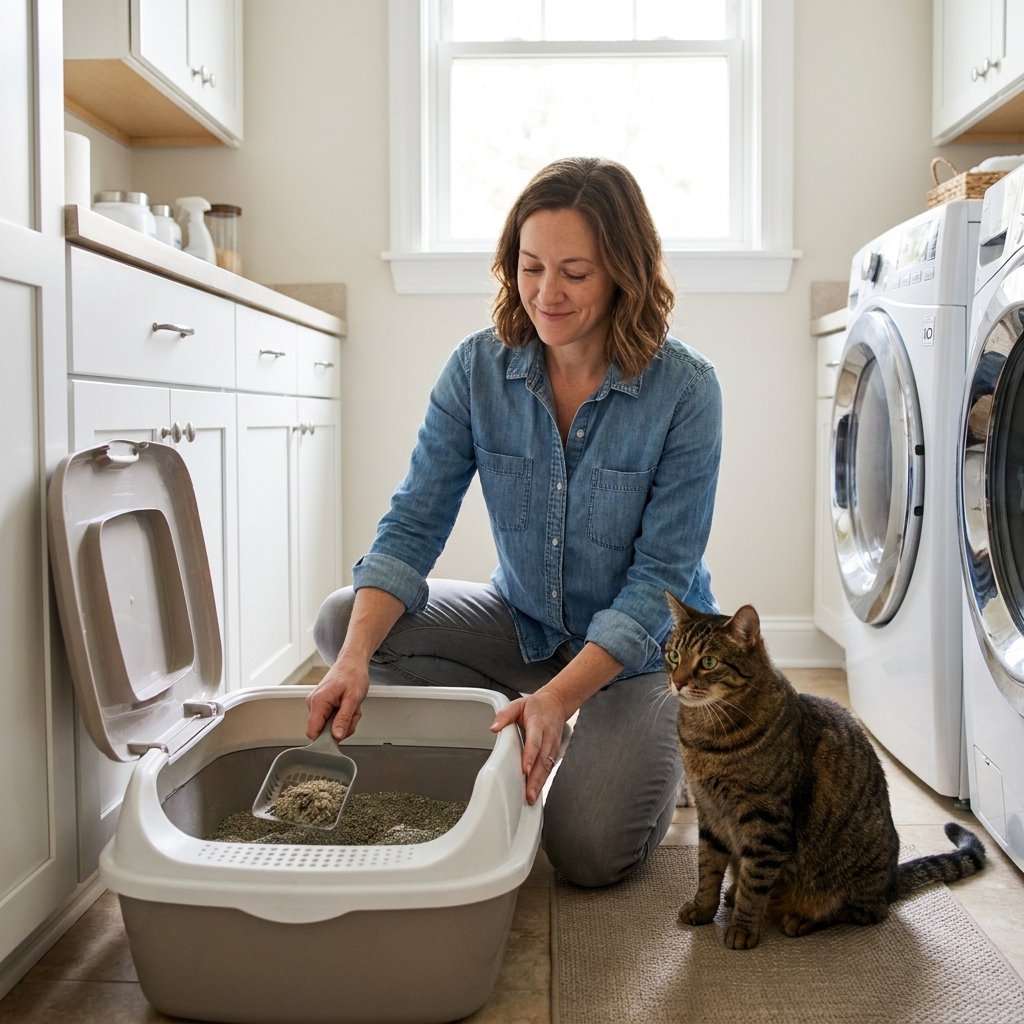
- Clean the litter box at least daily
- Wash hands after scooping
- Keep kids away from litter areas
- If you have multiple pets, consider separating litter boxes and minimizing grooming between pets until your vet advises
4) Do a cleaning reset
You do not need to bleach your entire life, but you do want to reduce contamination and reinfection risk.
- Wash bedding on hot if fabric allows
- Vacuum carpets and upholstered areas where your cat rests
- Wipe hard floors around litter areas with your usual household cleaner
One honest caveat: no cleaning routine is perfect for every type of parasite egg (some can be frustratingly hardy). The biggest wins are prompt litter removal, good hand hygiene, and preventing reinfection.
5) Address fleas if they are part of the picture
If you are seeing tapeworm segments, ask your vet about flea prevention for every pet in the home. Treating only one animal is a classic way to keep the flea cycle going.
Important: Use only flea products specifically labeled for cats, and follow your veterinarian’s guidance. Some dog-only products are dangerous for cats.
When this is urgent
Most suspected parasite cases can wait for a normal appointment, but I do not like waiting when a cat is very young or clearly struggling.
Contact your veterinarian promptly if:
- Your kitten has a potbelly and is not gaining weight
- You see repeated vomiting with worms present
- Your cat seems weak, dehydrated, or stops eating
- You have a very young kitten (especially under 8 to 10 weeks) with any concerning signs
Common questions
Can my indoor-only cat get worms?
Yes. Indoor cats can be exposed through fleas that hitchhike inside, through newly adopted pets, and occasionally through contaminated soil tracked indoors. Kittens may also arrive already infected.
If I see rice-like pieces once, is that enough to treat?
It is enough to call your vet, yes. Those segments are strongly suggestive of tapeworms. Your vet may still want a fecal test or may treat based on what you saw and your cat’s flea history.
Should I treat all my cats if one has worms?
Ask your veterinarian. In some households, treating all pets makes sense, especially if they share litter boxes or fleas are involved. Your vet will weigh exposure risk, ages, weights, and any health issues.
How do I keep worms from coming back?
The best prevention plan usually involves three parts: regular veterinary care and fecal testing when indicated, consistent flea prevention where appropriate, and excellent litter hygiene. If your cat hunts, discuss risk reduction with your veterinarian too.
A final, reassuring note
Seeing worms can feel like you have failed your cat. You have not. Parasites are a normal part of the real world cats live in, even in clean, loving homes. What matters is what you do next: document what you saw, get a fecal test or vet-guided treatment, clean smartly, and break the cycle so your cat can get back to feeling like themselves.