I have cleaned up more cat puke than I can responsibly count. Some of it was harmless scarf-and-barf from an overenthusiastic eater, some of it was a classic hairball on the rug at 2 a.m., and a small handful of times it was my cue to call the vet right away. If you are staring at a fresh mess and wondering what it means, take a breath. Many cats vomit at least occasionally, but the pattern and the details really matter.
This guide will help you tell vomiting from regurgitation and from a hairball, walk through common causes you can often spot at home, and explain when it is safer to seek same-day care versus scheduling a routine vet visit within the next 24 to 72 hours.
First: Vomit, regurgitation, or hairball?
Cat parents use the word “vomiting” for a lot of different things. The distinction matters because it can change how urgent the situation is and what your vet will want to investigate.
Vomiting
Vomiting usually involves active effort. You may see nausea signs first, like lip licking, drooling, swallowing repeatedly, restlessness, or hiding. Then come abdominal contractions or heaving, and the material is expelled.
- Timing: Can happen hours after eating or on an empty stomach.
- What it looks like: Partially digested food, foamy liquid, bile (yellow), or fluid with hair.
- Clue: It often looks and smells “digested.”
Regurgitation
Regurgitation is more passive. Food seems to come back up without the dramatic heaving, and many cats act totally normal right before and after.
- Timing: Often right after eating or drinking.
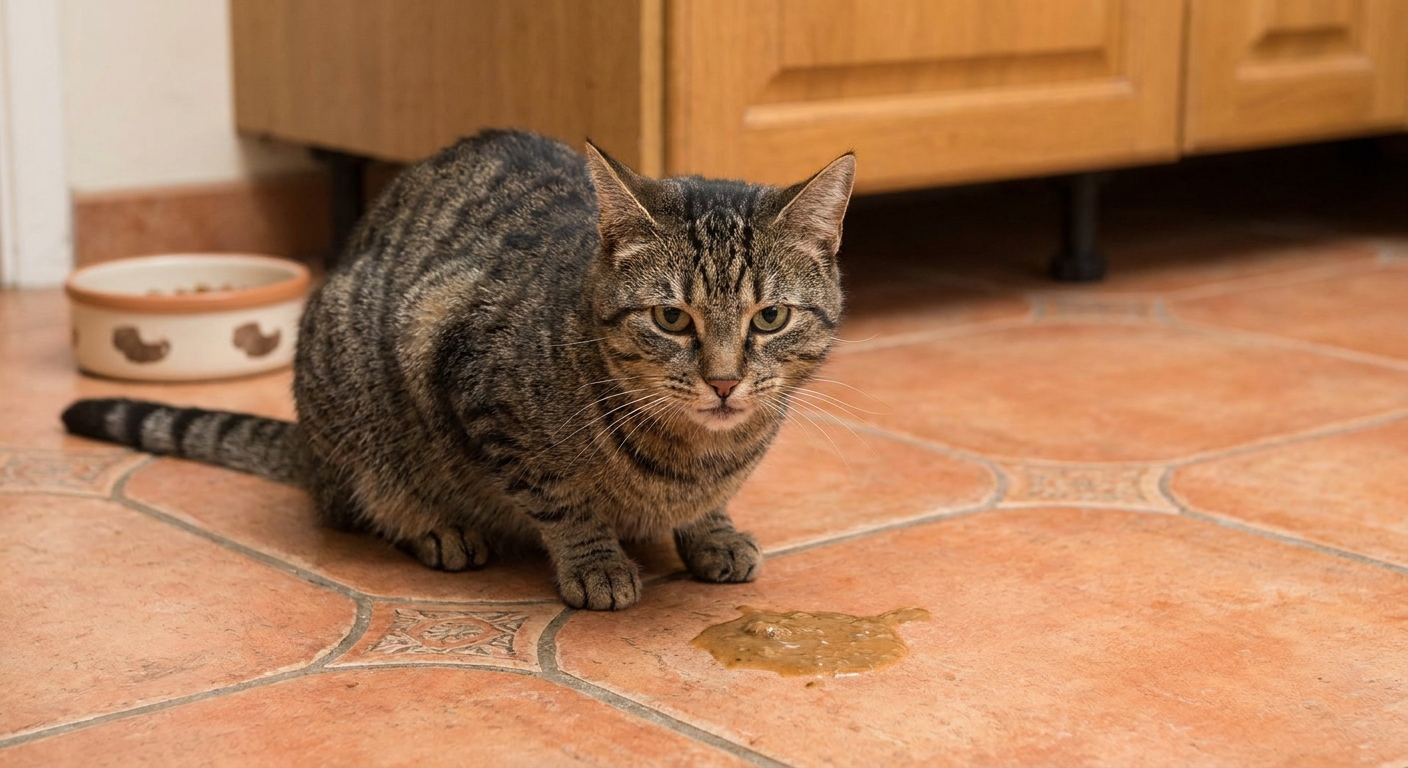
- What it looks like: Undigested food that still resembles the kibble or wet food.
- Clue: It may come up in a compact pile with minimal liquid.
Regurgitation can happen with eating too fast, but it can also point to esophageal issues. If it is frequent or increasing, your vet should know.
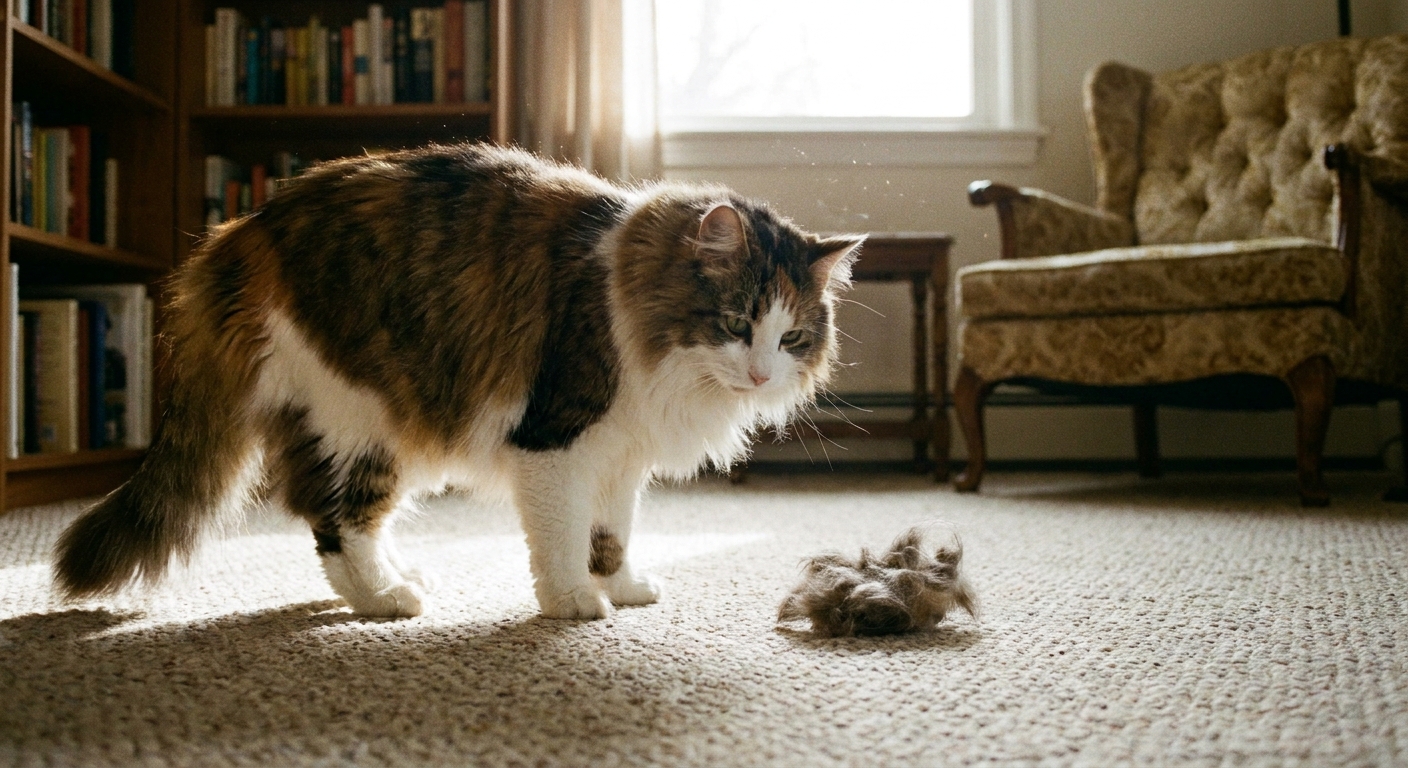
Hairball
A hairball is technically vomiting, but it has a recognizable pattern.
- Before: Repeated gagging or retching, sometimes over several minutes.
- What it looks like: A cylindrical wad of hair, often with mucus or a little fluid.
- Clue: The “sausage” shape is classic.
If your cat is repeatedly gagging or “trying to bring something up” but nothing comes out, treat that as a red flag and call a vet. Also note that coughing or wheezing from asthma can look a lot like hairball retching to many owners, and cats may crouch low with their neck extended. When in doubt, take a video for your vet.
Common causes you can spot
Here are the most common, owner-detectable reasons cats throw up. You do not need to diagnose the exact cause at home, but you can gather clues that help you decide how quickly to act.
Eating too fast or too much
This is the classic “scarf-and-barf.” Cats may vomit or regurgitate soon after eating, then march right back to the bowl like nothing happened.
Try at home:
- Offer smaller meals more frequently.
- Use a puzzle feeder or slow-feed bowl for dry food.
- Spread wet food thinly on a plate instead of serving it as a mound.
- Separate pets during meals so no one feels rushed.
Recent diet change (or too many new treats)
Cats have sensitive digestive systems. Switching foods abruptly, introducing rich treats, or changing flavors frequently can trigger vomiting, soft stool, or reduced appetite.
Try at home:
- If your cat is otherwise bright and stable, switch back to the previous food and call your vet for transition guidance.
- When you do transition, go slowly. Many cats do better with gradual changes over 7 to 14 days.
- Pause new treats, table food, and supplements unless your vet prescribed them.
Hair and grooming
Hair is normal in vomit now and then, especially in heavy shedders and fastidious groomers. But frequent hairball vomiting can also signal overgrooming from stress, skin disease, parasites, or pain.
Try at home:
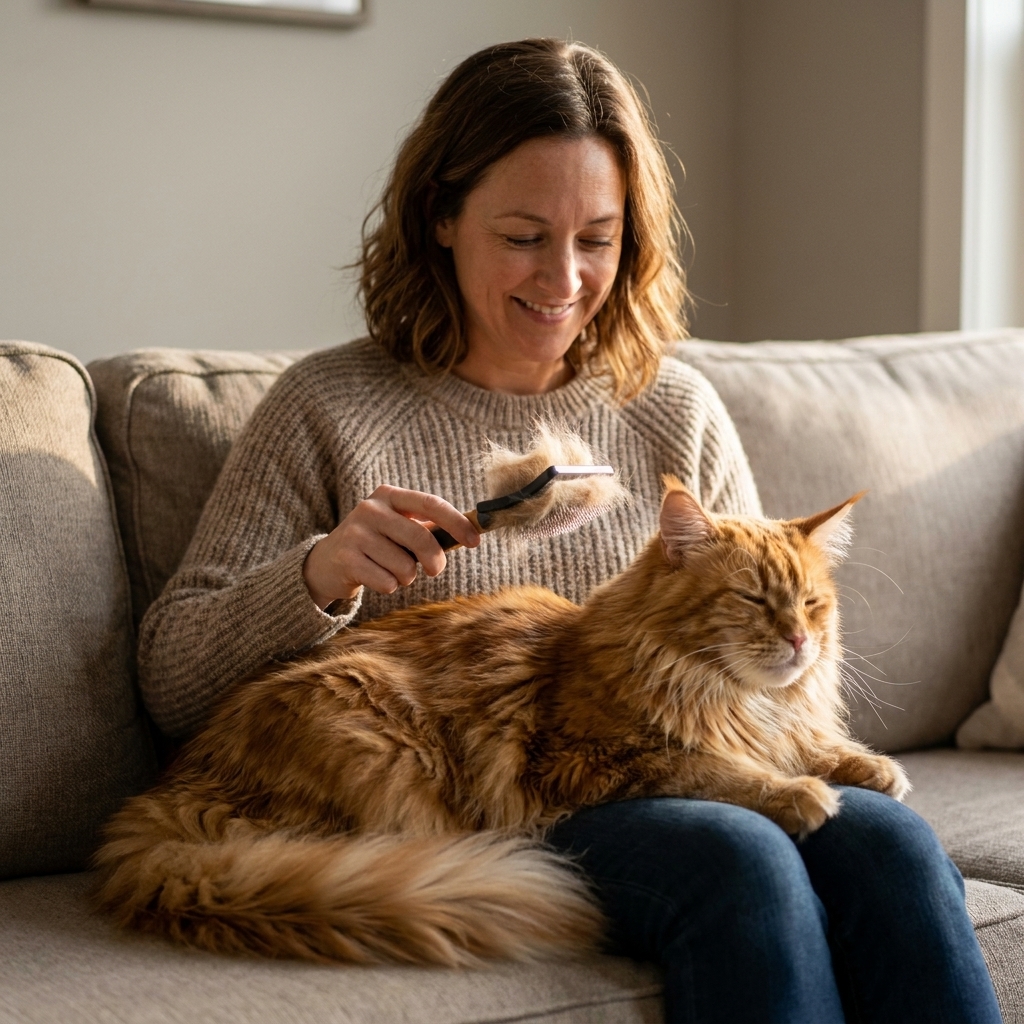
- Brush more during shed seasons, especially for longhaired cats.
- Ask your vet about safe hairball prevention options that fit your cat’s health history.
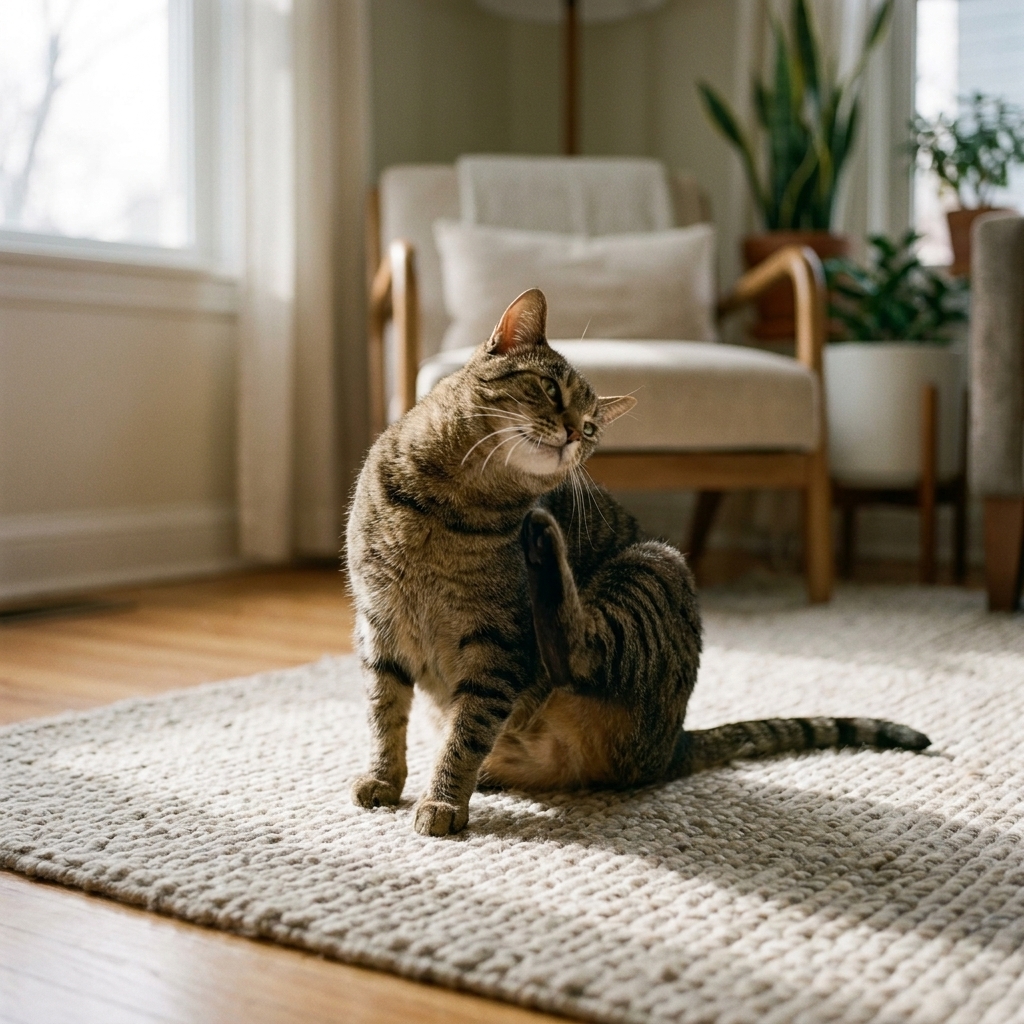
- Watch for signs of itchiness, scabs, bald patches, or obsessive licking.
Grass, plants, and non-food items
Some cats nibble grass and then vomit. Others chew plants or objects, which can irritate the stomach or, in worst cases, cause a blockage.
Try at home:
- Remove access to houseplants until you confirm they are cat-safe.
- Offer cat grass if your vet agrees it is appropriate for your cat.
- Check strings, ribbon, tinsel, hair ties, and kids’ toys. String-like items are an emergency risk.
Stress and routine changes
Cats are tiny routine detectives. Moving, visitors, new pets, schedule changes, construction noise, or even a new litter type can contribute to stress-related tummy upset in some cats.
Try at home:
- Keep feeding times consistent.
- Create a quiet safe room with litter, water, and hiding spots.
- Make changes gradually when possible.
Parasites (especially in kittens)
Kittens and newly adopted cats can come with intestinal parasites even if they look healthy. Vomiting, diarrhea, a potbellied appearance, or poor growth are common clues.
At home note: Bring a fresh stool sample to your appointment if your clinic requests it. Do not give over-the-counter dewormers unless your vet advises it, since dosing depends on weight, age, and parasite type.
Food sensitivity or chronic gut inflammation
Some cats vomit chronically due to food sensitivities or long-term gastrointestinal inflammation. This tends to look like intermittent vomiting over weeks or months, sometimes paired with weight loss, appetite changes, or softer stool.
This is a “schedule a vet visit” situation rather than a wait-and-see for months situation, especially if your cat is losing weight or vomiting is becoming more frequent.
Underlying medical issues
Vomiting is not always “just a stomach thing.” Kidney disease, hyperthyroidism, liver disease, pancreatitis, and other systemic problems can show up as vomiting, especially in senior cats. If your cat is vomiting and also drinking more, losing weight, acting restless, or seeming generally off, it is worth a timely vet check even if the vomiting is not dramatic.
When it can wait
Whenever you are unsure, it is always fair to call your veterinary clinic and ask what they recommend. But in general, a routine appointment within the next 24 to 72 hours is often appropriate when:
- Your adult cat vomited once (or had a single hairball) and is otherwise acting normal.
- Your cat is bright, alert, and still interested in food and water.
- There is no blood in the vomit.
- Your cat is not dehydrated and is urinating normally.
- You can identify a likely mild trigger, like eating too fast or a small diet slip, and the vomiting stops.
Even in these cases, make a note of what happened. If the vomiting repeats, those details become very valuable to your vet.
When to get same-day care
I tend to be conservative with vomiting because cats are very good at hiding how sick they feel. Same-day care is recommended if you notice any of the following:
Red-flag patterns
- Repeated vomiting (for example, multiple episodes in a day, or your cat cannot keep water down).
- Projectile vomiting or sudden intense vomiting that is unusual for your cat.
- Unproductive retching (trying to vomit but nothing comes up), especially if it continues.
- Vomiting plus diarrhea that is severe, frequent, or accompanied by weakness.
Concerning appearance
- Blood in vomit. Bright red streaks or coffee-ground material can both be significant.
- Repeated yellow or foamy vomit, especially if paired with poor appetite, lethargy, dehydration, or belly pain.
- Possible foreign material (string, ribbon, foam, plant pieces).
Your cat’s condition
- Lethargy, hiding, weakness, or collapse.
- Refusing food for more than a meal or two, especially if vomiting is also happening.
- Signs of dehydration like tacky gums, sunken-looking eyes, or very low energy.
- Belly pain (tense abdomen, hunching, growling when picked up, unwillingness to lie down).
- Known toxin exposure (lilies, rodent bait, certain human medications, antifreeze, some essential oils, pesticides).
Higher-risk cats
- Kittens (they dehydrate quickly).
- Senior cats (more likely to have underlying kidney, thyroid, or metabolic disease).
- Cats with chronic conditions like kidney disease, diabetes, hyperthyroidism, heart disease, or prior urinary issues.
Special note: Urinating issues are an emergency
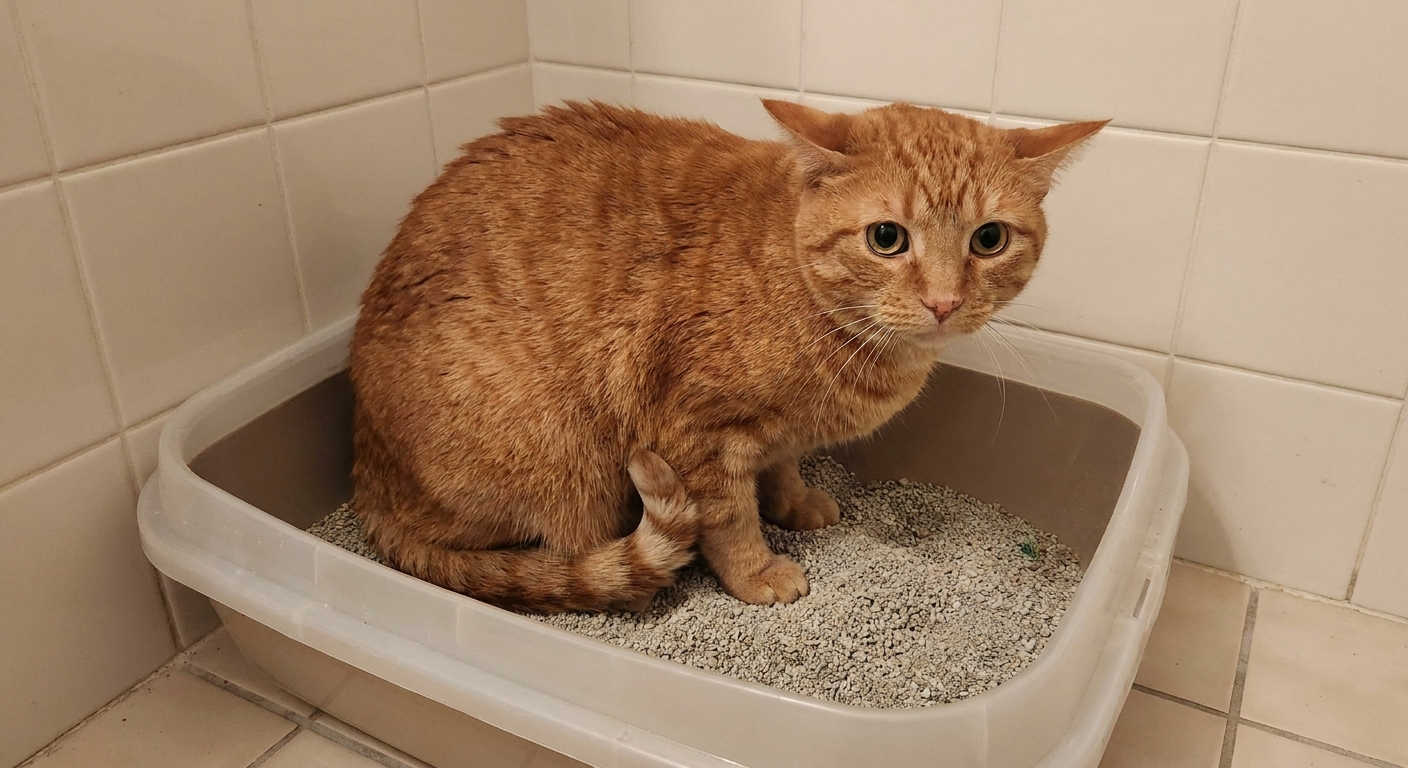
If your cat is vomiting and also going in and out of the litter box, squatting frequently, crying, licking the genitals, or producing little to no urine, treat this as an emergency. Urinary blockages, especially in male cats, can become life-threatening quickly.
What to do at home
While you are deciding whether to go in, focus on safety and good information gathering.
- Remove access to potential hazards like string, toys with dangling parts, and plants.
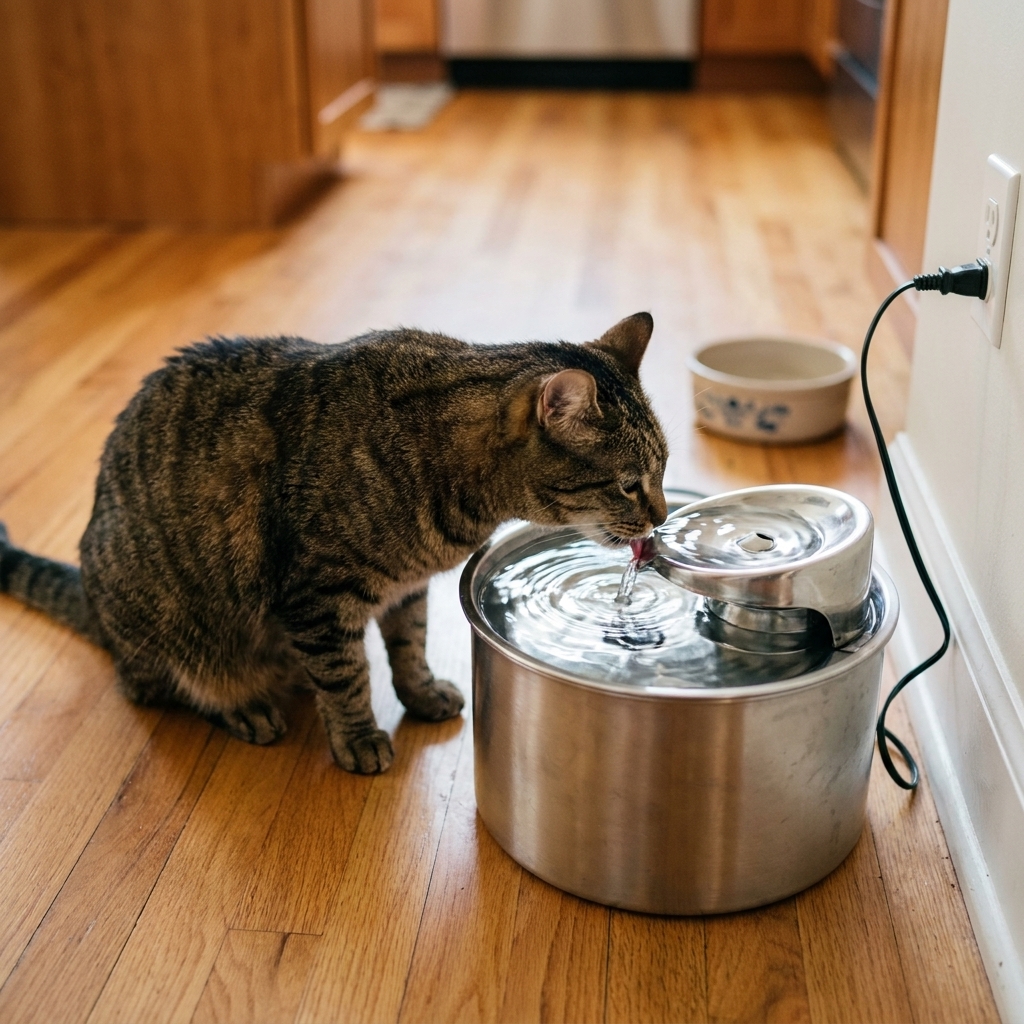
- Offer small sips of water. Do not force water into your cat’s mouth. If your cat vomits shortly after sipping, or cannot keep even small amounts down, call your vet the same day.
- Pause food briefly if your cat just vomited, then offer a small amount later if your cat is acting normal and your vet has not instructed otherwise. Do not fast your cat for long without veterinary advice. Prolonged fasting can be risky in cats.
- Do not give human medications or leftover pet meds. Many are dangerous to cats, and even safe meds need vet-directed dosing.
If you are heading to the clinic, it is okay to bring a photo of the vomit or a small sample in a sealed bag or container if your vet asks for it. Gross, yes. Helpful, also yes.
What your vet will ask
When you call or arrive, the clinic is trying to determine severity, dehydration risk, and possible causes like obstruction, pancreatitis, toxins, infection, or chronic disease. These details help them triage quickly.
Timing and frequency
- When did it start?
- How many times has your cat vomited in the last 12 to 24 hours?
- Is it happening right after meals or randomly?
- Any recent boarding, travel, stress, or household changes?
Appearance
- Undigested food vs partially digested food vs foam or liquid
- Color (clear, yellow, brown, greenish)
- Presence of hair, plant matter, or foreign material
- Any blood (bright red or coffee-ground)
Other symptoms
- Appetite changes, thirst changes, or weight loss
- Diarrhea or constipation
- Lethargy, hiding, feverish behavior
- Coughing or wheezing (sometimes mistaken for hairballs)
- Litter box changes, especially urination frequency or straining
Diet and exposures
- Exact food and treats (brand, flavor, and whether anything changed recently)
- Any access to plants, string, trash, people food, or toxins
- Medications or supplements your cat receives
If you can, write this down before you call. In a stressful moment, it is easy to forget details.
FAQ
My cat vomited but is acting normal. Should I worry?
One isolated episode in an otherwise normal adult cat can be monitored, especially if there is a plausible mild cause like eating too fast or a hairball. If it happens again within 24 hours, if your cat seems off, or if your cat is a kitten or senior, contact your vet.
Is yellow vomit in cats serious?
Yellow often means bile. A small amount once can happen on an empty stomach. But repeated yellow or foamy vomiting, especially with poor appetite, lethargy, belly pain, or dehydration, should be assessed the same day.
Can dry food cause vomiting?
Dry food itself is not inherently bad, but some cats regurgitate kibble when they eat too fast, drink a lot right after eating, or if the kibble does not agree with them. Meal size, feeder style, and diet consistency matter more than wet versus dry as a blanket rule.
How do I know if it’s a hairball or asthma?
Hairball retching usually ends with a hairball or vomit. Asthma episodes often look like low, crouched coughing with the neck extended, and nothing comes up. If your cat repeatedly “tries to hack up a hairball” and nothing appears, take a video and show your vet.
How often is “too often” for vomiting?
If your cat is vomiting more than once a month, if it is happening weekly, or if it has been going on for more than a couple of weeks, that is a good reason to schedule a vet visit even if your cat seems mostly fine. Chronic vomiting deserves a real workup, especially if there is weight loss or appetite change.
The bottom line
Most vomiting is not an emergency, but patterns and red flags matter. If your cat vomits repeatedly, seems lethargic, has blood in the vomit, cannot keep water down, is very young or older, or is straining to urinate, it is time for same-day veterinary care. When in doubt, call your clinic. You are never overreacting by asking for guidance, and your notes about timing, appearance, and your cat’s behavior can make the next steps much clearer.