I still remember the first time Clementine made that awful, low hacking sound. I was already halfway to the “hairball” cabinet when I realized nothing was coming up, and her whole body looked tight, like she was pushing air out, not trying to vomit. That moment is why I take cat coughing seriously. It is often fixable, but it is rarely something to ignore.
Below, I’ll help you figure out what you’re seeing and hearing, walk through common causes, and end with a simple watch vs. call list so you know what to do next.
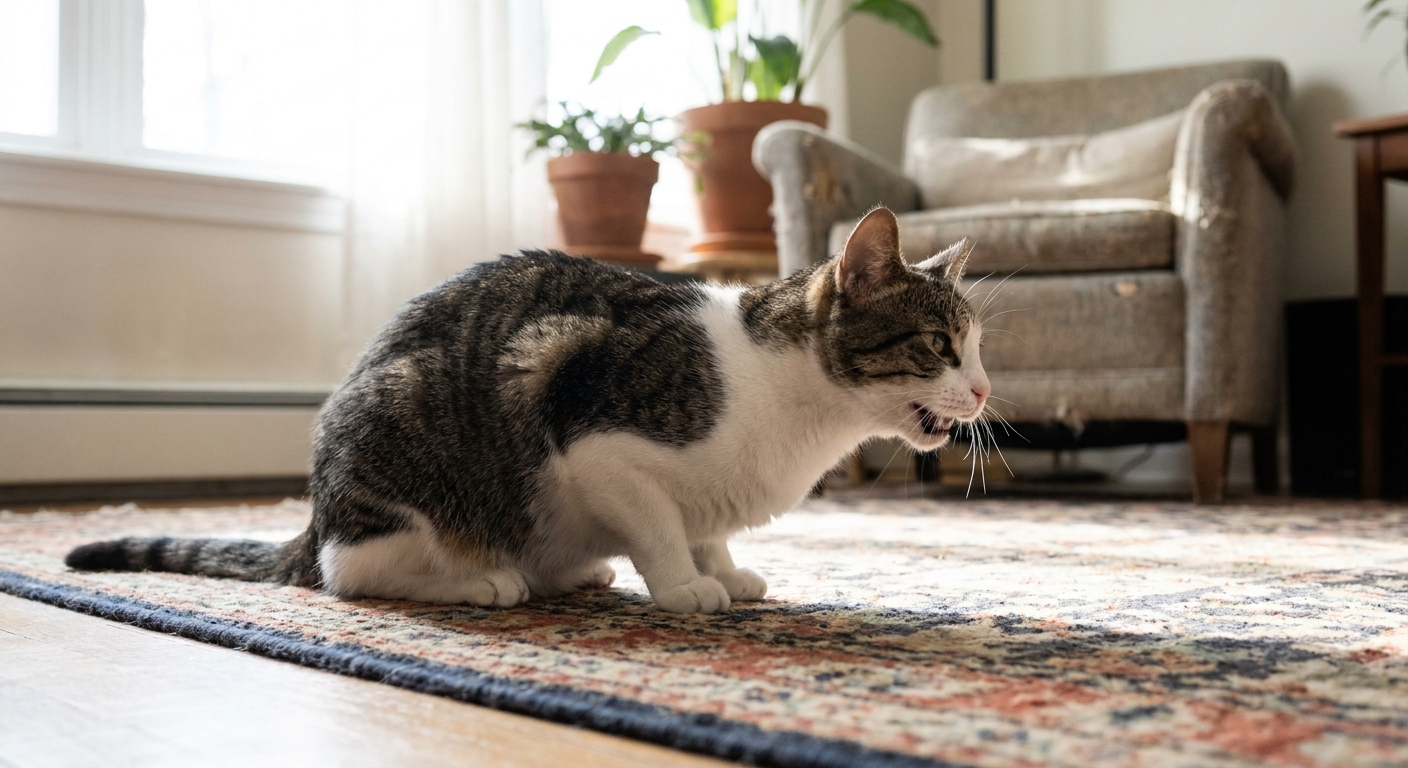
Cough, sneeze, or hairball gag?
These three can look similar in the moment, especially at 2 a.m. The goal is not perfection. It is getting close enough to decide whether this is a “monitor” situation or a “call the vet” situation.
What a cough usually looks like
- Body posture: low crouch, neck stretched forward.
- Effort: repeated chest and belly contractions, like air is being forced out.
- Sound: dry “huff” or honk, or a moist, phlegmy cough.
- Afterwards: may swallow, lick lips, or act a little tired. Often nothing comes up.
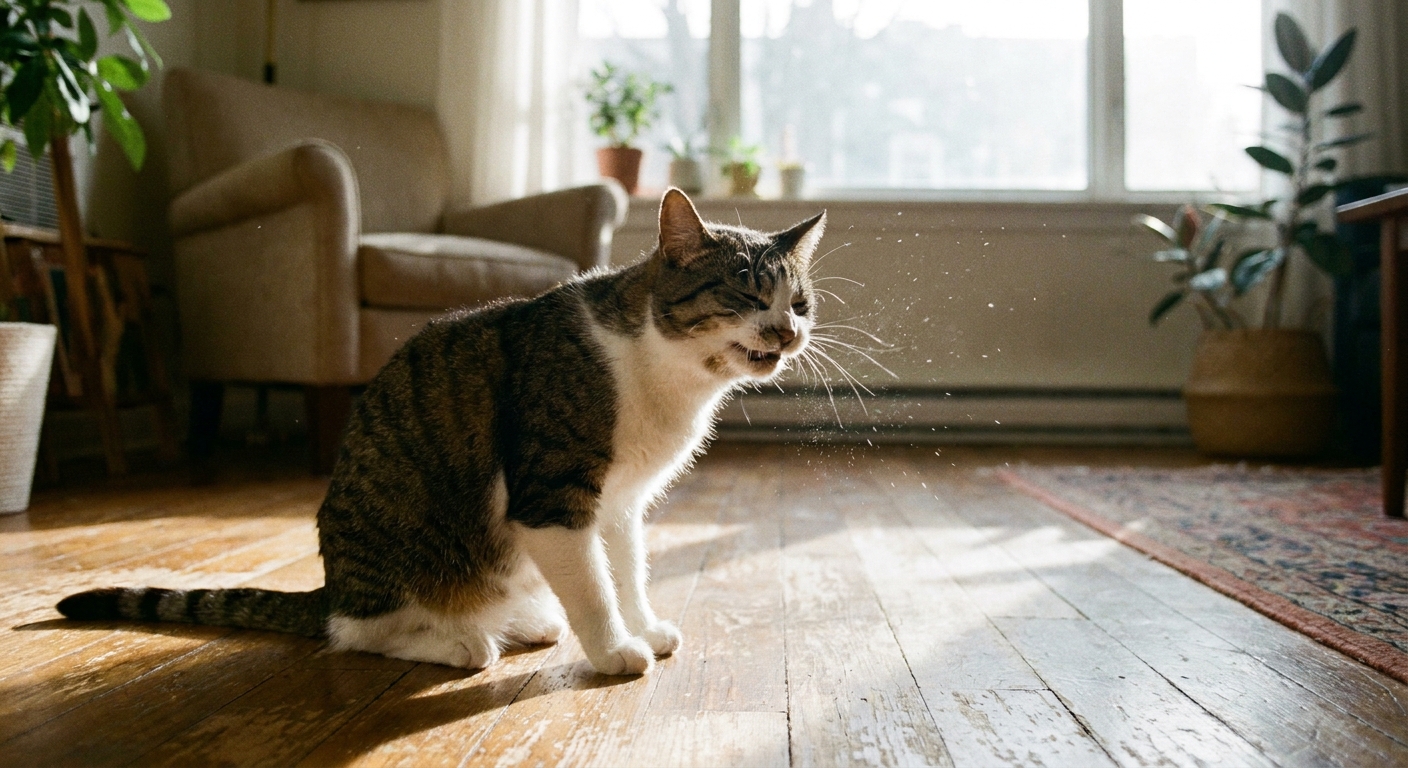
What a sneeze usually looks like
- Body posture: head jerks forward.
- Effort: quick burst from the nose.
- Sound: sharp “achoo” or snort.
- Afterwards: may wipe face, have watery eyes or nasal discharge if an infection or irritation is present.
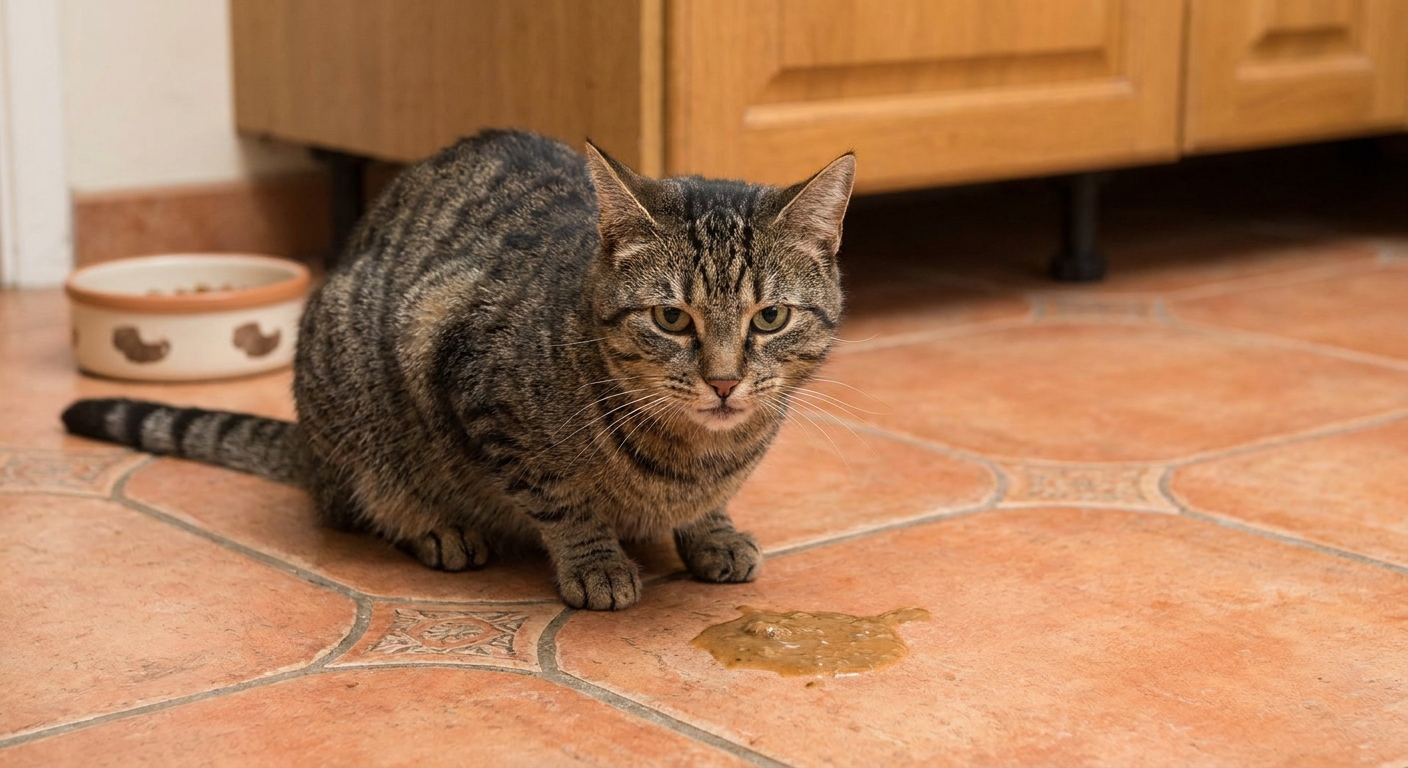
What hairball gagging usually looks like
- Body posture: crouch with repeated retching, often more dramatic whole-body heaves.
- Effort: looks like vomiting more than coughing.
- Sound: rhythmic gagging or retching.
- Afterwards: may bring up a hairball or foamy fluid. Some cats swallow it back down.
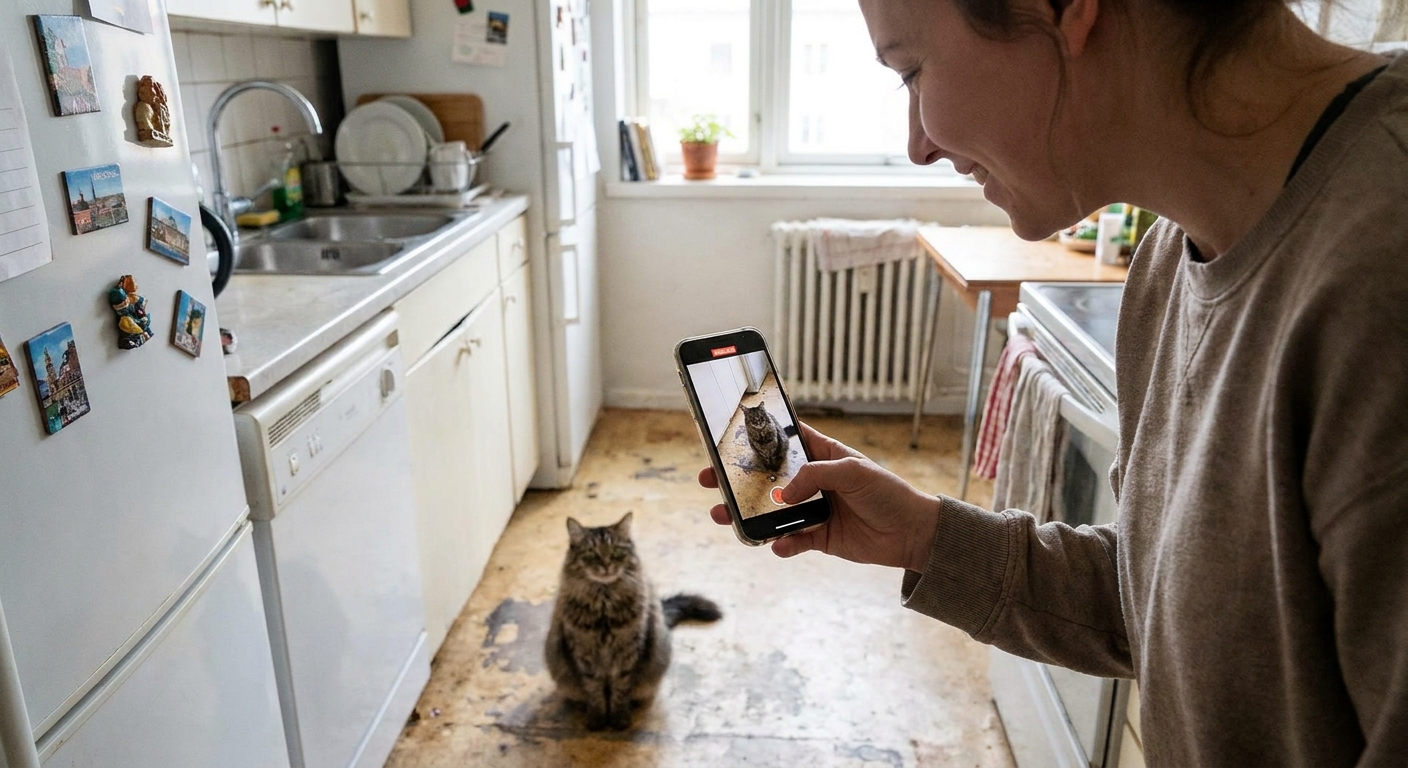
Tip from my foster days: If you can, take a 10 to 20 second video. The clip matters more than the best description in the world, and it helps your vet quickly distinguish cough vs. retch vs. reverse sneeze.
Common reasons cats cough
Coughing is a symptom, not a diagnosis. Some causes are mild and temporary. Others are urgent. What your cat’s cough sounds like, plus what else is happening at home, can help narrow the possibilities.
Feline asthma
Asthma is a common cause of recurring coughing. It involves airway inflammation and constriction, often triggered by irritants or allergens.
What it can look like at home:
- Repeated coughing episodes that come and go
- A dry, hacking cough that can sound like a hairball but produces nothing
- Wheezing or noisy breathing in some cats
- Episodes after play, stress, or exposure to dust, smoke, strong scents, or litter dust
- Some cats squat low with the neck extended during an episode
Why it matters: Asthma can escalate into a breathing emergency. If your cat ever struggles to breathe, breathes with an open mouth, or seems panicked, treat that as urgent.
Upper respiratory infection
Many cats with a “kitty cold” sneeze more than they cough, but coughing can happen, especially if mucus is draining or the lower airways are irritated.
What it can look like at home:
- Sneezing plus coughing
- Runny nose or congestion
- Watery or goopy eyes
- Hoarse meow
- Lower appetite because smell is reduced
- Low energy, hiding more than usual
Extra caution: Kittens, seniors, and cats with chronic illness can go downhill faster. If your cat stops eating, that is a reason to call sooner rather than later.
If you have multiple cats: While you’re waiting to talk to your vet, it can help to separate the sick cat if possible and avoid sharing bowls, water fountains, and grooming tools. Wash hands after handling, and clean high-touch surfaces. It will not stop every virus, but it can reduce spread.
Heartworm-associated respiratory disease
Heartworm is less common in cats than dogs, but it can still happen, even in indoor-only cats. In cats, heartworm may cause primarily respiratory signs.
What it can look like at home:
- Intermittent coughing
- Fast or labored breathing
- Sometimes vomiting along with respiratory signs
- Lethargy or reduced interest in play
Important note: Unlike in dogs, there is not a widely accepted, reliably safe adulticide treatment protocol for cats. That is why prevention and early veterinary guidance are especially important.
Inhaled irritants
Sometimes the simplest explanation is the right one: something in the air is irritating your cat’s airways.
Common household triggers:
- Cigarette, cannabis, or vape smoke
- Scented candles, incense, plug-ins, diffusers, perfumes
- Aerosol sprays, cleaners, paint fumes
- Dusty litter or litter box deodorizing powders
- Construction dust or wildfire smoke
What it can look like at home:
- Coughing that starts soon after exposure
- Watery eyes or sneezing may happen too
- Symptoms improve when the air is cleaner and the trigger is removed
If you suspect an irritant, move your cat to a well-ventilated room with clean air, stop the suspected product, and call your vet for guidance if the cough persists or your cat seems distressed.

Other causes your vet may consider
These are not the only causes of coughing, but they are common enough that I want you to have them on your radar, especially if the cough keeps coming back.
- Chronic bronchitis: a form of feline lower airway disease that can look a lot like asthma, with ongoing or recurring cough.
- Pneumonia or lower airway infection: cough with lethargy, fever, reduced appetite, sometimes fast or effortful breathing.
- Parasites: lungworms or other parasites can cause chronic coughing in some regions or lifestyles.
- Foreign material inhaled: sudden coughing fits after chewing plants, grass, or small objects, sometimes with pawing at the mouth.
- Heart disease or fluid in or around the lungs: coughing is less common in cats than in dogs, but breathing changes, weakness, or fainting are red flags.
- Airway irritation after vomiting or reflux: an episode of vomiting can irritate the throat and trigger coughing afterwards.
- Nausea or throat irritation: some cats do a gaggy, throat-clearing motion that owners call “coughing.” This is another reason a short video helps.
Because cats are masters of acting “mostly fine” between episodes, recurring cough is worth a real workup, even if your cat plays normally most days.
What to do at home now
1) Watch the breathing, not just the cough
A cough can be scary, but breathing changes are what help you gauge urgency. If your cat is calm and resting, note:
- Is breathing smooth and quiet, or does it look effortful?
- Is your cat breathing with the mouth closed?
- Is there belly effort or flaring nostrils?
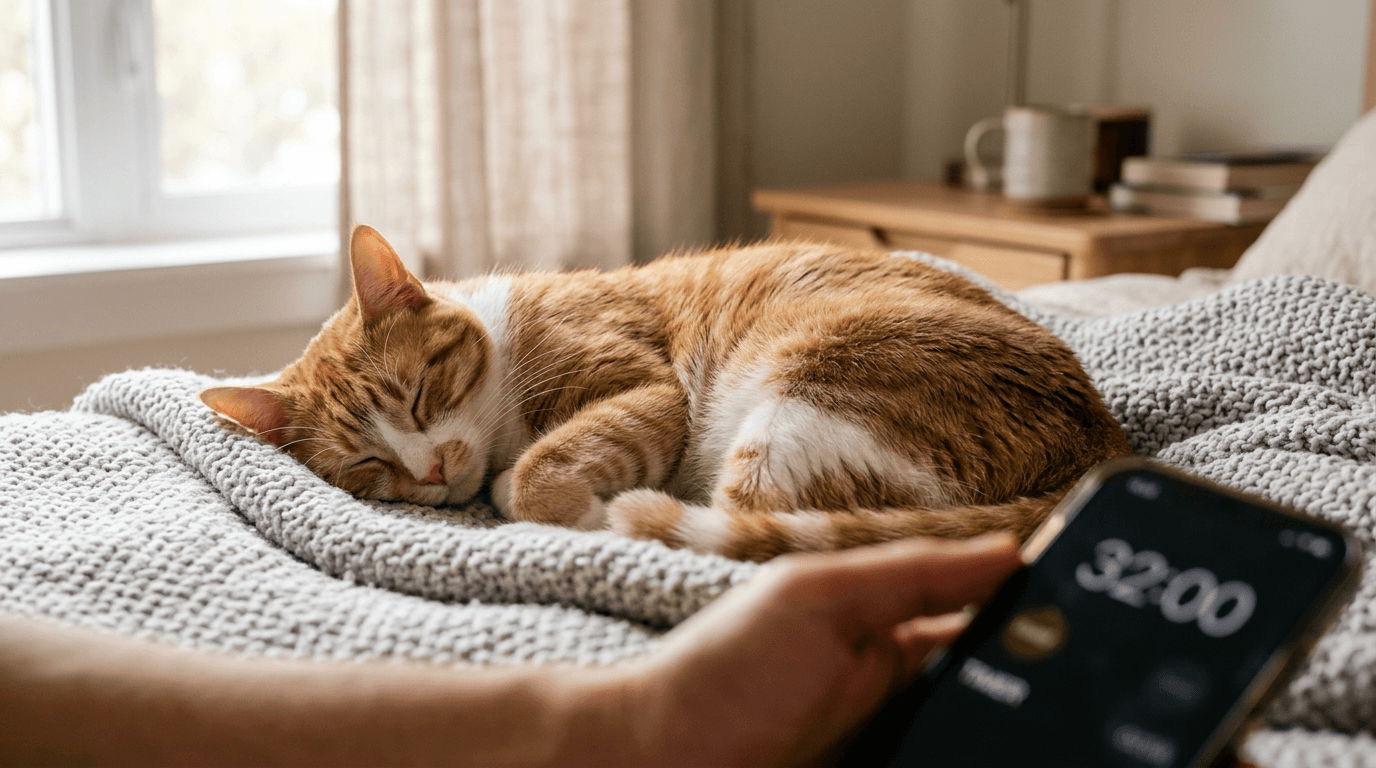
If you already know how to count resting breaths, do it while your cat is asleep or truly relaxed. A rising resting respiratory rate compared with your cat’s normal can be an early sign something is wrong. Many vets get concerned when a truly resting rate stays above roughly 30 to 40 breaths per minute, but your cat’s baseline and the full picture matter. When in doubt, call.
2) Remove likely irritants
- Stop sprays, diffusers, candles, incense, and smoking indoors.
- Switch to an unscented, low-dust litter if yours is dusty.
- Run a HEPA air purifier if you have one.
- Keep your cat in a quieter room away from fumes or dust.
3) Capture a quick video
Get a short clip of the episode and a second clip of your cat breathing at rest. Bring both to your appointment or send them if your clinic accepts videos.
4) Avoid human meds
Please do not give cough syrup, decongestants, essential oils, or leftover antibiotics without veterinary direction. Many common human products are dangerous for cats, and suppressing a cough can hide worsening breathing trouble.
Watch or call?
Call an emergency vet now
- Open-mouth breathing or panting that is not from brief stress
- Blue, gray, or very pale gums
- Severe breathing effort, belly heaving, flared nostrils, or obvious distress
- Collapse, extreme weakness, or unable to settle
- Possible toxin or smoke inhalation, or you think something may be stuck or inhaled
If your cat is struggling to breathe, keep handling minimal, keep them calm, and go in. Do not try to “wait it out.” If you need to transport them, use a carrier if possible and avoid stressful restraint.
Call your regular vet within 24 hours
- Coughing that continues more than a day or two, even if your cat otherwise seems okay
- Recurring cough episodes that happen weekly or monthly
- Cough plus wheezing or noisy breathing
- Cough plus poor appetite, hiding, feverish behavior, or low energy
- Kittens, seniors, or cats with known heart or lung disease who start coughing
You can usually watch closely for 24 hours if
- The cough happened once or twice and stops
- Your cat’s breathing is normal at rest
- Energy and appetite are normal
- You can identify a short-term trigger (like a dusty room) and remove it
Even in the “watch” category, trust your gut. If your cat looks uncomfortable, the cough returns, or anything about breathing seems off, call.
What your vet might do
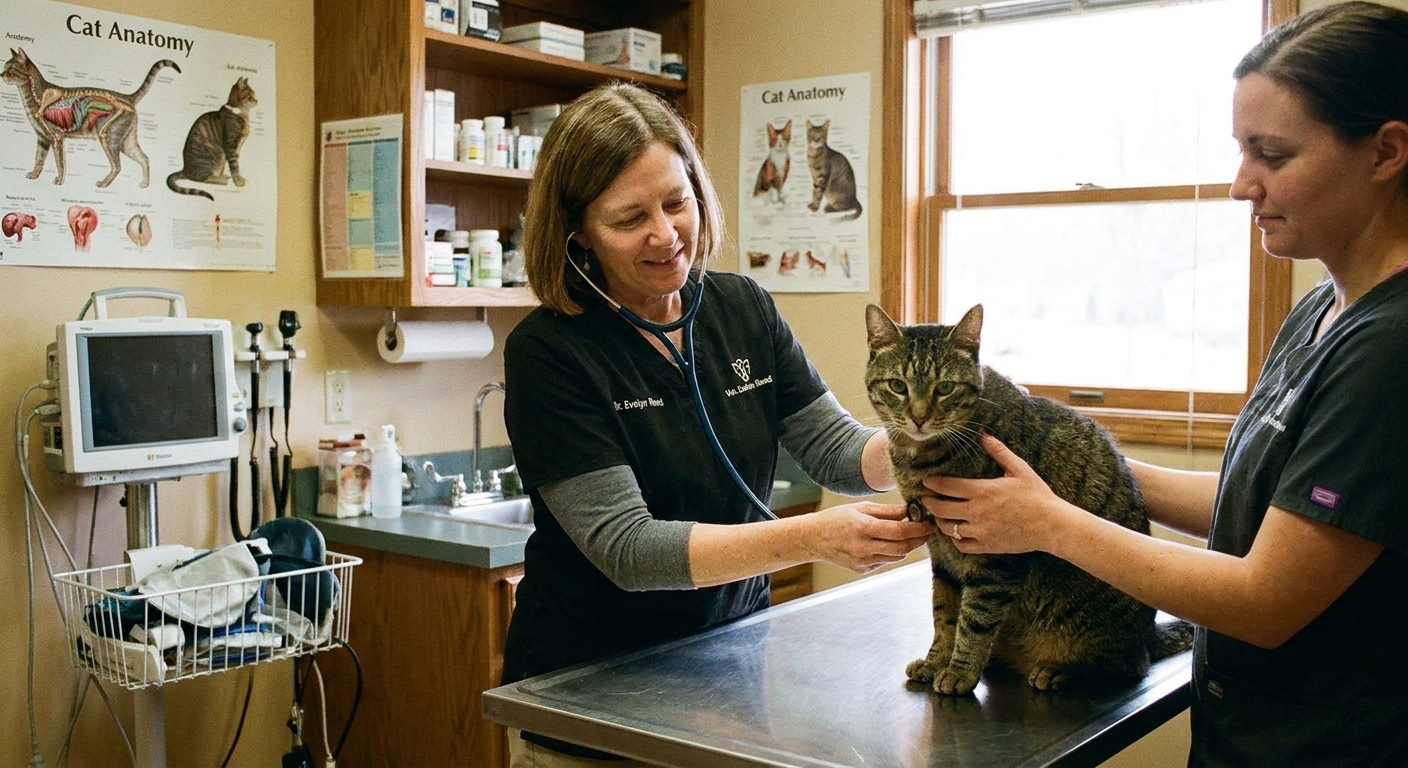
Knowing what to expect can make the appointment feel less stressful.
- History and video review: when the cough happens, triggers, frequency, and what it sounds like.
- Physical exam: listening to the heart and lungs, checking temperature and hydration.
- Chest X-rays: often the most helpful first test for asthma, bronchitis, pneumonia, heart enlargement, or fluid patterns.
- Lab work: to look for infection, inflammation, or underlying disease.
- Parasite testing or deworming plan: depending on risk.
- Heartworm testing: your vet may recommend a combination of tests based on geography and lifestyle.
Treatment could include inhaled or oral medications for asthma or bronchitis, antibiotics when appropriate, parasite treatment, or environmental changes. The best plan depends on the cause, which is why persistent cough deserves a workup.
Quick FAQ
My cat coughs like a hairball but nothing comes up. Is that asthma?
It can be. That “hairball cough with no hairball” pattern is common with asthma, but other issues can mimic it. A video plus a vet visit, often with chest X-rays, is the safest way to sort it out.
Can an indoor cat really get heartworm?
Yes. It is less likely than in outdoor cats, but mosquitoes get indoors. Because cats can have serious disease with a small number of worms, talk with your vet about prevention for your area.
Should I give a hairball remedy when my cat is coughing?
If you are sure it is classic hairball retching and your cat is otherwise normal, hairball management may help. If it looks more like repeated coughing, especially without producing anything, skip the guessing and call your vet. Treating cough like hairballs can delay care for asthma or infection.
What if my cat coughs after running around?
Coughing triggered by exercise or excitement can point toward asthma or airway sensitivity. It is worth scheduling a vet check, especially if it repeats.