If your vet ever asks, “What’s her resting respiratory rate?” it can feel oddly intimidating. I promise it does not need to be. You are not diagnosing anything at home. You are collecting one clean, repeatable data point that helps your veterinary team decide what to do next.
The key is to count only when your cat is fully asleep and not purring. Then you’ll log what you see, with the date and time, so your vet gets a helpful trend instead of a one-off number.
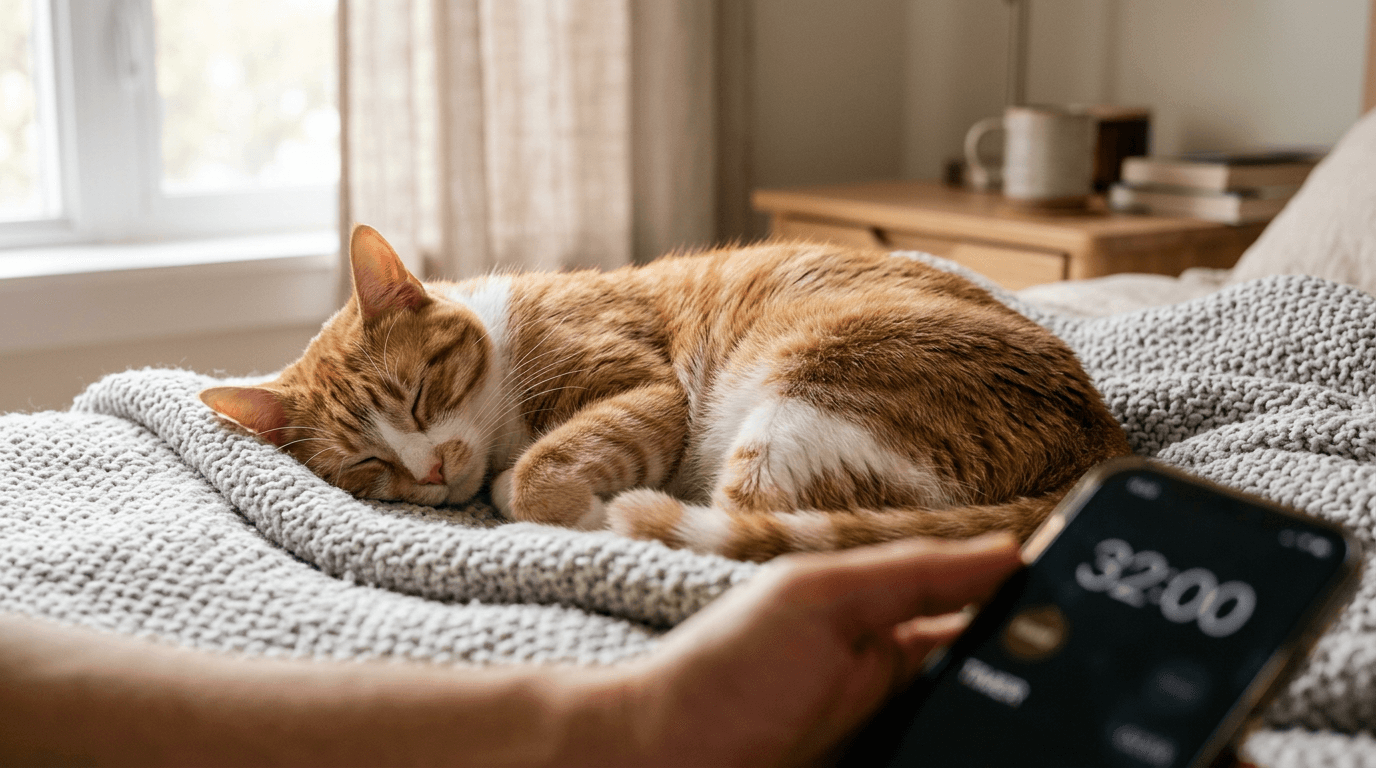
Why your vet cares about breathing rate
Your cat’s breathing rate at rest is one of the simplest “vital signs” you can gather at home. When it’s measured the same way each time, it can help your vet:
- Get a baseline for your individual cat
- Track change over time after a diagnosis or medication change
- Decide whether symptoms should be monitored at home or checked right away
What matters most is consistency and context, not perfection.
Before you count
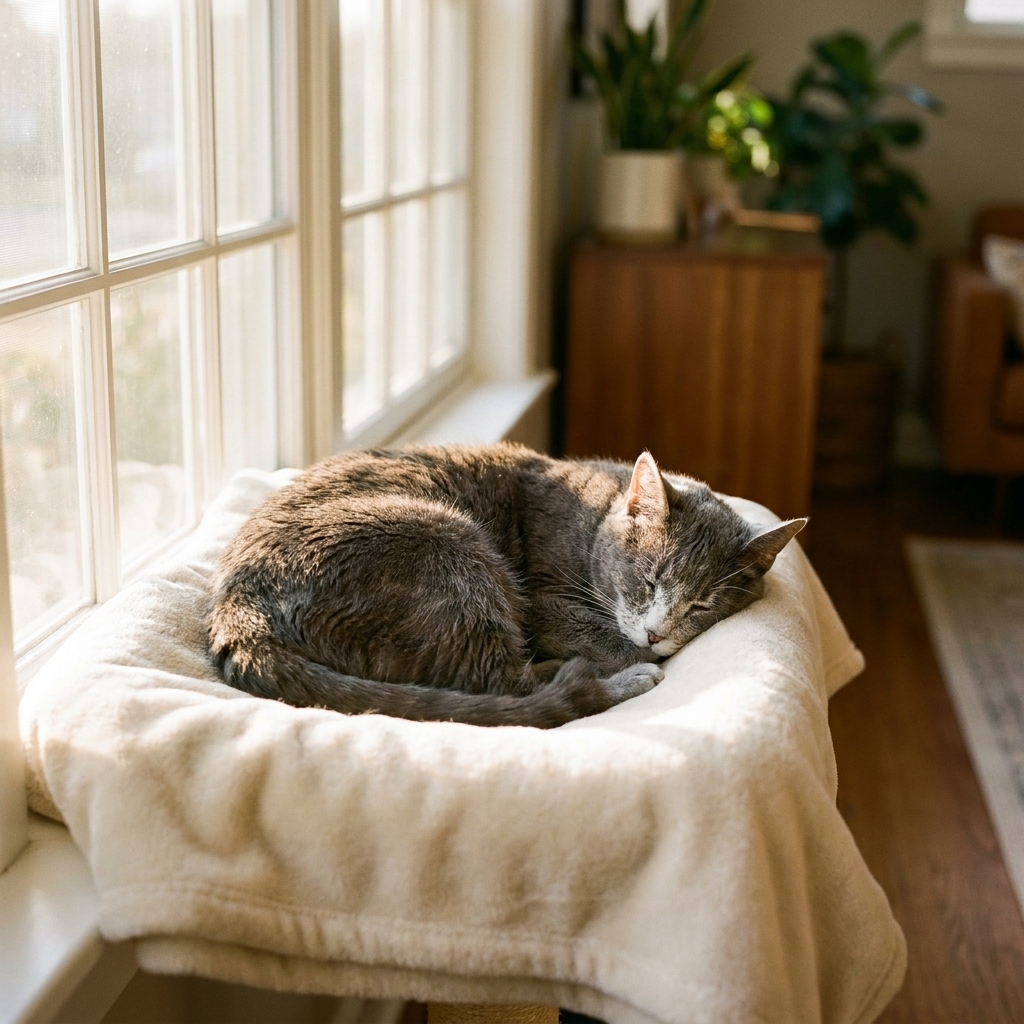
Wait for real sleep
Count when your cat is asleep, not loafing with half-closed eyes. If an ear is swiveling to every sound or their eyes pop open when you shift, they are probably resting but not fully asleep.
Make sure there’s no purring
Purring can create subtle body vibrations that make counting chest movement tricky and can throw off your rhythm. If your cat is purring, wait until they stop or choose another sleep session.
Pick a spot you can see
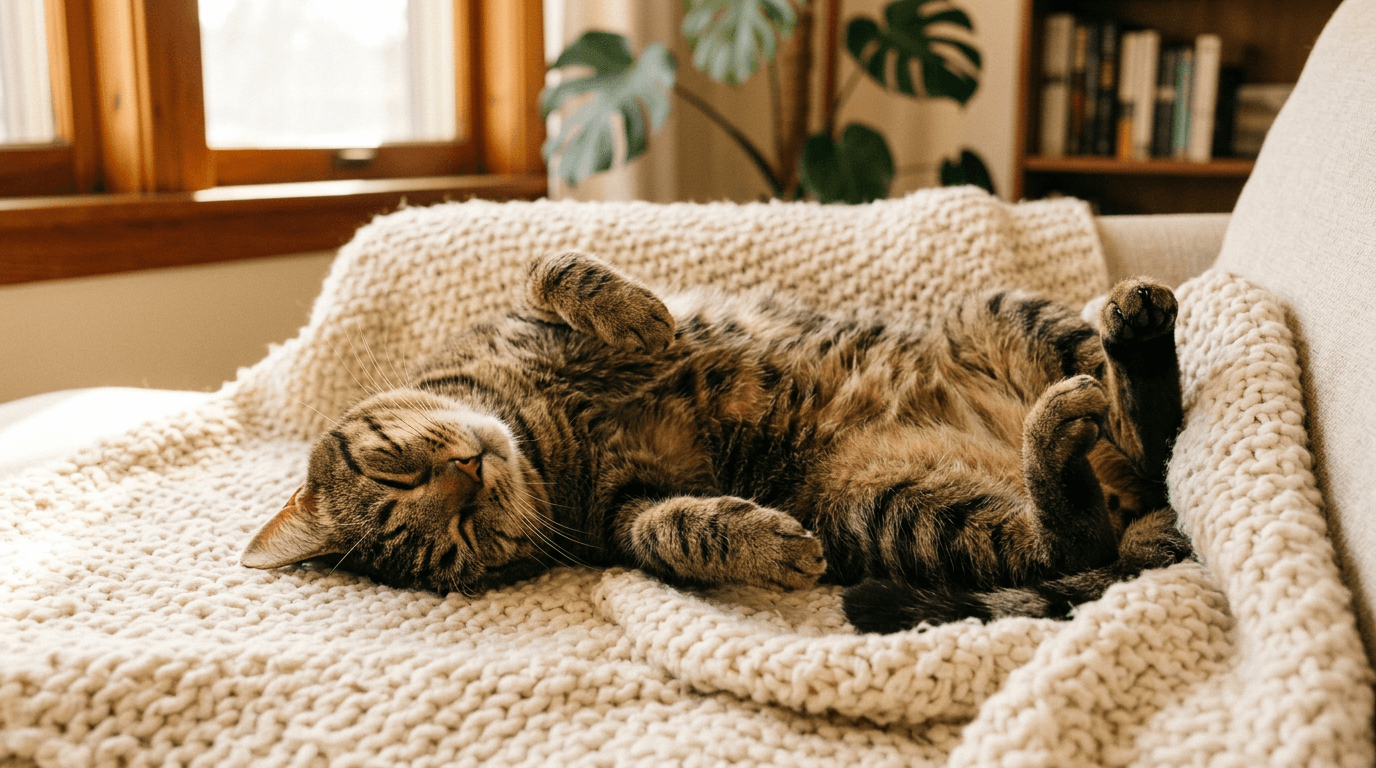
Depending on your cat’s sleeping position, the movement may be easiest to see at:
- The chest
- The side of the ribcage
- The belly (some cats show more motion here)
If you cannot clearly see a rise and fall, do not guess. Just try again later.
How to count
Here’s the method I teach fosters and adopters because it’s simple and repeatable.
Watch for one complete rise and fall. That full cycle is one breath.
Start a timer for 30 seconds. Count each breath (each rise-and-fall) you see during those 30 seconds.
Multiply by 2 to get breaths per minute.
If your cat’s breathing is irregular or you lose count because they twitch or change position, reset and start again. It is better to take longer and get a clean count.
Option: count for 60 seconds
If math makes you second-guess yourself, count for 60 seconds instead. This can also be helpful if breathing seems variable. The tradeoff is that cats sometimes wake up before the minute is over.
What is normal?
Healthy resting breathing rates in cats are often cited around 20 to 30 breaths per minute when fully asleep and relaxed. Some cats will sit a little above or below that depending on stress, temperature, body position, and individual variation.
Instead of obsessing over one number, aim to learn your cat’s usual pattern and share trends with your vet.
Important: If you are seeing a consistently elevated rate at rest, do not wait weeks to mention it. Call your veterinary clinic for guidance, especially if anything else seems “off.”
Keep a simple log
A single measurement can be misleading. A simple log, even for a few days, is incredibly useful.
What to write down
- Date and time
- Breaths per minute (and whether you counted 30 seconds x2 or a full 60 seconds)
- Sleep state (asleep, deeply asleep, just fell asleep)
- Anything relevant (recent play, stressful event, medication given, warm room)
A quick example
- Oct 18, 9:40 pm: 24 bpm (30 sec x2), deeply asleep, no purring
- Oct 19, 7:15 am: 26 bpm (60 sec), asleep, room warm overnight
- Oct 20, 10:05 pm: 32 bpm (30 sec x2), asleep, after a short zoomie session 20 minutes earlier
If your cat has a medical condition, your veterinarian may give you a specific threshold and frequency for monitoring. Follow their plan even if it differs from general advice online.

When to get urgent help
Counting breaths is only helpful if you also know when to stop counting and get help.
Contact a veterinarian urgently (or an emergency clinic, depending on your cat’s condition and your clinic’s instructions) if you notice:
- Open-mouth breathing (in cats, this is a big red flag)
- Effortful breathing, like pronounced belly heaving, strong chest pumping, or visible strain
- Breathing with neck extended or elbows held away from the body as if they cannot get comfortable
- Blue, gray, or very pale gums
- Collapse, extreme lethargy, or sudden weakness
If your cat seems to be working to breathe, do not spend extra time trying to get the perfect number. Your video and your description can be just as valuable. If it is safe to do so, take a short video of the breathing effort on your phone while you arrange care.
Common mistakes
Counting while your cat is awake
Cats breathe faster when alert, watching birds, or anticipating dinner. Wait for sleep, ideally in a quiet room.
Counting purring as breaths
Purring can trick your eyes. If you feel vibration when you rest a hand near your cat, pause and try later.
Counting too soon after play
After zoomies or a chase toy session, a temporary increase can be normal. Give them 15 to 30 minutes to fully settle, then count during sleep.
Touching the chest and waking them
Some cats tolerate gentle contact, many do not. You can usually count visually from a comfortable distance. If touching wakes them, skip it.
FAQ
Should I count if my cat is resting but not asleep?
If your vet specifically asks for a resting rate and your cat will not fall asleep, you can try counting when they are truly relaxed and still. Just note in your log that your cat was awake. Sleeping counts are usually more consistent, which is why I prefer them.
My cat’s chest barely moves. How can I count?
Try watching the ribcage from the side, or watch the belly just behind the ribs. If your cat is tucked tightly into a “cat ball,” you may need to wait until they sprawl out.
What if my cat purrs in their sleep?
Some cats do. In that case, aim for a moment of quiet breathing, or take multiple short attempts and record the cleanest count you can get. Let your vet know purring made it tricky.
Should I wake my cat to check their breathing?
No. If your cat is sleeping comfortably and breathing looks easy, let them rest. If you are worried about the way they are breathing, that is different. Seek veterinary guidance rather than repeatedly waking and stressing them.
One last tip
If you have a cat with a known heart or respiratory condition, ask your vet for a clear “action line,” for example: “If the sleeping rate is above X breaths per minute twice in a row, call us.” Having that number written on your fridge takes a lot of midnight anxiety out of the equation.
And if your gut says your cat is struggling to breathe, trust that instinct. Counting is useful, but your cat’s comfort and safety come first.