The first time Clementine limped across my kitchen, I did what a lot of loving cat parents do. I panicked quietly, tried to “act normal” so I would not scare her, and then immediately started replaying every jump and sprint from the last 24 hours.
If your cat is limping, you are not overreacting. Cats are masters at masking pain, so a limp is often one of the clearest clues you will ever get that something hurts. The good news is that many causes are fixable once you identify what is going on, and a calm, methodical check at home can help you decide what needs urgent veterinary care.
Start here: sudden limp or slow-building limp?
This one question helps sort “we should go today” from “let’s book soon and support them at home.” Think about what you noticed and how quickly it changed.
A sudden limp (minutes to a day)
- Common themes: stepped on something, torn nail, paw pad cut, sprain or strain from a jump, bite wound that is starting to hurt, sting, or a fracture/dislocation.
- What it looks like: your cat is suddenly three-legged, flinches when the paw touches the floor, or cries/hisses if you try to pick them up.
A gradual limp (days to weeks)
- Common themes: arthritis, chronic soft-tissue injury, slowly worsening nail or paw issue, old injury flaring up, or pain elsewhere that changes how they walk (hips or spine).
- What it looks like: stiffness after naps, “warming up” after a few steps, reluctance to jump, or slower stairs. Some cats stop playing before you ever see a clear limp.
Trust your gut: if you are seeing a limp at all, your cat likely feels more discomfort than they are showing.
Quick safety setup before you examine anything
I have handled a lot of sore cats, and the pattern is consistent: the nicer the cat, the more surprised you will be by a pain bite. Set yourself up to avoid getting hurt and to avoid making your cat’s injury worse.
- Choose a small, quiet room with the door closed.
- Bring a towel and a strong light (phone flashlight works).
- Move slowly and keep your voice low.
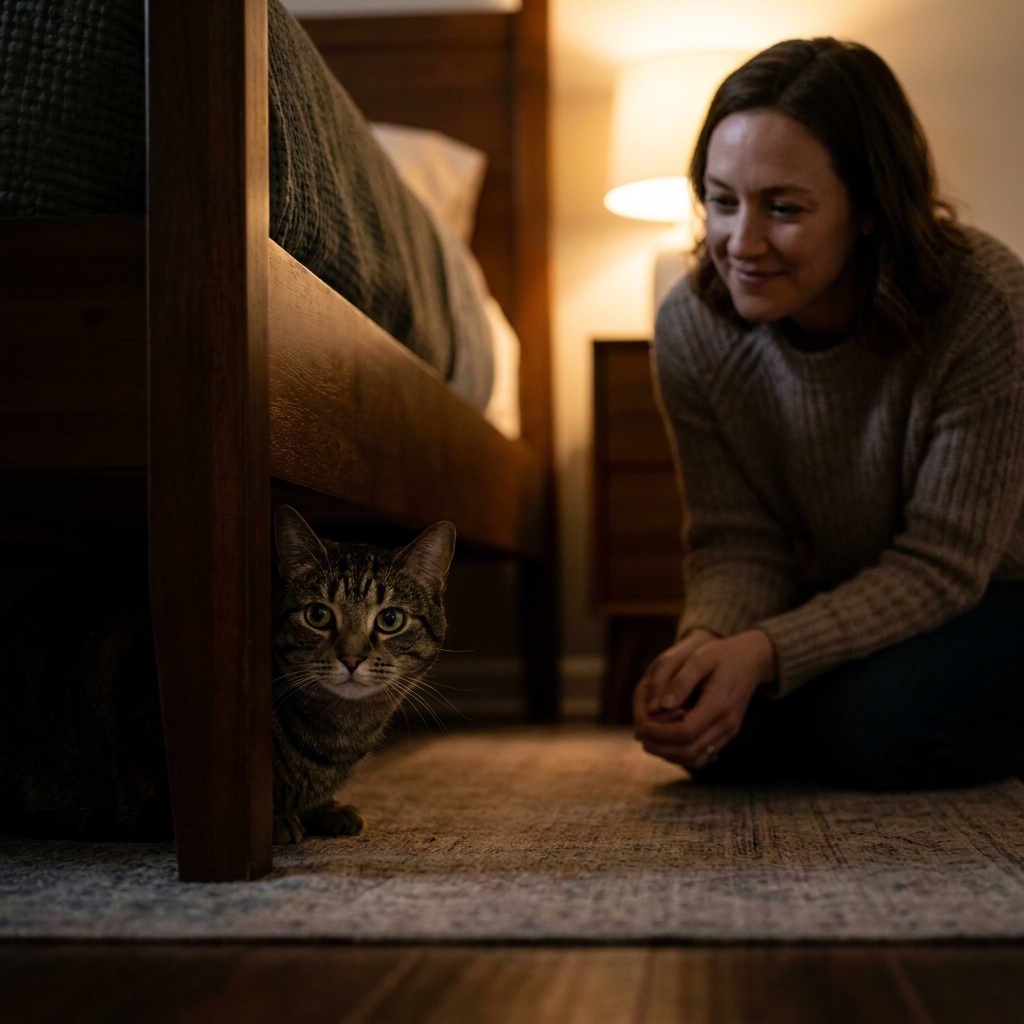
- If your cat is growling, panting, or trying to flee, stop. That is information. It is okay to switch to “call the vet” mode.
Safe at-home checks: paws first, then up the leg
Often, the problem is in the paw, not the bones higher up. Start with what you can see without bending joints or forcing movement.
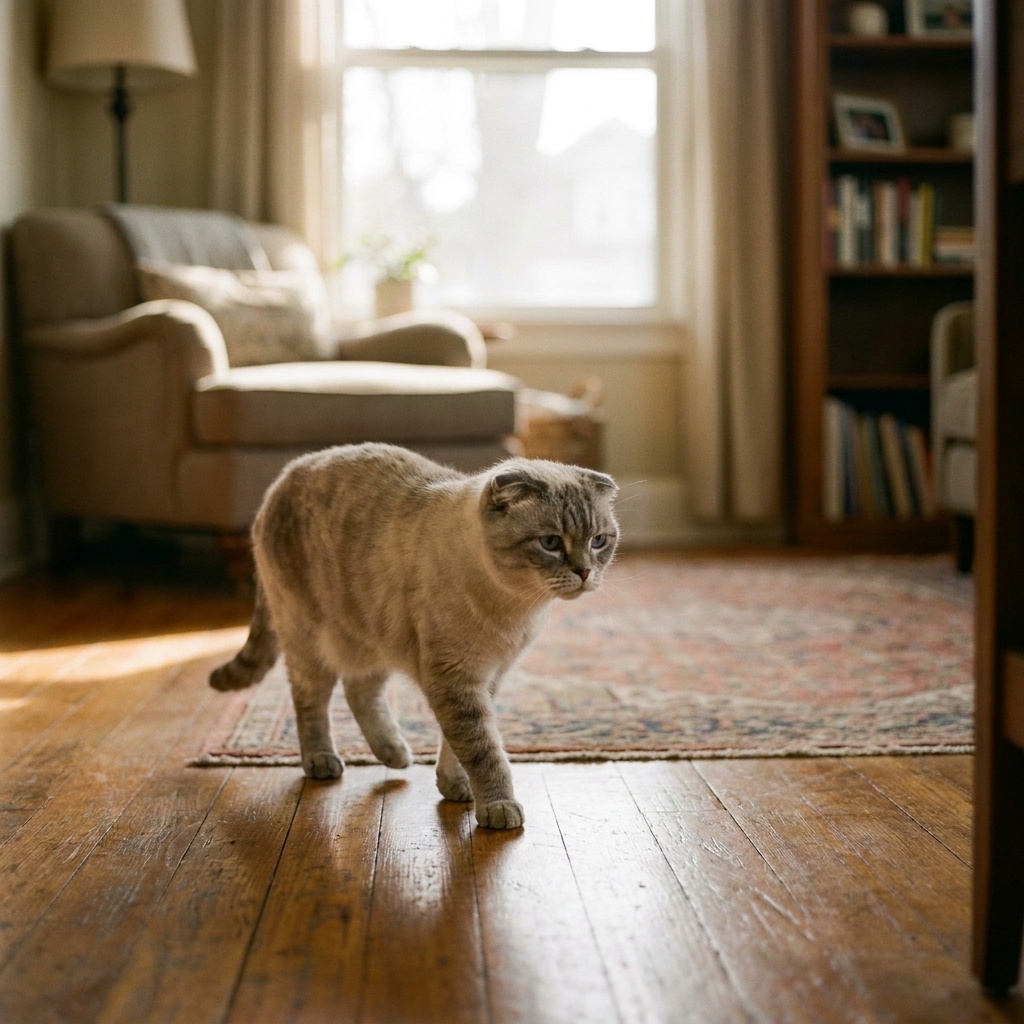
Step 1: Watch one short walk-by
On a non-slip surface, see which leg is affected and whether your cat will place the foot at all. A cat that will not put the foot down is telling you it hurts a lot.
Step 2: Check all paws for obvious issues
Even if you are pretty sure which leg is sore, look at all four feet. Cats will sometimes shift weight in a way that makes the “wrong” leg look like the problem.
Without squeezing, check:
- Torn or broken nail: nail looks jagged, split, bleeding, or missing. Some cats lick obsessively.
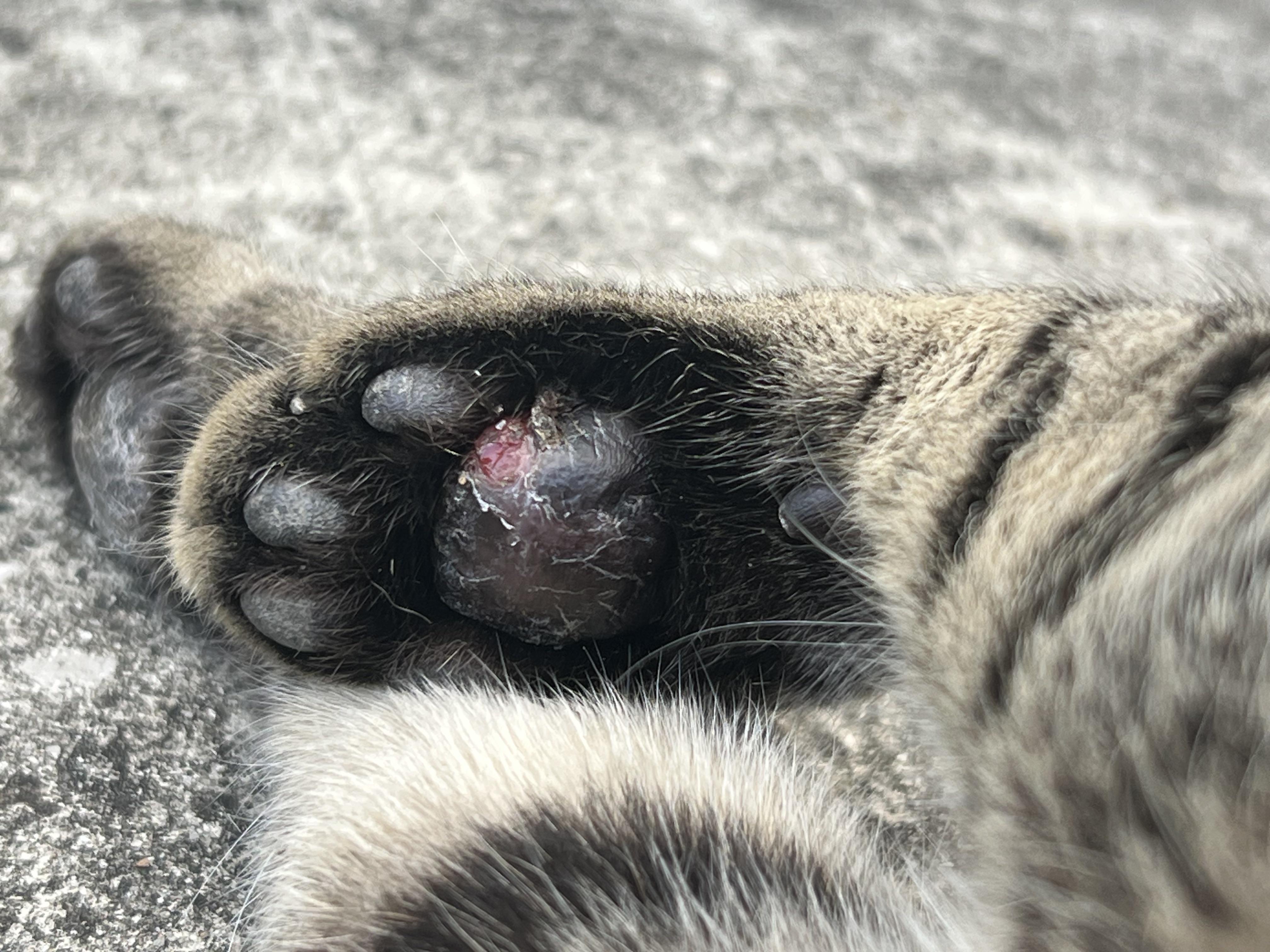
- Paw pad cut or abrasion: a flap of pad, a slice, or a raw spot. You may see blood smears or tiny spots on the floor.
- Something stuck: litter clump, burr, thorn, glass sliver, dried sap, or a tight band of hair between toes (common in long-haired cats).
- Swelling between toes: can suggest a puncture wound, sting, or infection starting.
- Claw snag: a nail hooked into fur, fabric, or carpeting can make a cat suddenly refuse to bear weight.
Step 3: Check for heat, swelling, and pain response
Compare the sore leg to the other side. Look and lightly feel for:
- Swelling in the paw, ankle, wrist, knee, or elbow area
- Heat (warmer than the other side)
- Visible wound, scab, or drainage
- Reaction to gentle touch like pulling away, crying, turning to bite, or sudden tense body posture
If you see swelling or your cat reacts sharply, stop the exam. This is a strong sign you should call your vet for same-day guidance.
Common reasons cats limp (and what you might notice)
Torn nail or nail bed injury
This is one of the most common sudden-limp culprits, especially in active cats who snag a claw on carpet or a scratching post.
- Clues: licking the paw, small spots of blood, a nail that looks crooked, split, or missing.
- Why it hurts: the nail bed has nerves and bleeds easily.
What to do now: keep your cat indoors and calm. If bleeding is present, apply gentle pressure with clean gauze for a few minutes. If the nail is dangling, do not pull it off. Let your vet handle it.
Paw pad cut or burn
Sharp debris, rough surfaces, and hot pavement can injure pads. Indoor cats can cut pads on broken glass, staples, or even a rough edge on a cat tree.
- Clues: visible cut, limping that worsens on hard floors, reluctance to jump down, licking.
What to do now: rinse briefly with clean lukewarm water if there is dirt. Avoid peroxide or alcohol, which can damage tissue, unless your veterinarian instructs otherwise. Keep the paw clean and call your vet if the cut is deep, gaping, or your cat will not bear weight.
Abscess (often from a bite wound)
Abscesses are sneaky. The puncture can be tiny, then bacteria get trapped under the skin and infection builds. Many abscesses show up within about a week after a scuffle, often on outdoor or indoor-outdoor cats.
- Clues: sudden limp plus a warm swelling, a painful lump, lethargy, decreased appetite, or a spot that begins to ooze foul-smelling fluid.
- Where you might find it: near the base of the tail, hips, legs, or between toes.
What to do now: this is a veterinary problem. Abscesses typically need draining, pain control, and sometimes antibiotics.
Sprain or strain
Cats can absolutely overdo it, especially after a big jump, a slippery landing, or a midnight zoomies collision with the coffee table (Waffles has made that exact choice).
- Clues: limping after a known jump or fall, no obvious paw injury, discomfort with gentle handling around a joint, improves slightly with rest but returns with activity.
What to do now: restrict activity for 24 to 48 hours: no jumping, no stairs if possible, and keep play gentle. If there is no improvement within 24 hours, or if your cat will not use the leg at any point, call your vet. Cats can hide fractures that look like “just a strain.”
Arthritis (especially in older cats)
Arthritis is very common in older cats, and it is often missed because cats change their behavior long before they limp dramatically.
- Clues: stiffness after resting, slower movements, hesitating at jumps, sleeping more, grooming less (especially lower back), irritability when touched, or “bunny-hopping” up stairs.
- Pattern: often worse in cold weather or after a very active day.
What to do now: schedule a veterinary appointment. Effective arthritis care usually includes cat-safe pain relief, joint support strategies, weight management if needed, and home modifications like lower entry litter boxes and step stools.
Other causes your vet may check
Sometimes the limp is real, but the source is not the paw. Your veterinarian may look for issues higher up the leg or even outside the leg entirely, including hip or spine pain, kneecap or ligament injuries, and neurologic problems that affect coordination.
There are also a few serious conditions that need urgent attention because time matters.
Subtle signs your cat is in pain
Cats rarely announce pain loudly. Look for these quiet tells:
- Hiding more than usual or staying in one room
- Less jumping or “thinking about it” before jumping
- Sleeping in odd places to avoid being bumped
- Changes in grooming: overgrooming one spot or looking unkempt
- Flattened ears, squinty eyes, tense face
- Growling, swatting, or suddenly “not wanting cuddles”
- Decreased appetite or not coming for treats
- Missing the litter box edge, or avoiding a high-sided box
What not to do
Do not give human pain medicine
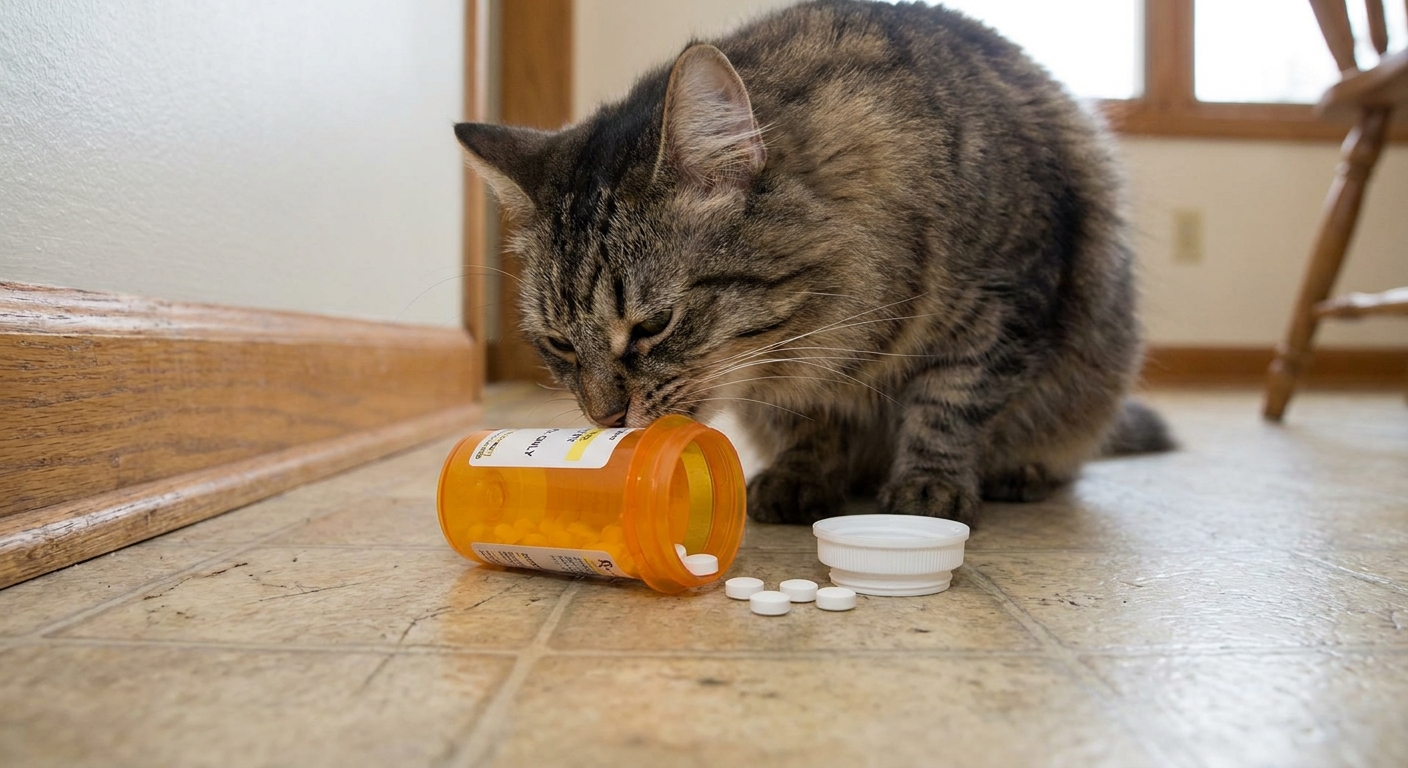
This is the big one. Many human pain relievers are toxic to cats, even in small amounts. That includes acetaminophen and ibuprofen, and it is not safe to guess doses with any over-the-counter medication.
If you already gave a human medication, call your veterinarian or an emergency clinic right away for next steps.
Do not bandage or splint unless a clinic tells you to
I know it is tempting, especially if you have wrapped a dog’s paw before. With cats, home bandages often slip, get too tight, hide worsening swelling, or create sores. If there is a fracture or dislocation, an incorrect wrap can also increase pain or damage.
The one time a wrap may come up is for short-term bleeding control on a paw, but that is best done with a clinic’s guidance so you do not make things worse on the way in.
Do not force range-of-motion tests
If you try to “see if it bends,” you can worsen an injury. A quick visual check and a gentle touch are enough for home triage.
Do not encourage activity to “walk it off”
Rest is protective. Confine your cat to a smaller space and pause rough play until you know what you are dealing with.
How to keep your cat comfortable while you call the vet
- Limit movement: use a single room with food, water, and a nearby litter box.
- Make things easy: offer a low-entry litter box and place water close to their resting spot.
- Create traction: put down a yoga mat or towel on slippery floors so they do not slide.
- Use a carrier calmly: if you need to transport, let your cat walk in if possible and avoid squeezing the sore leg.
If your cat allows it, you can take a couple of clear photos of the paw, any swelling, and a short video of the limp to show your vet. Those can be surprisingly helpful.
Same-day vet signs
If you see any of the following, call your vet or an emergency clinic the same day:
- A dangling leg or the limb looks unstable or “out of place”
- Your cat will not put the foot down or cannot bear weight
- Swelling of the paw or leg, especially rapid swelling
- Visible wound (puncture, deep cut) or bleeding that does not stop
- Hot, painful lump that could be an abscess
- Crying out, open-mouth breathing, or collapse
- Cold limb or pale or blue paw pads
- Sudden hind-limb weakness or dragging (especially if your cat seems panicked or painful)
- Signs of severe illness like not eating, hiding intensely, feverish warmth, or extreme lethargy
- Known fall or trauma (even if your cat seems “mostly fine” afterward)
If your cat is limping and also seems generally unwell, treat it as urgent. Pain and infection can escalate quickly in cats.
FAQ
My cat is limping but acting normal. Can I wait?
Sometimes, yes, for a very short window, especially if the limp is mild and your cat is otherwise bright and eating. But if there is no improvement within 24 hours, or if your cat stops bearing weight at any point, contact your vet.
If your cat is a kitten, a senior, or has known heart disease, diabetes, or other chronic conditions, I would lean more cautious and call sooner.
My cat is limping and licking their paw. What does that mean?
Excess licking commonly points to a paw-level problem like a torn nail, something stuck between toes, a pad injury, or a puncture wound. If you cannot quickly see and remove a superficial irritant without a struggle, let your vet examine it.
Could limping be arthritis even if my cat is not that old?
Yes. Arthritis can show up in middle-aged cats, particularly if they are overweight, have a history of injury, or have joint conformation issues. Many cats show behavior changes first rather than a dramatic limp.
The bottom line
A limp is a pain signal, even if your cat is still purring and asking for dinner. Start by deciding whether it came on suddenly or gradually, do a gentle paw-first check for common issues like torn nails, pad cuts, and abscesses, and avoid home treatments that can cause harm, especially human pain meds and DIY wrapping.
When in doubt, I lean conservative: if your cat will not put the foot down, you see swelling, the leg dangles, the limb feels cold, or your cat seems “off,” that is a same-day vet situation.