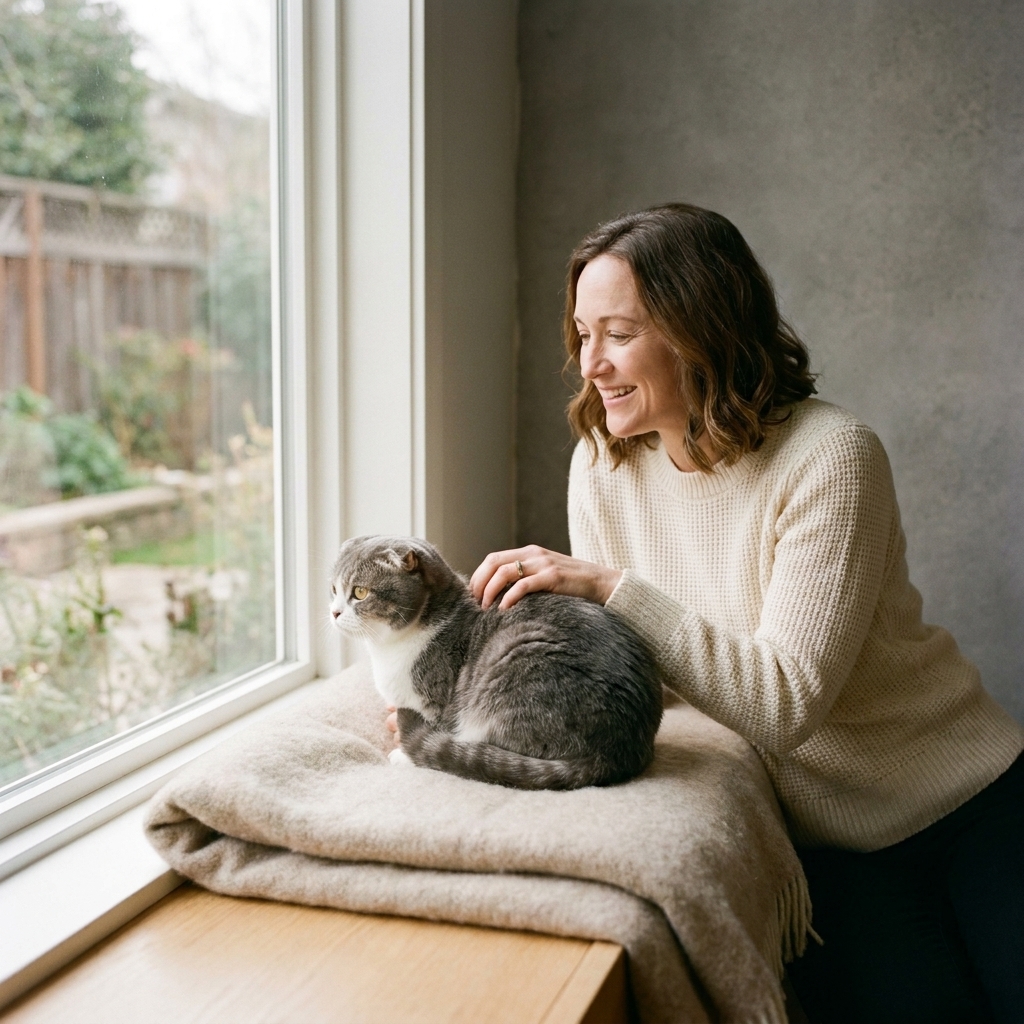
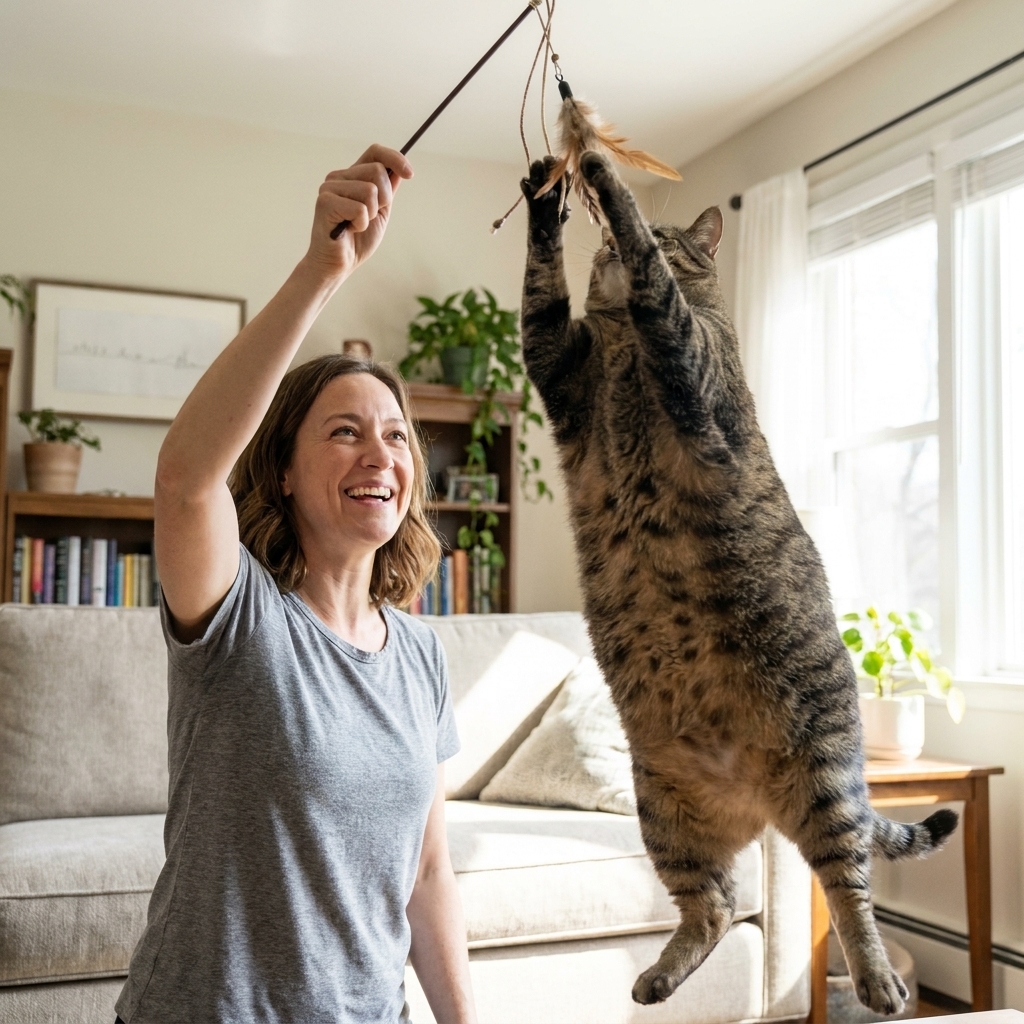
Scottish Folds are heartbreakingly lovable. Those folded ears and round, teddy-bear faces make people melt. But if you share your home with a Fold, there is one health topic worth keeping front and center: joint disease.
The ear fold is linked to a genetic cartilage disorder called osteochondrodysplasia (Scottish Fold osteochondrodysplasia, often shortened to SFOCD). In plain language, it means cartilage and bone do not develop normally. The ears are just the most visible part. The joints, tail, and sometimes even the way the toes and nails sit can be affected too.
I am going to walk you through what this condition looks like in real life, how to spot early symptoms, what a good veterinary workup involves, and the practical home changes that can make a huge difference in your cat’s comfort.
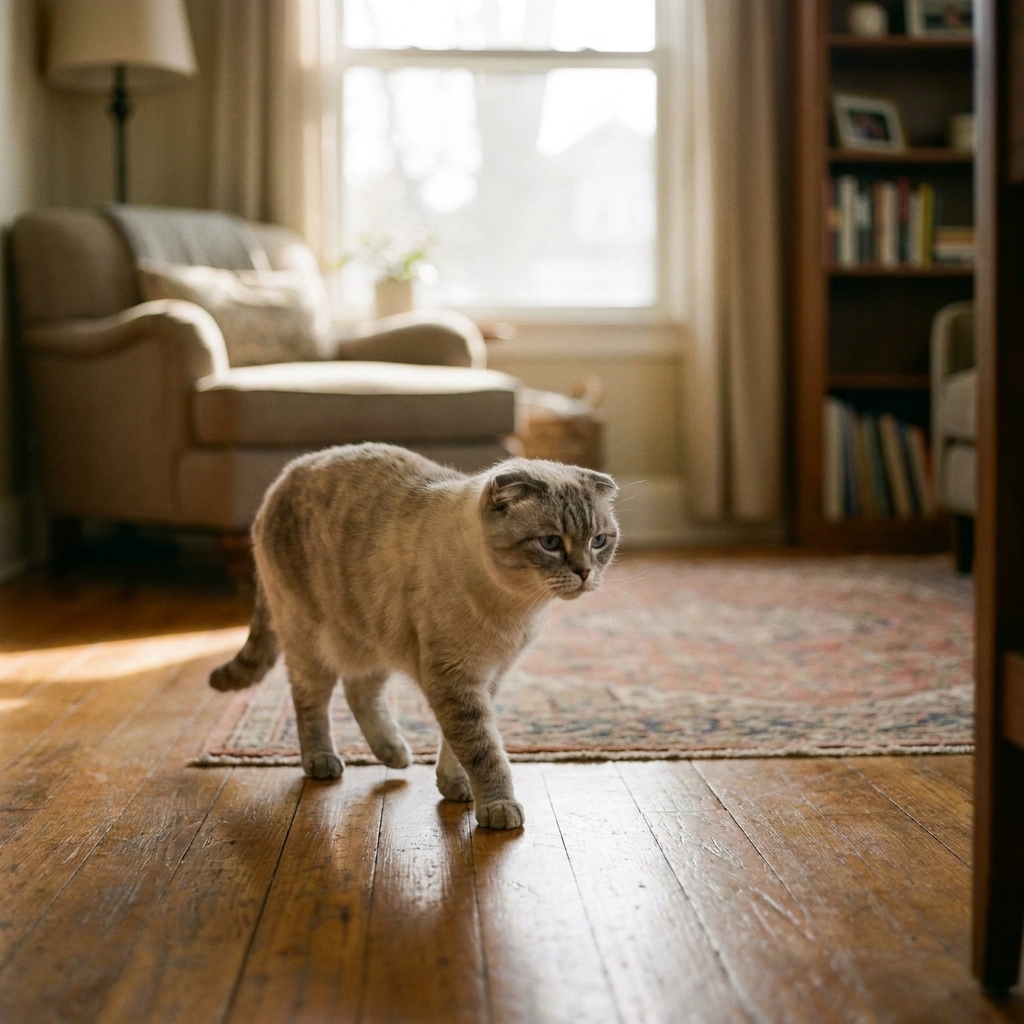
Why Scottish Folds have joint problems
Scottish Folds have a well-studied mutation in a gene involved in cartilage development (commonly referenced as TRPV4). Cartilage is the smooth, springy tissue that cushions joints. When cartilage is abnormal, joints can change earlier than they should, leading to pain, stiffness, and reduced mobility.
The trait is inherited with incomplete dominance. Cats that inherit two copies of the mutation (homozygous) are typically more severely affected than cats with one copy (heterozygous).
Osteochondrodysplasia: the condition behind the fold
SFOCD can cause:
- Arthritis and joint deformities, commonly in the ankles, knees, wrists, and toes
- Thickened or stiff tail that may be painful to touch or difficult to lift
- Reduced flexibility and changes in gait, posture, and jumping
Severity varies. Some cats show signs young, while others look “fine” until middle age. Even mildly affected cats can experience chronic, progressive discomfort without early support.
Does ear type matter (folded vs straight)?
All folded-ear Scottish Folds carry the fold mutation, and many develop varying degrees of joint and tail changes over time. A “Scottish Straight” (a straight-eared cat from Fold lines) generally does not carry the fold mutation if the ears are truly straight, so the SFOCD risk is much lower. Still, any cat can develop arthritis or injuries, and family history, body weight, and lifestyle matter. If you have a Scottish Straight, it is still smart to keep mobility on your radar and discuss background and health history with your breeder, rescue, or veterinarian when possible.
Early signs owners miss
Cats are famously stoic. Many do not limp dramatically. Instead, they get quieter. They adapt. And we accidentally label the change as “lazy” or “just getting older.” For Scottish Folds, subtle changes deserve attention.
Movement and posture clues
- Hesitating before jumping onto the bed, couch, or windowsill
- Choosing lower surfaces or using furniture like steps
- Stiffness after naps or moving like they are “warming up”
- Bunny hopping with the back legs or a shortened stride
- Walking low with a crouched posture
- Shifting weight off one limb, even briefly
Grooming, litter box, and mood changes
- Overgrooming a sore joint area or under-grooming the back and hips
- Messy coat along the spine or hindquarters
- Litter box “misses” because stepping over a high side hurts
- Less play, fewer zoomies, or stopping play quickly
- Irritability when picked up, touched near the back end, or when the tail is handled
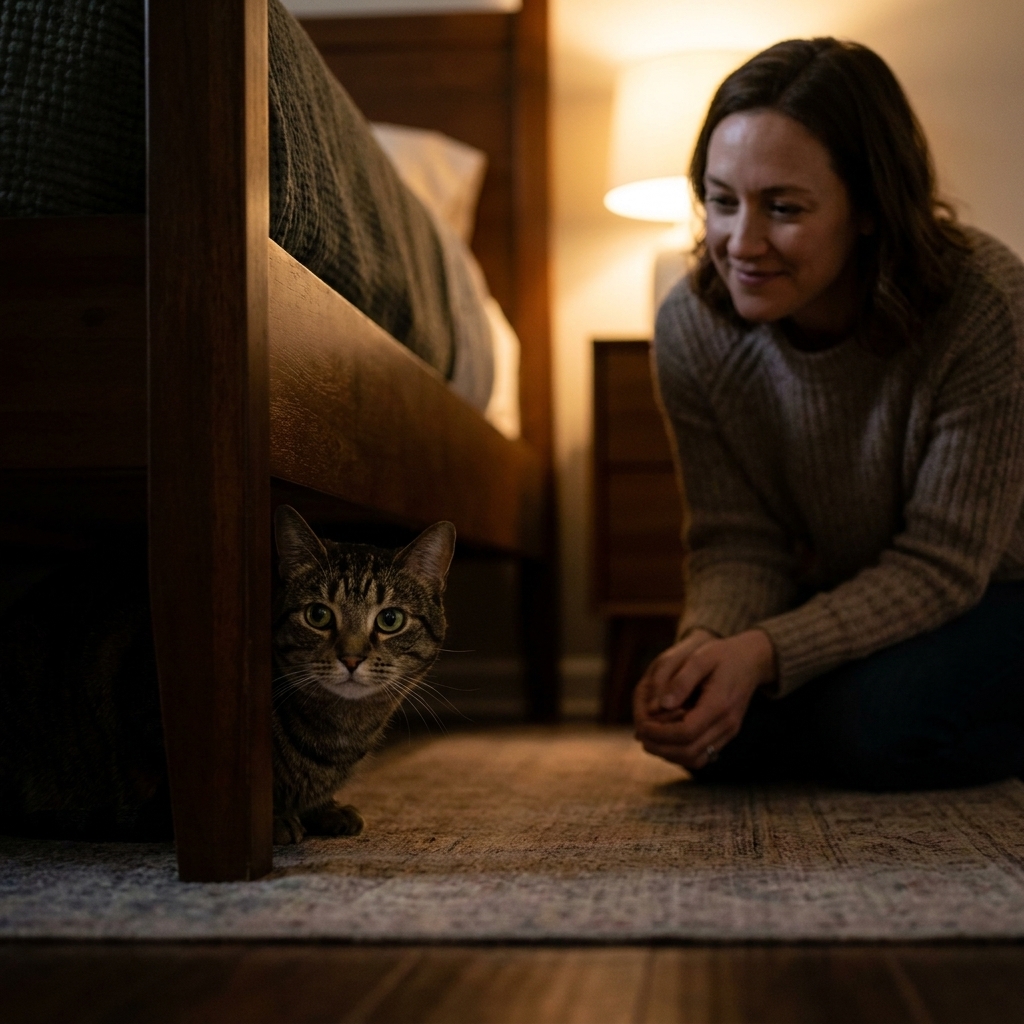
- Hiding more or sleeping in unusual places
Tail warning signs
With SFOCD, the tail can become thick, inflexible, and painful. Watch for:
- Tail held stiffly or not lifted as high
- Flinching when the tail base is touched
- Avoiding being petted along the spine
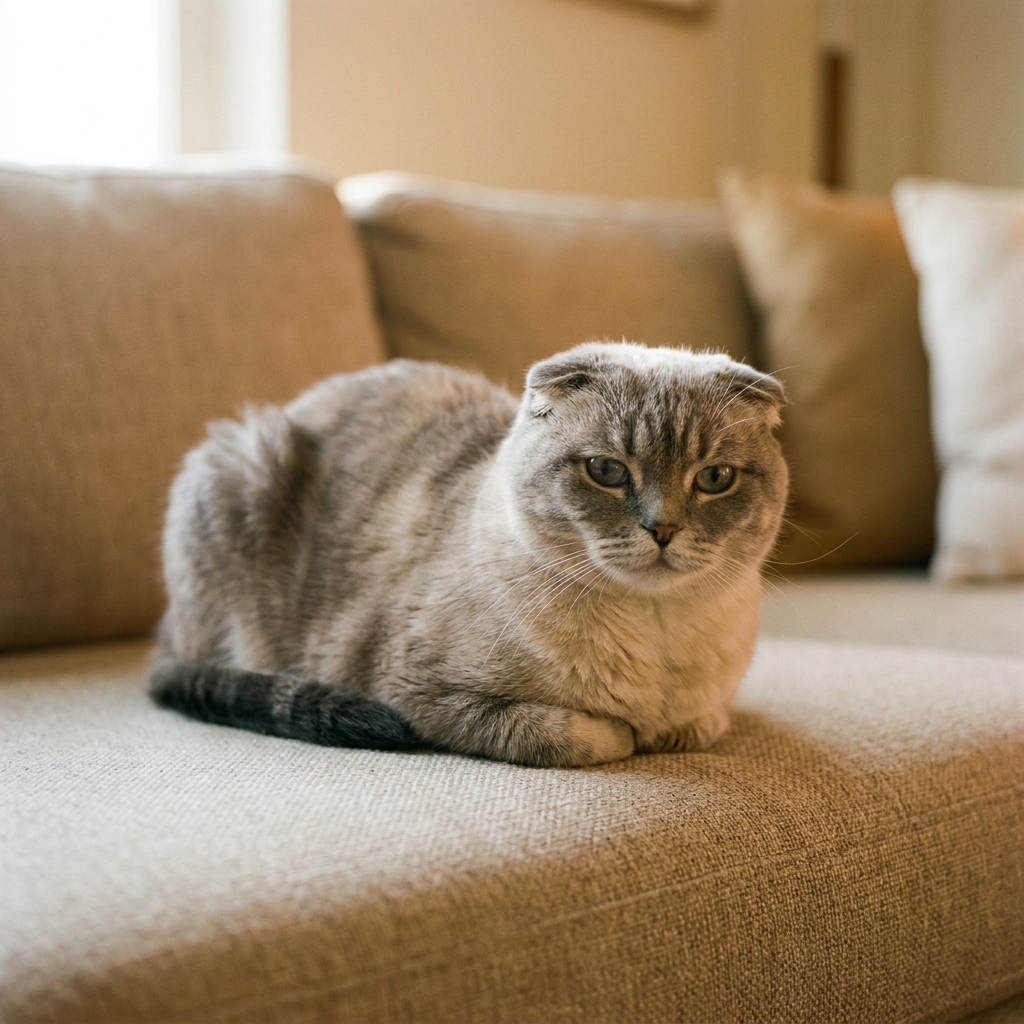
When to see the vet
If you see any mobility change that lasts more than a few days, schedule a visit. If your Fold seems painful, stops jumping suddenly, cries out, or becomes withdrawn, go sooner.
What diagnosis usually involves
Your veterinarian may recommend:
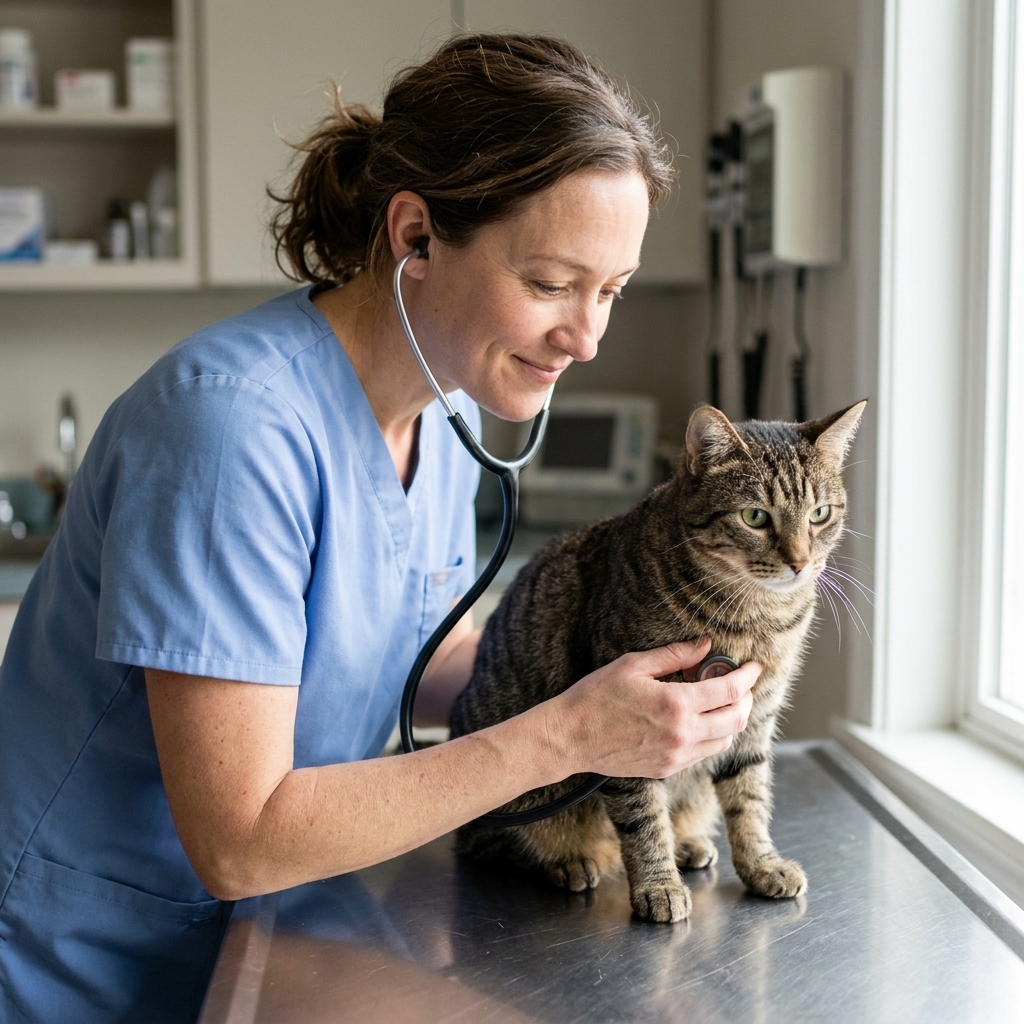
- Hands-on orthopedic exam to assess pain, range of motion, muscle loss, and joint thickening
- X-rays to look for bone and joint changes consistent with SFOCD and arthritis
- Pain trial in some cases, where response to treatment helps confirm pain as the driver of behavior changes
- Bloodwork before starting certain long-term medications
Not every cat needs advanced imaging, but for complicated cases, referral to a veterinary orthopedic specialist, neurologist, or rehabilitation practitioner can be very helpful.
What not to assume at home
SFOCD is common in Scottish Folds, but it is not the only reason a cat can limp or act “off.” Your veterinarian may also consider injuries, general osteoarthritis, patellar luxation, hip problems, neurologic issues, or even pain elsewhere (including dental pain) that changes grooming and mood.
Bring this to your appointment
You will help your vet more than you realize if you arrive with:
- Videos of your cat walking, jumping, using stairs, and entering the litter box
- A quick list of changes you have noticed (jumping, grooming, mood, appetite)
- Notes on which surfaces seem hardest (slick floors, stairs, high perches)
Cat pain can be sneaky. Video at home often shows what a stressed clinic cat hides.
Managing SFOCD
There is no cure for the underlying cartilage issue. But there is a lot we can do to reduce pain, protect joints, and keep your Fold enjoying normal cat things for as long as possible.
One helpful way to think about it is this: diagnosis tells you what is going on, but day-to-day management determines how comfortable your cat feels living with it.
1) Pain control
Please do not give human pain meds. Many are dangerous for cats.
Your vet may discuss options such as:
- Prescription pain relief tailored to cats and to your cat’s health profile
- Long-acting injectable options for chronic arthritis pain in some patients (for example, frunevetmab in regions where it is approved and appropriate)
- Adjunct medications if nerve-related pain is suspected
If your cat is still hesitating, hiding, or avoiding jumping after starting a plan, that is not failure. It often means the plan needs adjusting.
2) Weight and muscle support
If you take one prevention step seriously, make it this: keep your Scottish Fold lean.
Extra weight increases joint load and inflammation. Meanwhile, good muscle mass stabilizes joints. Ask your vet to help you set a realistic target weight and body condition score.
- Measure meals instead of free-feeding
- Prioritize high-protein, complete and balanced diets that support lean muscle
- Use food puzzles for gentle movement and mental enrichment
3) Joint supplements
Some cats benefit from veterinarian-recommended joint supplements. The evidence varies by ingredient and product quality, and results are usually subtle and gradual. In cats, evidence for glucosamine and chondroitin is mixed, and quality control matters, so this is a “choose carefully” category.
Commonly discussed options include:
- Omega-3 fatty acids (EPA and DHA)
- Glucosamine and chondroitin
- Green-lipped mussel
Because cats are tiny, dosing and product choice matter. I strongly recommend asking your veterinarian for a brand they trust and a dose based on your cat’s weight and health conditions.
4) Physical therapy and gentle movement
Many cats with chronic joint disease do well with targeted, cat-friendly rehab:
- Range-of-motion exercises taught by a professional
- Massage and heat therapy guidance
- Controlled play plans that build muscle without high impact
If your cat has significant pain or deformity, ask about referral to a certified rehabilitation practitioner. When it is done right, it is surprisingly cat-appropriate.
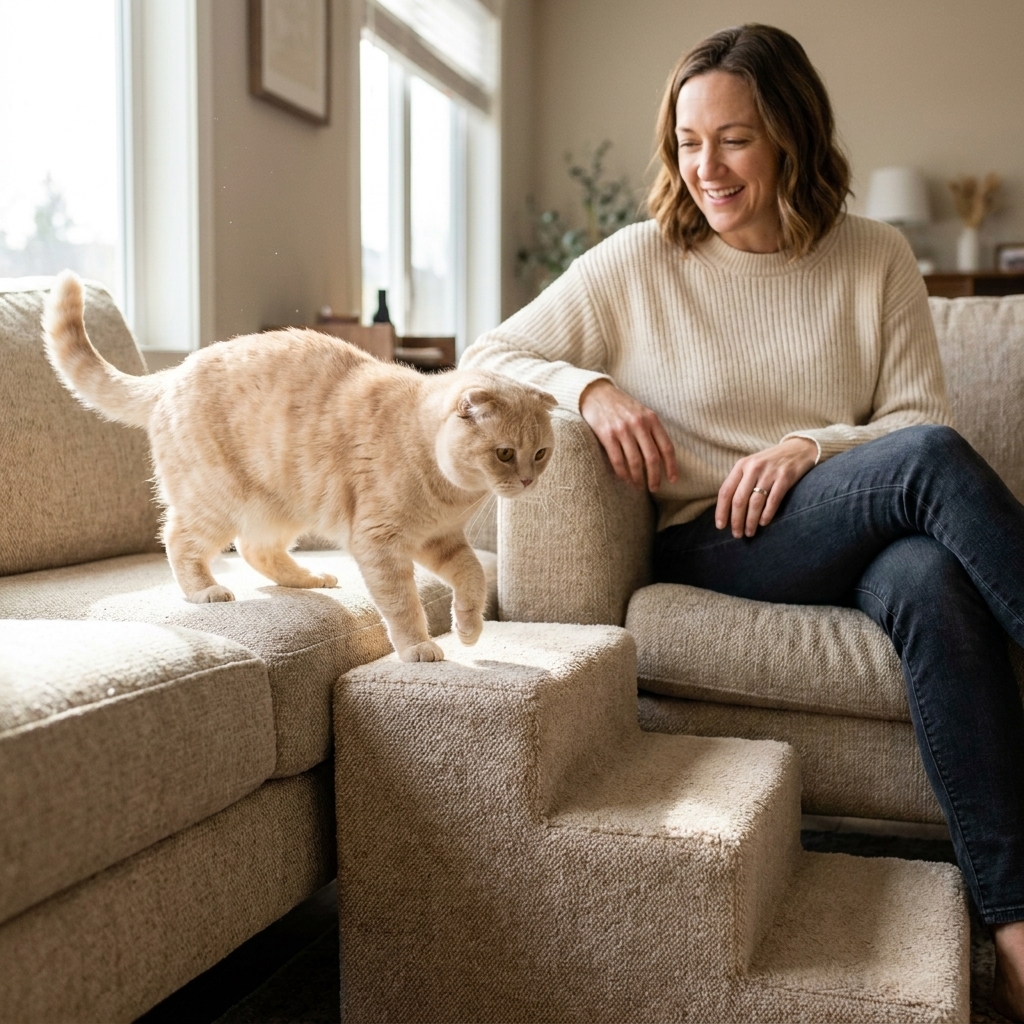
Joint-friendly home setup
Small environmental changes can reduce daily pain triggers. Think of it as making your cat’s world more accessible, not “babying” them.
Make vertical life easier
- Add steps to favorite spots: bed, couch, windowsill
- Use wide, stable ramps for cats who wobble or hesitate
- Lower the highest perches so they can still climb without big leaps
Upgrade the litter box
Litter box struggles are a common reason arthritis cats get mislabeled as “behavior problems.” Try:
- Low-entry boxes or a storage tote with a low cut-out
- Non-slip mat underneath so the box does not shift
- More boxes in more locations to reduce long walks and stairs
Prioritize traction
Slick floors make sore joints work harder. Add:
- Runners or area rugs along common routes
- Non-slip pads under rugs
- A grippy mat near food and litter areas
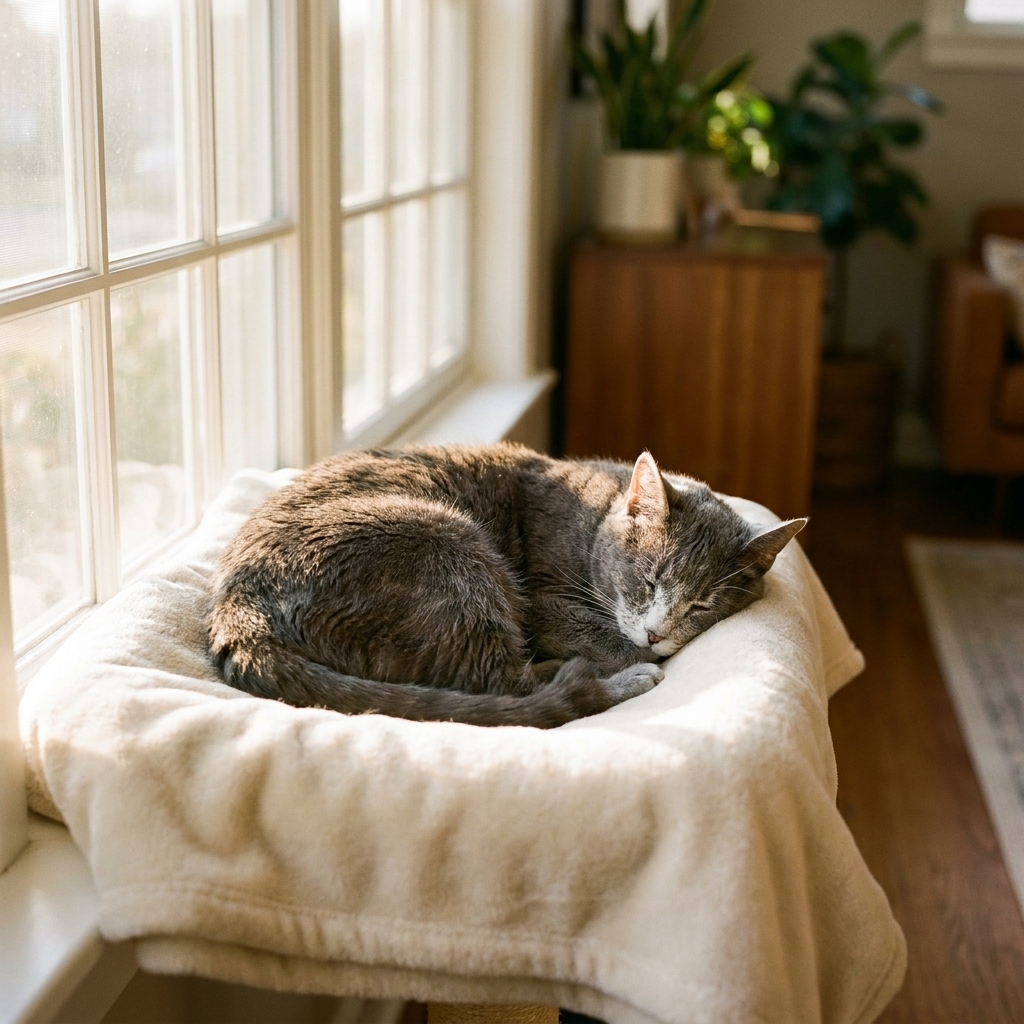
Comfortable resting spots
- Supportive bedding that is easy to step into
- Warmth, like a heated cat bed designed for pets or a warm room location
- Multiple rest stations so your cat does not feel they must travel far
Handling and play
Pick-up tips
If your Fold has joint pain, being scooped up under the front legs can hurt. Aim to:
- Support the chest and the hind end at the same time
- Keep the spine level
- Let your cat opt out if they tense, swish the tail, or try to wriggle away
Joint-kind play ideas
We want movement, but not repeated high-impact launches.
- Wand play that stays low and encourages stalking
- Tossing a soft toy short distances on carpet
- Treat trails and snuffle mats for gentle foraging
If your cat is breathing hard, flopping down abruptly, or refusing to continue, consider that a “thank you, we are done” moment, not stubbornness.
Monitoring and outlook
SFOCD is usually progressive, but progression is not the same for every cat. Some cats stay comfortable for long stretches with basic support, while others need earlier and more consistent pain control.
Ask your veterinarian what recheck cadence makes sense for your cat. Many cats with chronic joint disease benefit from periodic reassessments so you can adjust medication, weight goals, and home setup before discomfort becomes obvious.
Breeding and welfare context
Because the folded ears are tied to a painful cartilage disorder, many veterinary and welfare organizations discourage breeding for the fold trait. For owners, the practical takeaway is not guilt. It is awareness. If you love a Fold, planning for joint care is part of loving them well.
Common questions
Is SFOCD always painful?
Not every Fold looks painful every day, especially early on. But the condition is progressive, and many cats develop chronic discomfort over time. The goal is early support and quick response to subtle changes.
At what age do symptoms start?
It varies. Some cats show stiffness or tail sensitivity when they are quite young. Others develop more obvious arthritis signs in adulthood. If you have a Scottish Fold kitten, it is worth thinking about a joint-friendly setup now, not later.
Can my Scottish Fold still jump and climb?
Often yes, especially with good pain control, a lean body condition, and smart access points like steps. The aim is to reduce repeated hard landings and awkward jumps that flare pain.
Are folded ears themselves painful?
The ears are not usually the pain source. They are a visible sign of the cartilage mutation. The pain tends to come from affected joints and, for some cats, the tail.
What is the single best thing I can do at home?
Keep your cat lean and make daily life easier with traction and steps. Those two changes can significantly reduce joint strain.
Red flags that need urgent care
Joint disease can worsen gradually, but sudden changes can signal injury or another serious issue. Contact your veterinarian promptly if you notice:
- Sudden inability to use a leg
- Crying out in pain
- Dragging a limb or knuckling over
- Sudden severe hiding, aggression, or refusal to move
- Not eating for 24 hours (or 12 hours in kittens)
A gentle reality check
I will be honest with you the way I am with my rescue adopters: Scottish Folds require intentional joint care. That does not mean your cat cannot have a wonderful life. It means you become a keen observer and a strong advocate.
With early recognition, veterinary guidance, weight management, pain control, and a joint-friendly home, many Scottish Folds stay playful, affectionate, and comfortably mobile for years. And if you ever feel unsure whether something “counts” as a symptom, trust your gut and take a video. Your cat does not need to limp dramatically to deserve relief.