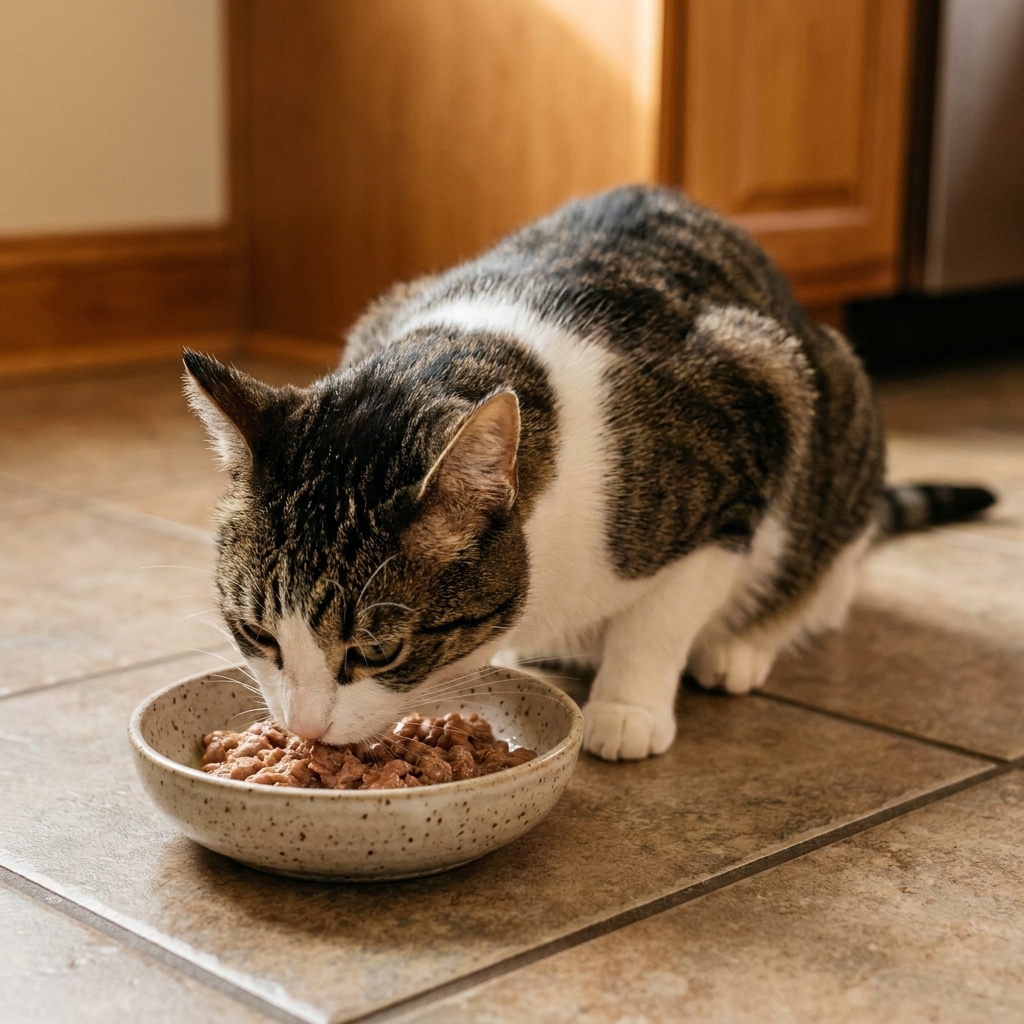
If you have ever cooked dinner with a cat supervising from the kitchen floor, you have probably wondered: Can I share a little? I get it. Clementine stares at me like I owe her a tax for opening a can of tuna, and Waffles would sell my soul for a bite of scrambled egg.
The good news: a handful of common human foods can be safe as small, occasional treats for most healthy cats. The not-so-fun news: some everyday foods are genuinely dangerous, even in tiny amounts.
Quick ground rules before we get into the lists:
- Think “treat,” not “meal.” As a general guideline, treats should stay under about 10 percent of your cat’s daily calories.
- Plain is the goal. Skip salt, seasoning blends, garlic, onion, butter, oils, sauces, and anything sweetened (especially with xylitol).
- Go tiny. Start with a pea-sized taste to test tolerance.
- When in doubt, call your vet. Cats with kidney disease, diabetes, pancreatitis, IBD, food allergies, or urinary issues may need stricter limits.
15 human foods that are safe for cats
These options are generally considered safe for most cats when served unseasoned and in small portions. I’m also flagging the most common gotchas I see cat parents run into.
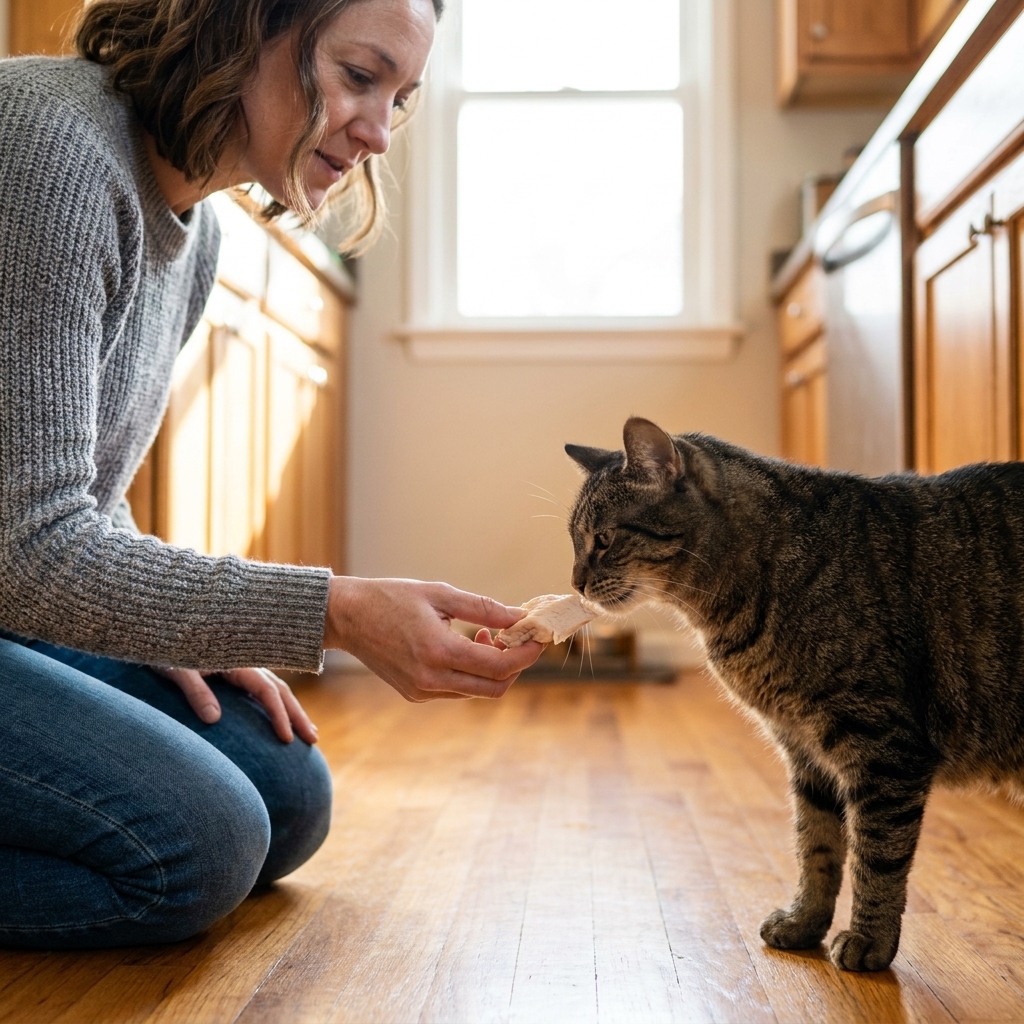
1) Cooked chicken (plain)
Why it works: Cats are obligate carnivores, so lean animal protein is one of the most biologically appropriate “people food” treats.
How to serve: Fully cooked, unseasoned, shredded into tiny pieces.
Avoid: Rotisserie chicken skin, bones, and any garlic or onion seasoning.
2) Cooked turkey (plain)
Why it works: Another lean protein many cats love.
How to serve: Small bits of plain cooked turkey breast.
Avoid: Deli turkey and holiday turkey with brines, rubs, gravy, or stuffing flavors. Processed meats tend to be high in sodium and additives, so keep them off the menu.
3) Cooked salmon (plain)
Why it works: Strong aroma, high palatability, and a source of omega-3s.
How to serve: Flaked, boneless, fully cooked.
Avoid: Raw salmon, smoked salmon (too salty), and any bones.
Keep perspective: Fish should be an occasional treat, not a daily habit. Too much can mean extra salt, potential contaminant concerns, and a diet that starts to drift away from “complete and balanced.”
4) Cooked sardines (in water)
Why it works: Soft texture, rich smell, and nutrient density.
How to serve: One small flake or two, rinsed if needed.
Avoid: Sardines in oil, sauces, or with added salt.
5) Tuna (in water, occasional)
Why it works: Very enticing for picky cats.
How to serve: A teaspoon of drained tuna as a rare treat.
Heads up: Tuna is not nutritionally complete for cats, and frequent tuna treats can contribute to picky eating and excess sodium. Keep it occasional.
6) Eggs (fully cooked)
Why it works: Highly digestible protein for many cats.
How to serve: Plain scrambled or hard-boiled, no butter, milk, salt, or seasoning.
Avoid: Raw egg due to bacteria risk.
7) Pumpkin (plain cooked or canned)
Why it works: A small amount of fiber may help some cats with mild constipation or mild loose stool.
How to serve: 1 to 2 teaspoons of plain pumpkin puree (not pie filling).
Note: Fiber is not right for every GI issue. If your cat is straining, not producing stool, seems painful, or symptoms last more than a day, loop in your vet. Constipation that is more than “mild” is not a DIY situation.
8) Cooked sweet potato (plain)
Why it works: Gentle fiber and a soft texture.
How to serve: A small mashed bite, cooled and unseasoned.
Avoid: Butter, brown sugar, marshmallows, spice mixes.
9) Steamed carrots
Why it works: Soft, low calorie, and some cats enjoy the mild sweetness.
How to serve: Very small, soft pieces.
Tip: Many cats ignore vegetables, and that is completely normal.
10) Green beans (cooked)
Why it works: Crunchy or soft, depending on how you cook them. Some cats like the texture.
How to serve: Chopped, cooked green beans with no added salt or seasonings.
Avoid: Casseroles, butter, garlic, onions, salt.
11) Cucumber
Why it works: Mostly water, can be a refreshing nibble for curious cats.
How to serve: A thin slice, peeled if the skin is waxy or tough.
Watch for: Start tiny since too much can cause soft stool.
12) Watermelon (seedless, no rind)
Why it works: Hydrating treat in small amounts.
How to serve: A thumbnail-sized cube, seedless and rind-free.
Avoid: Seeds and rind, which can be choking or GI hazards.
13) Blueberries
Why it works: Small, soft, and easy to portion.
How to serve: One or two berries, squished if your cat gulps treats.
Reality check: Many cats will sniff and walk away. That is fine.
14) Oatmeal (cooked)
Why it works: A bland option some cats tolerate well in tiny amounts.
How to serve: A teaspoon of fully cooked oatmeal made with water.
Avoid: Milk, sugar, raisins, chocolate, xylitol, flavored packets.
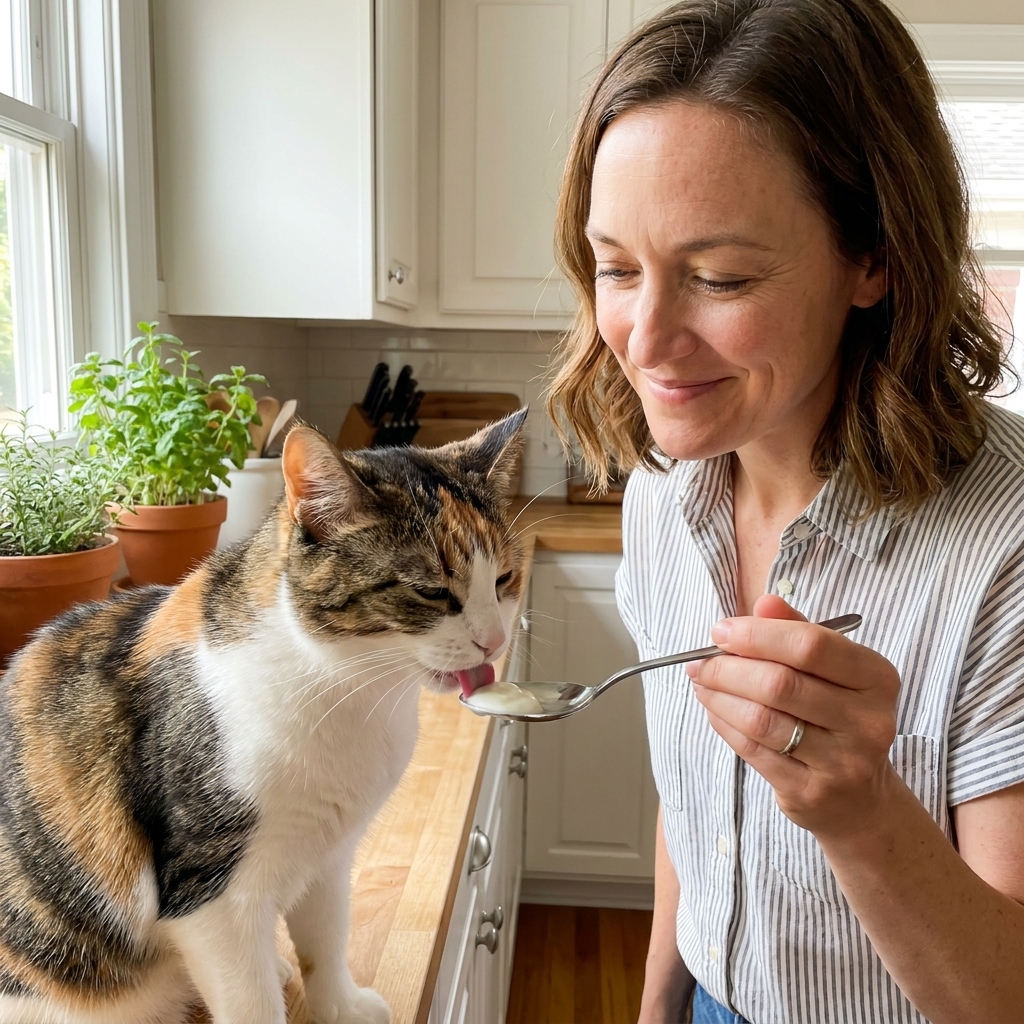
15) Yogurt (tiny tastes only)
Why it works: Some cats enjoy it, but cats are often lactose intolerant.
How to serve: A lick or two of plain, unsweetened yogurt.
Skip it if: You see gas, diarrhea, or itching afterward.
10 human foods to strictly avoid
These are the big ones I want cat parents to take seriously. Some are toxic. Others are dangerous because they can cause severe GI upset, pancreatitis flare-ups, or life-threatening blockages.
1) Onions, garlic, chives, and leeks
Why they are dangerous: Allium plants can damage a cat’s red blood cells and contribute to anemia. This includes powders and seasoning blends.
Common sources: Soup, broth, deli meats, baby food, pasta sauces, marinades, and “natural flavors.”
2) Grapes and raisins
Why they are dangerous: Kidney injury has been reported in pets after eating grapes or raisins. The exact mechanism is not fully understood, and sensitivity varies, so there is no reliably safe amount. Keep them completely away from cats.
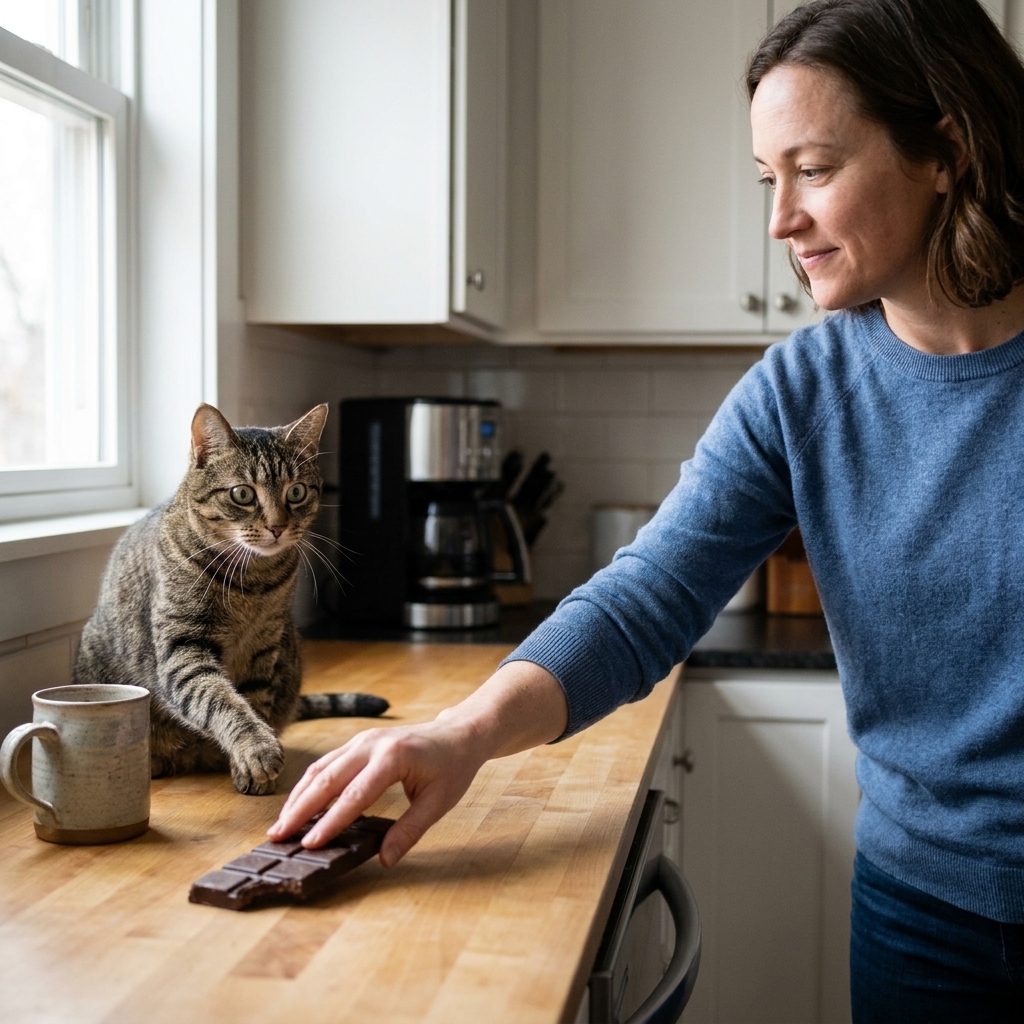
3) Chocolate
Why it is dangerous: Contains methylxanthines (like theobromine) that cats cannot process well.
Extra risky: Baking chocolate and dark chocolate.
4) Alcohol
Why it is dangerous: Even small amounts can cause dangerous drops in blood sugar and body temperature, plus respiratory depression.
Watch for: Cocktails, beer foam, and foods made with alcohol.
5) Xylitol (and sugar-free products)
Why it is dangerous: Xylitol is highly dangerous to dogs. Cat toxicity is less well documented, but ingestion should still be treated as an emergency risk and avoided.
Common sources: Sugar-free gum, candy, peanut butter, baked goods, and some toothpastes.
6) Caffeine (coffee, tea, energy drinks)
Why it is dangerous: Stimulants can cause restlessness, rapid heart rate, tremors, and worse.
Common sources: Coffee grounds, tea bags, soda, chocolate-covered espresso beans.
7) Raw dough with yeast
Why it is dangerous: Dough can expand in the stomach and yeast fermentation can produce alcohol.
8) Cooked bones and fish bones
Why they are dangerous: They splinter, causing choking, mouth injuries, GI perforation, or obstruction.
Safer choice: Offer boneless cooked meat instead.
9) Fatty foods and greasy scraps
Why they are dangerous: High fat foods can trigger vomiting and diarrhea, and may worsen pancreatitis in cats who are prone to it.
Common sources: Bacon, sausage, fried foods, skin from poultry, heavy gravy, buttery leftovers.
10) Milk, cream, and ice cream
Why they are risky: Many adult cats are lactose intolerant. The result is usually diarrhea and stomach discomfort, not a cute treat moment.
How to offer human foods safely
Keep portions truly small
A cat’s calorie needs are surprisingly low. A few bites of chicken can be the equivalent of a human eating half a sandwich as a “little snack.” For most cats, aim for 1 to 2 teaspoons of any people food at a time, or a few tiny pieces.
Serve it plain
Most kitchen dangers for cats come from the extras: onion and garlic powder, salty rubs, butter, oils, and sauces. If you would not feed it to a cat in its original ingredient form, skip it.
One sneaky gotcha: Broth. Many store-bought broths and stocks contain onion, garlic, and a lot of sodium. If you use broth to entice eating, choose a cat-safe option made without alliums, or ask your vet what they recommend.
Introduce one new item at a time
If your cat gets vomiting, diarrhea, gassiness, or itchy skin after a new food, stop offering it and check with your vet if symptoms do not resolve quickly.
Use people food strategically
- Pill helper: A tiny shred of chicken can hide a pill better than a wrestling match.
- Enrichment: Put a few flakes of cooked salmon on a lick mat designed for cats.
- Confidence building: For shy cats, a high value treat can help pair your presence with good things.
What if my cat ate something unsafe?
First, do not panic, but do act quickly. Save the packaging if you have it and estimate how much your cat could have eaten.
- Call your veterinarian right away for guidance.
- If your vet is closed, contact a pet poison hotline for time-sensitive advice.
- Do not force vomiting unless a veterinary professional tells you to. Some substances can cause more damage coming back up.
If you notice trouble breathing, collapse, severe lethargy, repeated vomiting, seizures, or pale gums, treat it as an emergency.
FAQ
Can cats eat peanut butter?
It is not toxic in the way chocolate is, but it is also not a great choice. Peanut butter is high fat and can upset a cat’s stomach. The bigger concern is that some brands contain xylitol. If you ever use peanut butter, read the ingredient label carefully and keep it as an extremely rare lick, not a regular treat.
Can cats eat bread?
A tiny bite of fully baked plain bread is usually not toxic, but it is mostly empty calories for cats. Raw dough is the real danger and should be strictly avoided.
Can cats eat cheese?
Many cats are lactose intolerant, so cheese often causes diarrhea. If your cat tolerates it, keep it to a tiny taste only. I usually prefer a small bite of cooked meat instead.
Can cats eat cooked rice?
Plain cooked rice is generally safe in small amounts, but it is not necessary for most cats. If your cat has ongoing GI issues, ask your vet before using rice as a home remedy.
Is raw feeding the same as giving raw meat from my kitchen?
Not really. Random raw meat scraps are not balanced and can carry bacteria. If you are interested in raw diets, do it with veterinary guidance and a plan that is complete and safe.
The bottom line
If you want to share, choose unseasoned cooked proteins first, keep portions tiny, and skip spice mixes and sauces entirely. And please, keep the “strictly avoid” list somewhere handy. Cats are small, fast, and dramatically talented at stealing bites when your back is turned.
If you are ever unsure about a specific food your cat got into, err on the side of caution and call your vet. I would rather you feel a little overprotective than end up with a preventable emergency.