The first time I gave insulin to a cat at home, my hands were shaking so badly I could barely uncap the needle. I had foster kittens and spicy “unadoptable” adults for years, but something about injections feels so final, like there is no room for error.
Here is the good news: once you learn the routine your veterinary team teaches, insulin shots become one of those two-minute tasks that most cats tolerate surprisingly well. Your job is not to decide the dose or adjust the schedule. Your job is to give exactly what your vet prescribed, in the way they showed you, and to notice quickly when something feels off.
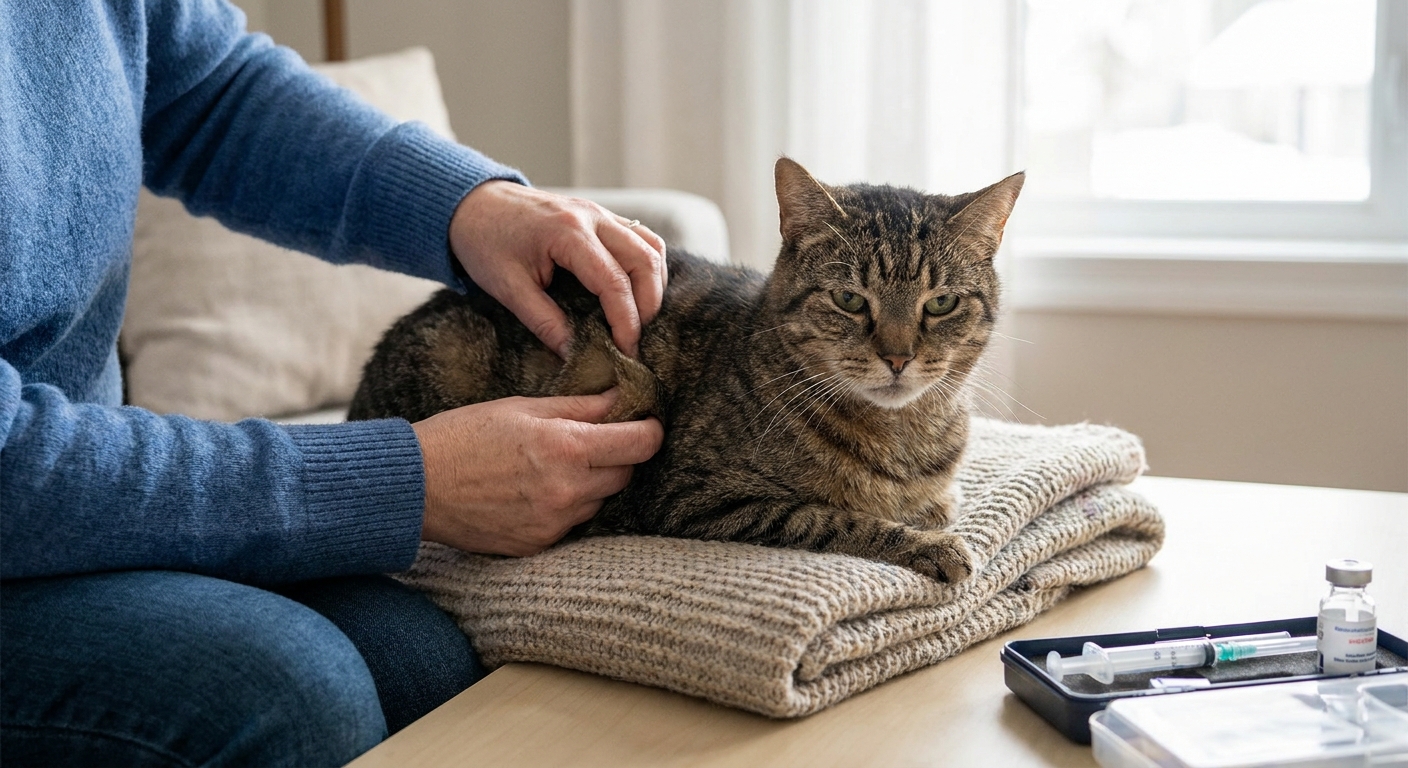
Before you start: safety basics
Insulin is powerful medicine. Too much can cause dangerously low blood sugar (hypoglycemia). Too little can leave diabetes uncontrolled. So before we talk technique, lock in these basics.
- The vet sets the dose and timing. Do not change the number of units, the insulin type, the syringe type, or the schedule unless your clinic tells you to.
- Do a quick “right” check. Right cat, right insulin, right syringe or pen needle, right dose, right time.
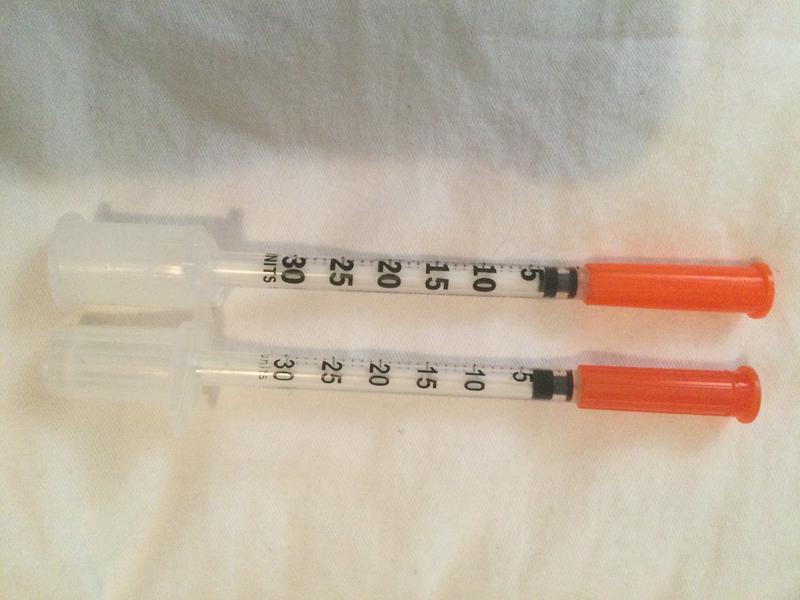
- Match insulin to the correct syringe. Many cats use U-40 or U-100 insulin. The syringe must match the insulin concentration. Using the wrong syringe can lead to a major dosing error.
- Store insulin correctly. Many feline insulins need refrigeration, but storage rules vary by product, including how long an “in-use” vial or pen can be kept at room temperature. Follow the label and your vet’s instructions.
- Handle insulin gently. Some insulins are mixed by gentle rolling or tipping, and some should not be shaken. Follow the label and your clinic’s directions for your specific insulin.
- Never reuse needles. Reusing can dull the needle (more painful), introduce bacteria, and damage the rubber stopper on vials.
- Keep a “hypo plan” visible. Ask your vet what signs to watch for and what to do if you suspect low blood sugar. Keep their emergency number handy.
What your vet will usually send home
Your supplies may look slightly different depending on the insulin and whether you use a vial and syringe or an insulin pen. Most cats go home with some combination of the following:
- Insulin vial or insulin pen/cartridge
- Correct syringes or pen needles (your vet will specify)
- Treats your cat loves (something small and lickable can be magic)
- A sharps container (or an approved puncture-resistant container per local guidance)
- A log to track date, time, dose, and notes
Set up an easy routine
Cats do best when injections are boring and predictable. Pick a consistent spot and sequence. For many households, this looks like:
- Food first, then insulin (if this is what your vet instructed). Many diabetic cats get insulin around mealtimes to reduce the risk of low blood sugar.
- Same location each time. A favorite blanket on the couch, a counter with a nonslip mat, or even your cat’s cozy bed.
- Same “script.” Calm voice, gentle handling, quick injection, then immediate reward.
If your cat is nervous, try doing a few “practice sessions” with no needle at all. Touch the injection area, give a treat, and walk away. You are teaching, “This little poke zone predicts snacks.”
Step-by-step: giving insulin
Most cats get insulin subcutaneously, meaning under the skin, not into muscle. Your vet will show you the exact technique for your cat and your insulin. This is the general process many clinics teach.
1) Set up first
- Insulin
- New syringe or pen needle
- Treat
- Sharps container
- Your dose log
Once your cat is in position, you want to move confidently and quickly, not rummage through drawers while they reconsider their life choices.
2) Check the insulin
- Confirm the label (right cat, right insulin).
- Look at the liquid. Your vet will tell you what is normal for your specific insulin. If you see clumps, “frosting” on the inside of a vial, discoloration, or anything that looks unusual, pause and call your clinic before injecting.
- Mix only as instructed. Some insulins are gently rolled to re-suspend. Others should not be shaken. If you are unsure which category yours is in, ask your clinic to show you, then stick to that method.
3) Draw up the dose (vial and syringe)
Your clinic may teach you a specific method, but a common approach is:
- Remove the cap from a new syringe.
- Pull back the plunger to the prescribed dose to draw in air.
- Insert the needle into the vial’s rubber stopper.
- Push the air into the vial (this can make drawing insulin easier).
- Invert the vial and syringe together and slowly draw insulin slightly past the dose line.
- Tap to bring bubbles to the top and gently push them out.
- Adjust to the exact dose line. Double-check at eye level.
If you consistently struggle with bubbles or reading the lines, ask your vet team to watch you do it at a recheck. This is a very normal learning curve.
4) Prepare the dose (insulin pen)
If you use a pen, your vet will show you how to attach a new pen needle, prime if needed, and dial the dose. Pen instructions vary by brand, so always follow the pen’s directions and your clinic’s guidance.
5) Choose a site and rotate
Ask your vet which injection zone they want you to use. Many clinics prefer the side of the body (chest or flank area) for more consistent absorption, and they may advise avoiding repeated scruff injections long-term unless they specifically instruct it for your cat.
Rotate sites so the same tiny patch of skin is not poked twice a day forever. A simple rotation can be:
- Morning: right side
- Evening: left side
- Move slightly forward or backward each time within that side
This helps reduce soreness and scar tissue, which can interfere with absorption.
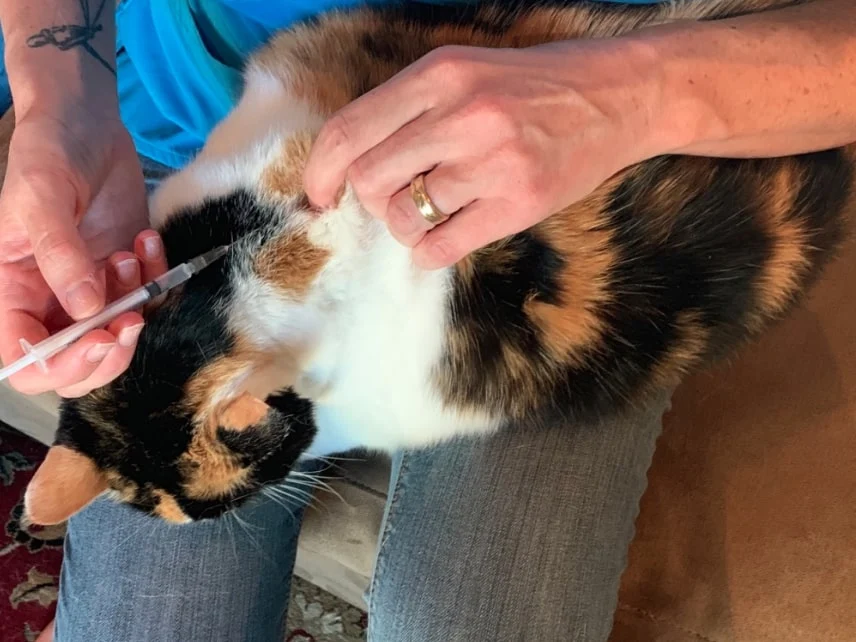
6) Make a skin tent
Use your non-dominant hand to lift a small fold of skin. You are aiming for the space under the skin, not through the other side of the fold.
7) Insert the needle and inject
- Insert the needle smoothly into the base of the tent at the angle your vet demonstrated (often a shallow angle).
- Press the plunger steadily to deliver the full dose.
- Withdraw the needle.
Then immediately praise and reward. Even if your cat acts unimpressed, the treat is doing important emotional work.
A quick hygiene note: Try not to touch the needle. Do not wipe it. Most cats do not need the skin swabbed with alcohol at home unless your vet tells you to, and wet alcohol can sting.
Wiggly cat strategies
I live with Clementine, a tortoiseshell who believes consent forms should be signed in triplicate, and Waffles, an orange tabby who forgets what is happening mid-step. Different cats, different challenges. The goal is always the same: calm, contained, and quick.
Try these tips
- Use food as your helper. Many cats hold still for a favorite wet food or a lickable treat. Some caregivers give the injection while the cat is eating.
- Pick a stable surface. A nonslip mat helps your cat feel secure.
- Stay low-drama. Slow movements, soft voice, minimal restraint.
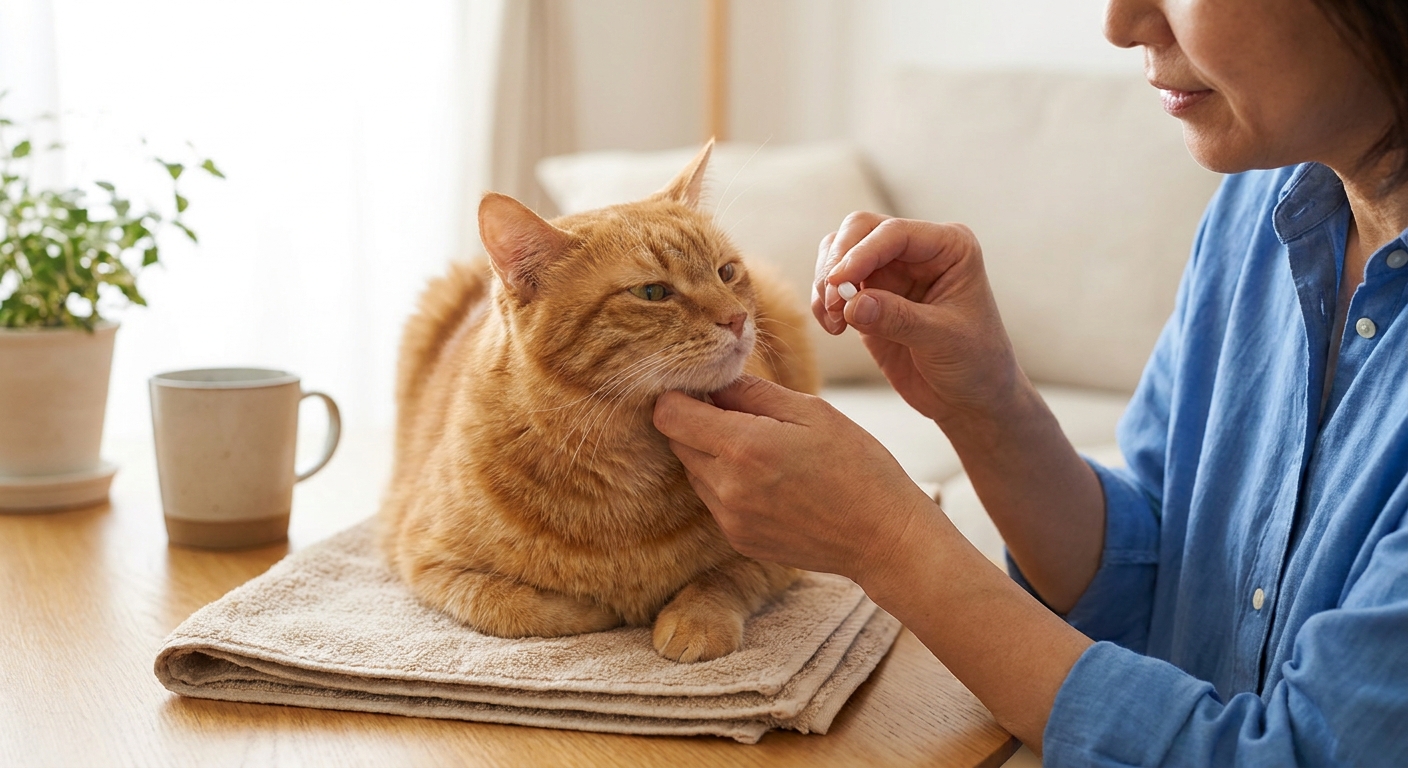
- Consider a kitty burrito. For cats who swat or back away, wrapping in a towel with only the injection area exposed can be safer. Your vet staff can show you how to do this without stressing your cat.
- Get a second set of hands. One person feeds and gently steadies while the other injects.
If every injection becomes a battle, pause and talk to your vet. They can watch your technique, adjust handling, or recommend anti-anxiety options. You are not failing. You are problem-solving.
If you are late
Life happens. If you realize you are late with an insulin dose, follow your clinic’s instructions for timing windows. If you do not have a plan, call and ask. In diabetes care, “close enough” depends on the insulin, the dose, your cat’s eating, and whether you monitor glucose at home.
If you are not sure it went in
This is one of the most common early fears, and it is important.
- If you think you missed or only gave part of the dose: Do not automatically give more insulin.
- If you see wetness on the fur or smell insulin: Some may have leaked out or you may have gone through the skin tent.
In many cases, it is safer to skip “make-up” insulin than to risk a double dose, unless your clinic has given you a specific protocol based on home glucose data. Call your vet clinic for guidance, tell them exactly what happened, and note it in your log.
Low blood sugar: what to do now
Your vet should give you a specific hypoglycemia plan for your cat. If you see signs like weakness, wobbliness, sudden lethargy, trembling, disorientation, seizures, or collapse, treat it as urgent.
- If your cat is awake and able to swallow: offer food right away and follow your clinic’s plan.
- If your cat is very out of it, seizing, or cannot swallow safely: seek emergency veterinary care immediately. If your vet has instructed you to use a sugar source (like corn syrup or honey) on the gums in an emergency, do that exactly as directed while you arrange urgent care.
If you are ever unsure, call your vet or the nearest emergency clinic. Hypoglycemia can become dangerous fast.
Tracking doses
Diabetes management is a marathon. A quick daily log helps your vet adjust safely when needed and helps you catch patterns.
At minimum, track:
- Date
- Time of injection
- Dose given (units)
- Which side or area you used
- Whether your cat ate normally
- Anything unusual (vomiting, extra thirst, acting “off,” suspected missed dose)
If your vet has you monitoring blood glucose at home or using a continuous glucose monitor, include those readings too.
Mistakes to avoid
- Using the wrong syringe type. U-40 vs U-100 mix-ups are a big deal. If you are ever unsure, stop and call the clinic.
- Shaking insulin that should be rolled. Some insulins are fragile.
- Changing dose because your cat “seems high or low.” Adjustments should be made with veterinary guidance and data.
- Skipping meals without guidance. If your cat will not eat, call your vet before giving insulin unless your vet has already given you a specific plan for this scenario.
- Poking the same spot every time. Rotate to protect the skin and support consistent absorption.
- Reusing needles. This increases discomfort and infection risk.
Call the vet right away
Trust your gut. If something feels wrong, it is worth a phone call. Contact your vet promptly if:
- You may have given too much insulin or your cat got a double dose
- You missed a dose and are unsure what to do
- Your cat is acting like they might have low blood sugar (weakness, wobbliness, sudden lethargy, trembling, disorientation, seizures, collapse)
- Your cat refuses food and you do not have explicit instructions for insulin in that situation
- You notice repeated vomiting, severe diarrhea, or your cat seems dehydrated
- The injection site becomes very painful, swollen, warm, oozing, or your cat develops lumps that persist
- The insulin looks abnormal or you suspect it was stored incorrectly
If you ever see severe symptoms like seizures, collapse, or extreme unresponsiveness, treat it as an emergency and seek urgent veterinary care immediately.
FAQ
Does giving insulin hurt my cat?
Most cats tolerate insulin injections very well when a new, tiny needle is used and the shot is given smoothly. If your cat cries out, flinches every time, or starts avoiding you, ask your vet to check technique and needle size.
Where is the best place to give the shot?
The best place is the one your vet recommended for your cat and that you can reach consistently and safely. Many caregivers use areas along the side of the body rather than the scruff, because absorption can be more consistent there. Follow your clinic’s guidance and rotate within the approved zone.
Can I give insulin cold from the fridge?
Some cats are more sensitive to cold injections. Ask your vet if they recommend gently warming the vial in your hands for a minute. Never microwave insulin or heat it in hot water.
What if my cat hides when it is time for the shot?
Make the routine more predictable and more rewarding: same time, same location, special treat only used for injections. You can also practice calm handling at non-injection times so your cat does not associate every cuddle with a poke.
What do I do with used needles?
Place them immediately into a sharps container or another puncture-resistant container approved by your vet or local regulations. Do not throw loose needles into household trash.
A final reassurance
If you are feeling overwhelmed, you are not alone. Diabetes care asks a lot of cat parents, especially in the beginning. With practice, the steps become muscle memory, and most cats learn the rhythm faster than we do.
If you want, call your clinic and ask for a quick technique check appointment or to have a veterinary nurse watch you give an injection. In my experience, that one extra set of eyes can turn weeks of anxiety into, “Oh, that is all it was.”