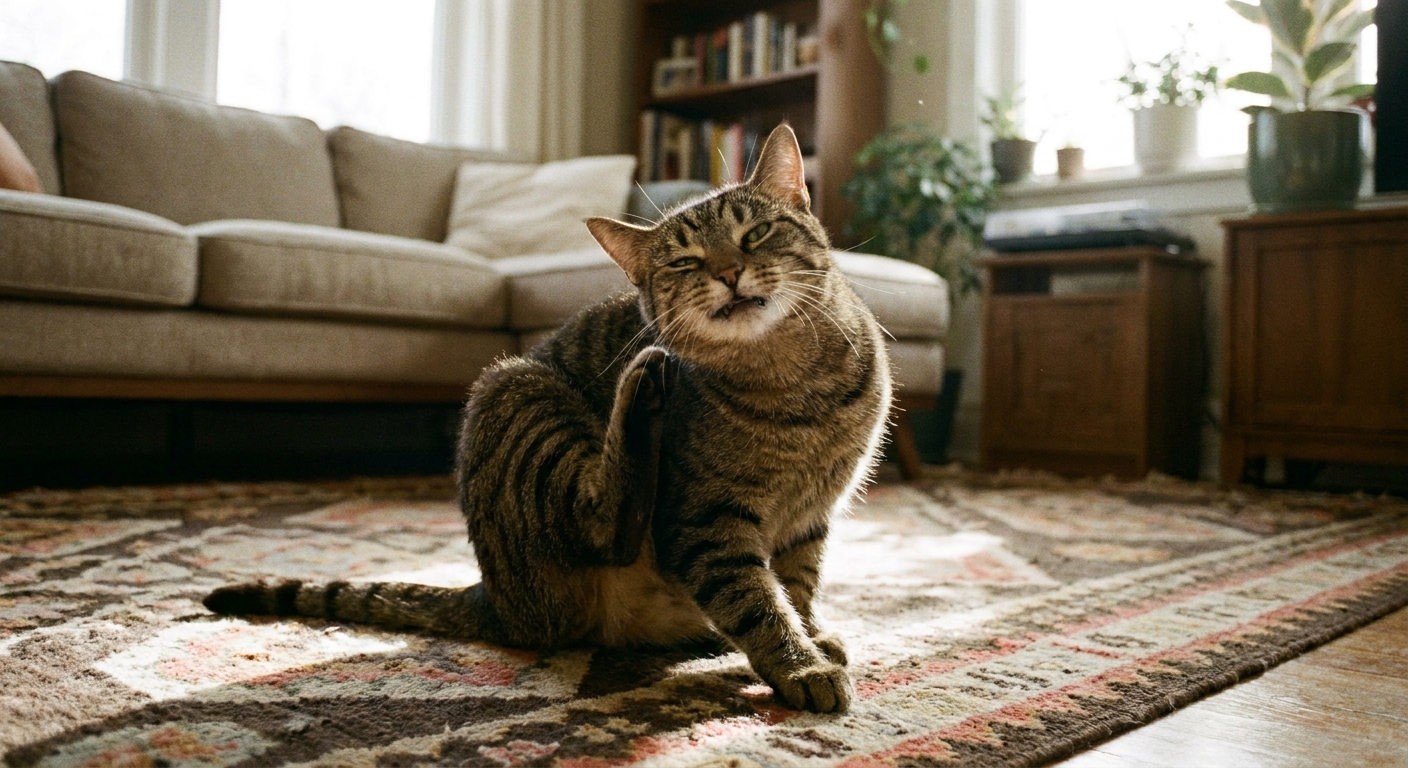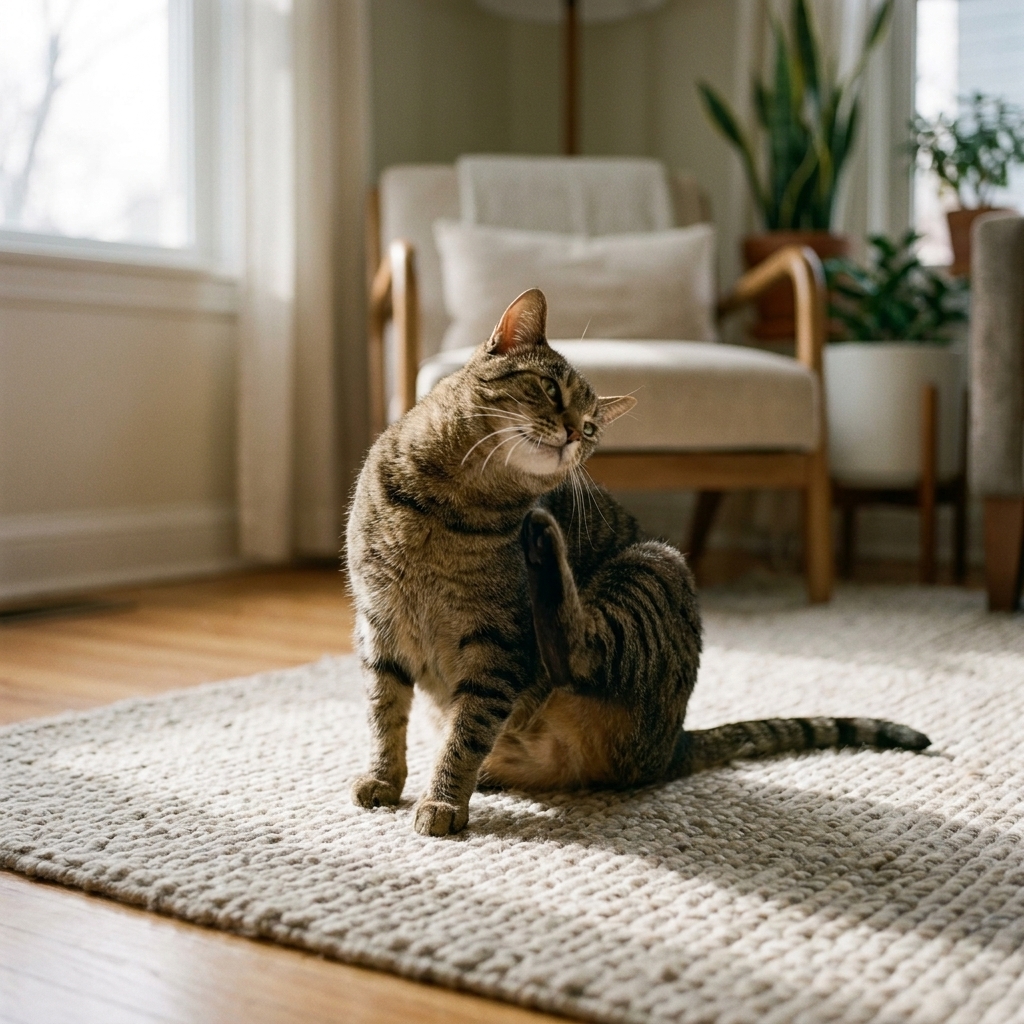
I used to think I was “good with cats” until I met the ear drop wiggle. In my foster coordinator years, I could syringe-feed a sneezing kitten like a pro, but put an ear medication bottle in my hand and suddenly I was wrestling an octopus in a fur coat. If you are feeling nervous, you are not alone. Ear infections are uncomfortable, cats are understandably protective of their heads, and the whole process can feel like a recipe for stress.
The good news: with the right setup and a gentle, repeatable technique, most cats tolerate ear medicine surprisingly well. This guide walks you through how to give vet-prescribed ear drops or ear ointment safely, without probing the canal or trying home remedies.
Before you start: safety check
Ear medications are one of those things where the details matter. Before you put anything in your cat’s ear, confirm these basics.
- Use only the medication your vet prescribed for this cat, for this ear problem, for this course of treatment.
- Read the label every time: which ear, how many drops, how often, and for how many days.
- Do not probe the ear canal with cotton swabs, tissues, or tools. You can push debris deeper and risk injury.
- Skip home remedies like vinegar, peroxide, oils, or “natural” drops unless your veterinarian specifically instructed you to use them.
- If there is any chance the eardrum is damaged (or your vet mentioned a rupture), call your clinic before using any drops or cleaners. Some products can be harmful to the inner ear if the eardrum is not intact.
- If your cat seems extremely painful, yowls when the ear is touched, holds the head tilted, seems off-balance, or the ear looks swollen shut, call your clinic before you medicate.
What to gather
Having everything within reach keeps the process short, which is your best friend here.
- Vet-prescribed ear medication
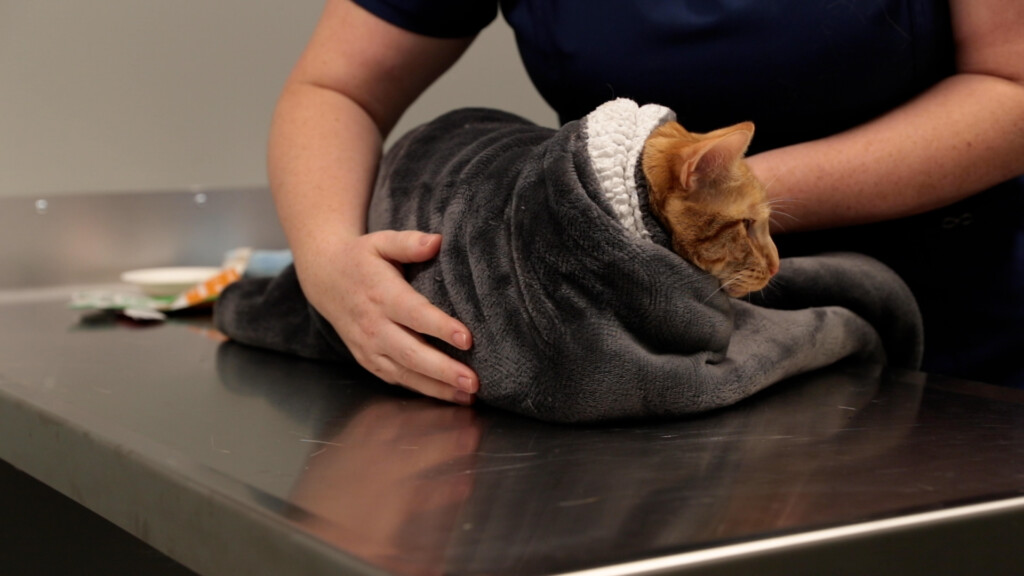
- A large towel or blanket (for grip and optional “kitty burrito”)
- Cotton balls or soft gauze pads (for wiping excess only)
- Treats your cat loves, or a favorite wet food
- Optional: a second person if your cat is squirmy or head-shy
Pick a low, stable surface with traction (floor, bed, or a sofa with a towel or yoga mat). If you use a counter, only do it if it is truly safe for your cat and you can prevent a jump or fall.
Prep the medicine and your cat
1) Warm the bottle in your hand
Cold drops can feel startling and may make a cat shake their head more. Hold the closed bottle in your palm for 1 to 2 minutes. You want it closer to body temperature, not hot.
2) Shake if the label says to
Some ear medications need mixing. If your label says “shake well,” do it.
3) Pick a calm moment
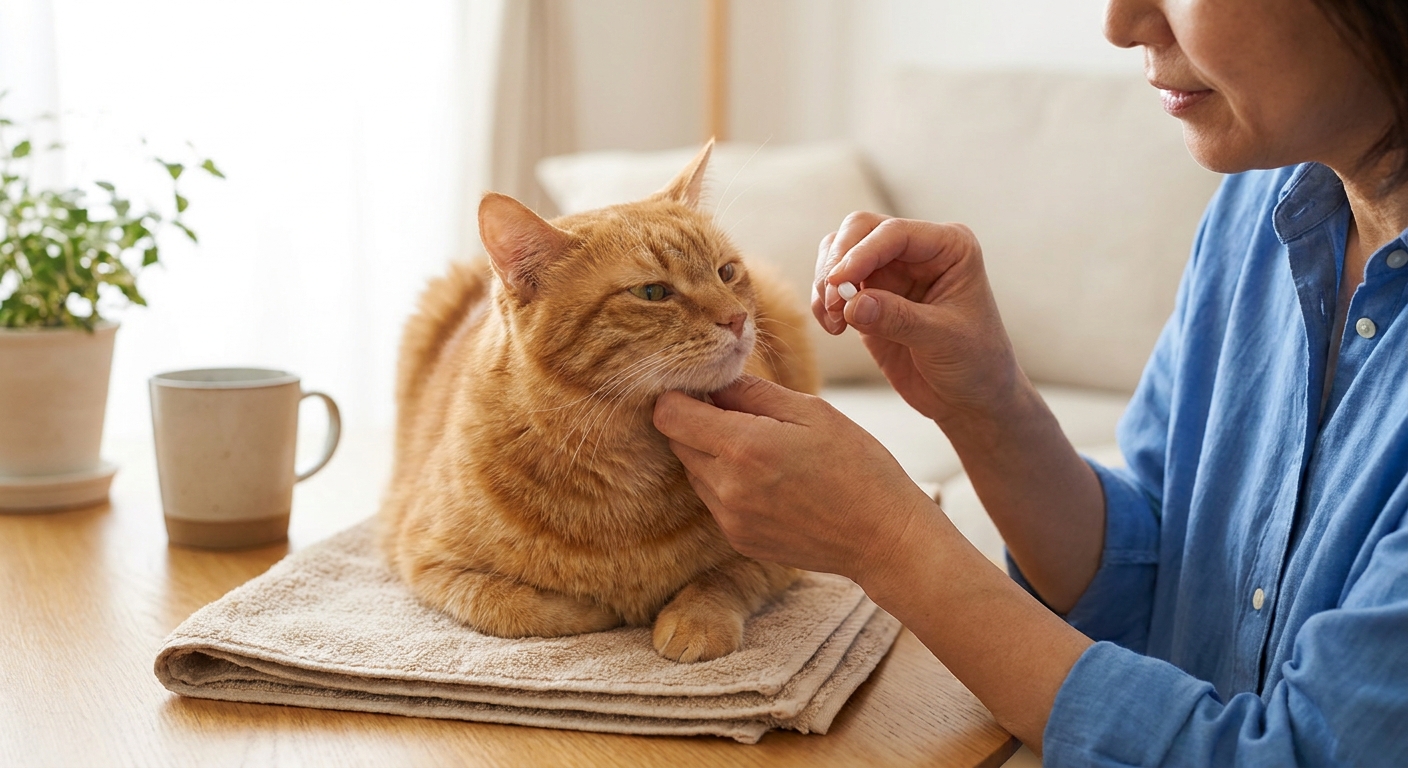
After a meal or a play session is often easier than during the evening zoomies. I like to set Clementine up on a towel, give a tiny snack, then begin.
4) Consider trimming claws
If your cat is prone to swatting, trimming the tips of the nails earlier in the day can protect everyone. If that feels like too much for one day, skip it and focus on calm restraint and speed.
Step-by-step: ear drops
These steps apply to most ear drop liquids and many ear gels. Always follow your vet’s instructions if they differ.
Step 1: Position your cat
- Solo method: Place your cat on a towel with their back end tucked against your body. Keep your elbow close to their side to prevent backing up.
- “Kitty burrito” method: Wrap the towel snugly around the body, leaving the head out. This is ideal for cats who paw at your hands.
- Two-person method: One person holds the cat and gently controls the head, the other gives the drops.
Your goal is gentle control, not a wrestling match. If your cat is escalating, pause and reset.
Step 2: Lift the ear flap
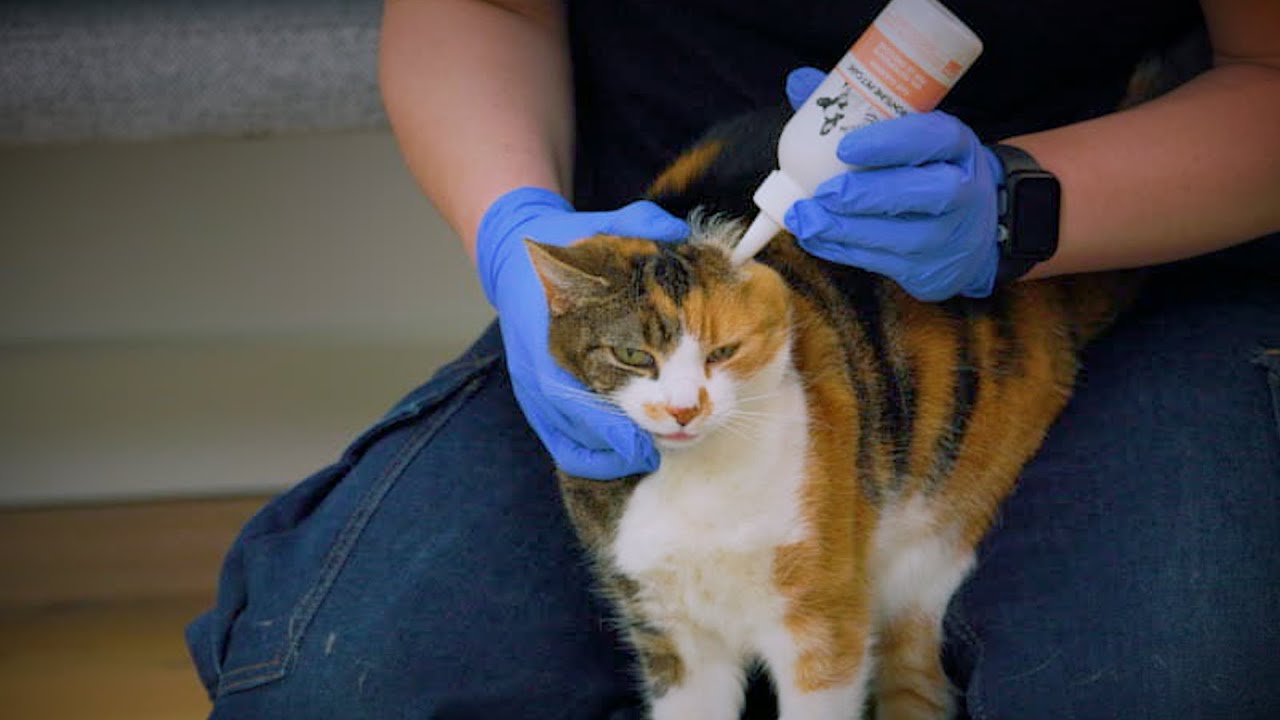
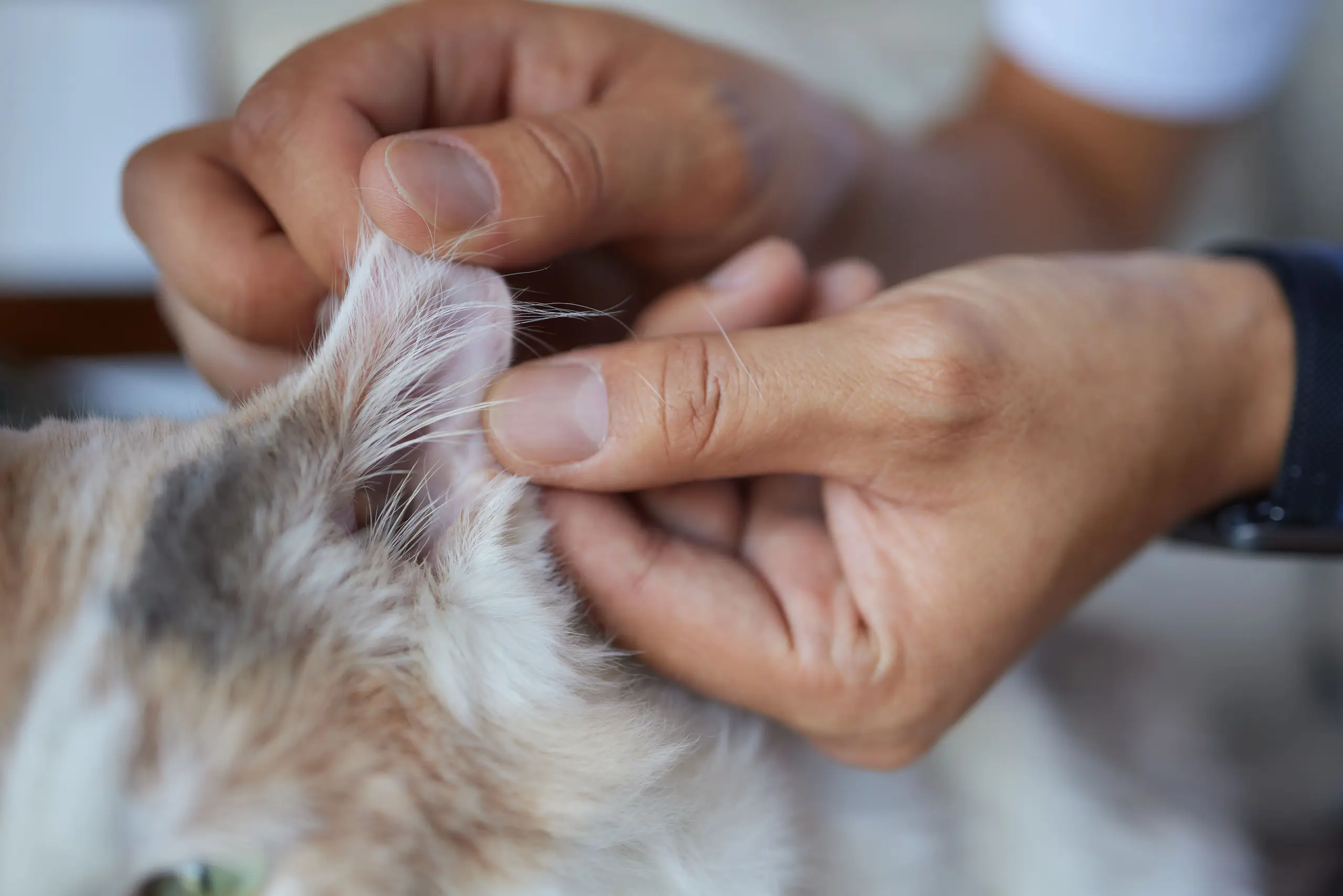
Using your non-dominant hand, gently lift the ear flap so you can see the opening of the ear canal. Aim for calm, steady contact rather than repeated grabbing.
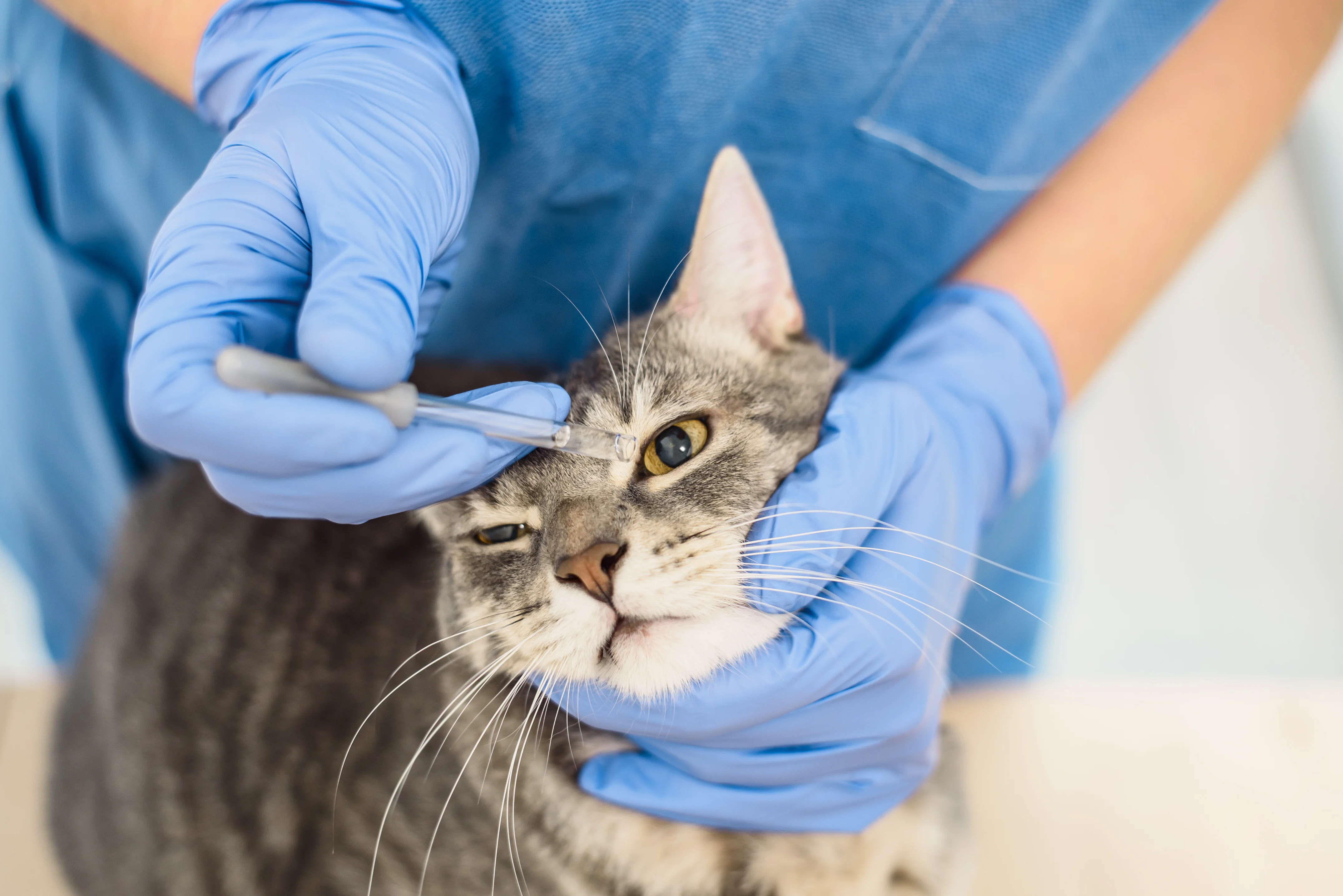
Step 3: Hold the tip near the opening
Hold the bottle tip just above the ear canal opening. Do not insert it. Avoid touching the tip to the ear when possible, which helps keep the medication clean. If the tip does touch fur or ear debris, follow your label directions or ask your vet what to do before the next dose.
Step 4: Give the exact dose
Squeeze in the number of drops your vet prescribed, or the measured amount of ointment or gel. More is not better here.
Step 5: Massage the base of the ear
Still holding the ear flap, use your fingers to gently massage the base of the ear (where the ear meets the head) for about 10 to 20 seconds, or as directed. You may hear a soft “squish” sound as the medication moves down the canal, but do not worry if you do not.
Step 6: Let them shake, then wipe excess
Most cats will shake their head right after application. That is normal whether the drops were warm or cool. After the shake, wipe away any medication that drips out onto the fur using a cotton ball or gauze pad.
Do not push cotton into the canal. You are only cleaning what you can easily see on the outer ear and fur.
Step 7: Reward and release
Offer a high-value treat, a lickable puree, or a small portion of wet food. The reward matters, even if your cat pretends they are too offended to enjoy it.
If your cat hates it
Some cats are fine with body handling but flinch the moment a hand nears the head. Waffles, my orange tabby, acts personally betrayed by anything near his ears, including compliments. These strategies can make a big difference.
Use one steady hand
Instead of repeatedly reaching in and out, rest your hand lightly on your cat’s head or cheek for a moment before lifting the ear flap. Predictable contact is often less scary than surprise touches.
Treat during the dose
If your cat will lick a treat tube, have them lick while you lift the ear and administer the dose. Licking is calming for many cats and keeps the mouth occupied.
Reduce escape routes
Place your cat so they cannot back away easily, for example against your torso or tucked into a corner of the couch. Fewer escape options often means less panic.
Approach from the side
Approaching from above can feel predatory. Whenever possible, approach from the side and keep movements compact.
Protect your face
Keep your face a little farther from your cat’s head than you think you need to. Even sweet cats can snap if a sore ear gets bumped.
Keep it short
If you are struggling, do one ear, reward, and take a 2 to 5 minute break before attempting the second ear (if both are prescribed). It is better to complete the dose calmly than to escalate into a fight.
Use the towel early
Many people wait until the cat is already upset. Wrapping first can prevent the “flail and flee” cycle entirely.
Common mistakes
- Stopping too soon: Ear infections can look better before they are fully cleared. Finish the full course unless your vet tells you to stop.
- Doubling doses: If you missed a dose, ask your clinic what to do. Do not automatically double up.
- Putting the bottle tip into the ear canal: This can hurt and contaminates the medication.
- Cleaning aggressively: Unless your vet instructed you to use a specific ear cleaner and showed you how, skip “digging out” debris. Safety comes first.
- Using cotton swabs: They can compact wax deeper and can damage delicate ear structures.
- Sharing ear medication between pets: Even if symptoms look similar, do not swap medications between animals unless your vet explicitly told you to.
When to call the clinic
Trust your instincts. If something feels off, it is worth a quick call. Stop administering the medication and contact your veterinarian promptly if you notice:
- Sudden head tilt, stumbling, circling, or balance problems
- Severe pain when touching the ear or after applying drops
- Facial droop, unusual eye movement, or unequal pupils
- Swelling that closes the ear canal or rapidly worsening redness
- Bleeding from the ear
- Hives, facial swelling, vomiting, or trouble breathing after medication (seek urgent care)
- No improvement within the timeframe your vet mentioned, or symptoms returning quickly after seeming better
- Persistent strong odor or discharge that is worsening despite treatment
If your cat is scratching the ear so much that they are making it bleed, ask your veterinarian whether a soft cone or e-collar is appropriate while treatment kicks in.
Stay calm for the full course
Ear meds are rarely a one-and-done situation. Consistency and routine keep your cat from getting more suspicious each day.
- Medicate at the same times daily, then immediately do a predictable reward.
- Choose a “med station” (same towel, same spot). Cats like patterns.
- Handle ears gently outside med time for one second, treat, and stop. This can rebuild trust.
- Watch your own tension. If you are bracing for a fight, your cat will feel it. Take a breath before you start.
FAQ
Should I clean my cat’s ears before applying ear drops?
Only if your veterinarian told you to, and only with the cleaner they recommended. Some treatment plans include cleaning first, and some do not. If you were told to do both a cleaner and medication, ask your clinic about the order and whether you should wait between steps.
My cat keeps shaking their head. Did the drops go in?
Head shaking right after application is common. That is why massaging the base of the ear helps distribute the medication quickly. If you are unsure you got the full dose in, call your clinic rather than re-dosing automatically.
Can I use leftover ear drops from last time?
No. Ear issues can look similar but have different causes (yeast, bacteria, mites, inflammation, foreign material), and the wrong medication can make things worse. Use only current, vet-prescribed medication for the current problem.
What if this is ear mites?
Ear mites are contagious, and treatment may involve addressing other pets in the household too. Follow your veterinarian’s plan closely and ask whether other animals should be treated or checked.
What if my cat fights so hard I cannot do it?
Stop before someone gets hurt and call your clinic. Many practices can demonstrate safer restraint, adjust the plan (different formulation or dosing schedule), prescribe calming support, or administer treatment in-clinic for a period of time.
A final pep talk
If today was messy, you did not fail. Ear infections are uncomfortable, and cats are wired to protect their heads. Focus on making tomorrow 10 percent easier: gather supplies first, warm the bottle, use the towel early, and keep your hands calm and confident. With repetition, most cats learn the routine is short, predictable, and followed by something good.
And if your cat’s ear looks worse, smells stronger, or your gut is telling you something is not right, pause and call your veterinarian. The goal is not to tough it out. The goal is relief, safely.