If you want your cat to leave the food bowl on cue, here’s the concrete plan: teach a target touch first, then use the target to guide your cat one step away from the bowl, and finally add a cue phrase (like “back” or “leave”) right before you present the target. You’ll reinforce the choice to move away with a small reward, then calmly release them back to the bowl.
I’ve used this exact approach with foster cats who were anxious about food and with my own Clementine, who considers the kitchen her personal kingdom. The secret is that we’re not “taking food away.” We’re teaching a simple, predictable pattern: move away briefly, earn a bonus, then you can return.
Why teach this skill?
“Leave the bowl” is a surprisingly useful life skill for cats. It can help you:
- Safely pick up or adjust the bowl without hands darting into an intense eating moment.
- Reduce tension in multi-cat homes by creating a calm pause and reset.
- Stop bowl nudging, pawing, or countertop demands by giving your cat a clear alternative behavior.
- Support medical care like slow introductions to prescription diets or measured feeding, where you sometimes need a brief pause.
This is also a confidence builder. Cats who understand what earns reinforcement often feel less frustrated and more secure, especially around food routines.
Safety and welfare rules
- No meal withholding. Do not require your cat to “earn” dinner by leaving the bowl. We’re teaching this skill around meals with tiny, optional pauses and bonus treats.
- Keep sessions short. Think 30 to 90 seconds at a time. End before frustration shows up.
- Keep treats small and limited. Pea-sized soft treats or a few kibbles from their daily allotment work well. A good rule of thumb is to keep treats and training extras to about 10% or less of daily calories (less if your vet has your cat on a weight plan). One easy option: set aside 1 to 2 tablespoons of their daily kibble ration for training so you are not overfeeding.
- Watch stress signals. Tail lashing, growling, a hard stare, freezing over the bowl, ears pinned, crouching, piloerection (fur standing up), and wide eyes or visible whites of the eyes can mean you’re too close to a resource tension moment.
- Escalate early if needed. If your cat is swatting, biting, or guarding food from people or other pets, contact your veterinarian to rule out pain or hunger-driving medical issues, and ask for a referral to a qualified feline behavior professional (for example, a board-certified veterinary behaviorist or an experienced, force-free trainer who works with cats).
Choose a quiet feeding and training spot where your cat does not feel cornered. If you live in housing with rules about pet feeding areas, follow your lease and keep training in your own unit.
What you need
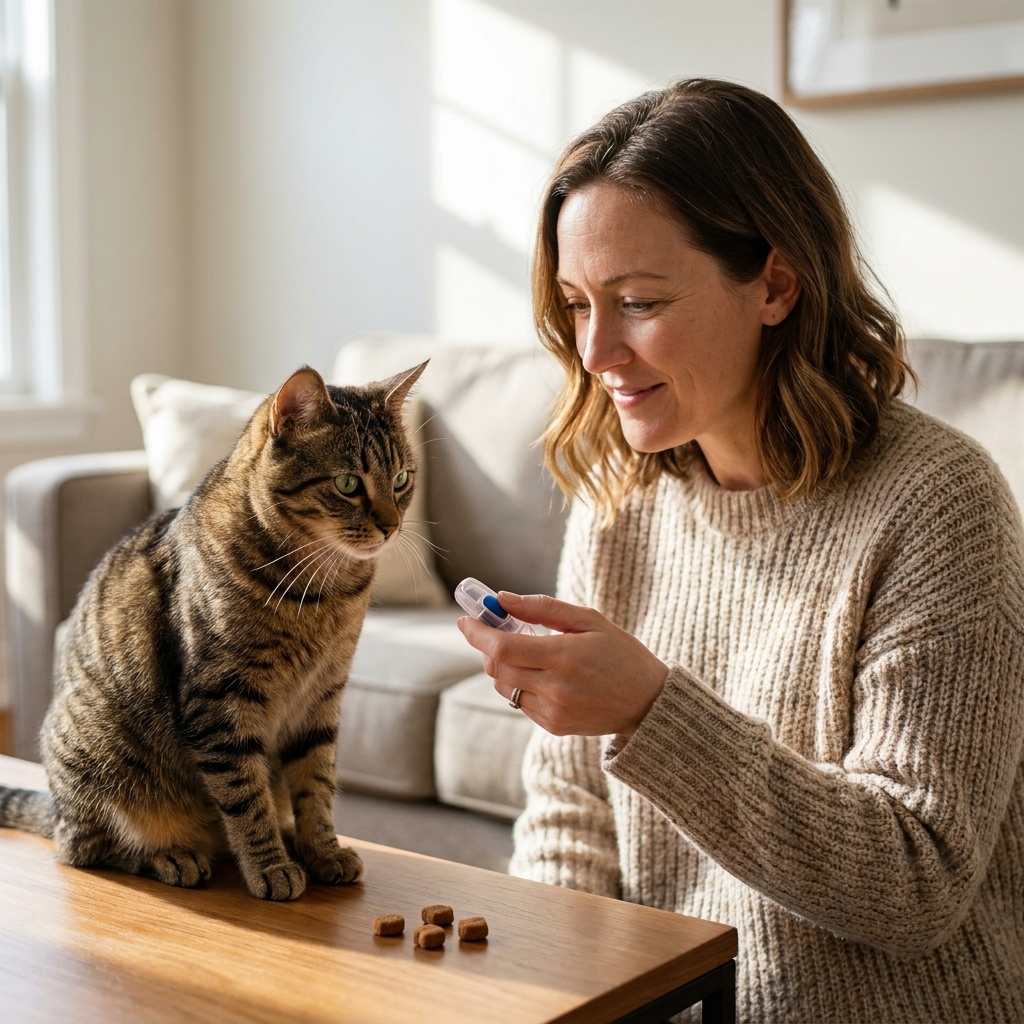
- A target: a spoon, chopstick, or target stick.
- Reinforcers: treats your cat likes, or a small portion of their regular food.
- A marker: a clicker or a consistent word like “yes.” (Pick one.)
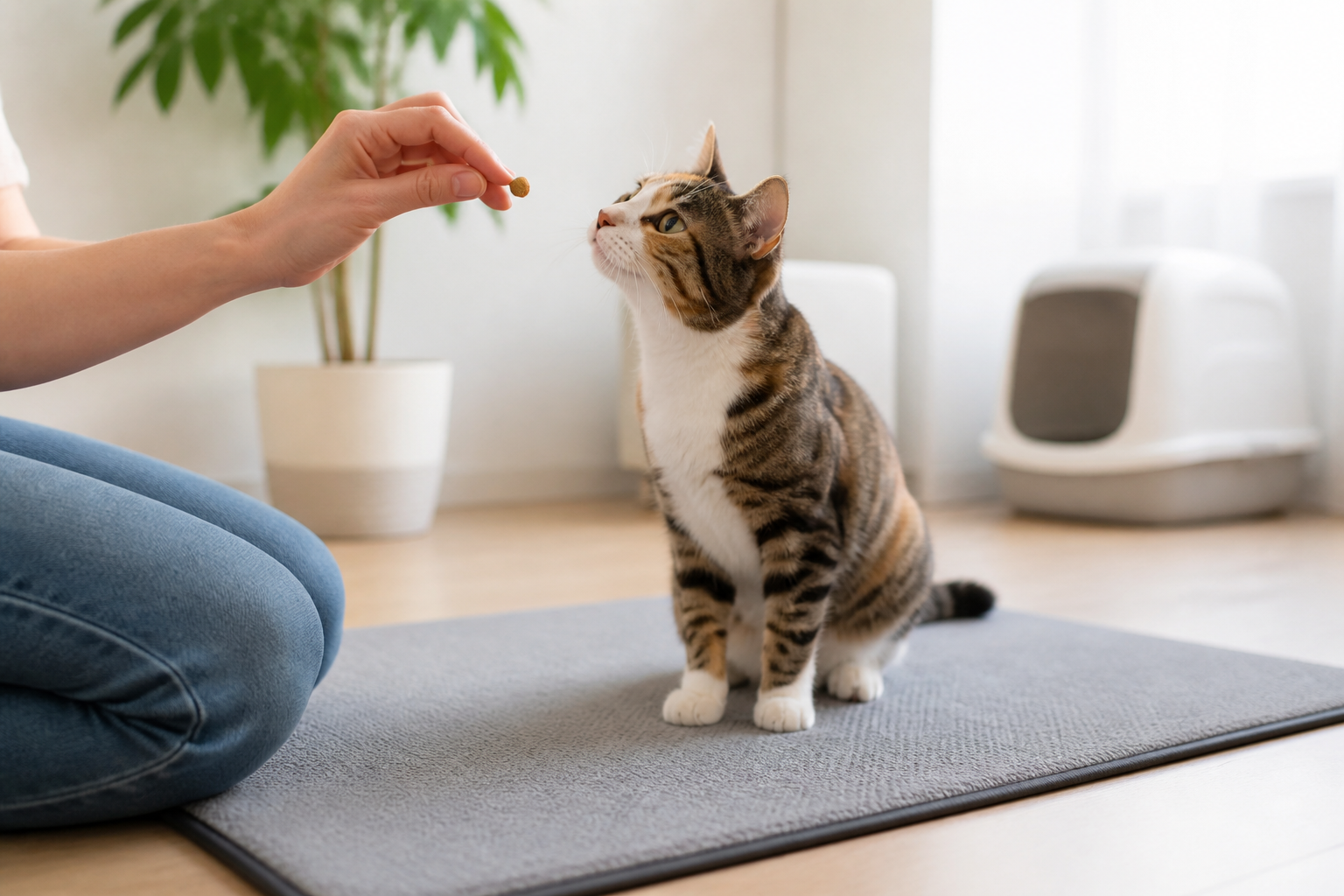
- A non-slip mat (optional): helpful if the bowl slides and creates extra excitement.
Step 1: Target touch
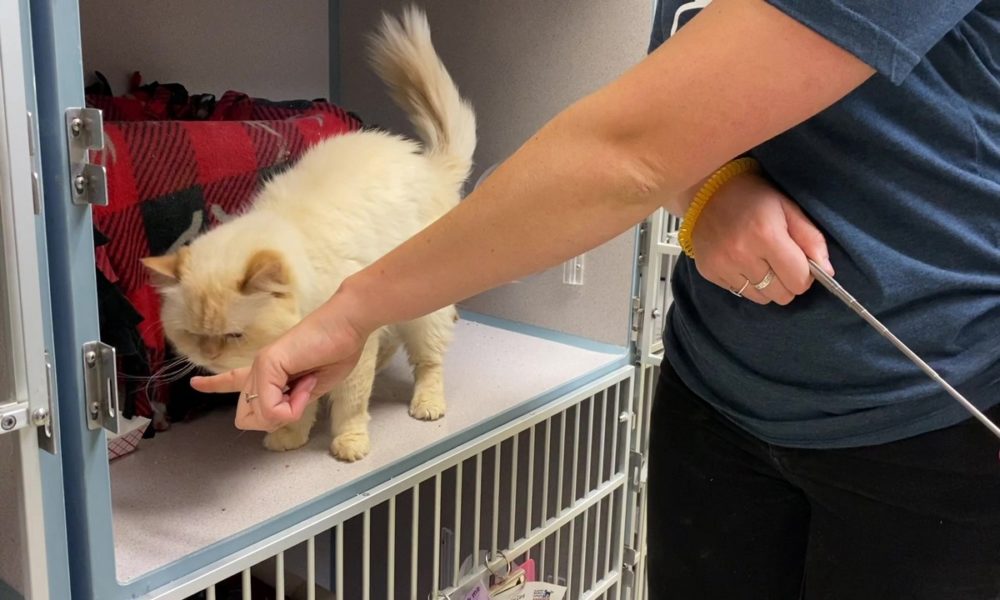
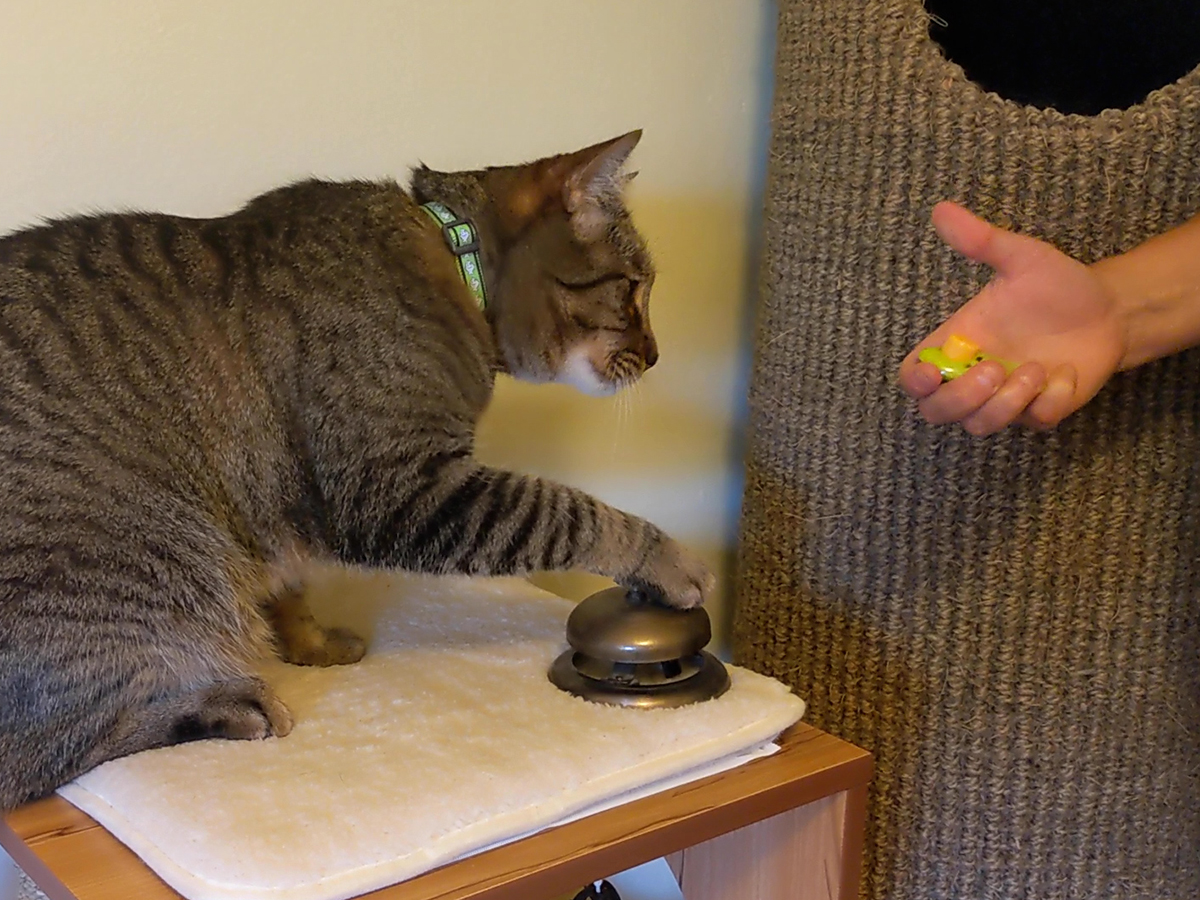
Before the bowl ever enters the picture, teach your cat: “Touch this target with your nose.” This gives you a gentle steering wheel later.
How to do it
- Present the target 2 to 4 inches from your cat’s nose.
- When they sniff or touch it, mark (“yes” or click).
- Reinforce immediately with a treat.
- Repeat 5 to 10 times, then take a break.
Goal: your cat reliably bops the target as soon as it appears.
If your cat seems wary: hold the target farther away and reward any curiosity. Shy cats often need a slower approach, and that’s completely fine.
Step 2: Move away
Now you’ll use the target to create one simple action: one step back or to the side.
How to do it
- With your cat in front of you, place the target slightly to the side so they take a step to touch it.
- Mark and reinforce.
- Next, place the target slightly behind their shoulder so they need to pivot or take a half-step back.
- Mark and reinforce.
Keep it easy. We are not asking for a dramatic retreat, just a calm repositioning that will later translate to “step away from the bowl.”
Pro tip from my foster days: some cats find “backing up” hard. Side steps are totally acceptable. You can shape “move away” in any direction as long as it creates space.
Step 3: Add the bowl
Now we carefully combine the bowl with the target. The bowl is present, but your cat is not losing their meal. In fact, leaving the bowl briefly should predict extra good stuff.
Set up
- Start when your cat is not extremely hungry. For many cats, this is not right at the peak “I am starving” moment.
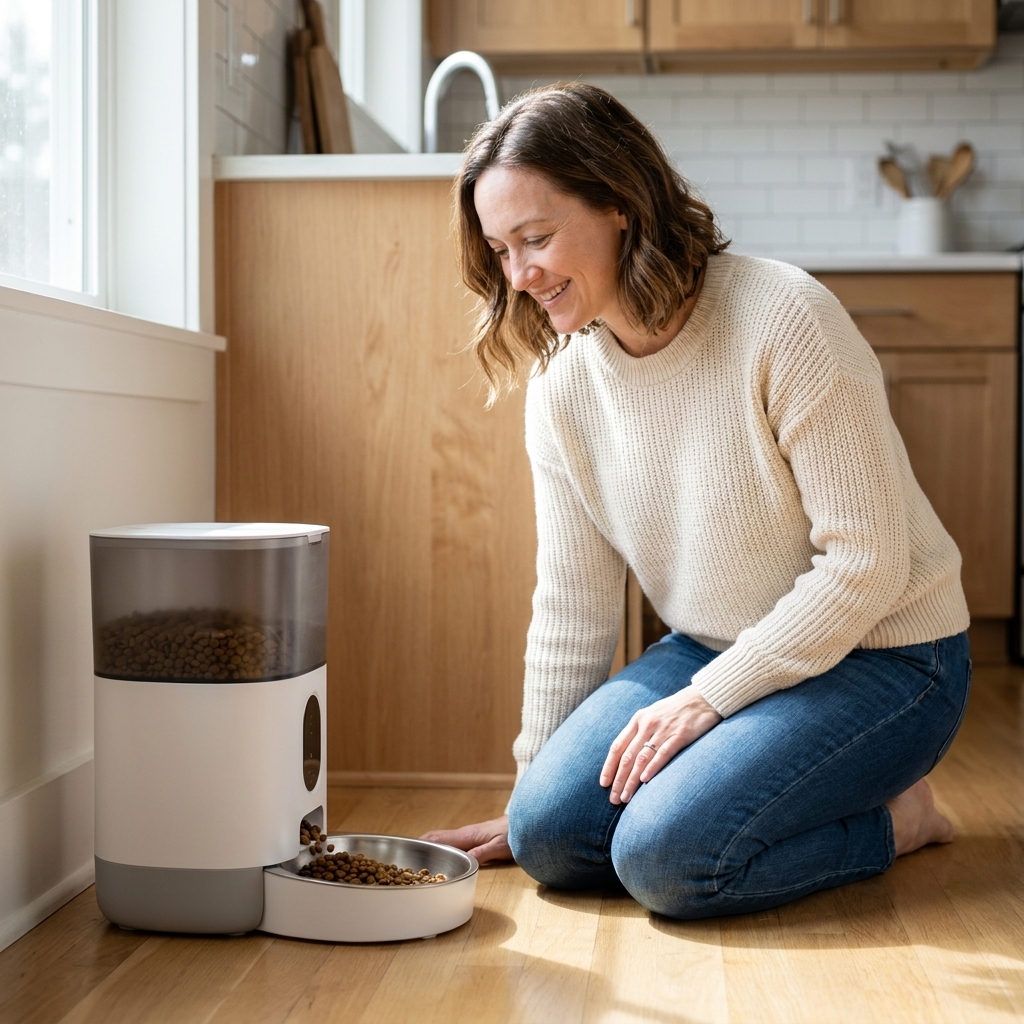
- Put a small portion of their meal in the bowl. Not the whole serving.
- Have 5 to 10 treats ready in your other hand or a nearby dish.
- If your cat tends to feel trapped, avoid pushing the bowl into a corner. An open, easy-to-exit spot can lower tension.
Training loop
- Let your cat take 1 to 3 bites.
- Calmly present the target one step away from the bowl.
- When your cat follows and touches the target, mark.
- Reinforce away from the bowl (feed the treat where they are, not over the bowl).
- Release back to the bowl by simply stepping back and allowing access. You are not luring them back to the bowl, you are just making it available again. If you like, add a friendly release cue like “okay.”
Repeat 3 to 6 times, then stop and let them finish that portion in peace.
Why we reinforce away from the bowl: it teaches “moving away makes good things happen,” not “moving away means the bowl disappears.”
Step 4: Add the cue
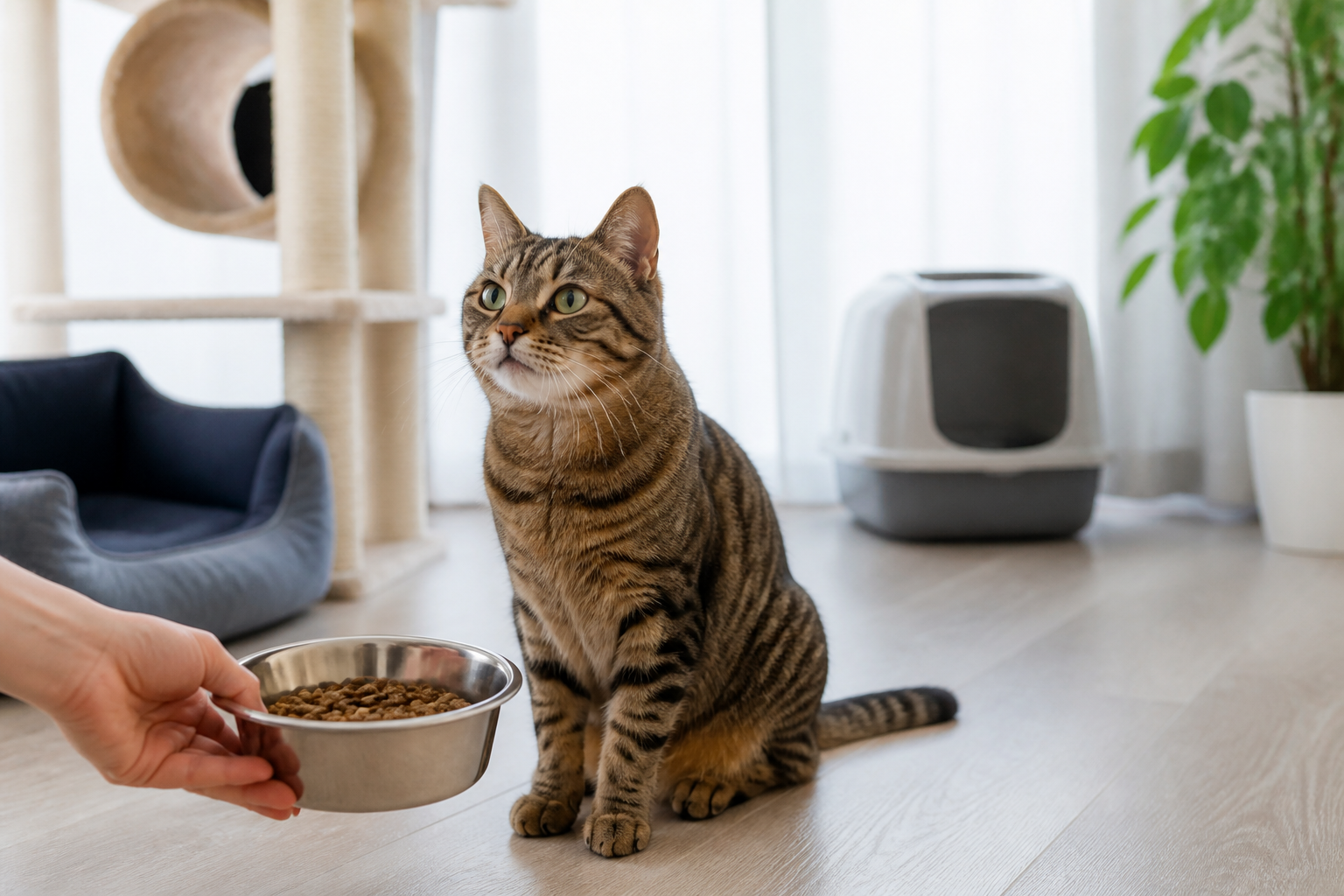
Once your cat is consistently leaving the bowl to touch the target, you can add the verbal cue.
Timing matters
Say your cue right before you present the target, every time.
- Cue: “Back”
- Then target appears one step away
- Cat moves away and touches
- Mark and reinforce away from bowl
- Release back to bowl
After several short sessions over a few days, many cats start responding to the cue by pausing or shifting away before the target even shows up. That’s when you know the cue is landing.
Step 5: Fade the target
Some families keep the target forever, and that’s perfectly fine. If you want your cat to respond to the cue without seeing the target, fade it gradually.
Two gentle options
- Smaller target motion: present the target closer to your body each time until it’s just a tiny hand movement.
- Target then cue-only: cue, pause one second to see if your cat moves away, then present the target if they do not. Reinforce either way.
Do not rush this part. If your cat stops succeeding, bring the target back fully for a while.
Generalize the skill
Once it is working at one bowl in one spot, practice in small, easy variations so the cue is not “context-locked.” Try:
- A different bowl (ceramic instead of metal, or a different shape)
- A different feeding mat or a slightly different location
- A different household member running the loop (same cue, same marker, same rules)
Keep the first reps in any new setup extra easy, like just one step away, then build back up.
What not to do
- Do not push, pull, or pick up your cat to move them away from food.
- Do not hover your hands over the bowl or tease the food to “test” them.
- Do not punish growling. Growling is information. If you punish the warning, you do not fix the feeling.
Common problems
My cat ignores the target
- Start with a less exciting food in the bowl while you train, then generalize to the favorite stuff.
- Increase reward value away from the bowl (for example, a lickable puree treat). Keep portions tiny and count it toward daily treat calories.
- Make the first “leave” super easy: one tiny step away.
My cat gets frustrated and paws at me
- Shorten sessions to 2 to 3 repetitions.
- Use a calmer marker (a soft “yes” rather than an exciting click can help some cats).
- End the session and let them eat. Training should not feel like a tug-of-war.
My cat guards the bowl from my other cat
Feed cats separately first. Training can help long-term, but you should not practice this exercise in a way that increases conflict. If there is staring, blocking, chasing, or swatting around meals, talk to your vet and consider a behavior consult. Multi-cat food tension is very fixable, but it needs a thoughtful plan.
How long does it take?
Many cats pick up the basics in a few short sessions once they understand targeting, but some cats take longer, especially if they are anxious around food or easily overstimulated. A realistic pace in many households is:
- Target touch: often 1 to 3 days (sometimes longer for shy cats)
- Move away from empty space: often another 1 to 5 days
- Move away from the bowl on cue: often about 1 to 2 weeks of brief practice
Temperament matters. Clementine learns fast but tests boundaries. Waffles, one of my former fosters, was sweet and earnest but needed more repetition because he got distracted by his own feet.
When to get help
Reach out to your veterinarian promptly if your cat’s food intensity seems sudden or extreme, especially if you also notice weight changes, increased vocalizing, vomiting, diarrhea, or constant hunger. Medical issues can drive urgent food behavior.
Contact a qualified behavior professional if you see:
- Growling or freezing over the bowl
- Swatting or biting when you approach food
- Escalating inter-cat conflict around meals
This is not “bad attitude.” It’s a cat feeling unsafe or over-aroused, and a professional can help you rebuild calm routines quickly and safely.
FAQ
Isn’t this the same as taking the bowl away?
No. The training goal is that your cat learns a predictable pattern: brief step away, bonus reward, return to eating. We are not repeatedly removing meals or using food as leverage.
Can I do this with a kitten?
Yes, and it often goes even faster. Keep sessions very short, use tiny rewards, and avoid practicing when your kitten is truly ravenous. Kittens have small stomachs and high calorie needs, so keep the focus on gentle learning, not long pauses.
What cue word should I use?
Choose something you will not say accidentally in daily conversation. “Back,” “pause,” and “leave” are common. Consistency matters more than the exact word.
Will this stop begging for food?
It can help with manners at the bowl, but begging is usually about routine, enrichment, and sometimes calories. If begging is intense or new, check in with your vet about diet and health, then add play and puzzle feeding to meet natural hunting needs.