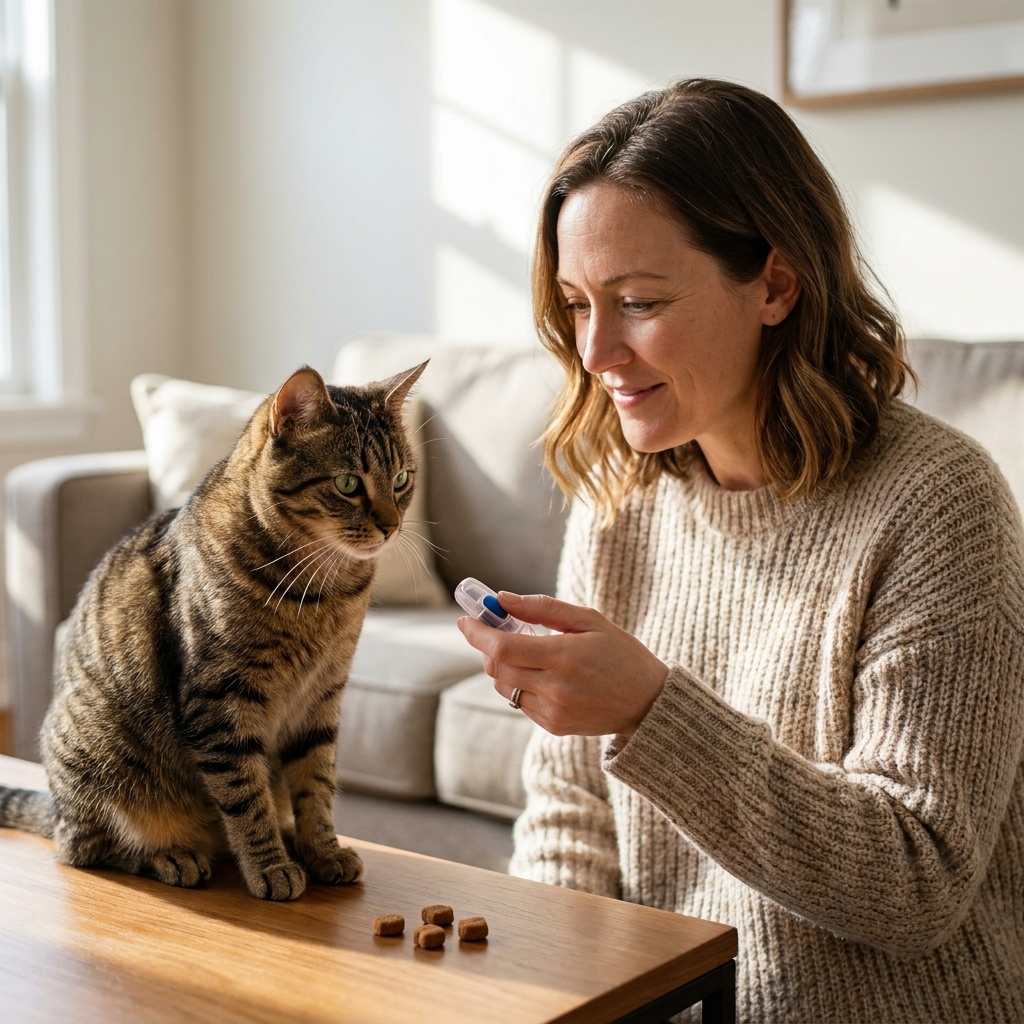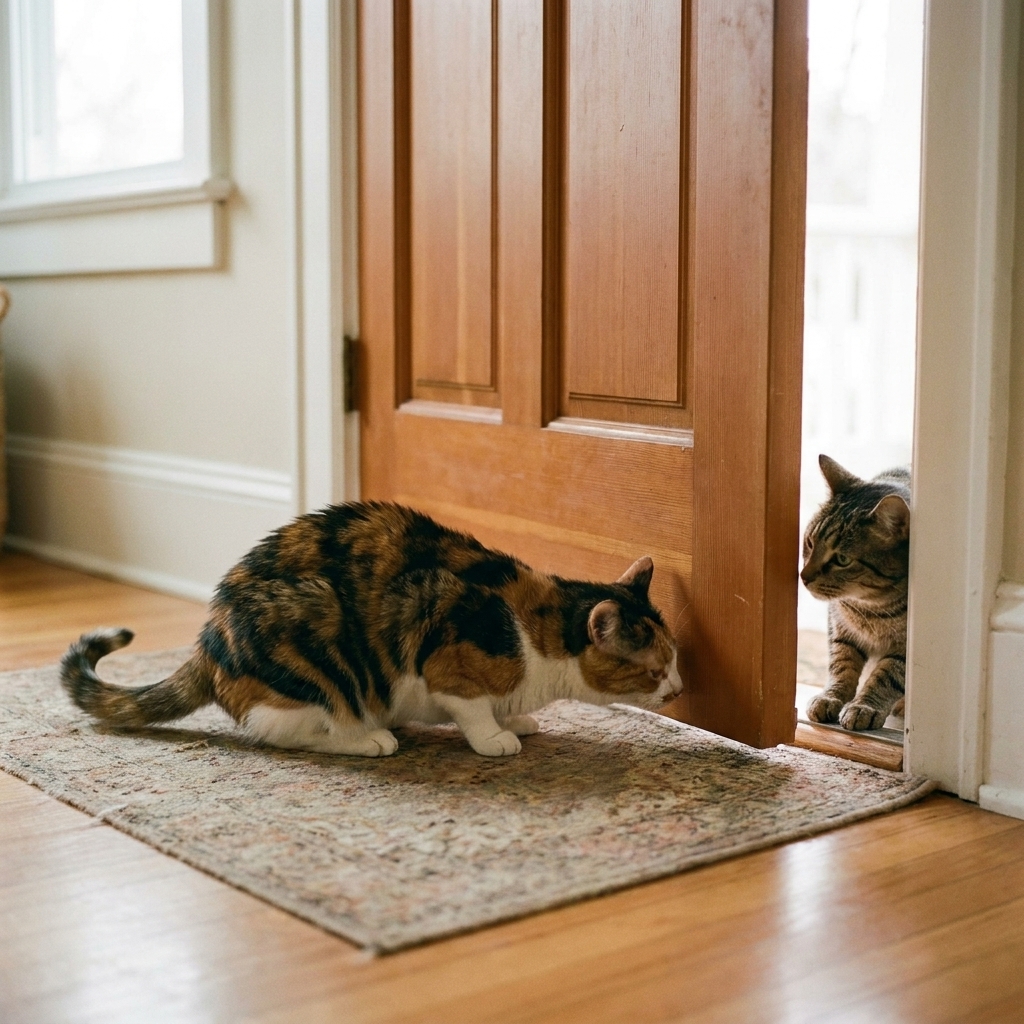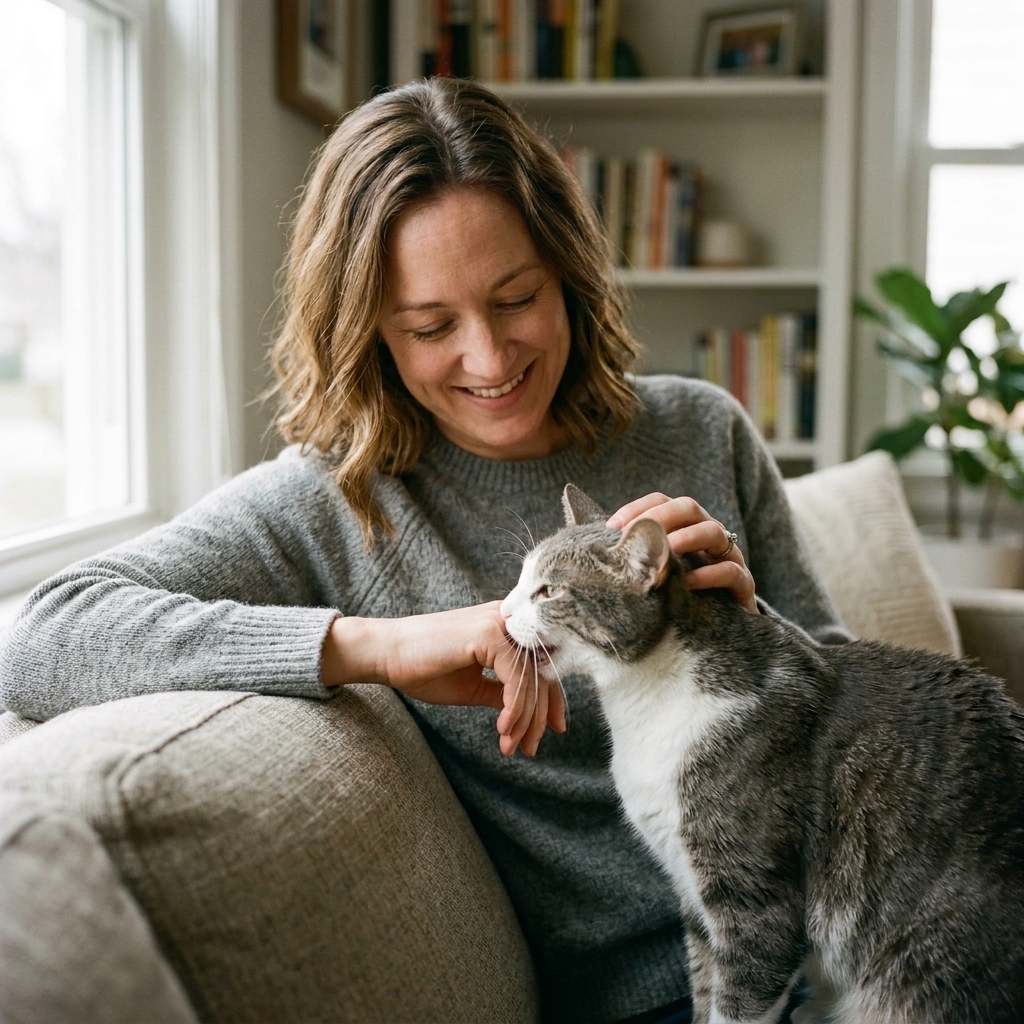
The concrete answer: yes, you can train two cats with one clicker, and the cleanest way to do it is to give each cat their own “training station”, then reinforce the cat who is taking the current turn while the other cat earns rewards for staying put. A station can be as simple as a towel, bath mat, low box lid, or a small cat bed. The station becomes your visual way to say, “This is your spot. Good things happen here.”
I learned this lesson the hard way back in my fostering days, when two “helpful” kittens would body-check each other mid-session like tiny furry linebackers. These days, Clementine (my tortie) still tries to negotiate for extra turns, and Waffles (my orange tabby) is very committed to looking confused while standing in the wrong place. Stations keep everyone honest and help keep things calmer and safer by reducing treat stealing and swat-worthy moments.
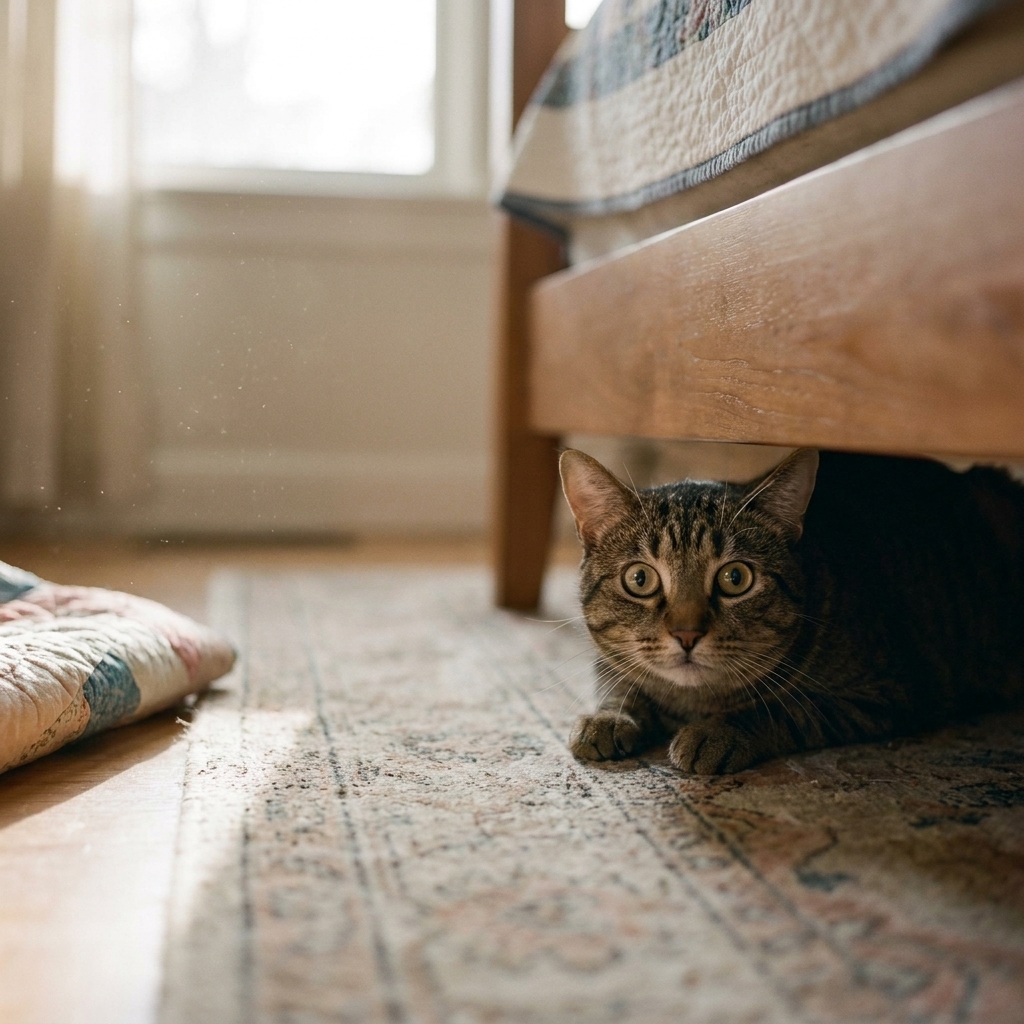
Quick safety note: If either cat shows stress (hard staring, growling, tail whipping, freezing, hiding, or refusing treats), shorten the session or train separately. And if you have a history of serious fighting or food aggression, skip group treat work and talk to your veterinarian or a qualified behavior professional first.
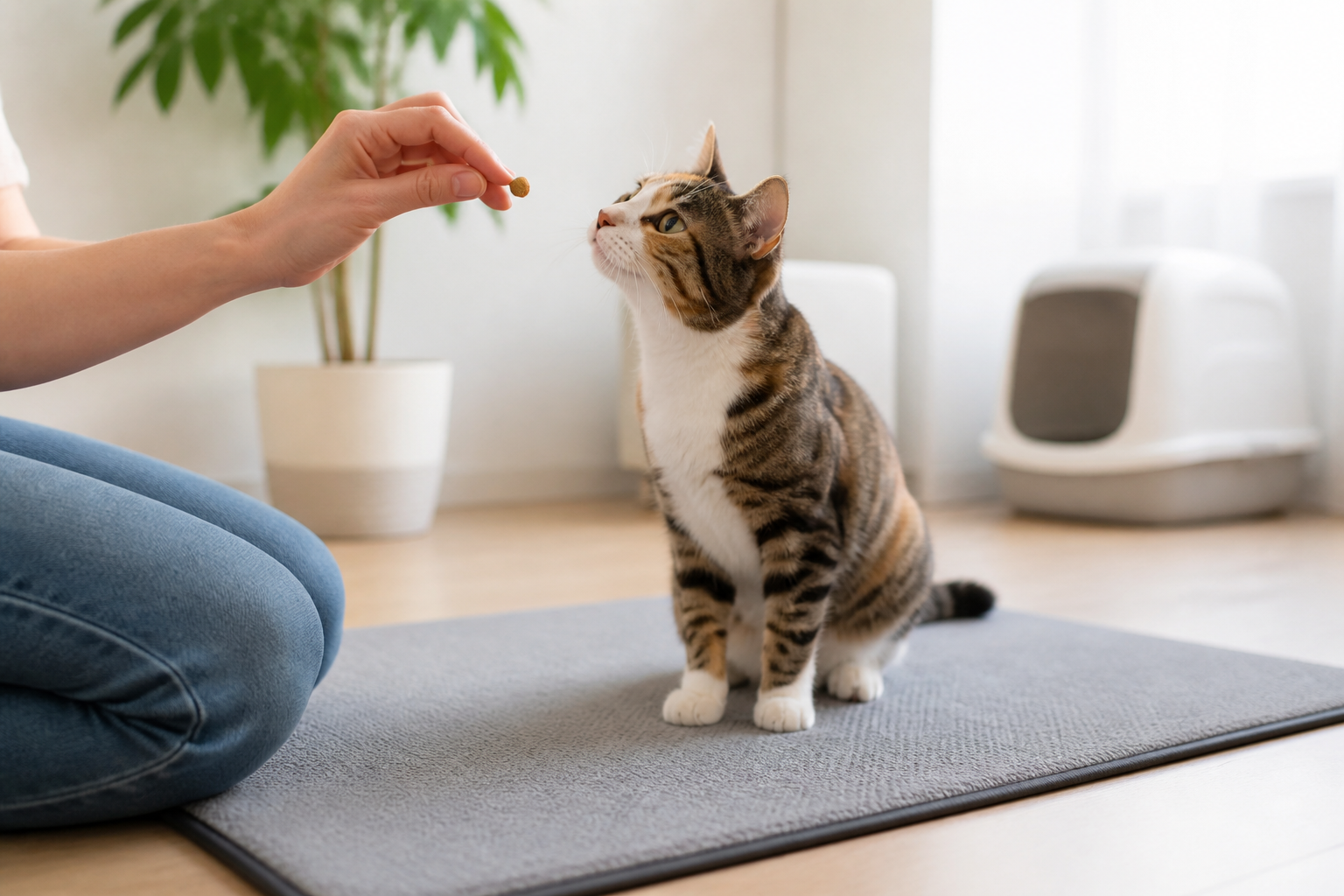
What a station is
A training station is a specific spot your cat learns to go to and stay on, usually with all four paws on it. It works because it:
- Reduces competition: Each cat has a clear “job” during the other cat’s turn.
- Builds impulse control: Waiting becomes a trained behavior, not a battle of wills.
- Creates predictable structure: Many cats relax when the rules are consistent.
- Makes your clicking cleaner: You can reinforce the correct cat more accurately.
Think of it like giving each cat their own parking spot during lessons.
What you need
- 1 clicker (or a consistent marker word like “yes” if you prefer)
- Two stations: small bath mats, towels, placemats, or low cat beds
- Treats: tiny pieces (pea-sized is a good benchmark), soft if possible, and something your cats value
- Optional: a treat pouch, a target stick, and a baby gate if one cat overwhelms the other
If the click sound startles a cat, try a quieter clicker, muffle it in your pocket, or switch to a marker word. The goal is clean communication, not jump-scares.
Also, use cat-safe rewards. Avoid anything toxic to cats (like onion or garlic). If one cat is on a diet or has health concerns, ask your veterinarian how to fit treats into their day. You can often use part of a measured meal as training rewards.
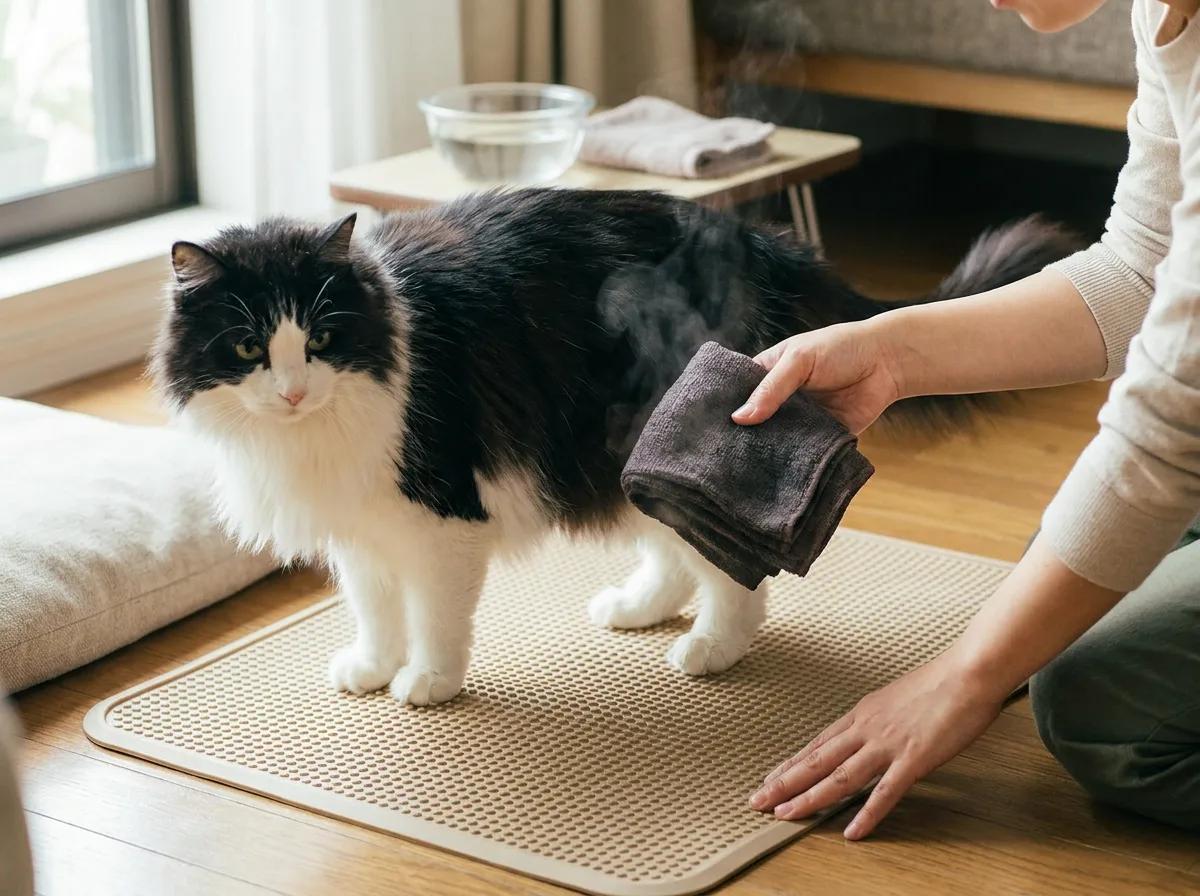
Teach stations first
Step 1: Pick two distinct stations
Choose stations that feel different: for example, a gray towel for Cat A and a round bed for Cat B. If they look identical, some cats will swap just to keep life interesting.
Step 2: Put space between them
Start with 6 to 10 feet between stations if your space allows. More distance reduces treat stealing and staring contests.
Step 3: Teach or refresh the click
Do 10 to 15 reps of: click, then immediately treat. No cues, no waiting. This teaches or refreshes the idea that the click predicts food.
Step 4: Station equals treats
Work with one cat at a time at first.
- Put the station down.
- The moment your cat steps onto it, click.
- Toss the treat onto the station, between their paws if possible.
Repeat until your cat is intentionally stepping onto the station as soon as it appears.
Step 5: Add a cue
When they are predictably moving to the station, add a cue like “station” or “mat.” Say the cue once, then wait. Click and treat when they get on.
Step 6: Build duration
Click for staying on the station, not just arriving.
- Start by clicking after 1 second on the station.
- Then 2 seconds, then 3 seconds.
- If your cat steps off, just reset. No scolding.
Your goal is “settle and wait,” not “freeze perfectly.”
Train together
Once both cats understand their station individually, you can train them together.
The turn-taking pattern
- Get both cats on their stations. Click and treat each cat once for being there.
- Pick Cat A for one rep. Give Cat A a simple cue that involves a tiny movement off-station (like touch a target, sit, or follow one step).
- Click Cat A’s correct behavior. Deliver Cat A’s treat close to Cat A, ideally back on Cat A’s station.
- Click Cat B for staying on their station. Treat Cat B on the station.
- Repeat, alternating cats every 1 to 3 reps.
This pattern matters: both cats get paid frequently, and the “waiting cat” learns that staying put is an active way to earn rewards.
Where to put treats
- Treats go to the station, not in the air and not halfway between cats.
- Low and close: place or toss gently between the cat’s front paws.
- Protect the shy cat: if one cat is bolder, you may need to hand-deliver to the timid cat while using your body to block the other.
Easy skills to practice
Pick behaviors that are easy and low-arousal. Early success is your friend.
- Name game: say one cat’s name, click when that cat looks at you, then treat on their station.
- Target touch (nose to target): one cat touches the target, the other earns for staying put.
- Sit: many cats offer sits naturally during treat sessions.
- Hand target: a gentle nose boop to your hand can be a great station-to-station skill later.
Avoid fast chase games early on. Speed tends to bring out tackle behavior between cats, especially if one cat is younger or more food-motivated.
Common problems
Problem: One cat invades the other station
- Increase distance between stations.
- Lower the difficulty: click and treat more often for simply being on their own station.
- Use a visual blocker: set a chair, ottoman, or laundry basket between stations to break line of sight.
- Give the invader a job: ask for an easy behavior on their station (sit, chin target), then pay.
Problem: The shy cat will not stay put
- Start with separate sessions and combine later.
- Try higher-value treats for the shy cat.
- Use protected space: place the shy cat’s station on a sofa corner, cat tree platform, or behind a baby gate so they can relax.
Problem: Tension rises
- Shorten sessions: aim for 60 to 120 seconds, then break.
- Add more station reinforcement: rapid-fire clicks for calm sitting and soft bodies.
- End early on purpose: stop while things are still peaceful, not after a swat.
Problem: One cat gets overstimulated
Some cats go from “learning” to “too much” quickly. Signs include tail whipping, skin twitching, growling, hard staring, or grabbing at the treat hand. Pause the session, toss a treat away from you to reset, and consider training separately. If irritation is new or escalating, a veterinarian check is smart to rule out pain or other medical factors.
Session length
For most multi-cat households, think micro-sessions:
- 1 to 3 minutes, 1 to 3 times per day
- Quit while both cats are still engaged and calm
- Use a consistent “all done” cue (like “finished”) and then put treats away
Ending cleanly matters. It prevents your cats from escalating behavior to keep the snack bar open.
Train separately if needed
Stations help a lot, but they are not magic. Train separately (at least for now) if:
- There is any history of serious fighting or bullying around food
- One cat is too fearful to eat or participate when the other is present
- You are working on sensitive handling (nail trims, medication practice) that raises arousal
It is not a failure to do individual sessions. In many homes, it is the fastest path to calm group training later.
How to level up
Once stations feel boring (compliment), you can gradually raise the difficulty:
- Longer waits: build station duration a second at a time.
- Closer stations: move them in a foot at a time, only if both cats stay relaxed.
- More interesting turns: add slightly harder cues for the working cat while the waiting cat still earns for staying put.
You do not have to “fade” stations completely. In my house, stations are less like training wheels and more like traffic lanes. We all drive better with lanes.
A routine to copy
Here is a hypothetical example you can adapt:
- Setup: Two towels, 8 feet apart.
- Warm-up: Click and treat Cat A on towel. Click and treat Cat B on towel. Repeat once.
- Round 1: Cat A touches target, click, treat on Cat A towel. Click Cat B for staying, treat on Cat B towel.
- Round 2: Cat B touches target, click, treat on Cat B towel. Click Cat A for staying, treat on Cat A towel.
- Finish: “All done,” then toss one treat to each station and put treats away.
That is it. Boring in the best way.
FAQ
Do I need two clickers?
No. One clicker is fine. The click marks the exact cat who earned it, so focus on timing and then deliver the treat to the correct station.
What if both cats do the behavior?
It happens. If it is a calm behavior (like both sitting), you can click and treat each cat on their station. If it creates chaos, simplify: cue one cat by name and click only that cat.
Will stations make food-obsessed cats worse?
For many cats, stations create predictable rules and can reduce pushiness over time. Some cats do get more revved up at first, so keep sessions short, reward calm station behavior heavily, and do not hesitate to separate and reset if excitement tips into conflict.
Can I use kibble?
Often yes, especially for cats who love their food. If motivation is low, use a higher-value option and keep portions small. If your cat has medical dietary restrictions, ask your veterinarian before changing rewards.
The goal
Training two cats in the same room is less about perfect obedience and more about teaching a shared skill: waiting calmly while someone else gets attention. Stations make that concept visible for your cats and manageable for you.
If your first sessions feel messy, you are not doing it wrong. Start smaller than you think you need to, pay generously for station behavior, and take lots of tiny breaks. Clementine would tell you she deserves the first turn every time. Waffles would forget which towel is his. We work with who we have, and that is kind of the point.