The first time I brought a foster cat home after surgery, I expected a quiet, sleepy patient who would nap politely and accept my help. What I got instead was a wobbly little daredevil who tried to launch herself onto the back of the couch like nothing had happened. If you are staring at your newly spayed or neutered cat and thinking, “Is this normal?” you are in very good company.
Below is a practical timeline for the first two weeks after a routine spay or neuter, plus the specific same-day problems that are never “wait and see.”
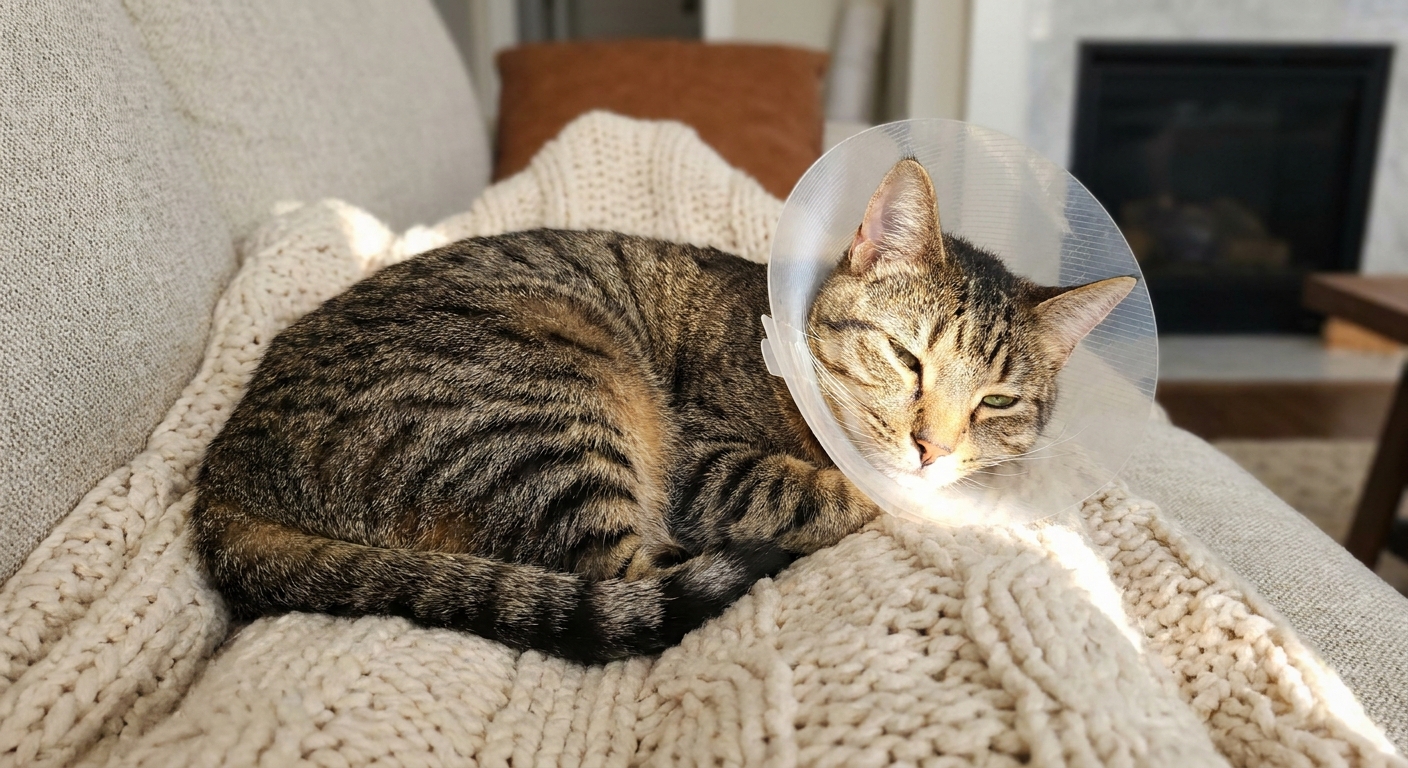
The first night: what normal can look like
Most cats go home the same day, and the first evening can be a little strange. Your cat is coming down from anesthesia, and their body is adjusting.
Common first-night behaviors
- Sleepiness and low energy: Many cats are drowsy or quieter than usual for the first 12 to 24 hours.
- Wobbly walking: Mild unsteadiness can happen that evening. Keep them in a small, safe area where they cannot climb and fall.
- Reduced appetite: It is common to eat less the first night. Some cats skip dinner and eat better the next morning.
- Extra vocalizing or mild restlessness: Some cats feel disoriented and may meow more than usual. A dark, quiet room helps.
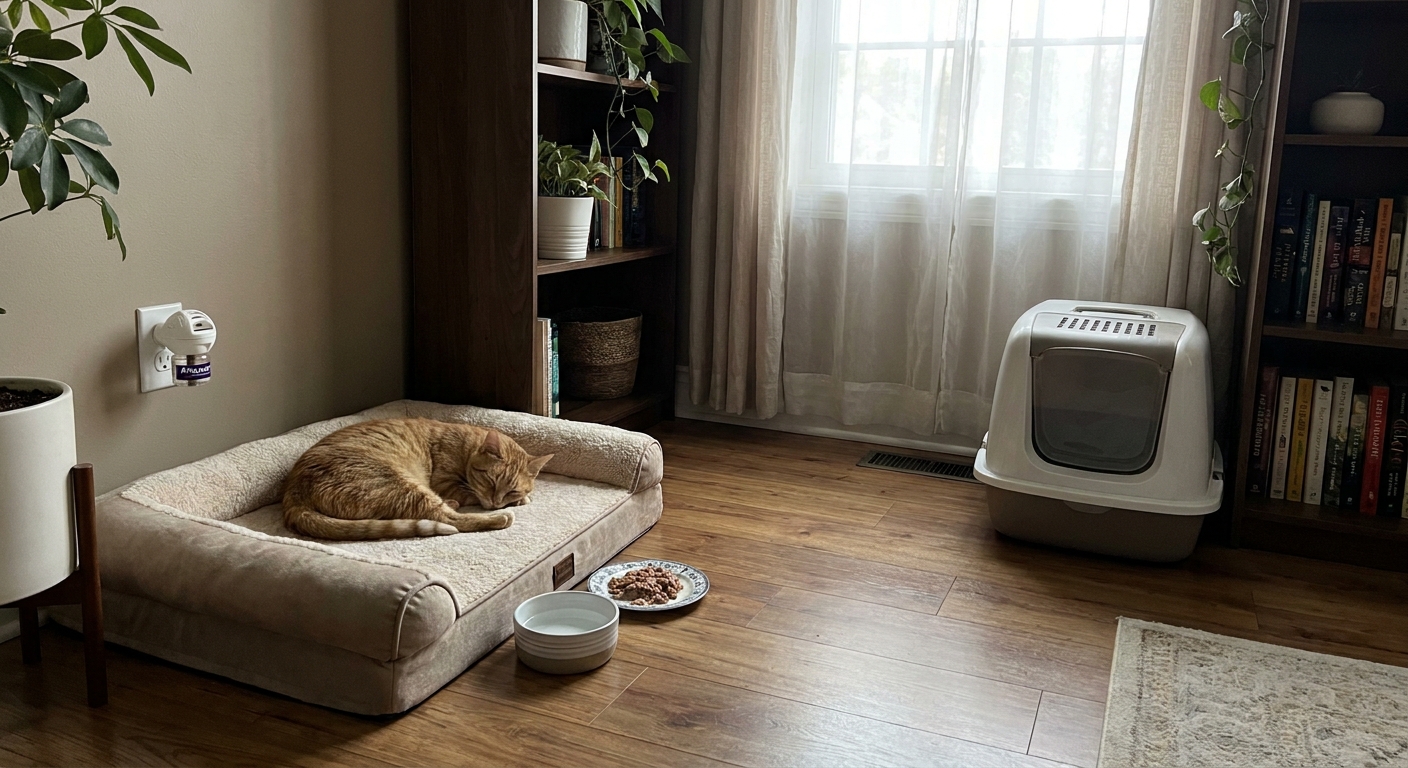
Set up a recovery room for night one
- Choose a small space: Bathroom, bedroom, or large crate setup, especially for jumpers.
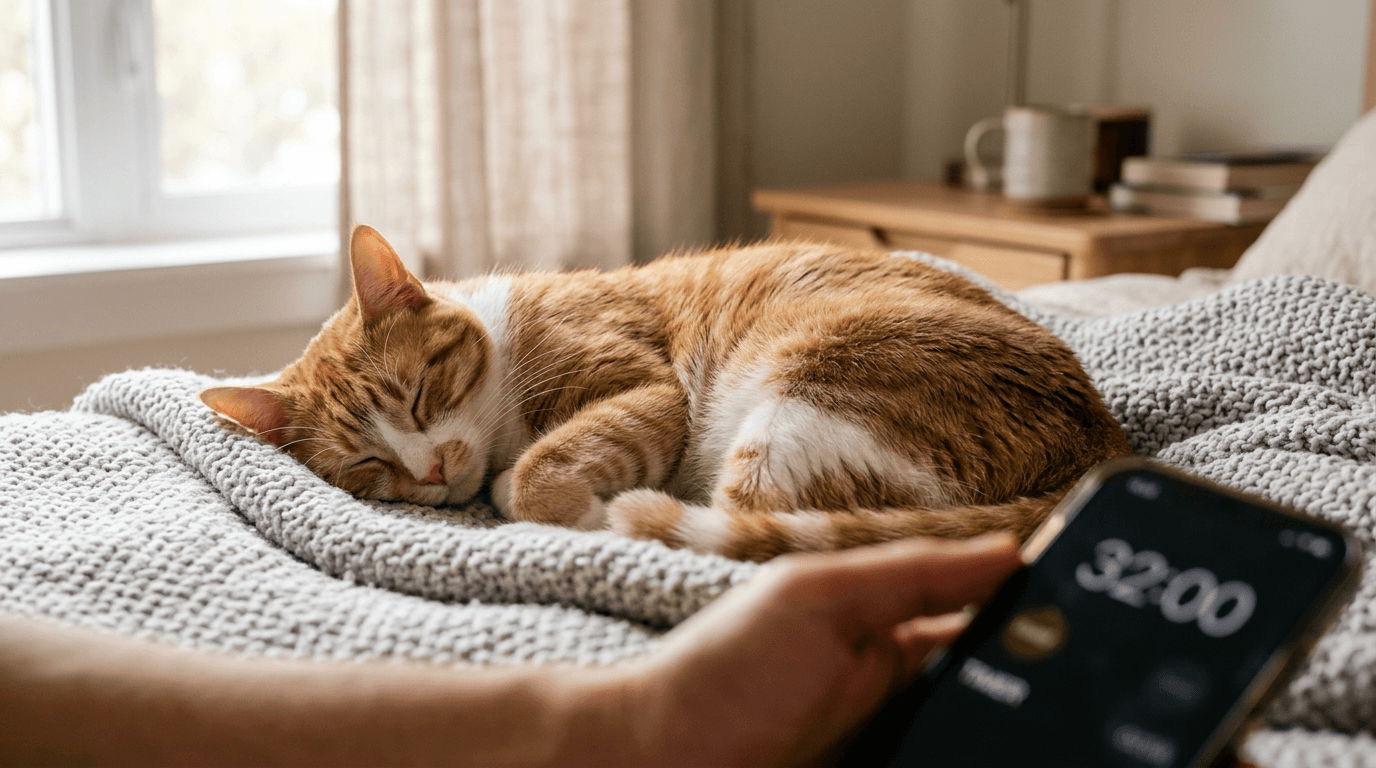
- Keep it warm and dim: A cozy bed on the floor, low lighting, and minimal foot traffic.
- Food and water nearby: Easy access without needing to hop or climb.
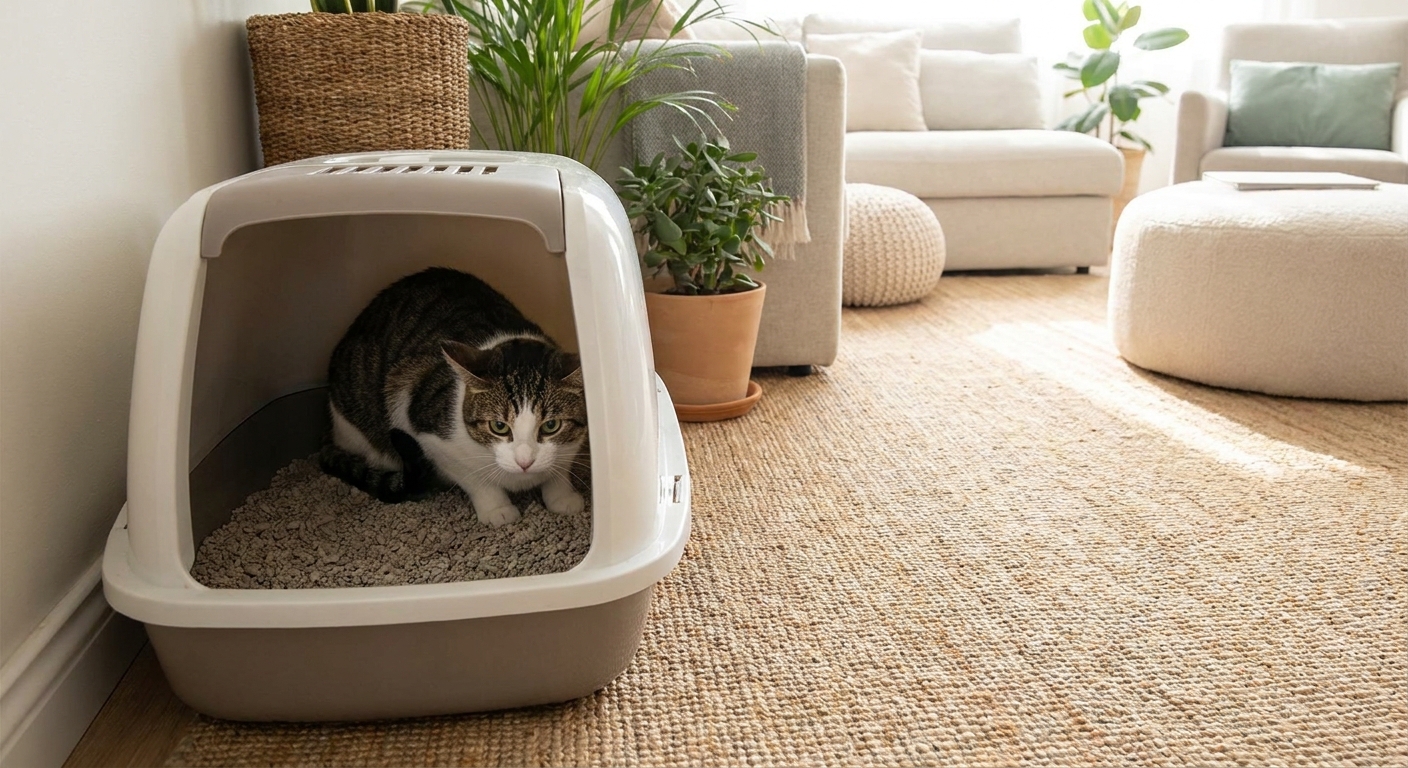
- Use non-clumping litter if your clinic advised it: Follow your discharge instructions. If you were not told to change litter, ask before you do.
Timeline: the first two weeks
Every clinic’s protocol is a little different, and you should always follow your discharge sheet if it conflicts with generic advice. Also, spays usually need stricter, longer rest than uncomplicated neuters. If you only remember one rule, make it this: your clinic’s instructions win.
Day 0 (surgery day)
- Activity: Plan on confinement. No running, wrestling, or jumping. If you have multiple cats, separate so nobody body-slams the patient.
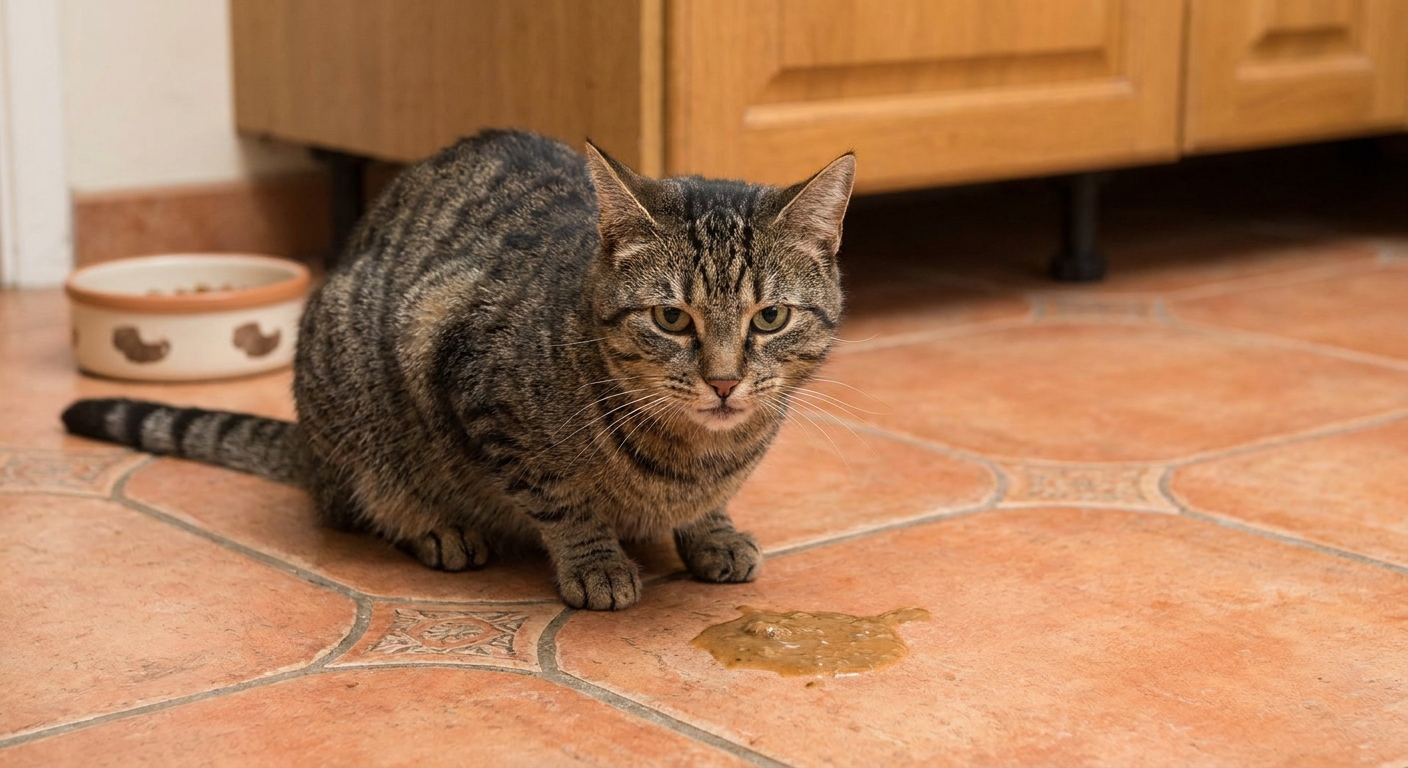
- Food: Offer a small meal when your vet says it is okay, often later that evening. If your cat eats too fast, they may vomit, so start small.
- Incision: You might not get a good look until the next day. Focus on preventing licking.
- Cone or recovery suit: Put it on before your cat gets interested in the incision. Prevention is much easier than stopping a determined licker later.
Days 1 to 3
- Energy: Many cats perk up dramatically by day 2, which is exactly why restrictions matter most now.
- Appetite: Eating should start trending back toward normal. A slightly smaller appetite can still be normal, but your cat should show interest in food.
- Incision look: Mild swelling, slight bruising, and a thin, dry scab can be normal. The skin should look closed and tidy, not wet or gaping.
- Litter box: You should see normal urination and stool. A smaller stool can happen if your cat ate less.
Days 4 to 7
- Incision: You should see steady improvement. Redness should not be spreading, and swelling should not be increasing.
- Activity limits: Spays almost always need strict “no jumping” during this stretch. Many male neuters still do better with calm, indoor downtime too, even if the incision is tiny.
- Cone or suit: Most spay recoveries still need full-time protection. Some uncomplicated neuters may be cleared for less, but only if your vet says so. A cat who can reach the incision will.
Days 8 to 10
- Behavior: Many cats seem fully normal and will test boundaries. This is the point where I start hearing the words, “But she feels fine.”
- Incision: The area often looks flatter and less noticeable. Mild itchiness as it heals can make licking temptations worse.
Days 10 to 14
- Recheck or suture timing: Many clinics schedule a check around this window. Some cats have buried sutures that do not need removal. Follow your clinic’s plan.
- Return to normal activity: Only after your vet clears it. Even if the skin looks good, deeper layers are still finishing up healing, especially after a spay.
- Cone or suit: Keep it on until you are told to stop, or until your vet confirms the incision is fully healed.
E-collar vs recovery suit
The whole point of a cone or suit is simple: prevent licking and chewing. Most post-op complications I have seen at rescues started with a cat who “only licked when we were asleep.”
E-collar basics
- Fit: Snug enough that your cat cannot back out, but loose enough to fit two fingers under the collar.
- Security check: You should not be able to slip it up over the jaw or ears. If you can, it is too loose. If you are unsure, ask your clinic to show you the correct fit.
- Length: The edge should extend past the nose so they cannot reach the incision.
- Practical tip: Raise food and water slightly (a small plate under the bowl) so the cone edge does not catch.
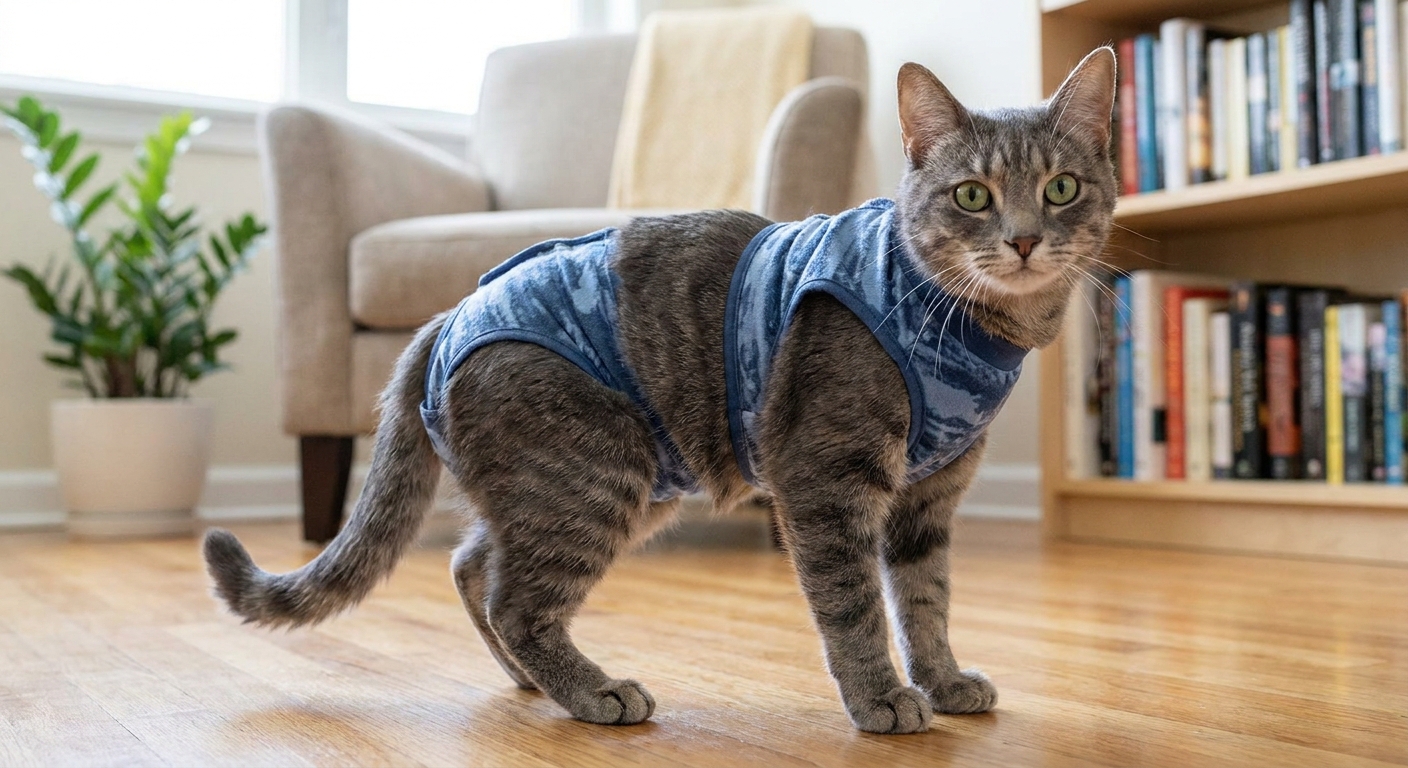
Recovery suit basics
- Best for: Cats who panic in a cone, and many female cats after spay.
- Watch for: Dampness from urine, rubbing at the armpits, or a suit that shifts and exposes the incision.
- Litter box check: Make sure your cat can urinate normally while wearing it.
If your cat can still lick the incision while wearing a suit, the suit is not doing the job. Switch strategies and call your vet for help fitting the right option.
Incision checks
A once or twice daily incision check is plenty. More frequent checking can make anxious cat parents second-guess normal healing changes.
How to check without wrestling
- Pick a calm moment: After a meal or when your cat is sleepy.
- Use good light: A phone flashlight helps.
- Look, do not scrub: Do not apply ointments, peroxide, alcohol, or creams unless your vet prescribed them.
Often normal during routine healing
- A clean, closed incision line
- Mild pinkness right at the incision edges
- Small, dry scabs
- Light bruising that fades over several days
Spay vs neuter: what looks different
- Spay: The belly incision is usually small, but it can look a little puffy or bruised. That can still be normal if it is dry, closed, and improving day by day.
- Neuter: The incision can be tiny or sometimes not obvious at all. Mild scrotal bruising or swelling can look dramatic for a day or two and still be within normal. What is not normal is wetness, active bleeding, a bad smell, or swelling that keeps getting bigger.
Not normal: changes that need a vet call
- Any gaping or opening of the incision
- Active bleeding or blood soaking the fur or bedding
- Yellow, green, or foul-smelling discharge
- Rapidly increasing swelling, especially a tense, bulging lump
- Skin that looks very red and angry and is spreading beyond the incision line
Eating and drinking
After anesthesia, it is common for a cat’s appetite to lag briefly. What matters most is the trend.
Typical pattern
- Night of surgery: May eat a small amount or skip.
- Next morning: Appetite often improves noticeably.
- By 24 hours: Many cats are close to normal interest in food.
When reduced appetite is a problem
- Not eating by about 24 hours after surgery: Call your vet for advice. Cats should not go long without calories.
- Call sooner for higher-risk cats: Kittens, seniors, diabetics, cats with kidney disease, or any cat with a history of not tolerating missed meals should be flagged to your clinic quickly if appetite is poor.
- Repeated vomiting: One small vomit can happen after anesthesia or eating too fast. More than that warrants a call.
- No drinking plus lethargy: Dehydration can sneak up quickly, especially in smaller cats.
If your vet approved it, gently warming wet food or offering a stinkier option (like a fish-based canned food) can help tempt appetite. Do not introduce a brand-new diet transition right after surgery unless your vet told you to.
Pain meds and comfort
Give only the medications your vet prescribed, exactly as directed. Do not give human pain meds. Many are dangerous for cats.
Signs pain may not be well controlled
- Hunched posture, tight belly, or guarding the incision
- Hiding, growling, or acting unusually snappy when touched
- Refusing to settle, or seeming restless and uncomfortable even in a quiet room
- Not eating, especially if appetite was normal before surgery
If you see these signs, call your clinic. Sometimes it is a medication adjustment, sometimes it is a problem we do not want to miss.
Bathroom habits
You should see urine within the first day home. Stool can be a little slower, especially if your cat ate less or if pain meds or anesthesia made things sluggish.
Constipation basics
- It can happen: A delayed bowel movement for a day or two can be normal if your cat is otherwise comfortable and eating.
- Call your vet if: Your cat is straining, crying, producing small hard pellets, vomiting, or you have no stool for longer than your discharge sheet suggests.
Jumping and play limits
I know it is hard. By day 2, some cats look at you like you are being very dramatic. But internal healing takes longer than the surface looks.
Why the no jumping rule matters
- Jumping and twisting can stress the internal sutures, especially after a spay.
- Overactivity increases swelling and can contribute to incision opening.
Realistic ways to limit acrobatics
- Use one room: Close doors and block access to tall furniture.
- Move essentials to the floor: Beds, food, and litter box.
- Offer calm enrichment: Food puzzles that do not require pouncing, lickable treats (if allowed), gentle brushing if your cat enjoys it.
- Separate from other pets: Friendly play can turn into wrestling fast.
Same-day red flags
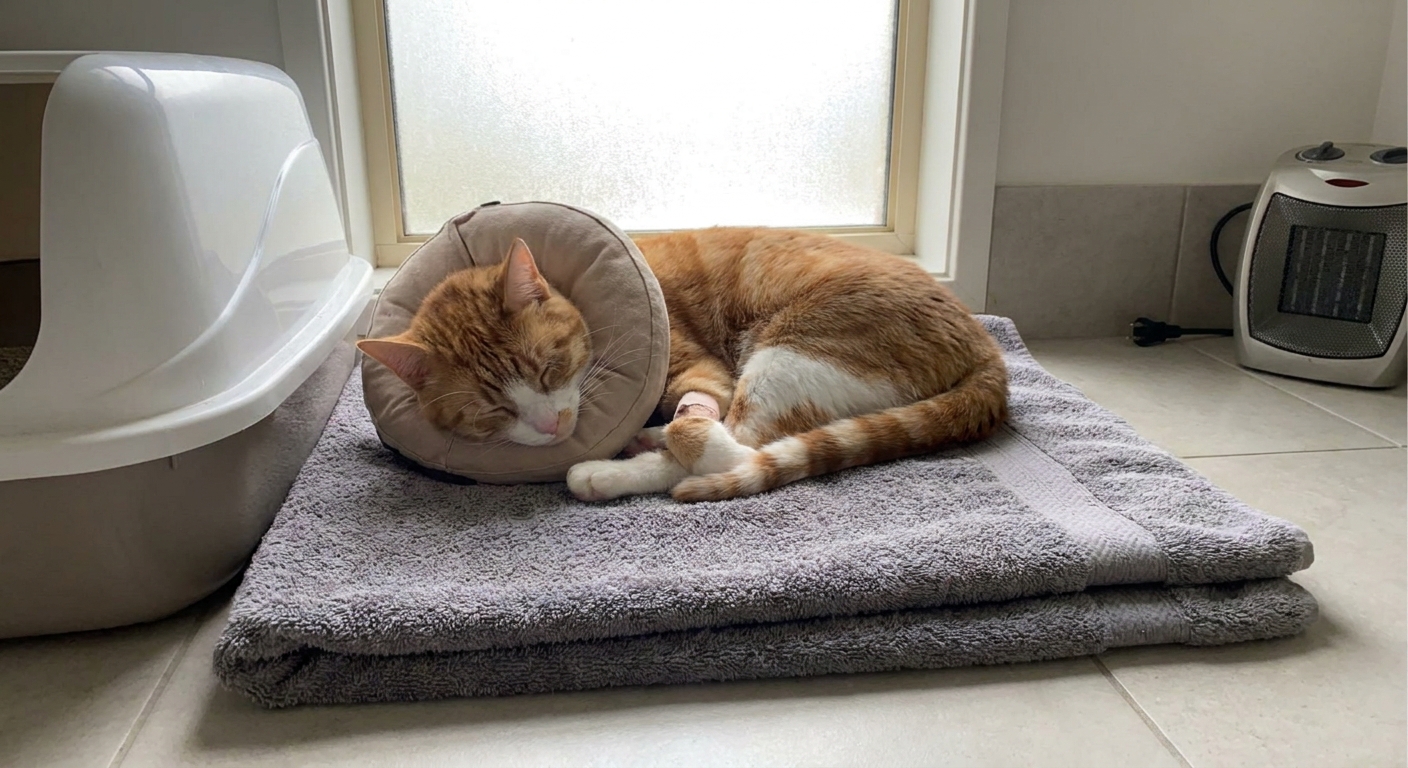
It is normal for your cat to be sleepy the day of surgery. It is not normal for certain specific issues to appear. If any of the following happen, contact your vet or an emergency clinic the same day.
Call urgently if you see any of these
- Incision opening or you can see tissue beneath the skin
- Bleeding that does not stop, or blood pooling on bedding
- Labored breathing or open-mouth breathing
- Collapse, extreme weakness, or inability to stand hours after coming home
- Straining to urinate, repeated trips to the litter box with little or no urine, or crying in the box
About straining to urinate (especially important in males)
After surgery, some cats squat and strain because they are constipated or uncomfortable. But urinary blockage is a life-threatening emergency and can look similar at first glance. If your cat is making frequent litter box trips with little to show for it, or you are unsure whether urine is coming out, do not wait overnight. Call.
Quick FAQ
Can my cat sleep in my bed tonight?
If your cat is steady on their feet, wearing their cone or suit, and your bed is low enough that they will not jump up and down, it can be fine. Many cats are safer in a small recovery room the first night so they do not attempt surprise parkour at 2 a.m.
Should I clean the incision?
Usually no. Keep it dry and protected from licking. Only clean it if your vet specifically instructed you to, and only with what they recommended.
Is swelling normal after a spay or neuter?
A little swelling at the incision can be normal. Swelling that is increasing, firm and bulging, hot to the touch, or paired with discharge is not. Call your vet.
When can I take the cone off?
When your vet says the incision is healed enough. Many spays need protection for 10 to 14 days. Some neuters may be cleared sooner. If you take it off early and your cat licks for even a few minutes, you can end up right back at the clinic.
A final pep talk
The weird part about spay and neuter recovery is that the toughest stretch is often when your cat starts to feel better. Your job is not to keep them miserable. It is to keep them boring. Two calm weeks now can save you from complications, extra vet visits, and a longer, harder recovery.
If you are unsure whether something is normal for your cat, trust your gut and call your clinic. I would always rather a cat parent ask one “silly” question than miss the one detail that mattered.