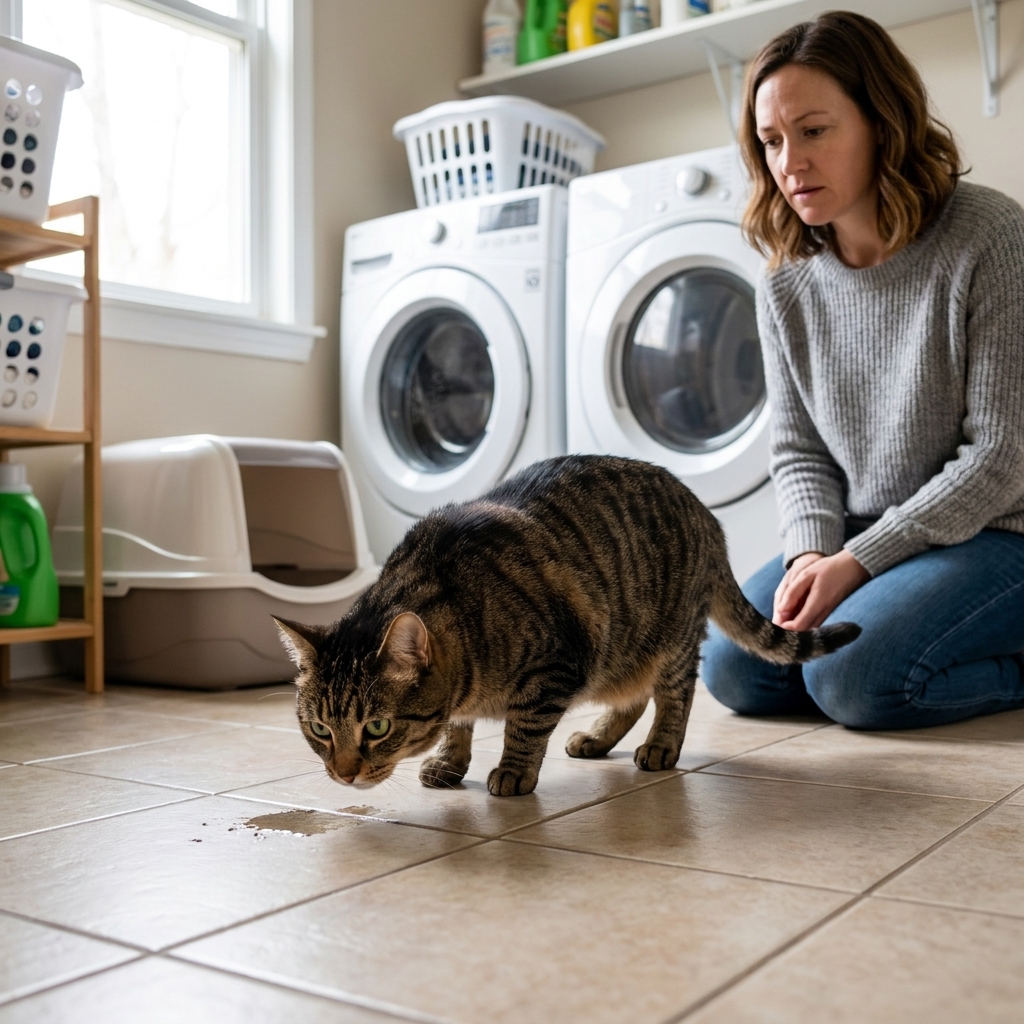
The first time I saw a foster cat squat, strain, hop out, then go right back in again, I assumed constipation. He looked so focused, like he was trying to push out something stubborn. But when I leaned in to check the clumps, there was basically nothing. That is the moment my stomach dropped, because straining can look the same whether a cat is trying to poop or trying to pee, and one of those problems can turn into a life-threatening emergency fast.
If your cat is repeatedly squatting in the litter box and little or nothing is coming out, your job right now is not to guess. It is to figure out whether this looks more like urinary straining or constipation, and to know the same-day red flags that mean you need a vet immediately.
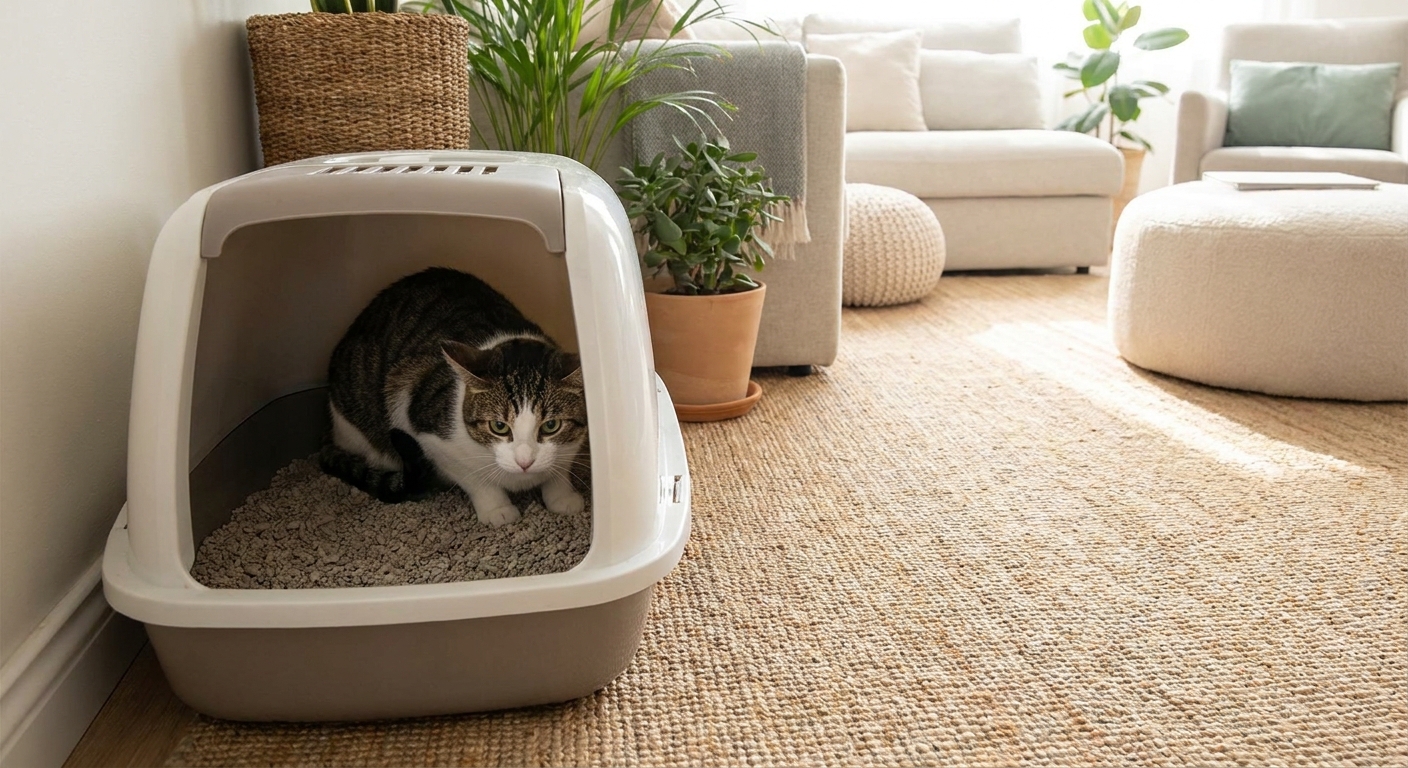
Straining: poop problem or pee problem?
Cats often use the exact same posture for pooping and peeing: a squat, tail lifted slightly, belly tucked, face tight with concentration. That is why this is so confusing and so stressful for cat parents.
A helpful way to think about it is: constipation usually produces small, dry stool (or none), while urinary trouble often produces tiny urine spots (or none). The catch is that with a urinary blockage, you may see no urine at all, just repeated attempts.
Quick check you can do in the next 5 minutes
- Scoop and inspect the box. Are there urine clumps? Are there stools, and what do they look like?
- Watch one attempt (if your cat will tolerate you nearby). Note how long they strain and whether anything comes out.
- Check for licking. Cats with urinary discomfort often lick their penis or vulva more than usual.
- Notice how they act once they leave the box. Constipated cats may still seem fairly normal between attempts. Cats with urinary pain often seem distressed, restless, or suddenly withdrawn.
Multi-cat household note: In a home with more than one cat, clumps do not always tell you who is peeing. If you are not sure which cat is struggling, confine the cat you are worried about to one room with one clean litter box so you can confirm output.
If you are unsure after a quick check, it is safest to treat it as a urinary issue and call a vet. Urinary blockage, especially in male cats, is not something to wait on.
How urinary straining usually looks
Urinary straining is when a cat is trying to pass urine but cannot, or can only pass a few drops. This can be caused by bladder inflammation (including feline idiopathic cystitis), crystals or mucus plugs, stones, a bacterial infection (less common in young, otherwise healthy cats), or a true urethral obstruction.
Common signs of urinary straining
- Repeated trips to the litter box, often every few minutes
- Little urine produced, sometimes just a tiny spot
- Crying, yowling, or grunting while trying to pee
- Long time in the squat, with visible effort
- Genital licking more than usual
- Restlessness and inability to get comfortable
- Blood-tinged urine or pink staining in the litter
Important: Cats with urinary pain sometimes strain and accidentally pass a small stool at the same time. That can fool you into thinking it is constipation. A constipated cat can also squat and strain without producing stool. The full picture matters.
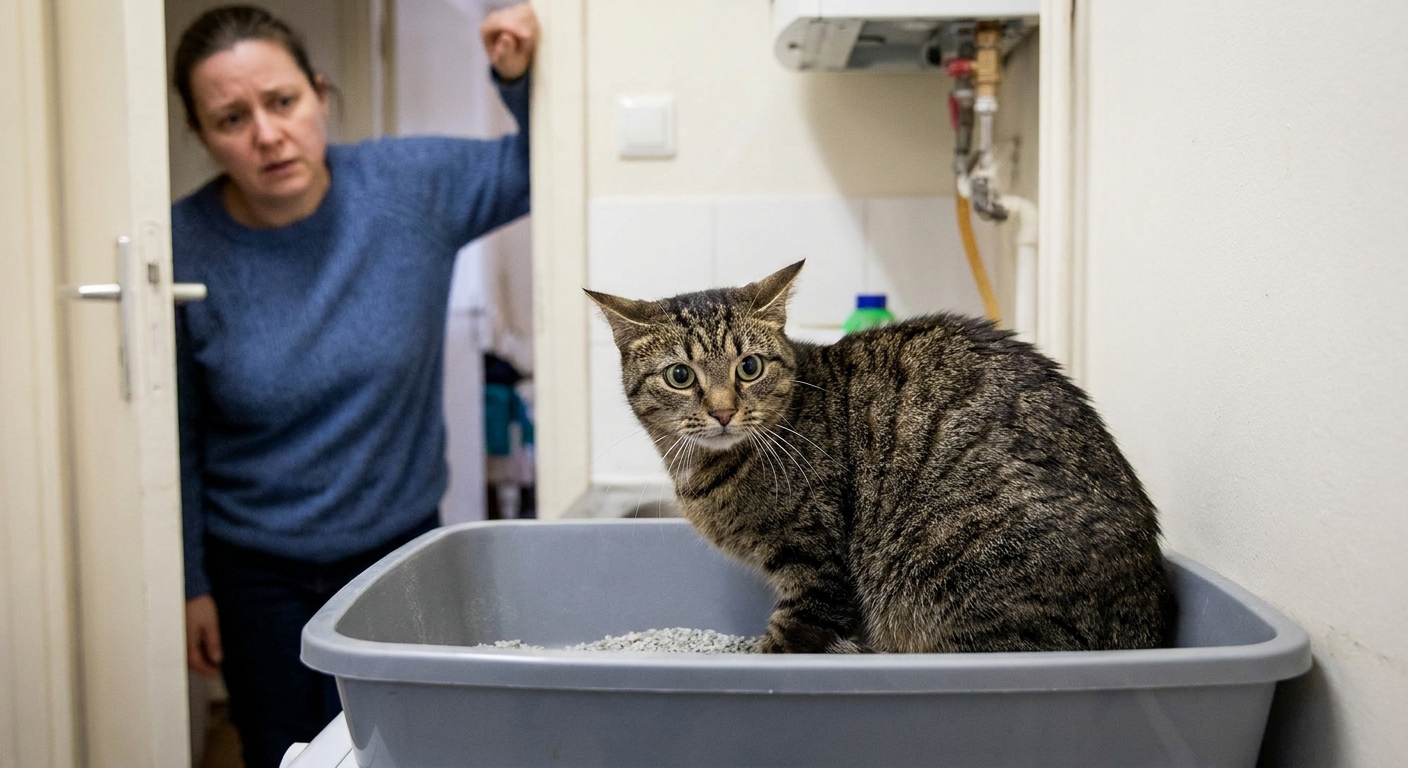
How constipation usually looks
Constipation is when stool moves too slowly through the colon, becomes dry and hard, and is difficult or painful to pass. Cats may still have the urge to go, but very little comes out.
Common signs of constipation
- Small, dry, hard stools or no stool in the box
- Long, sustained straining with little or no stool produced
- Poop stuck to fur around the rear end
- Reduced appetite or picky eating over a day or two
- Hiding or seeming uncomfortable when sitting
- Less frequent stools than normal for your cat
Constipation can also be serious, especially if it is persistent or if your cat is vomiting, refusing food, or has a painful belly. But when you are seeing repeated squatting with minimal output, the biggest immediate danger to rule out is urinary blockage.
Male cat emergency: urinary blockage signs
I am going to be blunt because I would rather scare you into calling than reassure you into waiting. If your cat is blocked and cannot pass urine, it can become life-threatening quickly, sometimes within 24 hours. Male cats are at higher risk because their urethra is narrower and more likely to obstruct.
Go to an emergency vet today if you see any of these
- No urine produced despite repeated attempts in the litter box
- Crying out while trying to pee
- Frequent trips to the box with only drops or nothing
- Excessive licking of the genitals
- Lethargy, weakness, or hiding more than usual
- Vomiting
- Loss of appetite
- A firm, painful belly or your cat reacts when you pick them up
- Collapse or inability to stand (this is a true emergency)
If your cat is a male and you are not seeing normal urine clumps in the box, assume it is urgent until a veterinarian tells you otherwise.
Do not wait overnight. If your regular vet is closed, go to an ER clinic.
What to do now (and what not to do)
Do this
- Call a veterinarian now and describe what you are seeing: repeated squatting, how much urine or stool is produced, any crying, licking, vomiting, or lethargy.
- Confine your cat to one safe room with one clean litter box so you can monitor output. A bathroom works well.
- Bring a fresh sample if you can. If your cat produces any urine or stool before you leave, your vet may want it. Do not delay care to collect a sample.
- Take a quick video of the straining episode if it is safe and you can do it without stressing your cat. This can help your vet interpret what is happening.
Please do not do this
- Do not give human stool softeners, laxatives, enemas, or pain meds. Many are dangerous for cats, and they can mask symptoms your vet needs to see.
- Do not give leftover antibiotics. Wrong drug, wrong dose, and wrong diagnosis can make things worse and delay the right treatment.
- Do not try to “force water” with a syringe unless a veterinarian has specifically instructed you. If your cat is nauseated or weak, forcing liquids can lead to aspiration.
- Do not press on your cat’s belly to see if the bladder feels full. It can be extremely painful, and it can worsen an already dangerous situation.
- Do not assume it is constipation just because you saw a small poop. A blocked cat can still pass stool.
- Do not change foods or start supplements as your first move. First confirm urine output and get veterinary guidance, especially if straining is involved.
Other issues that can look similar
Not every litter box problem is constipation or a full urinary blockage. A few other common possibilities can cause squatting, straining, or repeated box trips:
- Feline idiopathic cystitis (FIC): bladder inflammation often linked to stress. Cats may strain, pee frequently, and show blood in urine, even when they are not blocked.
- Diarrhea or colitis (tenesmus): straining to pass small amounts of soft stool or mucus can look like constipation from a distance.
- Anal gland or rectal irritation: discomfort near the rear end can trigger repeated attempts.
- Pain or arthritis: some cats struggle to posture comfortably and seem to “try” repeatedly.
- Urinary stones or crystals without full obstruction: still painful and still worth prompt veterinary attention.
Even when urine is coming out, painful or frequent urination is still a same-day call to your vet. It might not be blocked, but it is not something to ignore.
When you can watch closely at home
There are a few situations where a vet may advise monitoring for a short period, but this should be the exception, not the rule, when straining is involved.
Watching closely may be reasonable only if all of the following are true, and you have already checked in with a veterinary clinic:
- Your cat is still producing normal urine clumps in the litter box
- They strain briefly but then seem normal, meaning eating, drinking, and moving normally
- There is no crying, vomiting, or lethargy
- You can monitor continuously and have access to veterinary care if anything changes
If any red flags show up, or urine output drops, shift from “monitoring” to “vet now.”
What the vet may do
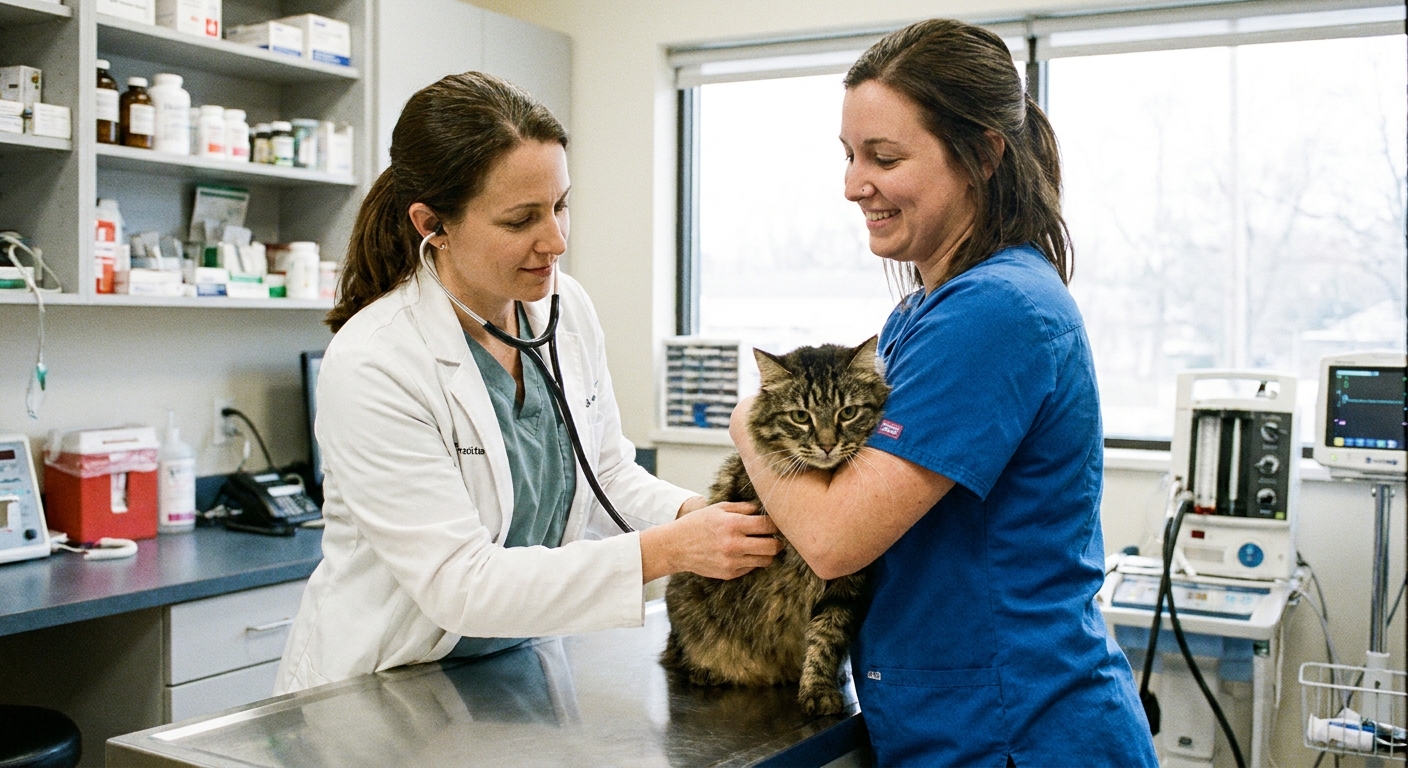
If your cat is straining, a veterinary team is usually trying to answer one big question first: Is your cat able to pass urine?
Depending on what they find, your vet may:
- Palpate the bladder to assess size and discomfort
- Run a urinalysis to check for blood, crystals, concentration, and signs of inflammation
- Check kidney values and electrolytes with bloodwork, especially if blockage is suspected
- Take X-rays or ultrasound to look for stones or constipation
- Give pain relief and fluids as needed
- Place a urinary catheter if your cat is blocked, to relieve the obstruction
I know the idea of catheterization sounds intense. But if a cat is blocked, relieving that obstruction is what saves their life.
FAQ
My cat keeps squatting but only a drop comes out. Is that constipation?
That pattern is more suggestive of urinary trouble than constipation. Tiny drops, frequent trips, crying, and genital licking are classic urinary signs. Call a vet the same day, and if your cat produces no urine, treat it as an emergency.
How long can a cat go without peeing?
In a healthy cat, you should see regular urine clumps daily. If your cat is trying to pee and nothing is coming out, do not time it out at home. A complete blockage can become life-threatening quickly, sometimes within 24 hours, especially in male cats.
My cat is straining and crying but did poop a little. Should I still worry about blockage?
Yes. Passing stool does not rule out urinary blockage. Focus on whether normal urine is being produced. If you are not seeing urine clumps, seek urgent veterinary care.
Can I give my cat something to help them poop?
Please do not give human constipation products unless a veterinarian tells you exactly what to use and how much. Some can be toxic to cats, and if the real issue is urinary obstruction, delaying proper care is dangerous.
What if I cannot tell whether it is pee or poop?
You are not alone. When in doubt, assume urinary straining and call your vet. I would always rather you “overreact” to a potential blockage than wait and hope.