Small apartment living and happy cat living can absolutely go together. I have worked with plenty of cats who thrive in studios and one-bedrooms, as long as their needs are met in smart, space-saving ways. The key is choosing a cat with an adaptable temperament and then building up your environment vertically with routines that prevent boredom.
Before we jump in, a gentle reminder from someone who has rehabbed a lot of so-called “difficult” cats: breed can hint at tendencies, but it never guarantees personality. The individual cat in front of you matters most, especially if you are adopting an adult. Still, if you are trying to stack the odds in your favor, these breeds are often great matches for smaller spaces.
What makes a cat apartment-friendly?
When I am helping a cat parent choose a good fit for a smaller home, I look for a few traits that tend to make indoor apartment life smoother:
- Lower to moderate energy: Not “lazy,” just less likely to require hours of high-intensity running to feel okay.
- Easygoing temperament: More tolerant of household noise, visitors, and normal apartment sounds like footsteps or elevators.
- Content indoors: Many cats can adapt, but some are especially happy as indoor companions.
- People-oriented (optional): If you work from home or want a cuddle buddy, a social breed can be a joy in a smaller space.
- Comfort with routine: Apartment life often means consistent feeding, play, and quiet hours. Cats who like predictability tend to settle well.
If you already have your heart set on adopting from a shelter (my favorite plan), ask about the cat’s day-to-day: Do they relax after play? Are they confident indoors? Do they use the litter box reliably? That information is often more useful than a breed label.
One more thing I always say out loud: your best apartment cat might be a mixed-breed domestic shorthair or longhair. Most cats in shelters are not pedigreed, and plenty of them are calm, adaptable, and thrilled to trade street life or shelter life for a quiet home and a sunny window.
The 7 best indoor cat breeds for small apartment living
These breeds are commonly described as adaptable indoor companions, often with calmer or moderate energy levels and a good ability to settle in smaller homes.
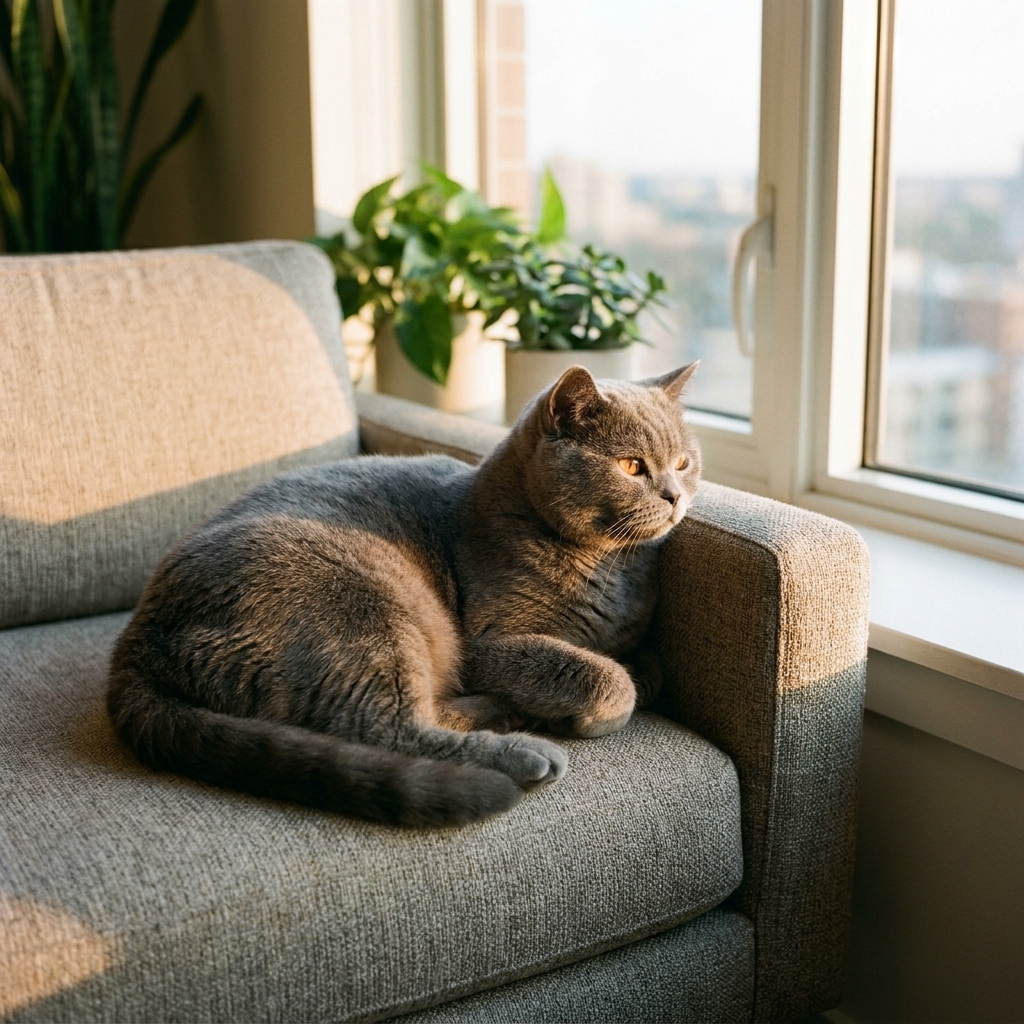
1) British Shorthair
British Shorthairs are the definition of sturdy, calm companionship. Many are perfectly content being near you rather than on you, which can be ideal if you want a cat who is affectionate without demanding constant attention.
- Apartment strengths: Generally low to moderate energy, good settle skills, and many are less likely to keep high gear for long stretches (though every cat has their moments).
- Enrichment must-haves: Daily wand-toy sessions and a couple of sturdy scratching options. They may not be big climbers, but many enjoy a low, stable perch by a window.
- Note: They can be prone to weight gain, so measured feeding and routine play matter in smaller spaces where movement is naturally limited.
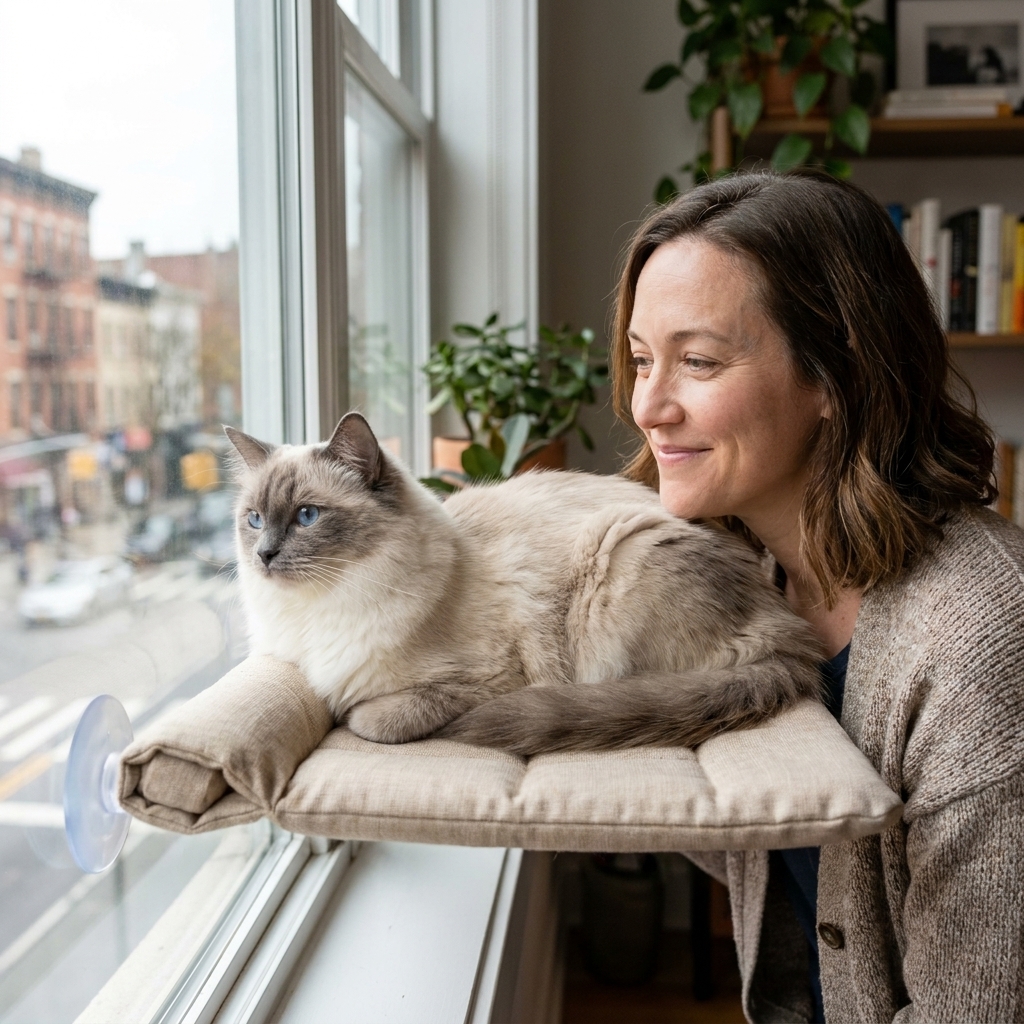
2) Ragdoll
Ragdolls are famous for their relaxed, people-loving vibe. Many do wonderfully as indoor cats and enjoy being in the same room as their humans. If you want a cat who turns apartment evenings into a cozy routine, this breed often fits the bill.
- Apartment strengths: Typically gentle, sociable, and more mellow than many breeds.
- Enrichment must-haves: A tall cat tree or sturdy window perch for lounging, plus interactive play to keep muscles and joints healthy.
- Note: Their coat needs regular brushing. In a small home, staying on top of grooming helps reduce fur tumbleweeds.
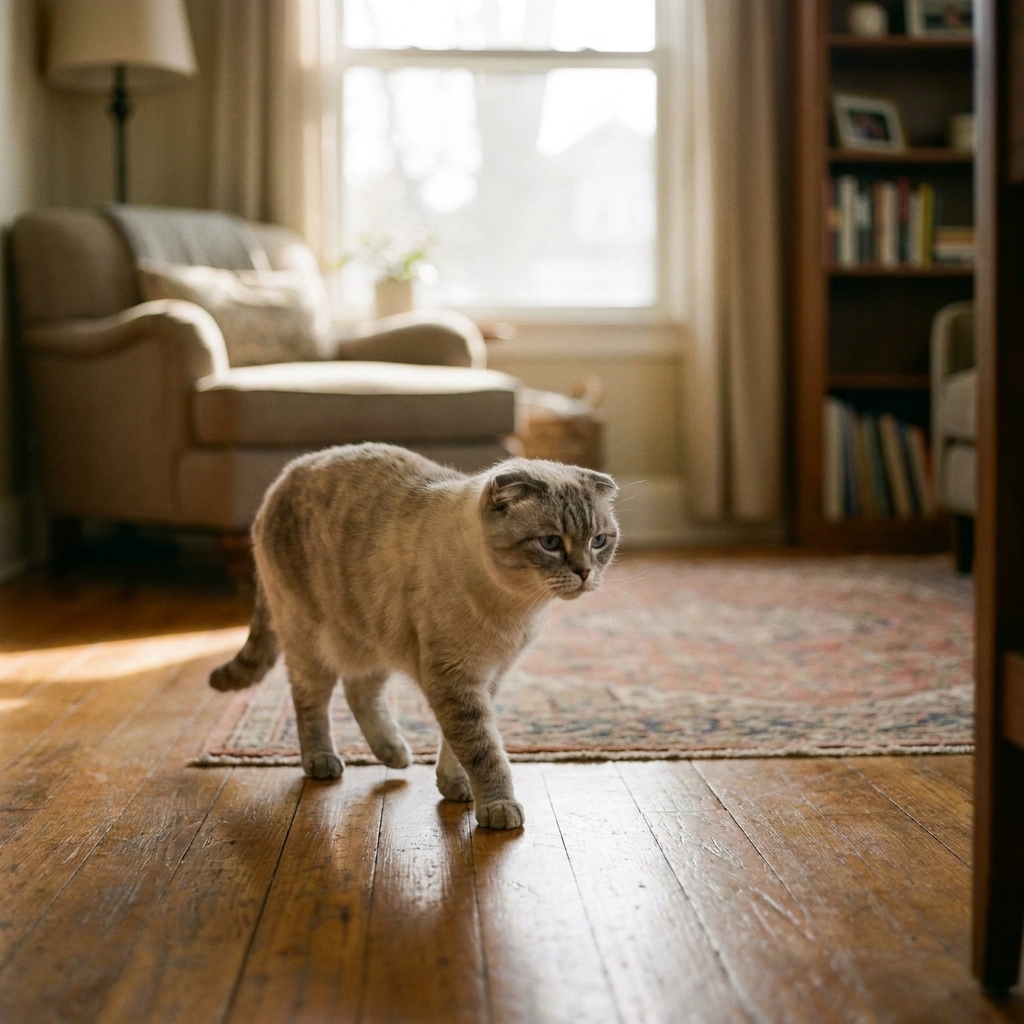
3) Scottish Fold
Scottish Folds are often sweet, quiet companions who enjoy calm environments. Many settle nicely into apartment routines, especially with consistent play and plenty of cozy rest spots.
- Apartment strengths: Typically moderate energy and content indoors.
- Enrichment must-haves: Food puzzles, short daily play sessions, and comfortable beds placed in quiet corners.
- Important health note: The folded-ear trait is genetically linked to a painful cartilage and bone condition (osteochondrodysplasia) that can affect joints and mobility. Many veterinary and welfare groups discourage breeding Scottish Folds for this reason. If you are considering one, talk with your veterinarian first and prioritize rescue or truly transparent, health-focused sources that screen thoroughly and are honest about long-term comfort.
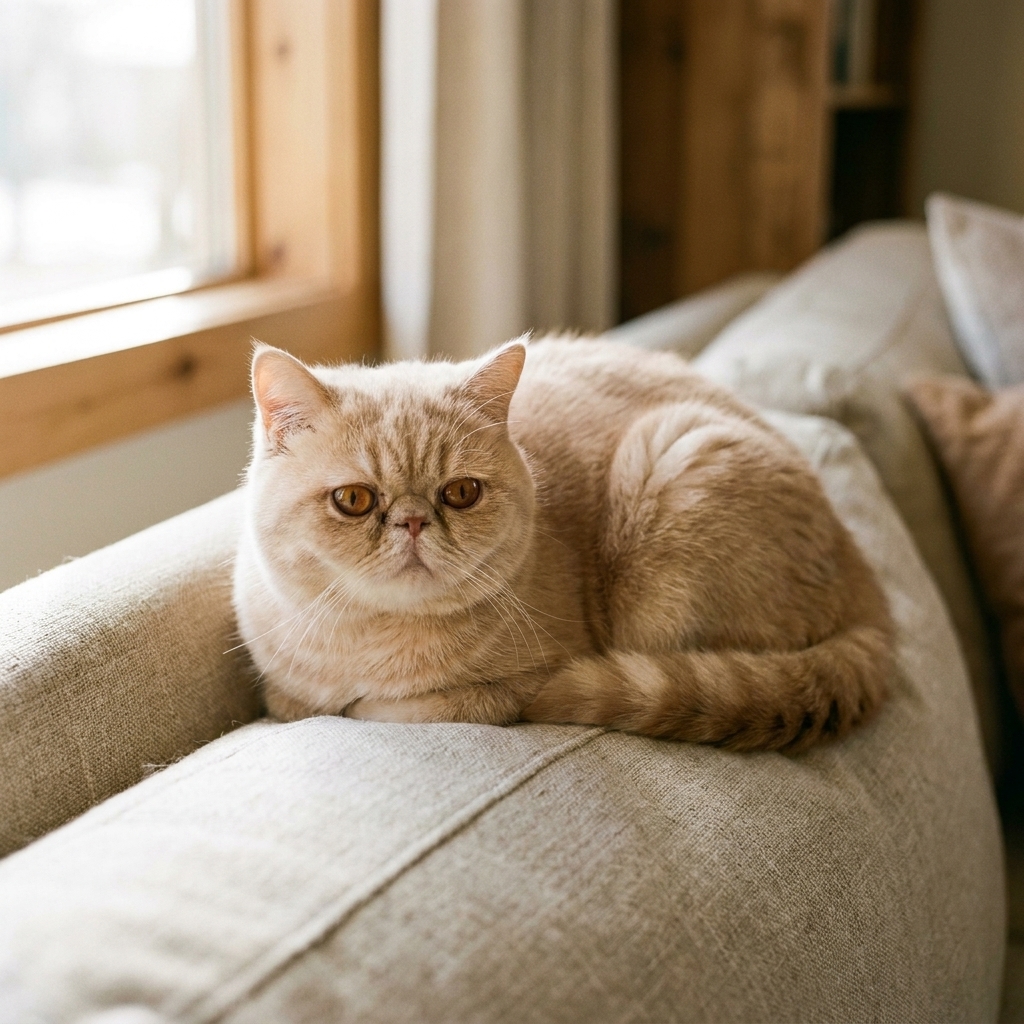
4) Exotic Shorthair
Think of the Exotic Shorthair as the Persian’s lower-maintenance cousin in a teddy-bear package. Many are affectionate, calm, and happy to lounge close by. For apartment living, that often translates to less “parkour at midnight” energy.
- Apartment strengths: Laid-back temperament, generally happy with indoor life.
- Enrichment must-haves: Gentle play, sturdy scratchers, and a steady daily rhythm.
- Health note: Many lines have flatter faces (brachycephalic features). Severity varies, but it can be associated with breathing, dental, and eye issues. Choose responsibly, ask about health testing, and have your vet evaluate breathing and eye health early.
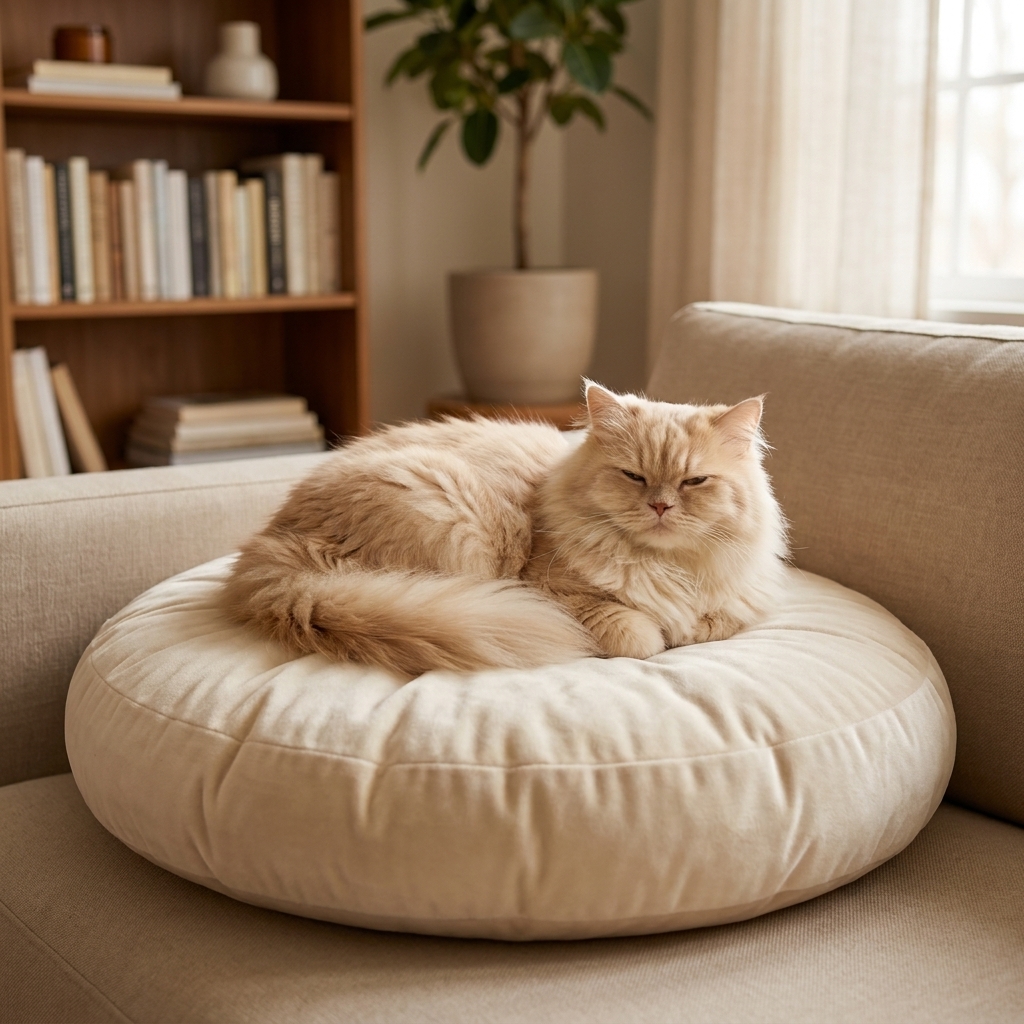
5) Persian
Persians are often described as calm, quiet, and home-loving. Many prefer soft beds, steady routines, and watching the world from a safe window spot. In other words, they can be excellent apartment cats when their grooming and health needs are met.
- Apartment strengths: Low energy, typically not as driven to sprint and climb nonstop.
- Enrichment must-haves: Gentle interactive play, a comfortable window perch, and multiple soft resting areas.
- Reality check: Daily grooming is not optional for most Persians. In a small apartment, that daily brush session also prevents mats, hairballs, and fur on everything you own.
- Health note: Like Exotics, flatter-faced Persians can have brachycephalic issues, and some lines have higher risks for certain inherited conditions. Work with a veterinarian and choose sources that prioritize health over extreme features.
6) Burmese
If you want an apartment cat who is friendly and engaged without needing constant square footage to run laps, Burmese can be a lovely choice. Many Burmese cats are social, people-focused, and playful in a “let’s interact together” way.
- Apartment strengths: Usually very human-oriented, often adapts well to indoor life with enough attention and play.
- Enrichment must-haves: Two short, structured play sessions a day, puzzle feeders, and a vertical perch to supervise your life.
- Good to know: Burmese can get lonely. If your schedule is long and quiet, a bonded pair or a confident cat companion may be worth considering.
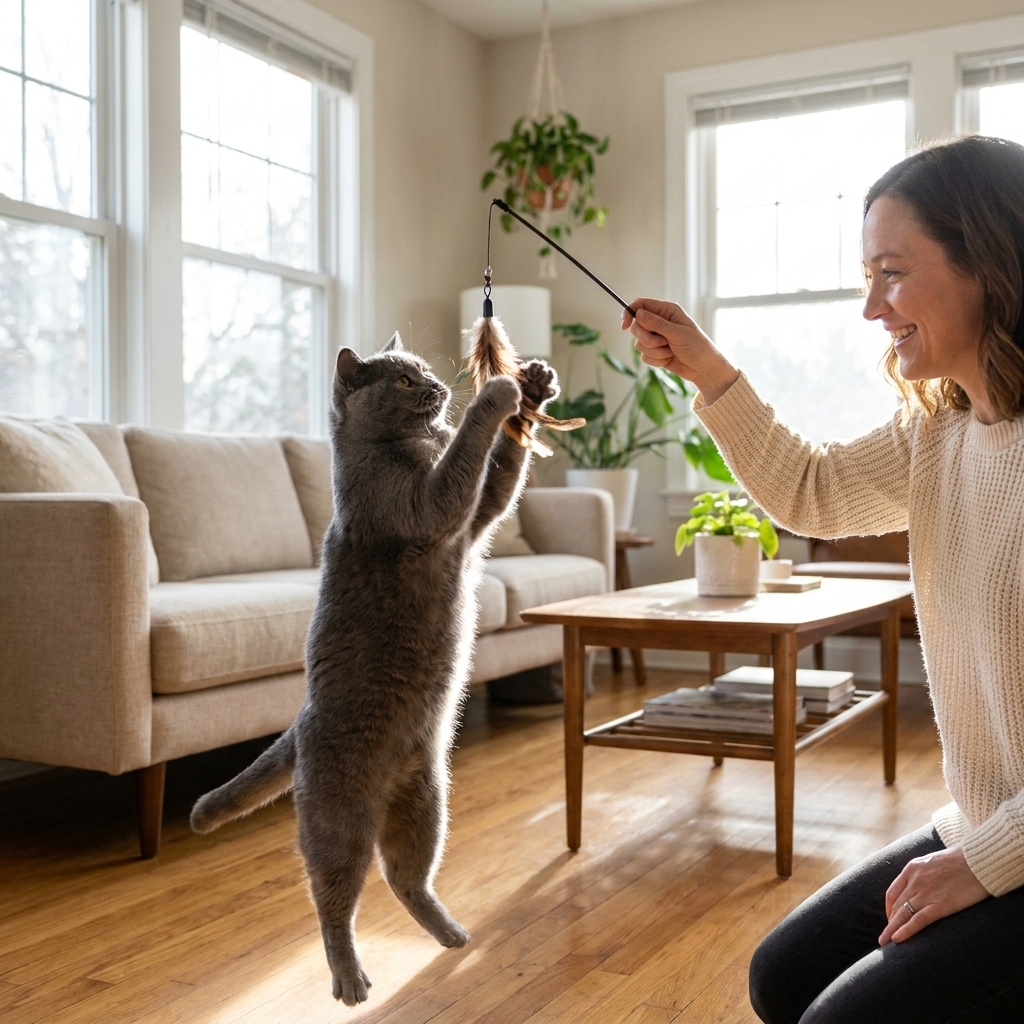
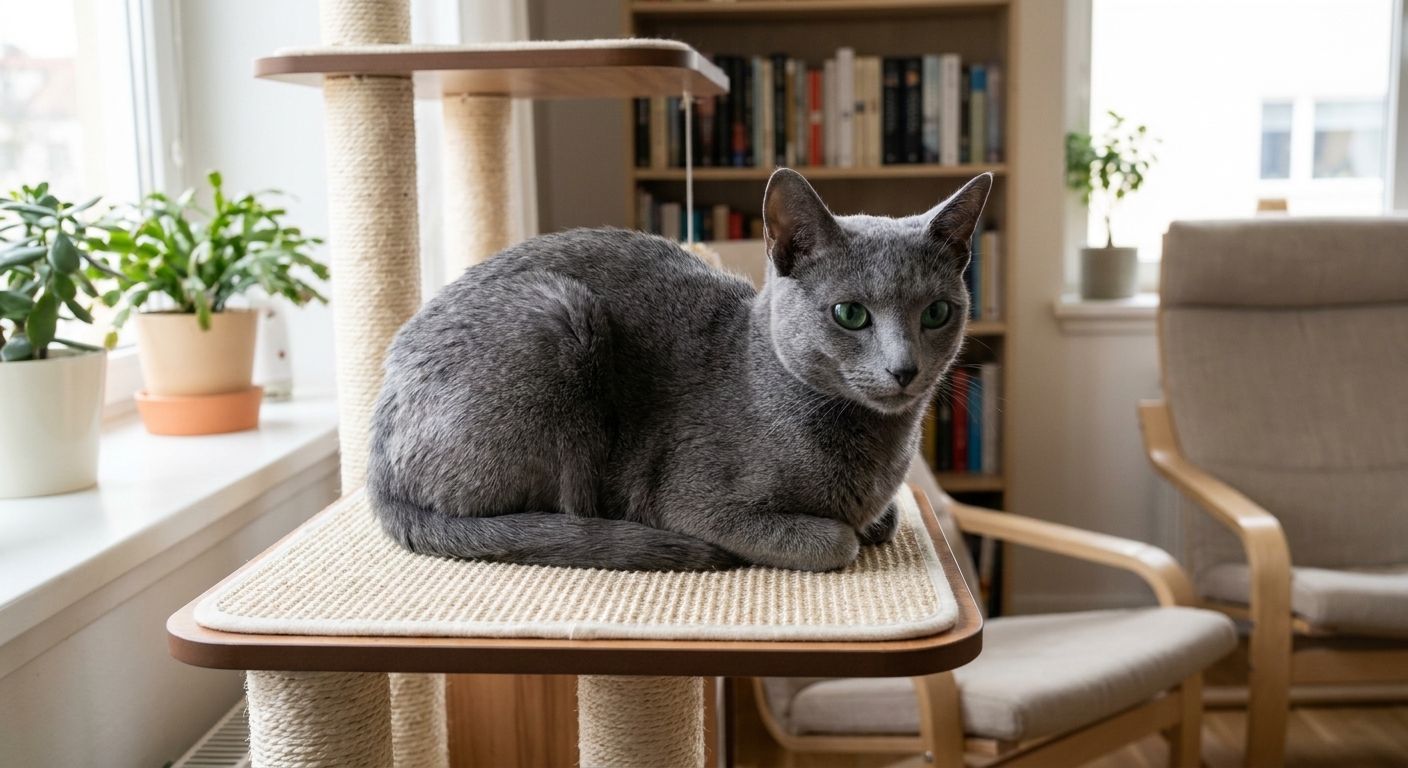
7) Russian Blue
Russian Blues are often described as gentle and routine-oriented. Many do well in smaller homes because they are not typically chaos machines, but they do appreciate consistent interaction and a peaceful setup.
- Apartment strengths: Often moderate energy with solid indoor manners, and many do best with a predictable day-to-day flow.
- Enrichment must-haves: Daily play, a cat tree or shelves for vertical territory, and quiet hiding spots for decompression.
- Note: Some can be shy with visitors. A small apartment can amplify that, so give them a dedicated safe room option or at least a covered bed where they can opt out.
How to set up a small apartment for cat success
You do not need a huge home. You need a home that makes sense to a cat. Here are my go-to strategies, including the ones I use with my own rescues, Clementine and Waffles.
Go vertical
In tight spaces, vertical territory is your best friend. It gives your cat movement, choice, and confidence without stealing your floor space.
- A tall, sturdy cat tree near a window
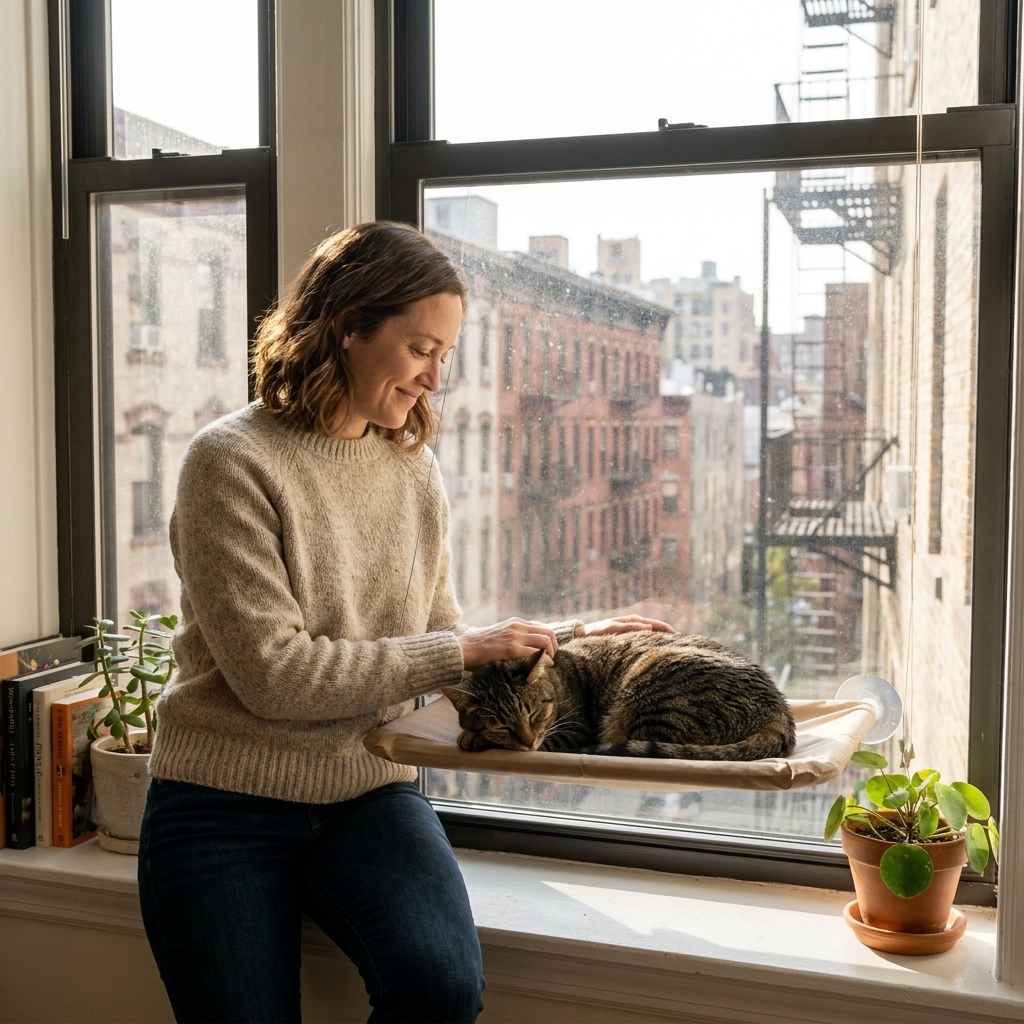
- A window perch for bird watching
- Cat shelves if your building rules allow wall mounting
- The top of a bookcase with a non-slip mat (and no breakables)
Create three zones
Many apartment issues are actually layout issues. Cats feel safer when their resources are spread out, even if it is just spread out within one or two rooms.
- Litter zone: Quiet, low-traffic, and not right next to food or water.
- Food and water zone: A consistent spot, ideally with water a little apart from food if possible.
- Rest zone: A bed, covered hide, or cozy corner where your cat can fully relax.
Nail the litter box basics
In a small home, litter box problems become everybody’s problem fast. My practical baseline is:
- Number of boxes: Aim for one box per cat, plus one extra if you can swing it. In a studio, that may not be realistic, but try not to go below one high-quality, correctly sized box per cat.
- Size matters: Many cats need a larger box than what stores market as “standard.” A roomy box reduces accidents and stress.
- Scoop schedule: Scoop at least once daily. Twice daily is even better in small spaces.
Keep play quiet and consistent
Apartment cats still need to hunt, stalk, and pounce. You can meet those needs without sounding like you are moving furniture at 11 p.m.
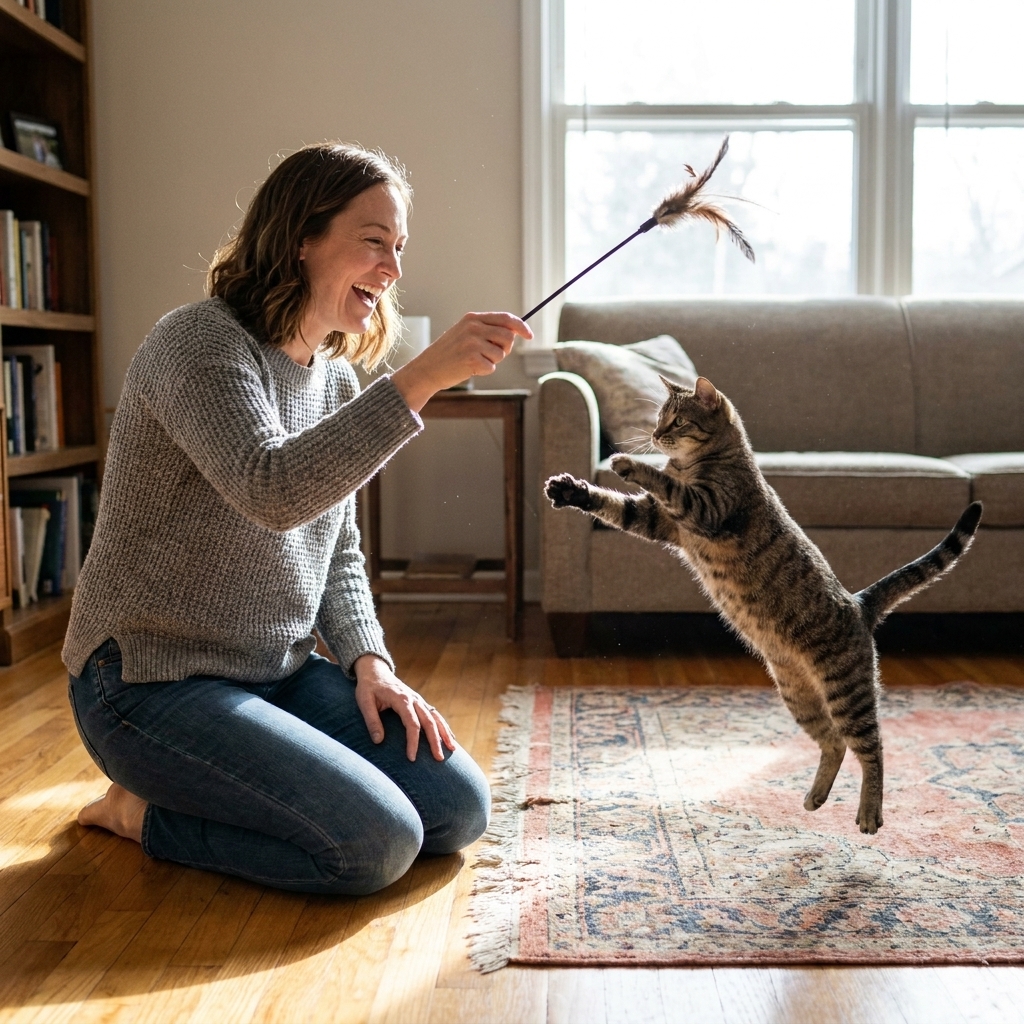
- Do two 10 to 15 minute play sessions daily using a wand toy
- End play with a small meal or treat to complete the hunt sequence
- Rotate toys weekly so your cat does not get bored
- Use puzzle feeders to add work to mealtimes
Add scratchers where they count
Scratching is not misbehavior. It is stress relief, nail maintenance, and communication. In apartments, I like a simple rule: place a scratcher where your cat already wants to scratch.
- One tall vertical scratcher near sleeping areas
- One horizontal scratcher in a social area
- If space is tight, a scratcher that doubles as a lounge works beautifully
Apartment safety and lease basics
A small space can be wonderfully cozy for a cat, but it also means little hazards add up fast. Before you bring your cat home, I recommend a quick apartment-ready check.
Safety checklist
- Secure windows and screens: A pushed-out screen is a common accident. If you open windows often, reinforce screens and consider window stops so openings stay narrow.
- Balcony caution: Supervise or keep balcony access closed unless it is safely enclosed. Falls happen, even from heights cats “should be fine” with.
- Watch cords and strings: Blind cords, charging cables, ribbon, and string toys left out can be dangerous. Store wand toys when you are not using them.
- Check houseplants: Many common plants are toxic to cats. If you love greenery, choose cat-safe plants and place them thoughtfully.
Lease-friendly cat proofing
- Know the rules: Confirm pet fees, deposit, and any restrictions before adoption day, and get it in writing if possible.
- Protect high-risk spots: Put scratchers near your cat’s favorite corners, use washable throws on the sofa, and consider furniture covers in the first few months.
- Keep neighbor noise in mind: If you share walls, schedule active play earlier in the evening and use soft toys and rugs to cut down on thumping during zoomies.
- Wall mounting: If you cannot drill for shelves, use a tall cat tree or a sturdy bookcase setup to create vertical space without breaking lease terms.
Choosing the right cat when you live small
If you are adopting, an adult cat is often the easiest match for apartment life because their energy level and preferences are already visible. Kittens are wonderful, but they are basically tiny athletes with sharp opinions.
When you meet a cat, look for:
- Recovery after play: Do they settle within a few minutes?
- Confidence indoors: Curious is great, frantic is hard in a small space.
- Litter box reliability: Ask the rescue or shelter staff what they have observed.
- Comfort with handling: Not every cat wants constant cuddles, but basic tolerance makes apartment life easier.
And if you are deciding between one cat or two, here is my honest take: a bonded pair can be easier than a single bored cat, even in a smaller apartment. Two cats who genuinely like each other can burn energy together and feel more secure when you are out.
Quick FAQ
Is it okay to keep a cat indoors in an apartment?
Yes. Indoor life is often safer, especially in busy urban areas, where cats face risks like traffic, poisoning, predators, parasites, and fights with other animals. The goal is to provide enrichment: play, vertical space, scratching outlets, and a steady daily rhythm.
What if my apartment has no space for a cat tree?
Try a sturdy window perch, a slim vertical scratcher, or even a cleared shelf with a non-slip mat. In small homes, a few well-placed cat spots can do more than one giant piece of furniture.
Are low-energy breeds always calm?
Not always. Individual personality, age, health, and environment make a huge difference. That said, many cats from the breeds above are often described as more mellow and adaptable than average.
What is the best breed if I work long hours?
Consider an adult cat with a naturally calmer temperament, or a bonded pair. Also prioritize enrichment that works while you are gone: puzzle feeders, bird feeder views from a window, and cozy resting spots. If your cat struggles with separation stress, talk to your vet or a qualified behavior professional for a plan.
Bottom line
The best apartment cat is the one whose needs you can meet consistently. Many British Shorthairs, Ragdolls, Persians, Exotics, Scottish Folds, Burmese, and Russian Blues can adapt beautifully to indoor life, especially when you give them vertical space, daily play, and a litter setup that stays clean and calm. And if your future best friend is a domestic shorthair from the shelter, you are in excellent company.