British Shorthairs are famous for that teddy-bear build: broad chest, thick neck, sturdy legs, and a round face you want to kiss all day. The tricky part is that their naturally “cobby” body type can make extra weight easy to miss until it starts affecting comfort, grooming, and long-term health.
I have met plenty of British Shorthairs in rescue and foster care who were labeled “just big-boned” when, in reality, they were carrying several unnecessary pounds. The good news: weight management can be gentle, realistic, and very do-able, even for a laid-back cat. Individual personalities vary, of course, but the plan is the same: clearer portions, smarter calories, and low-stress movement.
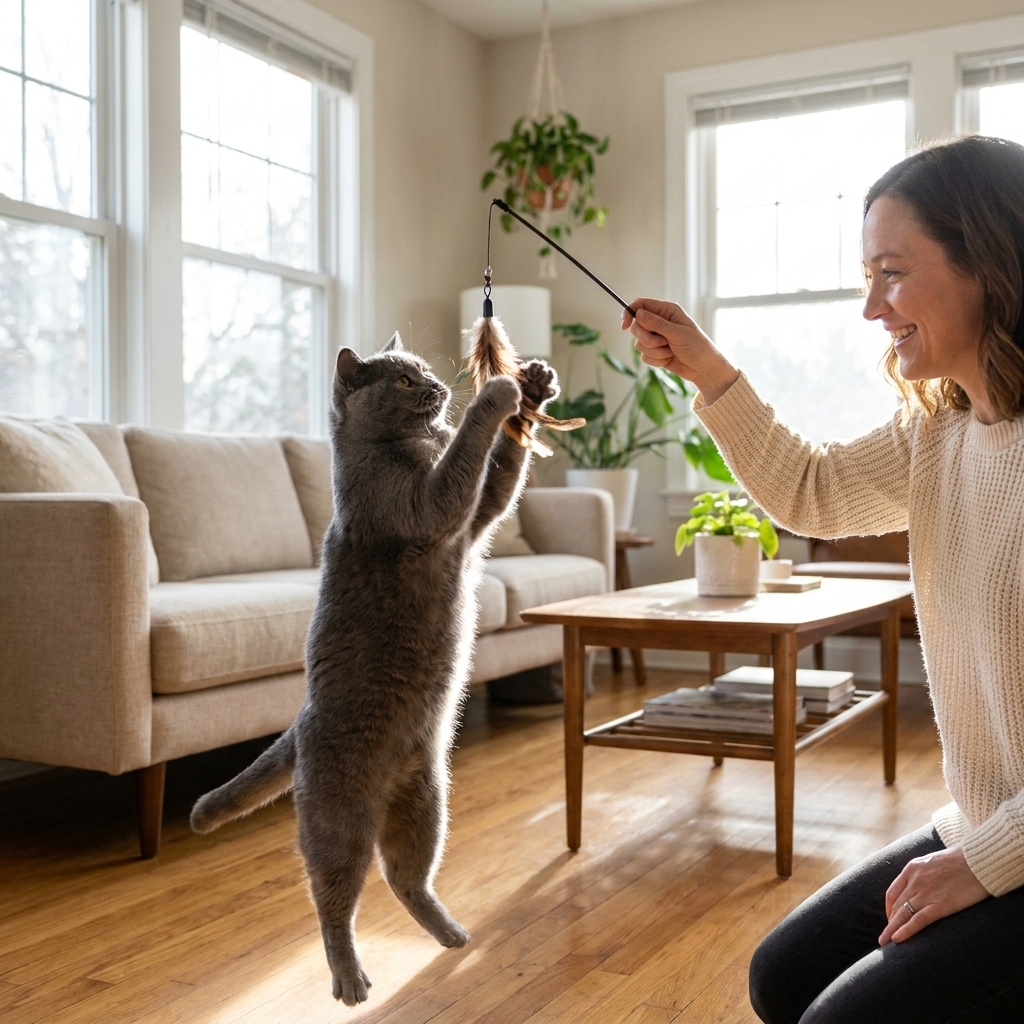
Is my British Shorthair overweight or just stocky?
British Shorthairs are meant to feel solid, not squishy. A quick at-home body check can tell you a lot, even before the scale does.
Use this simple body condition check
- Ribs: You should be able to feel ribs with light pressure, like running your fingers over the back of your hand. If you have to press hard, there is likely extra fat covering them.
- Waist: Looking down from above, most cats have at least a subtle waist behind the ribs. In an overweight cat, the body looks more oval or round.
- Tuck: From the side, there should be a gentle “tuck” up toward the back legs. A hanging belly that swings can mean extra fat (a normal primordial pouch is softer and looser and can exist even in a healthy-weight cat).
- Topline: Over the spine and hips, you should feel bony landmarks under a thin layer of padding, not a thick cushion.
If you are unsure, ask your vet team to assign a Body Condition Score (BCS) and a target weight. Those two numbers make every next step much easier and help prevent overly aggressive calorie cuts that can lead to nutrient shortfalls.
When to call the vet first
Always rule out medical contributors before starting a plan, especially if weight gain was sudden or appetite changed. Pain (including arthritis), dental disease, and certain medications (like steroids) can reduce activity or change appetite. Endocrine disease can play a role too, and diabetes mellitus is a more common concern in cats than hypothyroidism. Also ask your vet about a safe weight loss rate and daily calorie targets, particularly for seniors or cats with other health conditions.
Safe weight loss goals for British Shorthairs
For cats, slow and steady is not just nicer, it is safer. Rapid weight loss increases the risk of hepatic lipidosis (fatty liver disease), which can be life-threatening.
- Typical safe pace: often about 0.5% to 2% of body weight per week, but many vets aim closer to 0.5% to 1% for a steady, conservative trend, especially for seniors or cats with comorbidities.
- Never crash diet: do not sharply cut food without a calorie plan.
- Weigh consistently: weekly weigh-ins at the same time of day are more helpful than occasional check-ins.
If the scale is not moving after 3 to 4 weeks of consistent measuring, it usually means calories are still a bit too high or sneaky calories are coming from treats, licking plates, dog food, or free-feeding. Small day-to-day fluctuations are normal, so focus on the trend line over several weeks.
Recheck and monitor
Plan on regular progress check-ins with your vet team (many people do monthly). Call your vet promptly if your cat eats significantly less or not at all for more than 24 hours, seems weak or lethargic, vomits repeatedly, develops diarrhea or constipation that does not settle, or you notice coat changes. A weight plan should make your cat healthier, not miserable.
Portion control that actually works
A very common reason weight plans fail is not willpower. It is vague measuring. “A little extra” adds up fast with calorie-dense kibble and treats.
Measure meals by weight, not by cup
For the most accurate portions, use a small kitchen scale and measure food in grams. Scoops and cups are notoriously inconsistent, especially with different kibble shapes. Once you find the right grams-per-meal, save it in a phone note so everyone in the home feeds the same amount.
- Pick a daily calorie goal with your vet or veterinary nutrition team.
- Divide into 2 to 4 meals to reduce begging and stomach upset.
- Track everything your cat eats, including treats, toppers, dental chews, supplements with calories, and “just one bite” of human food.
Build structure without making your cat frantic
British Shorthairs tend to love routine, and routine is your best friend here.
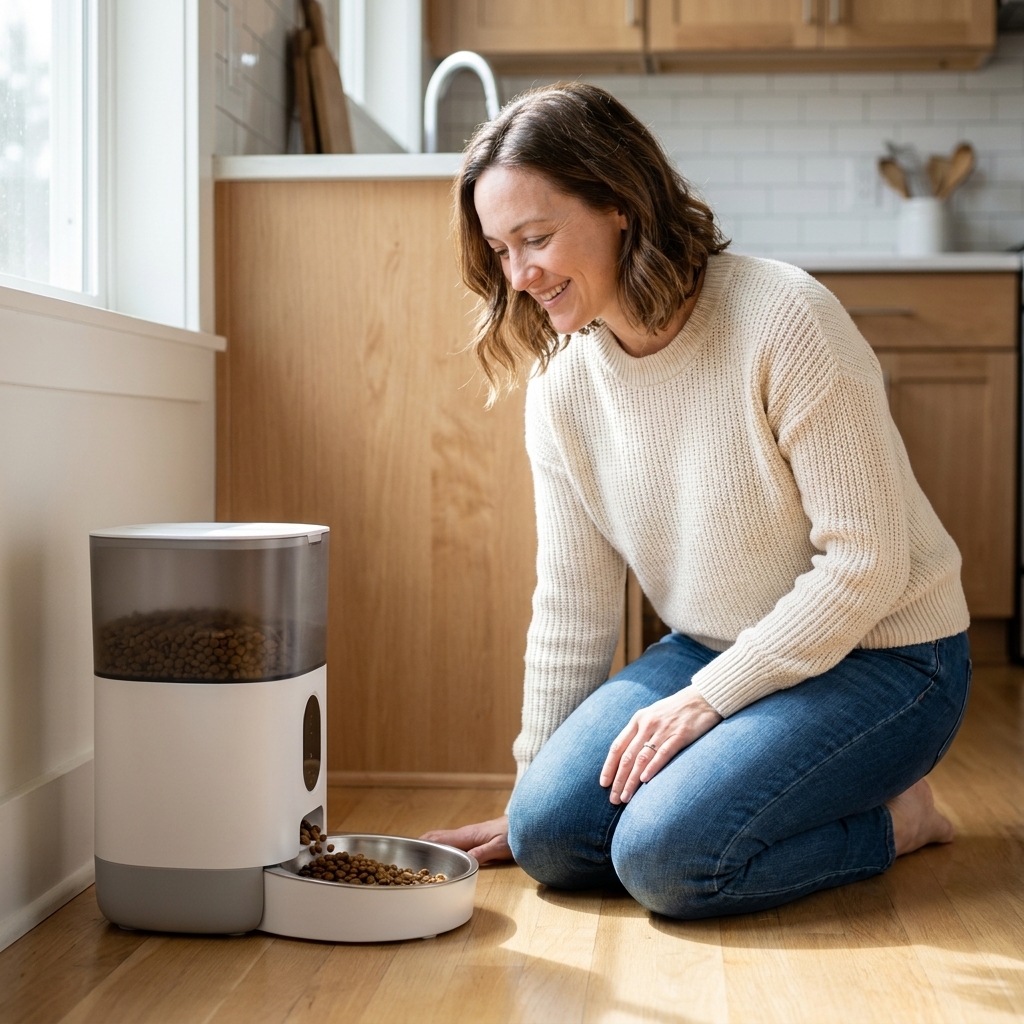
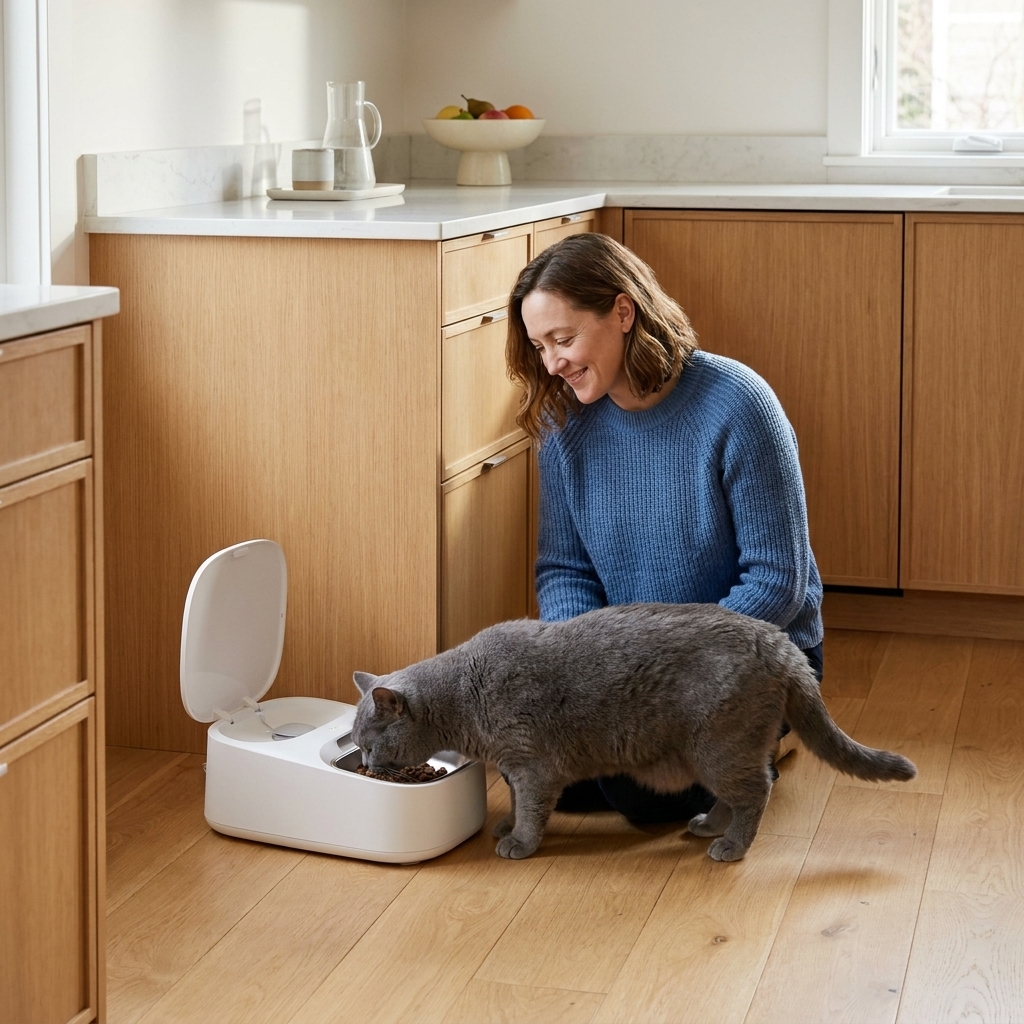
- Timed meals: use scheduled feedings rather than all-day grazing.
- Puzzle feeding: slow eating and add gentle activity, especially for kibble portions.
- Separate pets during meals: if you have multiple cats, microchip feeders or closed-door feeding can prevent food theft.
Choosing a lower-calorie diet
The goal is not “less food forever.” The goal is fewer calories with good satiety, which usually means higher protein, appropriate fiber, and more moisture.
Wet food can make weight loss easier
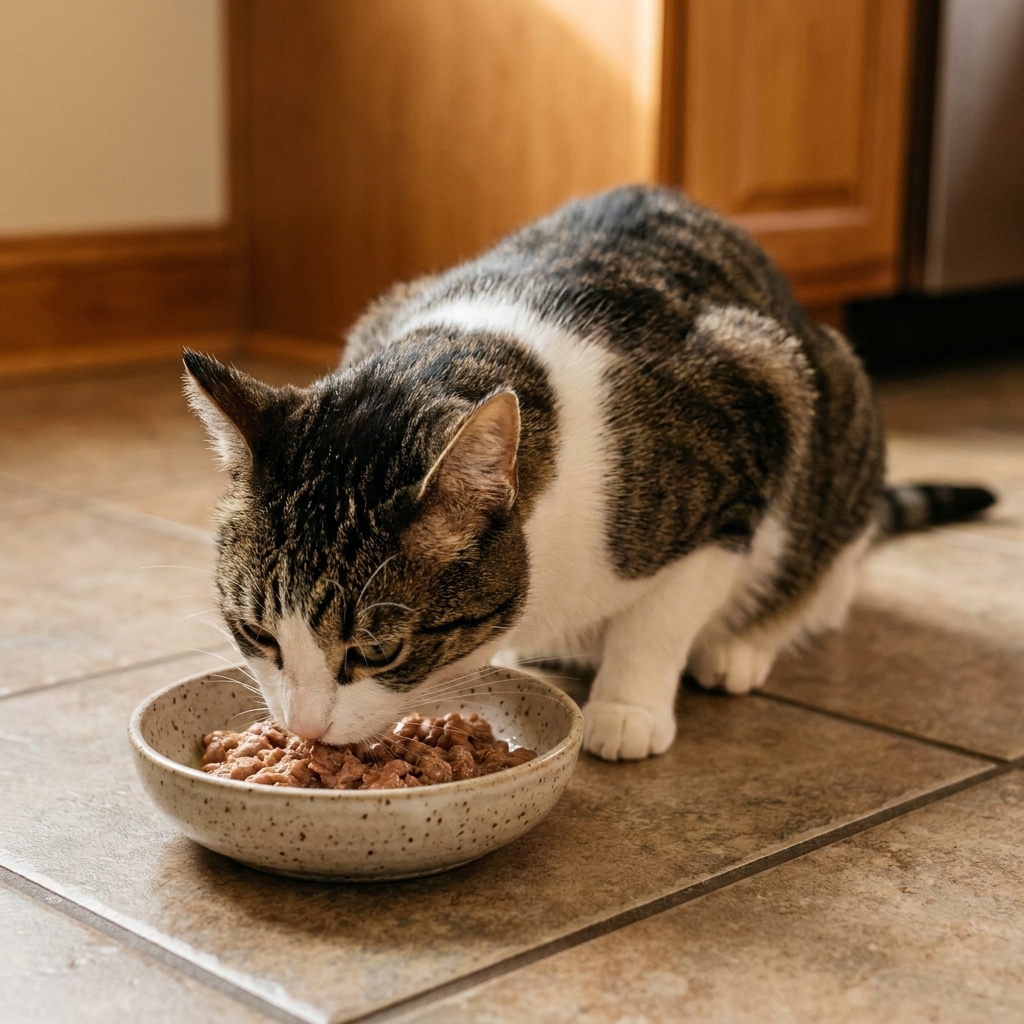
Many cats feel fuller on wet food because of the added moisture and often lower calorie density. That said, there are calorie-dense canned foods too, so always check the label for kcal per can or kcal per ounce.
- Pros: higher water intake, often fewer calories per gram, can increase satiety.
- Tip: split wet food into smaller, more frequent meals to reduce “empty bowl panic.”
Look for high-protein options
Every brand and formula is different, so use the label and calorie information rather than buzzwords. What I like to see in a weight-management plan:
- Clear animal protein sources (chicken, turkey, rabbit, fish, etc.)
- Calories listed as kcal per can or kcal per cup
- Complete and balanced for your cat’s life stage
If you are considering a veterinary weight-loss diet, that can be a great tool. These formulas are designed to maintain nutrient intake even while calories are reduced, which matters because cats must still get enough protein, taurine, and essential vitamins and minerals.
Be careful with “light” or “indoor” labels
Some “light” foods are only slightly lower in calories. Others rely on fiber to reduce calorie density, which works for some cats and leaves others acting like they have never been fed once in their lives. If your British Shorthair seems ravenous, talk to your vet about a different approach rather than assuming your cat is just being dramatic.
Treats and toppers: the hidden calorie leak
I say this with love: treats are usually where the math falls apart. A British Shorthair can gain weight on “just a few” treats a day, especially if multiple family members are involved.
Use the 10% rule
Keep treats at 10% or less of total daily calories. For many cats, that means treats need to be small, measured, and intentional.
Lower-calorie treat ideas
- Single-ingredient freeze-dried meat, broken into tiny pieces
- A spoon of their regular wet food used as a “treat” so calories stay predictable
- Churu-style lickable treats in very small amounts, or squeezed onto a lick mat and spread thin
- Cat-safe crunchy swaps like a few pieces of measured kibble taken from their daily allotment
If your cat gets meds, try hiding pills in a small portion of their meal rather than extra cheese, deli meat, or high-calorie pill pockets.
Also, avoid “diet” human foods and sweeteners. Some ingredients that are common in kitchens are dangerous to cats, including onions, garlic, and xylitol.
Exercise ideas British Shorthairs will do
British Shorthairs are not usually marathon runners. They tend to be calm, steady, and quietly playful, which means your best strategy is short, frequent bursts of activity that feel like a game, not a workout.
Think “micro-sessions”
Aim for 2 to 5 minutes at a time, several times a day. That is often more successful than one long session. If your cat is overweight or you suspect sore joints, keep it gentle and build up slowly.
My favorite low-stress play routines
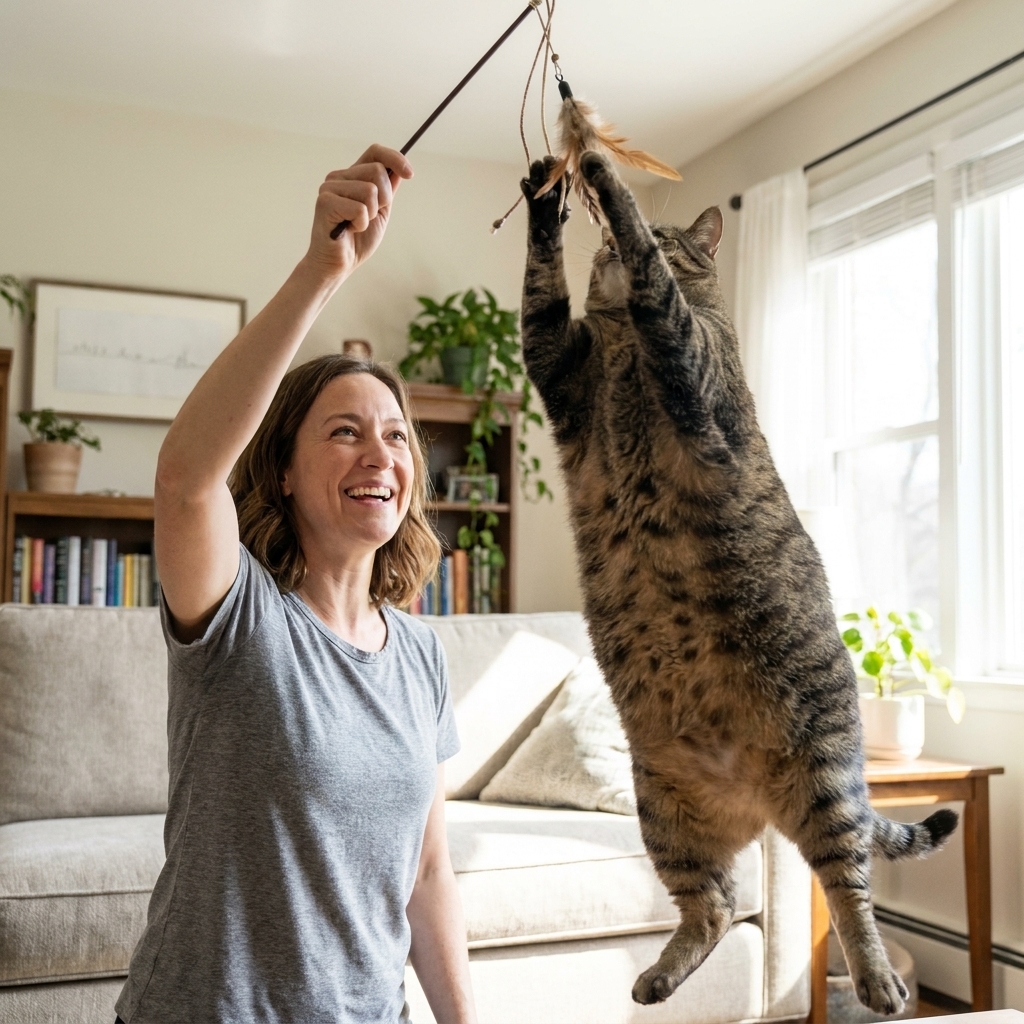
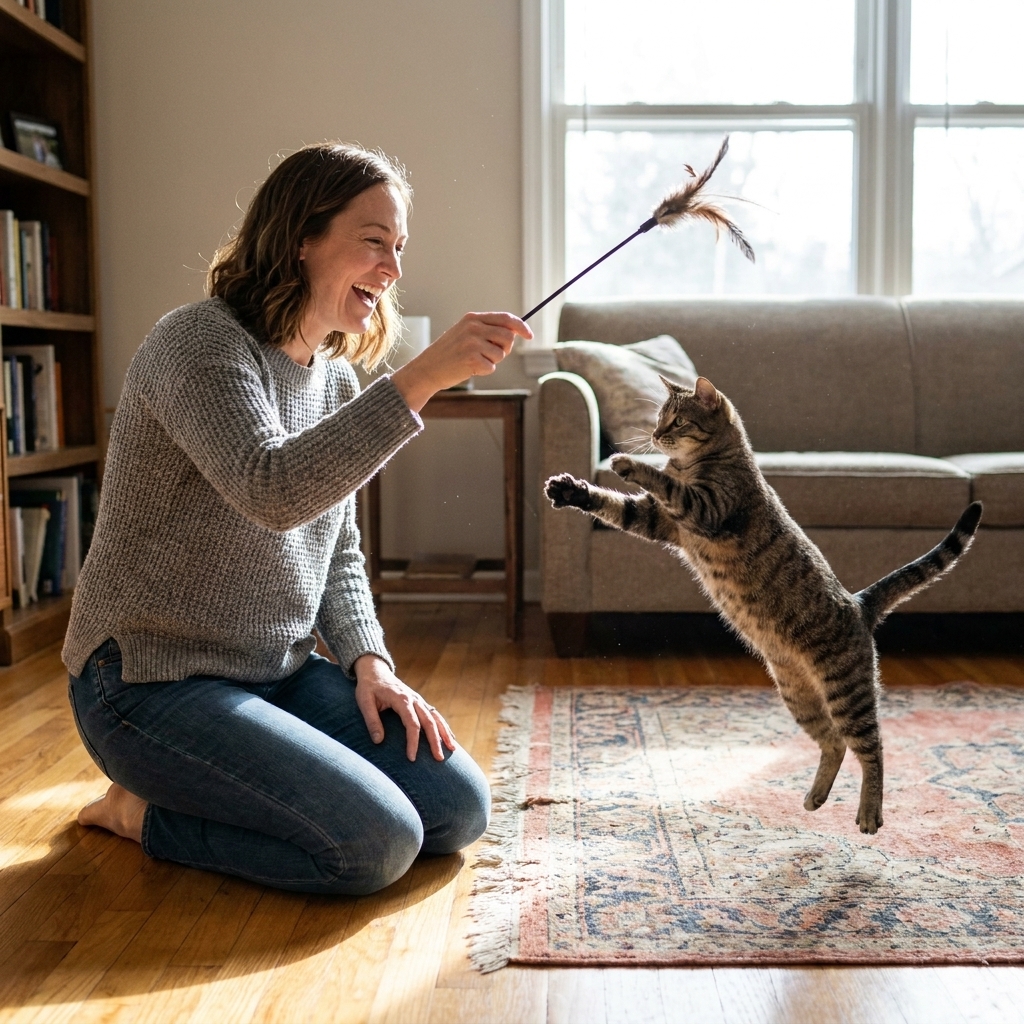
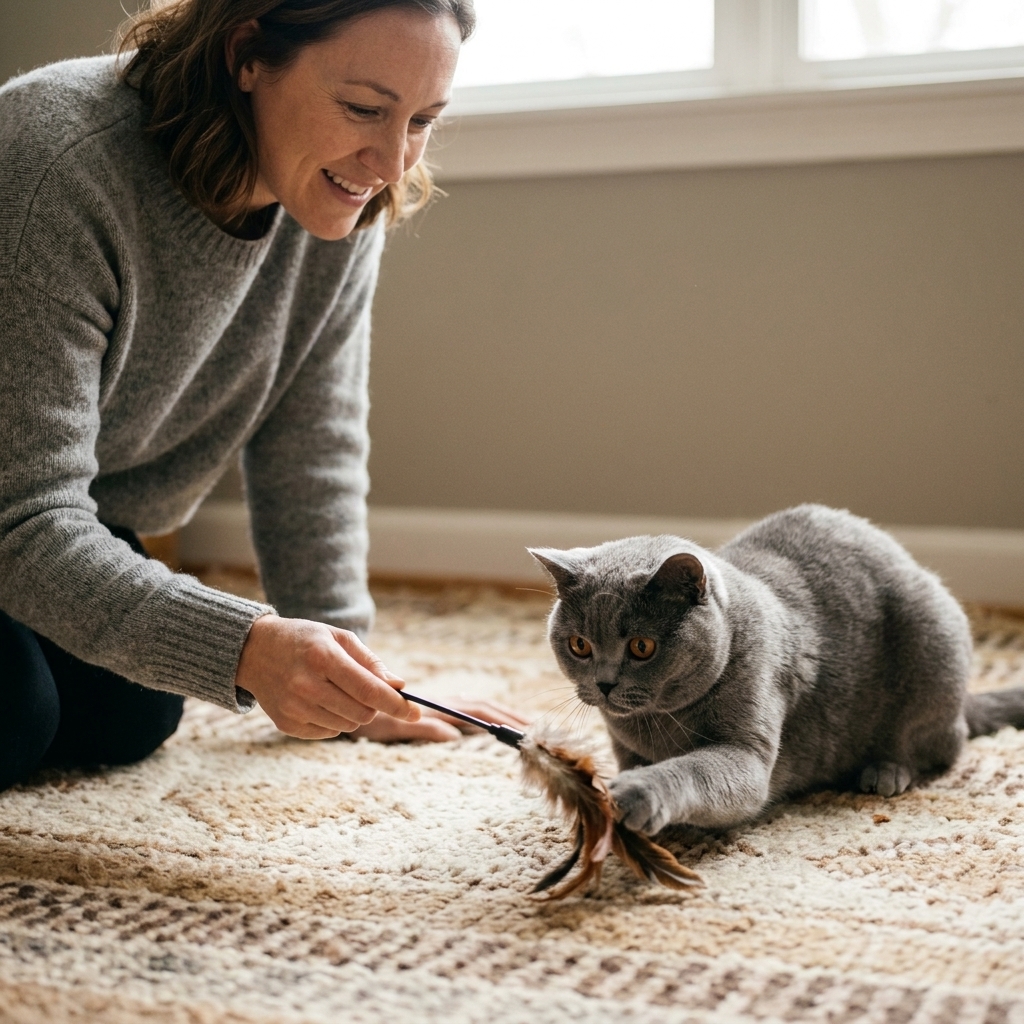
- Wand toy “stalk and pounce”: keep movements low to the ground, like prey. Let your cat catch it often so they do not give up.
- Hallway fetch (yes, really): some British Shorthairs will bat a soft ball and trot after it. Try a quiet, lightweight toy.
- Food puzzles: treat balls, puzzle trays, or scattering measured kibble in different spots for “foraging.”
- Stair snacks: if your cat can safely do stairs, place a few pieces of their measured kibble on different steps to encourage gentle climbing.
- Box circuits: set out two or three boxes and toss a toy between them to encourage short dashes and hopping in and out.
Set up the home to encourage movement
Your environment can nudge activity all day long without you needing to lead every play session.
Easy environmental upgrades
- Place resources apart: keep food, water, and litter boxes in different locations (still convenient, just not all in one corner).
- Add vertical options: sturdy cat trees, window perches, and wide shelves. British Shorthairs appreciate stability and roomy platforms.
- Create warm lookout spots: a perch near a window can encourage standing, turning, and hopping up and down.
- Rotate toys weekly: novelty matters more than quantity.
If your British Shorthair is older or stiff, choose ramps or shorter climbs and keep floors non-slip. Pain can look like “laziness,” so talk to your vet if your cat is reluctant to jump.
Transitions: change food gently
British Shorthairs can be wonderfully easygoing, but their digestive systems do not always love sudden diet changes. A slow transition helps prevent diarrhea, vomiting, and food refusal.
A gentle transition schedule
- Days 1 to 3: 75% old food, 25% new food
- Days 4 to 6: 50% old, 50% new
- Days 7 to 9: 25% old, 75% new
- Day 10+: 100% new
If your cat has a sensitive stomach, go even slower. If your cat stops eating entirely or eats significantly less for more than 24 hours, call your vet. Cats should not go without food.
Common roadblocks
“My cat is screaming like they are starving.”
First, confirm you are feeding enough calories for safe weight loss. Then consider:
- Switching to a higher-protein or veterinary satiety diet
- Moving more calories into wet food for volume
- Adding meal frequency (smaller meals more often)
- Using puzzle feeders to stretch mealtime
“My British Shorthair refuses wet food.”
Start with tiny changes. Mix a teaspoon of wet food into their usual meal, warm it slightly to boost aroma, or try different textures like pate versus chunks in gravy. Some cats prefer a consistent texture, and once you find it, they stick with it.
“Multi-cat household chaos.”
This is incredibly common. Solutions that work:
- Microchip feeders for each cat
- Separate feeding rooms with timed pick-up
- Supervised meals, then bowls removed
“The scale is not moving.”
Double-check measuring accuracy and treat calories, then ask your vet for an updated calorie target. As cats lose weight, their calorie needs often decrease slightly. If your cat has been stuck for a month, it is worth a check-in rather than cutting food dramatically on your own.
FAQ
What is a healthy weight for a British Shorthair?
There is no single ideal number because frame size varies widely, and this breed is naturally substantial. Very roughly, many healthy adult British Shorthairs fall somewhere around 7 to 17 pounds, depending on sex and build, with some healthy cats outside that range. The best way to judge is by Body Condition Score and your cat’s individual target weight set by your vet.
Is dry food bad for weight loss?
Not automatically. Dry food is often more calorie-dense and easier to over-serve, but you can still manage weight with measured portions and puzzle feeding. Many cats do best with a combination plan: some wet food for volume and hydration plus a carefully measured dry portion for enrichment.
How much should I feed my British Shorthair to lose weight?
It depends on current weight, target weight, age, activity level, and whether your cat is neutered. Work with your vet for a calorie goal, then measure precisely. If you want a starting point conversation with your vet, bring the food label calorie info and a log of everything your cat eats for 7 days.
Can I put my cat on a dog weight-loss plan?
No. Cats have unique nutritional requirements, including high protein needs and essential nutrients like taurine. Use cat-specific foods and cat-safe calorie targets.
A gentle plan you can start this week
If you feel overwhelmed, start with three simple steps:
- Book a weigh-in and BCS check with your vet team and ask for a target weight.
- Measure every bite for 14 days, including treats, using a kitchen scale when possible.
- Add two micro play sessions daily with a wand toy or food puzzle, even if it is only 3 minutes.
Weight management is one of the kindest gifts you can give a British Shorthair. Less strain on joints, easier grooming, better endurance, and often a brighter, more playful mood. And yes, they will still be gloriously squishy in all the ways that count.