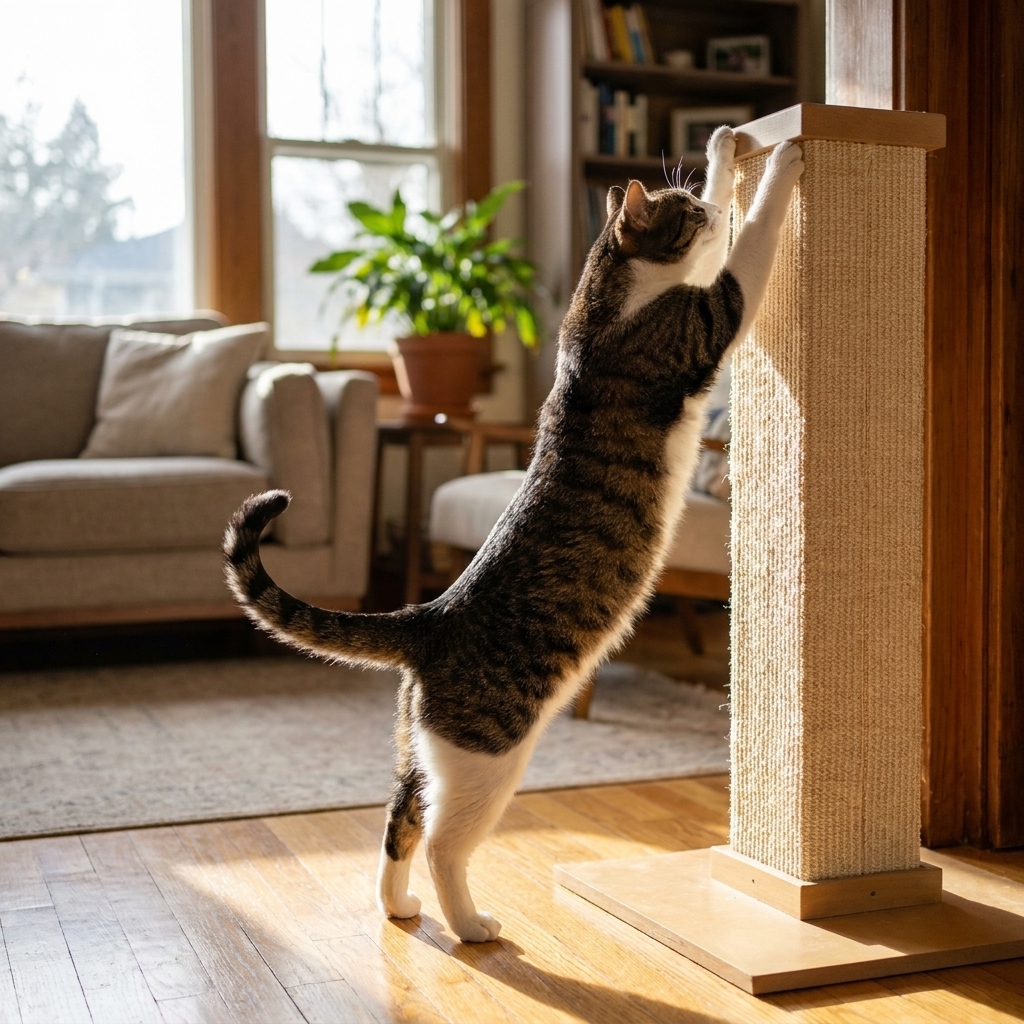
If your cat is shredding the sofa, one of the fastest ways to redirect them is to offer a scratching surface that matches what the couch feels like to their paws and how they prefer to scratch. Most cats are not being stubborn. They are voting for the angle and texture that hits their muscles just right.
Concrete answer: Start by offering two angles (flat and upright) and two textures (sisal and cardboard) placed right next to the sofa scratch zone. Give it 1 to 2 weeks to see a clear preference, and longer if the habit is older or you have multiple cats. Reward any interaction with the new surface. Keep the sofa temporarily less appealing with a removable cover or double-sided tape. Then keep the winning option and gradually move it to your preferred spot.
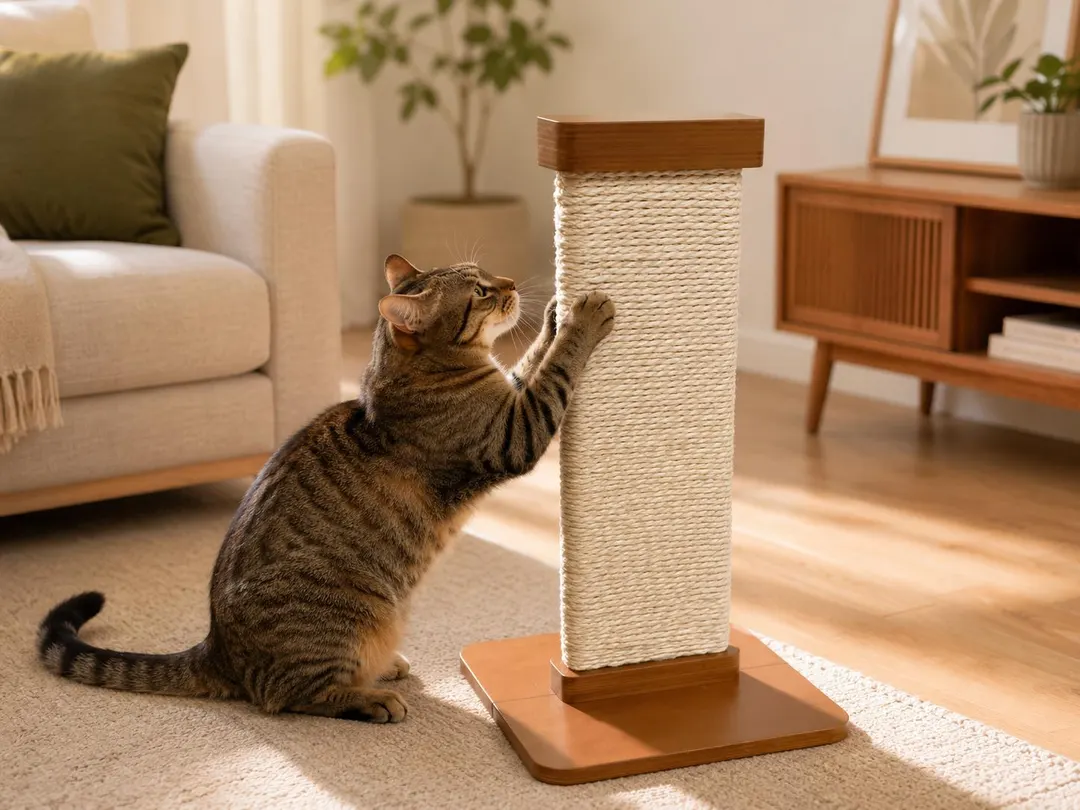
Why angle and texture matter
When I was coordinating fosters, the couch scratcher cats were almost always telling us something specific: “This angle feels better,” or “This fabric gives me the resistance I like.” Scratching is normal. It maintains claws, stretches the shoulders and back, and marks territory with scent glands in the paws.
So instead of asking your cat to stop scratching, we want to answer: Where do you want them to scratch and what scratch will they actually choose?
- Angle preference is about body mechanics. Some cats want a big full-body stretch (upright). Others prefer a low, stable surface they can bunny-kick (flat). Many like both at different times of day.
- Texture preference is about resistance and feedback. Upholstery often has a grab that feels similar to sisal weave or certain carpets. Some cats love the rip of corrugated cardboard.
Step 1: Do a 2-by-2 test
You do not need a complicated experiment. You just need clear options and consistent placement.
The four options
- Flat + cardboard (corrugated scratcher pad or lounge)
- Flat + sisal (sisal mat or flat scratch board)
- Upright + sisal (sturdy post or tower)
- Upright + cardboard (less common, but some cats love vertical cardboard panels)
If you cannot do all four, start with upright sisal and a flat cardboard pad. That pair covers the most common preferences.
Where to put them
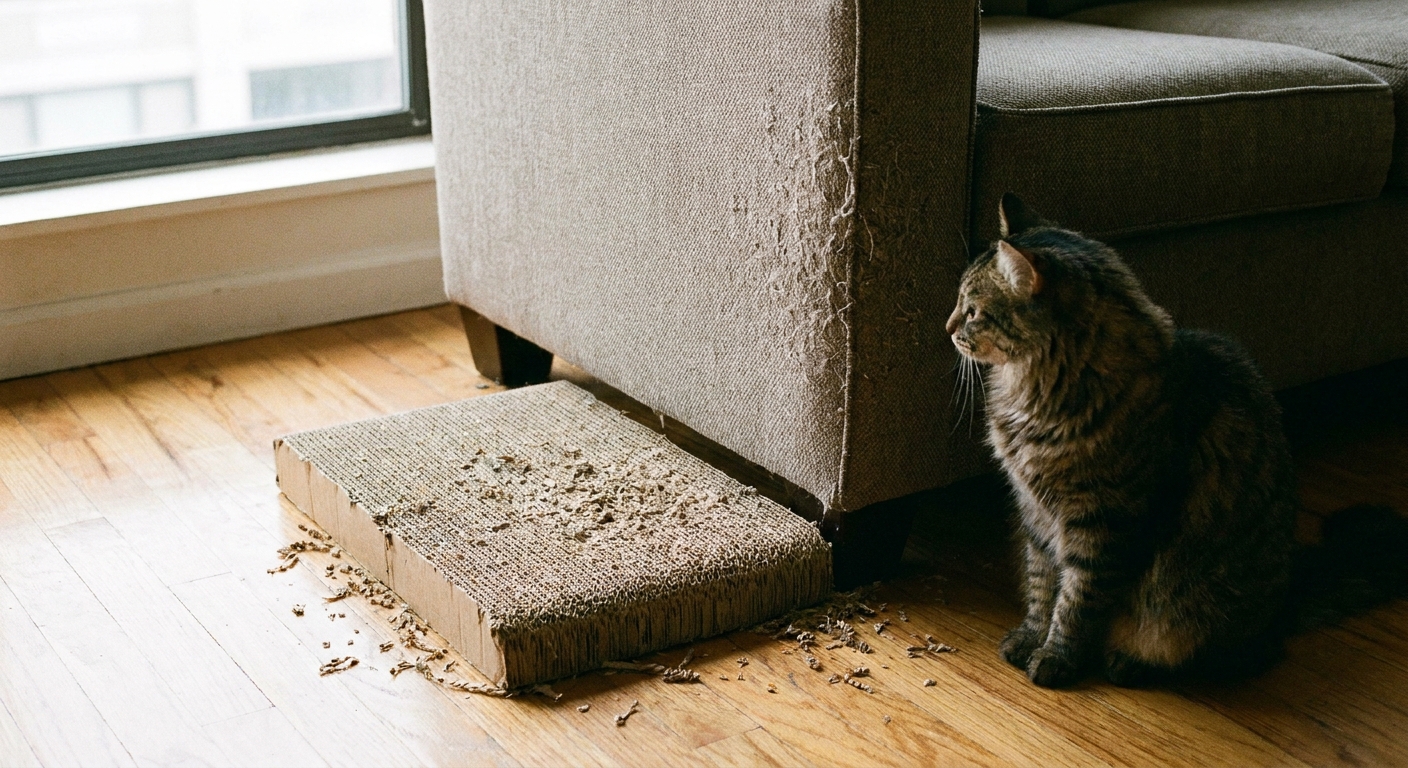
Place at least two options within 1 to 2 feet of the exact sofa spot your cat scratches. Yes, it looks a little silly for a week. It works.
Many cats are location loyal. If your cat scratches the front corner of the sofa arm, put the new scratcher so they can hit it on the way to that corner, not across the room.
Step 2: Make them sturdy
A wobbly post is a common reason cats ignore a scratching option. The sofa does not wobble, so it feels safer and more satisfying.
Stability checklist
- Upright post: tall enough for your cat to fully stretch. For many adult cats, that means at least about 28 to 32 inches, and taller for long-bodied cats. Seniors or arthritic cats may do better with a slightly lower post or an angled ramp they can lean into.
- Flat scratcher: non-skid bottom or anchored on a rug pad so it does not scoot away.
- Angled scratcher (ramp style): brace it against a wall or furniture so it stays put.
If you already own a post your cat ignores, try fixing it before replacing it: slide a heavy base under it, wedge it between furniture and wall, or add a non-slip mat underneath.
Step 3: Test angle first
If your cat is currently scratching the sofa, you have a clue about angle. A lot of sofa scratching is vertical or slightly angled because the arm and side panels invite an upright stretch, but some cats go after seat cushions or flat upholstery too.
Angle test (days 1 to 4)
- Offer one upright option and one flat option right beside the sofa scratch zone.
- Watch which one your cat touches first and returns to most.
- Reward every interaction (more on that below).
Texture test (days 5 to 14)
- Keep the preferred angle.
- Swap textures while keeping placement identical. For example, if upright wins, test upright sisal versus another upright material.
- Stick with the texture your cat uses most consistently.
If you cannot find vertical cardboard, compare your upright sisal post with another upright option that feels different, like a different sisal weave, a tightly wrapped jute surface, or a carpeted post (especially if your cat does not target household carpet).
Hypothetical example (sofa arm): Your cat scratches the sofa arm. You set an upright sisal post and a flat cardboard pad next to that arm. Your cat sniffs both but scratches the upright post twice daily. Great. Now keep the upright format and test sisal versus another upright texture for a week.
Hypothetical example (seat cushion): Your cat claws the front edge of the seat cushion like it is a floor scratcher. Put a flat cardboard lounge or pad right at that edge, plus a flat sisal mat, and see which one they choose most over the next week.
Step 4: Reward and redirect
I know it is tempting to pick your cat up and place their paws on the scratcher. Many cats tolerate it, but plenty find it stressful, and it can make the scratcher feel like a trap.
What to do instead
- Catch them doing it right: The moment they scratch the board or post, calmly say a consistent cue like “Yes” or “Good scratch,” then deliver a small treat, a short play burst, or cheek scratches if they love affection.
- Make it easy to start: Sprinkle a pinch of catnip on the scratcher (if your cat responds to it) or rub a little on the surface. You can also drag a wand toy so the cat’s paws land near the scratcher, then let them choose.
- Short sessions: If your cat gets overstimulated, stop and try later. Two 30-second attempts are better than one frustrating 5-minute push.
If you see sofa scratching in progress
- Interrupt gently with a sound like a light clap or a cheerful “Hey!”
- Immediately redirect by moving yourself to the scratcher and tapping it lightly with your fingers.
- Reward if your cat switches over, even if it is just one swipe at first.
Make the sofa less tempting
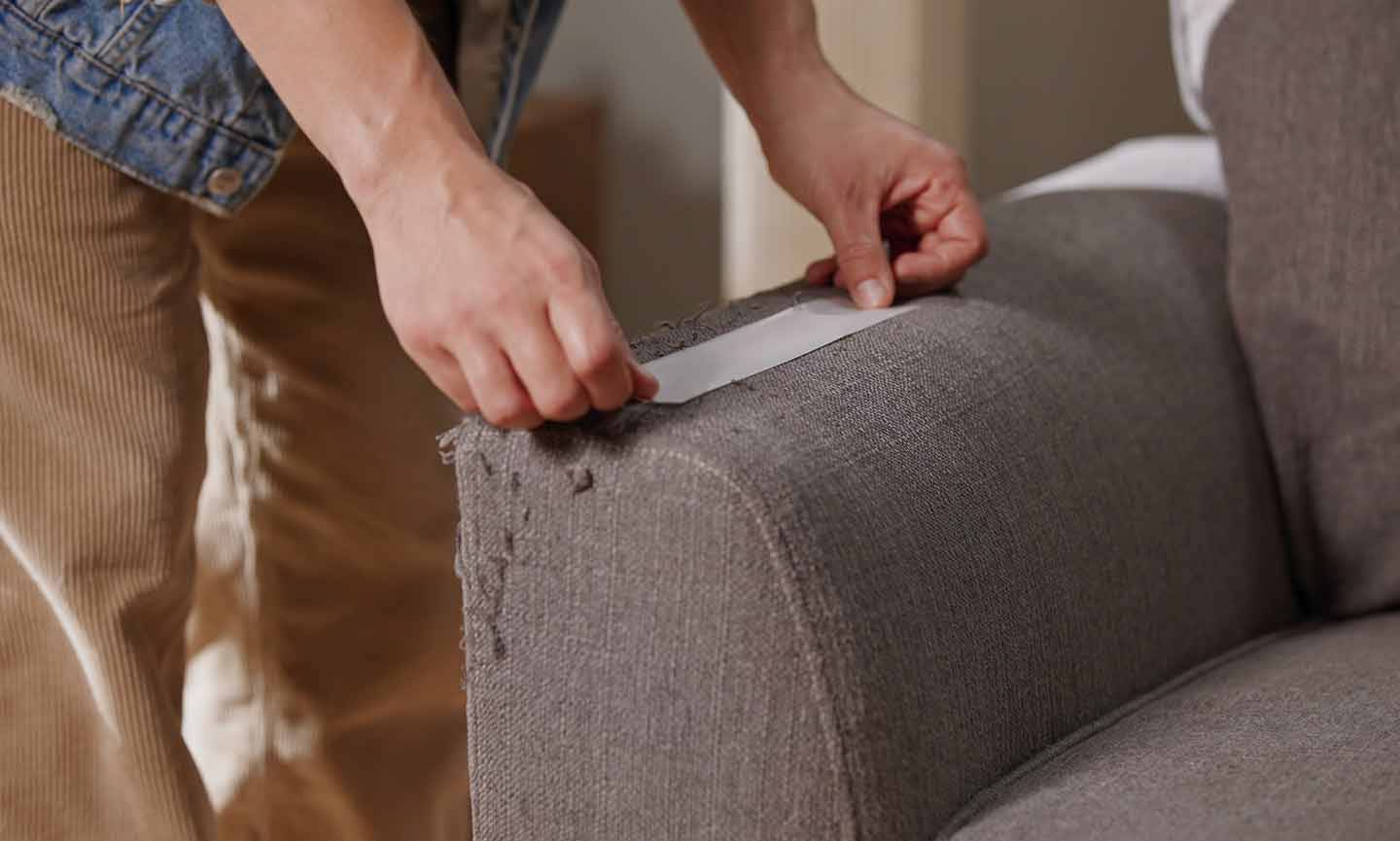
This is not punishment. Think of it as reducing practice time on the wrong surface while the new habit forms.
- Cover the target zone with a washable throw blanket or slipcover.
- Use double-sided tape on the specific scratch area if your cat dislikes sticky textures (many do). Test a small spot first to protect your furniture finish, and use adhesives designed for household surfaces so you do not leave residue.
- Block access temporarily with a chair, storage bin, or strategically placed scratcher.
Meanwhile, keep the new scratcher irresistible: best placement, stable base, and rewards.
Texture tips
If your cat scratches woven fabric or sofa arms
- Try sisal rope or sisal fabric first.
- A carpeted post can work for some cats, but if your cat also claws household carpet, you may be teaching them that carpet is fair game everywhere.
If your cat scratches leather or smooth upholstery
- Offer cardboard and tightly wrapped sisal. Some cats like the sound and tear of cardboard because it gives satisfying resistance.
If your cat scratches rugs or door mats
- Offer a flat sisal mat or flat scratch board in that same traffic area.
Freshness matters. A worn-down cardboard pad often stops being rewarding. Rotating in a new one can bring your cat right back.
Quick safety note: If your cat is chewing cardboard chunks or pulling long sisal strings loose, replace the scratcher or trim frayed strands. You want scratching, not swallowing hazards.
Angle cues
Signs your cat wants vertical
- They stand tall and stretch long along the sofa side or arm.
- They scratch right after waking up.
- They prefer scratching near entryways or central rooms (territory marking plus stretch).
Signs your cat wants flat
- They scratch rugs, cardboard on the floor, or low ottomans.
- They crouch while scratching and may kick with back feet after.
- They scratch during play, then flop or roll.
Signs your cat wants angled
- They scratch the sofa at a slant, especially corners.
- They use both front paws in a rowing motion and lean their weight forward.
When to move the scratcher
Once your cat is using the scratcher daily, start moving it slowly.
- Move it 6 to 12 inches every few days.
- If your cat goes back to the sofa, move the scratcher back closer and slow the timeline.
Your goal is not to win a standoff. Your goal is a stable habit your cat chooses without thinking.
Common problems
“My cat uses the scratcher, but still scratches the couch too.”
This usually means one of three things: the scratcher is not in the right location, you need a second scratcher, or the sofa offers a different angle or texture your cat still wants.
- Add a second scratcher at another hotspot.
- Try a different height post.
- If your cat scratches the sofa corner, try an angled ramp pushed right up against that corner.
“My cat ignores brand-new scratchers completely.”
- Check stability first.
- Put the scratcher where your cat already scratches, not where you wish they would scratch.
- Use a reward the cat truly values (treat, play, or affection).
- Try a different texture. Some cats have a strong preference and will not negotiate.
“My cat scratches when I am on the couch.”
Sometimes that is attention seeking. In that case, scratching has become a reliable way to make you look up.
- Preempt it with a short play session before your usual sit-down times.
- Keep a scratcher within arm’s reach and reward scratching there.
- Avoid big reactions to sofa scratching. Redirect, then reward the right choice.
Multi-cat homes
If you have more than one cat, assume you need more than one scratching station. Cats can guard resources, and a scratcher in a high-traffic area can become socially complicated fast.
- Offer at least one scratcher per cat, plus one extra, spread across different rooms when possible.
- If one cat blocks the scratcher, add another near the hotspot so the shy cat has a safe option.
When to call your vet
If scratching suddenly ramps up, your cat seems painful when stretching, or you notice barbering (overgrooming), limpness, or unusual irritability, it is worth a veterinarian check. Sometimes discomfort, arthritis, or stress changes can shift scratching habits. Everyday scratching guidance can do a lot, but medical questions belong with your vet.
FAQ
How long does it take to stop sofa scratching?
Many cats show improvement in 1 to 2 weeks if the scratcher matches their preferences and sits right next to the problem area. Some need longer, especially if the sofa scratching has been reinforced for months, if you have multiple cats, or if the sofa is in a high-stress spot like a noisy entryway.
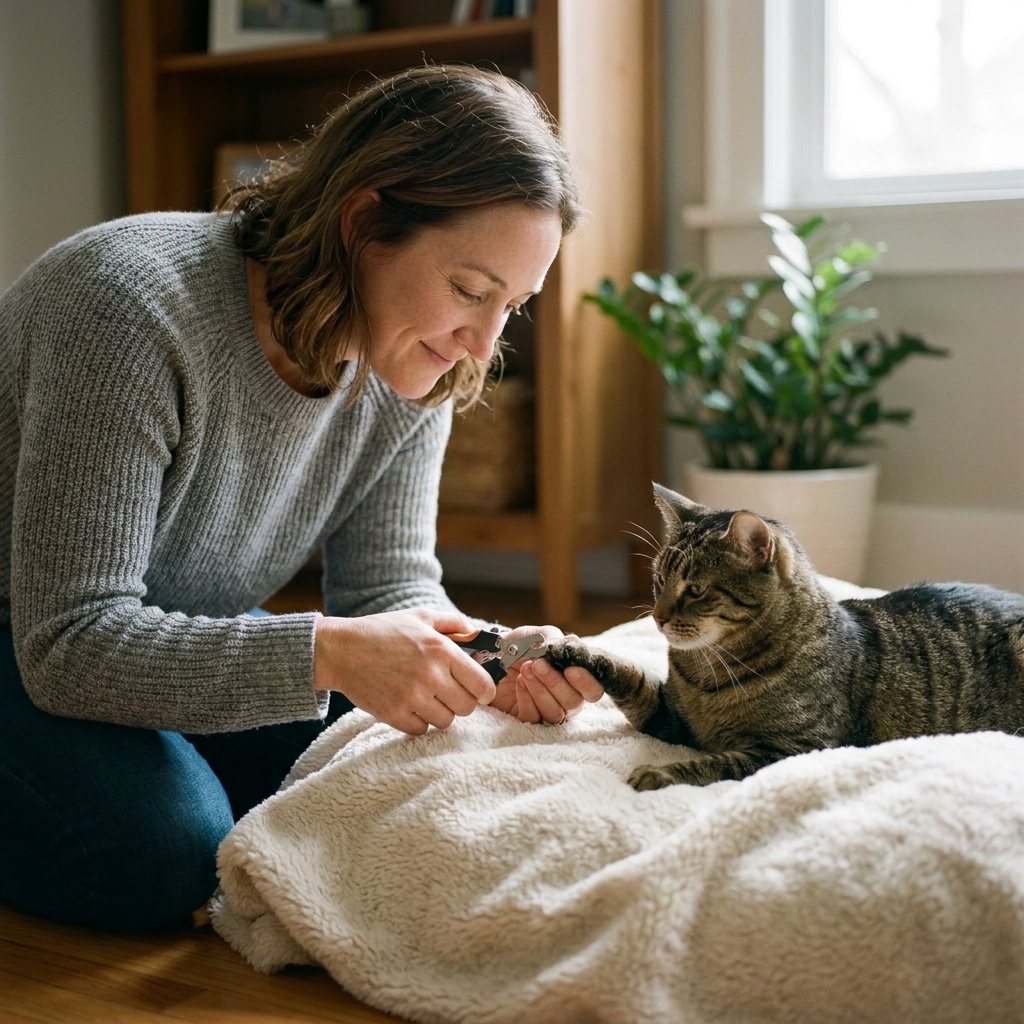
Should I trim my cat’s nails while working on this?
Nail trims can reduce damage and buy you time while you retrain. If your cat tolerates trims with reward-based handling and breaks, it can help. If trims are stressful, focus on redirection first and ask your vet team or a qualified groomer to help you build a calm routine.
Are deterrent sprays a good idea?
Some sprays do not work, and strong scents can stress cats. If you try a deterrent, avoid essential oils and concentrated citrus oils, which can be risky for cats. I prefer changing the environment: protect the sofa, offer better scratch options, and reward the behavior you want.
What about soft nail caps?
Soft nail caps can reduce furniture damage for some cats, especially as a temporary management tool. They are not a behavior fix on their own, and they need proper sizing and application. If you are curious, ask your vet or groomer to show you how to use them safely.