Why cats go on counters (and why it is not spite)
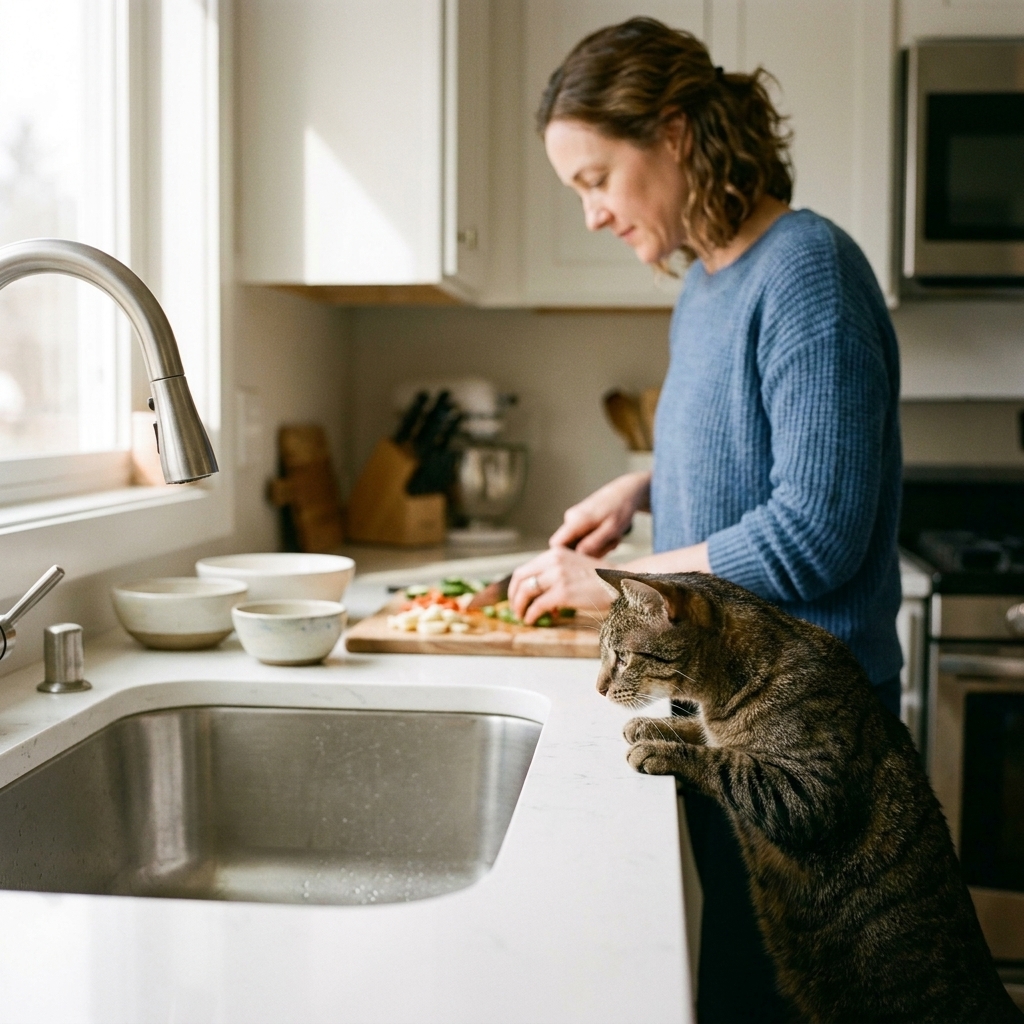
If your cat treats your kitchen counters like their personal runway, you are not alone. Counters are warm, high up, and full of interesting smells. From a cat’s perspective, they are also a safe lookout spot where nothing sneaks up from behind.
Most counter surfing is driven by one (or more) of these needs:
- Food rewards (crumbs, butter residue, cooling pans, dirty dishes)
- Height seeking (cats feel secure up high)
- Attention (if jumping up reliably makes you react)
- Curiosity and routine (they want to be where the action is)
- Heat and comfort (sunny spots, warm appliances)
The goal is not to “win” a battle of wills. It is to make counters boring and predictable, while giving your cat an acceptable place to perch nearby.
Start with health and stress
Sudden counter surfing in an adult cat can be a clue that something changed. Before you assume it is purely behavioral, consider whether your cat might be:
- Hungrier than usual due to diet changes, parasites (more common in outdoor or unsupervised cats), or conditions like hyperthyroidism or diabetes
- More restless from pain, arthritis, or (in older cats) cognitive changes
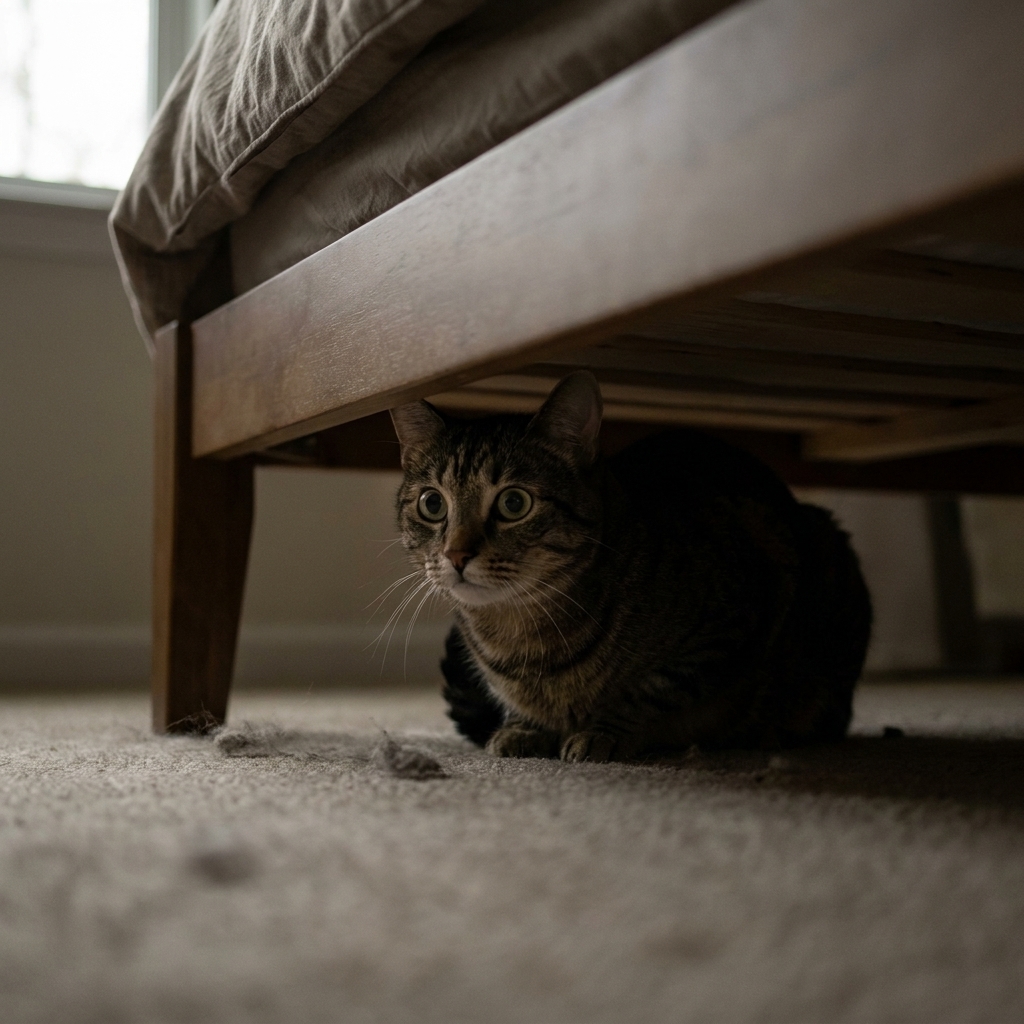
- Stressed by a new pet, new schedule, moving, construction noise, or neighborhood cats at the windows
If this is new, intense, or paired with weight loss, increased thirst, vocalizing, or litter box changes, loop your veterinarian in. Training works best when your cat feels well and secure.
Remove the payoff
Cats repeat what works. If your cat ever finds something tasty on the counter, the counter becomes a slot machine. Even if the jackpot only happens once a week, it is worth checking daily.
Make the kitchen boring when you are not watching
- Wipe counters and stovetops after cooking. Remove grease and food smells, not just visible crumbs.
- Put food away immediately, including bread, fruit, cooling meat, and anything wrapped in paper or plastic.
- Soak or load dishes instead of leaving them in the sink overnight.
- Secure trash with a lidded can or a baby lock. A trash raid often starts with counter exploration.
- Do a quick kitchen reset before bed so the night shift is not rewarded.
This step feels small, but it is the backbone of long-term success.
Quick hygiene note
Even a healthy indoor cat can track litter dust or bacteria onto surfaces. If you are working with raw meat or prepping food for kids, older adults, or immunocompromised family members, keeping counters cat-free is as much about food safety as it is about manners.
Give a better option
In rescue work, I can tell you this plainly: telling a cat “no” without offering a “yes” spot rarely sticks. Your cat wants height and proximity. Let’s meet that need in a way that works for both of you.
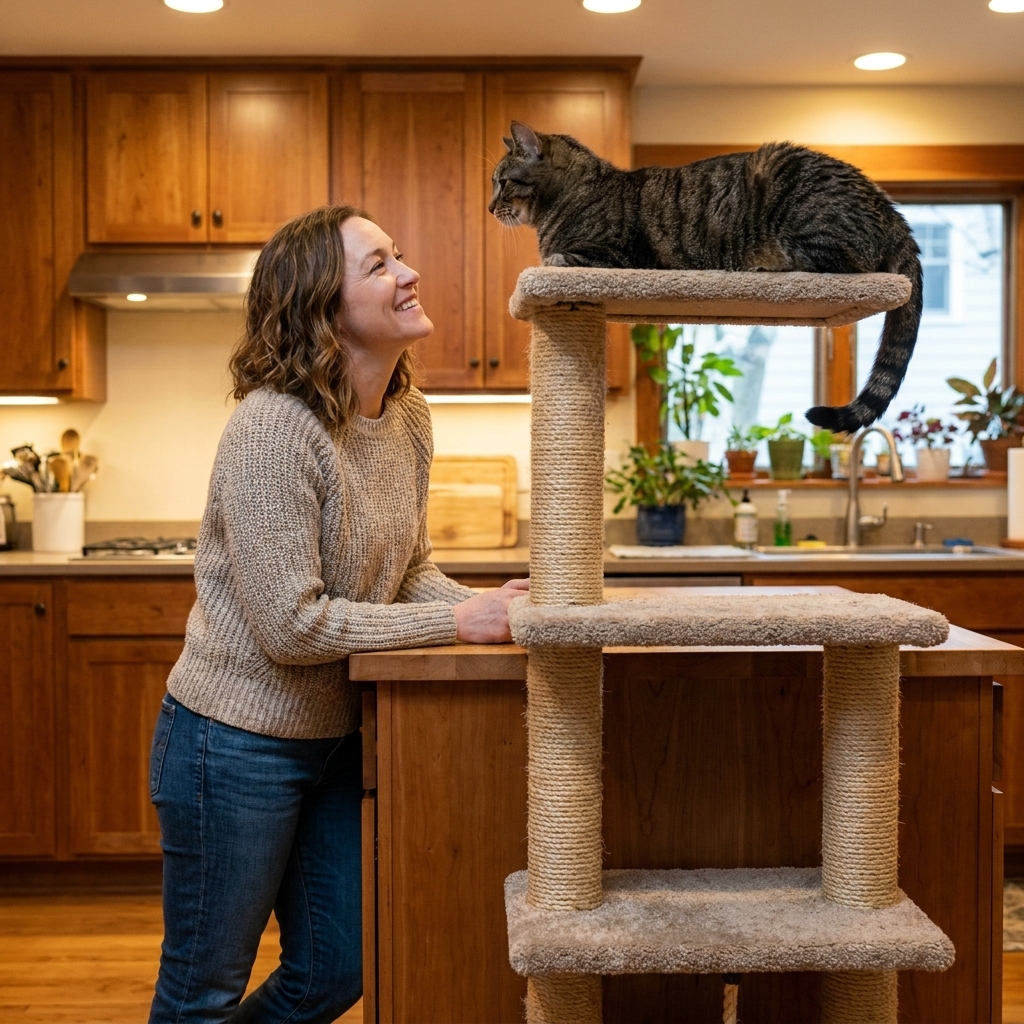
Create a kitchen perch
Pick one option and place it within sight of the counter action:
- A tall cat tree placed near (not against) the kitchen
- A window perch if your kitchen has a window with safe viewing
- A sturdy barstool with a non-slip mat if you want a simple solution
- A floating shelf or wall-mounted cat shelf for small spaces
Make it worth choosing
- Add a soft mat or towel that smells like your cat
- Sprinkle a pinch of catnip or use silvervine (if your cat responds)
- Deliver a few treats there while you cook
- Offer a lickable treat on a lick mat placed on the perch, not the counter
The message you are teaching is: “If you want to be near me and up high, go here.”
Teach an “off” cue
I am a big fan of training skills that give your cat a clear path to success. “Off” is one of those skills, and it works best when it is taught proactively, not only used in frustration.
Step by step
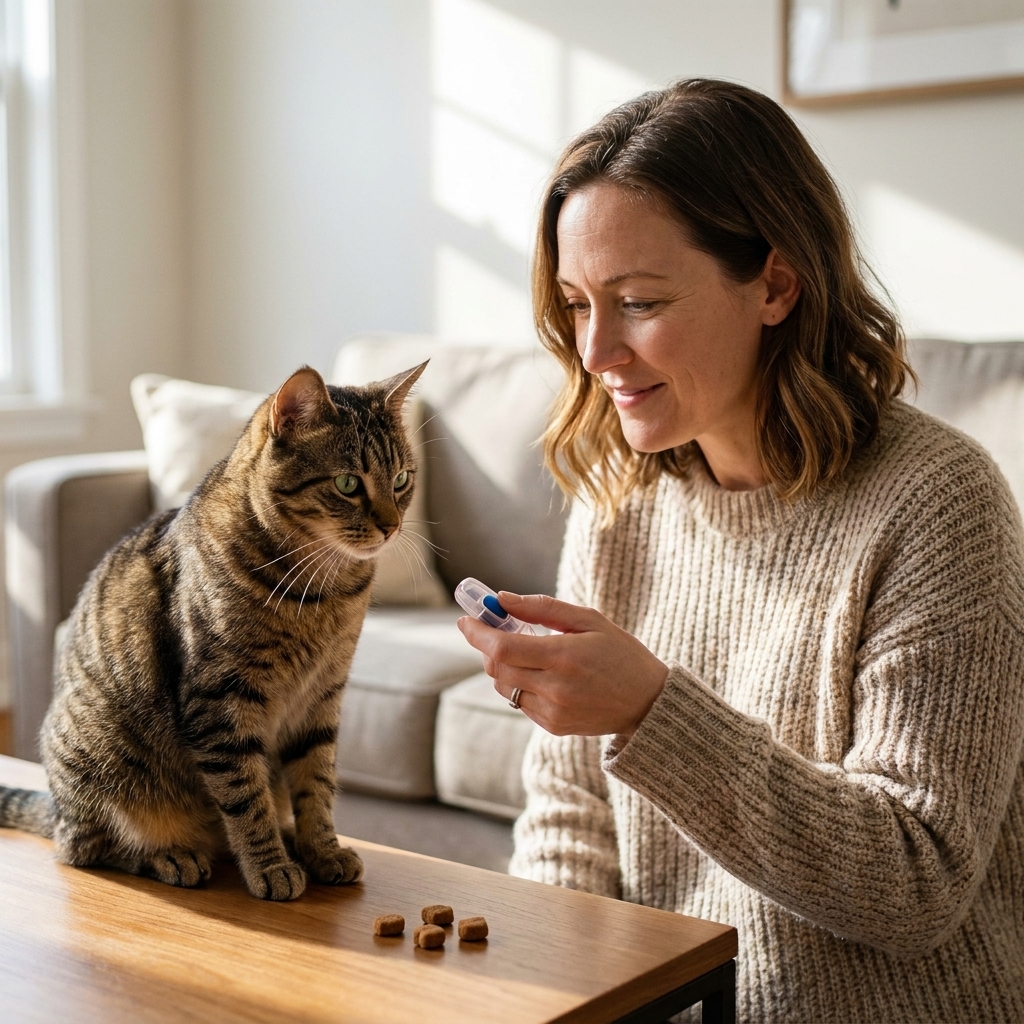
- Prepare rewards: Use tiny, high-value treats (or a favorite wet food on a spoon).
- Catch the moment: When your cat jumps up, stay calm. Avoid chasing or clapping.
- Lure down: Hold a treat at nose level, then slowly move it down and away from the counter so your cat follows.
- Mark and reward: The second all four paws hit the floor, say “Yes” (or click) and deliver the reward on the floor.
- Add the cue: After a few repetitions, say “Off” right before you lure down. Over time, fade the lure.
- Redirect: Immediately guide them to their perch and reward again there.
Two important notes:
- Reward on the floor, not from the counter. You do not want the counter to become the treat dispenser.
- Keep sessions short. Five repetitions, a couple times a day, beats a long showdown.
Use humane deterrents
Deterrents can help, but they work best as temporary support while you build better habits. Think of them as training wheels, not the whole bike.
Deterrents that can help
- Double-sided tape or a sticky mat placed on the counter when not in use. Cats dislike the texture.
- Aluminum foil for some cats, especially early on. It is safe and simple.
- A motion-activated air puff device used when you cannot supervise, and positioned away from food prep areas.
- Closed doors or baby gates during high-risk times (food cooling, parties, meal prep).
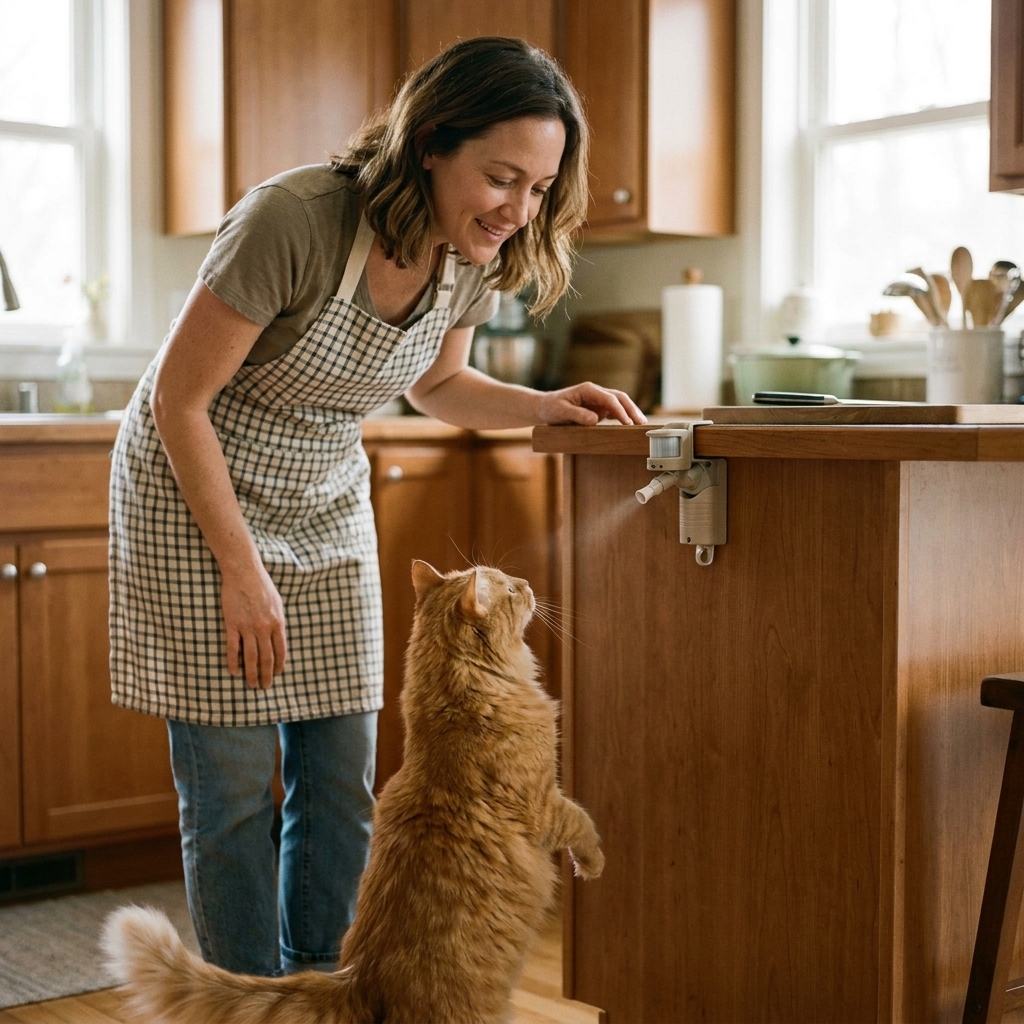
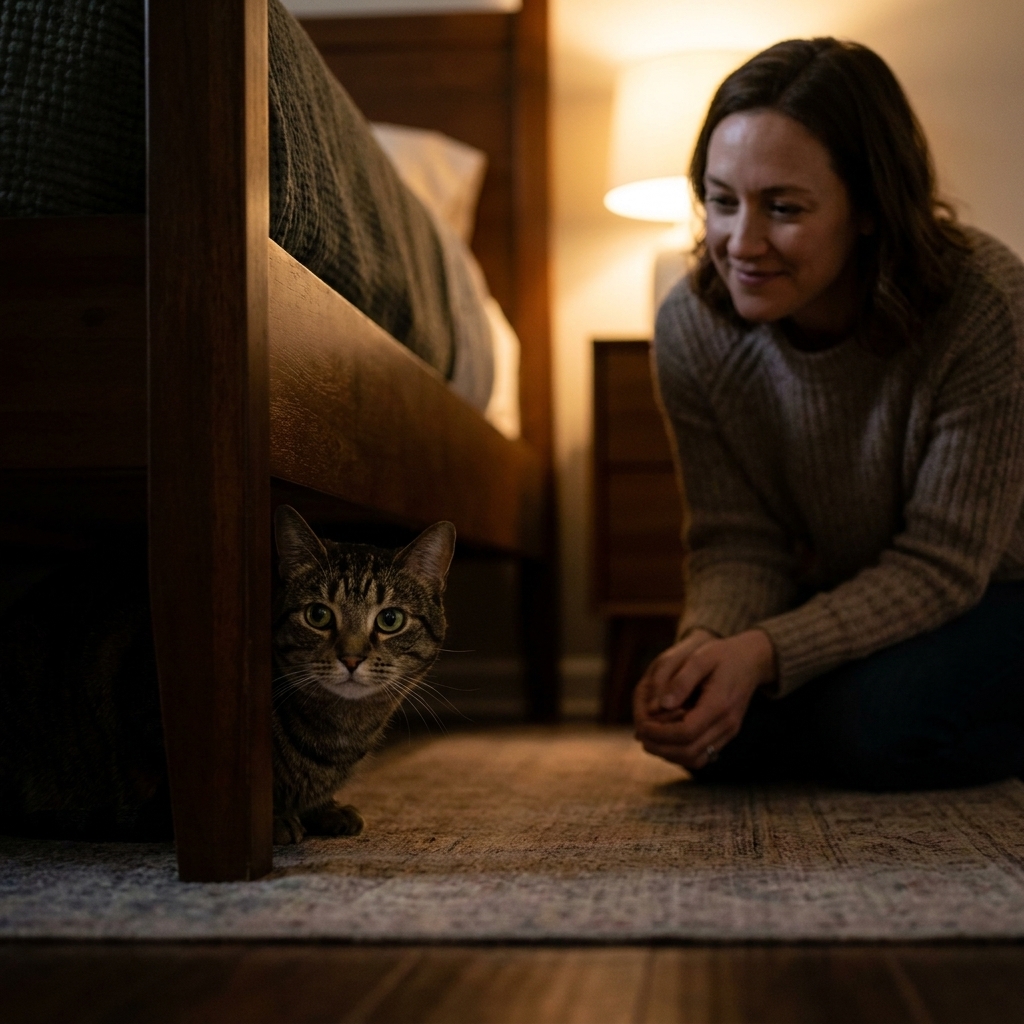
If you use an air puff device, watch your cat’s stress level. If you see increased hiding, fear, or avoidance of the kitchen altogether, discontinue and lean harder on management plus the “yes” spot.
Deterrents to skip
- Spray bottles: They teach your cat that you are unpredictable, not that the counter is off-limits. Many cats simply learn to jump up when you are not around.
- Loud noises or yelling: These can increase anxiety and make behavior worse, especially in sensitive cats.
- Essential oils and strong scent hacks: Many essential oils are unsafe for cats. And many commercial “citrus deterrent” sprays are hard to evaluate ingredient by ingredient. Unless your veterinarian confirms a product is cat-safe, skip it.
If you use a deterrent, pair it with a “yes spot” nearby and consistent rewards for choosing that spot.
Build smarter routines
A few household tweaks can dramatically reduce counter surfing, especially if your cat is doing it for enrichment or food.
Feed predictably
Many cats jump up when they are bored or genuinely hungry. A consistent feeding schedule, plus a portion of daily calories delivered through puzzle toys, can take the edge off food-seeking behavior.
- Try a treat ball, a puzzle tray, or hiding small portions around the house
- Offer a small snack before you start cooking if your cat gets frantic at mealtimes
Add legal climbing and hunting
- Daily play: 10 to 15 minutes with a wand toy, ending with a small food reward
- More vertical space: Cat trees, shelves, or a tall scratching post
- Window enrichment: A bird feeder outside a window (safely positioned), or a cozy perch
When your cat’s enrichment needs are met, the kitchen becomes much less exciting.
In the moment
This is the part that trips up loving, well-meaning cat parents. If your cat jumps on the counter and you pick them up, talk to them, or chase them, you may be handing over exactly what they wanted: interaction.
Also, cats vary. Some find being picked up attention (and therefore rewarding). Others find it scary or annoying, which can damage trust. When in doubt, aim for calm cues and guided choices, not wrestling.
A calm script
- Pause. Take a breath. Neutral face, neutral voice.
- Use your “off” cue and lure if needed.
- Reward four paws on the floor.
- Redirect to the perch and reward there.
- Resume cooking without continuing the conversation.
If your cat is jumping up repeatedly during food prep, that is a clue the environment needs more management. Close the cat out briefly, use a baby gate, or set them up with an enrichment activity before you start cooking.
Special cases
Kittens and young cats
Young cats are basically curiosity with legs. Focus on prevention and redirection. Reward the perch often, keep counters spotless, and build play into your daily routine. If you like specifics, the 6 to 18 month stage is a common time for extra bold “testing boundaries” behavior.
Multi-cat homes
In multi-cat households, counters can become a way to avoid conflict. Add multiple vertical options, not just one, so no one has to compete for the best seat.
Nighttime counter surfing
This is usually a combo of opportunity and boredom. Do a kitchen reset before bed, pick up all food cues, and offer a short play session plus a small snack. For persistent night surfing, a motion-activated air puff can be effective as a temporary measure, as long as your cat is not becoming anxious from it.
How long will it take?
Many cats show improvement within a few weeks when you combine:
- zero food payoff (clean counters, food put away)
- a clearly rewarded alternative perch
- a consistent “off” cue
- a humane deterrent for unsupervised times
Some cats need longer, especially if the counter has been rewarding for months or years, or if stress is in the mix. Progress is usually not perfectly linear. Expect a few test jumps, then longer stretches of success.
Troubleshooting
They jump down, then jump right back up
This usually means the counter is still more rewarding than the alternative. Increase the value of the perch rewards, reduce kitchen rewards further, and consider adding a deterrent for unsupervised times.
They only do it when I cook
Set your cat up for success before you start: a lick mat on their perch, a puzzle feeder in another room, or a short play session first. Managing the environment beats repeated corrections.
My cat does not care about treats
Use what your cat values: a spoon of wet food, freeze-dried meat treats, a favorite toy, or even a quick wand-toy session as the reward. Some cats are play-motivated more than food-motivated.
I tried foil and they slept on it
I have met those cats. Switch tactics. Sticky mats often work better, or a motion-activated air puff device for the times you cannot supervise.
Kitchen safety
- Never leave hot burners unattended, even if they are “off” but still warm
- Turn pot handles inward
- Do not leave bread ties, strings, or sharp skewers accessible
- Keep lilies and other toxic plants completely out of the home
- Store human foods that are toxic to cats (like onions and garlic) securely
FAQ
Is it ever okay to let my cat on the counter?
In most homes, I recommend a clear, consistent rule: counters are always off-limits. Cats do not love partial rules, and it can be confusing if sometimes it is allowed and sometimes it is not. If you want your cat in the kitchen with you, a perch or stool is the best compromise.
Will my cat stop if I keep telling them no?
Usually not, especially if the counter is rewarding. “No” does not tell your cat what to do instead. Pair boundary-setting with an appealing alternative and rewards for choosing it.
Are citrus sprays safe?
I do not recommend essential oil based sprays or strong scent deterrents around cats. “Citrus” can mean a lot of different formulations, including concentrated extracts and fragrances. Unless your veterinarian confirms the specific ingredients are cat-safe, skip it and stick to management, training, and texture-based deterrents.
What if my cat is stealing food off the counter?
Treat it like serious management first: no food left out, lids on everything, trash secured, dishes handled right away. Then add enrichment and a predictable feeding routine so your cat is not scavenging for calories or stimulation.
A mindset shift
Counter surfing is not your cat being “bad.” It is your cat being a cat in a house that accidentally rewards the behavior. With a clean-counter routine, a nearby perch, and consistent positive reinforcement, most cats learn the boundary surprisingly quickly.
And if you need moral support, my foster crew has opinions. Clementine is convinced all elevated surfaces are a human conspiracy. Waffles would like to know where you keep the treats.