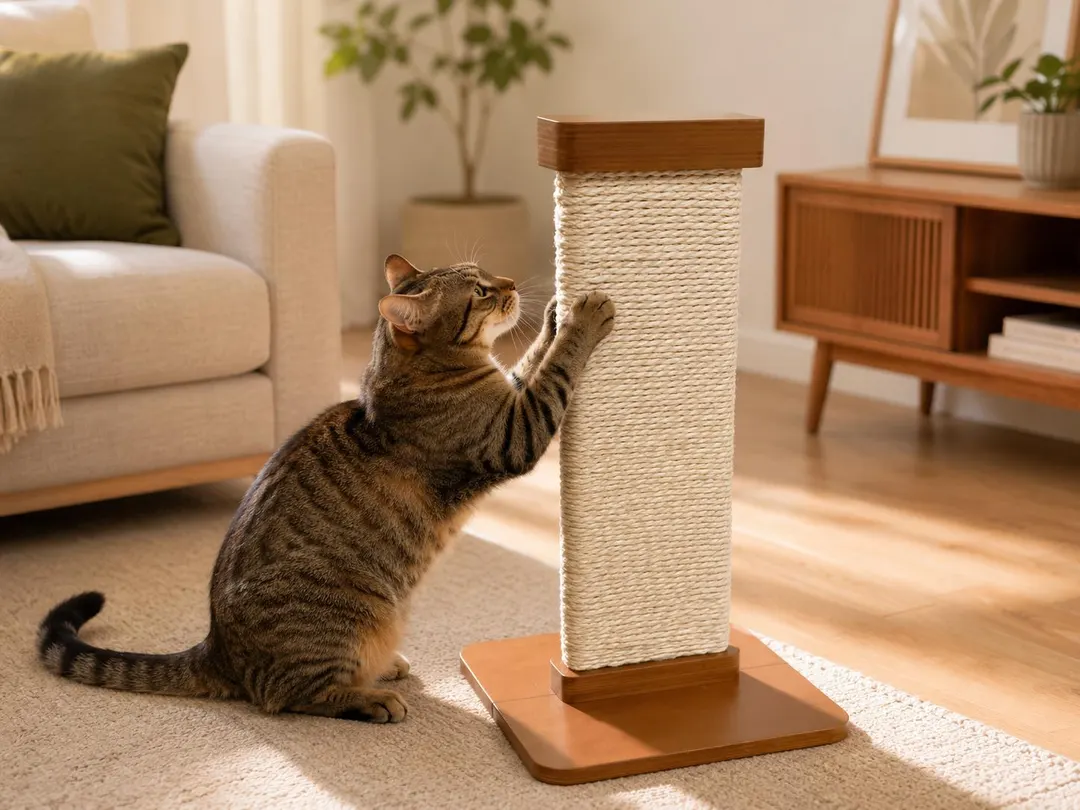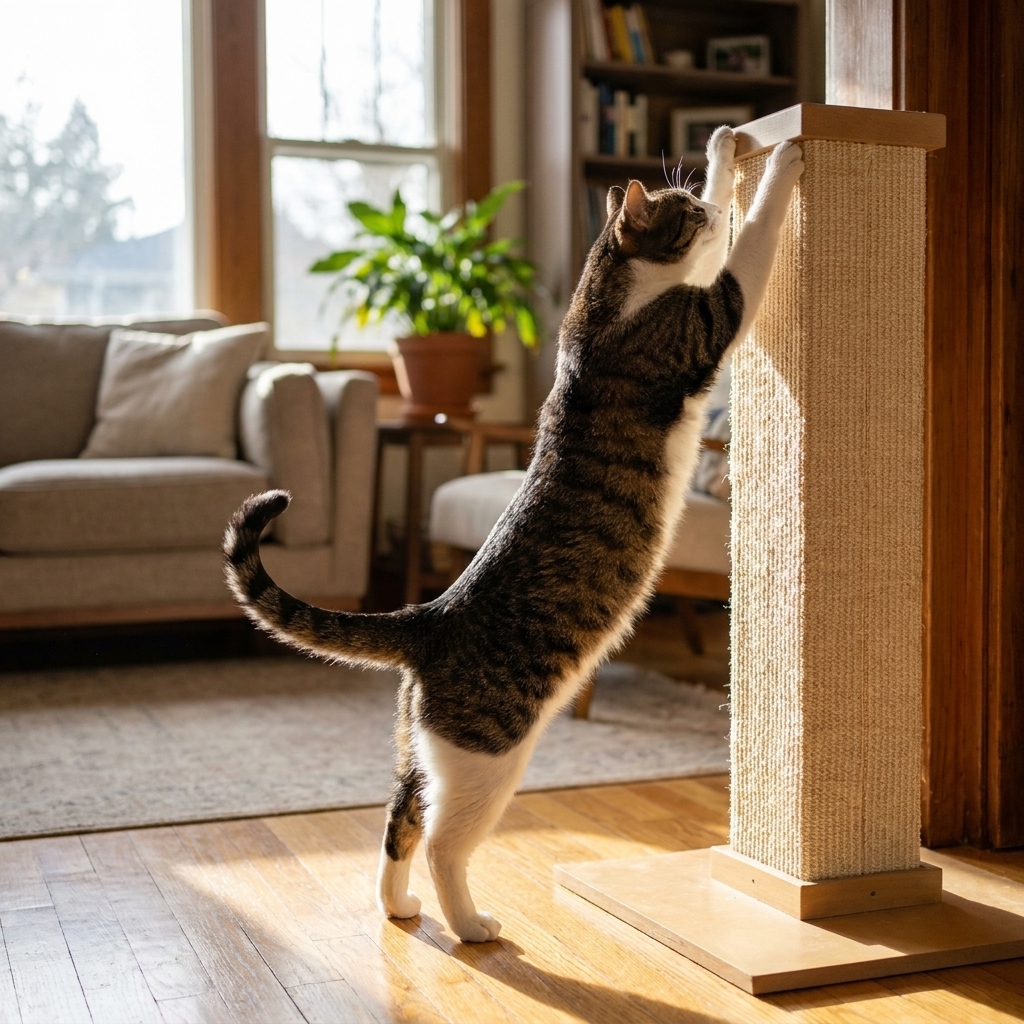
If your cat has stiff joints, the best scratching spot is simple: put a scratch surface at floor level on a flat, stable pad (so it will not slide), in a place your cat already likes to rest. For many achy cats, a low, angled scratcher is easier than a tall vertical post because it lets them scratch without standing fully upright or reaching high.
I have fostered plenty of “suddenly grumpy” scratchers who were not being difficult at all. They were uncomfortable. A little joint-friendly setup can bring back normal scratching, protect your furniture, and make your cat look relieved in that quiet, dignified way they do.
Why stiff joints change how cats scratch
Scratching is not just about claws. It stretches the shoulders, flexes the wrists, loads the spine, and asks a cat to shift weight through the hind end for balance. With arthritis or other mobility issues, a typical tall post can ask for:
- More vertical reach than your cat can comfortably manage
- More balance on the back legs, which can be painful in hips and knees
- More grip on slippery floors, which can feel unsafe
That is why the goal is not “a nicer scratcher.” The goal is safe access + stable footing + a comfortable angle.
Flat pad vs. floor-level access
You will often see two ideas recommended for older cats: a flat scratch pad and placing scratchers at easy-to-reach, floor-level locations. Both help, but they solve slightly different problems.
Flat, stable pad
A flat scratch pad is joint-friendly because it lets your cat scratch with a low range of motion. It is especially helpful if your cat is reluctant to stand tall or shifts weight awkwardly when reaching up.
Make it stable: Put the pad on a non-slip rug grip or rubber-backed mat so it does not skid. If the pad moves even once, some cats decide it is “unsafe” and never fully trust it again.
Easy access at floor level
“Easy access” is about how your cat gets to the scratcher. If the scratcher is up on a cat tree level or tucked behind furniture, your cat may need to jump, climb, or squeeze to reach it.
Floor level wins when your cat is stiff on waking, hesitant on stairs, or avoiding jumps. Even if you prefer vertical scratching posts, putting a scratch option at floor level makes it more likely your cat will use it daily.
My rule of thumb: start with a floor-level scratch option first. Then add other styles as your cat shows you what feels good.
Best joint-friendly setups
Pick one to start. You can always add a second option once you see what your cat prefers.
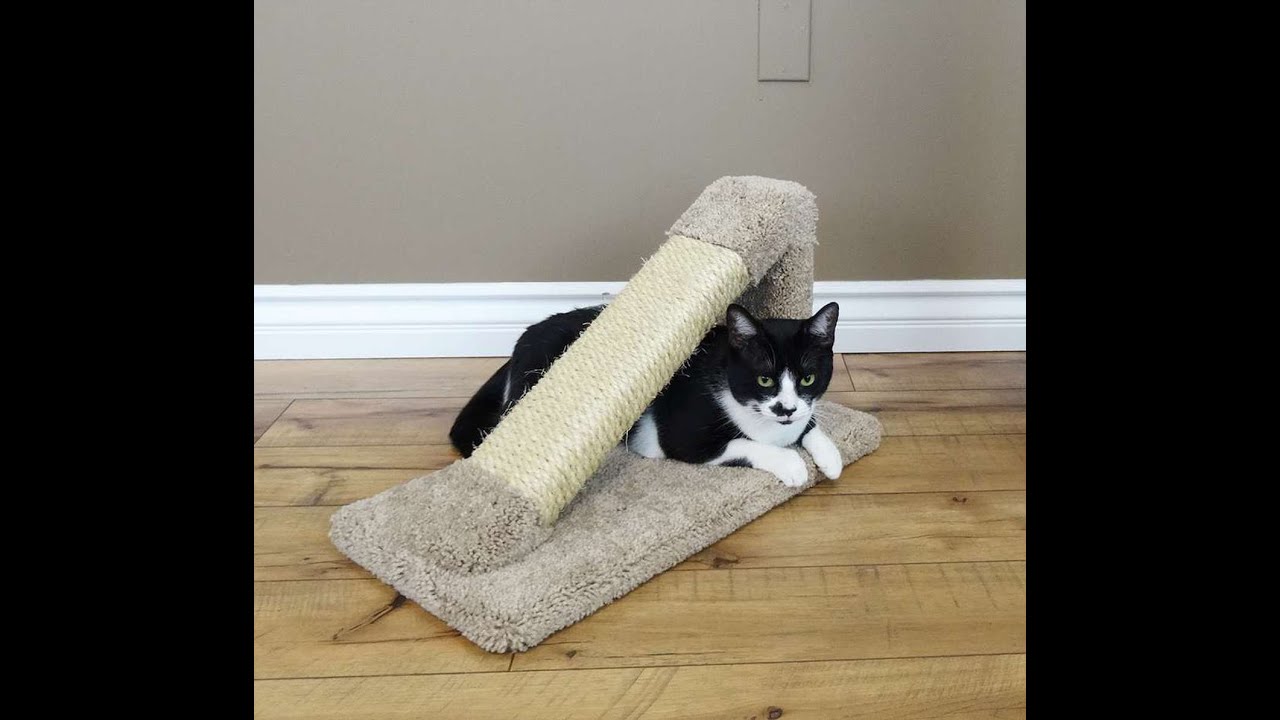
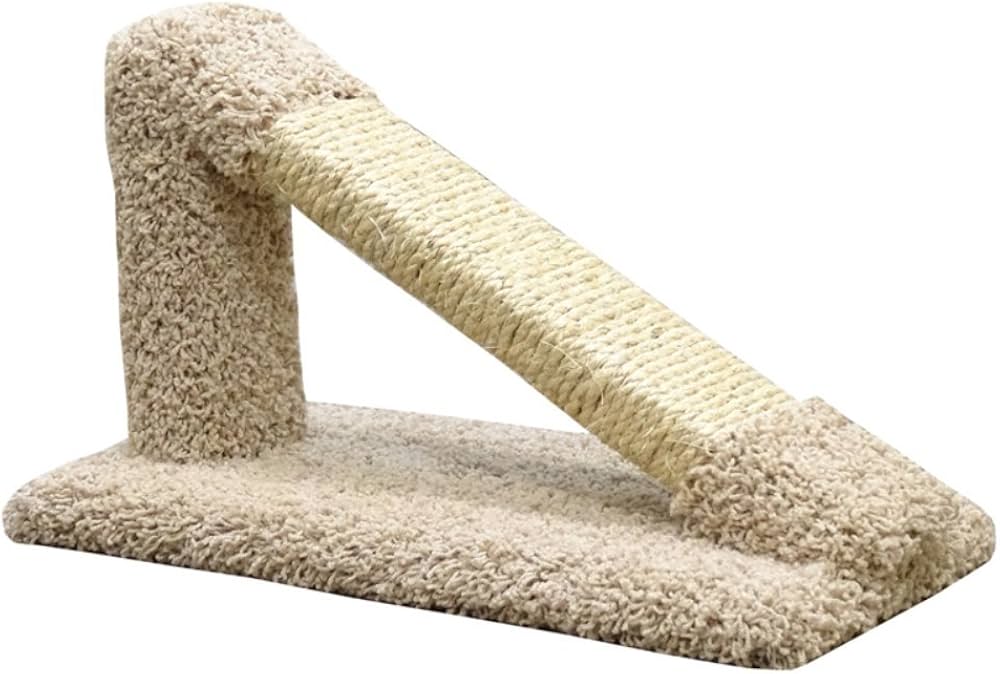
1) Low angled scratcher
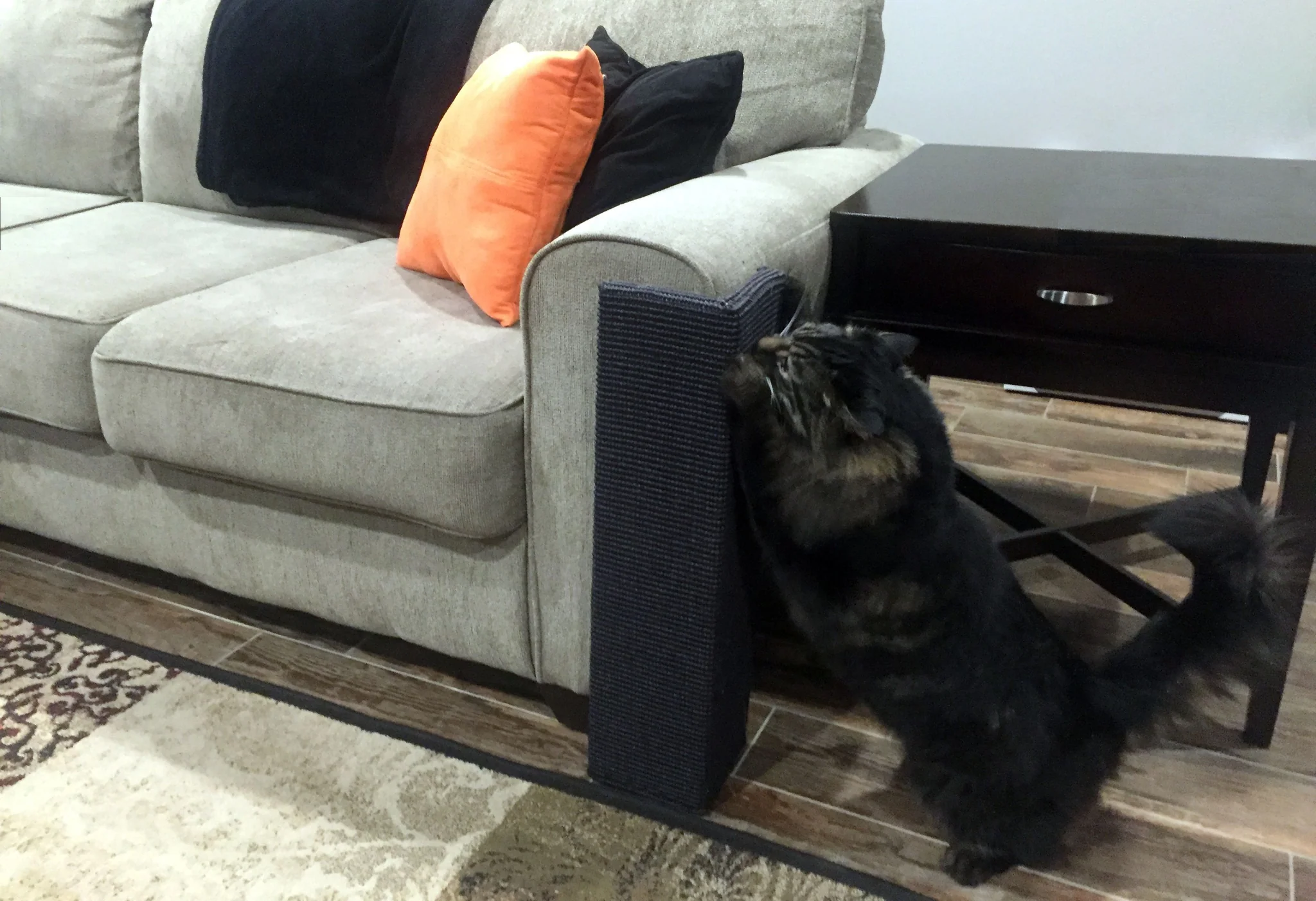
An angled scratcher offers a compromise between horizontal and vertical. Many stiff cats can brace gently without having to fully stand tall.
- Place it so your cat can approach without turning tightly
- Anchor it on a non-slip mat
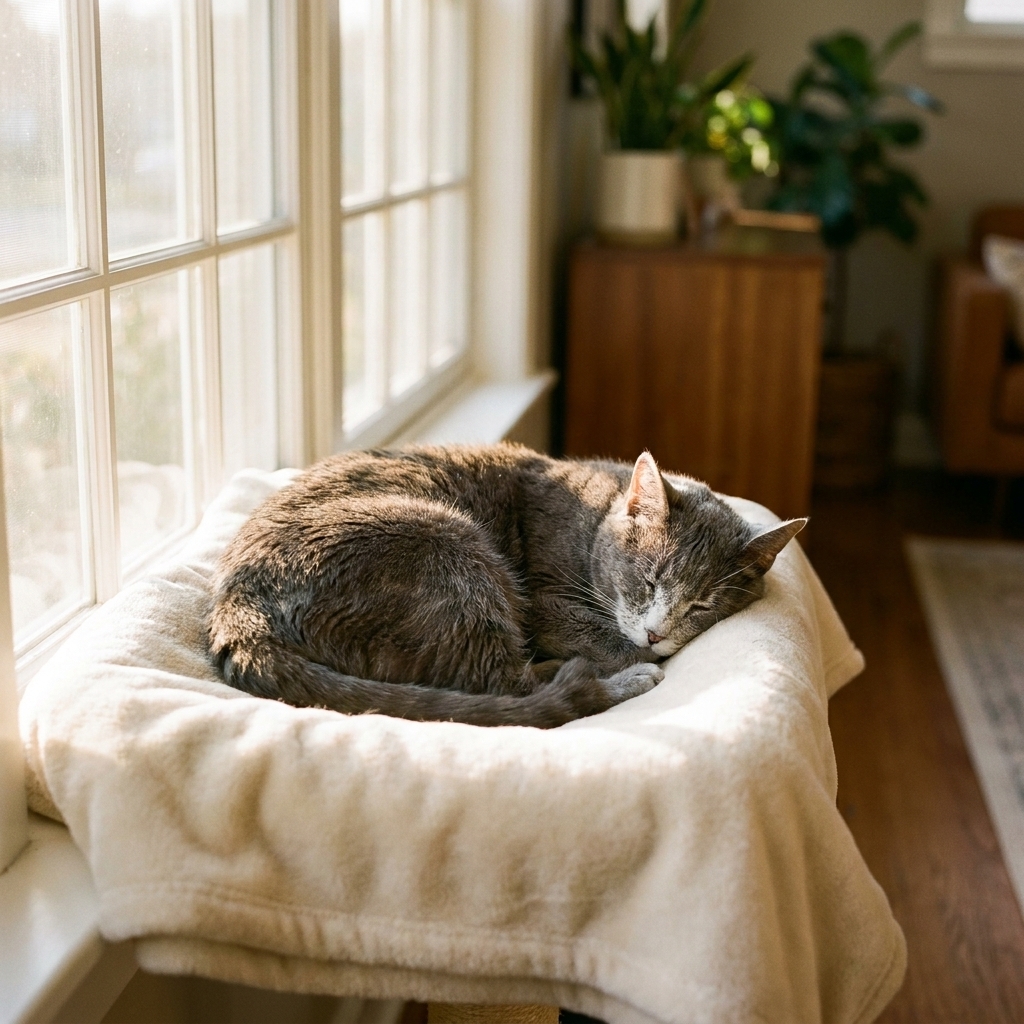
- Offer it near a favorite resting spot so they can scratch right after waking
2) Large horizontal scratch pad
Choose a pad that is long enough for a full-body stretch without forcing a deep back bend.
- Set it on carpet or a grippy mat
- If your cat likes to scratch after using the litter box, place one nearby but not so close that litter gets kicked onto it
3) Short, heavy vertical post
Some cats strongly prefer vertical scratching even with arthritis. If that is your cat, choose a post that will not wobble and does not require a high reach to feel satisfying.
- Look for a wide, heavy base (wobble is the enemy)
- Place it against a wall for extra stability
- Keep it on a non-slip surface, especially on tile or hardwood
If you rent, check your lease before attaching anything to walls or baseboards. If you live in a condo or HOA community, follow your HOA rules for wall mounting. When in doubt, choose a freestanding option.
Placement matters
Cats do not put scratchers on their “to-do list.” They scratch where it makes sense in their routine. For stiff-jointed cats, convenience is everything.
Best spots
- Next to the main sleeping spot (scratching is a common post-nap activity)
- Along a normal walking path, like the route to food or the living room
- Near a social hub (many cats scratch to communicate, especially near family activity)
Spots to avoid
- Slippery flooring with no traction support
- Tight corners that require a sharp turn to access
- High-traffic pinch points where people step over the cat or the scratcher
Hypothetical example: If your cat struggles to get up from the couch and then immediately scratches your sofa arm, placing an angled scratcher flush with the sofa’s side (on a grippy mat) can meet the same need without asking for a big stretch.
Keep it non-slip
For a cat with stiff joints, a scratcher that shifts can be genuinely scary. These small tweaks can make a huge difference:
- Add traction: use a rubber-backed runner, yoga mat, or rug grip under the scratcher
- Brace it: position angled scratchers so the back edge touches a wall or heavy furniture
- Clear the approach: remove clutter so your cat can walk straight up to it
- Keep nails maintained: overgrown nails can snag and make a cat hesitant to scratch (ask your vet or groomer for help if trimming is stressful)
If your cat’s scratching spot is near cords (lamps, chargers), follow basic household electrical safety: keep cords secured and out of reach, and replace frayed cords. If you need to manage cords in a rental, use landlord-approved solutions that do not violate your lease.
Encourage use gently
I am not a fan of “training” stiff cats with pressure. We want scratching to feel easy and rewarding.
- Put the scratcher where your cat already scratches, at least for the first week
- Use catnip or silver vine if your cat responds to it (not all do)
- Reward curiosity with a treat or gentle praise when they investigate
- Match the texture: some cats love sisal, others prefer cardboard, others want carpet-like fabric
If your cat scratches furniture right next to the new scratcher, that is information, not spite. Move the scratcher even closer, or choose a different angle or texture.
When to call the vet
Stiff joints are common, but they should not be ignored. Contact your veterinarian if you notice:
- Sudden changes in scratching habits, mobility, or temperament
- Limping, hiding more than usual, or reluctance to jump
- Accidents outside the litter box (pain can make stepping into a box difficult)
- Overgrooming, especially over hips or lower back
A vet can assess for arthritis, nail pain, soft tissue injury, or other medical causes and discuss weight management, joint supplements, pain relief, and home modifications. If you suspect pain, avoid pushing extra stretching or play that seems to worsen discomfort.
Quick checklist
- At least one scratch option at floor level
- Non-slip base so it will not slide
- Stable with no wobble
- Placed near sleep spots and along daily routes
- Angle and texture your cat actually prefers
My two, Clementine and Waffles, disagree on almost everything, but they both agree on this: the best scratcher is the one that feels safe under your paws. If your cat is stiff, start low, start stable, and let comfort be the deciding factor.