If your cat started scratching the couch, rug, or door frame right after you moved a scratching post, you are not imagining things. The most reliable way to tell is to keep a simple scratch-location log for 7 to 14 days and compare it to your cat’s baseline before the move, while changing only one variable at a time (post location first, then post type or attractants if needed).
In practice, “scratching more” usually means one of these is happening:
- Scratching shifted from the post to nearby “better” surfaces.
- Scratching stayed the same, but it is happening in more noticeable places.
- Scratching truly increased because the new location is stressful, inconvenient, or doesn’t meet your cat’s preferences.
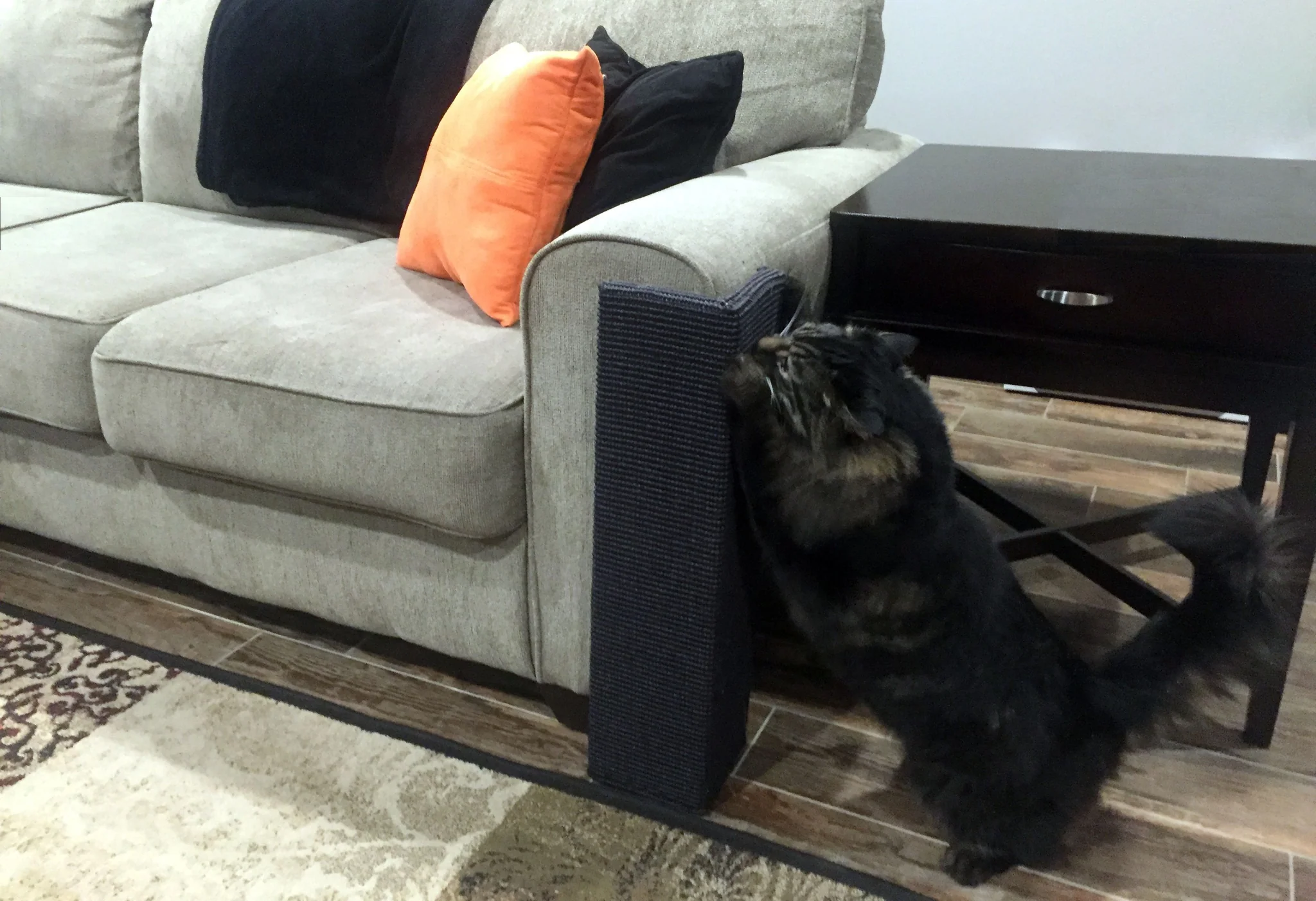
What counts as more scratching?
Scratching is normal cat behavior. It is nail maintenance, full-body stretching, and communication rolled into one. When a post moves, the “message board” changes, and some cats respond quickly.
Signs scratching may have increased after you moved the post:
- New scratch sites show up within a few days (couch arms, bed skirt, doorway trim).
- Longer scratching sessions (for example, 10 to 20 seconds instead of quick 2 to 5 second passes).
- More frequent scratching at peak times (after meals, after naps, during evening energy spikes).
- More vertical scratching on walls or furniture when the post is now wobbly, too short, or blocked.
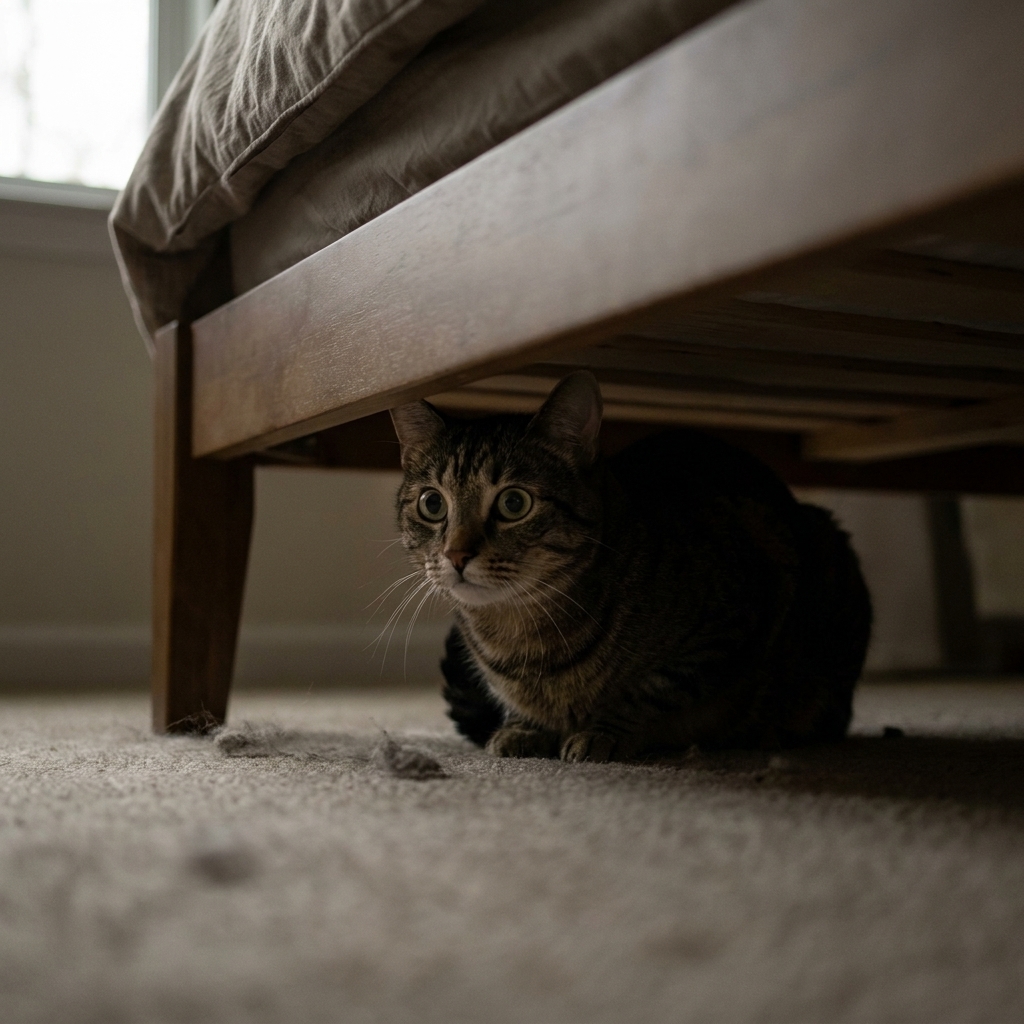
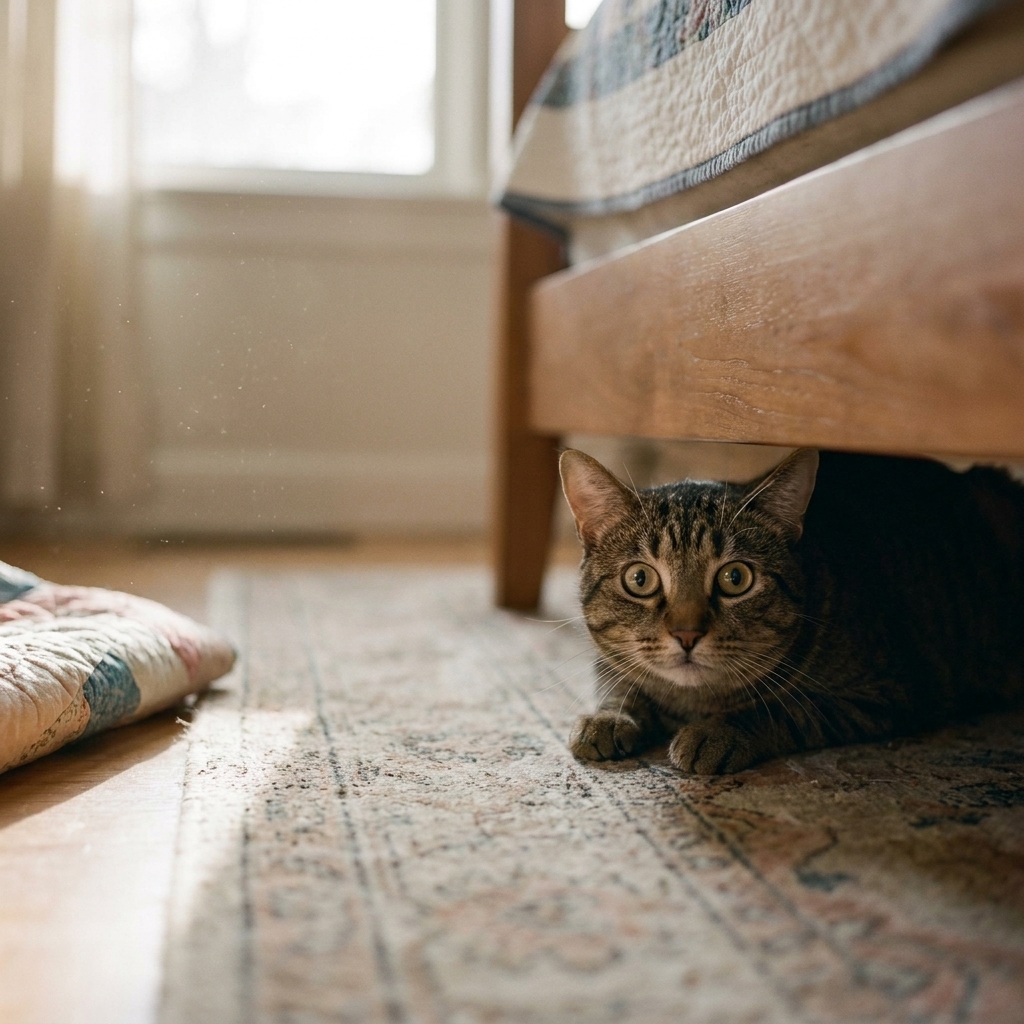
- Scratching paired with stress signals like hiding, less play, startle reactions, overgrooming, or changes in litter box habits.
Protect things while you troubleshoot
While you run your little “one change at a time” experiment, protect the stuff you do not want scratched. The goal is to make the right choice easy and the wrong choice boring, not to scare your cat.
- Use pet-safe double-sided tape on the problem area (many cats dislike the sticky feel).
- Cover high-value targets with a furniture cover or a tightly tucked sheet for a couple of weeks.
- Block access temporarily by moving the couch a few inches out from the wall, or placing a lightweight barrier where your cat likes to hook claws.
- Add a scratcher right there as a “legal substitute,” even if it is temporary. For many cats, proximity beats perfection.
The scratch-location log
I know logging sounds like homework, but it is the fastest way to replace “I think” with “I’m sure.” When I was coordinating fosters, this tiny habit solved a surprising number of “sudden behavior change” mysteries, especially in multi-cat homes.
What to track
Use your phone Notes app or a sheet of paper on the fridge. Each time you notice scratching or fresh marks, jot:
- Date and time
- Location (post, couch left arm, rug edge by hallway, etc.)
- Type (vertical, horizontal)
- Intensity (light, moderate, heavy)
- What happened right before (you came home, cat woke up, another cat passed by, loud noise, feeding)
How to compare before and after
Best case: you have a few “before” notes. If you do not, you can still do this:
- Pick a 7-day window with the post in the new location and log consistently.
- Move the post back to the original location (or as close as possible) and log for another 7 days.
- Compare totals: number of incidents, number of locations, and which surfaces are being targeted.
If scratching drops noticeably after returning the post, that strongly suggests placement was the trigger.
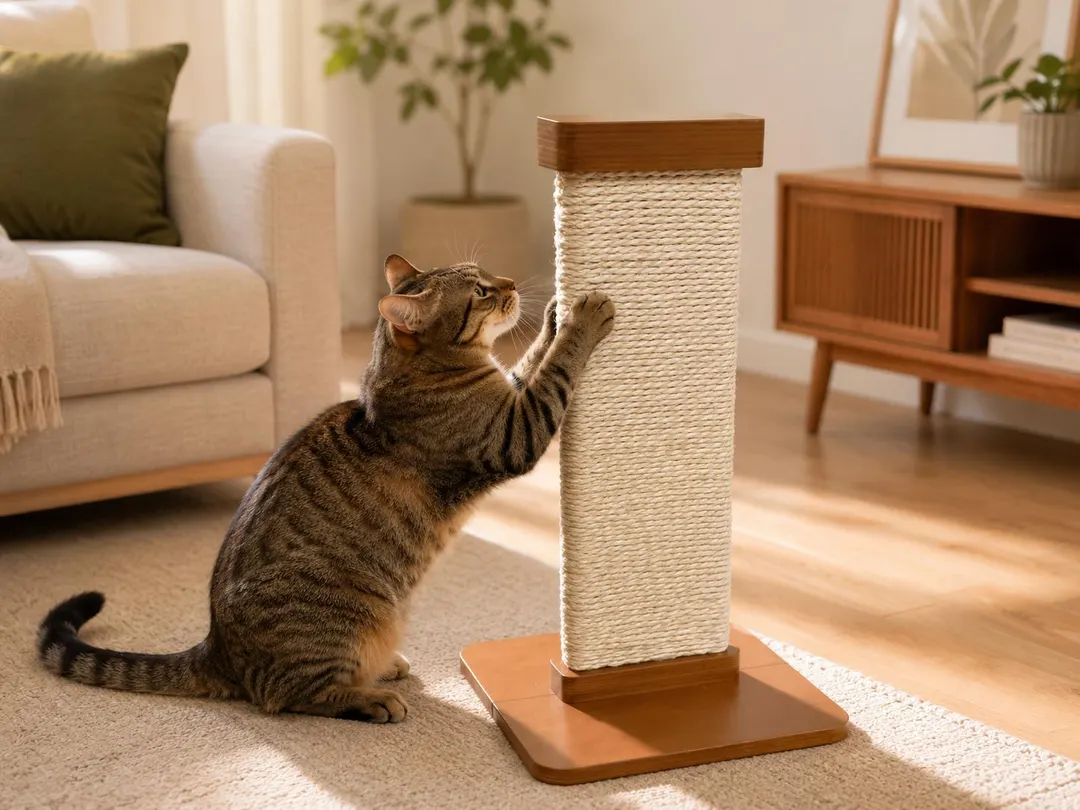
Why moving a post can backfire
Cats do not choose scratch spots randomly. They pick locations that match three things: convenience, stability, and communication value.
Common placement issues
- You moved it away from a traffic area. Many cats like to scratch where you and other pets pass through, like a hallway or living room edge.
- The post is no longer part of a routine. A post near a sleeping spot or feeding area often gets used because it is naturally on the route.
- The new spot is too tight or blocked. Cats want room to approach, stretch, and leave without feeling cornered.
- The post feels unstable on the new floor. On slick flooring, a post can skid. On thick carpet, it can wobble.
- Another cat claimed the area. In multi-cat homes, moving a post can accidentally place it inside one cat’s preferred zone.
Do this first: placement only
The biggest troubleshooting mistake I see is changing three things at once: moving the post, buying a new one, adding catnip, then rearranging furniture. If scratching improves, you will not know why. If it gets worse, you will not know what to undo.
A quick placement recipe
- Put a scratcher where your cat already scratches. Start there, then you can slowly “negotiate” the location later.
- Place one near sleep spots. Many cats like a good stretch and scratch after waking up.
- Place one near social spots. Living rooms, hallways, and near entrances can be high-value communication zones.
- Give an easy approach and exit. Avoid wedging a post into a tight corner where your cat feels trapped.
A practical placement reset
- Put the post back where it was, if possible, and log scratching (as above).
- If you cannot put it back, choose the closest functional equivalent: same room, same path of travel, similar light and noise level.
- Make the post easy to discover. Place it in open view, not tucked behind a plant or chair.
- Anchor it. If it wobbles, stabilize it with a larger base, a non-slip mat, or by placing it against a wall so it cannot tip.
If you rent, check your lease and follow your landlord’s written rules before using adhesive strips, wall anchors, or any hardware on floors or baseboards. When in doubt, use non-damaging options like heavy bases and non-slip pads.
More than one scratcher helps
One post is often not enough, especially in a multi-cat home or a larger space. Think in terms of scratch “stations.” If your cat has a favorite nap spot, a favorite window, and a favorite hallway, it is completely reasonable to give them a scratch option in each area.
In multi-cat homes, multiple scratchers also reduce traffic jams and competition. If one cat guards the only post, the other cat will find your couch.
If it’s still worse: the post
If placement is solid and scratching remains higher than baseline, the post may not be meeting your cat’s preferences. Clementine (my tortie) is a hardcore sisal-and-tall-post girl. Waffles, my sweet orange tabby, will pick a horizontal cardboard scratcher over a fancy cat tree 9 times out of 10. Cats have opinions.
Quick checks that matter
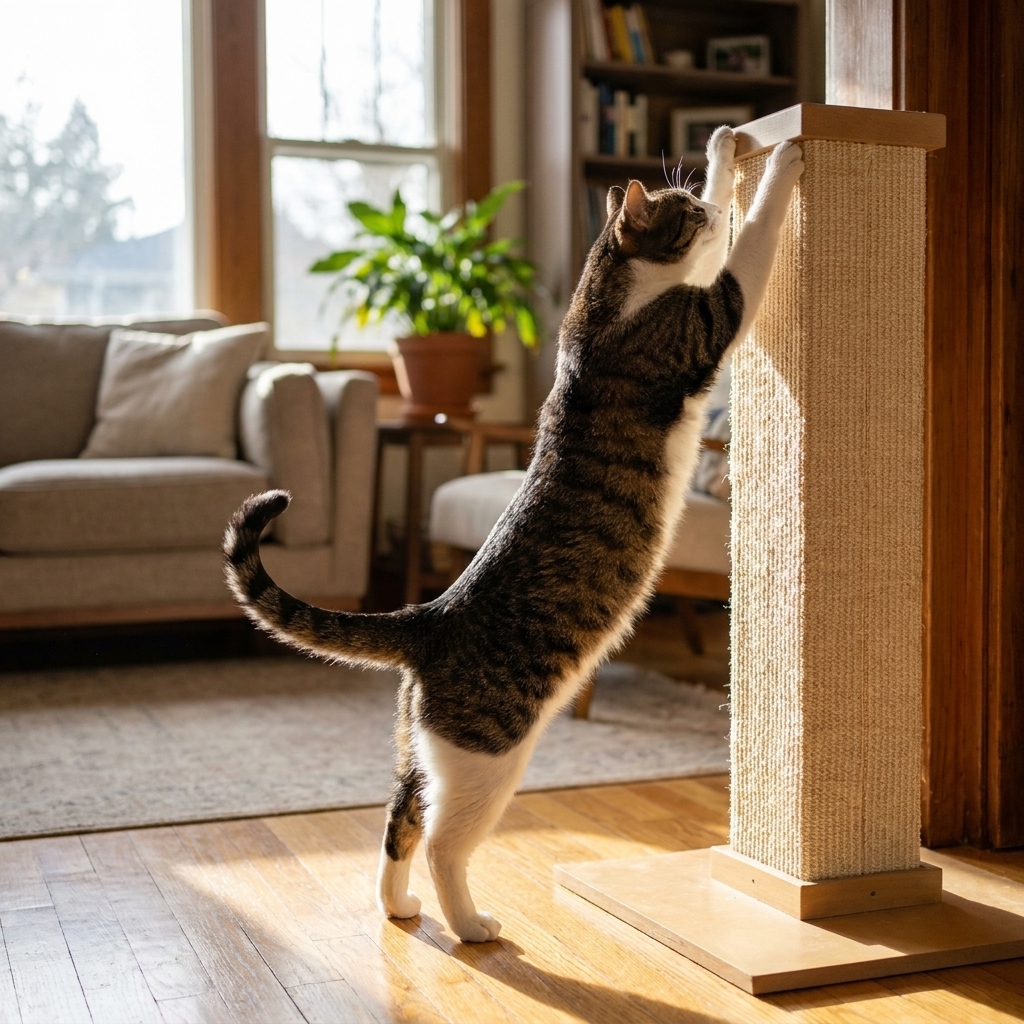
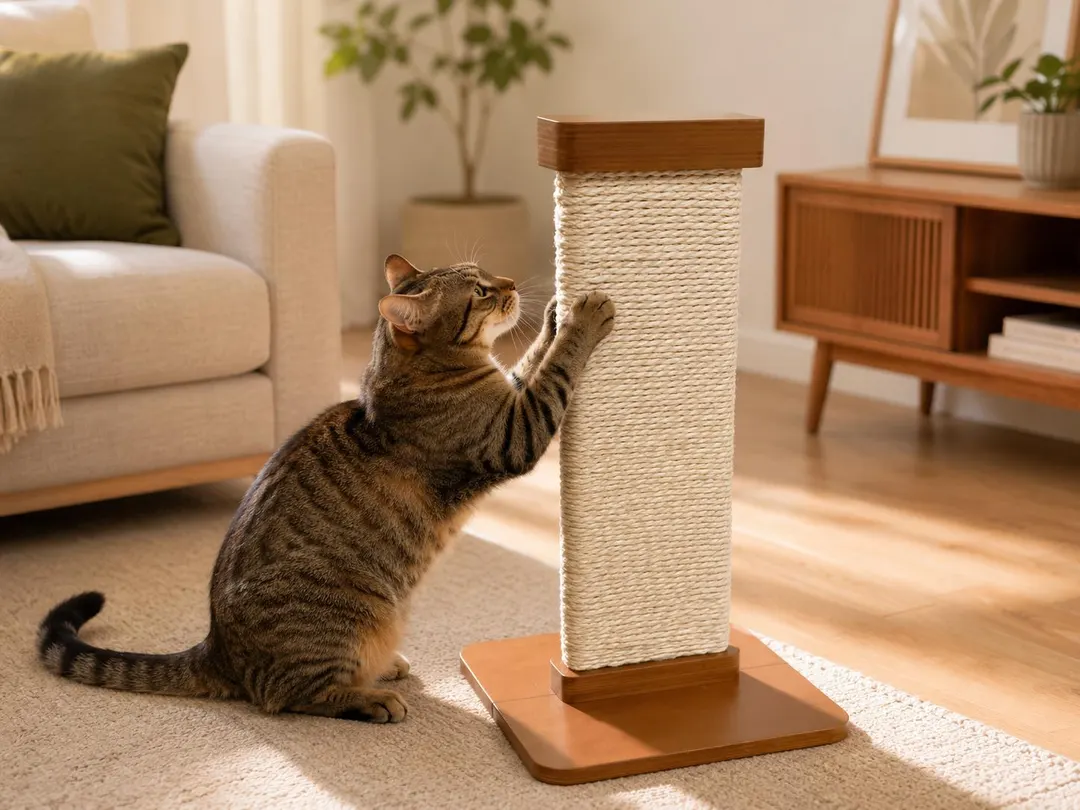
- Height: For vertical scratchers, many cats prefer something tall enough for a full stretch. If your cat’s shoulders hunch, the post may be too short.
- Stability: A post that shifts even slightly can teach a cat “this is not safe,” especially if they have slipped once.
- Material: Sisal rope, sisal fabric, cardboard, and carpet feel very different. (Avoid carpet-covered scratchers if your goal is to protect carpet in the home, since it can blur the rules.)
- Orientation: If your cat scratches rugs, they may need a horizontal scratcher near the rug edge, not a vertical post across the room.
Attract without making a mess
- Catnip or silvervine: Sprinkle lightly on the post or use a catnip spray. Some cats do not respond, and that is normal. If you have light carpet or upholstery, keep loose catnip off fabric so you are not vacuuming it out of the couch seams later.
- Play placement: Do a 2-minute wand-toy session that ends with paws on or near the post, then reward with a treat. You are building a habit loop.
- Pheromone support: A feline facial pheromone product can help in some stress-related cases, especially after a move or household changes. Results are mixed, and not every cat responds. Follow label directions.
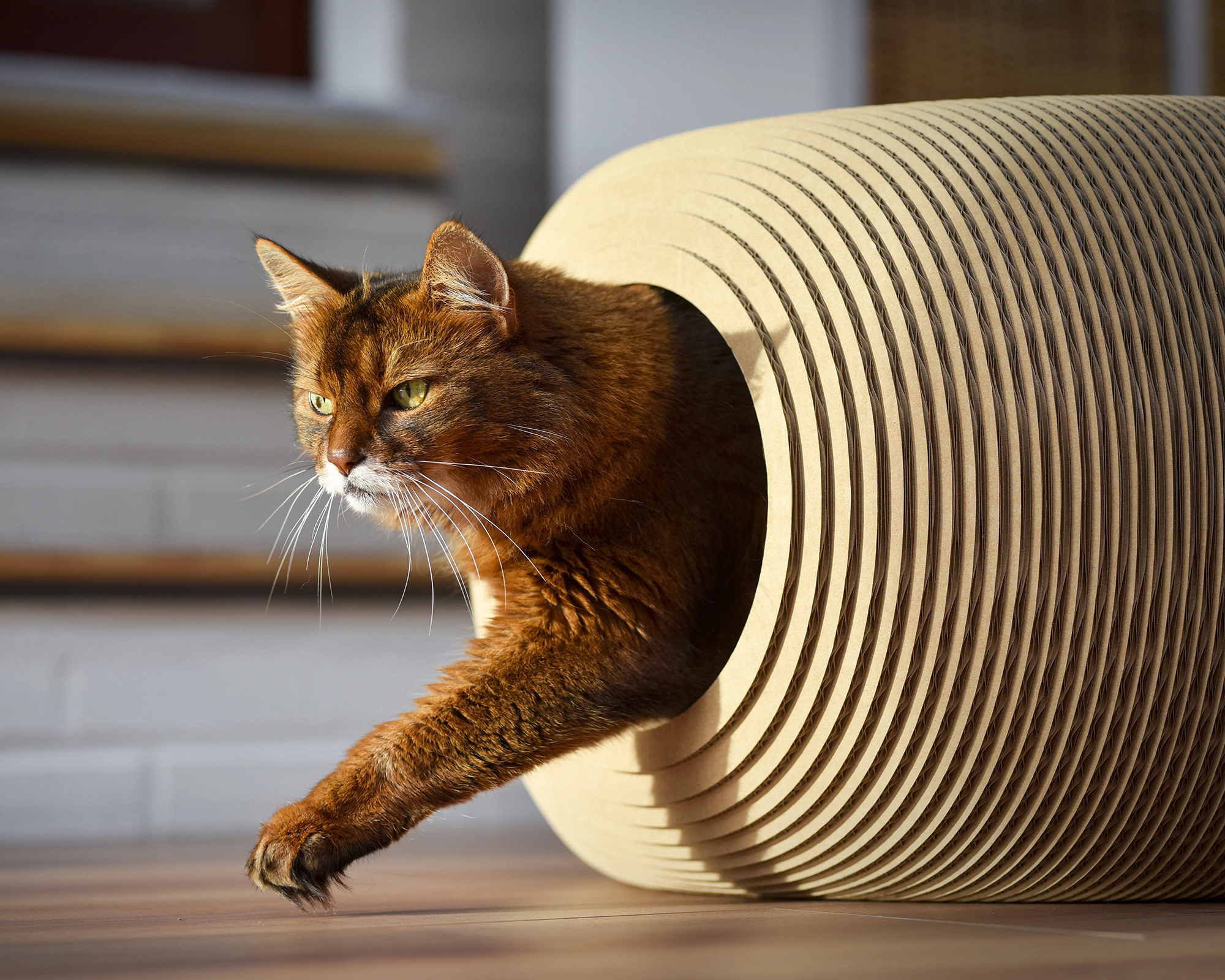
Stress scratching or normal?
Moving a post can be “no big deal” for one cat and a stressor for another, especially cats who are sensitive to change.
More likely normal
- Scratching is mainly on the post or approved scratchers.
- Your cat is eating, playing, and socializing normally.
- No other behavior changes.
More likely stress-related
- Scratching spikes alongside hiding, vigilance, growling, or avoidance.
- New marking behaviors show up (urine marking, frequent rubbing, or intense kneading).
- The behavior started after a bigger disruption (new pet, construction noise, visitors, moving house).
If you suspect stress, keep your environment predictable, add more scratch options (different orientations), and avoid punishment. Punishment can increase anxiety and make scratching more secretive, not less.
When to get help
Escalate when the scratching change is severe, sudden, or paired with other red flags.
- Talk to your veterinarian if you see pain signs (limping, sensitivity when paws are touched, decreased jumping), sudden aggression, or major behavior changes. Medical issues like arthritis can change scratching preferences.
- Consult a qualified behavior professional if scratching is escalating despite good setup, especially in multi-cat tension. Look for credentials such as a board-certified veterinary behaviorist (DACVB), a certified applied animal behaviorist (CAAB), or an experienced behavior consultant with a respected certification (for example, IAABC).
FAQ
How soon could behavior change show up?
Some cats react within a day or two, while others take a week or more to show a clear pattern. That is why a 7 to 14 day log is so helpful.
Should I move the post gradually?
For sensitive cats, yes. Try moving it a few feet every couple of days while logging. If scratching pops up elsewhere, pause and keep the post where it is until use stabilizes.
My cat scratches right next to the post. What does that mean?
Usually one of three things: the post wobbles, the material is not appealing, or the cat wants a different orientation (horizontal vs. vertical). It can also mean the location is correct, but the scratcher style is not.
Is declawing ever the answer?
No. Declawing is an amputation of the last bone of each toe and is associated with pain and behavior problems. Scratching can almost always be managed with proper scratch options, placement, and behavior support.
The takeaway
If your cat scratches more after you move a post, treat it like a small experiment: log scratch locations, change only one thing at a time, and prioritize placement and stability first. Most cats are not being “spiteful.” They are telling you the new setup is not working for their body, their routine, or their sense of security.