The first time you hear it, you might swear your cat has discovered opera. One minute she is her normal self, and the next she is rolling, yowling, and acting like the floor is made of magnets. If your female cat is not spayed, there is a good chance she is in heat, also called estrus.
I grew up fostering kittens and later spent years working with cats who came in labeled “unadoptable,” and heat behavior is one of the most common reasons families panic and think something is terribly wrong. The good news is that heat is normal, temporary, and manageable. The important part is recognizing it, keeping her safe, and making a plan to spay.
What “in heat” means
When an unspayed female cat reaches sexual maturity, her body cycles through periods where she is receptive to mating. That receptive window is estrus, or being “in heat.” Cats are seasonally polyestrous, which means they can have repeated heat cycles during times of year with longer daylight. Indoor cats may cycle year-round because consistent home lighting and other environmental factors can mimic “long day” conditions.
Most cats have their first heat between about 5 and 9 months old, but it can happen earlier or later depending on genetics, body size, and environment. I have seen petite young cats cycle surprisingly early, which is why early spay planning matters.
Clear signs your cat is in heat
Many people expect obvious physical swelling or bleeding like a human period. Cats usually do not bleed in heat. Instead, estrus is mostly a behavior and body-language event.
1) Loud, persistent vocalizing
This is often the first thing families notice. Heat vocalizations can sound like yowling, wailing, or a drawn-out “calling” sound that ramps up at night.
2) Affection on overdrive
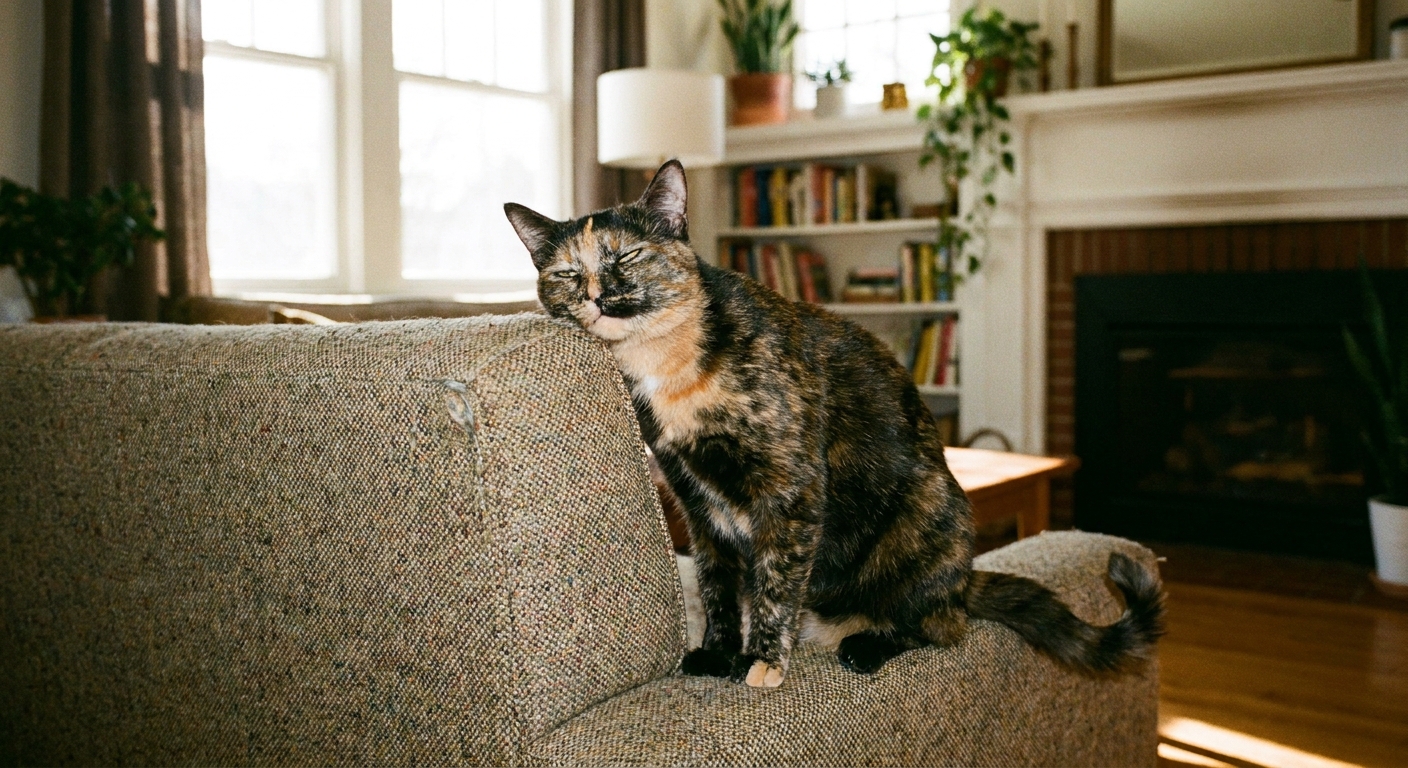
Your cat may seem extra cuddly, rub her face and body on you and furniture, knead more, and demand attention. Some cats become clingy and follow you from room to room.
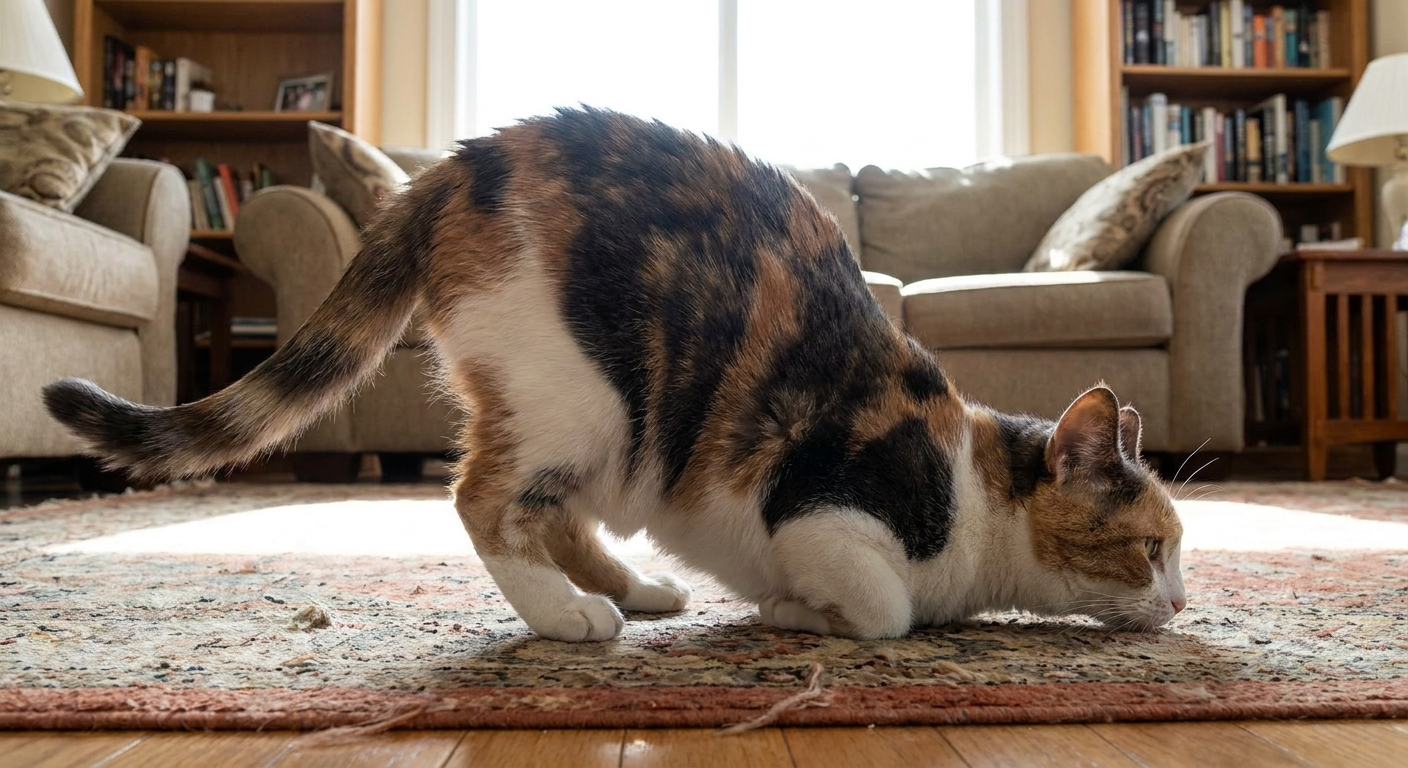
3) Rolling and writhing on the floor
Rolling, flopping, and rubbing the cheeks and hips against surfaces are classic estrus behaviors. It can look dramatic, but it is usually normal.
4) The heat posture (lordosis)
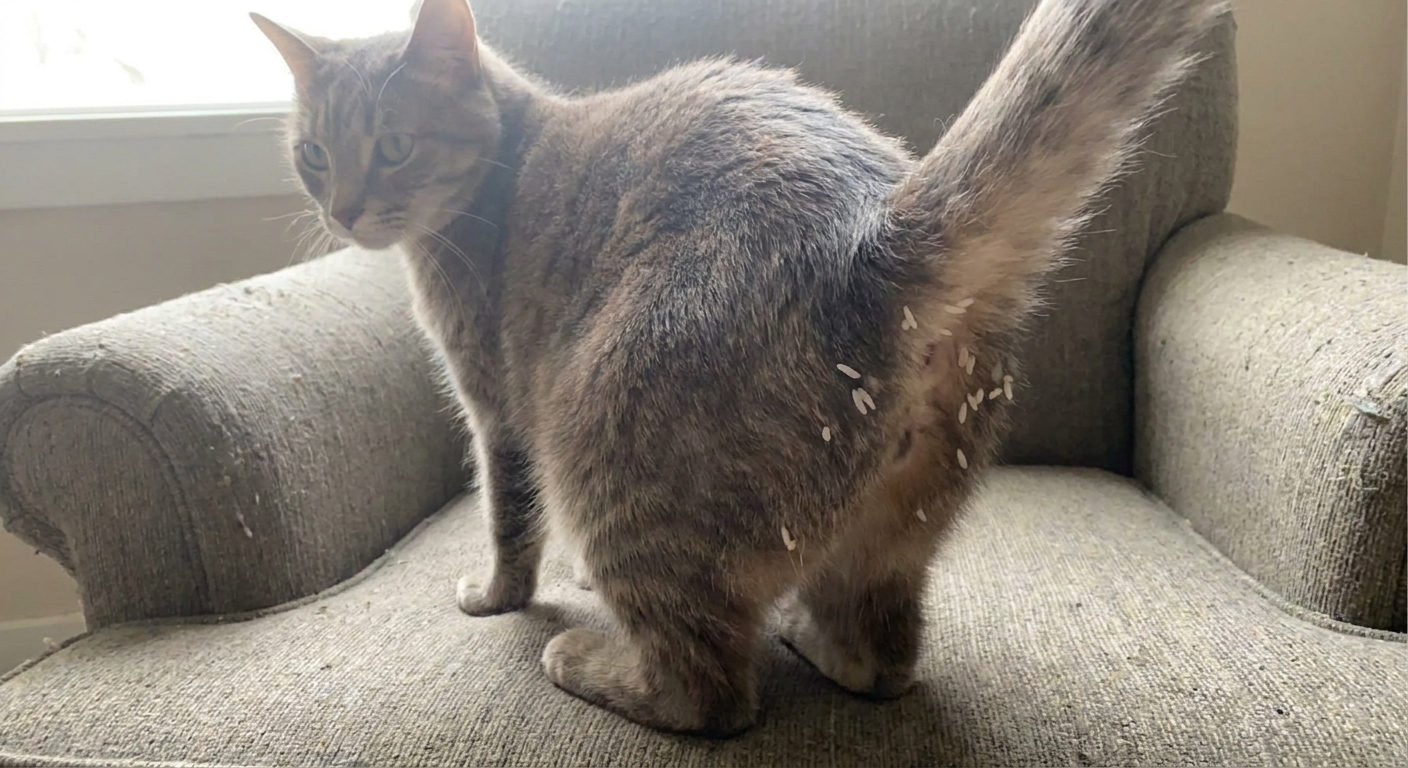
If you pet along her back, she may drop her front end, raise her hind end, and move her tail to the side. This posture is a hallmark of estrus.
5) Restlessness and “can’t settle” energy
Some cats pace, seem distracted, or get up and down repeatedly. You might notice less napping and more door-dashing attempts.
6) Increased interest in doors, windows, and escaping
A cat in heat may actively try to get outside. This is one of the biggest safety concerns, because it only takes a quick slip to lead to pregnancy or injury.
7) Spraying or urine-marking (sometimes)
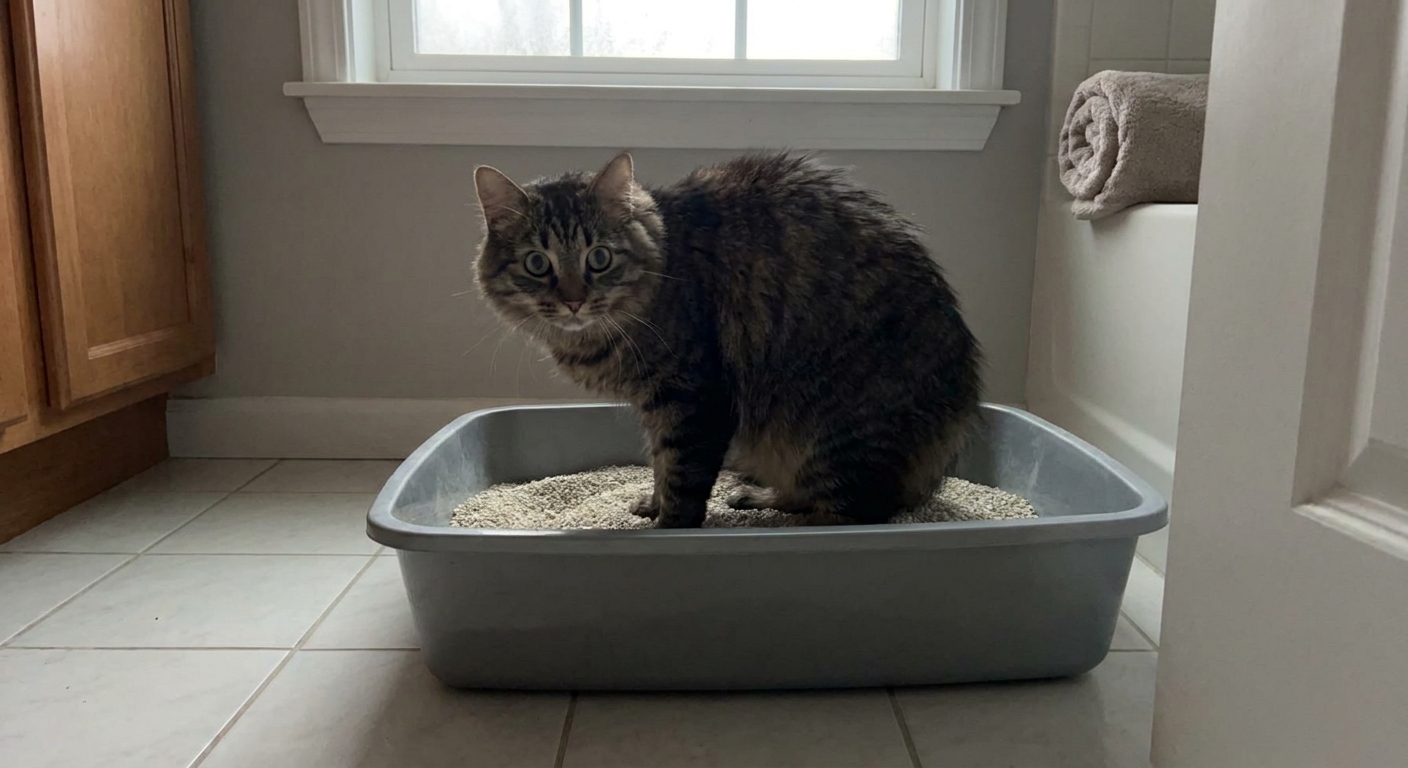
Not every female cat sprays, but some will mark vertical surfaces with urine during estrus. You may also notice more frequent trips to the litter box.
Physical changes you might notice
Heat usually is not a visibly obvious, anatomical change in cats, but a few subtle physical signs can happen:
- Slight vulvar swelling, though often minimal and easy to miss.
- Increased grooming around the rear.
- Small clear discharge is possible, but heavy discharge is not typical.
- Decreased appetite in some cats, although others eat normally.
If you see bleeding, thick yellow or green discharge, a bad smell, or your cat seems sick, treat that as a veterinary concern, not “just heat.”
How long heat lasts
Heat can feel endless when you are trying to sleep, but most estrus periods last several days. A common range is about 3 to 10 days, with some cats running shorter or longer and intensity that can vary from cycle to cycle.
If she does not get pregnant, she may go back into heat again in as little as 1 to 3 weeks. This is why it can seem like she is “always in heat,” especially during spring and summer when many cats cycle back-to-back.
One more wrinkle: cats are induced ovulators. That means ovulation is triggered by mating. Without mating, many cats do not ovulate and can cycle again quickly.
Heat vs illness
Estrus behavior can be loud and intense, but your cat should otherwise look and act healthy. If something feels “off,” take it seriously. Two common problems can mimic or overlap with heat signs: urinary issues and reproductive infections.
Heat vs urinary tract discomfort
Sometimes owners notice frequent litter box trips, vocalizing, and restlessness and assume heat. Urinary discomfort can look similar, especially if your cat is crying, licking her genitals, or seeming unable to get comfortable.
Get veterinary help quickly if you notice:
- Straining to urinate or producing only tiny drops
- Blood in the urine
- Urinating outside the box suddenly
- Excessive genital licking paired with obvious discomfort
- Lethargy, hiding, or a sudden change in demeanor
Female cats can get urinary tract infections, bladder inflammation, or stones. A complete urinary blockage is rarer in females than males, but painful or persistent urinary signs still deserve prompt attention.
Heat vs pyometra (uterine infection)
Pyometra is a serious infection of the uterus that happens in unspayed females, often after a heat cycle. It can be life-threatening.
Seek emergency veterinary care if your unspayed cat has:
- Low energy, weakness, or collapse
- Fever (only a thermometer can confirm it)
- Vomiting or not eating
- Bloated belly
- Increased thirst or urination
- Foul-smelling vaginal discharge (sometimes there is none)
If your cat is in heat and also seems sick, do not wait it out.
What to do at home
You cannot “train” a cat out of being in heat, and punishment will only add stress. The goal is comfort, safety, and preventing escape or pregnancy until your veterinarian can spay her.
Keep her indoors and secure
- Check windows, screens, and door latches. Cats in heat can become surprisingly determined.
- Use a double-door routine if possible: step into a hallway or mudroom, then close one door before opening the other.
- If you have visitors, put her in a quiet room with food, water, and a litter box during door-heavy times.
Reduce stimulation
- Close blinds at night if outdoor cats are visible.
- Clean any sprayed areas with an enzymatic cleaner to reduce re-marking.
- Separate her from intact male cats in the home. Scent alone can escalate behavior.
Increase calming enrichment
- Offer interactive play in short bursts, especially before bedtime.
- Use puzzle feeders or scatter feeding to give her something to focus on.
- Provide cozy hiding spots and soft bedding in a dim, quiet room.
Try gentle comfort measures
Some cats relax with warmth and quiet.
- A warm (not hot) heating pad designed for pets on a low setting, supervised.
- Soft brushing if she enjoys it.
- Calm background sound like a fan or white noise to reduce reactivity to outdoor noises.
- A feline pheromone diffuser or spray may take the edge off for some cats. Results vary, but it is generally a low-risk option.
What not to do
- Do not let her outside “just for a little while.” Pregnancy can happen fast, and outdoor risks are real.
- Do not give human medications or leftover pet sedatives unless your veterinarian instructs you.
- Do not attempt hormonal heat suppression on your own. Hormone treatments can carry significant risks and should only be discussed with a veterinarian.
Spaying: the long-term fix
Spaying prevents future heat cycles and eliminates the risk of uterine infections like pyometra. It also reduces the risk of mammary cancer, especially when done before the first or second heat.
If your cat is currently in estrus, many clinics can still spay her, though some prefer to wait until the cycle ends because blood flow to the reproductive tract can be higher. The best approach is to call your veterinarian, explain what you are seeing, and ask about timing.
If you think she may have mated recently, still call. Cats can mate multiple times during a heat and can become pregnant by more than one male in the same cycle. If pregnancy happens, cat gestation is typically around 63 to 65 days, so timing matters for planning and care.
If heats are frequent, she is trying hard to escape, or you have any concern she was exposed to an intact male, treat the spay conversation as time-sensitive.
Quick checklist
- Unspayed female, typically 5 months or older
- Loud yowling or calling, often worse at night
- Rolling, rubbing, extra affection
- Restlessness and door-focused behavior
- Heat posture: hind end up, tail to the side
- No signs of overall illness (normal energy, eating and drinking normally, no vomiting)
If the behaviors match but you also see pain, straining to pee, lethargy, vomiting, fever, or abnormal discharge, treat it as a medical problem first.
FAQ
Do cats bleed when they are in heat?
Usually no. Unlike humans, most cats do not have noticeable bleeding during heat. If you are seeing blood, especially with urinary signs or lethargy, contact your veterinarian.
Can my spayed cat act like she is in heat?
It is uncommon, but possible. Rarely, a small amount of ovarian tissue remains after surgery (often called ovarian remnant syndrome), which can lead to heat-like behaviors. If your cat is definitely spayed and you are seeing repeated heat signs, talk with your vet.
Will catnip help a cat in heat?
Some cats relax with catnip, while others get more excited. It is safe for most cats, but it is not a reliable heat solution. If it revs your cat up, skip it during heat.
Can I bathe my cat to calm her down?
A bath usually adds stress and does not stop estrus behaviors. If she is dirty, a gentle wipe-down is often better. Focus on play, calm spaces, and keeping her safely indoors.
How soon can my cat get pregnant?
Very quickly once she is in heat and has access to a male cat. Cats can mate repeatedly during this phase. If she is intact, assume pregnancy is possible after any unsupervised contact with an intact male.