I have fostered a lot of cats who arrived wearing their life story in their fur: kitchen grease, flea dirt, litter box mishaps, and once, an impressive streak of something sticky that I never did identify. If you are staring at your own cat thinking, “You clearly need help,” you are not alone. The good news is that most cats rarely need full baths. The better news is that when they do, you can usually handle it at home with the right setup and a plan that keeps things quick.
Do cats actually need baths?
Most healthy adult cats keep themselves very clean. A full bath is usually an occasional, specific tool, not routine grooming.
Times a bath is truly worth it
- Grease or oil in the coat (cooking splatter, garage grime, food oils) that brushing cannot lift
- Something sticky like syrup, resin, or spilled drink that is clinging and matting fur
- Poop or urine mess the cat cannot clean, especially around the back end
- Skunk spray or strong odors where spot cleaning will not cut it (for skunk, talk to your vet or groomer about a cat-safe de-odorizing plan and keep any products away from eyes and mouth)
- Medical grooming needs your veterinarian recommends, such as a medicated shampoo
- Hairless breeds that need help managing skin oils (your breeder or vet will usually give a schedule)
When a damp wipe is enough
If the issue is small, you can often skip the bath and do a targeted clean instead. This is my first choice for most cats because it is faster and less stressful.
- Dusty paws or light dirt: a warm, damp washcloth
- Minor food on the chin or chest: pet-safe wipes or a washcloth, followed by drying
- Small smudge on the rump: a quick “butt bath” only, not the whole body
- Light dander: brushing plus a slightly damp cloth over the coat
A quick safety note: Avoid human baby wipes with added fragrances, essential oils, or strong detergents. Cats groom by licking, so anything on the coat can become something in the stomach.
Before you start: what not to do
- Do not use human shampoo. It can be too harsh for feline skin and may cause dryness or irritation. Stick with products labeled for cats.
- Do not use dog flea shampoo unless your vet explicitly approves it. Some canine products contain ingredients that are unsafe for cats.
- Do not aim water at the face or pour water over the head. It is scary, it risks ears and eyes, and it makes cats fight harder.
- Do not bathe a sick, very elderly, or very stressed cat without veterinary guidance. If your cat is coughing, congested, lethargic, or seems painful when handled, call your vet first.
When not to DIY
I am very pro “do it at home,” but I am more pro everyone staying safe. Skip the home bath and call your vet or a professional groomer if:
- Your cat is fractious or escalating fast, meaning growling, biting, or launching out of your arms
- The substance is unknown, caustic, or potentially toxic, or you suspect chemical exposure
- There are open wounds, sores, or significant skin inflammation
- There is heavy matting that really needs clipping, not soaking
- Your cat has breathing issues or gets winded with handling (especially seniors)
Gather your supplies first (this keeps the bath short)
I like to set everything up before I bring the cat into the room. Once they are in “why is the door closed” mode, you want zero delays.
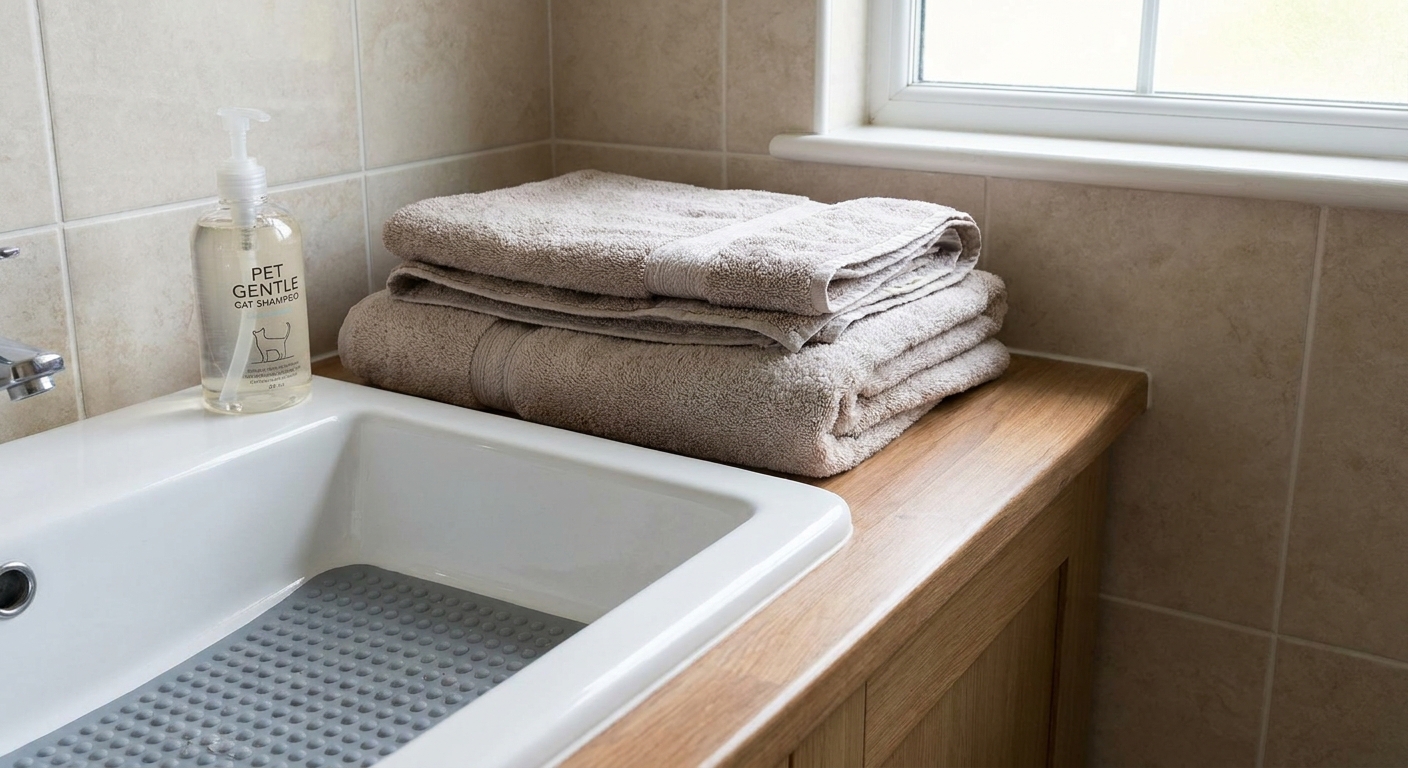
- Cat-safe shampoo (or veterinarian-prescribed medicated shampoo)
- 2 to 3 towels (one for the sink or tub, one for drying, one backup)
- Non-slip surface like a rubber mat or towel in the sink or tub
- Warm water (lukewarm, like a baby bath, never hot)
- Rinse tool such as a plastic cup, pitcher, or handheld sprayer on gentle flow
- Washcloth or cotton pads for face wiping
- Comb or brush for a quick pre-bath pass
- Optional: a second person to calmly help hold and reassure
Quick prep
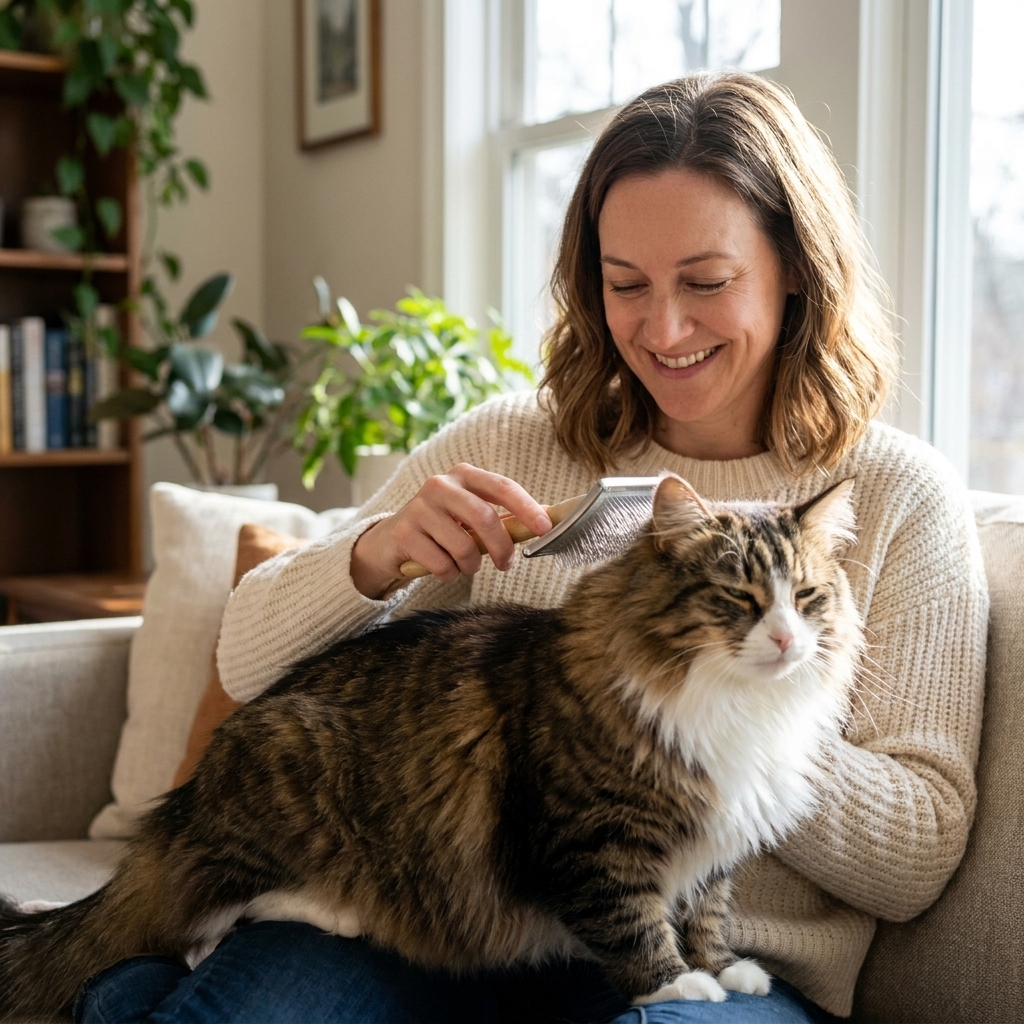
1) Brush first
Brushing removes loose fur and small tangles so shampoo and water reach the coat evenly. If you find tight mats, do not try to soak and “wash them out.” Water can tighten mats. For heavy matting, talk to a groomer or vet about safe removal.
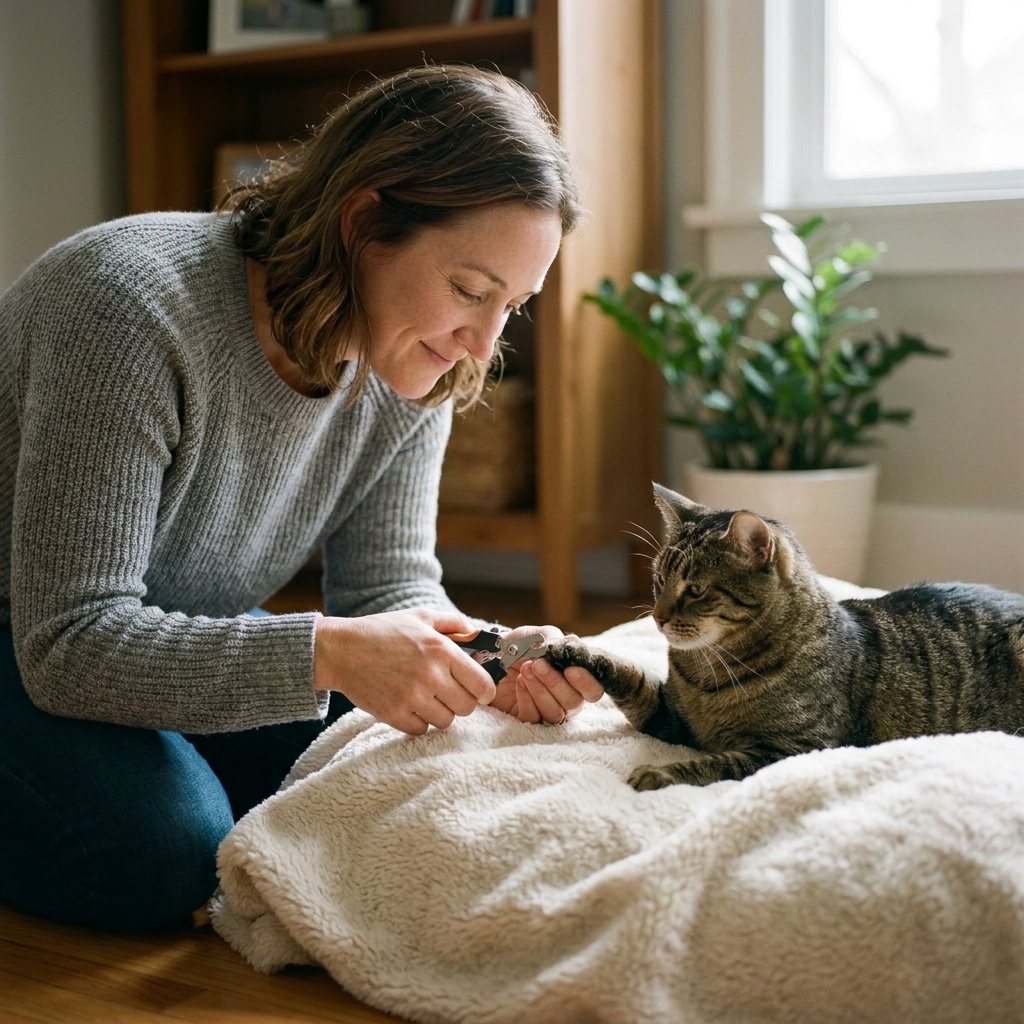
2) Trim nails if you can
Shorter nails mean fewer accidental scratches. If nail trimming is a battle in your house, skip it and focus on a secure hold and a faster bath. A stressed cat plus a nail-trimming session is often too much at once.
3) Choose the right location
For many cats, a sink is easier than a bathtub because it feels more contained. For bigger cats, a tub can be safer. Either way, close the door and remove escape routes.
Step-by-step: how to bathe your cat at home
My goal is always the same: wet, wash, rinse, towel burrito, done. Five to ten minutes is a great target.
Step 1: Set the scene
- Put a towel or non-slip mat down.
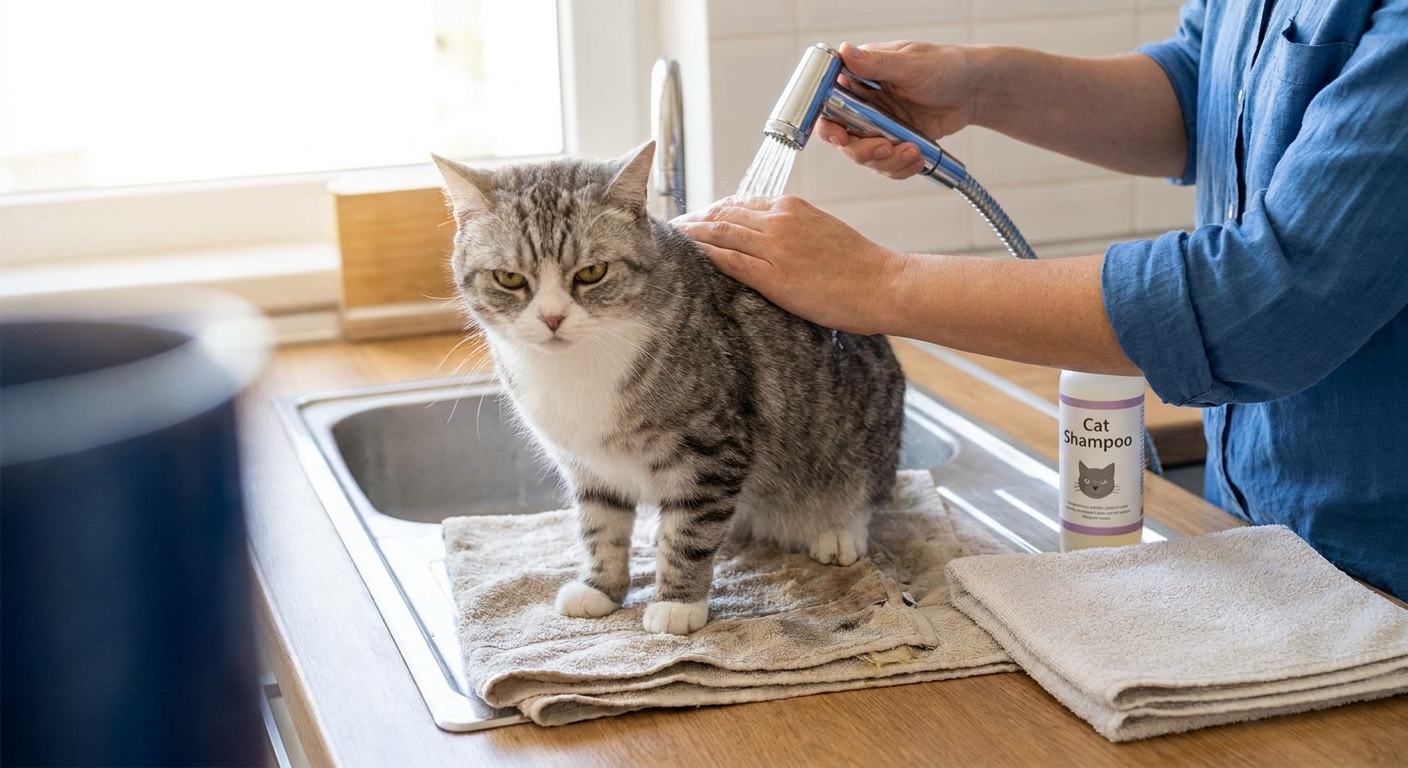
- Use a few inches of warm water in the sink or tub so paws can feel stable.
- Most cats do best with no running water. If your cat is unusually relaxed around a quiet trickle and the sound does not bother them, you can use a very gentle flow for rinsing.
- Keep the room warm. Chills make cats panic.
Step 2: Lower your cat in calmly
Support the chest and belly. Talk softly. I often place one hand gently around the shoulders like a steadying “hug” while the other hand does the work.
Step 3: Wet the body, not the head
Start at the neck and work back. Use a cup or sprayer on low flow. Many cats tolerate water better when it is applied slowly and stays away from the face.
Tip: If your cat is very anxious, you can leave the top of the head and neck mostly dry and focus on the areas that are actually dirty.
Step 4: Shampoo in small amounts
Apply a small amount of cat shampoo, lather gently, and focus on the dirtiest zones: back end, belly, paws, or greasy patches. Avoid the eyes, ears, nose, and mouth.
Step 5: Rinse thoroughly
Leftover soap is itchy and can lead to overgrooming later. Rinse until the water runs clear and you do not feel any slickness or residue when you run your fingers through the coat.
Step 6: Towel dry immediately
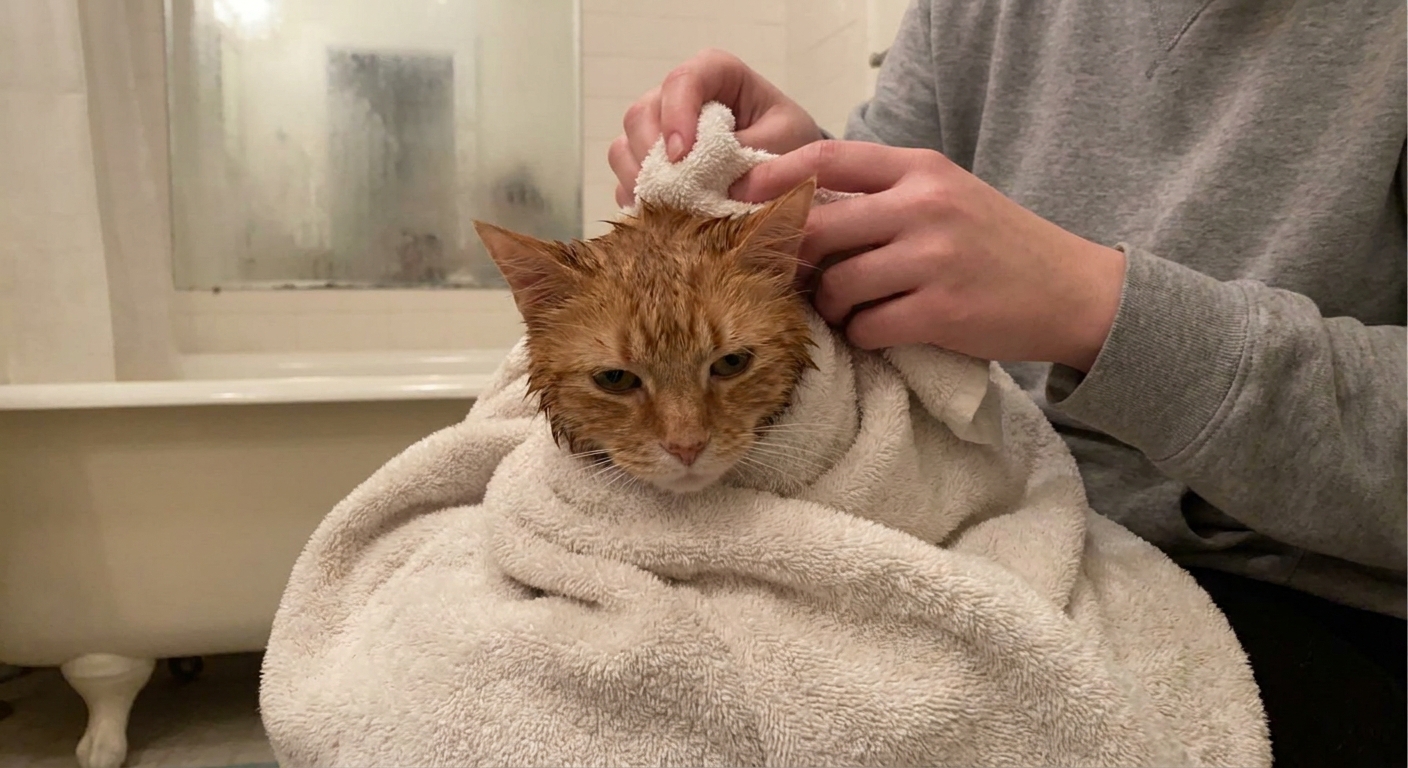
Lift your cat onto a towel, wrap snugly like a burrito, and blot. Most cats hate vigorous rubbing. Blotting is calmer and reduces tangles.
Handling the face, ears, and sensitive spots
Face cleaning
Instead of washing the face under running water, use a warm, damp washcloth.
- Wipe from the outer face inward, avoiding the eyes.
- For crusty eye corners, soften with a damp cotton pad and wipe gently once per swipe.
- If something is truly stuck in facial fur, use a tiny dab of cat shampoo on the cloth, then wipe again with clean water to remove residue.
Ears
Do not put water in your cat’s ears. If the outer ear flap looks dirty, wipe only what you can see with a slightly damp cotton pad and dry it after.
Call your vet if you notice a strong odor, lots of dark debris, head shaking, or redness. Those are common ear infection or ear mite clues and baths will not solve them.
Paws and nails
Paws get surprisingly grimy, especially in long-haired cats. You can wash paws with a little lather and rinse well. If nails are out, be gentle around each toe and avoid twisting the foot.
Private areas
For poop or urine stuck around the rear, I prefer a targeted “butt bath” in shallow water. Keep it quick, rinse very thoroughly, and towel dry completely to prevent chills and skin irritation.
Safe handling
If there is one secret, it is this: keep it secure, keep it gentle, keep it short.
- Support the body under the chest and belly so your cat feels steady.
- Skip scruffing. It can increase panic in many adult cats. A calm hold around the shoulders and a supported back end is usually kinder and more effective.
- Use a helper if your cat tends to flail. One person can steady and soothe while the other washes and rinses.
- Stop if safety is at risk. A half-finished bath is better than a bite.
Drying your cat safely
Drying is where many baths go sideways, because cats often tolerate wet fur less than they tolerate water.
Towel-dry in phases
- First towel: wrap and blot for 1 to 2 minutes.
- Second towel: swap to a dry towel and blot again.
- Warm room: keep your cat in a cozy space until fully dry, especially kittens and seniors.
Should you use a hair dryer?
Some cats accept a dryer on low heat, low airflow, and at a distance, but many find it terrifying. If your cat is tense or trying to flee, skip it. A panicked cat plus a noisy dryer is how scratches happen.
If you do use a dryer, keep it moving, never aim at the face, and stop immediately if your cat shows distress.
Long-haired cats
Long coats hold water longer and mat faster. After towel drying, use a gentle comb once your cat is calm, and keep them warm until the undercoat is fully dry. If your cat is prone to mats, a quick brush the next day can prevent surprise tangles.
Keeping the bath calm and quick
My foster coordinator brain is always looking for ways to prevent the “bath equals betrayal” story from taking root.
- Do a practice run. Bring your cat into the bathroom, offer treats, then leave. No water involved.
- Use confident, gentle handling. Hesitation can make cats more worried.
- Work in zones. If only the back end is dirty, wash only the back end.
- Reward after. A favorite snack, a calm brush session, or a warm lap can help reset the mood.
- If your cat is escalating, stop. A partially successful bath is better than a full wrestling match.
What to do if your cat hates baths
Some cats, like my tortoiseshell Clementine, communicate their dislike for certain activities with the intensity of a Shakespearean monologue. If your cat is a hard no on baths, you still have options.
Try alternatives first
- Warm washcloth spot-cleaning
- Cat-safe grooming wipes
- Waterless cat shampoo or foam (follow label directions, use sparingly, avoid the face, and do not overapply since cats may lick residue)
- Professional grooming for severe mess, heavy coat, or safety concerns
Ask your vet about help for extreme cases
If bathing is medically necessary and your cat becomes aggressive or panicked, your veterinarian may prescribe anti-anxiety medication for grooming days. This can be safer for everyone and far less traumatic for your cat.
After the bath: what to watch for
- Chilling: shivering, hunching, seeking heat. Warm the room and keep towel drying.
- Skin irritation: redness, itching, dandruff, or excessive licking can mean soap residue or sensitivity.
- Ear issues: head shaking, pawing at ears, or odor in the next day or two needs a vet check.
If you used a medicated shampoo, follow your vet’s instructions about contact time and frequency. More is not better with medicated products.
FAQ
How often should I bathe my cat?
For most cats, only when needed. That could mean once or twice a year, or not at all. Cats with medical skin issues or hairless breeds may need more frequent bathing under veterinary guidance.
Can I bathe a kitten?
Yes, but kittens chill easily. Keep the room warm, use a small amount of lukewarm water, work fast, and dry thoroughly. For very young kittens, spot-cleaning is often safer than a full bath.
What shampoo is safe for cats?
Use a shampoo specifically labeled for cats, or a veterinarian-recommended product. Avoid essential oils, heavy fragrances, and any product not meant for feline skin.
My cat got into something toxic. Should I bathe them?
If you suspect a toxic substance on your cat’s coat, call your veterinarian or a pet poison helpline right away for specific instructions. In many cases, bathing promptly helps, but you want expert guidance on what the substance might be and how to handle it safely.