If you have young kids, you do not just need a “nice” cat. You need a cat who can handle unpredictable movement, occasional noise, and the learning curve that comes with tiny humans. As a foster coordinator and behavior consultant, I have seen the happiest family matches come from two things: a naturally social temperament and adults who teach kids how to be gentle from day one.
Below are five cat breeds that are widely known for affectionate, patient personalities, plus my step-by-step approach for introducing a new cat to children safely. (Quick note from the rescue world: every breed has outliers, and individual personality matters more than a pedigree. Temperament can also vary by line, breeder, and early socialization. If you are adopting, ask for a confident, people-seeking cat who has lived with respectful kids or has a history of enjoying handling.)
What “kid-friendly” means
When families tell me they want an affectionate cat for children, they usually mean:
- Low reactivity: less likely to swat when startled
- People-oriented: chooses to be near the family, not just tolerate them
- Handling tolerance: can cope with gentle petting and occasional awkward hugs (with supervision)
- Playful but not intense: enjoys games without becoming mouthy or over-aroused
Even the sweetest cat can get overwhelmed if kids are loud, chase, or grab. The goal is to pick a breed with a reputation for steadiness and then set your home up so your cat never has to defend itself to get space.
One non-negotiable safety note: Never leave a toddler or preschooler unsupervised with any cat, even the most tolerant one. Cats scratch when they feel trapped or scared, not because they are “mean.”
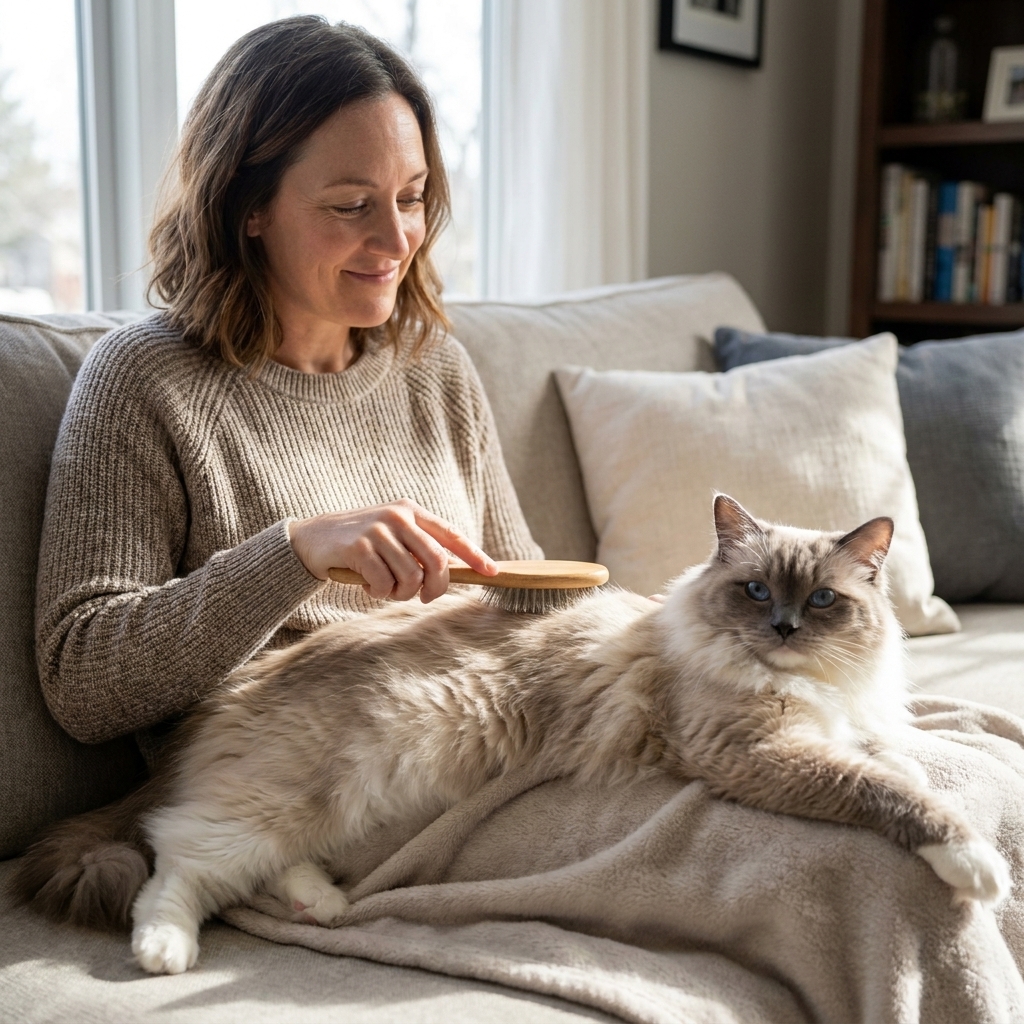
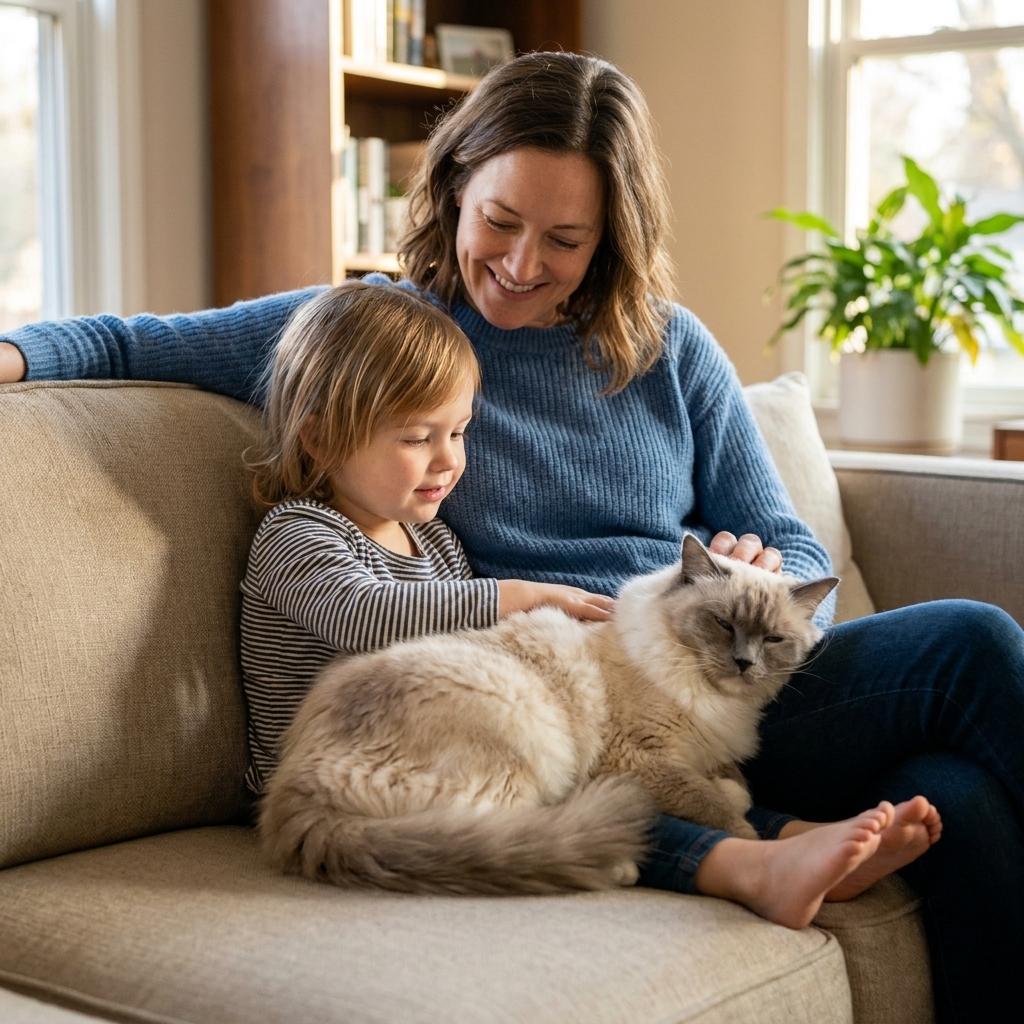
1) Ragdoll
Why families love them: Ragdolls are famous for their relaxed, affectionate vibe. Many are the kind of cat who follows you from room to room and happily settles near (or on) their people. With respectful children, they often become gentle, devoted companions.
Temperament highlights
- Usually calm and people-focused
- Often tolerant of handling when introduced thoughtfully
- More likely to choose cuddling over chaos
Family tips from the behavior side
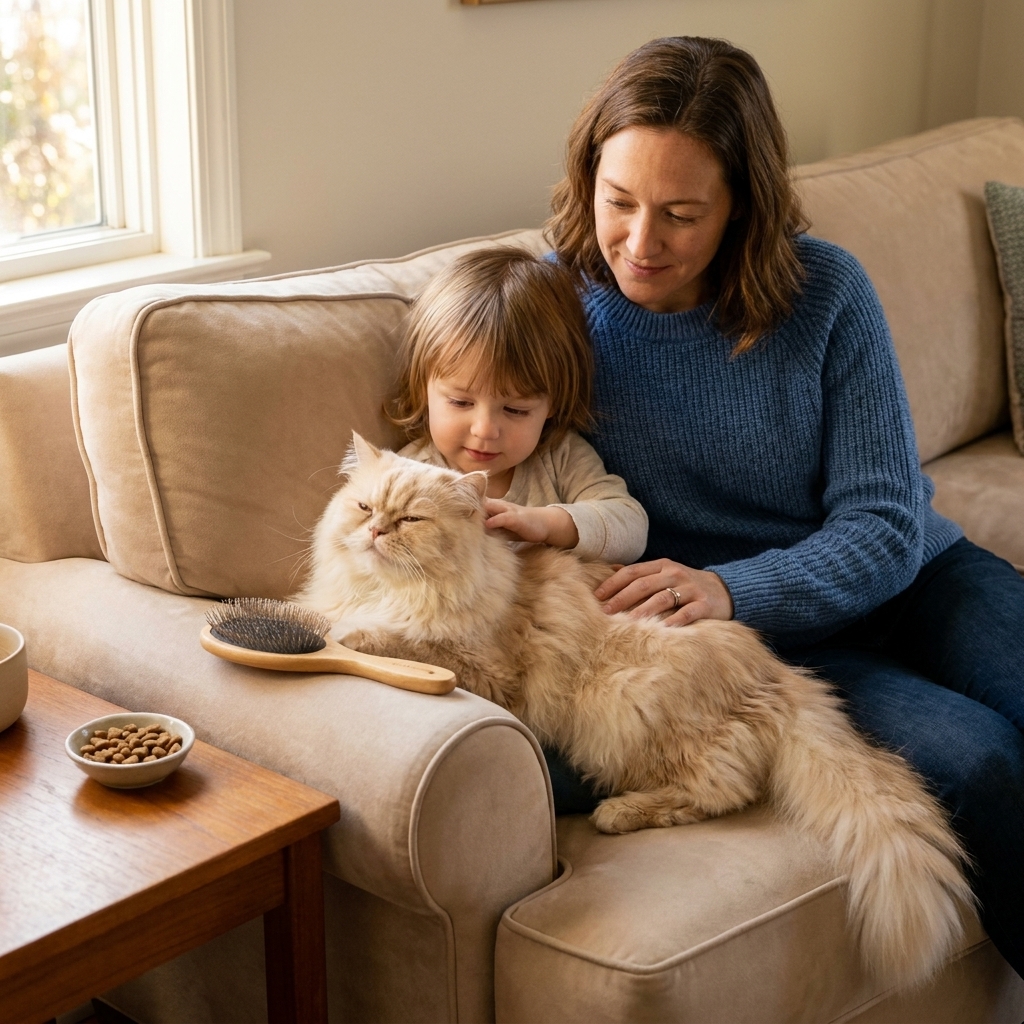
Because they can be so easygoing, some kids assume they can pick them up whenever they want. Teach “ask first” rules: the cat chooses. Also, long coats require regular brushing. Make grooming a calm, paired-with-treats routine so it stays a positive family activity.
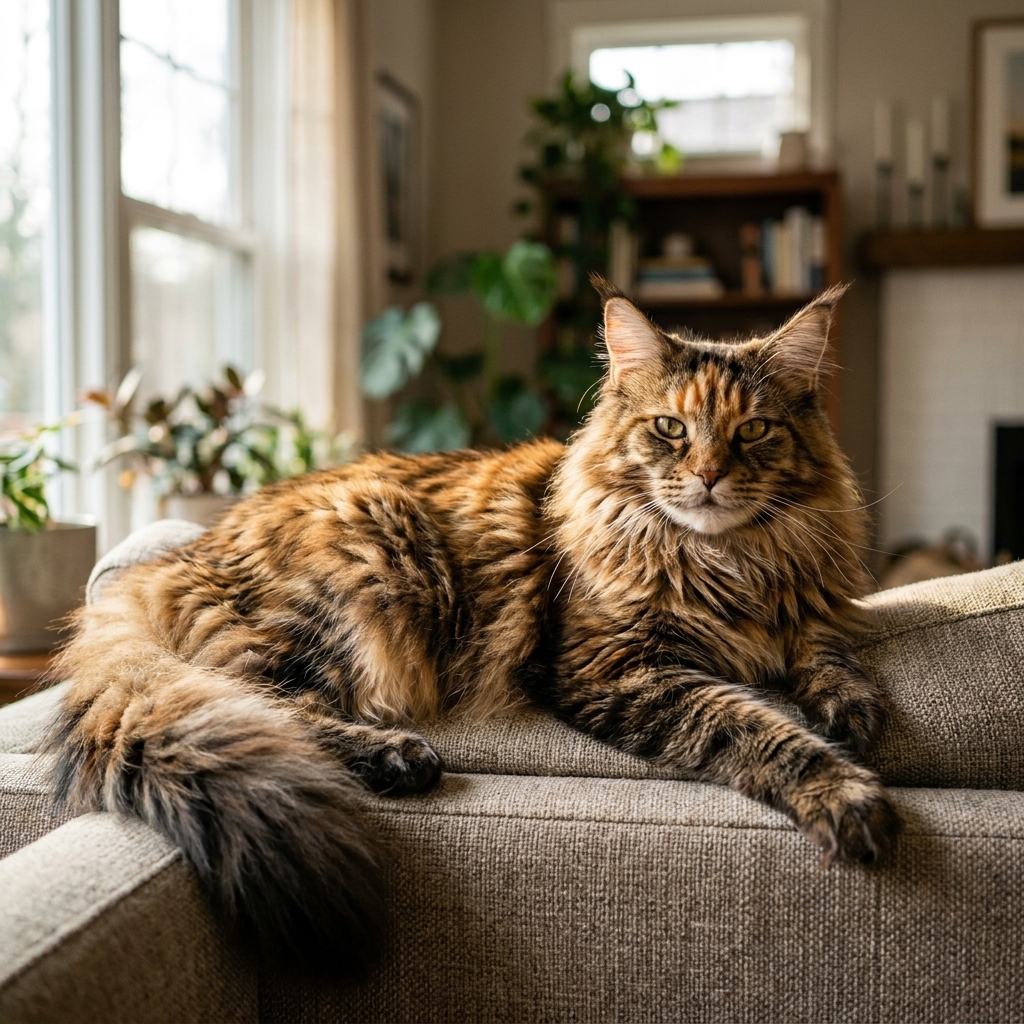
2) Maine Coon
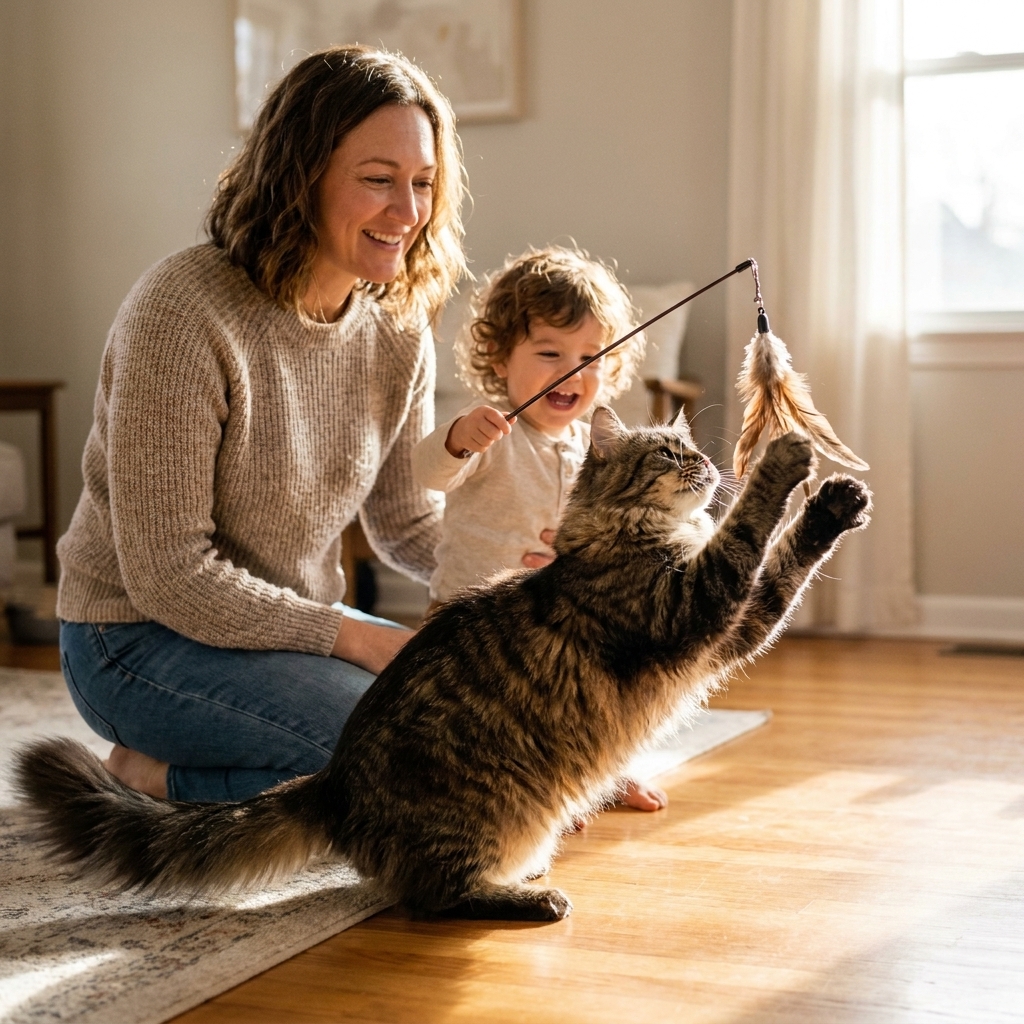
Why families love them: The Maine Coon is often called the gentle giant of the cat world. They tend to be friendly, confident, and social, and many do well with kids who want a cat that will “hang out” and play.
Temperament highlights
- Generally outgoing and tolerant
- Playful without being as easily overstimulated as some high-drive breeds
- Often good with respectful children and cat-savvy dogs
Family tips from the nutrition nerd in me
Maine Coons are big cats with big appetites, and some may gain weight if free-fed, especially after neuter surgery or if their activity level drops. Measured meals, puzzle feeders, and wand-toy play sessions help a lot. A sturdy scratching post and a stable cat tree are not optional for this breed.
3) Birman
Why families love them: Birmans tend to be affectionate, gentle, and quietly social. They often enjoy being near the family without demanding constant attention, which can be a lovely balance in a busy household.
Temperament highlights
- Sweet, soft-natured companions
- Often do well with calm kids and routine
- Typically less “in your face” than some ultra-needy breeds
Family tips
Birmans are a great match for families who can offer predictable quiet time. Teach kids to invite the cat over rather than carry them around. A “cozy corner” bed or covered cat cave can become the cat’s reliable retreat when the house gets busy.
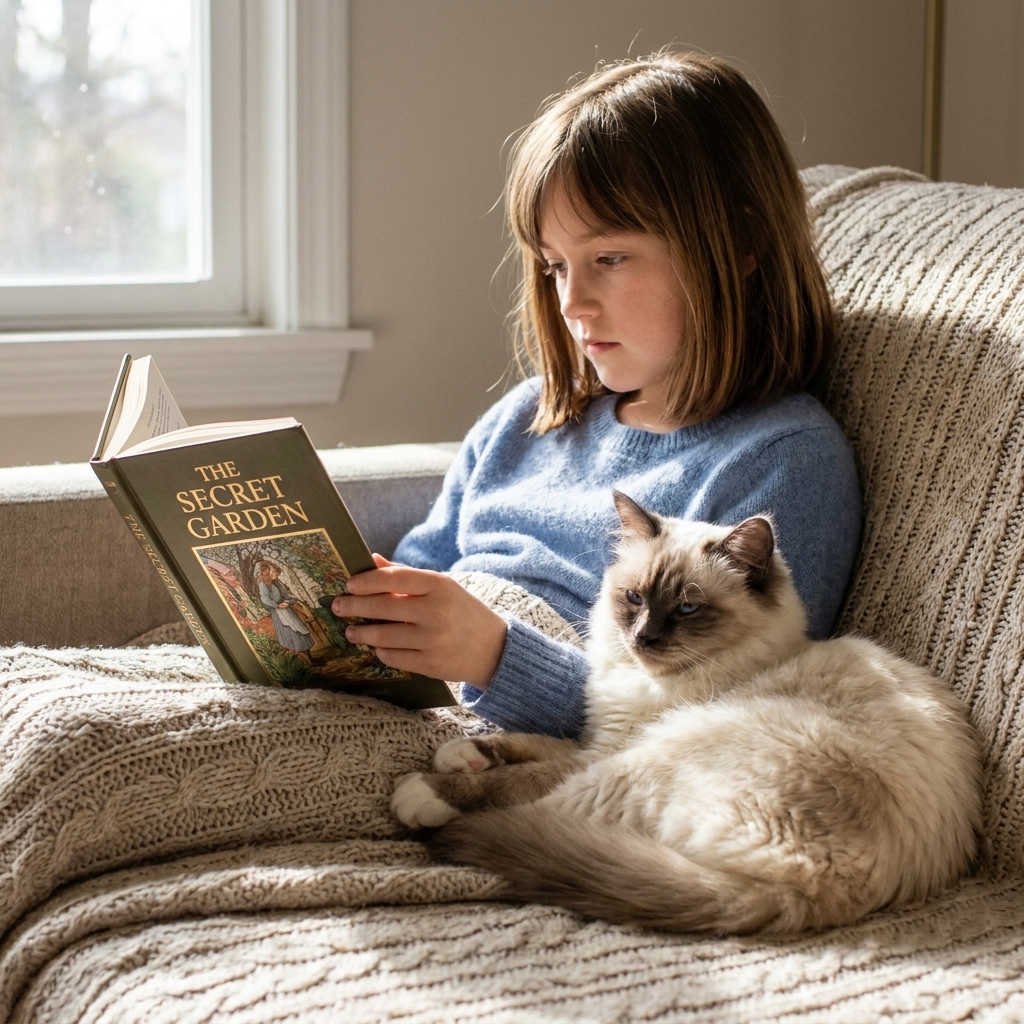
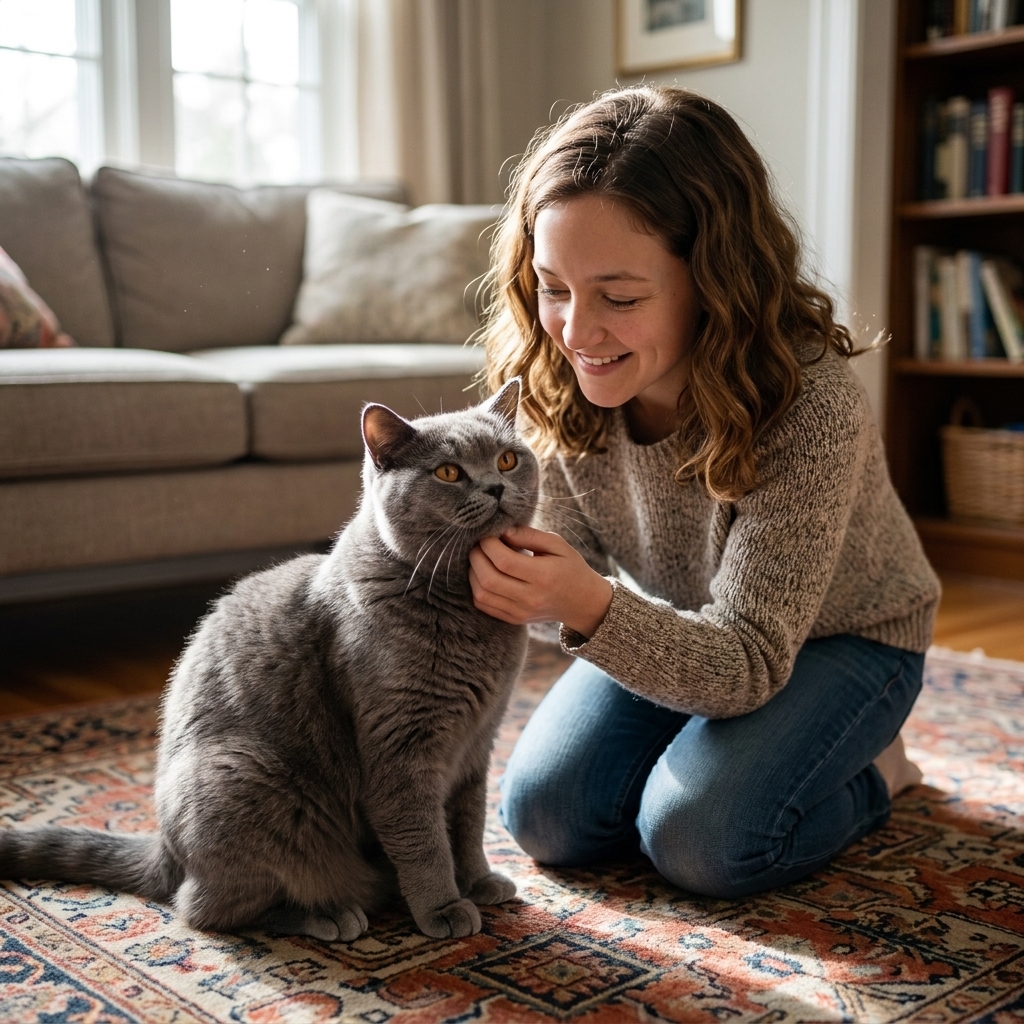
4) British Shorthair
Why families love them: British Shorthairs are often calm, sturdy, and unflappable. They are not always lap cats, but many are very affectionate in a low-key way, staying close, asking for pets, and tolerating gentle family life.
Temperament highlights
- Usually easygoing and steady
- Often prefers petting next to you rather than being carried
- Can handle a moderately active home when given space
Family tips
This is a great breed for teaching kids respectful affection. Encourage “two feet on the floor” cuddles: sit on the couch or floor and let the cat come in. If your child wants to hold the cat, do short, supported lifts only, and stop before the cat squirms.
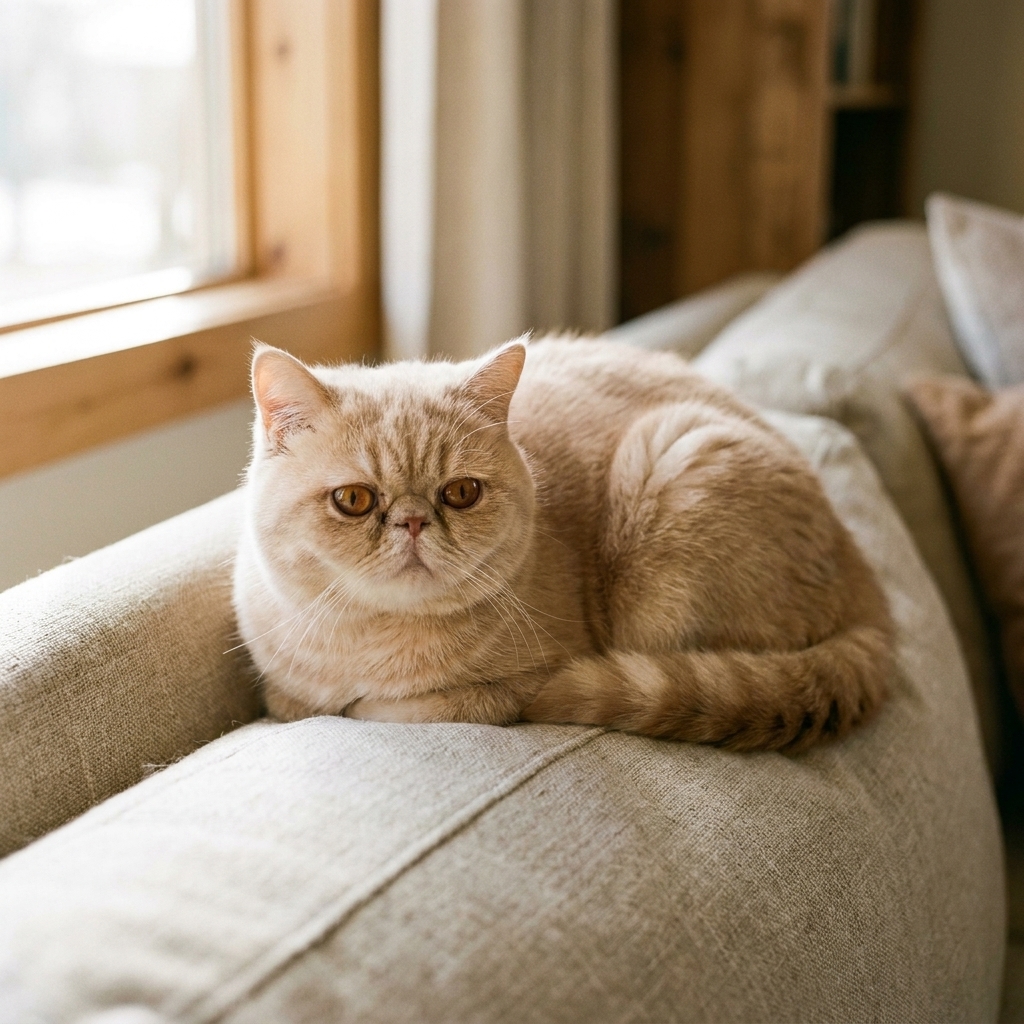
5) Persian
Why families love them: Persians are typically calm, sweet, and content with a quieter pace. In the right household, they can be very affectionate and enjoy peaceful companionship with kids who are taught to be gentle and patient.
Temperament highlights
- Usually mellow and not easily wound up
- Often enjoys calm petting sessions
- Typically best with quieter play rather than roughhousing
Important care reality check
Persians require consistent grooming, and their flat faces can be associated with breathing and eye issues. Severity varies, but more extreme brachycephaly tends to raise the risk. If you are considering a Persian, choose an ethical breeder who prioritizes health, and budget time for daily coat care. For many families, adopting a calm adult longhair with a similar temperament can be a wonderful alternative.
How to introduce a new cat
This is the part that makes or breaks “affectionate.” Most cats are not instantly comfortable with a brand-new home and a curious child. Go slow, and think in terms of building trust.
Step 1: Set up a safe room
Before your cat arrives, create a quiet room with:
- Litter box (far from food and water)
- Food and water
- A hiding spot (covered bed or a carrier left open)
- Scratching post
- A cozy perch
Explain to your kids that this is the cat’s “bedroom,” and the cat gets privacy there.
Step 2: Teach three kid rules
- No chasing. If the cat walks away, we let them go.
- Hands are for petting, toys are for playing. No fingers as prey.
- One calm voice. If you want the cat to come closer, get quieter, not louder.
In my house, I also like the “turtle hands” rule for little ones: closed, still hands when the cat approaches, then gentle petting after an adult says it is okay.
Step 3: Start with short, supervised visits
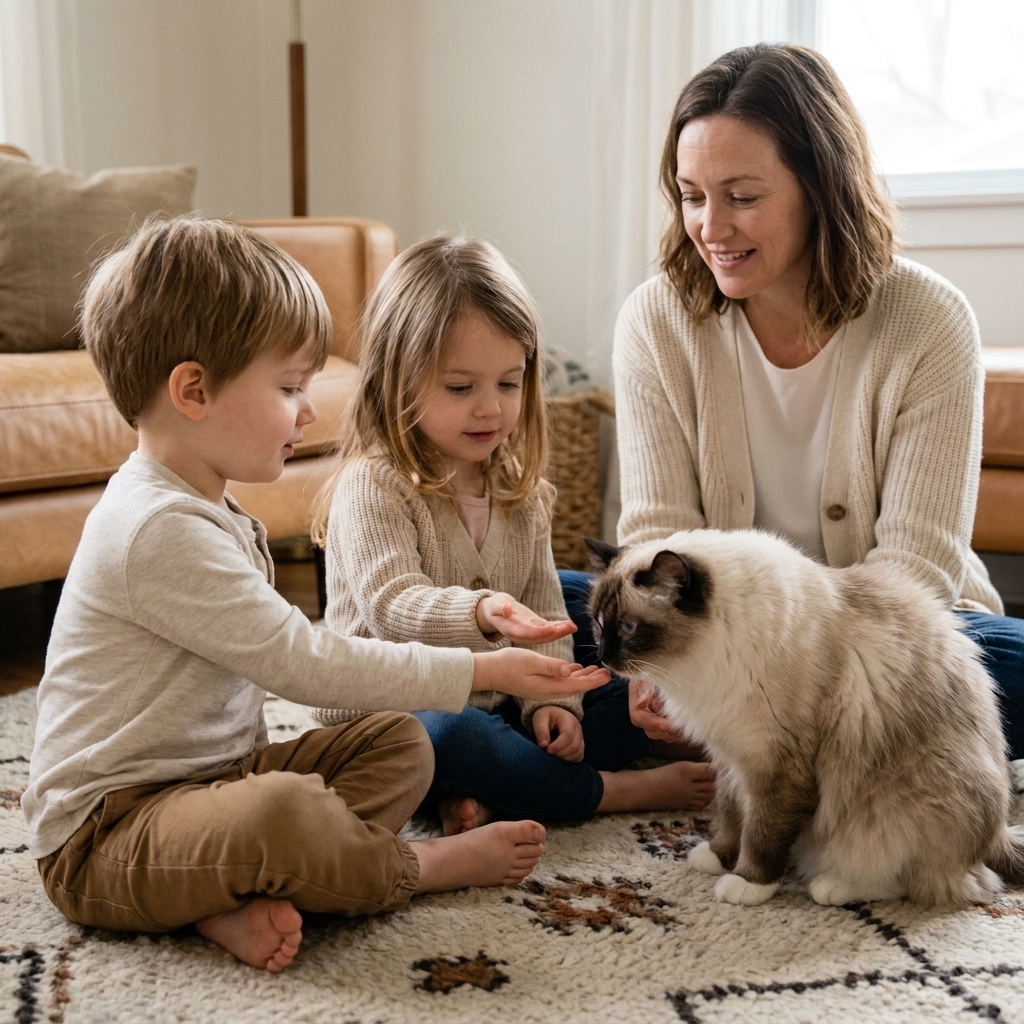
Bring one child in at a time, seated on the floor or couch, and let the cat choose the distance. Use treats tossed away from the child so the cat can approach and retreat easily.
Step 4: Pair kids with good things
Have your child participate in calm routines that cats love:
- Putting down meals
- Offering a treat in an open palm (only if the cat is gentle)
- Holding the wand toy while an adult controls speed and distance
This teaches the cat, “Tiny humans predict snacks and fun, not grabbing.”
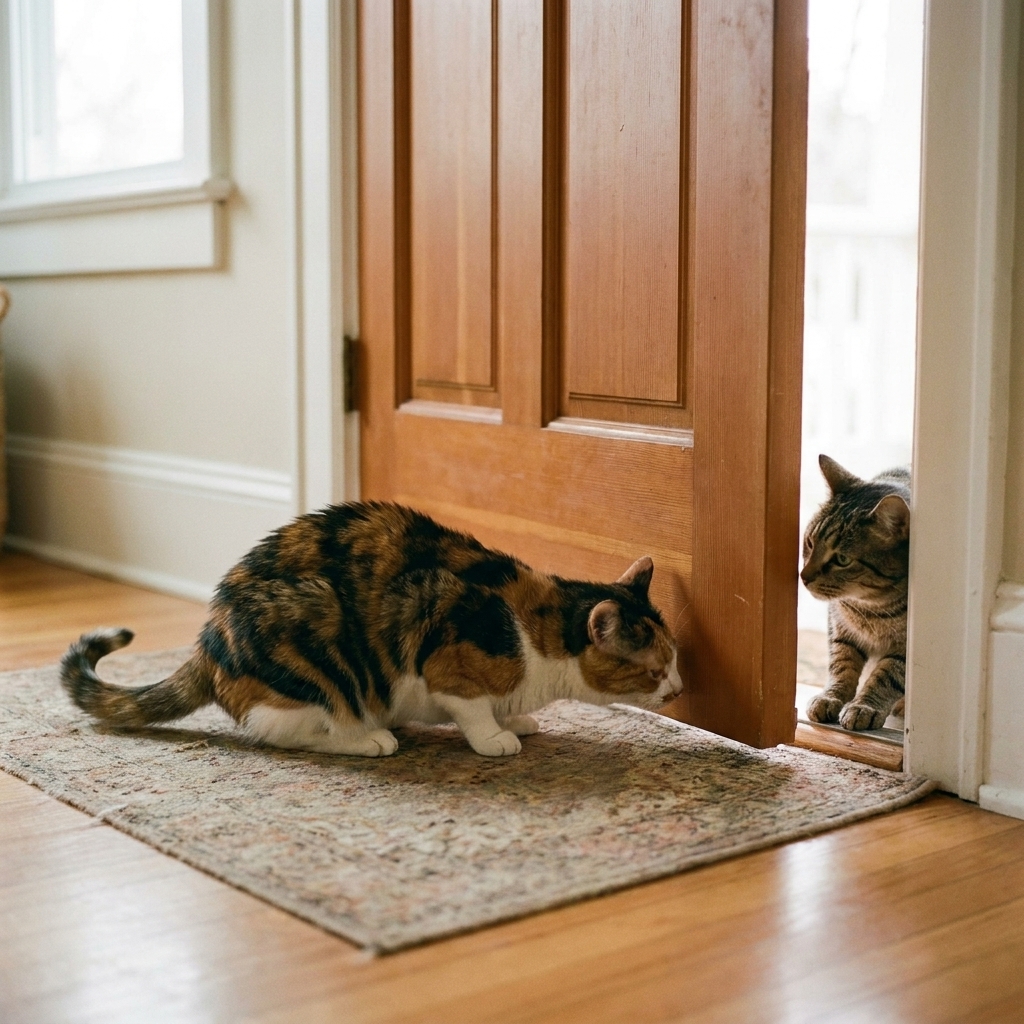
Step 5: Watch body language
Because for the first few weeks, it kind of is your job. End interactions early if you see:
- Ears turning sideways or back
- Tail flicking or thumping
- Skin twitching along the back
- Sudden freezing or wide pupils
- The cat leaving and hiding
A cat who is allowed to leave is a cat who learns they do not need to escalate.
Teach kids where to pet
If you want fewer scratches and more snuggles, coach kids to pet like a cat would choose.
- Good spots: cheeks, chin, shoulders, and along the back in slow strokes
- Usually avoid: belly, paws, and tail, unless you already know the cat enjoys it
- Keep it short: a few gentle strokes, then pause and let the cat decide if they want more
Make your home cat-friendly
The secret to a cuddly family cat is not just temperament. It is environment. Give your cat ways to feel safe and in control.
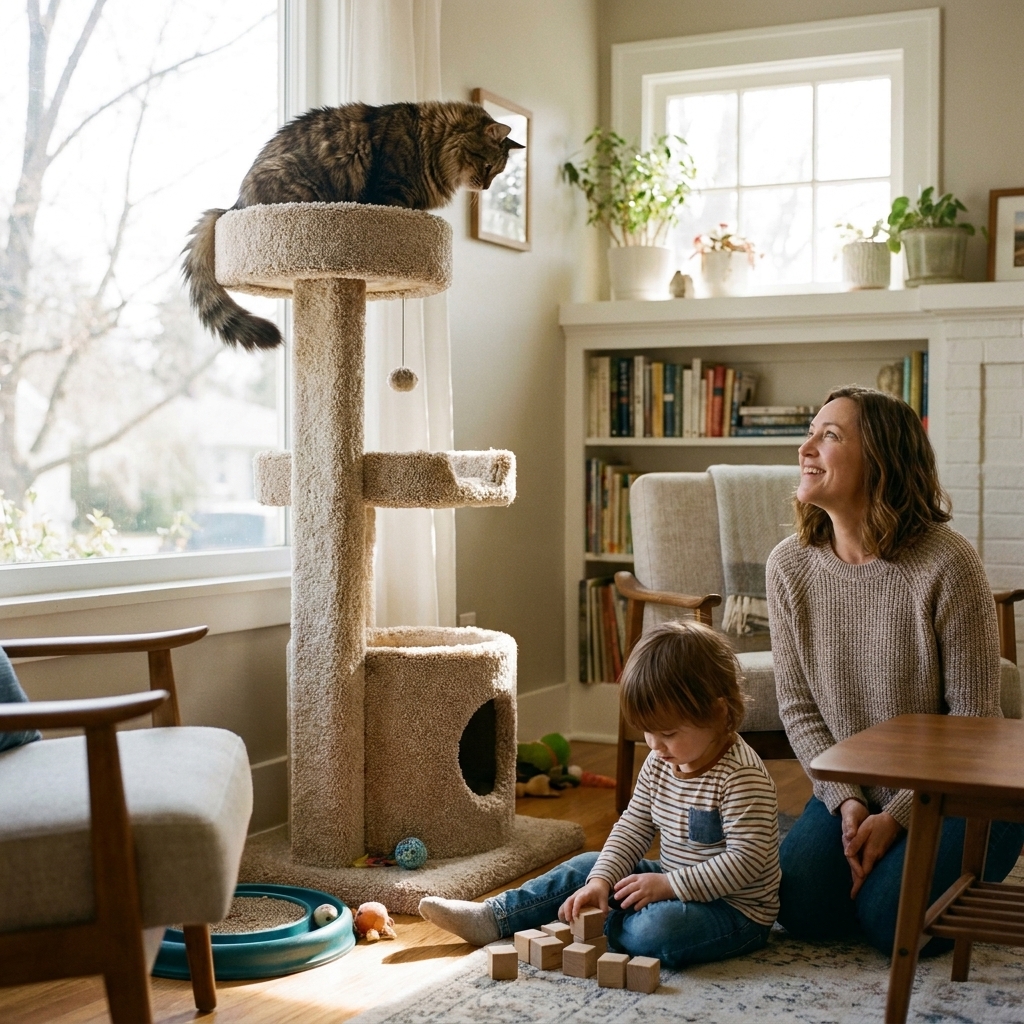
- Add vertical space: a cat tree or wall shelves so the cat can observe without being touched.
- Create “no kid zones”: a gated room, a high perch, or a bedroom where the cat can nap.
- Use enrichment daily: 10 minutes of wand-toy play can reduce zoomies and nipping.
- Support healthy scratching: tall posts and cardboard scratchers in the rooms your kids spend time in.
Also: Never declaw. Provide scratchers, use soft nail trims, and consider nail caps if your veterinarian agrees they are a good fit for your cat.
Choosing the right cat
If you are working with a breeder or rescue, ask questions that reveal real-life temperament:
- Does this cat seek out people or wait at a distance?
- How do they respond to being touched on paws, belly, or back?
- Have they lived with children? If not, how do they handle sudden movement or noise?
- Are they food-motivated and playful (helpful for bonding and training)?
For many families, a confident adult cat is easier than a kitten. Kittens are adorable, but they are also tiny athletes with sharp bits and a limited attention span for cuddling.
And if your household is loud, busy, or full of surprise dance parties, take this to heart: plenty of mixed-breed shelter cats are outstanding with kids. The best “breed” is often the individual cat who is confident, curious, and well matched to your home’s energy.
FAQ
Are male or female cats more affectionate with kids?
In my experience, affection is more about individual personality, early socialization, and stress levels than sex. I have met cuddly boys, cuddly girls, and plenty of “love you from over here” cats of both sexes.
Is it better to get a kitten or an adult cat for young children?
Often, an adult cat with a known temperament is the safer choice. Kittens play with teeth and claws, and young kids tend to move quickly. If you do choose a kitten, plan on very active daily play to prevent hand-biting habits.
What if my child is allergic?
No cat is truly hypoallergenic. Some people react less to certain individuals, but it is never guaranteed. If allergies are a concern, talk with your pediatrician or allergist, and consider fostering-to-adopt so you can test how everyone does in the same environment.
What is the biggest mistake families make during introductions?
Moving too fast and allowing unsupervised access. A cat who gets cornered by a well-meaning toddler may scratch out of fear. Slow introductions and consistent boundaries protect both your child and your cat.
A final word from my cats
Clementine (my sassy tortie) would like me to remind you that consent matters. Waffles (my perpetually confused orange tabby) would like you to know that crunchy treats help everyone bond faster. Jokes aside, the most affectionate family cats are the ones who feel safe. Choose a steady temperament, teach gentle handling, supervise closely, and let your new cat set the pace. That is how you get the headbutts, lap naps, and slow blinks you are hoping for.