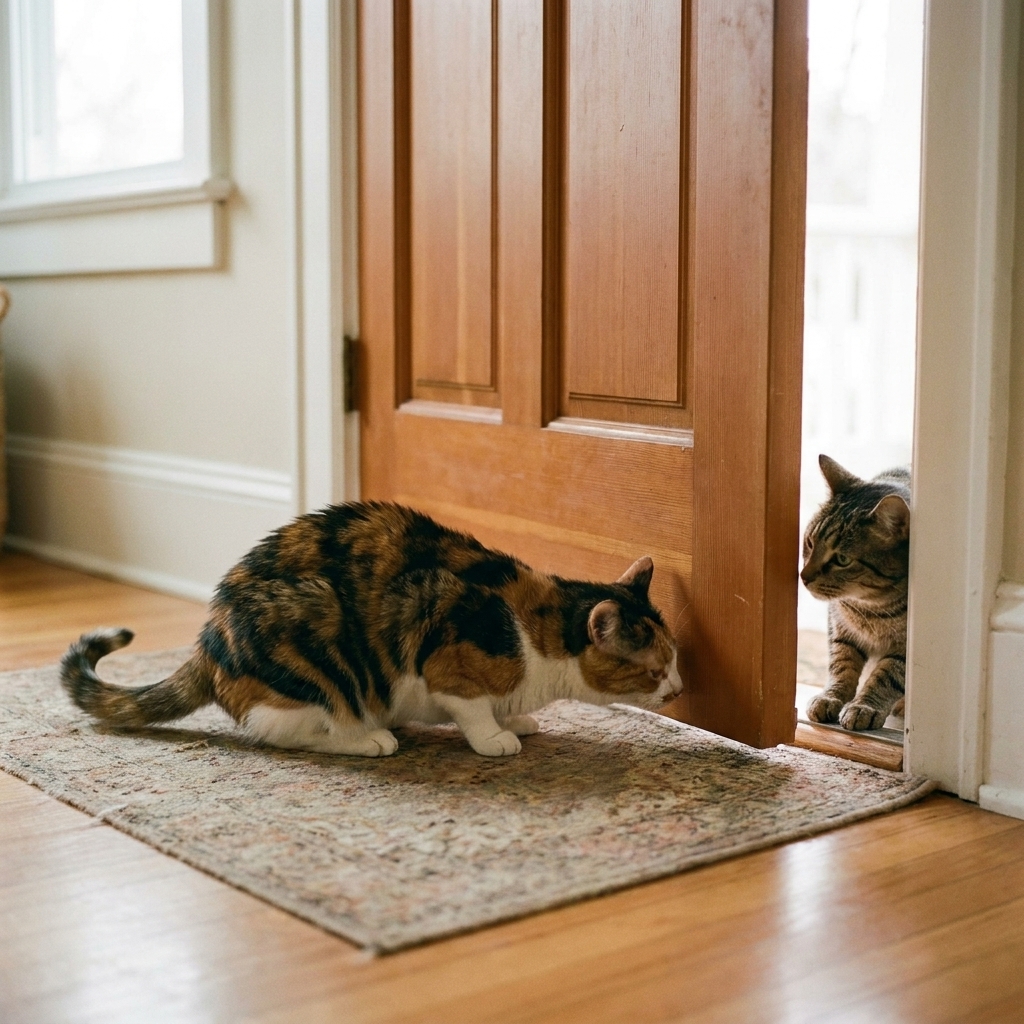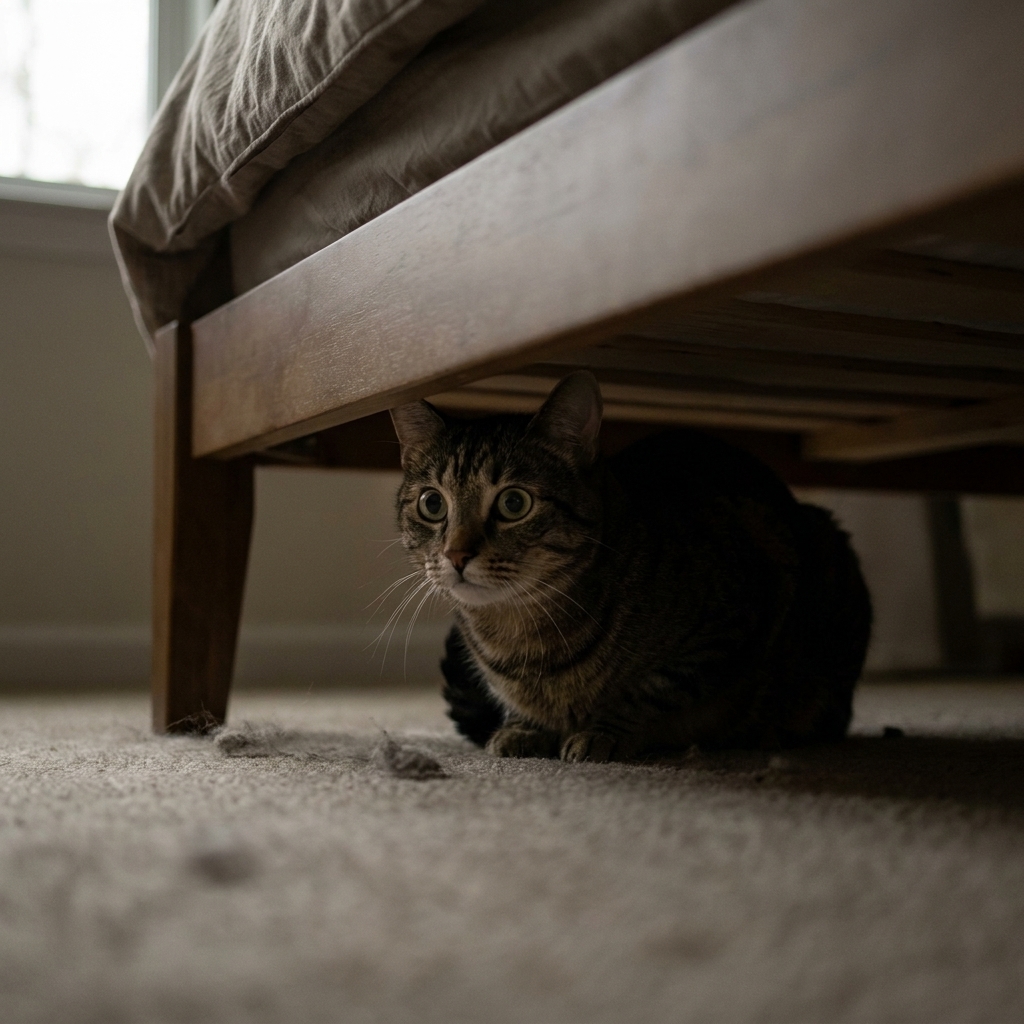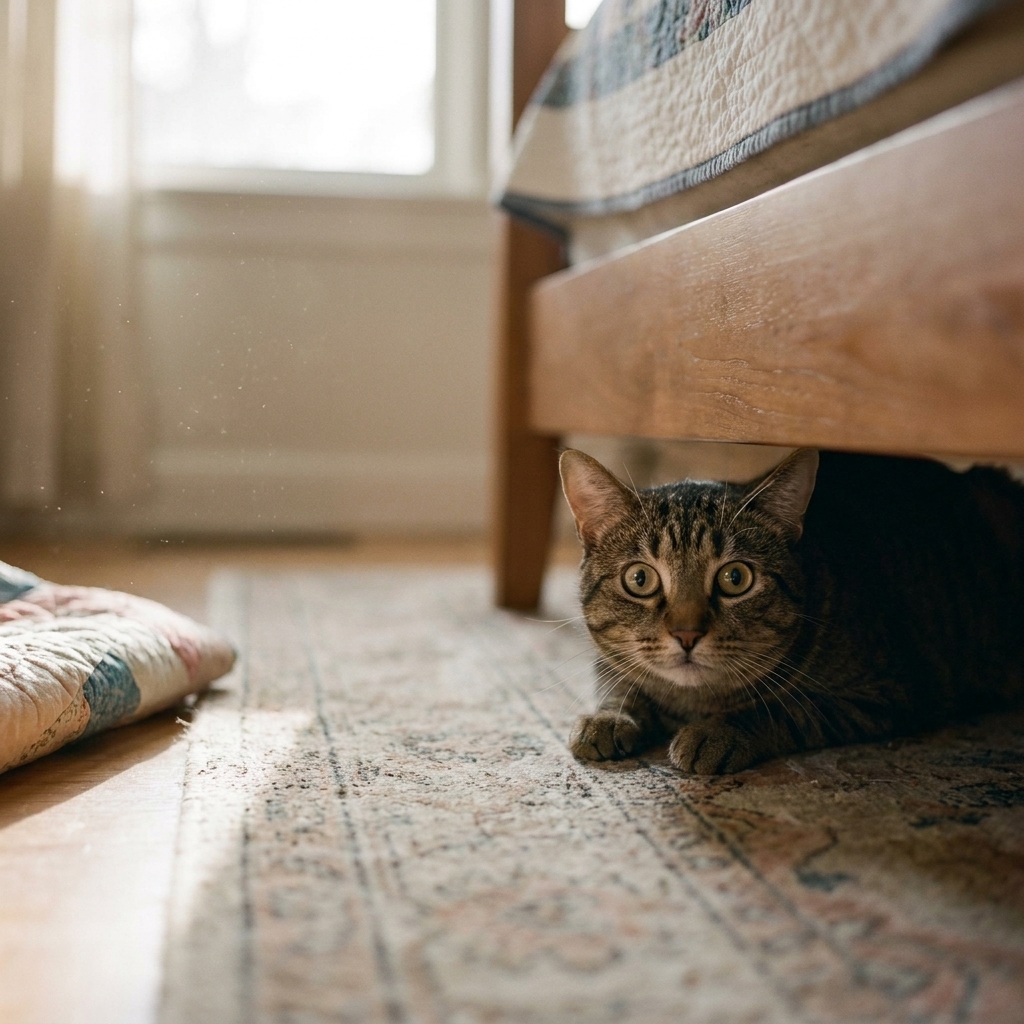
I have a soft spot for the cat who shows up to foster care with a note that says “doesn’t like dogs.” In my experience, what they often really mean is: this cat has never been introduced to a dog in a way that made them feel safe.
If you want your cat and dog to share a home peacefully, your goal is not for your cat to “get used to it.” Your goal is for your cat to feel in control, protected, and able to retreat, while your dog learns that the cat is not a squeaky toy with legs. The best introductions look boring. That is a compliment.
Before you start: set the cat up to feel safe
When I’m coaching cat parents through cat and dog introductions, I start with one question: Can your cat get away easily? If the answer is “not really,” pause and set up your space first.
Essentials to have ready
- A true cat-only room with a door that latches (not just “the guest room we keep open”).
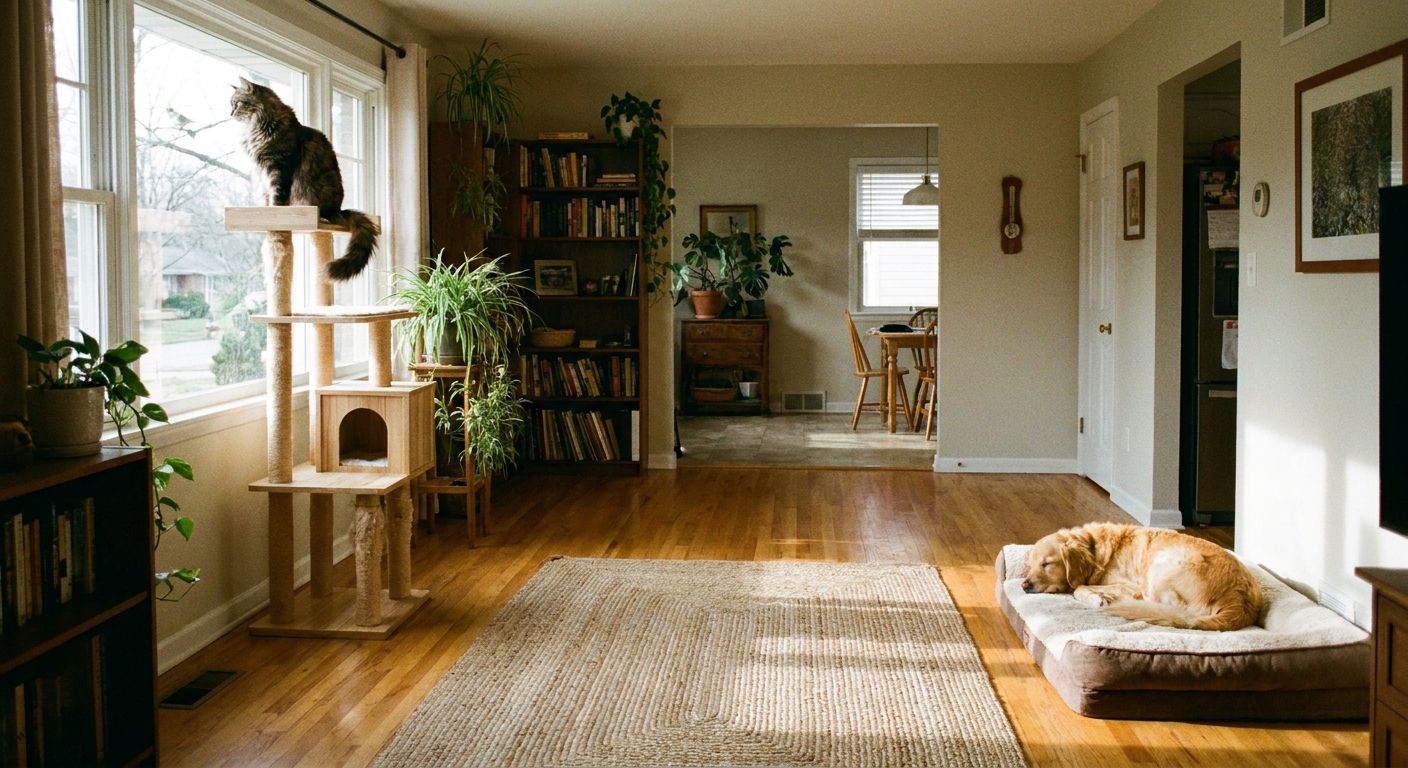
- Vertical space in shared areas: a tall cat tree, shelves, or a cleared bookcase your cat can access without passing the dog.
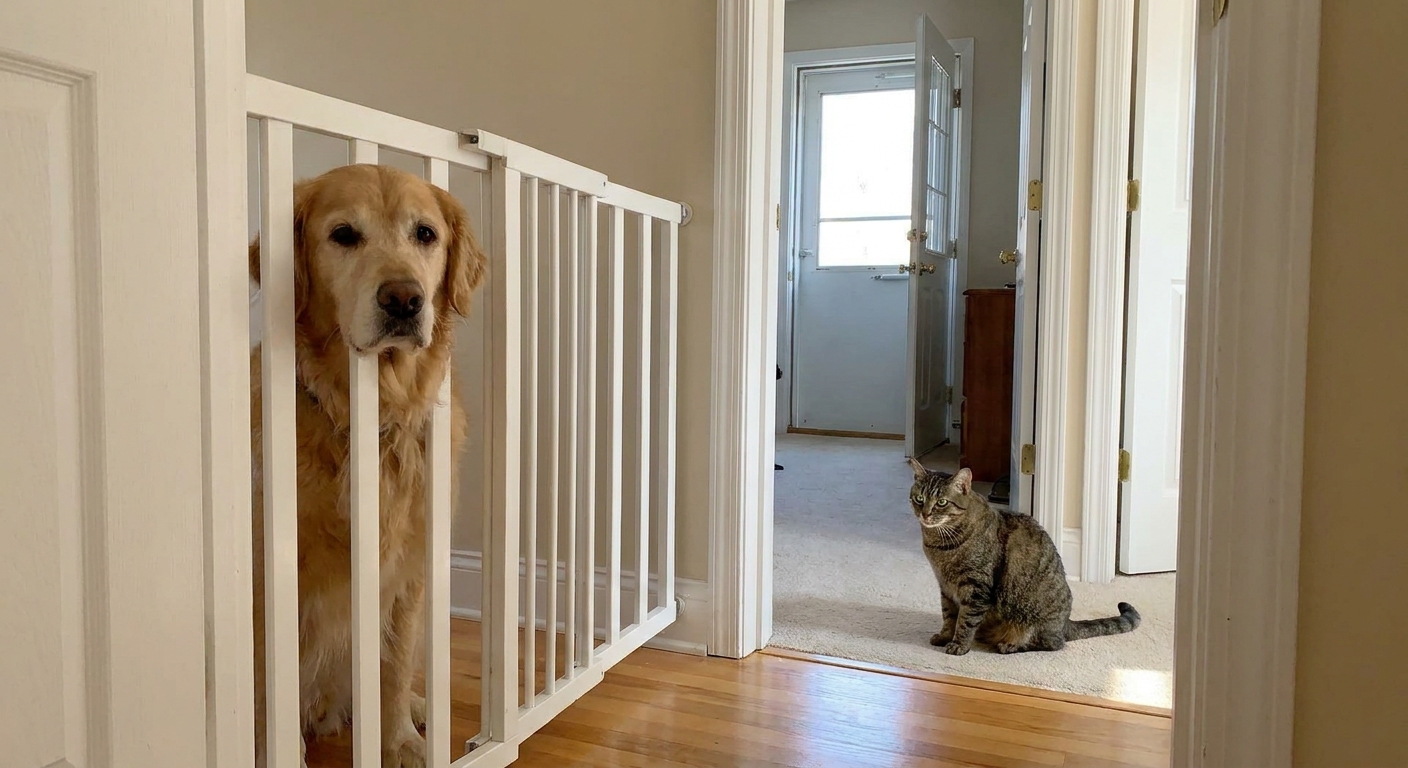
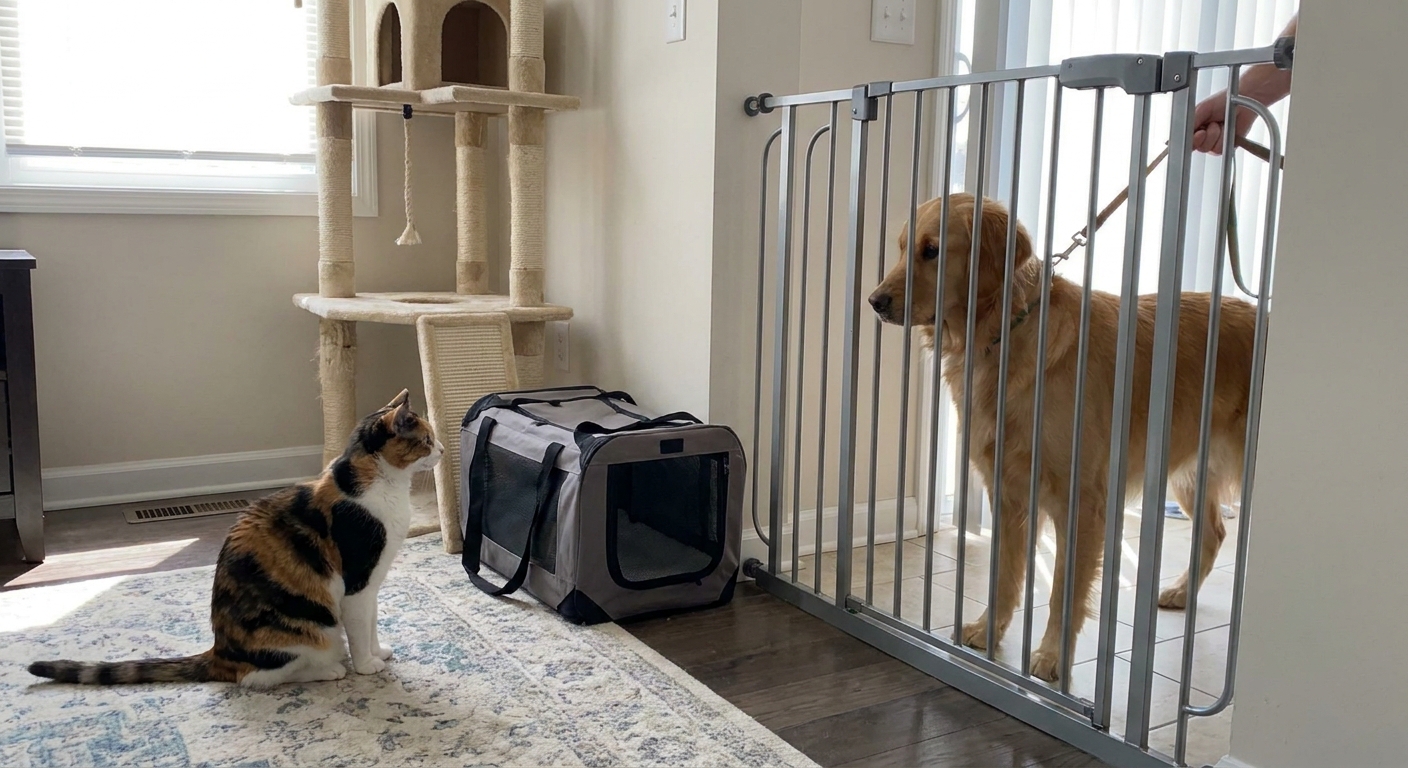
- Physical barriers: a solid door, then a baby gate (or two stacked gates), or an exercise pen. For many dogs, one gate is not enough. For many cats, one gate is not tall enough. Test your setup like you are your most determined animal and secure it accordingly.
- Dog management tools: leash, harness, and high-value treats. If your dog is intense, consider a basket muzzle trained positively before any face-to-face time.
- Cat resources in multiple locations: at least one litter box your dog cannot access, water, scratching posts, and hiding spots.
Two common scenarios
- New cat in a dog home: assume the dog is the “resident” and manage the dog away from the safe room door. Your cat should not have to run a gauntlet on day one.
- New dog in a cat home: keep your cat’s normal routines and access points stable (favorite perches, litter box locations), and introduce the dog to the home gradually so your cat does not feel like their territory was flipped overnight.
Dog prep matters, but we keep the focus on the cat
Your cat will cope better if your dog can reliably do a few basics: sit, down, stay, and respond to a “leave it.” If your dog cannot disengage from movement, plan on a slower timeline and tighter management so your cat never has to be the one to teach the dog manners.
The staged plan (the order matters)
Think of this as a ladder. Your cat sets the pace. If your cat struggles on a rung, you go back down a step until they look confident again.
Stage 1: Separate rooms (often several days to a few weeks)
Your cat starts in a dedicated safe room with everything they need. The dog does not enter. This is not punishment; it is decompression and control.
What to do daily
- Quiet bonding time in the safe room for your cat: play, treats, petting if they want it.
- Keep the dog’s routine normal elsewhere, so the dog’s energy does not spike at the closed door.
- Let your cat explore the rest of the home only when the dog is crated, behind a closed door, or out on a walk.
Signs your cat is ready for the next stage
- Eating, grooming, using the litter box normally.
- Curiosity at the door: sniffing, sitting nearby, relaxed body.
- Responding to you in the safe room: playing, taking treats.
If your cat is hiding constantly, skipping meals, or startling at every sound, give them more time in Stage 1 and reduce noise and traffic around their room.
Stage 2: Scent swapping (start day 1, continue throughout)
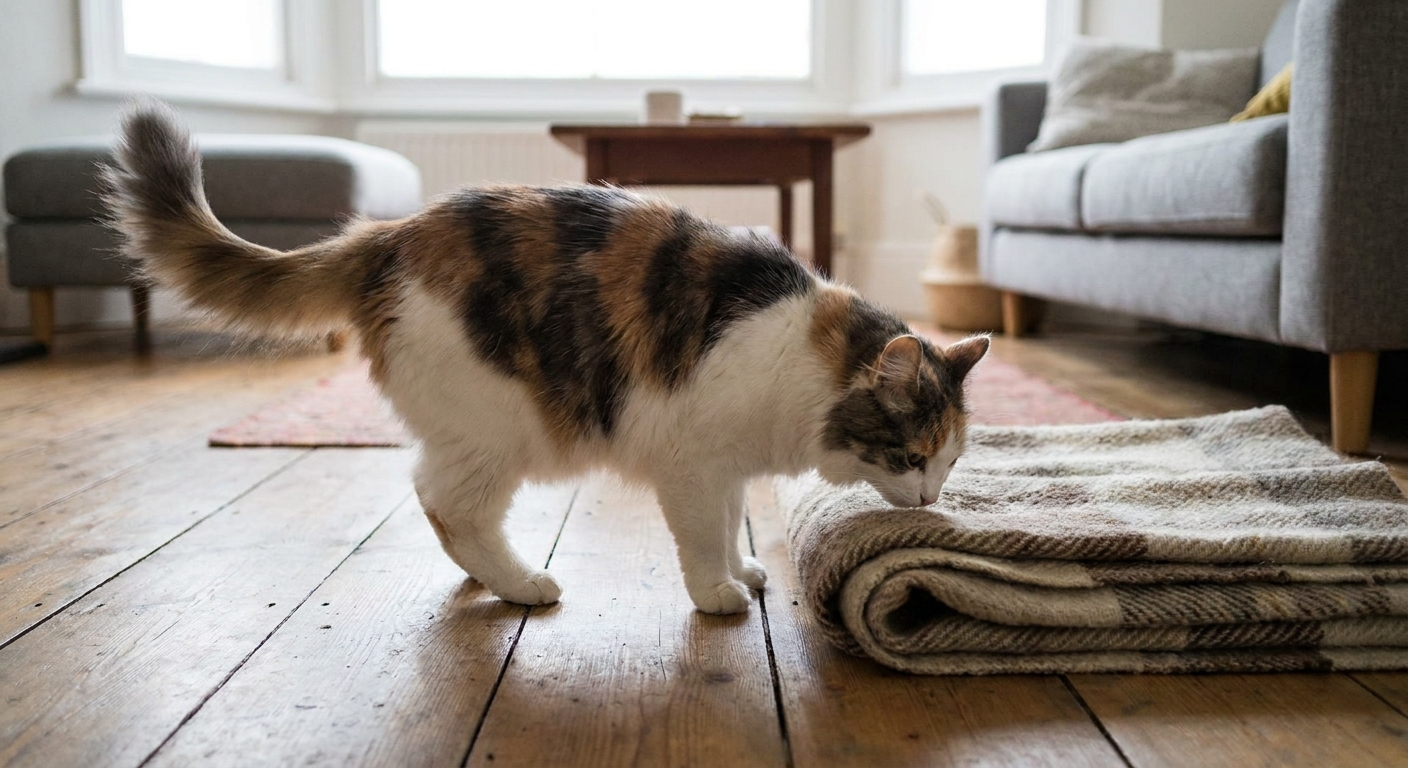
Before your cat ever sees the dog, you want the dog’s smell to become “background noise.” Scent is information. We want it to feel non-threatening.
Easy scent swap routines
- Swap bedding: trade a small blanket between the cat’s room and the dog’s resting spot.
- Towel rub: gently rub a towel on the dog’s shoulders and chest, then place it near (not in) the cat’s favorite area. Do the same with the cat and offer the dog a sniff while you reward calm behavior.
- Room rotation: let the dog spend time in a room the cat uses, then later let the cat explore that room while the dog is elsewhere.
What “good” looks like
Your cat sniffs, then continues on with life. A brief pause is fine. A full-body freeze, growl, or hiding after smelling the dog means slow down and make scent exposure less intense (farther away, shorter duration).
Stage 3: Closed-door feeding
This is one of my favorite steps because it is so simple: the dog’s presence predicts something your cat loves.
How to do it
- Feed your cat on one side of a closed door and the dog on the other side.
- Start with bowls far from the door if either pet hesitates, then gradually move closer over multiple meals.
- Keep things calm and routine. No hype, no excited voices at the door.
What to watch for in your cat
- Coping well: continues eating, pauses briefly then resumes, ears mostly forward or neutral.
- Not ready: won’t approach the bowl, crouches low, tail tucked, ears sideways or flattened, growling or hissing at the door.
If your cat will not eat, move the bowl back to the distance where they do eat. Appetite is feedback.
Stage 4: First visuals (through a barrier)
This stage is where many introductions go too fast. Your cat should see the dog with a clear safety buffer and a guaranteed escape route.
Best setups
- Baby gate plus leash: cat on one side, dog on the other, dog leashed and rewarded for calm.
- Crate plus distance: dog in a crate only if the dog is already crate-comfortable and not barking or slamming the door.
- Door cracked with a doorstop: only if neither pet can force it wider.
Keep sessions short, like 30 to 90 seconds at first, then end on a calm note. Multiple micro-sessions per day beat one long stressful session.
Cat body language
Coping well
- Loose body posture, weight evenly distributed.
- Tail neutral or gently swishing at the tip.
- Ears forward or rotating normally.
- Blinking, grooming, or sniffing the floor.
- Willing to take treats or play at a distance.
Time to pause
- Freezing like a statue for more than a moment.
- Crouching low with tense muscles.
- Ears pinned back, pupils very dilated.
- Tail puffed, tail tucked, or tail lashing hard side to side.
- Hissing, growling, spitting (a sharp hiss), or swatting the barrier.
If you see the “pause” signs, increase distance immediately and shorten the next session. Your cat should not have to escalate to make the dog go away.
Stage 5: Short supervised meetings (same room)
Only move to this stage when your cat can see the dog through a barrier without freezing, hissing, or panicking, and when the dog can disengage from the cat on cue.
How to run the first meetings
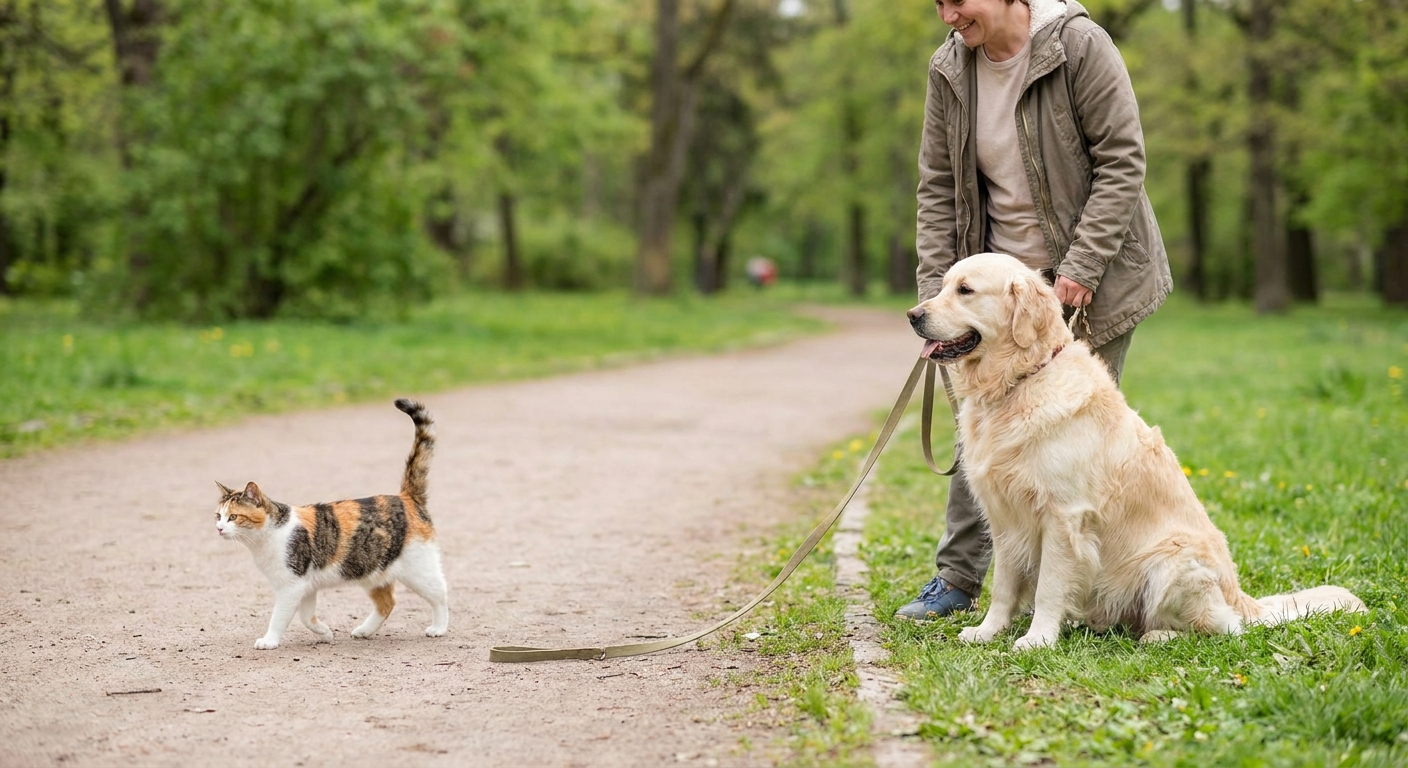
- Dog on leash, ideally after a walk so energy is lower. Keep the leash short enough to prevent a lunge, but loose enough to avoid constant tension, since tight leash pressure can increase arousal.
- Cat chooses whether to approach. Do not carry your cat into the room, and do not place them “nose to nose.”
- Create safe cat pathways: clear routes to high perches and exits that do not require passing the dog.
- Reward calm: treat your dog for looking away from the cat, lying down, or calmly sniffing the floor. Treat your cat for any confident behavior like sitting, blinking, or walking away calmly.
- Keep it short: 1 to 3 minutes, then separate and let everyone decompress.
What “success” looks like
Success does not mean they cuddle. Success is: your cat can share airspace without feeling hunted, and your dog can exist in the same room without fixating.
If your cat freezes, hisses, or bolts
These behaviors are not your cat being “mean.” They are your cat communicating that the current setup feels unsafe.
If your cat freezes
- Increase distance immediately: guide the dog farther away, or end the session.
- Reduce intensity next time: go back to barrier-only viewing, shorten sessions, and add more vertical escape routes.
- Check the dog’s behavior: staring, stiff posture, whining, and creeping forward are very stressful for cats even if there is no barking.
If your cat hisses or growls
- Do not punish. Punishment convinces your cat the dog makes bad things happen.
- End the session calmly: lure your dog away with treats, then give your cat space.
- Return to closed-door feeding and scent swapping for a few days, then try barrier viewing again.
If your cat bolts and the dog wants to chase
Chasing is the big line in the sand. Even one chase can set your cat’s trust back significantly, and it can be dangerous.
- Prevent rehearsal: keep the dog leashed during meetings until you are confident chasing will not happen.
- Interrupt fast: if the dog fixates, say your cue (“leave it”), turn and walk the dog away, then reward when they reorient to you.
- Increase management: more gates, closed doors, and separate time. Your cat needs to believe escape is always possible.
- Consider professional help: if your dog repeatedly attempts to chase, especially if there is prey drive, bring in a qualified force-free trainer. Your cat’s safety comes first.
Quick emergency reset
If you have a chase, a near-miss, or any moment that makes your stomach drop, separate immediately and reset. Go back to barriers and earlier stages for at least a few days while everyone’s stress hormones settle. If there is any chance your cat was bitten, grabbed, or injured, call your veterinarian right away. Cats are very good at hiding pain.
Troubleshooting
“My cat won’t come out of the safe room.”
Stay in Stage 1 longer, and add confidence builders:
- Feed high-value food near (not at) the doorway.
- Use wand toys to encourage forward movement.
- Let your cat explore the home when the dog is fully separated, then return them to their safe room before the dog reappears.
“My dog is friendly but too excited.”
Friendly can still be terrifying to a cat. Tighten management:
- Exercise the dog before any cat exposure.
- Practice calm behaviors around the barrier with treats.
- Use a leash and increase distance until the dog can stay loose-bodied and responsive.
“My cat is okay until the dog moves.”
Motion is a big trigger. Try:
- Have the dog lie on a mat while the cat observes from a perch.
- Do very short sessions with tiny dog movements, then reward calm and end early.
- Increase vertical space so your cat can watch from above, which often helps them feel safer.
“The dog keeps staring at the cat.”
Hard staring is pressure. Treat it as a red flag, not a quirk.
- Increase distance and block line of sight with a blanket over the gate or a strategically placed piece of furniture.
- Reward the dog for looking away. You are training a default behavior of disengagement.
- If staring escalates to trembling, stalking, or lunging, stop face-to-face sessions and consult a trainer experienced with prey drive.
How long does it take?
Some cats can progress to short, calm supervised meetings in a week or two. Many need several weeks, and some need longer. A shy adult cat or a high-energy adolescent dog can take extra time.
I know it is tempting to rush because you want your home back. But the timeline that matters is your cat’s nervous system, not your calendar. Slow is smooth, smooth is fast.
Sharing space long term
Even once things are going well, I like to keep “cat-only safety” permanent. That means:
- Litter boxes that the dog can never access (it is a hygiene issue, it can create parasite risk, and it can make some cats avoid the box).
- At least one room the cat can retreat to where the dog is not allowed.
- Vertical routes in shared areas.
Gradually increase shared time while you are home and able to supervise. Many cats and dogs coexist beautifully, but I still do not recommend leaving a new cat and dog together unsupervised until you have a long track record of calm behavior.
Prevent real-life setbacks
Most blow-ups are not about the plan. They are about someone opening a door.
- If you have kids or frequent guests, use simple house rules: gates stay closed, doors stay latched, and nobody “just lets the dog say hi.”
- Consider a sign on the safe room door if needed, especially during Stage 1.
Red flags: get help now
- The dog lunges, snarls, or repeatedly tries to break through barriers to reach the cat.
- The dog fixates, stalks, or trembles with intense arousal when seeing the cat.
- Your cat stops eating, hides constantly, or develops litter box issues after the dog arrives.
- Your cat has been chased, cornered, or injured, even once.
Your veterinarian can help if stress is affecting your cat’s health, and a qualified force-free trainer can create a safety plan for dog behavior. You are not “failing” if you need support. You are being responsible.
Quick FAQ
Should I let them “work it out”?
No. Cats do not benefit from being forced into close contact, and dogs can learn bad habits fast. Controlled, staged exposure is safer and kinder.
Is a face-to-face sniff necessary?
Not at all. Many peaceful cat and dog households never do a prolonged nose-to-nose greeting. Neutral coexistence is the gold standard.
Will a pheromone diffuser help?
It can help some cats feel a bit more settled, especially during Stage 1 and Stage 2. If you try one, look for a synthetic feline facial pheromone product and treat it as a support tool, not a substitute for management and a slow plan.